

Most bathroom renovations look dated within five years — not because the work was poor but because of specific, predictable design decisions. Here’s exactly which ones age fastest and what to choose instead.Go back and look at bathroom renovation photographs from 2017 and 2018. The wall-to-wall gray tile. The geometric hexagon floor in a contrasting gray. The matte black fixtures appearing in every project regardless of the bathroom’s other characteristics. The shiplap accent wall. The open floating vanity with hairpin legs. Each of these choices was fresh, considered, and widely praised at the time they were made. Today, together, they date a bathroom to a very specific two-year window as precisely as a newspaper headline.
This is not a retrospective criticism of the people who made these choices. Most of them were responding reasonably to what was available, recommended, and celebrated at the time. The problem is structural — embedded in how design trends work, how renovation decisions get made, and how the renovation industry profits from the cycle of obsolescence that makes bathrooms date faster than almost any other room in the home.
Understanding this cycle doesn’t require abandoning contemporary design. It requires knowing which decisions belong to a moment and which decisions belong to no specific moment at all — and tilting the balance of any renovation toward the second category.
How Design Trends Actually Work
A design trend begins as a specific, relatively unusual choice made by architects and designers working outside the mainstream. It gets published in design media, adopted by early renovators, appears in more publications, gets picked up by retailers who supply the contractor market, spreads to mainstream renovation projects, peaks when it appears in every bathroom renovation photo on the internet, and begins its decline precisely at the moment of peak adoption.
The gap between first publication and peak adoption is typically three to five years. The gap between peak adoption and “visibly dated” is another two to four years. This means a renovation done at peak trend adoption — when the decision feels most clearly right because it’s everywhere — is already six to nine years into a trend cycle and closer to dated than it appears.
The renovation industry doesn’t operate against this cycle. It depends on it. Tiles, fixtures, vanities, and accessories are merchandised around current trends. Renovation media celebrates new trends while quietly consigning previous ones to the “before” photos. The cycle creates demand, and demand is the engine that sustains the industry.
This isn’t a conspiracy — it’s just how trend economies work. The consequence for homeowners is that renovating to current trends is almost always renovating toward the rear of a trend cycle without enough visibility to know it.
Why Bathrooms Date Faster Than Other Rooms
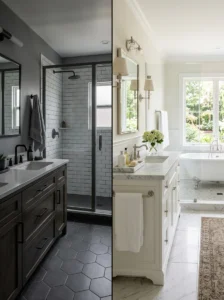
A living room can be updated continuously without renovation — new cushions, new artwork, rearranged furniture, a different rug. The bones of the room are permanent, but the visible expression of those bones is flexible enough to stay current without major investment.
A bathroom cannot be updated this way. The tile, the vanity, the toilet, the shower, the fixtures — these are all permanent or near-permanent elements. Once installed, they will define how the bathroom reads for the next fifteen to twenty years without significant expenditure to change them.
This permanence means two things simultaneously. First, the style decisions made in a bathroom renovation have much longer consequences than style decisions in other rooms. Second, the decisions that age poorly become permanent problems rather than easy fixes.
The bathroom is also a room where renovation decisions tend to be made at a single point in time — the whole room done at once, with a coherent visual language that belongs entirely to the year the renovation was completed. A bedroom that was furnished gradually over ten years contains objects from multiple eras, which produces a layered look that resists dating. A bathroom renovated in a single project contains only objects from one year, which produces a room that reads unmistakably as that year.
The Decisions That Date Fastest
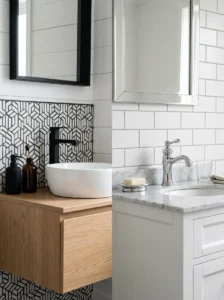
Not all bathroom renovation choices age at the same rate. Some elements have cycles measured in years. Others have cycles measured in decades or remain outside the trend cycle entirely.
Statement tile patterns with high-trend specificity. The geometric patterned floor tile that appears in bathroom renovation media during a specific window is the most reliably dated element in any bathroom. Not because patterned tile is wrong, but because the specific pattern and colorway are absorbed into the trend cycle’s peak-and-decline rhythm. A bathroom with hexagon tiles in a gray-and-white colorway will always read as “that era” regardless of how well-maintained it is.
Trend-specific hardware finishes. Matte black fixtures had a period of absolute dominance. Brushed gold had one before that. Both have supporters who love them genuinely and both read as era-specific to observers who don’t. The hardware finish that ages least visibly is the one that was always present — chrome and brushed nickel have appeared in bathrooms for long enough that they no longer read as belonging to a specific moment.
Accent walls using current materials. Shiplap, subway tile in a non-standard layout, peel-and-stick wood panels — each of these cycles through trend adoption and reads as dated at the rear of the cycle. An accent wall using a material specifically popularized by renovation media in a two-to-five year window is an accent wall that reads as dated by the end of that window.
Floating vanities at a specific visual style. The open floating vanity with visible legs, popular at a specific moment, now reads specifically as that moment. The next version will too. Vanity styles that have been continuously present across decades — simple frameless cabinets, inset door vanities, classic furniture-style bases — read as timeless rather than trend-specific.
Highly specific color combinations. A bathroom in gray and white reads as a specific renovation era. A bathroom in black and white reads as no specific era because the combination has been present in bathrooms for over a century. The distinction between a color combination that belongs to a moment and one that has been continuously used without pause is the distinction between dated and timeless.
What the Gray Tile Wave Teaches
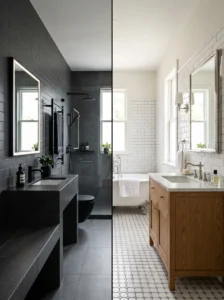
The gray tile bathroom deserves its own analysis because it was adopted at such scale and has aged so visibly within such a short time that it’s become something of a case study in renovation dating.
Gray tile was adopted for understandable reasons: it was photographed beautifully, it was neutral enough to work with multiple accent choices, it was widely available, and it represented a departure from the beige-and-oak bathrooms it replaced. None of these were bad reasons.
The problem was scale of adoption. When a very high percentage of bathroom renovations within a three-to-five year window use a similar tile in a similar tone in a similar layout, the look becomes a period marker rather than a timeless choice. The gray tile bathroom now reads as “renovated between approximately 2014 and 2020” with a precision that makes it visually comparable to the avocado green bathrooms of the 1970s — clearly contemporary to their era, clearly not to ours.
What this teaches is not that neutral tile is wrong. It’s that neutral tile chosen for its neutrality at a point when it’s at peak adoption isn’t actually neutral — it’s trend-specific precisely because it’s the most commonly chosen option of the moment.
The tile choices that have aged least visibly are the ones continuously present: plain white ceramic tile in standard formats, simple marble in classic applications, unglazed terracotta in appropriate settings. These haven’t “gone out” because they were never specifically “in” — they’ve been continuously present rather than trend-adopted.
The Decisions That Age Well
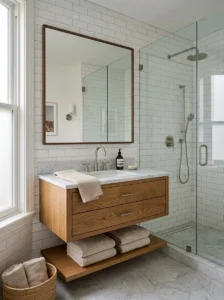
The inverse of the trend-specific decision is the decision that belongs to no specific moment — one that has been present across multiple decades and across multiple trend cycles without being absorbed by any of them.
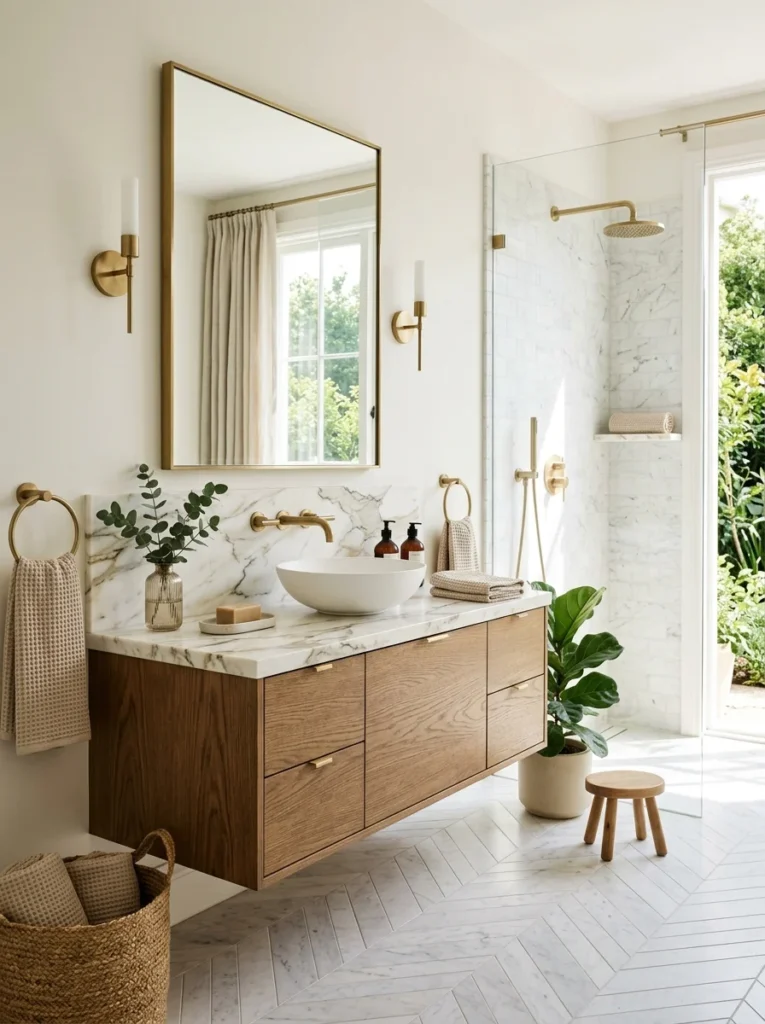
Simple, classic tile formats in neutral base tones. A plain white subway tile in a standard format. A small white hex floor tile. A large format white or near-white porcelain. These have been present in bathrooms continuously for decades. They read as “bathroom” rather than as “bathroom renovated in a specific year.”
Hardware in finishes with continuous history. Chrome and brushed nickel have been present in bathrooms for long enough that they belong to no specific trend era. Polished brass, which is returning in contemporary design, has a long enough history that it reads as traditional rather than current-trend-specific.
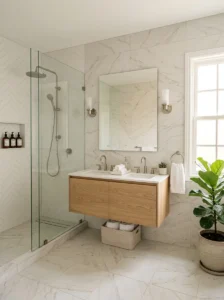
Vanity styles that reference furniture history. A simple cabinet with classic proportions, clean lines, and no highly specific stylistic markers from a current trend reads as permanent rather than dated.
Quality materials over trend materials. A bathroom tiled in genuinely good quality stone, even if the stone is fashionable currently, ages better than a bathroom tiled in trend-specific pattern work using low-cost materials. The quality reads beyond the trend; the trend without quality reads as dated and cheap simultaneously.
Classic fixtures. A freestanding bath in a simple, clean form has been present in bathrooms continuously without belonging to a specific era. A toilet with clean, classic lines. A basin in a simple unfussy profile. These don’t date because they haven’t trended — they’ve just been present.
How to Use Trend Elements Without Being Defined by Them
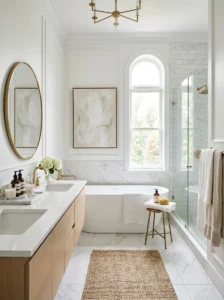
This doesn’t require eliminating contemporary choices entirely. It requires managing their scale and reversibility within the renovation.
Place trend elements in reversible positions. A trend-specific paint color costs a gallon of paint and a weekend to change. A trend-specific hand towel costs almost nothing. These are appropriate vehicles for contemporary design moments. A trend-specific tile on every wall and the floor is neither reversible nor cheap to change.
Reserve trend-specific decisions for a limited portion of the room. One accent tile surface, one trend-specific color on a vanity, one piece of hardware in a currently fashionable finish — these bring contemporary feeling to the room without defining the room entirely by a specific moment. The remainder of the room in classic, timeless choices means that as the trend-specific element ages, it can be updated without rebuilding the bathroom.
Distinguish between “current” and “trend-specific.” Some contemporary design choices are contemporary expressions of continuously-present principles — a well-proportioned room, quality materials, clean lines. These are not trend-specific even if they look modern. Trend-specific choices are ones that would have looked wrong five years ago and will look wrong five years from now: the specific combination, the specific pattern, the specific material popularized in a defined window.
The Maintenance Connection
A final point that doesn’t get enough discussion alongside the trend conversation: a well-maintained bathroom doesn’t read as dated the same way a neglected one does.
The bathroom renovations that read most visibly as dated are often also the ones where maintenance has been minimal — grout that’s discolored, caulk that’s yellowed, fixtures that show lime scale, mirrors that haven’t been properly cleaned. These maintenance failures compound with any dating effect from trend-specific choices and make the room read as both old and unloved.
A bathroom with genuinely classic decisions that’s meticulously maintained reads as permanent rather than dated regardless of when it was renovated. Conversely, even a recently renovated bathroom can read as dated when neglect has been allowed to accumulate. The maintenance practice is the ongoing investment that protects whatever the renovation created.
Key Takeaways
- Renovation trends follow a cycle of approximately three to five years from first publication to peak adoption, and two to four years from peak adoption to dated — meaning a renovation done at peak trend is already near the rear of its cycle
- Bathrooms date faster than other rooms because the permanent, tile-and-fixture elements are all chosen at a single point in time and can’t be gradually updated the way furniture-dependent rooms can
- The decisions that date fastest are trend-specific tile patterns, trend-specific hardware finishes, accent walls using currently-fashionable materials, and highly specific color combinations
- The gray tile wave is a useful case study in how scale of adoption converts a neutral choice into a period marker
- Decisions that age well are those continuously present across multiple decades rather than adopted at a specific trend moment
- Trend elements work best in reversible or limited positions — paint, textiles, a single accent surface — rather than as the defining material of the entire room
- A well-maintained bathroom reads as timeless regardless of age; a neglected one reads as dated regardless of how recently it was renovated
Frequently Asked Questions
Is it possible to renovate a bathroom that won’t look dated within a decade? Yes, with deliberate choices. The bathrooms that read as timelessly renovated — and there are plenty — are almost always built around materials and forms with continuous history (classic tile formats, quality stone, clean-lined fixtures, neutral base tones) rather than around the specific combination fashionable at the moment of renovation. They contain no element that could be precisely dated to a short window of trend adoption.
If I love a current trend, is there a way to include it without dating the bathroom? Include it at a scale and in a position that’s either reversible or limited. A trend color on the walls can be repainted. A trend-specific accessory can be replaced. A trend-specific vanity front can sometimes be replaced without replacing the whole cabinet. The elements that lock trend in permanently are those that are also the most expensive and disruptive to change: floor tile, wall tile in a full shower, the structural form of the vanity. Reserve trend-specific choices for everything except these elements.
Does high-end, expensive tile age better than budget tile? Quality matters for maintenance and appearance over time, but the aging question is primarily about trend specificity rather than price. An expensive tile in a highly trend-specific pattern will read as dated within the trend cycle regardless of its quality. A modestly priced tile in a classic, continuously-present format will read as timeless regardless of its cost. The combination of classic format and quality material produces the most durable result.
Why does the renovation industry promote trends that will date quickly? Because trend cycles create repeat business. A bathroom that feels permanently current doesn’t need renovation for thirty years. A bathroom built around trend-specific choices creates a client who is motivated to renovate again within a decade. This isn’t explicitly dishonest — the industry also genuinely responds to demand from consumers who want contemporary design — but it does mean the industry’s incentives are not aligned with producing the most durable renovation possible.
What’s the single most datable choice in any bathroom renovation? Trend-specific floor tile, in a pattern and colorway that peaked in a defined window. The floor is a large, permanently visible surface in the most contrasting position in the room — light from the walls shows it clearly. Floor tile in a highly trend-specific pattern dates a bathroom more visibly and more permanently than any other single decision. Choosing the floor tile in a classic, simple format — even when the walls or other elements use more contemporary choices — keeps the most visible permanent surface from becoming a period marker.