

A sofa is one of the most expensive, hardest-to-change pieces in a living room, and color is the decision most likely to be regretted a year or two later. Here’s how to choose one that lasts.A sofa is usually the single largest furniture purchase in a living room, and unlike a rug, a set of pillows, or a wall color, it’s expensive and disruptive enough to change that most households live with the decision for years, whether or not they still like it after the first one. This makes sofa color a meaningfully higher-stakes decision than most other color choices in a home, and it’s also one of the decisions most commonly made based on a single, of-the-moment preference rather than on how that preference tends to hold up over years of daily use.
The color that looks most exciting in a showroom or a design photo is frequently not the color that’s easiest to live with for a decade. Understanding why — and what actually predicts long-term satisfaction with a sofa color — is more useful than any specific color recommendation.
Trend-Driven Colors Age Faster Than Almost Anything Else in a Room
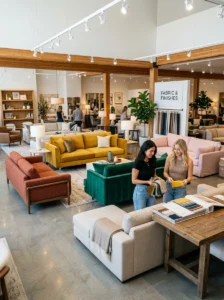
Sofa color trends move in cycles, the same way paint color trends and hardware finish trends do, and a sofa purchased at the peak of a specific trending color reads as dated on roughly the same timeline the trend itself fades on — often three to five years, sometimes faster for particularly of-the-moment shades.
This doesn’t mean trending colors are always a mistake, but it does mean the decision should be made with open eyes about the trade-off. A boldly trend-forward sofa color can be genuinely enjoyable during the years it’s current, and some households are comfortable replacing or reupholstering a sofa on a similar timeline to when they’d repaint a wall. For a household that wants a sofa to remain visually current for ten-plus years, though, chasing the specific shade that’s dominating design media in a given year is a choice that’s more likely to require an earlier replacement than a more restrained option would.
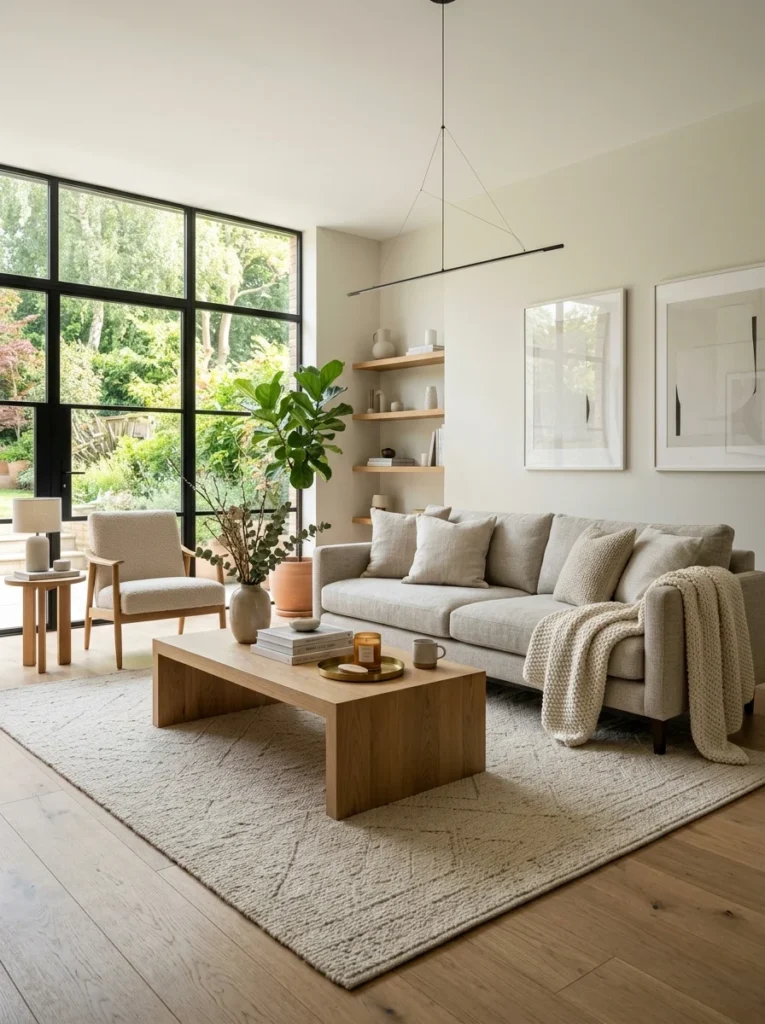
Neutral doesn’t mean boring, and this is worth separating clearly. A well-chosen neutral — a warm greige, a soft oatmeal, a deep charcoal, a rich navy that functions almost as a neutral — has far more longevity than a bright trend color while still contributing real character to a room, particularly when paired with pillows, throws, and art that carry more of the room’s color and personality.
The Sofa Is the Hardest Piece in the Room to Change Later
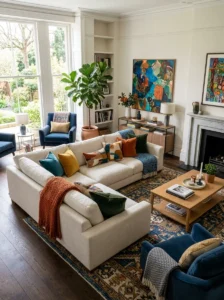
Color decisions on a sofa carry more weight than color decisions almost anywhere else in the room, because a sofa is disproportionately expensive and disruptive to replace relative to nearly every other colored element. A wall can be repainted in a weekend for a modest cost. A rug can be swapped without much disruption. Pillows and throws can be changed seasonally without a second thought. A sofa, by contrast, typically represents a four-figure investment and a delivery, disposal, or reupholstery process that most households aren’t eager to repeat more often than necessary.
This asymmetry is the core argument for choosing sofa color more conservatively than other elements in the room. The room’s more changeable elements — walls, rugs, pillows, art — are the appropriate place to introduce a trending color, a bold seasonal choice, or an experiment that might not hold up over years. The sofa is the appropriate place to be more restrained, precisely because it’s the piece the household is most locked into once it’s purchased.
Undertone Matters More Than the Color Name Suggests
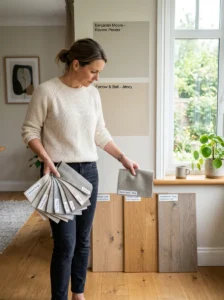
Two sofas both described as “gray” or both described as “beige” can look meaningfully different, and can wear very differently over time, depending on the undertone beneath the primary color — whether the gray leans warm or cool, whether the beige leans pink, yellow, or green.
A cool-toned gray sofa in a room with predominantly warm light and warm-toned wood tones can read as slightly off or clinical, in a way that’s hard to name but easy to sense. The same is true in reverse: a warm beige with a yellow or pink undertone in a room with cool-toned finishes and cool lighting can look subtly wrong rather than harmonious. This mismatch is one of the more common reasons a sofa color that seemed perfectly neutral in the store ends up looking not quite right once it’s actually in the room.
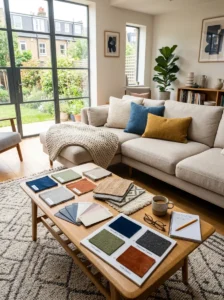
Testing the actual fabric swatch in the room’s real lighting, at different times of day, is worth doing before committing, the same way testing a paint sample in situ matters more than trusting how a color chip looks under store lighting. A sofa fabric swatch brought home and viewed under the room’s morning light, evening artificial light, and whatever natural light the room gets is a meaningfully more reliable test than the memory of how the same fabric looked in a showroom.
Fabric Texture Changes How a Color Reads and Ages
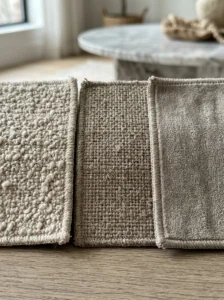
The same color in a nubby boucle, a smooth performance velvet, and a flat linen weave will read differently and photograph differently, because texture affects how light scatters across the surface. A textured fabric tends to read as slightly more muted and forgiving than the same color in a flat, smooth weave, which shows the color more purely and, often, shows wear, fading, and staining more visibly as well.
Textured fabrics also tend to hide the everyday evidence of use — pet hair, minor stains, the slight color shift that happens where a fabric gets the most contact — better than smooth fabrics do, independent of the color chosen. This is a separate practical consideration from color longevity, but it compounds with color choice: a household choosing a light, smooth-fabric sofa is choosing both a harder color to maintain visually and a harder texture to maintain, at the same time.
What Actually Predicts Long-Term Satisfaction
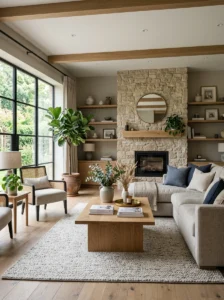
Colors that already exist elsewhere in the home’s established palette tend to hold up better than a color chosen in isolation for the new sofa alone. A sofa color pulled from an existing rug, an adjacent room’s palette, or a color the household has already lived with happily in some other form is a safer long-term bet than a color chosen purely because it looked appealing on its own, disconnected from everything else in the home.
Colors inspired by natural materials — the range of grays in stone, the warm range in wood tones, the muted greens and blues found in nature — tend to age better than colors inspired by more purely decorative or trend sources, likely because these color families have functioned as visually stable choices across long periods of design history rather than moving in and out of fashion on a several-year cycle.
A simple, low-risk test: imagining the sofa in the room in five years, with different pillows, a different rug, and a different wall color than exist today. A sofa color that still feels reasonable under several different hypothetical future pairings is a safer choice than one that only works with the exact palette currently planned around it.
Key Takeaways
- A sofa is one of the most expensive and disruptive pieces of furniture to replace, which makes its color a higher-stakes, more conservative decision than more changeable elements like walls, rugs, or pillows
- Trend-driven sofa colors tend to age on the same timeline as the trend itself, often three to five years, which is worth accepting deliberately rather than discovering later
- Neutral doesn’t mean boring — a well-chosen warm or cool neutral has far more longevity than a bright trend color while still contributing real character, especially alongside more changeable colored accents
- Undertone matters as much as the color name — testing an actual fabric swatch in the room’s real lighting at different times of day is more reliable than trusting a showroom impression
- Fabric texture changes how a color reads and how visibly it shows wear, staining, and everyday use, independent of the color itself
- Colors already present elsewhere in the home’s palette, or inspired by natural materials like stone and wood, tend to hold up better over time than colors chosen in isolation or drawn from current trends
Frequently Asked Questions
Is it ever worth buying a bold, trend-forward sofa color? Yes, for a household that’s comfortable with the trade-off — a bold color can be genuinely enjoyable during the years it’s current, and some households are happy to reupholster or replace a sofa on a similar timeline to repainting a wall. The choice becomes a problem mainly when it’s made without recognizing that trend colors typically age faster than neutrals, and the household expected a decade of satisfaction from a color with a shorter natural lifespan.
How do I know if a gray or beige sofa will actually match my room, not just look neutral in isolation? Bring an actual fabric swatch into the room and view it across different times of day and lighting conditions, rather than relying on how the color looked in a showroom or in photos. Undertone mismatches — a cool gray in a warm-toned room, or the reverse — are common and are much easier to catch with a real swatch in the actual space than with a color name or a small chip viewed under different lighting.
Does fabric texture actually affect how long a sofa color looks good, or is that just about durability? Both, and they’re related. Textured fabrics tend to scatter light in a way that reads as more muted and forgiving, which makes the color itself age more gracefully, while also hiding the visible evidence of daily use — pet hair, minor staining, contact wear — better than smooth fabrics. A smooth fabric in a light color combines the two hardest-to-maintain properties at once.
Should I choose my sofa color to match my rug, or is that too matchy? Pulling a sofa color from an existing rug, rather than matching it exactly, tends to work well and has genuine longevity advantages, since it ties the sofa into a palette the household has already chosen and lived with. This is different from an exact match, which can read as overly coordinated — the goal is a color that relates to the existing palette, not one that duplicates it precisely.
Is a patterned sofa a safer or riskier choice than a solid color? Generally riskier for long-term satisfaction, since a pattern is both a color decision and a style decision at once, and patterns tend to read as dated on a similar or faster timeline than trend colors do. A solid, well-chosen neutral or muted color, with pattern introduced instead through pillows, throws, or a rug, offers more flexibility to update the room’s look over time without needing to replace the sofa itself.