

Scent is one of the most overlooked design tools in a home, and one of the most psychologically powerful. Here’s how to actually use it with intention rather than as an afterthought.
Scent comes up briefly throughout this series — as a marker of a lived-in versus vacant-feeling room, as part of what makes a bathroom feel genuinely clean versus merely tidy — but it deserves direct, focused attention on its own terms, since it’s one of the most psychologically powerful and most consistently under-considered tools available in home design. Most people treat scent reactively, addressing a specific bad smell after the fact, rather than proactively, as a genuine design element with the same intentionality applied to color, lighting, or texture throughout the rest of this series.
Scent Has a Uniquely Direct Path to Memory and Emotion
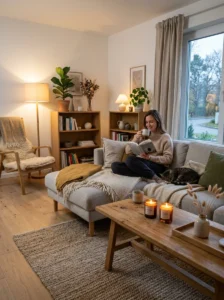
The olfactory system has a more direct neurological connection to the brain’s memory and emotion centers than any other sense, which is why a specific scent can trigger a vivid memory or emotional response more immediately and powerfully than a visual or auditory cue often does. This isn’t a minor or incidental detail — it means scent is doing genuine emotional work in a home whether or not a household is deliberately managing it, and an unconsidered scent environment (or the complete absence of one) is a missed opportunity relative to how much psychological influence this sense actually carries.
This is part of why a home with no scent at all — genuinely neutral, odorless air — can read as sterile or unlived-in, a point touched on elsewhere in this series regarding the difference between a calm bedroom and a merely empty one, since the total absence of scent removes one of the primary cues the brain uses to register a space as active and cared for, alongside visual and tactile cues.
Masking a Bad Smell Is Different From Creating a Genuinely Pleasant Scent Environment
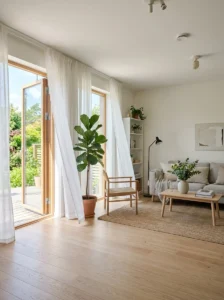
A strong, sweet, or overpowering scent used specifically to cover an underlying odor problem — pet smells, cooking odors that have settled into fabric, mustiness from inadequate ventilation — treats a symptom rather than the cause, and the underlying smell frequently persists beneath the masking scent, sometimes creating an unpleasant combination of the two rather than a genuinely fresh environment.
Addressing the actual source — the ventilation issues covered elsewhere in this series regarding windowless bathrooms and stuffy bedrooms, regular washing of fabric and soft furnishings that absorb odor over time, adequate cleaning of the specific surfaces or materials holding onto a persistent smell — is a prerequisite for scent to function as an intentional design tool rather than a cover-up. A pleasant scent layered onto a genuinely clean, well-ventilated space reads as considered; the same scent layered onto an unresolved underlying odor problem reads as an attempt to hide something, even if that’s not consciously how a visitor would articulate the impression.
Different Rooms Benefit From Different Scent Profiles
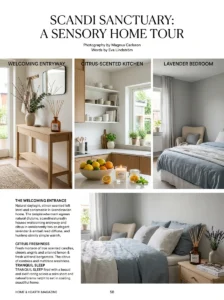
Just as lighting needs shift by room and by time of day, covered throughout this series, scent benefits from being matched to a room’s actual function rather than applying one uniform scent throughout the entire home. A kitchen benefits from scents that complement rather than compete with food — lighter, cleaner profiles like citrus rather than heavy, sweet, or food-adjacent scents that can clash with actual cooking smells or read as artificial against them.
A bedroom benefits from calming, muted scent profiles — lavender, chamomile, sandalwood — that support the same wind-down function covered in more detail elsewhere in this series regarding bedroom lighting and color, rather than bright, energizing scents better suited to a more active space.
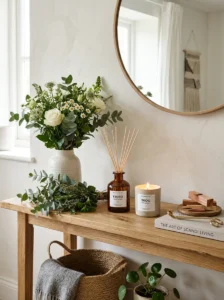
An entryway, covered in more detail elsewhere in this series as the space that sets the tone for a visitor’s entire first impression, is a particularly high-value location for a considered, welcoming scent specifically, since it’s encountered before any other room and disproportionately shapes the very first impression of the whole home.
Layering and Consistency Across the Home Avoid a Disjointed Effect
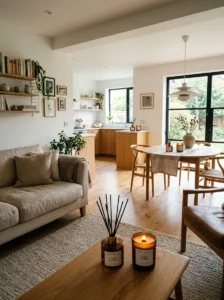
Using entirely unrelated, competing scents in adjacent rooms — a strong floral in one room immediately next to a strong woody scent in another — tends to create a disjointed, slightly chaotic olfactory experience moving through the home, similar to the visual disjointedness that results from stylistically unrelated rooms placed next to each other without any coordinating thread, covered elsewhere in this series regarding shared living-dining spaces and whole-home coordination generally.
A more successful approach uses a coordinated scent family throughout connected, open spaces — variations within a related profile (different citrus notes in the kitchen and a nearby living area, for instance) rather than entirely unrelated scent categories — while allowing more distinct, room-specific profiles in more separated, function-specific spaces like a bedroom or bathroom, where the abrupt transition matters less since these rooms are usually reached through a hallway or door rather than experienced as directly adjacent, continuous space.
Natural and Sourced Scent Versus Synthetic Fragrance Products
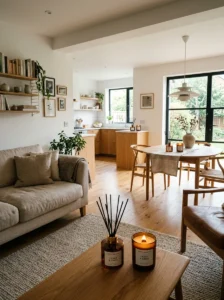
Plants, covered in more detail elsewhere in this series, contribute subtle natural scent in addition to their visual and air-quality benefits, though the effect is generally mild compared to a dedicated fragrance product and shouldn’t be relied upon as a primary scent source on its own.
Fresh flowers, herbs grown in a kitchen, and natural materials like cedar or dried botanicals provide scent through their actual physical presence rather than through an added fragrance product, which tends to read as more subtle and more integrated into the room’s overall character than a synthetic fragrance layered on top of an otherwise unscented space.
Candles, diffusers, and other dedicated fragrance products remain the most direct and controllable way to introduce a specific, consistent scent, and quality varies considerably — a well-made product using genuine essential oils or high-quality fragrance compounds tends to read as more sophisticated and less artificial than a cheaper synthetic alternative, in the same way material quality affects how “expensive” other elements throughout a home read, covered elsewhere in this series regarding curtains and fabric specifically.
Intensity Matters as Much as Choice of Scent
A scent strong enough to be immediately, overwhelmingly noticeable upon entering a room tends to read as excessive or artificial, regardless of how pleasant the specific scent itself is, while a more subtle presence — noticeable but not dominant, something a visitor registers as a pleasant ambient quality rather than a distinct, identifiable fragrance — tends to be more successful and more broadly appealing. This mirrors the restraint principle covered throughout this series regarding color, pattern, and decor generally: a lighter touch, applied thoughtfully, tends to outperform a heavier, more aggressive application of the same underlying idea.
This is also worth considering for households and guests with scent sensitivities, where a lighter, more subtle scent presence is both a more successful design choice and a more genuinely welcoming one for visitors who may find stronger fragrances uncomfortable or even physically irritating.
Key Takeaways
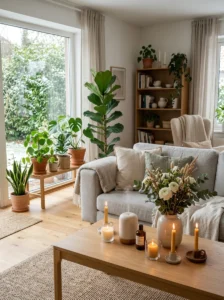
- Scent has an unusually direct connection to memory and emotion, which means it’s doing real psychological work in a home whether or not it’s being deliberately managed
- Addressing the underlying source of an unpleasant odor — ventilation, regular fabric washing, genuine cleaning — is a prerequisite for scent to function as an intentional design tool rather than a cover-up
- Different rooms benefit from different scent profiles matched to their function, similar to how lighting needs shift by room throughout this series
- Coordinated, related scent families work better across open, connected spaces, while more distinct room-specific profiles are appropriate for separated spaces like bedrooms and bathrooms
- Natural sources like plants, fresh flowers, and herbs provide subtle scent as a byproduct of their physical presence, while dedicated fragrance products offer more direct, controllable intensity
- A subtle, restrained scent presence generally reads as more sophisticated and is more broadly welcoming than an overwhelming one, which tends to read as artificial regardless of the specific scent chosen
Frequently Asked Questions
Is it bad for a home to have no scent at all? A completely neutral, odorless environment can read as sterile or unlived-in, since scent is one of the cues the brain uses alongside visual and tactile signals to register a space as active and cared for. This doesn’t mean every room needs an assertive fragrance, but a genuinely intentional, even subtle scent presence tends to contribute positively to how lived-in and cared-for a home feels.
Should I use a strong scent to cover up a smell I can’t get rid of? This generally doesn’t fully work and can create an unpleasant combination rather than genuine freshness — masking treats a symptom rather than the underlying cause, whether that’s inadequate ventilation, fabric that’s absorbed odor over time, or another unresolved source. Addressing the actual cause is a necessary first step before a pleasant scent can function as an intentional design choice rather than a cover-up.
Can I use the same scent throughout my whole home, or does it need to vary by room? Using a coordinated, related scent family across open, connected spaces works well, while more distinct, function-specific profiles are reasonable for separated rooms like bedrooms and bathrooms, which are typically reached through a door or hallway rather than experienced as continuous space. Entirely unrelated, competing scents in immediately adjacent rooms tend to create a disjointed rather than coordinated impression.
Are natural scent sources like plants and flowers enough, or do I need candles or diffusers too? Natural sources contribute a genuine but generally mild scent effect and shouldn’t be relied upon as a home’s primary or only scent source if a more noticeable, controllable presence is the goal. Combining natural sources with a dedicated fragrance product in key rooms, particularly the entryway, is a more reliable way to achieve a consistent, intentional scent environment.
How strong should a home’s scent actually be? Generally more subtle than people initially assume — a scent immediately and overwhelmingly noticeable upon entering a room tends to read as artificial or excessive regardless of how pleasant it is in isolation, while a lighter, more ambient presence tends to be more successful and more welcoming, including for guests with scent sensitivities.