


Hair turning greasy the same day it’s washed is usually a specific, identifiable habit or scalp condition, not simply “oily hair” as an unchangeable trait. Here’s what’s actually driving it.
Hair that looks noticeably greasy within hours of washing, rather than the more typical one-to-three-day gap before oil buildup becomes visible, is usually driven by a specific, identifiable cause rather than being an unchangeable fact about a person’s hair type. This is worth investigating directly, since several of the most common causes are habits or scalp conditions that can genuinely be addressed, rather than a fixed characteristic that simply has to be managed indefinitely with more frequent washing.
Overwashing Can Create a Rebound Effect That Makes the Problem Worse

Washing hair very frequently, particularly with a stripping, sulfate-heavy shampoo, removes not just excess oil but also the scalp’s baseline protective oil layer, and the scalp’s sebaceous glands can respond to this repeated stripping by increasing oil production to compensate — a genuine physiological rebound effect that means frequent washing, counterintuitively, can be part of what’s driving same-day greasiness rather than simply a reasonable response to it.
Gradually extending the interval between washes, even by a day or two at a time, allows the scalp’s oil production to recalibrate toward a lower baseline over a period of weeks, though this transition period often involves hair looking and feeling greasier than usual as the scalp adjusts, which is worth anticipating and pushing through rather than interpreting as evidence that the approach isn’t working.
Touching, Brushing, and Product Application Habits Distribute Oil More Than People Realize
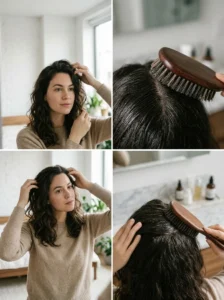
Frequently touching or running fingers through hair transfers oil from the hands directly onto the hair, and this is a more significant contributor to perceived greasiness than many people account for, particularly for anyone with an unconscious habit of touching their hair throughout the day.
Brushing, especially with a natural boar-bristle brush specifically designed to distribute oil from the scalp down through the length of the hair, actively spreads oil that would otherwise remain concentrated at the roots — genuinely useful for someone with dry, oil-starved lengths, but counterproductive for someone whose primary complaint is oily roots specifically, since brushing in this case actively worsens the perception of greasiness by spreading the oil further down the visible length.
Applying conditioner or other rich, moisturizing products directly to the scalp and roots, rather than concentrating them on the mid-lengths and ends where dryness is more likely to actually occur, adds unnecessary oil and product weight exactly where a person prone to same-day greasiness is least equipped to handle it.
Incomplete Rinsing Leaves Product Residue That Reads as Greasiness

Conditioner, in particular, is a common source of residue when it isn’t rinsed thoroughly enough, especially at the roots and hairline where it’s easy to under-rinse compared to the more accessible mid-lengths — this residue can look and feel remarkably similar to natural oil buildup, and someone attributing same-day greasiness purely to their scalp’s oil production may actually be dealing partly or entirely with incompletely rinsed product.
A useful diagnostic approach: paying deliberate, extended attention to rinsing at the roots and hairline specifically during the next several washes, beyond what feels like an already-thorough rinse, and observing whether this measurably changes how quickly greasiness becomes visible afterward.
Water Temperature and Hard Water Both Affect Scalp Oil and Residue

Very hot water can strip the scalp’s protective oil layer aggressively, similar to the overwashing rebound effect covered above, which may prompt increased compensatory oil production, while a final rinse with cooler water is sometimes recommended specifically to help close the hair cuticle and reduce this stripping effect.
Hard water, containing higher mineral content, can leave mineral deposits on the scalp and hair that interfere with how effectively shampoo cleanses and how residue rinses away, which can compound the appearance of greasiness or buildup independent of the scalp’s actual oil production — a shower filter designed to reduce mineral content, or a periodic clarifying treatment specifically formulated to address hard water buildup, are both reasonable interventions for someone in a hard water area experiencing unexplained greasiness or buildup despite a reasonable washing routine.
Scalp Health Conditions Can Directly Drive Excess Oil Production
Seborrheic dermatitis and other scalp conditions can cause genuinely increased oil production and flaking as part of the underlying condition itself, which is a different situation than a simple oil-production baseline issue and generally requires a targeted scalp treatment (often involving specific active ingredients like zinc pyrithione, ketoconazole, or salicylic acid) rather than general hair care adjustments alone.
Persistent greasiness accompanied by flaking, itching, or visible scalp irritation is worth discussing with a dermatologist rather than assuming general hair care adjustments will resolve it, since an underlying scalp condition driving the oil production won’t necessarily respond to washing frequency changes or product adjustments alone.
Dry Shampoo Manages the Symptom but Doesn’t Address Underlying Causes

Dry shampoo, used between washes, absorbs surface oil and adds texture that visually reduces the appearance of greasiness, but it’s a management tool for the symptom rather than a solution to whatever’s actually driving excess or rapid oil production — relying on dry shampoo heavily without addressing any of the underlying factors covered above (washing habits, touching and brushing patterns, rinsing thoroughness, water quality, or an underlying scalp condition) tends to require increasing reliance on it over time rather than resolving the underlying issue.
Additionally, dry shampoo itself contributes to product buildup at the scalp if not periodically removed through a thorough wash, which can compound the very problem it’s being used to manage if it’s relied upon too heavily without adequate actual washing in between.
Hormonal Factors Can Also Play a Genuine Role
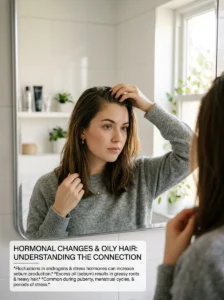
Hormonal fluctuations — during puberty, pregnancy, certain phases of the menstrual cycle, or as a side effect of some medications — can genuinely increase sebaceous gland activity and oil production, independent of any washing habit or product choice, which is worth recognizing as a legitimate contributing factor for some people rather than assuming oil production is purely a matter of external, controllable habits in every case.
This doesn’t mean hormonally-driven oil production can’t be managed — the washing frequency, product, and technique adjustments covered throughout this piece still help manage the visible symptom — but it does mean some baseline level of oil production may not be fully eliminable through hair care adjustments alone if a hormonal factor is genuinely the primary driver.
A Reasonable Diagnostic Sequence for Identifying the Actual Cause

Reviewing washing frequency and product choice first (checking for a stripping shampoo and rebound-effect overwashing), then reviewing touching, brushing, and application habits, then confirming thorough rinsing specifically at the roots, then considering water quality and, if greasiness persists alongside flaking or irritation, consulting a dermatologist about a possible underlying scalp condition — working through these factors roughly in this order, rather than assuming any single cause immediately, generally identifies the actual driver more efficiently than randomly adjusting one variable at a time without a systematic approach.
Key Takeaways

- Frequent washing with stripping shampoo can create a rebound effect where the scalp increases oil production to compensate, meaning overwashing itself can be part of what’s driving same-day greasiness
- Touching hair frequently and brushing with oil-distributing brushes spread oil from the scalp down through the hair, worsening the visible perception of greasiness at the roots specifically
- Incompletely rinsed conditioner, especially at the roots and hairline, can look and feel similar to natural oil buildup and is a commonly overlooked contributor
- Very hot water and hard water mineral content can both increase scalp stripping or leave residue that compounds the appearance of greasiness independent of actual oil production
- Persistent greasiness accompanied by flaking or irritation may indicate an underlying scalp condition like seborrheic dermatitis, which requires targeted treatment rather than general hair care adjustments alone
- Dry shampoo manages the visible symptom without addressing underlying causes, and heavy reliance on it without addressing washing habits, rinsing, or an underlying condition tends to require increasing use over time rather than resolving the issue

Frequently Asked Questions
Will washing my hair less often actually help, or will it just get greasier? It often gets greasier during an initial transition period of a few weeks as the scalp’s oil production adjusts, but for many people experiencing overwashing-driven rebound oil production, gradually extending the interval between washes allows the scalp to recalibrate toward a lower baseline oil production over time. This isn’t universal, but it’s worth testing gradually if overwashing seems like a plausible contributing factor.
Could my conditioner actually be making my roots look greasy? Yes, in two possible ways — either incomplete rinsing leaving residue that resembles oil buildup, or applying conditioner too close to the roots and scalp rather than concentrating it on the mid-lengths and ends where moisture is more genuinely needed. Both are common, correctable habits worth checking directly.
Is same-day greasy hair always caused by something I’m doing wrong? Not always — hormonal factors and underlying scalp conditions like seborrheic dermatitis can genuinely increase oil production independent of washing habits or product choice. That said, habits like overwashing, frequent touching, oil-distributing brushing, and incomplete rinsing are common, correctable contributors worth ruling out before assuming the cause is purely hormonal or medical.
Should I stop using dry shampoo if it’s not actually fixing the problem? Not necessarily stop entirely, but it’s worth using it as a genuine between-wash management tool rather than a substitute for addressing underlying causes, and making sure it’s periodically removed through thorough washing rather than allowed to build up at the scalp, since unaddressed dry shampoo buildup can itself contribute to the greasy or weighed-down appearance it’s meant to prevent.
When should I see a dermatologist about greasy hair instead of just adjusting my routine? If greasiness persists despite reasonable adjustments to washing frequency, product choice, and technique, or if it’s accompanied by flaking, itching, or visible scalp irritation, it’s worth consulting a dermatologist, since these signs suggest a possible underlying scalp condition that requires targeted treatment rather than general hair care habit adjustments alone.