

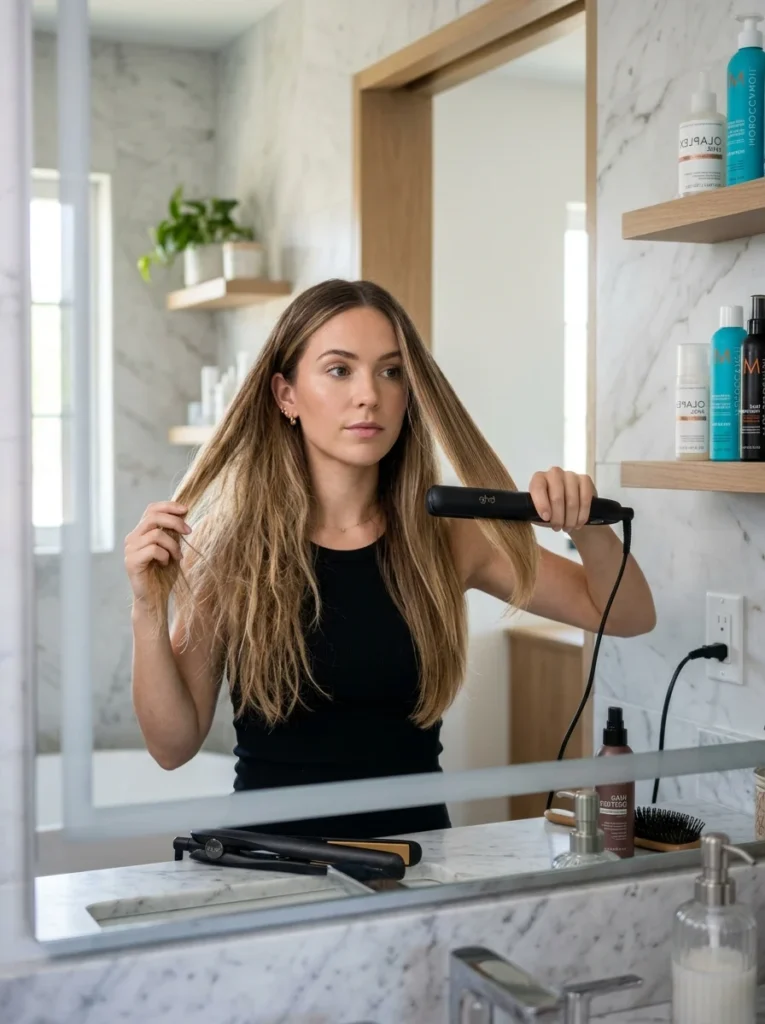
Heat styling causes more damage than most people realize because it’s not just about split ends — it’s altering your hair at a structural level every time you use it. Straighteners, curling irons, and blow dryers can leave your hair looking sleek in the short term while quietly breaking it down underneath. Here’s what’s actually happening, and why the damage runs deeper than most people think.
It Breaks Down the Protein Structure
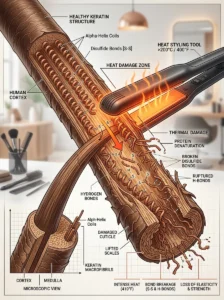
Hair is made mostly of keratin, a protein with a very specific structure held together by hydrogen and disulfide bonds. High heat (most tools run 300–450°F) breaks these bonds, permanently changing hair’s shape and strength. This is literally how straighteners and curling irons work — but repeated exposure weakens the strand over time.
It Causes “Bubble Hair”]
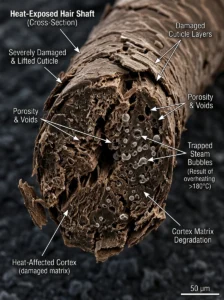
When heat is applied too fast or too hot, water inside the hair shaft boils and turns to steam, creating tiny bubbles inside the strand. This makes hair brittle and prone to snapping — often invisible until the damage is already done.
It Strips Moisture and Causes Porosity Issues
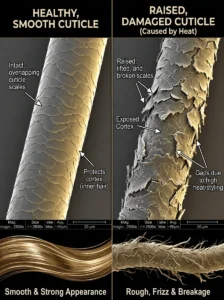
Heat evaporates the natural moisture in hair, leaving it dry and raising the cuticle. Raised cuticles make hair more porous, meaning it loses moisture faster in the future and becomes rougher, frizzier, and duller-looking.
Damage Is Cumulative and Irreversible

Unlike some damage that can be “repaired” with conditioning, structural heat damage doesn’t heal — it can only be conditioned to look and feel better temporarily. The only real fix for badly heat-damaged hair is cutting it off as it grows out.
It Fades Color Faster
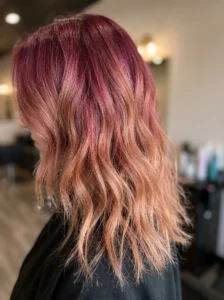
Heat opens the cuticle, which lets color molecules escape more easily — so if you color your hair, heat styling is actively working against your color’s longevity too.
It Affects Hair Differently Depending on Type
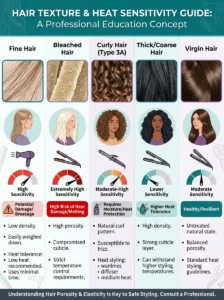
Fine or fragile hair (including bleached, permed, or chemically treated hair) is far more vulnerable to heat damage than thick, coarse, or virgin hair, since it has less structural reserve to absorb the stress.
Signs You’re Already Seeing Damage

Increased frizz, dullness, split ends, hair that feels rough or “straw-like,” and hair that won’t hold curls or styles as well as it used to are all common signs of accumulated heat damage.
Key Takeaways
- Heat breaks protein bonds in keratin, permanently altering hair’s structure with repeated use.
- “Bubble hair” can form when heat is applied too fast or too hot, making strands brittle and prone to snapping.
- Heat strips moisture and raises the cuticle, leading to increased porosity and frizz over time.
- Structural damage is irreversible — conditioning only masks it temporarily; cutting it off is the real fix.
- Heat accelerates color fade by opening the cuticle and letting color molecules escape faster.
- Fine, bleached, or chemically treated hair is more vulnerable to heat damage than thick or virgin hair.
- Watch for warning signs: frizz, dullness, split ends, rough texture, and curls or styles not holding like they used to.
Frequently Asked Questions
Q: How hot do styling tools actually get? A: Most straighteners, curling irons, and blow dryers run between 300–450°F, which is hot enough to break the hydrogen and disulfide bonds in hair’s protein structure.
Q: What is “bubble hair” and how does it happen? A: Bubble hair occurs when heat is applied too quickly or at too high a temperature, causing water inside the hair shaft to boil and form tiny internal bubbles. This weakens the strand and makes it prone to breakage.
Q: Can heat damage be reversed or repaired? A: Not fully. Once the internal protein structure is broken down, conditioning treatments can only improve the look and feel of hair temporarily — the actual damage doesn’t heal. Growing it out and trimming it off is the only permanent fix.
Q: Does heat styling really affect hair color? A: Yes. Heat opens the hair cuticle, which allows color molecules to escape more easily, speeding up fading — especially for color-treated or fashion-color hair.
Q: Is some hair more prone to heat damage than others? A: Yes. Fine, fragile, bleached, permed, or otherwise chemically treated hair has less structural reserve and is more vulnerable to heat damage than thick, coarse, or virgin hair.
Q: What are the early signs of heat damage? A: Increased frizz, dullness, split ends, a rough or “straw-like” texture, and hair that no longer holds curls or styles as well as it used to are all common early indicators.
Q: Does using a heat protectant fully prevent damage? A: Heat protectants reduce damage by creating a barrier and helping distribute heat more evenly, but they don’t eliminate risk entirely — lower heat settings and less frequent use are still the most effective ways to protect hair.