
Bangs are one of the most transformative haircuts you can get without any real commitment — no chemicals, no dramatic length loss, just a change in framing. But they can also be one of the most polarizing choices, instantly flattering on some faces and awkward on others. Understanding what bangs actually do visually — and how they interact with your face shape, features, and hair texture — can help you decide if they’re right for you before you sit in the chair.
They Shorten the Appearance of Your Face
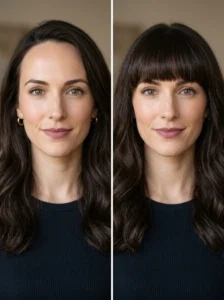
Bangs create a horizontal line across the forehead, which visually shortens the length of the face. This is why bangs are often recommended for longer face shapes, and why they can make a shorter face look even more compact if not styled carefully.
They Draw Attention to the Eyes

By covering or framing the forehead, bangs shift visual focus downward toward the eyes and cheekbones. This is part of why bangs are often described as “eye-opening” — they create a frame that makes the eyes the first thing people notice.
They Change the Balance of Your Features
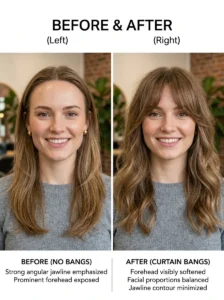
Bangs interact with the proportions of your face, meaning they can either soften angular features (like a strong jawline or prominent forehead) or, if the wrong style is chosen, exaggerate features you might prefer to downplay. This is why the type of bang matters as much as the decision to get them at all.
They Require Understanding Your Face Shape
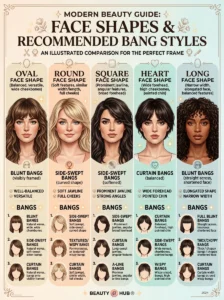
Different bang styles work better with different face shapes:
- Oval faces: Considered the most versatile — almost any bang style works, from blunt to curtain to side-swept.
- Round faces: Longer, side-swept bangs or wispy bangs with volume at the crown help elongate the face rather than adding width.
- Square faces: Soft, wispy, or curtain bangs help soften strong jaw and forehead angles.
- Heart-shaped faces: Side-swept or curtain bangs balance a wider forehead and narrower chin.
- Long faces: Full, blunt bangs help shorten the appearance of the face and add width.
They Interact With Your Hair Texture
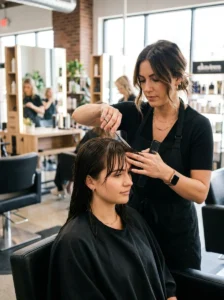
Straight hair tends to hold defined, blunt bang shapes well, while wavy or curly hair often works better with softer, layered, or curtain-style bangs that move with the natural texture rather than fighting against it. Fighting your natural texture with heavy styling can lead to more upkeep and faster damage.
They Require Maintenance
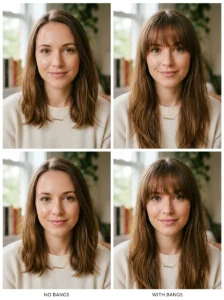
Bangs grow out noticeably faster than the rest of your hair in terms of visual impact — even a small amount of growth changes how they sit on the forehead. Most people need a trim every 3–6 weeks to keep bangs looking intentional rather than overgrown.
They Can Highlight or Hide Forehead Size

Bangs are often chosen specifically to visually reduce the appearance of a large forehead, but the reverse is also true — poorly chosen bang styles can make a small forehead look cramped or a large forehead look even more prominent if the shape and thickness aren’t right.
How to Know If They’ll Suit You

A few signals that bangs could work well for you:
- You have a longer or oval face shape (more forgiving for most bang styles).
- You’re comfortable with more frequent trims to maintain the shape.
- Your hair texture matches the bang style you want (straight hair for blunt, wavy for curtain/wispy).
- You want more emphasis on your eyes and less on your forehead.
Signals that bangs might be trickier:
- You have a very round or square face and want a blunt, heavy style (softer options usually work better).
- Your hair is very curly or has a strong cowlick at the hairline, which can make bangs harder to style consistently.
- You have an active lifestyle or sweat frequently, since bangs require more daily upkeep to look their best.
Key Takeaways
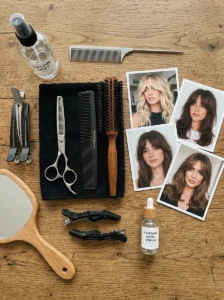
- Bangs create a horizontal line that visually shortens the face and draws focus to the eyes.
- Face shape matters: oval faces are the most versatile, while round, square, heart, and long face shapes each suit different bang styles.
- Hair texture affects style choice — straight hair suits blunt bangs, wavy/curly hair suits softer curtain or wispy bangs.
- Bangs need regular trims, typically every 3–6 weeks, to maintain their shape.
- The right bang style can minimize forehead size, but the wrong one can have the opposite effect.
- Lifestyle matters too — active or low-maintenance routines may make bangs harder to keep styled.

Frequently Asked Questions
Q: Do bangs suit every face shape? A: Not exactly the same style for every face, but there is generally a bang style that works for most face shapes — the key is matching the specific cut (blunt, curtain, side-swept, wispy) to your proportions.
Q: What face shape do bangs suit best? A: Oval faces are considered the most versatile, since nearly any bang style works well with their balanced proportions.
Q: How often do bangs need to be trimmed? A: Most people need a trim every 3–6 weeks to keep bangs from growing out of shape and into the eyes.
Q: Can curly hair pull off bangs? A: Yes, though softer, layered, or curtain-style bangs tend to work better with curly or wavy texture than a hard, blunt cut, which is easier to maintain with straight hair.
Q: Will bangs make my forehead look smaller? A: Often yes — bangs are commonly used to visually reduce the appearance of a larger forehead, though the effect depends on choosing the right thickness and shape for your face.
Q: Are bangs high maintenance? A: They require more frequent trims and daily styling than the rest of your haircut, so they do add some maintenance, especially for those with an active lifestyle or oily hair at the roots.
Q: What’s the safest bang style to try if I’m unsure? A: Curtain bangs are often recommended as a flexible, lower-commitment option since they can be styled back and blended into the rest of the hair as they grow out, making the transition easier if you decide bangs aren’t for you.