



Most complaints about slow hair growth are actually a length retention problem, not a growth rate problem — and confusing the two leads to completely the wrong fix. Here’s the real distinction.
“My hair won’t grow” is one of the most common hair complaints, and it’s also frequently a misdiagnosis — for a large share of people experiencing this frustration, their hair is actually growing at a completely normal rate, but breakage at the ends is removing length at close to the same pace it’s being added at the root, which produces the appearance of stalled growth without an actual growth rate problem. Distinguishing between genuinely slow growth and a length retention problem is the single most important step before addressing “slow” hair growth, since the two situations require entirely different solutions.
Growth Happens in Cycles, and Genetics Set the Baseline Rate
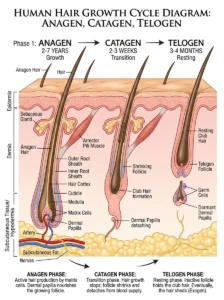
Each hair follicle cycles through distinct phases: anagen (active growth, lasting anywhere from two to seven years depending on genetics), catagen (a brief transitional phase), and telogen (a resting phase before the hair eventually sheds and a new growth cycle begins) — the length of the anagen phase specifically determines how long a single hair can grow before it naturally sheds, which is why some people’s hair genuinely has a genetic ceiling on maximum length, regardless of how well it’s cared for.
Average hair growth rate is commonly cited around half an inch per month, though this varies by individual within a fairly wide normal range based on genetics, and there’s a meaningful difference between this average growth rate (which is relatively similar across most people without a specific medical condition affecting it) and maximum achievable length (which varies considerably more, based on each individual’s specific anagen phase duration).
Most “Slow Growth” Complaints Are Actually a Retention Problem, Not a Growth Rate Problem

Hair is being added at the root at approximately the same rate for most people without an underlying medical issue, which means the visible outcome — whether hair appears to be getting longer over time — depends heavily on how much length is simultaneously being lost to breakage and split ends at the other end, a factor entirely separate from the actual rate of new growth at the root.
A person experiencing significant breakage from harsh styling habits, chemical damage, or inadequate moisture can have completely normal root growth and still perceive their hair as “not growing,” because the net length gain (growth minus breakage) is minimal or even negative, while a person with the exact same root growth rate but considerably less breakage will see visibly longer hair over the same time period — this distinction is the single most common source of confusion in complaints about slow hair growth.
Addressing Breakage, Not Growth Rate, Is Usually the Actual Solution

For someone whose hair genuinely isn’t lengthening over time despite no diagnosed medical condition affecting growth, the more productive question is usually about breakage and retention rather than growth rate specifically — reducing heat styling frequency and using heat protectant, addressing chemical damage from coloring or over-processing (covered in more detail elsewhere in this series), gentle detangling practices, and regular trims to remove split ends before they travel further up the hair shaft and cause more significant breakage all address the retention side of the equation.
This reframing matters because products and treatments marketed specifically as “hair growth” solutions frequently don’t address the actual underlying issue for someone dealing primarily with a retention problem — a genuinely retention-focused routine, even without any specific growth-stimulating product, often produces more visible length increase over time than a growth-focused approach that doesn’t address ongoing breakage.
Genuine Growth Rate Issues Do Exist and Have Distinct Causes

Separate from the retention issue covered above, actual reduced growth rate or increased shedding can result from specific, identifiable factors: significant nutritional deficiencies (particularly iron, protein, and certain vitamins, though this generally requires a genuine deficiency rather than simply suboptimal intake in an otherwise adequately nourished person), certain medical conditions and hormonal imbalances (thyroid conditions being a common example), certain medications, and telogen effluvium — a temporary but sometimes significant increase in hair shedding triggered by acute physical or emotional stress, illness, significant weight change, or hormonal shifts like postpartum recovery.
Telogen effluvium specifically is worth understanding as a distinct phenomenon from typical growth or retention issues, since it involves a larger-than-usual percentage of hair follicles shifting into the shedding phase simultaneously, usually with a delay of two to three months after the triggering event, producing a period of noticeably increased shedding that generally resolves on its own within several months as the growth cycle normalizes, though it can be alarming to experience without understanding the underlying mechanism and expected timeline.
Biotin and Popular Growth Supplements Have Limited Evidence for Most People

Biotin, heavily marketed in hair growth supplements, is genuinely necessary for normal hair growth, but genuine biotin deficiency is relatively uncommon in people with a reasonably varied diet, which means biotin supplementation provides a meaningful growth benefit primarily for people who are actually deficient, rather than producing an additional growth boost for someone whose biotin levels are already adequate — this is a commonly misunderstood distinction in how biotin supplementation is marketed versus what the evidence actually supports for someone without a genuine deficiency.
A blood test confirming an actual nutritional deficiency provides a more reliable basis for targeted supplementation than broadly taking a hair growth supplement on the general assumption that more of a given nutrient will produce more growth, regardless of whether an actual deficiency exists.
Scalp Health and Circulation Play a Supporting, Though Often Overstated, Role

A healthy, unobstructed scalp environment supports normal follicle function, and conditions like significant dandruff, product buildup, or scalp inflammation can genuinely interfere with healthy growth in the affected areas, which is part of why scalp health is a reasonable area of general attention, though scalp massage and circulation-focused treatments, while not harmful, generally have more modest evidence behind them for meaningfully accelerating growth rate than marketing for these treatments and tools often suggests.
Addressing an actual underlying scalp condition (through appropriate treatment, sometimes requiring a dermatologist) is more likely to meaningfully affect growth in cases where a genuine scalp health issue exists, compared to general circulation-focused scalp massage practiced on an already-healthy scalp with no underlying condition to address.
Age-Related Changes Are a Normal, Expected Part of the Growth Cycle

Hair growth rate and the anagen phase’s duration both tend to gradually decrease with age for most people, which is a normal physiological change rather than a problem requiring correction, and this age-related shift is worth factoring into realistic expectations for anyone noticing their hair growing more slowly or reaching a shorter maximum length than it did at a younger age, separate from any of the retention or medical factors covered above.
A Practical Approach to Genuinely Addressing “Slow” Hair Growth

Start by honestly assessing whether the actual issue is likely retention (visible breakage, split ends, damage from styling or chemical processing) or genuine growth rate (accompanied by broader signs like overall thinning, unusual shedding, or other symptoms suggesting a possible underlying medical or nutritional cause) — the former is addressed through the damage-reduction and gentle-handling practices covered throughout this series, while the latter genuinely warrants a conversation with a doctor or dermatologist to rule out or identify a specific underlying cause, rather than a general hair care product-based approach alone.
Key Takeaways

- Hair growth happens in distinct cycles (anagen, catagen, telogen), and the anagen phase’s genetically determined duration sets each person’s maximum achievable hair length, separate from the general growth rate
- Most “slow growth” complaints are actually a length retention problem — hair is growing normally at the root but breaking off at close to the same rate at the ends, producing the appearance of stalled growth
- Addressing breakage through reduced heat styling, chemical damage management, and regular trims is usually more effective for visible length increase than growth-focused products, when retention is the actual underlying issue
- Genuine growth rate reduction has specific causes, including nutritional deficiencies, medical conditions, certain medications, and telogen effluvium — a temporary, stress-triggered increase in shedding that typically resolves within several months
- Biotin supplementation meaningfully helps hair growth primarily for people with an actual biotin deficiency, which is relatively uncommon in people with a varied diet, despite how heavily it’s marketed as a general growth solution
- Age-related changes to growth rate and maximum length are a normal part of the hair growth cycle, worth factoring into realistic expectations separate from retention or medical factors

Frequently Asked Questions
How do I know if my hair problem is actually slow growth or just breakage? Check your hair for visible signs of damage — split ends, noticeable thinning specifically at the ends compared to the roots, or hair that feels rough and prone to snapping — since these suggest a retention problem rather than a genuine growth rate issue. A simple test some people use is measuring new growth at the roots after a set period (like a colored root line, or hair pulled back consistently at the hairline) to directly observe whether root growth itself is actually slow, separate from what’s happening at the ends.
Is it worth taking biotin supplements to grow my hair faster? Biotin supplementation meaningfully helps primarily if you have an actual biotin deficiency, which is relatively uncommon in people with a varied diet — for someone without a genuine deficiency, additional biotin generally doesn’t provide a meaningful additional growth boost, despite how heavily it’s marketed as a general hair growth solution. A blood test confirming an actual deficiency provides a more reliable basis for supplementation than assuming a deficiency exists.
What is telogen effluvium and should I be worried about it? Telogen effluvium is a temporary increase in hair shedding triggered by significant physical or emotional stress, illness, major weight change, or hormonal shifts, typically appearing two to three months after the triggering event. It generally resolves on its own within several months as the hair growth cycle normalizes, though persistent or severe shedding is worth discussing with a doctor or dermatologist to rule out other causes.
Does trimming my hair regularly actually help it grow faster? Trimming doesn’t affect the rate of new growth at the root, since that’s determined by the follicle, not the ends — but regular trims remove split ends before they travel further up the hair shaft and cause more significant breakage, which supports better length retention. This is why regular trims are associated with “faster” apparent growth, even though the actual mechanism is reduced breakage rather than an accelerated growth rate.
Does age really affect how fast or how long my hair can grow? Yes — both growth rate and the anagen (active growth) phase’s duration tend to gradually decrease with age for most people, which is a normal physiological change. This means noticing your hair grow more slowly or reach a shorter maximum length than it did when you were younger is often a normal part of aging, separate from any retention issue or underlying medical cause.