

Every September, my Instagram fills up with the same ad: cozy sweaters, “transitional pieces,” a capsule wardrobe I’m supposed to buy into. Two autumns ago, broke and mildly annoyed by all of it, I decided to see how far I could get using only what was already hanging in my closet from summer. Turns out — pretty far.
This isn’t a minimalist manifesto. I still like clothes. But what I learned that September changed how I think about “seasonal” dressing altogether, and I’ve barely bought anything specifically for fall since.
The Layering Trick Nobody Explains Properly
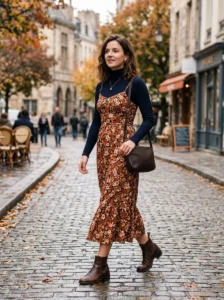
Everyone says “just layer it,” like that’s a complete instruction. It isn’t. I spent my first fall attempt throwing a cardigan over a sundress and calling it a day — and freezing by 6pm, because layering isn’t about adding warmth, it’s about adding structure.
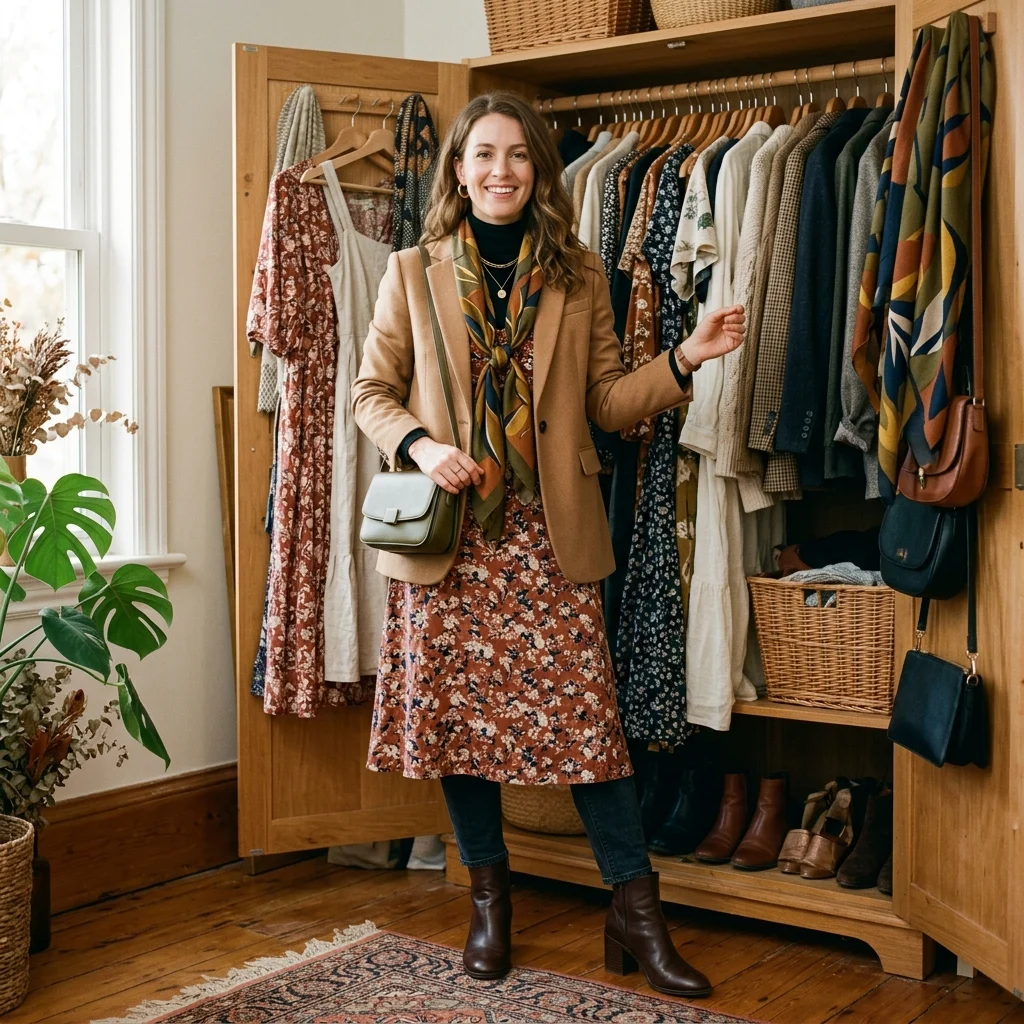
Here’s what actually works: a thin, close-fitting layer underneath does more than a bulky one on top. A basic long-sleeve tee or a fitted turtleneck under a summer dress changes the whole silhouette, not just the temperature. The dress becomes a tunic. The turtleneck becomes the actual outfit, with the dress as color and texture on top of it.
I didn’t buy a single new turtleneck to make this work. I had two from a winter years earlier that I’d forgotten even fit into warm-weather clothes at all.
Footwear Did More Work Than I Expected
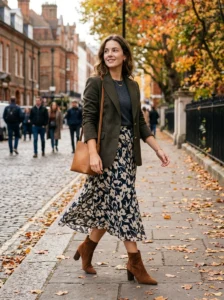
If I’m honest, shoes were the biggest unlock, and I almost missed it entirely.
I own the same sandals in June that I own in September — the only thing that changes is what I put them with, and even that’s a small piece of it. Swapping sandals for sneakers or ankle boots under the exact same summer skirt made it look like a completely different, cooler-weather outfit, with zero new purchases involved.
A few pairings I kept coming back to:
- Linen shorts, worn with tights and boots instead of bare-legged
- A summer slip dress, with sneakers instead of sandals and a jacket tied at the waist
- Wide-leg summer trousers, unchanged, just paired with a closed shoe instead of an open one
None of this is groundbreaking styling advice. But nobody tells you that shoes alone can shift the “season” of an outfit more than almost anything else you own.
The Color Thing Is Mostly a Myth
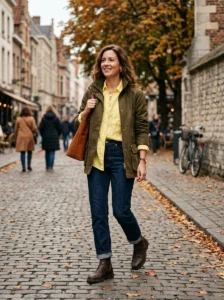
I used to believe fall meant switching into browns, rust, and olive — like my bright summer clothes had an expiration date once September hit. I don’t think that anymore.
A pale yellow linen shirt, paired with darker denim and boots instead of shorts, doesn’t read as “summer color in the wrong season.” It reads as an intentional pop of color against a fall palette. The context around a piece changes how the color reads far more than the color itself does.
That said, I’m not saying colors don’t matter at all — pairing is what matters. One bright summer piece against two or three deeper, heavier-textured pieces tends to look deliberate. Two or three bright pieces together in October just looks like you forgot to change your wardrobe.
Fabric Weight Matters More Than the Actual Garment
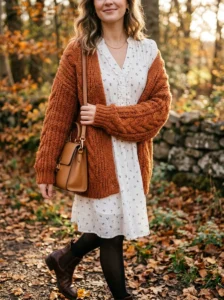
This one took me longer to notice. It’s not really about what you’re wearing — it’s about how heavy the fabric feels next to everything else in the outfit.
A cotton summer dress feels wrong alone in fall, but the same dress under a wool or heavier-knit cardigan suddenly feels seasonally appropriate, because the outfit as a whole has weight to it now. The lightness of the dress isn’t hidden — it’s balanced.
I started paying attention to this specifically with my summer button-downs. Worn alone, they’re clearly summer pieces. Worn under a denim jacket or a chunkier knit vest, they read completely differently, almost like an intentional layering piece rather than something pulled straight out of July.
What I Actually Kept On Hand (No Shopping Required)
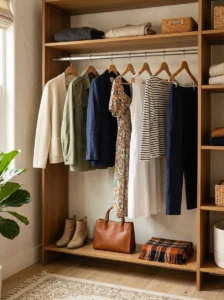
By the end of that first fall, I realized the “transition wardrobe” wasn’t a separate set of clothes at all — it was really just three categories of things I already owned, used differently.
- One or two heavier layering pieces — a cardigan, a light jacket, something with actual structure to throw over thinner summer fabric
- Closed-toe shoes in a neutral tone — the single biggest wardrobe multiplier I own, honestly
- A couple of accessories with weight to them — a scarf, a structured bag — small things that shift the overall feel of an outfit without touching the clothes at all
That’s genuinely it. Everything else was just remixing pieces I already had, in combinations I hadn’t tried because I’d mentally filed them under “summer only.”
A Quick Reality Check
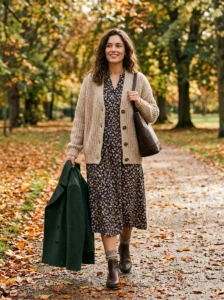
This approach has limits, and I want to be upfront about that. If you live somewhere that goes from 85°F to 40°F within a few weeks, no amount of clever layering replaces an actual warm coat. This method extends the life of your summer wardrobe into the milder stretch of fall — it doesn’t replace cold-weather clothing altogether.
I also found it worked better with fabrics that were already reasonably substantial — linen, denim, heavier cotton — than with very thin, delicate summer pieces that just don’t hold up once layered.

Frequently Asked Questions
Do I really not need to buy anything new for fall? For the milder weeks of early-to-mid fall, most people can get surprisingly far with what they already own, especially with the right shoes and one or two layering pieces. Deep winter is a different story.
What’s the easiest single change to make an outfit feel fall-appropriate? Switching sandals for closed-toe shoes or boots. It changes the read of an outfit more than almost anything else, without touching the clothes themselves.
Can bright summer colors still work in fall? Yes, when they’re balanced against darker or heavier pieces rather than worn in multiples. One bright piece against a muted outfit tends to look intentional rather than out of season.
What if my summer clothes are all very thin, lightweight fabric? Thin fabrics like a light cotton dress can still work layered under something with more structure — a cardigan or jacket — since the weight of the outer layer does most of the seasonal “work.”
Is this approach only for mild climates? It works best where fall temperatures dip gradually. In places with an abrupt shift into cold weather, you’ll still need proper cold-weather pieces alongside this approach, not instead of it.