

A narrow hallway doesn’t have to feel cramped. These 13 practical ideas use light, color, and layout tricks to make small spaces feel bigger.
Hallways get treated as afterthoughts in most homes — a space to walk through, not a space to design. But a narrow, poorly lit hallway can make an entire home feel smaller than it actually is, while a well-planned one can trick the eye into perceiving far more space than what’s physically there.
I’ve reworked a few painfully narrow hallways over the years, including one in my own home that was barely wide enough for two people to pass comfortably. A handful of specific changes — none of them structural — made that same hallway feel noticeably more open without removing a single wall.
Why Hallways Feel Smaller Than They Actually Are
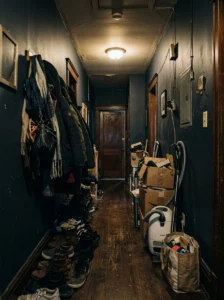
Before jumping into specific ideas, it helps to understand what makes a hallway feel cramped in the first place, since most of it comes down to perception rather than actual square footage.
- Poor lighting creates shadows that visually shrink a narrow space more than the width itself does.
- Dark or busy wall colors absorb light and make walls feel like they’re closing in.
- Clutter and furniture placed too close to walkways disrupt the sense of flow that makes a space feel open.
Lighting Tricks That Open Up the Space
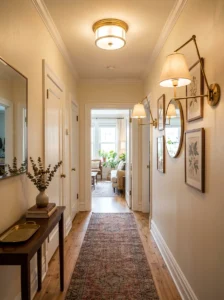
Lighting does more to change the perceived size of a hallway than almost any other single factor, since shadows and dim corners are what make narrow spaces feel tight.
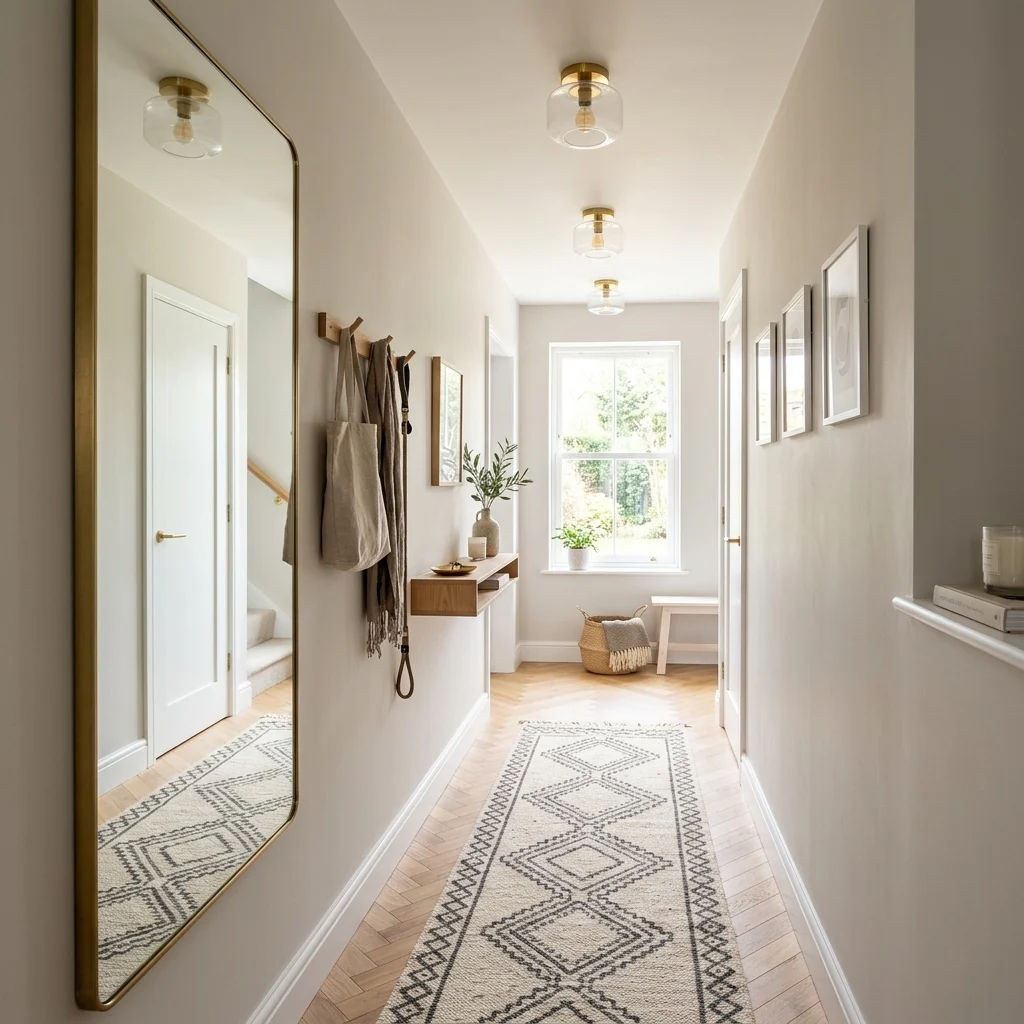
1. Layered Lighting Instead of One Overhead Fixture Combining a central overhead light with smaller wall sconces or picture lights eliminates the shadowed corners that a single fixture often leaves behind, making the whole hallway feel more evenly lit and open.
2. Warm, Higher-Wattage Bulbs
Swapping dim, cool-toned bulbs for warmer, brighter ones instantly makes a narrow hallway feel less cave-like, especially in hallways without natural light sources.
3. A Skylight or Transom Window Where structurally possible, adding a small skylight or a transom window above a doorway introduces natural light that dramatically changes how spacious a hallway feels, even without any layout changes.
Color and Wall Treatment Choices
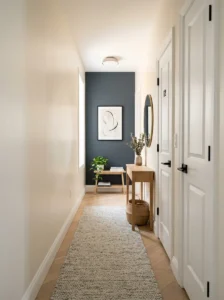
Wall color and finish affect how light bounces around a hallway, which directly impacts how wide or narrow the space feels to the eye.
4. Light, Reflective Wall Colors Soft whites, light grays, or pale pastels reflect available light far better than deep, saturated colors, helping a narrow hallway feel less enclosed.
5. Glossy or Satin Finish Paint
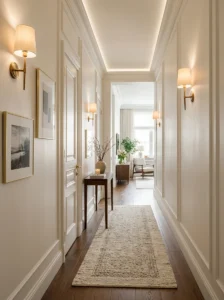
A slightly glossy finish reflects more light than flat matte paint, adding a subtle brightness that flat finishes can’t replicate, especially useful in hallways with limited natural light.
6. A Single Accent Wall at the End, Not the Sides Placing a bolder color or wallpaper only on the far end wall — rather than the long side walls — draws the eye down the length of the hallway, making it feel longer and more intentional rather than narrower.
Mirror Placement for Visual Depth
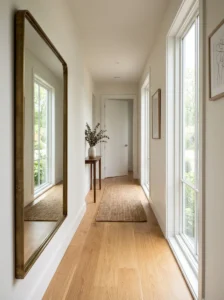
Mirrors are one of the most effective and least expensive tools for making a small hallway feel significantly larger, when placed thoughtfully.
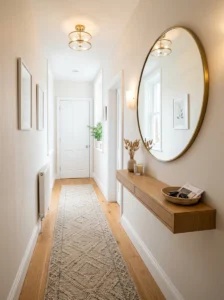
7. A Large Mirror Opposite a Light Source Positioning a mirror directly across from a window or light fixture doubles the perceived light in the hallway, immediately making the space feel brighter and more open.
8. A Row of Smaller Mirrors Along One Wall Instead of one large mirror, a series of smaller mirrors spaced evenly along a wall adds rhythm and reflected light without requiring a single oversized piece, which can feel overwhelming in a narrow space.
Smart Storage That Doesn’t Crowd the Walkway
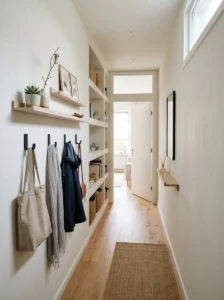
Cluttered or bulky furniture is one of the fastest ways to make a small hallway feel even smaller, so storage needs to be chosen carefully.
9. Slim, Wall-Mounted Shelving Narrow floating shelves mounted higher on the wall provide storage or display space without intruding into the walkway the way a traditional console table often does.
10. Hooks and Vertical Storage Instead of Furniture
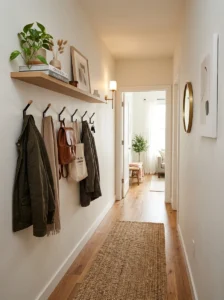
Wall-mounted hooks for coats or bags use vertical space efficiently, avoiding the need for floor-level furniture that visually and physically narrows the walkable path.
11. Recessed or Built-In Storage Where possible, recessing shelving or storage into the wall itself, even shallow niches, adds function without eating into the hallway’s width at all.
Flooring and Rug Choices That Add Length
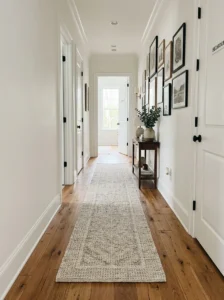
The direction and pattern of flooring or rugs can visually stretch a hallway, making it feel longer and more spacious rather than tight and boxed in.
12. Flooring Laid Lengthwise Down the Hallway Installing wood or plank flooring so the boards run the length of the hallway rather than across it draws the eye forward, creating a sense of extended length.
13. A Runner Rug That Doesn’t Touch the Walls A narrow runner rug with a small margin of visible flooring on each side keeps the hallway feeling open, while a rug that stretches wall-to-wall can make the space feel boxed in and even narrower.
Common Mistakes That Undo These Tricks
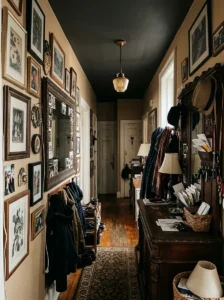
Even with the right ideas in place, a few common missteps can quietly cancel out the visual benefits of an otherwise well-planned hallway.
- Hanging artwork or décor too low or too cluttered, breaking up the clean sightline that makes a hallway feel longer.
- Choosing furniture, even small pieces, that’s too deep for the width of the hallway, narrowing the actual walkable path.
- Overcrowding the walls with too many mirrors, shelves, or frames at once, which recreates the same cluttered feeling the changes were meant to fix.
- Ignoring the ceiling — a dark or heavily textured ceiling in a narrow hallway can make it feel lower and more enclosed than it actually is.
Key Takeaways
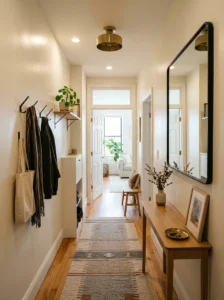
- Layered, warm lighting eliminates shadows that make narrow hallways feel tighter than they are.
- Light, reflective wall colors and glossy finishes help bounce available light around the space.
- Strategically placed mirrors can double perceived light and visually widen a hallway.
- Slim, wall-mounted storage keeps the walkway clear without sacrificing function.
- Flooring and rugs laid lengthwise draw the eye forward, making the hallway feel longer.
- Avoiding clutter and low-hanging décor preserves the clean sightlines that make these tricks work.
Conclusion
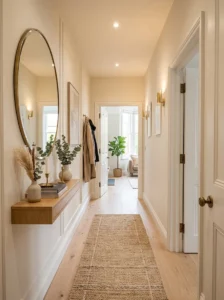
A tiny hallway doesn’t have to feel like wasted, cramped space — a combination of the right lighting, color choices, mirror placement, and smart storage can make it feel dramatically larger without any structural changes. The key is treating the hallway as an actual design opportunity rather than an afterthought. Even a few of these thirteen ideas, applied thoughtfully, can transform how an entire home feels to move through.
Frequently Asked Questions
1. What’s the single most effective change for making a small hallway feel bigger? Improving lighting, especially by layering multiple light sources and using warmer, brighter bulbs, tends to make the biggest immediate difference, since shadows are one of the main reasons narrow spaces feel cramped.
2. Do mirrors really make that much of a difference in a small hallway? Yes, particularly when placed across from a natural or artificial light source, since they effectively double the perceived light and depth in the space. Poorly placed mirrors, however, can also reflect clutter, so placement matters as much as the mirror itself.
3. Should hallway walls always be painted a light color to look bigger? Light colors generally help the most, but a bold accent wall at the far end of the hallway, rather than along the sides, can actually enhance the sense of length by drawing the eye forward rather than making the space feel smaller.
4. What kind of flooring works best in a narrow hallway? Flooring installed lengthwise, following the direction of the hallway, tends to visually stretch the space more than flooring laid across it. Lighter flooring tones also reflect more light than very dark options.
5. Is it possible to add storage to a small hallway without making it feel more crowded? Yes, as long as the storage stays off the floor and out of the walkway. Wall-mounted shelves, hooks, or recessed niches add function without narrowing the actual path people walk through, unlike bulkier furniture pieces.