

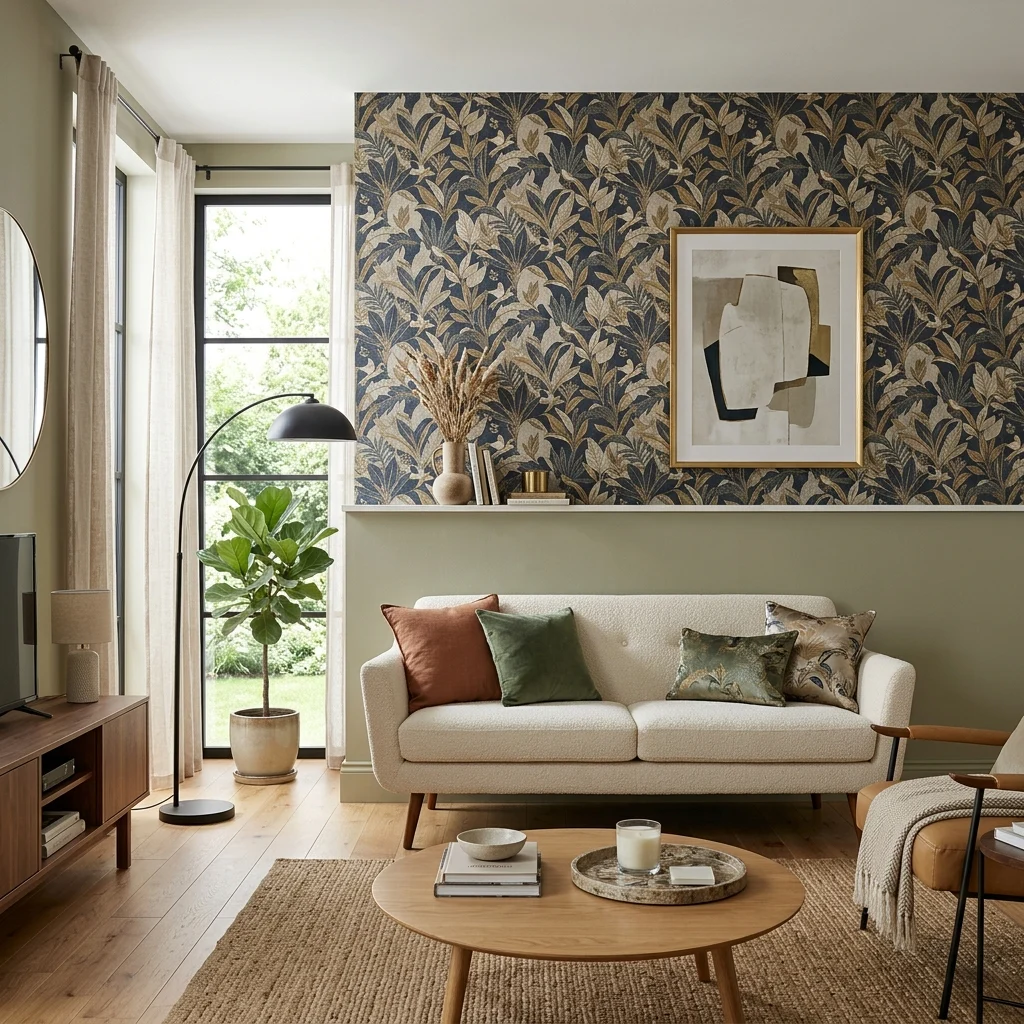
Half wallpaper, half paint walls add texture and depth without overwhelming a room. Here are 19 modern ways to get the look right.
Full wallpaper rooms can feel like a big commitment, and an entire wall of paint can feel a little flat. The half-and-half approach splits the difference, adding pattern and texture in a controlled dose while keeping the overall look clean and current. It’s become one of the most popular ways to update a room without going all in on one material.
I’ve used this technique in a few small rooms that felt visually boring with paint alone, and the difference a defined wallpaper section makes is bigger than it seems on paper. It’s a genuinely low-risk way to experiment with pattern, as long as a few layout principles are followed.
Why This Combination Works So Well
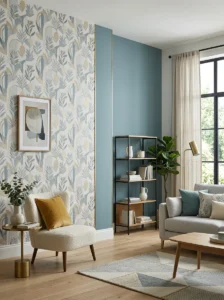
Before getting into specific ideas, it helps to understand why splitting a wall between wallpaper and paint tends to look more polished than either material used alone.
- It limits pattern to a manageable portion of the room, reducing the risk of visual overwhelm that full wallpaper can create.
- The paint section acts as a visual break, giving the eye a resting point next to the more detailed wallpaper area.
- It’s more budget-friendly and less committal than papering an entire room, making it easier to update later if tastes change.
Classic Horizontal Split Ideas
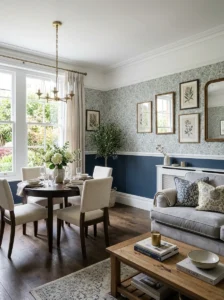
The most traditional version of this technique divides the wall horizontally, echoing the look of classic wainscoting but using wallpaper instead of wood paneling.
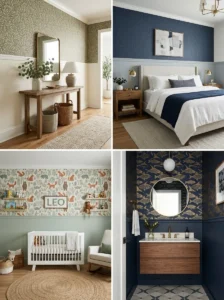
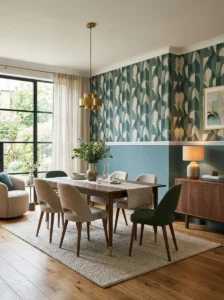
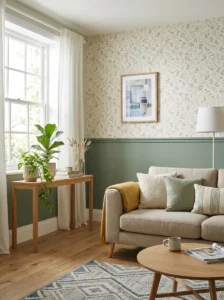
1. Wallpaper on Top, Paint Below Placing wallpaper on the upper portion of the wall and a solid paint color below, divided by a chair rail or simple trim line, creates a traditional, balanced look that works particularly well in dining rooms and entryways.
2. Paint on Top, Wallpaper Below
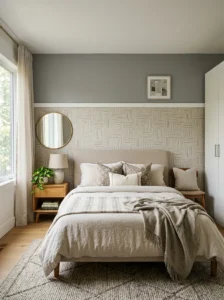
Flipping the traditional order — solid paint above and wallpaper below, near furniture and baseboards — creates a more grounded, modern feel, especially effective in bedrooms where the lower wall is often the main visible area behind furniture.
3. A Higher Wallpaper Line for Drama Raising the wallpaper section further up the wall, closer to two-thirds height instead of the traditional one-third, adds a bolder, more dramatic effect while still keeping a clean paint section above.
Vertical Split Ideas
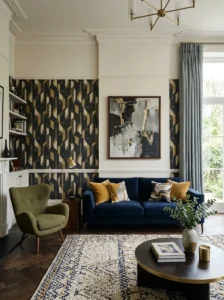
A vertical division offers a more contemporary alternative to the classic horizontal split, and it works particularly well on accent walls or in narrow spaces.
4. Half the Wall Papered, Half Painted Splitting a single wall directly down the middle, one half in wallpaper and the other in a complementary solid color, creates a striking, modern focal point that works well behind a bed or sofa.
5. Alternating Papered and Painted Wall Sections In a room with multiple wall sections, alternating between wallpaper and paint on adjacent sections adds rhythm and visual interest without covering every surface in pattern.
Framed or Panel-Style Wallpaper Sections
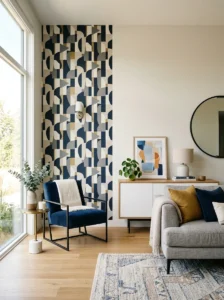
Rather than a full horizontal or vertical split, wallpaper can be contained within a defined panel or frame, creating a more architectural, gallery-like effect.
6. A Single Framed Wallpaper Panel Adding trim or molding around a rectangular section of wallpaper, surrounded by paint, creates the look of built-in artwork or paneling, adding detail without wallpapering the entire wall.
7. Multiple Wallpaper Panels in a Row
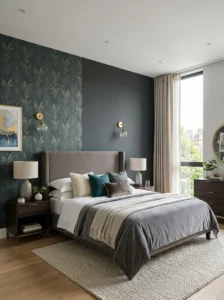
Repeating a series of smaller, evenly spaced wallpaper panels along a wall, framed individually, adds a rhythmic, gallery-inspired pattern that reads as intentional and architectural.
8. A Wallpapered Alcove or Niche Applying wallpaper only within a recessed alcove or niche, while leaving the surrounding wall painted, highlights the architectural feature and adds depth without overwhelming the full room.
Ceiling and Wall Combinations
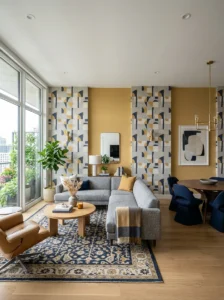
The half wallpaper, half paint concept doesn’t have to stay confined to a single wall — extending it to the ceiling adds an unexpected but increasingly popular twist.
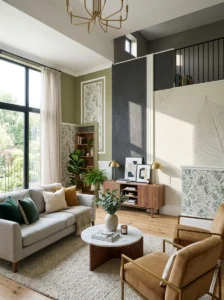
9. Wallpapered Ceiling, Painted Walls Applying wallpaper to the ceiling while keeping the walls a solid paint color draws the eye upward, adding drama and pattern without competing with wall-level furniture and decor.
10. Wallpapered Upper Wall Transitioning to a Papered Ceiling Extending the wallpaper from the upper portion of the wall directly onto the ceiling, without a break, creates a cocooning, enveloping effect that works particularly well in small bedrooms or reading nooks.
Room-Specific Applications
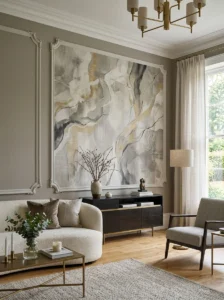
Certain rooms lend themselves particularly well to specific versions of this technique, based on furniture placement and how the space is typically used.
11. Entryway Half-Wall Wallpaper An entryway with wallpaper on the lower half, protected by a chair rail, holds up well against the wear and tear of a high-traffic area while still adding a strong first impression.
12. Bedroom Headboard Wall Split Applying wallpaper only behind and slightly above where a headboard sits, with paint continuing around the rest of the room, creates a built-in focal point without requiring a full accent wall.
13. Nursery Half-and-Half Walls
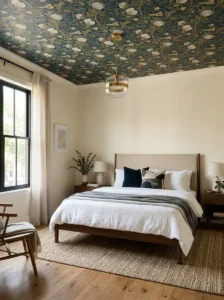
A soft-patterned wallpaper on the lower half of a nursery wall, paired with a calming solid paint color above, adds personality at a scale appropriate for a smaller room without overwhelming it.
14. Powder Room Panel Wallpaper In a small powder room, a single framed wallpaper panel above the vanity, surrounded by paint, adds a bold design moment in a space too small for full wallpaper coverage.
Color and Pattern Pairing Tips
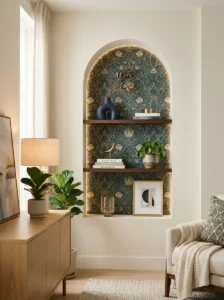
Choosing how the wallpaper and paint colors relate to each other matters as much as the layout itself, and a few approaches consistently work well together.
15. Pulling the Paint Color From the Wallpaper Selecting a paint shade that matches one of the secondary colors within the wallpaper pattern ties the two sections together seamlessly, avoiding a disjointed, mismatched look.
16. High-Contrast Pairings for a Bold Look
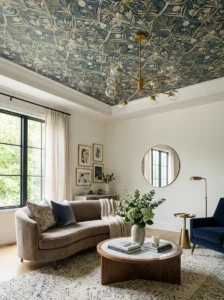
Pairing a busy, colorful wallpaper with a stark white or black paint section creates strong visual contrast, ideal for rooms meant to feel more dramatic or design-forward.
17. Tonal Pairings for a Subtle Look Choosing a paint color within the same tonal family as the wallpaper — different shades of the same hue — creates a softer, more cohesive look suited to calmer, more restful spaces like bedrooms.
Trim and Transition Details That Elevate the Look
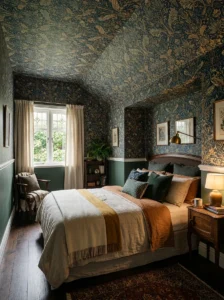
The line where wallpaper meets paint needs a clean, deliberate transition, and the choice of trim style significantly affects how polished the final result looks.
18. A Simple Chair Rail or Picture Rail Divide
r A basic wood molding strip at the transition point is the most classic and reliable way to create a crisp, finished line between wallpaper and paint sections.
19. A Reveal Line Instead of Molding For a more minimal, modern look, some designers skip molding entirely and use a precise, straight-cut transition line instead, relying on careful application rather than trim to define the split.
Key Takeaways
- Splitting a wall between wallpaper and paint limits pattern exposure while still adding texture and depth.
- Both horizontal and vertical splits offer distinct looks, from traditional to modern.
- Framed wallpaper panels create an architectural, gallery-like effect without full wall coverage.
- Extending wallpaper to the ceiling adds drama while keeping wall-level decor uncluttered.
- Matching or coordinating paint and wallpaper colors is essential for a cohesive, intentional look.
- Clean trim or a precise reveal line makes the transition between materials look finished rather than accidental.
Conclusion
Half wallpaper, half paint walls offer one of the most flexible ways to add personality to a room without the commitment of full wallpaper coverage. Whether it’s a classic horizontal split, a bold vertical division, or a single framed panel, these nineteen ideas show just how many directions this simple concept can take. Start with one room, choose a layout that matches the space’s proportions, and let the color pairing tie it all together.
Frequently Asked Questions
1. Is half wallpaper, half paint more affordable than fully wallpapering a room? Yes, generally. Since only a portion of the wall requires wallpaper, both material costs and installation labor are typically lower than papering an entire room, making it a more budget-friendly way to add pattern.
2. Where should the wallpaper-to-paint transition line be placed for the best look? A common guideline is placing the transition at about one-third of the wall height for a traditional look, or up to two-thirds for a bolder, more dramatic effect. The right height often depends on ceiling height and furniture placement in the room.
3. Do I need molding to divide the wallpaper and paint sections? Molding creates the most classic, finished look and helps hide any minor application imperfections, but a precise, straight-cut line without molding can achieve a more minimal, modern aesthetic if applied carefully.
4. What rooms work best for this half wallpaper, half paint technique? Entryways, dining rooms, bedrooms, and powder rooms tend to work particularly well, since they often have a defined focal wall or furniture line, like a headboard or vanity, that naturally suits a partial wallpaper application.
5. How do I choose a paint color that pairs well with a patterned wallpaper? Pulling a paint color directly from one of the secondary tones within the wallpaper pattern is the most reliable way to ensure the two sections feel connected rather than randomly paired together.