


How to Choose Bedroom Curtains That Actually Block Light
Light creeping around your curtains at 5 a.m. is a special kind of annoyance. You bought blackout curtains, you closed them properly, and still a bright stripe lands on your pillow. The problem is rarely the curtain itself. It is the fit, the fabric, or the gaps at the edges. Choosing bedroom curtains that truly block light means thinking about the window as a whole: width, length, lining, and how the panels sit against the wall. The twelve steps below walk through that in order, so you buy once and sleep past sunrise.
1. Measure the Window, Then Add Room on Every Side
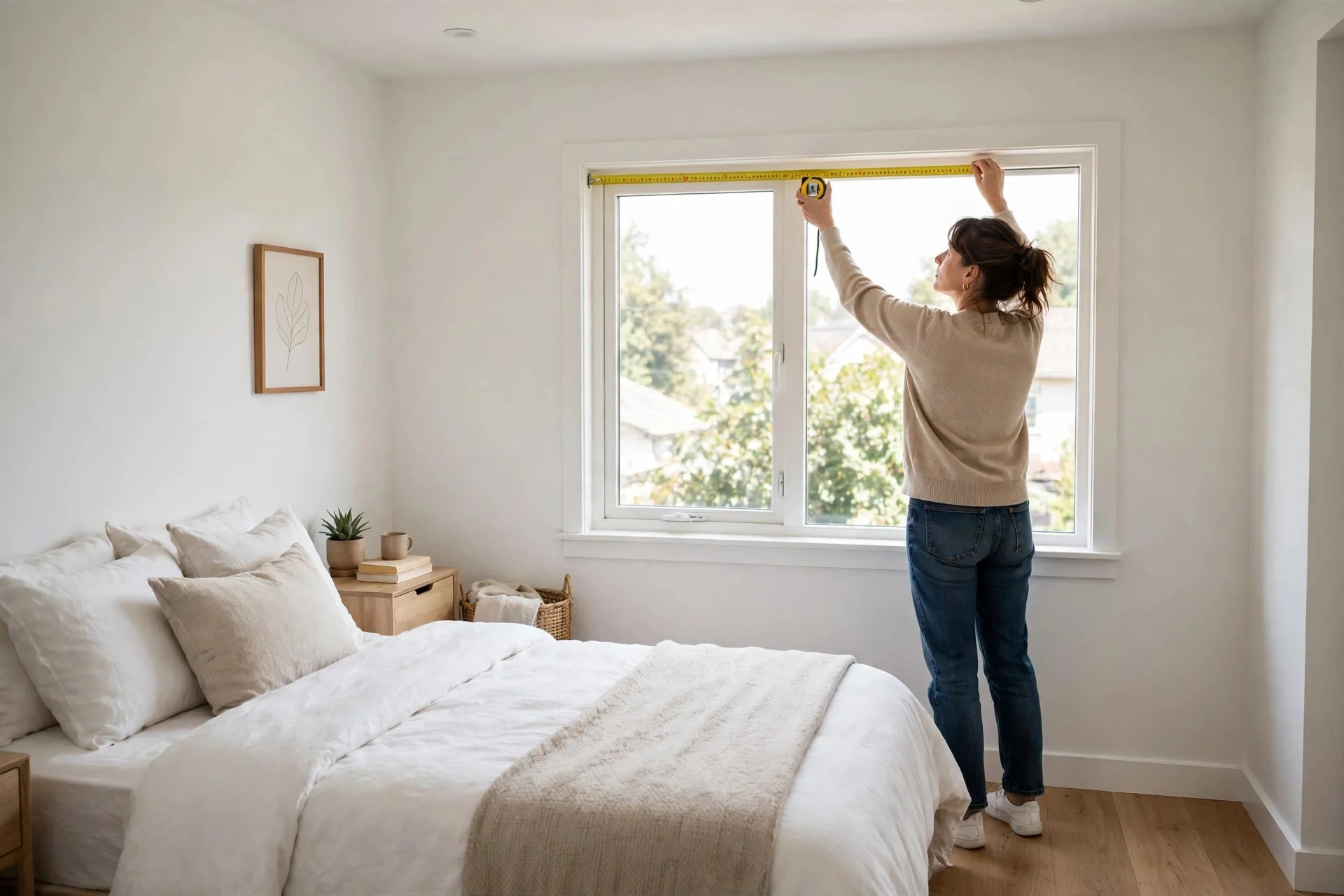
Start with three measurements: the window width, the height from your planned rod position to the floor, and the depth of any trim or handles that stick out. Then add to them. The rod should extend eight to twelve inches past the window on each side, and the panels should be wide enough to overlap in the middle when closed, not just meet. A panel that barely covers the glass leaves light gaps at the edges, which is where most leaks come from. Write the numbers down and take them shopping. Guessing from memory in a curtain aisle is how the wrong size ends up on your wall.
2. Blackout vs Light-Filtering Bedroom Curtains: Pick by How You Sleep
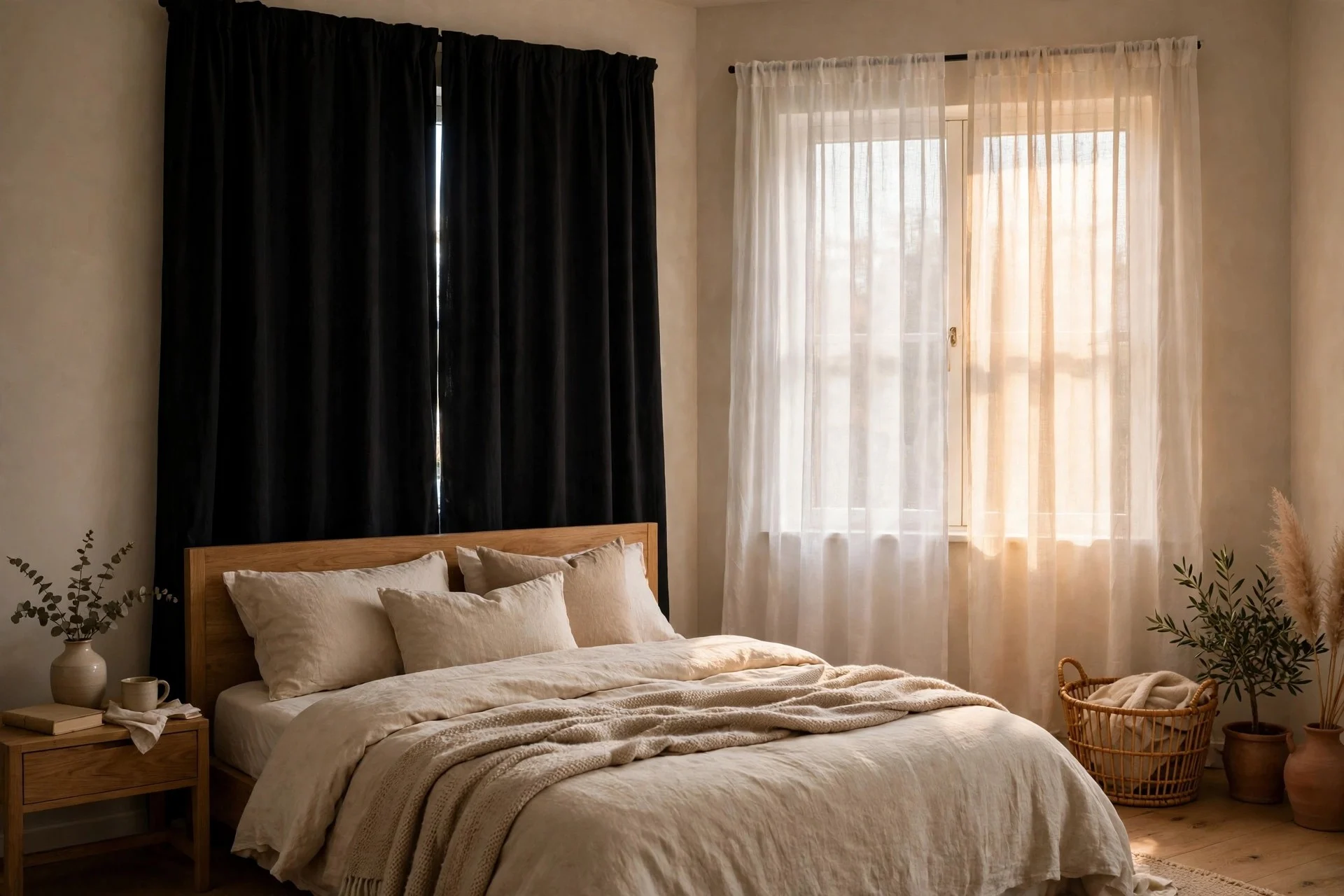
Blackout curtains block most light; light-filtering ones soften it but still let the room glow. If you work nights, sleep past sunrise, or have a streetlight outside, blackout is the honest choice. If you just want privacy and a softer morning, light-filtering fabric may suit you better, and it keeps the room from feeling like a cave during the day. Hold the fabric up to a shop light before buying: true blackout shows almost nothing through it, while light-filtering fabric glows clearly. Do not trust the label alone. I have bought “blackout” panels that turned out to be merely dark-coloured, and the morning sun proved it.
3. Feel the Fabric Weight Before You Judge the Colour

Colour catches your eye first, but weight does the blocking. A heavy cotton twill or velvet stops far more light than a thin polyester panel in the same dark shade. Linen looks beautiful and breathes well, but unlined linen is a light-filtering fabric, not a blackout one. If you love linen, pair it with a blackout lining rather than giving up on the look. Check the drape too: fabric that falls in clean folds closes without bunching into gaps. A stiff, cheap panel that will not hang straight will leak light at every fold, no matter what the packaging promises.
4. Choose a Header That Closes Without Gaps
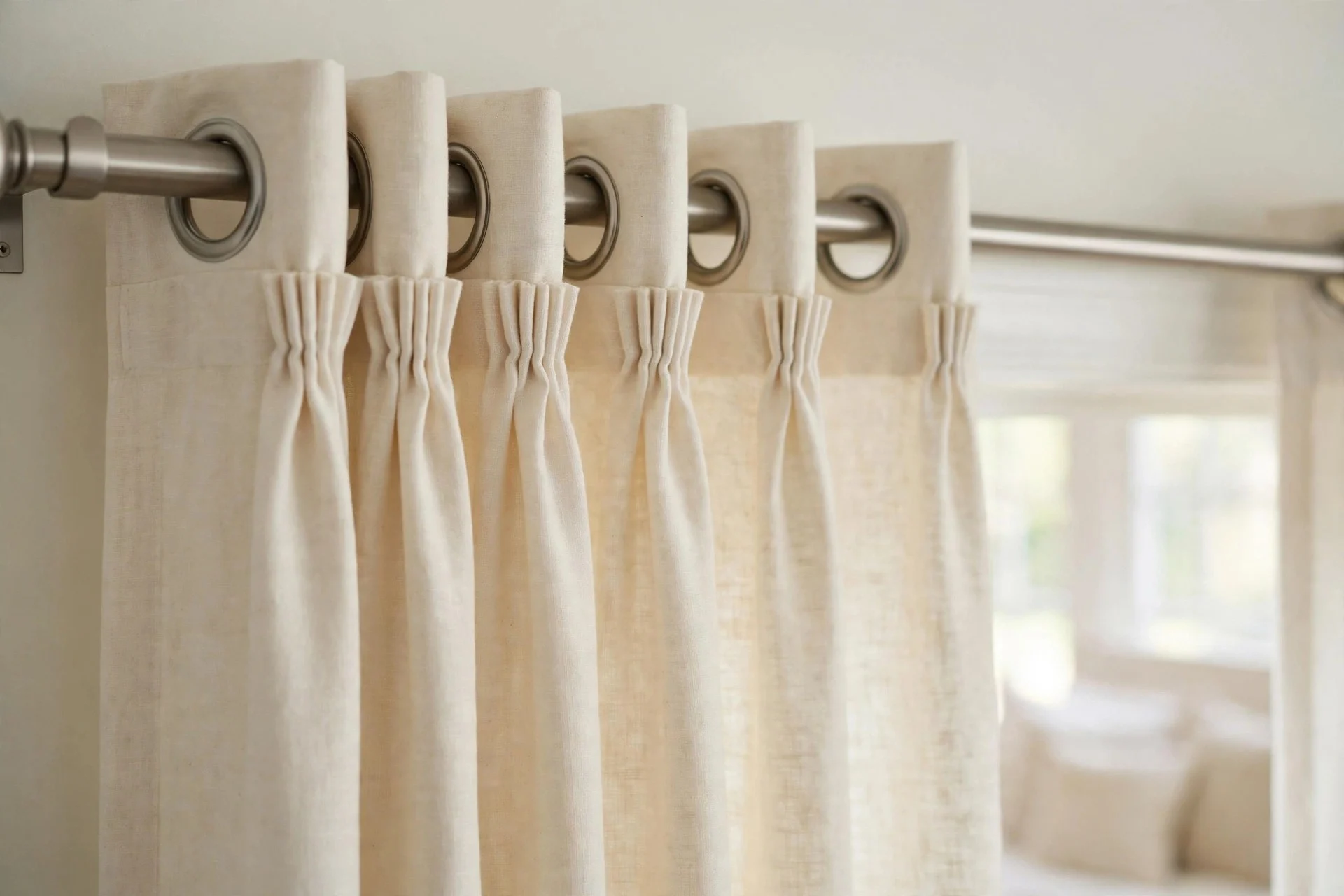
Grommets slide easily and look tidy, pinch pleats give a tailored, full look, and rod pockets are the cheapest option but the hardest to slide. For light blocking, pinch pleats and grommets both work well because they gather evenly and close flat. Rod pockets tend to bunch at the sides and leave a gap where the fabric meets the wall. Whatever header you pick, check that the panels overlap by at least a few inches in the centre when drawn. A centre gap is the most common leak I see in bedrooms, and it is usually a width problem disguised as a fabric problem.
5. Hang the Rod High and Wide, Not on the Window Frame

A rod fixed to the window frame traps you: the panels can only cover the glass, and light spills around all four edges. Mount the rod four to six inches below the ceiling and twelve inches wider than the window on each side. When the curtains are open, they stack on the wall instead of covering the glass, so the window looks bigger and the room gets more daylight. When closed, the extra width means the fabric overlaps the wall, sealing the side gaps. This one move fixes more light leaks than upgrading the fabric ever will, and it costs nothing extra if you are buying a rod anyway.
6. Get the Length Right: Floor-Kissing Beats Sill-Length
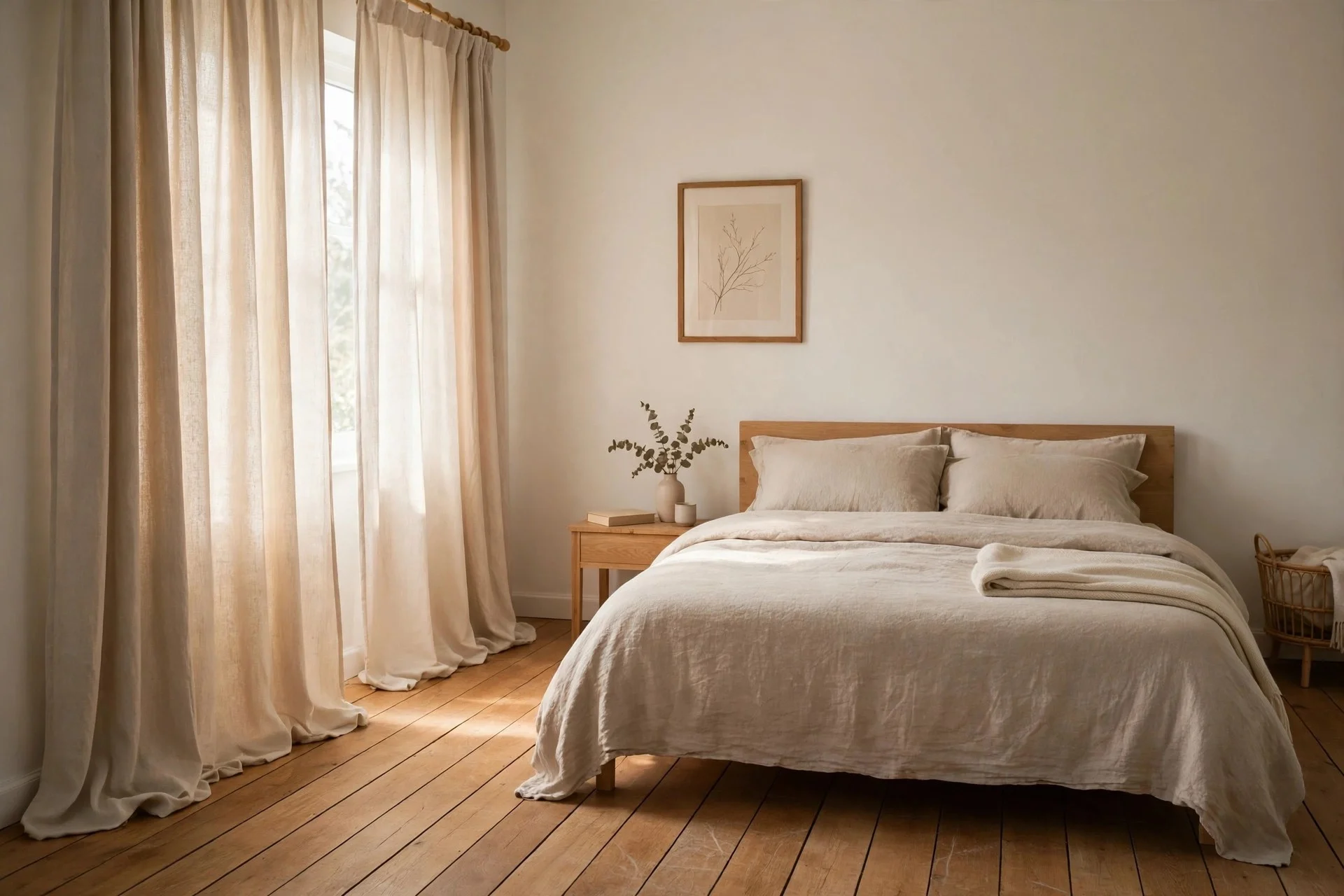
Curtains that end at the sill leave a bright stripe under the window and let cold air pour in behind them. Floor-length panels that just kiss the floor seal that bottom gap and look far more finished. Measure from the rod to the floor, not from the window, and buy the next length up if you fall between sizes; a hem is easier than a stretch. A slight puddle of fabric on the floor looks romantic but collects dust and trips pets, so aim for touching, not pooling. For more on sizing floor coverings the same way, our guide on how to choose the right rug size uses the same tape-on-the-floor trick.
7. Layer Sheers Behind Blackout for Day and Night
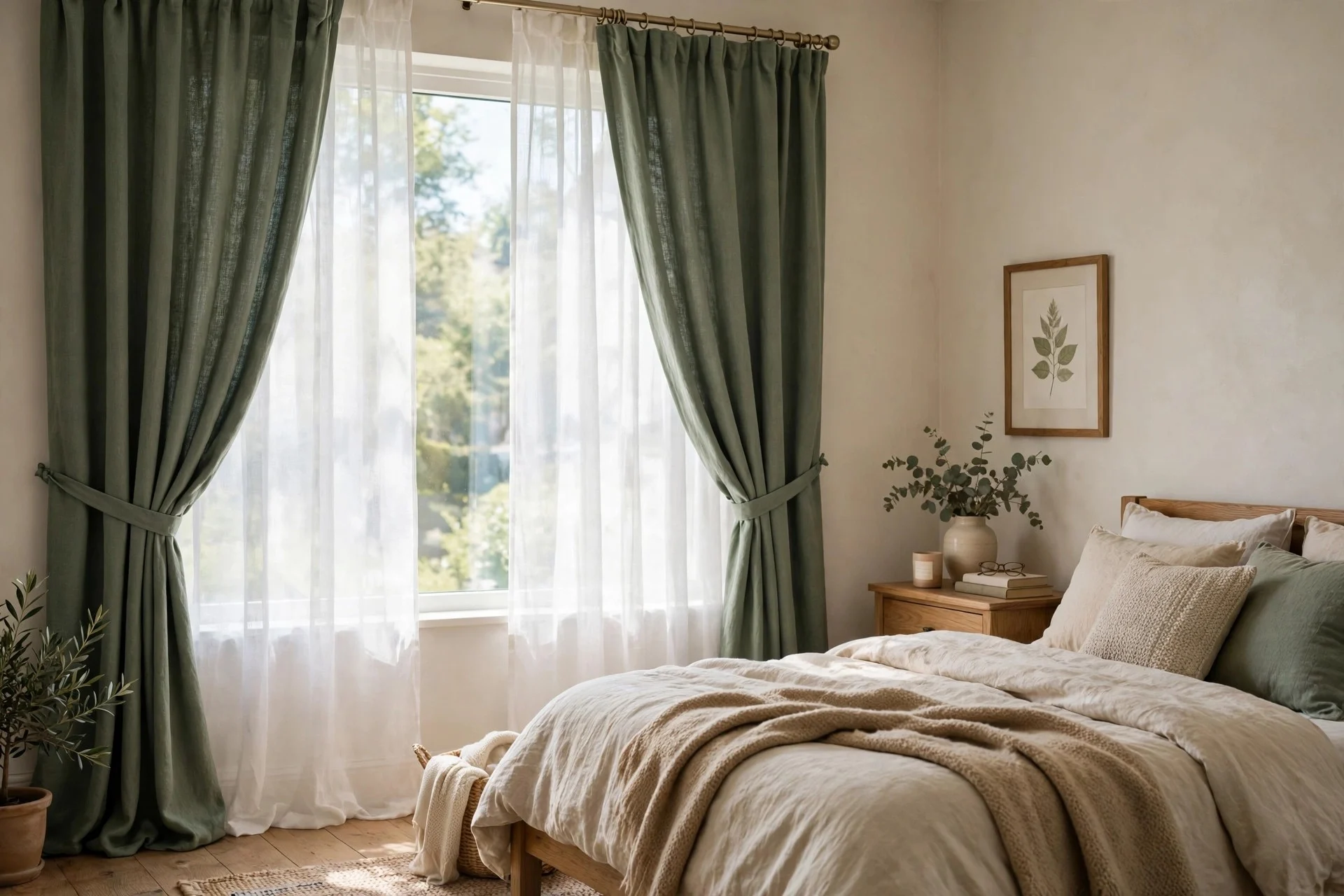
One layer forces a choice between privacy and darkness. Two layers give you both: sheers for daytime privacy with soft light, blackout panels for sleep. Use a double rod or a ceiling track, with the sheer closest to the glass. During the day, close the sheer and leave the blackout open, and the room stays bright but private. At night, draw the blackout over the top and the room goes properly dark. This is also the kindest option for small rooms, because the sheer softens the window during the day instead of leaving a heavy dark panel as the room’s main feature. For layout ideas in tight spaces, see our guide on arranging a small room for maximum space.
8. Pick Colour and Pattern for the Room, Not Just the Window

Dark curtains block slightly more light than pale ones in the same fabric, but the difference is small once a blackout lining is involved, so do not let darkness dictate your palette. Match the curtain colour to the room: pull a tone from the bedding or the rug, and keep bold patterns to one window treatment per room. A busy print on every window fights with the bedding and makes the room feel smaller. Solid or lightly textured panels are the safest choice, and they age better than a trend print you tire of in a year. If you love pattern, use it on the blackout layer and keep the sheer plain.
9. Lining and Thermal Backing Do More Than the Face Fabric
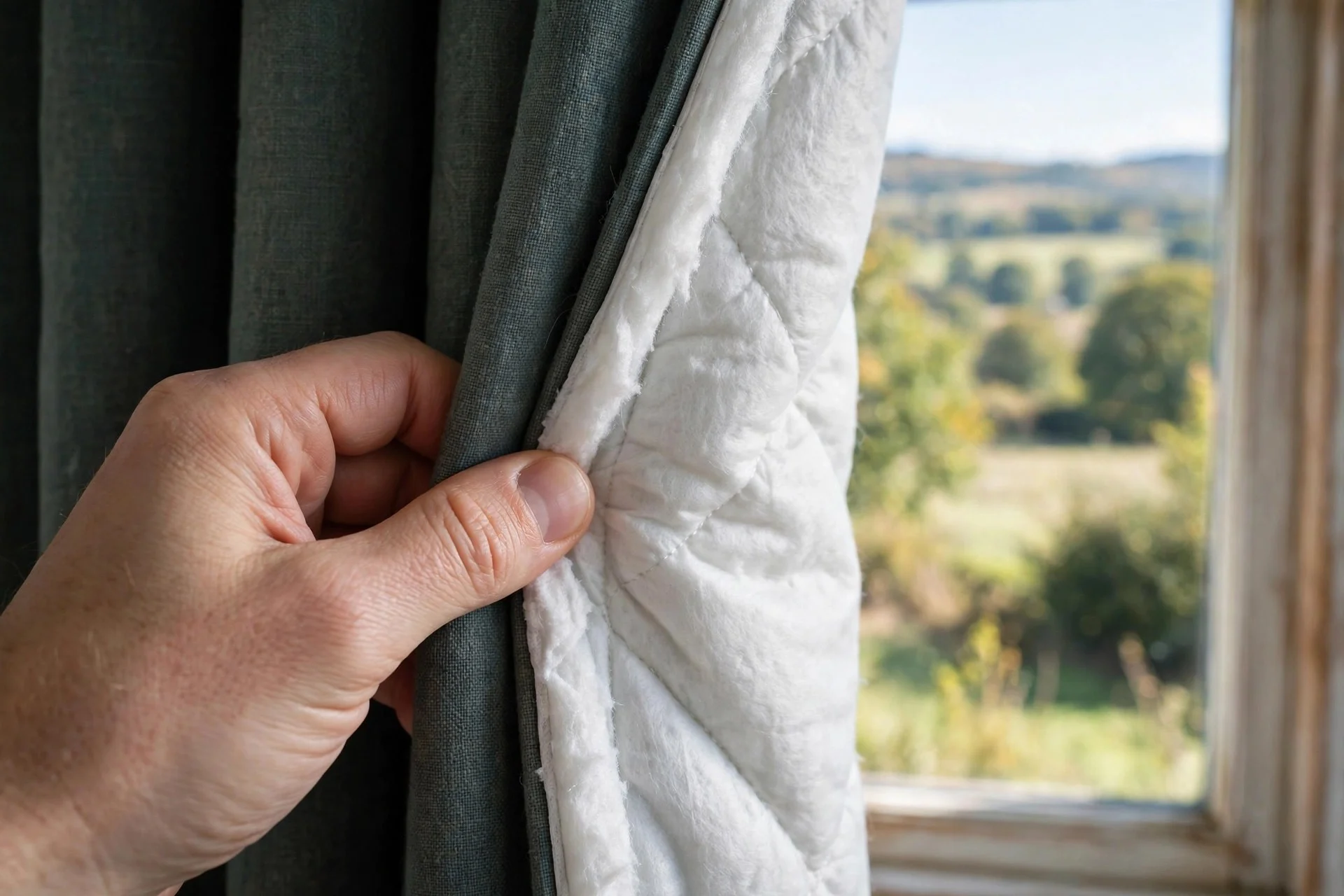
Many so-called blackout curtains are ordinary fabric with a thin coating, and that coating cracks after a few washes. A proper blackout lining is a separate, densely woven layer sewn behind the face fabric, and a thermal lining adds insulation on top of that. The lining is what blocks light and slows heat loss, and it also protects the face fabric from sun damage, so curtains last longer. Chelan PUD’s guide to energy-efficient window coverings notes that well-fitting double-layer drapes can cut heat loss by up to 10% in winter. Ask the seller whether the lining is sewn in or bonded on, and whether it survives washing. Sewn-in linings last.
10. Match the Hardware to the Weight of the Curtains
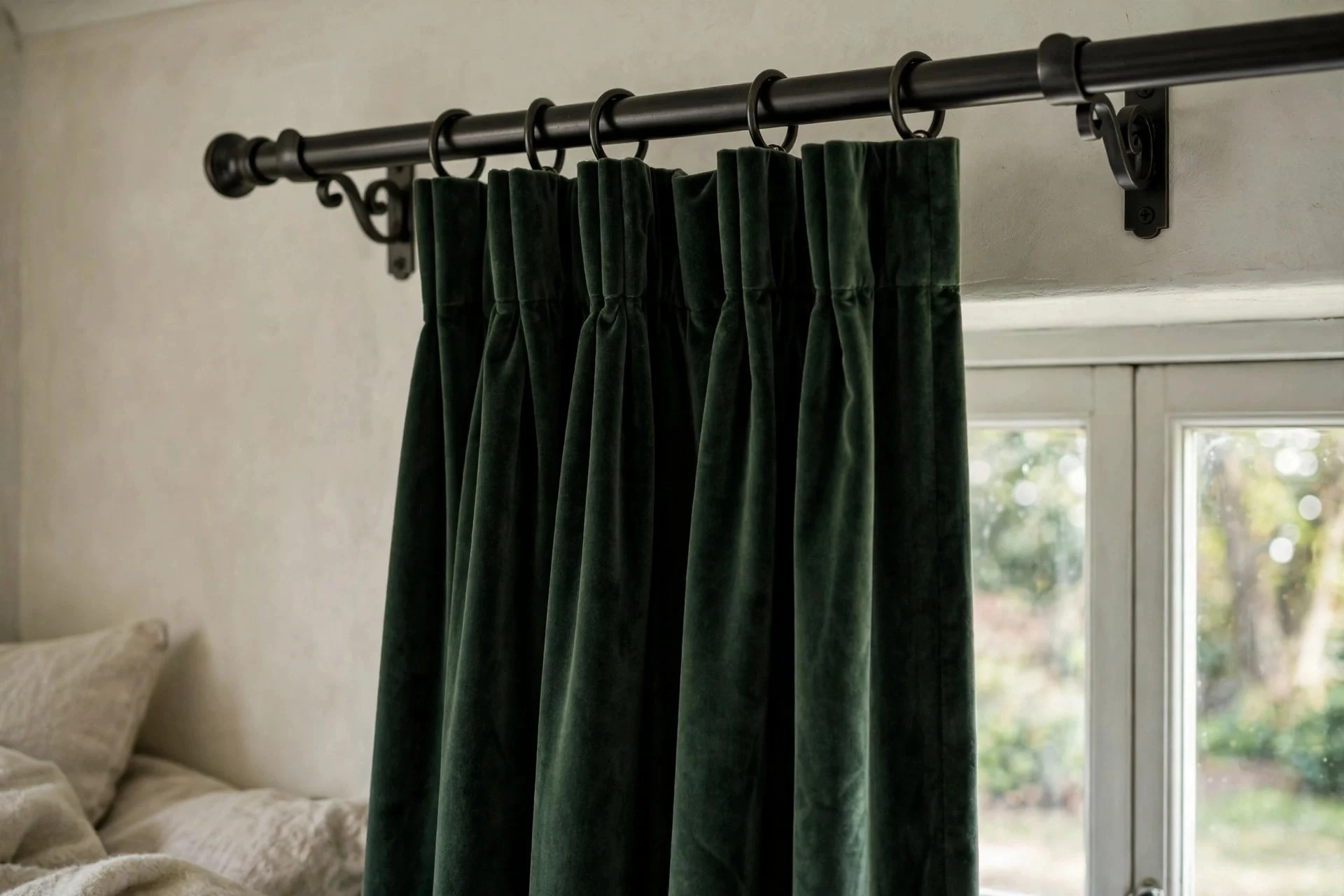
Heavy lined curtains will drag a flimsy rod down in the middle, and a sagging rod leaves gaps at the top and sides. Use a metal rod with a centre support bracket for any span wider than about five feet, and fix brackets into studs or proper wall anchors, not just plaster. Test the rod by hanging the curtains and pulling them closed firmly a few times. If the rod flexes or the brackets creak, upgrade before the whole thing comes down at 2 a.m. It happened to me with a bargain tension rod and a pair of velvet panels, and I would rather warn you than pretend it was anyone’s fault but mine.
11. Go Cordless for Kids, Pets, and Peace of Mind

Cords and looped chains are a genuine safety hazard around small children and curious pets, and they also snag, tangle, and break. Cordless options use a wand, a pull, or a simple hand-draw to open and close, and they work just as well for bedrooms. If you already own corded curtains, fit cord cleats high on the wall and wrap every loop out of reach, or replace the cords with a cordless conversion kit. Our guide on cozy rooms on a budget covers the same safety-first swaps, and this is the one upgrade I would never skip in a child’s bedroom, whatever the cost.
12. Do the Night Test Before You Call It Done
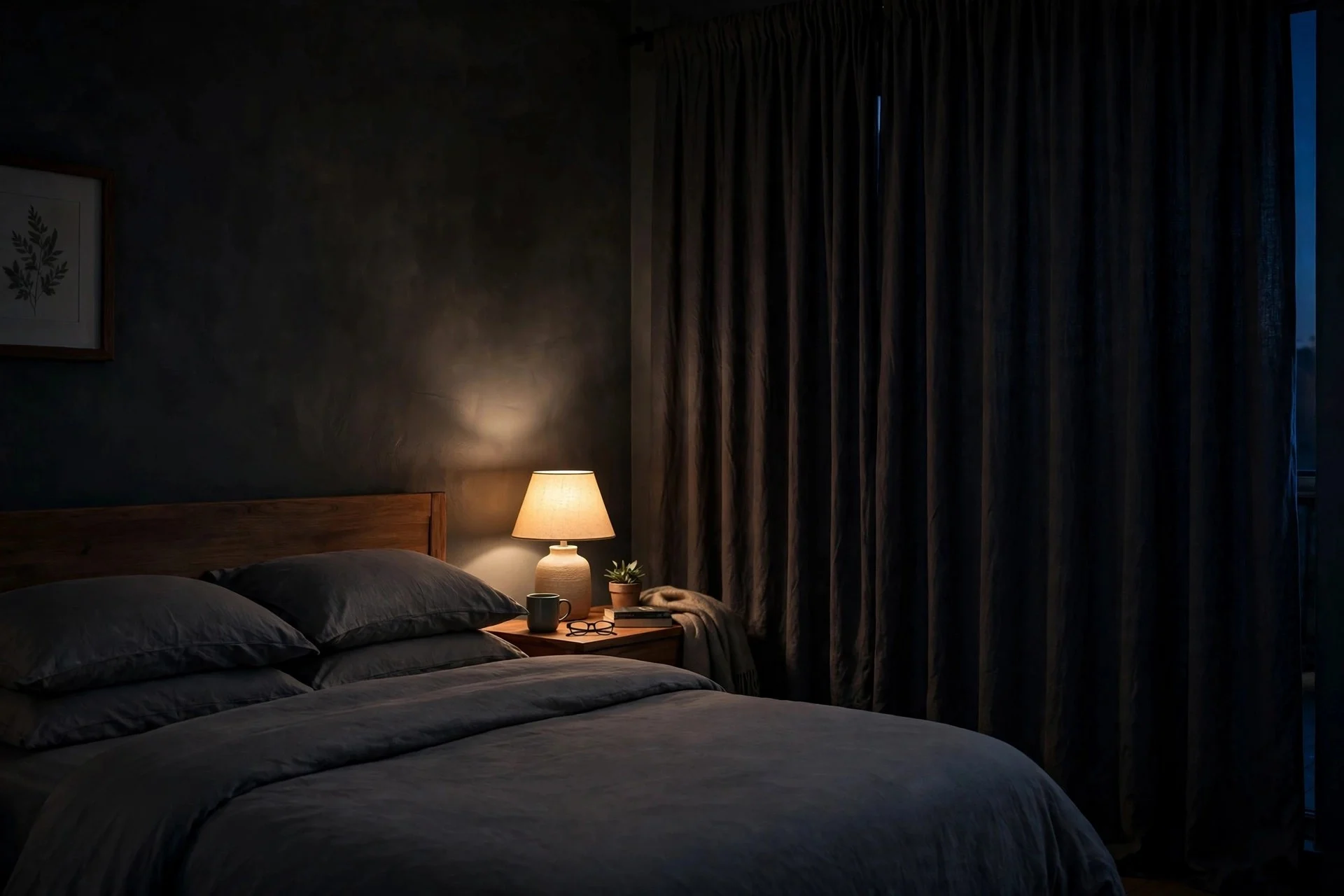
Hang the curtains, wait for dark, and switch off every light in the room. Stand by the bed and look for leaks: the top edge, the sides, the centre overlap, and the bottom hem. A thin line at the side can be fixed with a return rod that curves back to the wall, or with magnetic strips that hold the panel edge flat. A centre gap means you need wider panels or an overlap arm. Do not settle for “good enough” on the first night. Light leaks are much easier to fix while the packaging and receipt are still around, and your sleep is worth one more trip to the shop.
Frequently Asked Questions
Do blackout curtains block all light?
Good ones block most of it, but no curtain seals a window perfectly on its own. Fit matters as much as fabric: a wide rod, overlapping panels, and sealed edges get you far closer to true darkness than a thicker fabric hung badly.
Can I make my existing curtains block more light?
Yes. Add a clip-on blackout lining, widen the rod so panels overlap the wall, and fix side gaps with return rods or magnetic strips. These three fixes solve most leaks without replacing the curtains.
Are blackout curtains good for summer heat too?
They help, especially lined ones in a light colour on the window side, because they reflect some heat back out. Keep them closed on sunny windows during the day and open them at night when the air cools.
How do I wash blackout curtains without ruining them?
Check the label first: many lined curtains need a gentle cold wash or dry cleaning, and bonded coatings can crack in a hot dryer. Line-dry them when you can, and rehang them slightly damp so the folds fall straight.
Blocking light is a fitting job before it is a shopping job. Measure generously, hang high and wide, choose a real lining, and test the room at night before you decide you are finished. Get those four things right and the curtains you already like will probably do the job. If they still leak, the night test will show you exactly where, and that is a much cheaper problem to fix than a whole new set of curtains.