

That’s the tricky part with color. What feels fresh right now can quickly become something you regret, especially in a space you use every single day. That’s why the best bathroom color ideas for 2026 aren’t about chasing trends—they’re about creating a calm, timeless feel that still looks modern.
In this post, you’ll find color ideas that strike that balance perfectly. Think soft, natural tones, subtle contrasts, and palettes that feel fresh without being overwhelming. Whether you’re repainting or planning a full update, these ideas will help you create a bathroom that feels clean, relaxed, and easy to live with.
1. Warm White and Soft Beige
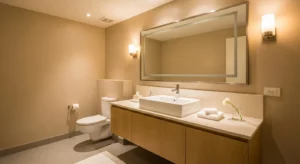
A blend of warm white and beige creates a clean but cozy atmosphere. It feels brighter than darker tones but still avoids that cold, sterile look.
This combination works beautifully in both small and large bathrooms.
Tip: Choose creamy whites instead of stark white for softness.
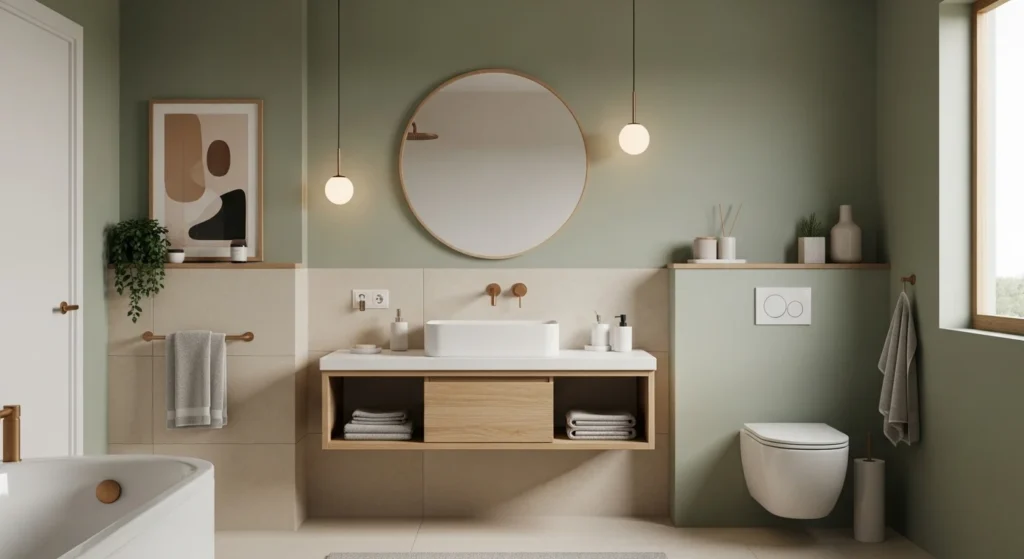
2. Sage Green and Ivory
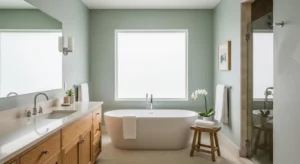
Sage green paired with ivory brings a natural, calming feel. It’s subtle enough to stay timeless but still adds personality.
This palette feels like a quiet spa retreat.
Suggestion: Use sage on walls and ivory for fixtures or textiles.
3. Greige for Balanced Neutral
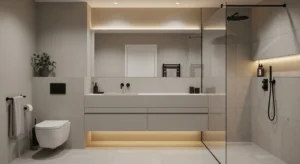
Greige offers the perfect middle ground between grey and beige. It feels modern but not too cool or stark.
It adapts well to different lighting conditions.
Question: Do you prefer warm tones or cooler ones—or both?
4. Soft Taupe and Cream
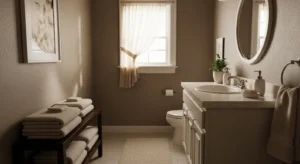
Taupe adds depth, while cream softens the overall look. Together, they create a relaxed and elegant space.
It’s ideal if you want something neutral but not flat.
Tip: Layer textures to enhance the palette.
5. Dusty Blue and Warm White
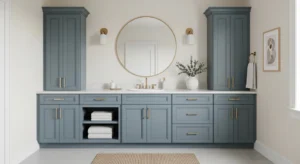
Dusty blue adds a gentle hint of color without feeling too bold. Paired with warm white, it stays fresh and calm.
It works especially well in smaller bathrooms.
Suggestion: Use blue on cabinetry for a subtle effect.
6. Muted Olive and Sand
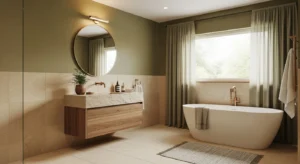
Olive green feels grounded and natural, while sand tones keep the space light.
This combination feels earthy and balanced.
Tip: Add wood accents for extra warmth.7. Soft Blush and Beige
A barely-there blush adds warmth and softness without overpowering the space.
Combined with beige, it feels cozy and slightly elevated.
Question: Would a soft touch of color make your bathroom feel warmer?
7. Blush Beige Bathroom
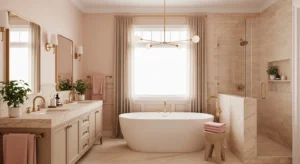
A barely-there blush adds warmth and softness without overpowering the space.
Combined with beige, it feels cozy and slightly elevated.
Question: Would a soft touch of color make your bathroom feel warmer?
8. Classic Off-White Layers
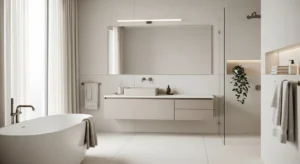
Using multiple shades of off-white creates depth while keeping the space light.
It’s simple but far from boring.
Suggestion: Mix matte and slightly textured finishes.
9. Charcoal and Warm Neutrals
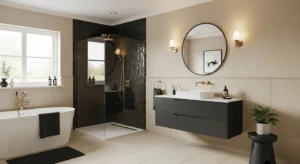
Charcoal adds contrast, while warm neutrals balance it out. It creates a modern but inviting look.
Perfect for adding depth without going too dark overall.
Tip: Use charcoal sparingly for impact.
10. Soft Green and Light Wood
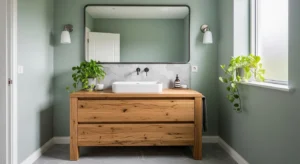
A pale green paired with wood tones creates a natural, spa-like feel.
It feels fresh but not overly styled.
Suggestion: Use this palette for vanities or shelving.
11. Warm Sand and White
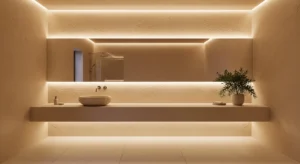
Sand tones bring warmth, while white keeps things bright and clean.
It’s a timeless combination that feels relaxed.
Tip: Keep finishes matte for a softer look.
12. Muted Mustard and Cream
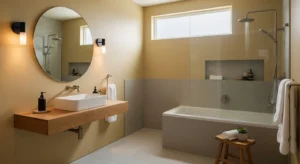
Muted mustard adds warmth and personality in a subtle way.
Paired with cream, it stays balanced and inviting.
Question: Could your bathroom use a hint of warmth?
13. Pale Grey with Warm Undertones
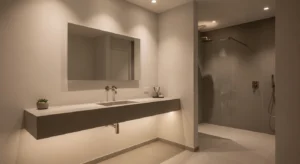
Not all greys feel cold—warm greys add softness and comfort.
They work well in modern bathrooms that still need warmth.
Tip: Avoid overly cool grey tones.
14. Clay and Off-White
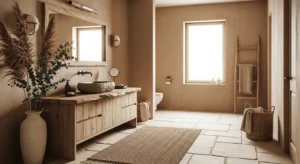
Clay tones bring earthy richness, while off-white keeps things light.
It creates a grounded yet fresh atmosphere.
Suggestion: Use clay as an accent rather than the main color.
15. Soft Blue-Green Blend
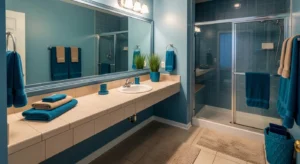
A mix of blue and green creates a calming, watery feel.
It’s perfect for a relaxing bathroom environment.
Tip: Pair with neutral flooring for balance.
16. Cream and Light Brown Layers
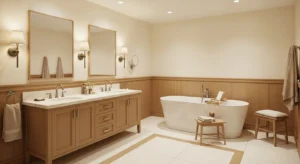
Layering cream with light brown tones creates a cozy, natural palette.
It feels simple but thoughtfully designed.
Suggestion: Add woven textures for depth.
17. Forest Green and Beige
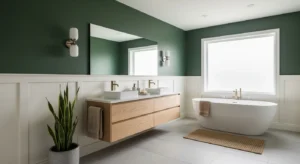
Deep green adds richness, while beige keeps it approachable.
This pairing feels bold but still calming.
Question: Would you try a darker tone in your bathroom?
18. Soft Lavender Grey
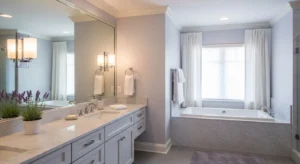
A hint of lavender in grey adds subtle uniqueness. It’s barely noticeable but makes the space feel special.
It’s modern without being trendy.
Tip: Use in well-lit bathrooms for best effect.
19. Warm Peach and Neutral Base
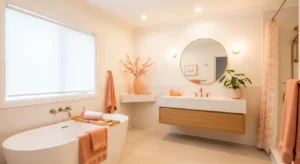
Soft peach tones bring warmth and a welcoming feel. Combined with neutrals, it stays balanced.
It’s gentle and cozy without being overwhelming.
Suggestion: Use peach in smaller accents.
20. Stone Grey and White
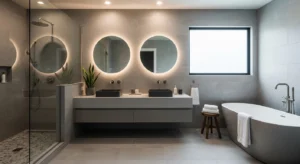
Stone grey feels grounded and natural. Paired with white, it creates a clean but not cold look.
It works well in both classic and modern designs.
Tip: Add warm lighting to soften the space.
21. Olive and Creamy White
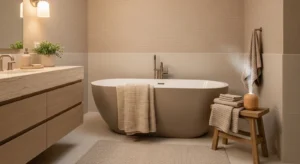
Olive adds depth while creamy white keeps the palette fresh.
It feels earthy yet refined.
Suggestion: Pair with brass accents for warmth.
22. Warm Beige Monochrome
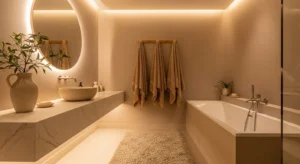
Using different shades of beige creates a layered, cohesive look.
It’s simple but incredibly calming.
Tip: Mix textures to avoid a flat appearance.
23. Blue Grey and Sand
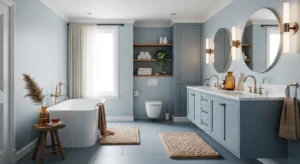
Blue-grey adds a cool contrast, while sand tones keep it grounded.
It’s a balanced, modern combination.
Question: Do you prefer cooler or warmer calming tones?
24. Balanced Earth Tone Mix
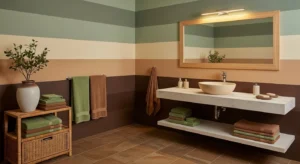
Combining greens, browns, and soft neutrals creates a natural, harmonious feel.
It feels complete without trying too hard.
Suggestion: Keep the palette consistent for best results.