



12 Winter Bedroom Ideas for Better Sleep
Winter is the season your bedroom should work the hardest — and for most of us, it doesn’t. The heat runs all night, the air turns bone-dry, and that 5 p.m. darkness messes with your body clock in ways a blackout curtain can actually fix. I spent one January tracking my sleep with a cheap sleep app and realized my winter bedroom ideas weren’t really ideas at all. They were just “pile on more blankets.” These twelve changes are different. Every one targets something winter does to your sleep — overheating, dry air, noise, cold floors, light — and none of them requires a renovation.
1. Winter Bedroom Ideas That Start with Temperature: Set the Room Cooler
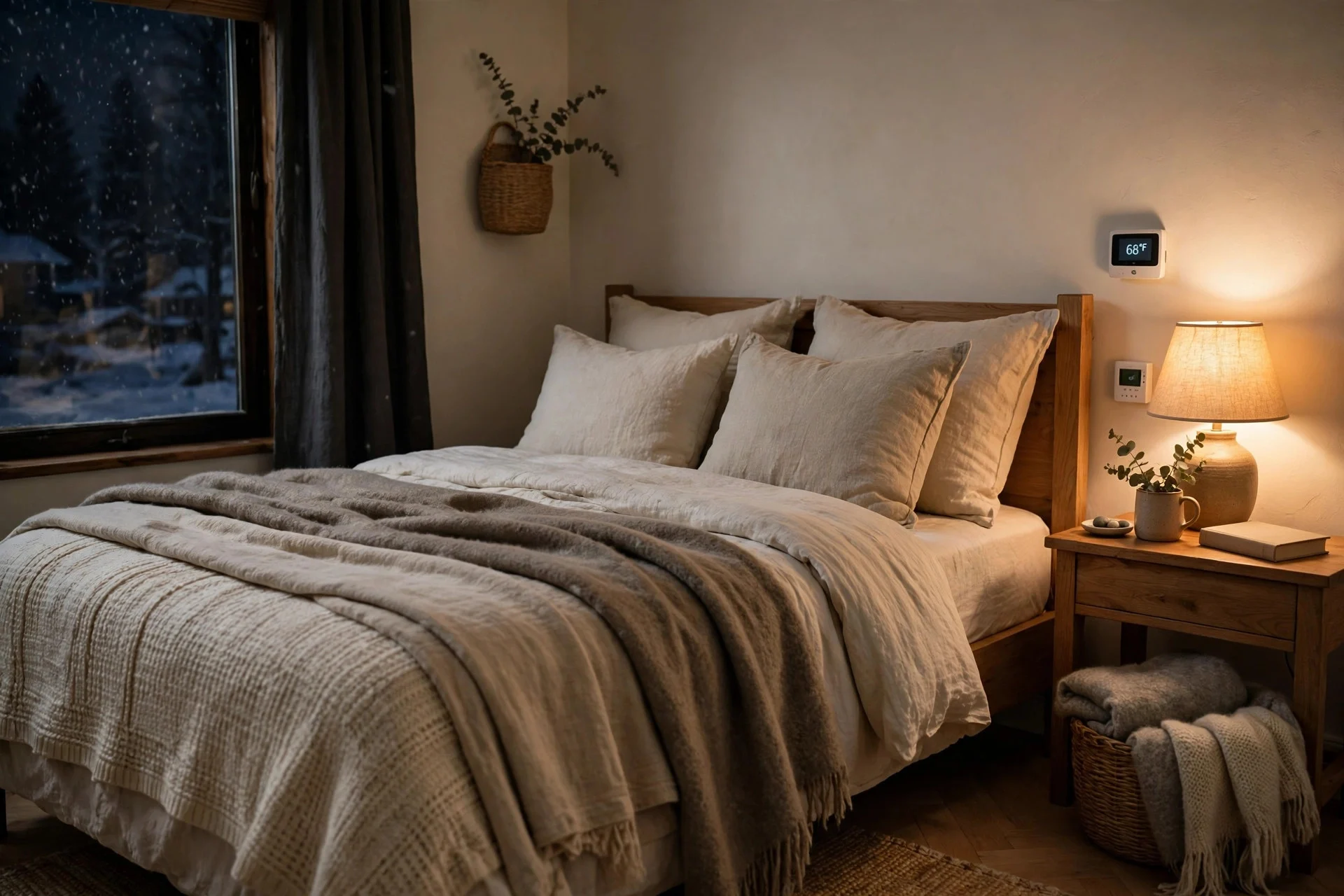
The number one mistake is heating the bedroom like the living room. Your core body temperature needs to drop about two degrees for you to fall asleep, and a 72-degree bedroom fights that process all night. The Sleep Foundation recommends keeping the bedroom between 65 and 68 degrees Fahrenheit for adults. Here’s how I handle it: I set the hallway thermostat to 70 and close my bedroom vent halfway, then crack the bedroom door for the first hour after I get into bed. A $15 digital thermometer on the nightstand keeps me honest. I tried the “just open the window” route once — woke up at 3 a.m. with an ice-cold nose and a stiff neck. Don’t do that. A door draft or a slightly closed vent gives you the cool air without the punishment.
2. Layer Breathable Bedding Instead of One Giant Comforter

One heavy comforter is a trap. You overheat at midnight, kick it off, then freeze at 4 a.m. Layers let you adjust without fully waking up. Build from the bottom: breathable cotton sheets, a medium-weight quilt or coverlet, then a folded throw at the foot of the bed you can pull up or push down in seconds. Each layer traps a little air, which is what actually keeps you warm — the same principle as layering clothes for a hike. Wash the layers separately on a normal cycle; big comforters end up in the dry cleaner once a year if you’re lucky, which is a whole other problem. For the full hotel-bed look without the fuss, our guide on how to layer bedding so it looks like a hotel walks through the order and the fold.
3. Switch to Flannel or Brushed-Cotton Sheets for the Season

This is the single coziest swap on the list, and it costs less than a dinner out. Flannel sheets feel warm the instant you slide in — no more of that freezing two minutes while your body heats up slick cotton. Look for 100% cotton flannel, not a polyester blend; the blends pill into little plastic beads by February and feel clammy. Brushed cotton (sometimes sold as “flannel-feel”) is a decent middle ground if you run hot. Buy one extra set so you can rotate on laundry day; nothing kills a bedtime routine like wrestling sheets on at 10 p.m. because the only set is in the wash. A solid set runs $40 to $70 at places like Target, IKEA, or LL Bean. I bought mine in November three years ago and they’re still going — wash cold, tumble low, and skip the fabric softener so the nap stays fluffy.
4. Block the Light with Real Blackout Curtains
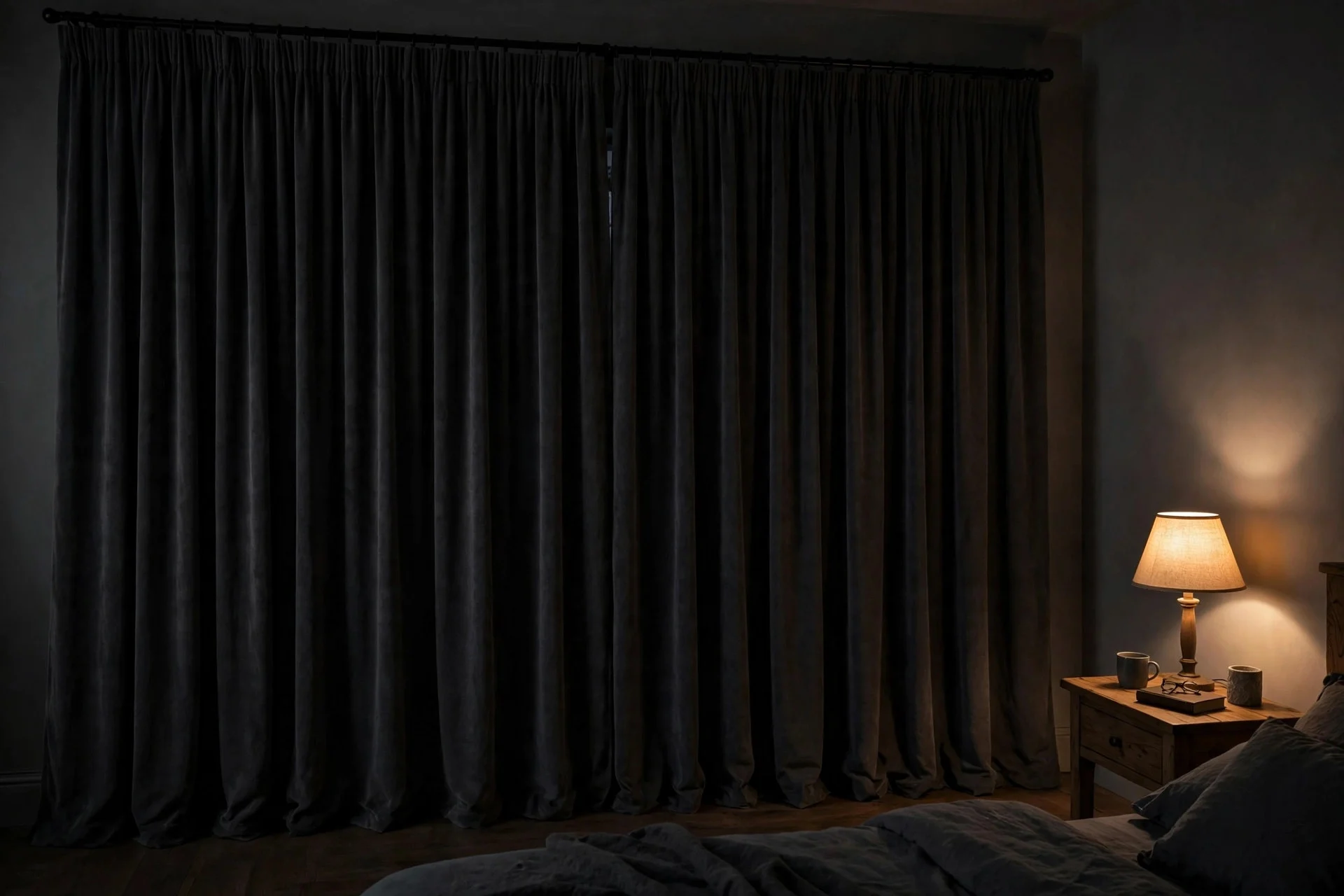
Winter darkness arrives at 5 p.m., but your sleep needs darkness on your schedule, not the sun’s. Streetlights, a neighbor’s porch light, headlights sweeping the ceiling at 2 a.m. — all of it fragments your sleep even if you don’t fully wake. Cheap blackout curtains from Amazon work fine; the trick is in the install. Mount the rod 4 to 6 inches wider than the window frame on each side and a few inches above it, so light can’t sneak around the edges. Then overlap the panels in the middle by at least 3 inches. I hung mine with the rod too narrow the first time and had two glowing stripes on either side of the window all winter. Looked like a drive-in theater in there. Total cost: about $35 per window, twenty minutes with a drill. Pair them with sheers for daytime so the room doesn’t feel like a cave at noon.
5. Go Warm and Dim After Sunset — Kill the Overheads

Your ceiling light is a daylight impersonator, and it’s telling your brain it’s noon at 9 p.m. After sunset, switch to lamps only — and warm ones. Bulbs labeled 2700K or lower give that amber, fireplace-adjacent glow that lets melatonin do its job. Put a small lamp on each nightstand with a simple on-off or, better, a dimmer plug ($12 at any hardware store). Overhead off, lamps on, screen brightness down: that’s the whole routine. I also moved my phone charger across the room, which forced me to actually get up in the morning instead of scrolling under the covers. This one change made my evenings feel slower in the best way.
6. Run a Cool-Mist Humidifier on the Nightstand
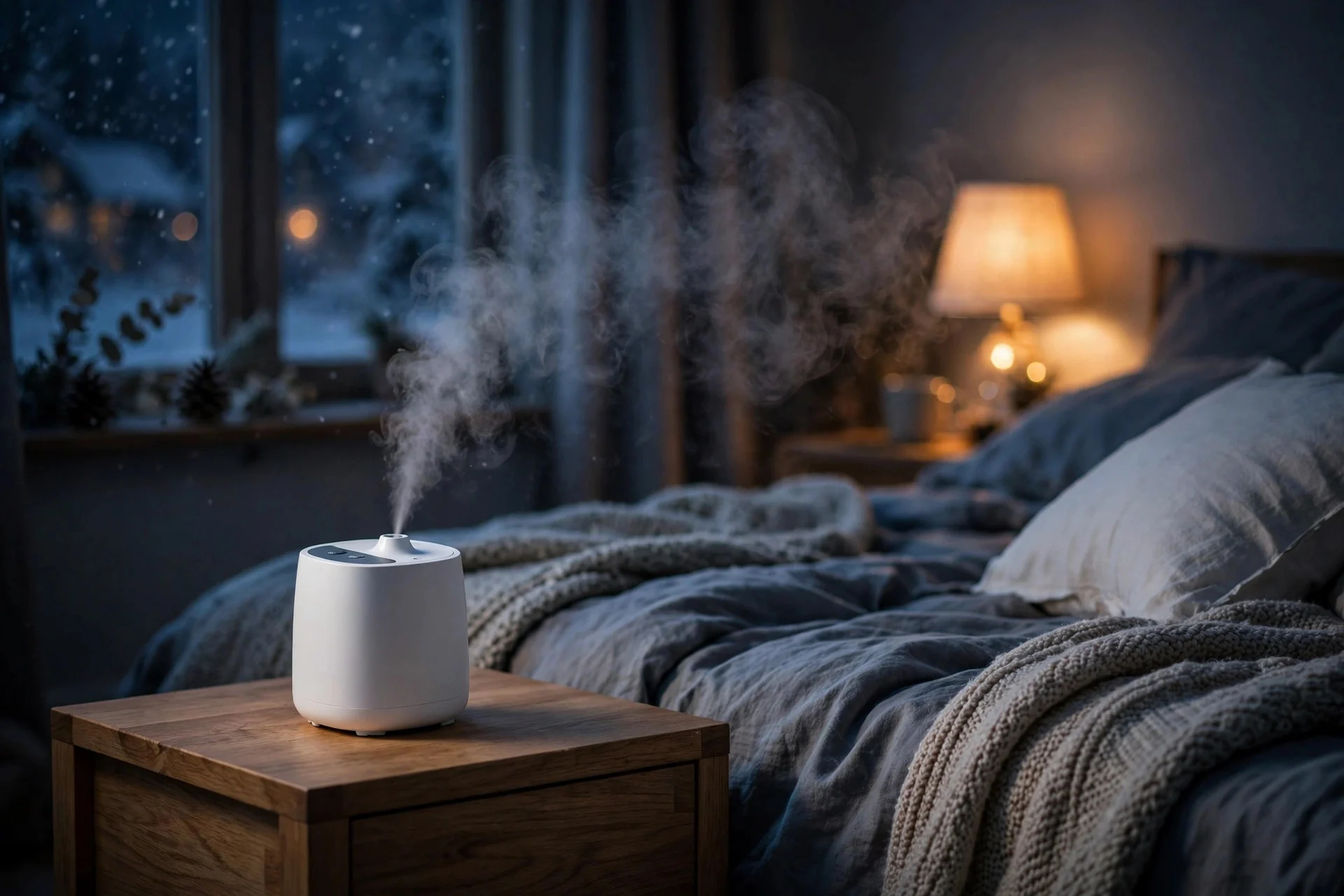
Forced-air heat in winter drops indoor humidity into the teens, and you feel it at 3 a.m.: dry throat, scratchy nose, that congested feeling that isn’t quite a cold. A small cool-mist humidifier on the nightstand — not across the room, near the bed — makes a real difference. Get a 1 to 2-liter tank; anything bigger is overkill for a bedroom and anything smaller runs dry by midnight. Fill it with distilled or filtered water if your tap water is hard, and rinse the tank every couple of days — a slimy humidifier is worse than none. Set it to medium, not max; you want the air comfortable, not foggy. Mine runs about $30, whisper-quiet, and I notice the difference most on windy nights when the furnace runs nonstop. If your bedroom air feels stale in general, here’s why bedrooms get stuffy and what actually helps.
7. Warm the Bed with a Heated Mattress Pad, Not the Whole Room
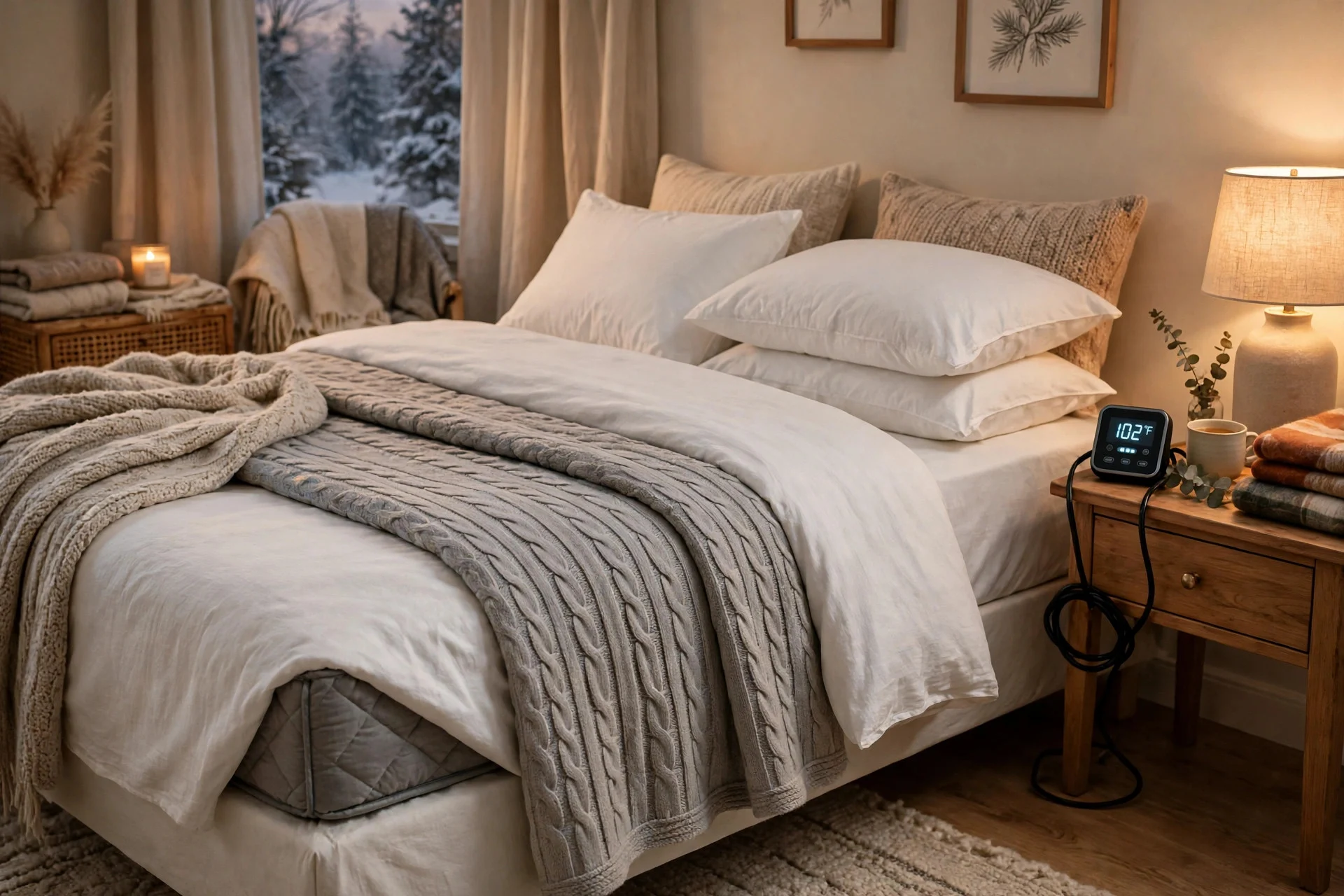
Cranking the thermostat to 74 all night is expensive and it ruins your sleep (see idea #1). A heated mattress pad solves the actual problem: the cold bed. It warms the mattress from below, preheats in ten minutes, and costs pennies a night to run compared to whole-house heat. The dual-control models — around $80 to $120 for a queen — are worth it if you and your partner disagree on temperature, which, let’s be honest, you do. Set yours to medium-low, turn it on thirty minutes before bed, then turn it down once you’re in; sleeping on full blast all night will wake you up sweaty. Safety note: it’s a mattress pad, not an electric blanket — no bunching, no folding it double, and replace it if the cord looks worn. I resisted this for years as “an old-person thing.” It is not. It is the best $90 I have spent on sleep.
8. Drown Out Winter Noise with Steady Sound
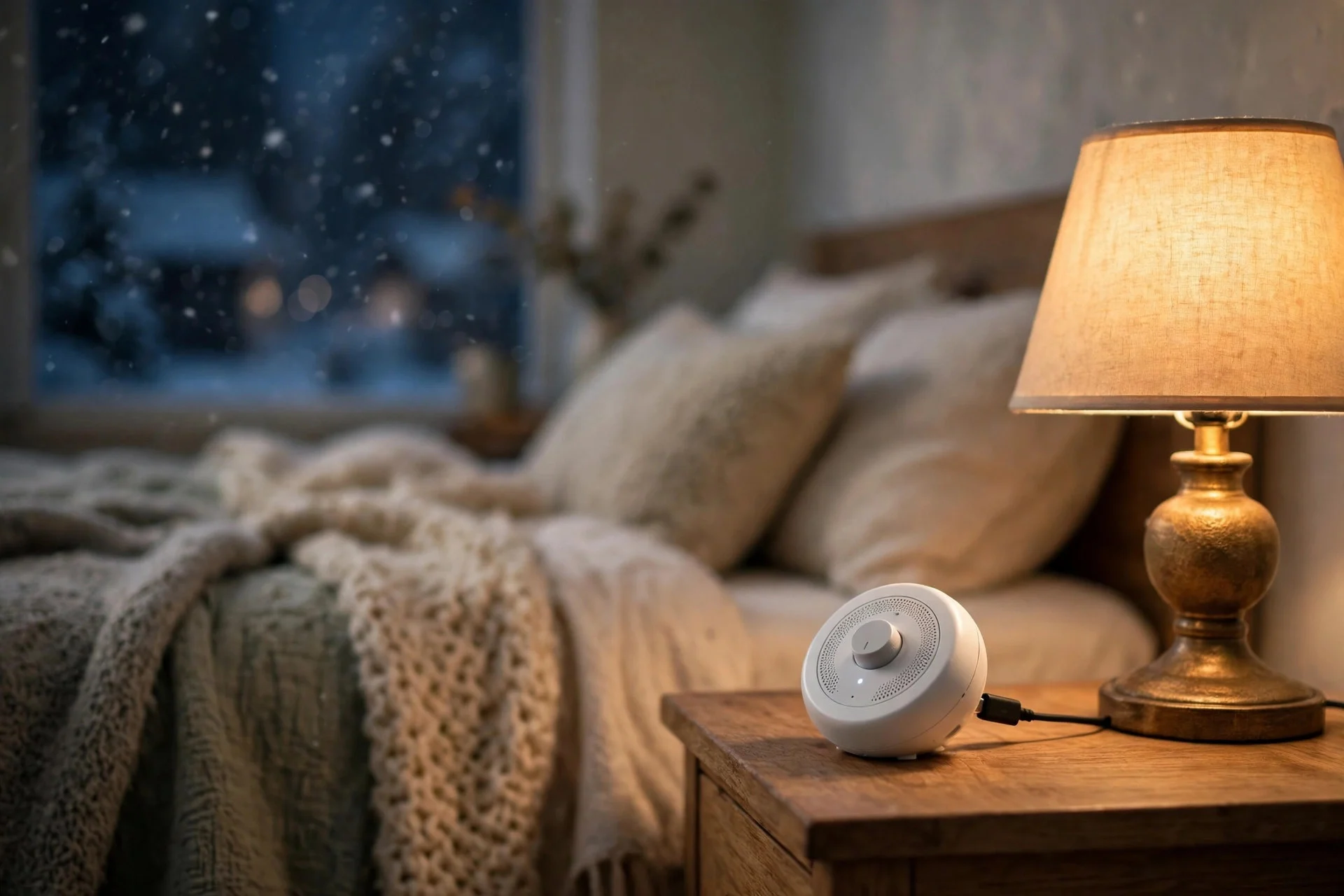
Winter is louder than you think. The furnace kicks on with a clunk. Wind rattles the window. Your neighbor’s car won’t start at 6 a.m. and everyone on the street hears about it. A white noise machine — the simple kind with a real fan inside, not a phone app — masks the sudden spikes that pull you out of deep sleep. Place it between you and the noise source, not right against your pillow; near the door if hallway noise is the issue, near the window if it’s street noise. Run it all night at a moderate volume, about as loud as a quiet conversation. Phone apps work in a pinch, but the speaker is tinny and a 2 a.m. notification will undo everything. A decent machine is $40 to $60. I bought mine after a week of my radiator’s 4 a.m. percussion solo and I have not looked back.
9. Strip the Visual Clutter Before You Sleep

A chaotic room keeps your brain in to-do mode. The laundry chair, the stack of mail on the dresser, the tangled chargers — your eyes land on every one of them when you should be winding down. You don’t need a full declutter. You need the “ten-minute reset”: every night before bed, clear the nightstand down to lamp, book, water. Toss the chair clothes in a basket with a lid. Close the closet door. Put the mail in a drawer, any drawer. It takes less time than brushing your teeth and the room feels fundamentally calmer when you get into bed. I started doing this because I read somewhere that visual clutter raises cortisol — whether or not that’s precisely true, I sleep better in a tidy room, and that’s data enough for me. A calm palette helps too; see bedroom colors that actually support better sleep if you’re thinking about repainting.
10. Put a Rug Down So Cold Floors Don’t Shock You Awake

Nothing ends a peaceful night like swinging your feet onto an ice-cold floor at 3 a.m. That jolt of cold wakes your nervous system right up, and getting back to sleep takes twenty minutes. A rug that extends at least 18 inches on each side of the bed — plus at the foot — fixes it completely. Low-pile or flatweave works best here; high-pile looks cozy but traps dust and is miserable to clean. If a full rug isn’t in the budget, two washable runners, one on each side of the bed, do 80% of the job for about $30. Keep a pair of slippers parked on the rug so the whole path is warm. Not sure what size works? Our guide on what type of rug works best under a bed covers the sizing math. This is one of those changes you feel the very first night.
11. Seal the Drafts That Wake You at 3 A.M.
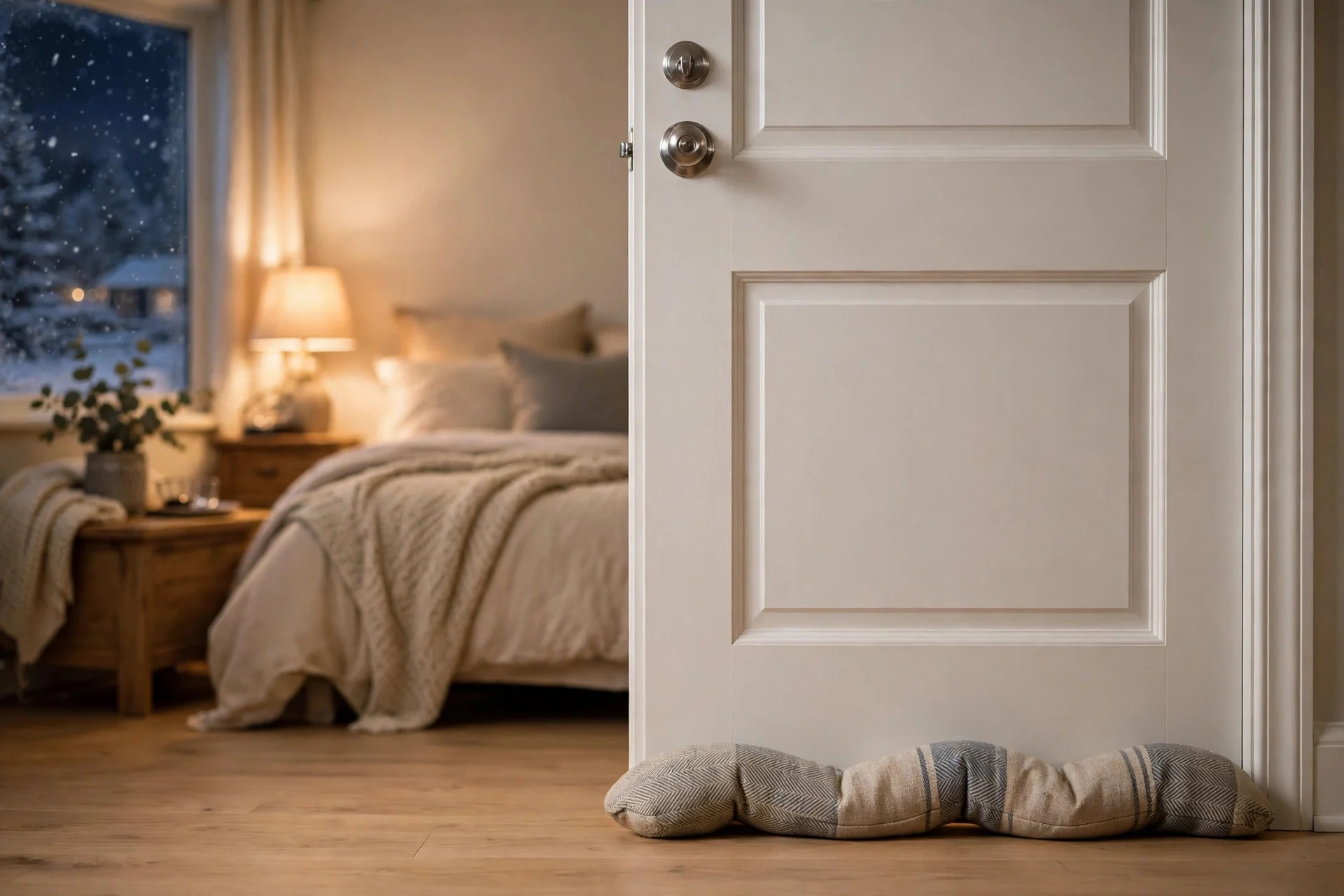
There’s a special misery in waking up cold at 3 a.m. because a draft is working its way under the door or around an old window. Hunt them down on a windy evening: hold a lit candle or a strip of tissue paper near window frames, the door bottom, and any outlet on an exterior wall. Where it flickers, you’ve got a leak. A $10 fabric draft stopper under the door handles the worst offender in most bedrooms. For windows, removable rope caulk ($6 a tube) seals the gaps without damaging the frame — pull it off in spring. Heavy curtains earn their keep here too; they add a surprising amount of insulation over single-pane windows. I sealed my bedroom window one Saturday in January and the room held temperature so much better that I turned the heated pad down a notch. Small fix, big sleep payoff.
12. Wake Up with Light, Not an Alarm Scream
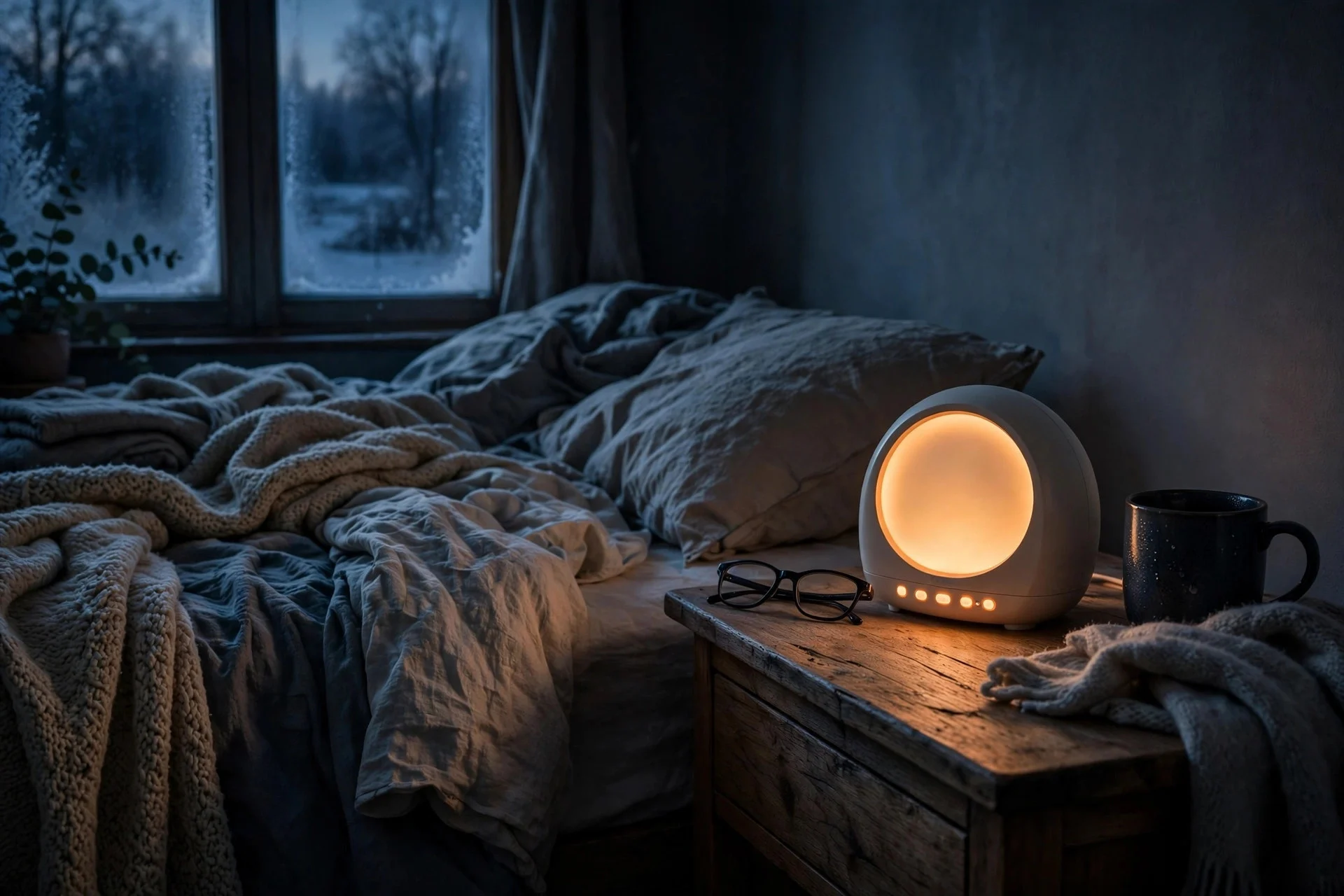
Winter mornings are the cruelest part of the season: pitch black at 7 a.m., and your alarm rips you out of deep sleep. A sunrise alarm clock fixes the worst of it by starting a gradual glow thirty minutes before wake time — dim amber building to full warm light, with the sound only kicking in at the end. Your body starts its wake-up chemistry before the beep ever comes, so you feel less groggy. The popular models run $40 to $70; place the clock where the light actually reaches your face, not hidden behind the nightstand. It won’t replace real sunlight — on weekends I still open the curtains and stand by the window with coffee for ten minutes — but it makes weekday mornings civilized. Waking up gently changes the whole tone of a winter day.
FAQ
What is the best bedroom temperature for sleep in winter?
Most sleep researchers land on 65 to 68°F (about 18 to 19°C) for adults. That’s cooler than most people keep their homes, which is why a slightly closed vent or cracked door works better than reheating the whole house. Babies and older adults may need it a touch warmer — around 68 to 70°F.
Should I wear socks to bed in winter?
Honestly? It helps more people than admit it. Warm feet dilate blood vessels, which signals your body it’s time to sleep. Thin cotton or wool-blend socks are best — thick hiking socks can overheat you. If your feet run hot, skip it; the heated mattress pad in idea #7 covers the same ground.
Do weighted blankets actually help you sleep better in winter?
Many people find the deep pressure calming, especially in winter when everything already feels heavy and dark. Choose one that’s about 10% of your body weight, and make sure it’s breathable — a heavy non-breathable blanket plus winter heat is a recipe for overheating. They’re a nice-to-have, not a must.
How do I stop waking up with a dry throat every winter morning?
It’s almost always dry indoor air. A cool-mist humidifier near the bed (idea #6) is the most direct fix. Drinking water before bed helps a little, but breathing humidified air all night is what actually solves it. If it persists past winter, check with your doctor — chronic dry mouth can have other causes.
Is it bad to sleep with the window open in winter?
A cracked window for fresh air is fine if your room stays above about 60°F and the cold air isn’t blowing directly on you. But a wide-open window in freezing weather forces your heating to fight all night and can leave you stiff and cold by morning. The vent-and-door method in idea #1 gives you the cool air without the draft penalty.
Winter sleep doesn’t need a perfect bedroom — it needs a bedroom that respects what the season does to your body. Start with the temperature and the light, because those two move the needle most. Then add the layers, the humidity, and the quiet. By February, when the dark feels endless, you’ll have a room that actually restores you instead of just housing you. Sweet dreams, and stay warm — but not too warm.