




15 Easter Table Setting Ideas for Spring Gatherings
An Easter table should feel joyful, not fussy. The best spring gatherings I have hosted were not the ones with the most decorations — they were the ones where the table looked pretty, everyone could reach the food, and nobody was afraid to actually sit down. If you are planning your easter table setting this year, these 15 ideas cover everything from the colour palette to the kids’ corner, with nothing that takes all morning to set up.
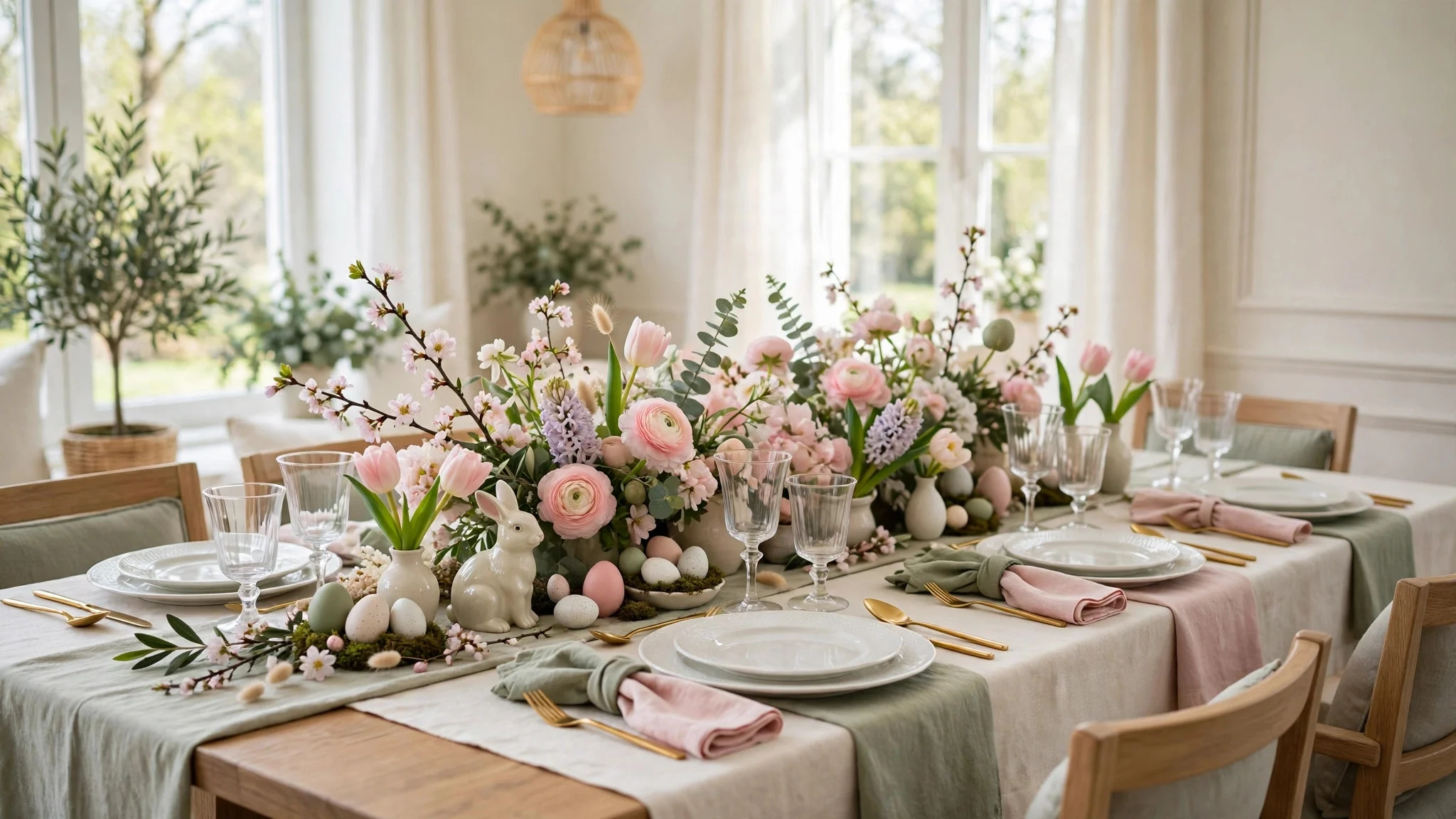
1. Start with a Soft Pastel Palette
Pick two pastels and one neutral before you buy or borrow anything. Blush pink and sage green with cream linen is my go-to, because it looks fresh without screaming Easter. First, lay out what you already own in those colours — plates, napkins, glasses — and see what is missing. Then fill only the gaps, rather than buying a whole new set. Finally, keep the tablecloth or runner neutral so the pastels pop gently instead of competing. I learned this after one year of clashing pink, yellow and lilac all at once, and my photos from that lunch still make me laugh.
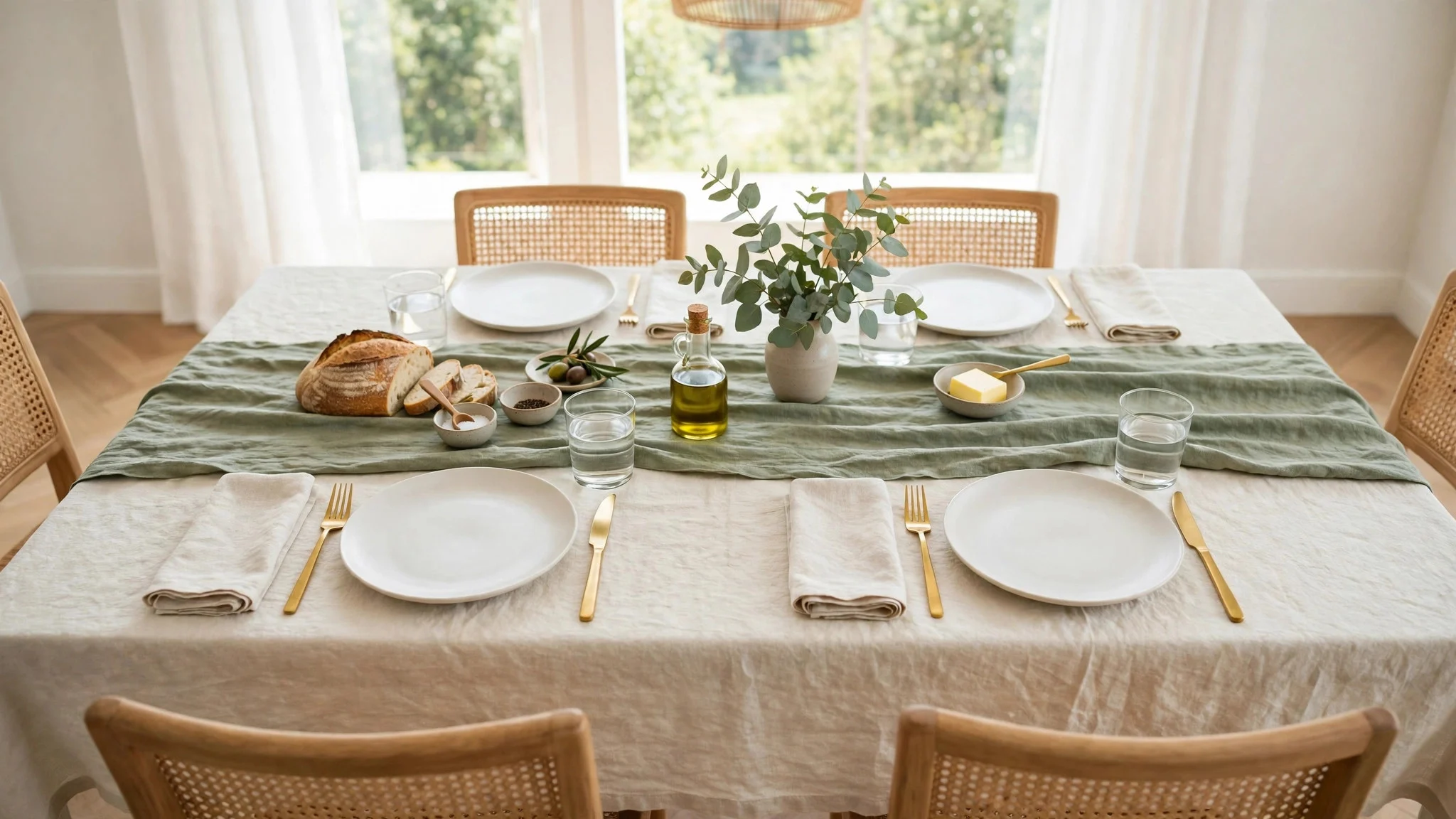
2. Layer a Linen Tablecloth with a Runner
Layering is what makes a table look styled rather than just covered. Start with a plain cream or white linen cloth, then lay a narrower runner — sage, blush or a soft floral — down the centre. First, iron or steam the cloth; wrinkles undo the whole effect in photos. Then centre the runner so equal cloth shows on both sides. Finally, let the runner hang slightly over each end of the table for a relaxed, gathered feel. I use the same cream cloth for every occasion and just swap the runner, which saves money and cupboard space.
3. A Low Tulip Centrepiece Everyone Can See Over
The golden rule of centrepieces: guests should be able to see each other. A low bowl of tulips, or three small bud vases in a row, gives you flowers without a wall of foliage. First, choose a shallow bowl or a few short vases rather than one tall arrangement. Then trim tulips short and let them open naturally over the day — they will look better by lunch than they did at breakfast. Finally, add a few sprigs of greenery to fill gaps. I once built a huge centrepiece that meant half the table talked around a vase, and I have kept everything low ever since.

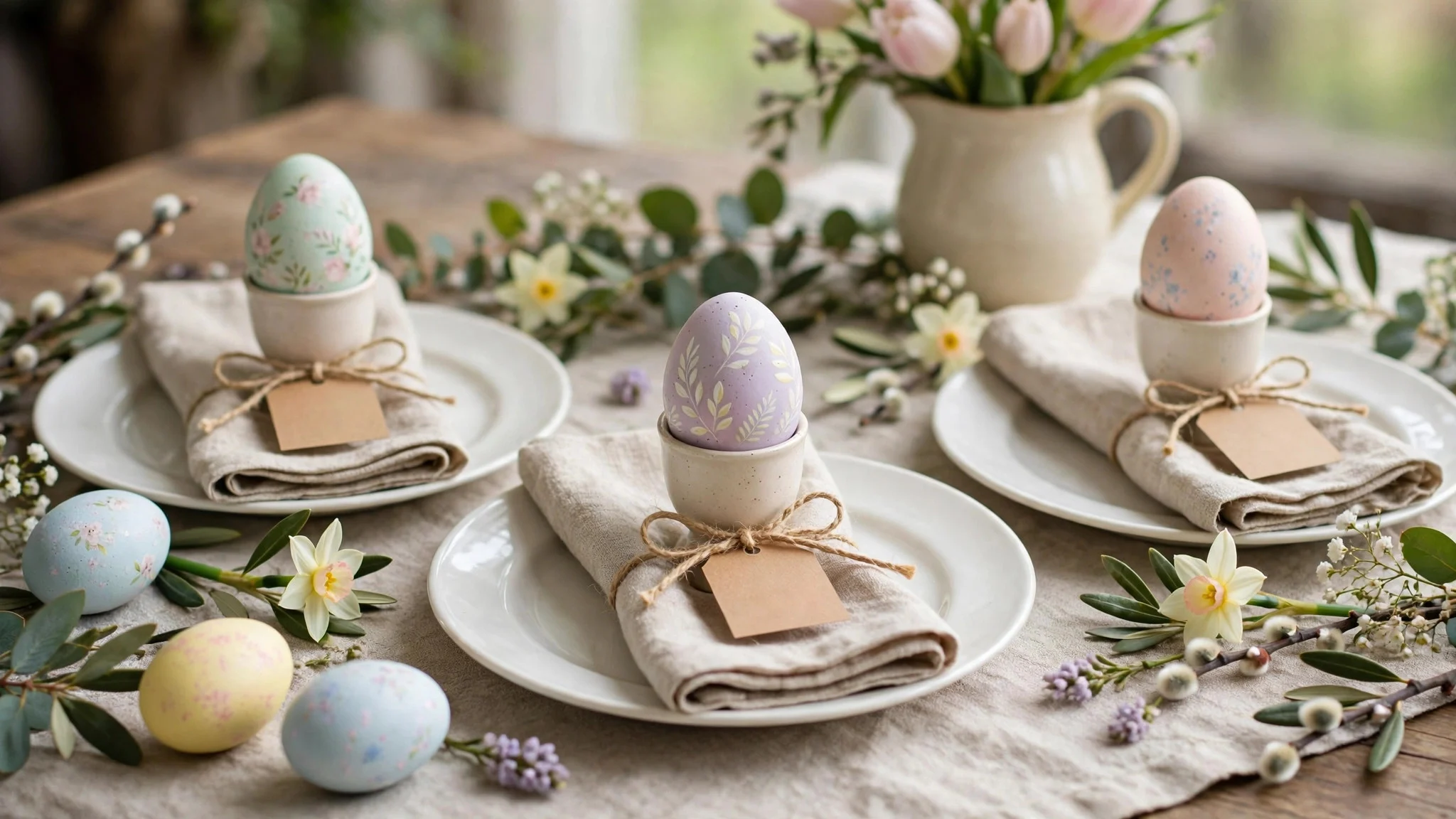
4. Painted Eggs as Place Settings
Hand-painted or naturally dyed eggs are the simplest personal touch on an Easter table. Place one egg on each plate, or in a small egg cup, with the guest’s name written on a tiny tag tied with twine. First, blow out or hard-boil the eggs, then dye them in soft pastel shades — onion skins give a lovely natural peach. Then write names with a fine pen once they are fully dry. Finally, sit each egg on a small nest of shredded paper or a folded napkin. Guests always take theirs home, which tells me it works better than any shop-bought favour.
5. Bunny Ear Napkin Folds
Bunny ear napkins are playful without being childish, especially in linen rather than paper. Fold a square napkin into tall ears and stand it on each plate, or tie a rolled napkin with a ribbon bow to suggest ears. First, practise one fold before the day — a quick video makes it click in minutes. Then use stiff linen or lightly starched cotton so the ears stand up. Finally, place a small flower or sprig at the base of each one. My family now expects these every year, and the kids fight over who gets to fold them, which is a job I happily hand over.

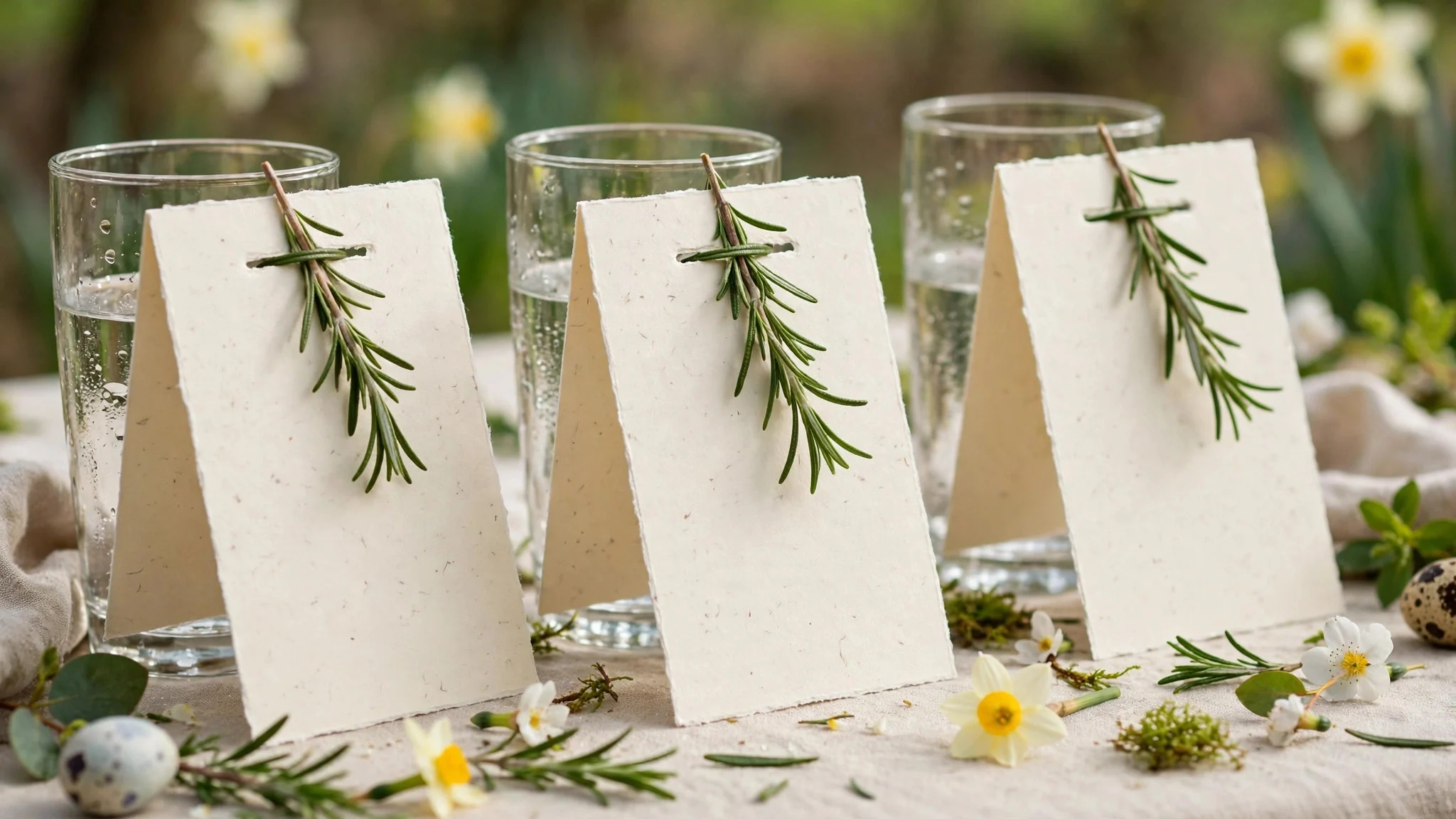
6. Handwritten Place Cards with a Sprig
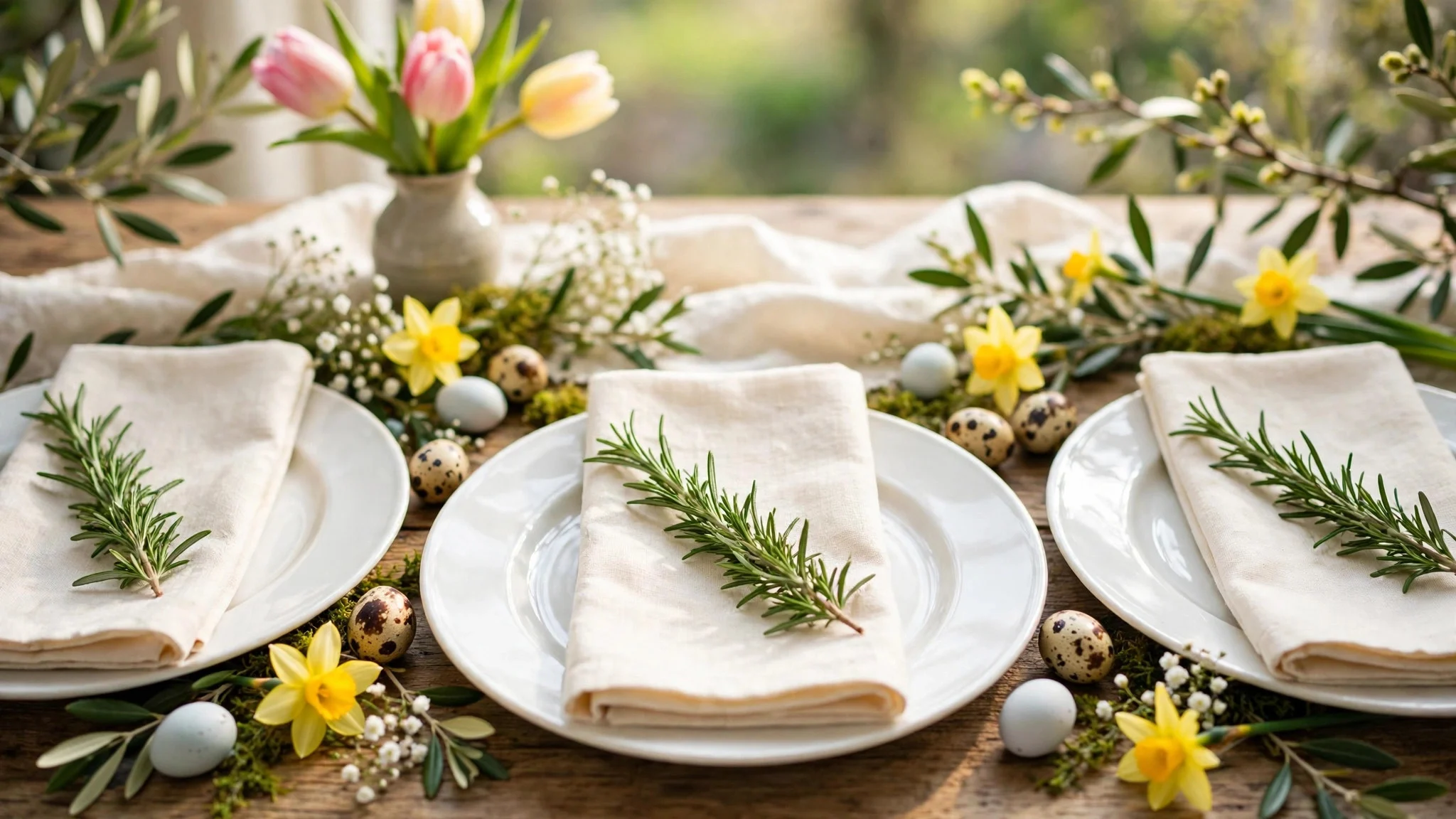
Place cards stop the awkward hovering when everyone sits down, and they double as decoration. Write each name on a small kraft or cream card, punch a hole in the corner, and thread a sprig of rosemary or lavender through it. First, write the names the day before so you are not rushing with wet ink. Then match the sprig to your palette — rosemary for a green table, lavender for a lilac one. Finally, lean each card against a glass or lay it flat on the plate. It takes ten minutes for a table of eight and makes guests feel genuinely welcomed.
7. Mismatched Vintage Plates
Perfectly matched plates can feel formal; a mix of vintage or charity-shop plates feels warm and collected. Choose plates in the same palette — creams, soft blues, pale florals — so the mix looks intentional rather than random. First, gather what you own and borrow the rest from family, noting who owns what. Then alternate patterns around the table so no two identical plates sit together. Finally, keep the bowls and serving dishes plain so the plates stay the stars. My favourite Easter table used six different plates, and nobody noticed the mismatch — they just said the table looked beautiful.

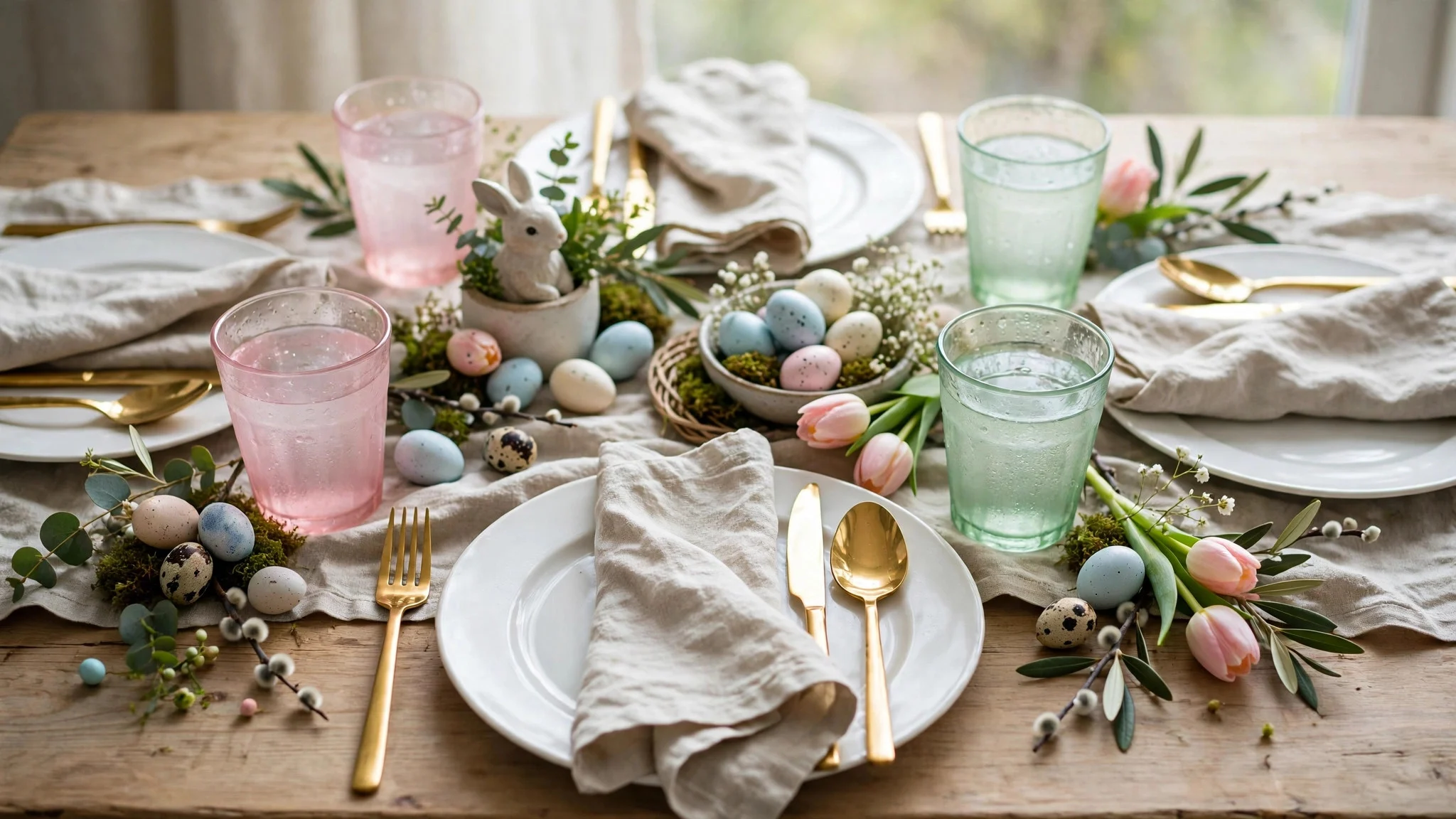
8. Gold Cutlery with Pastel Glassware
A little shine stops pastels from feeling too sweet. Gold or brass-toned cutlery against blush or mint glasses gives the table a grown-up glow. First, polish the cutlery the night before — water spots show up fast in spring light. Then pair one coloured glass per setting with a plain water glass, so the table does not look like a rainbow. Finally, keep the cutlery placement simple and correct: forks left, knives right, dessert spoon above. I bought my gold set on sale years ago and it has earned its keep at every spring gathering since.
9. Taper Candles in Pastel Holders
Taper candles add height without blocking anyone’s view, which makes them perfect for a gathering table. Use pastel or cream holders in different heights, and keep the candles slim and unscented so they do not fight with the food. First, place holders in a loose line down the centre, leaving space for serving dishes. Then light them just before guests sit down, not hours earlier, so they burn evenly. Finally, keep a small tray or plate under each holder to catch wax. Candlelight makes even a simple roast lunch feel like an occasion, and it photographs beautifully in the evening.

10. A Mini Nest Favour at Each Setting
A tiny nest — shredded wheat nests with chocolate eggs, or a small woven nest with a few foil eggs — is a favour guests actually want. Place one on each plate or just above it. First, make the nests the day before so chocolate sets properly. Then add two or three eggs per nest, not a mountain. Finally, tie a small tag with a thank-you note if you have time, but do not stress if you skip it. I started doing this when my nieces were small, and the adults now complain if their nest is missing, which is probably the best review a table decoration can get.
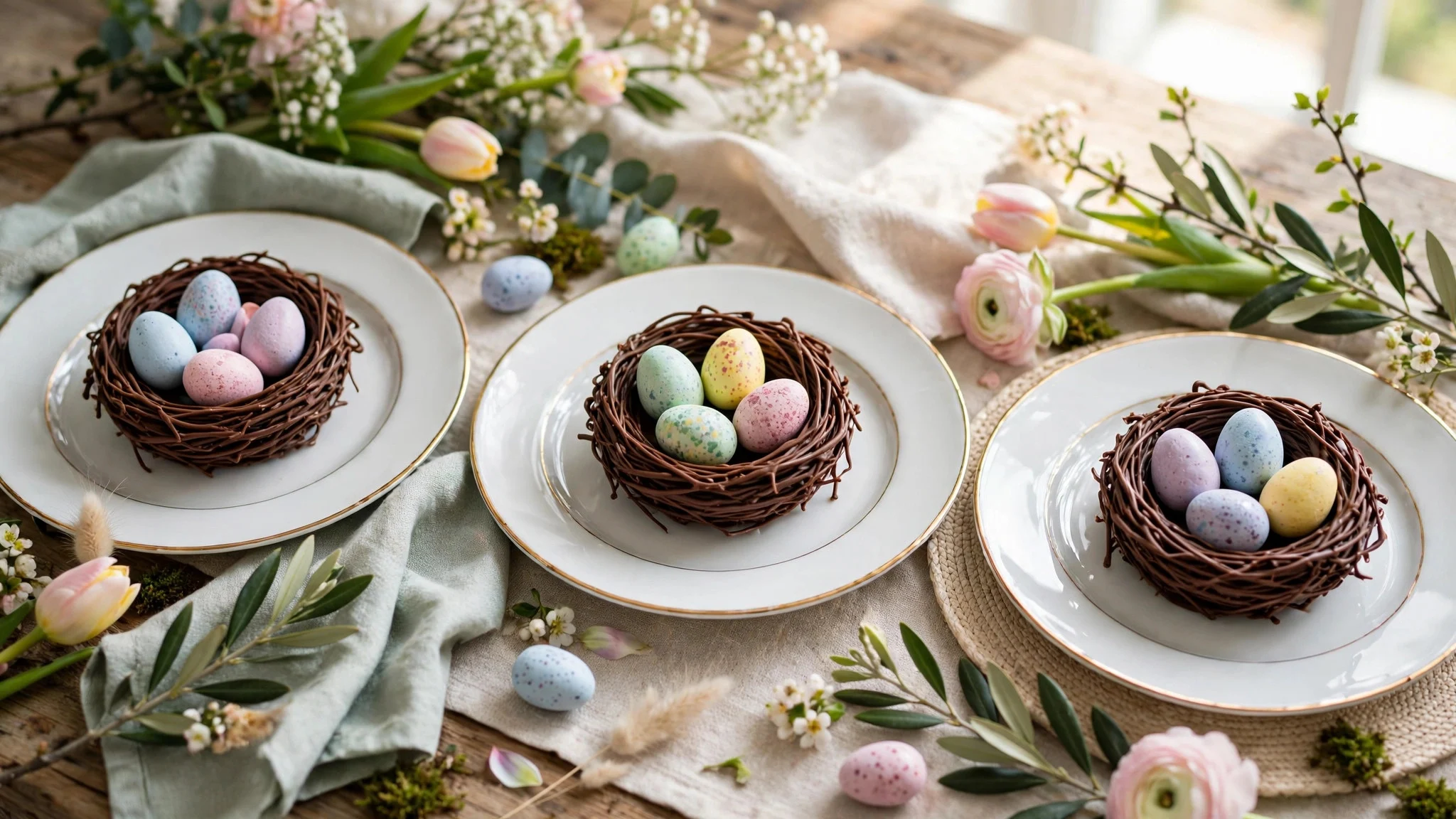
11. Fresh Herb Sprigs on Every Plate
Herbs are the cheapest table decoration that also smells wonderful. A sprig of rosemary, mint or thyme laid across each napkin adds green, scent and a cook’s touch. First, cut the sprigs the morning of the gathering so they stay fresh. Then rinse and pat them dry, so no soil ends up on the plates. Finally, lay one sprig diagonally across each napkin, or tuck it under the napkin ring. Guests can drop the rosemary into their roast potatoes later, which is a nice little bonus. For more seasonal table inspiration, see these Christmas table setting ideas for every style — many of the layering tricks work just as well at Easter.
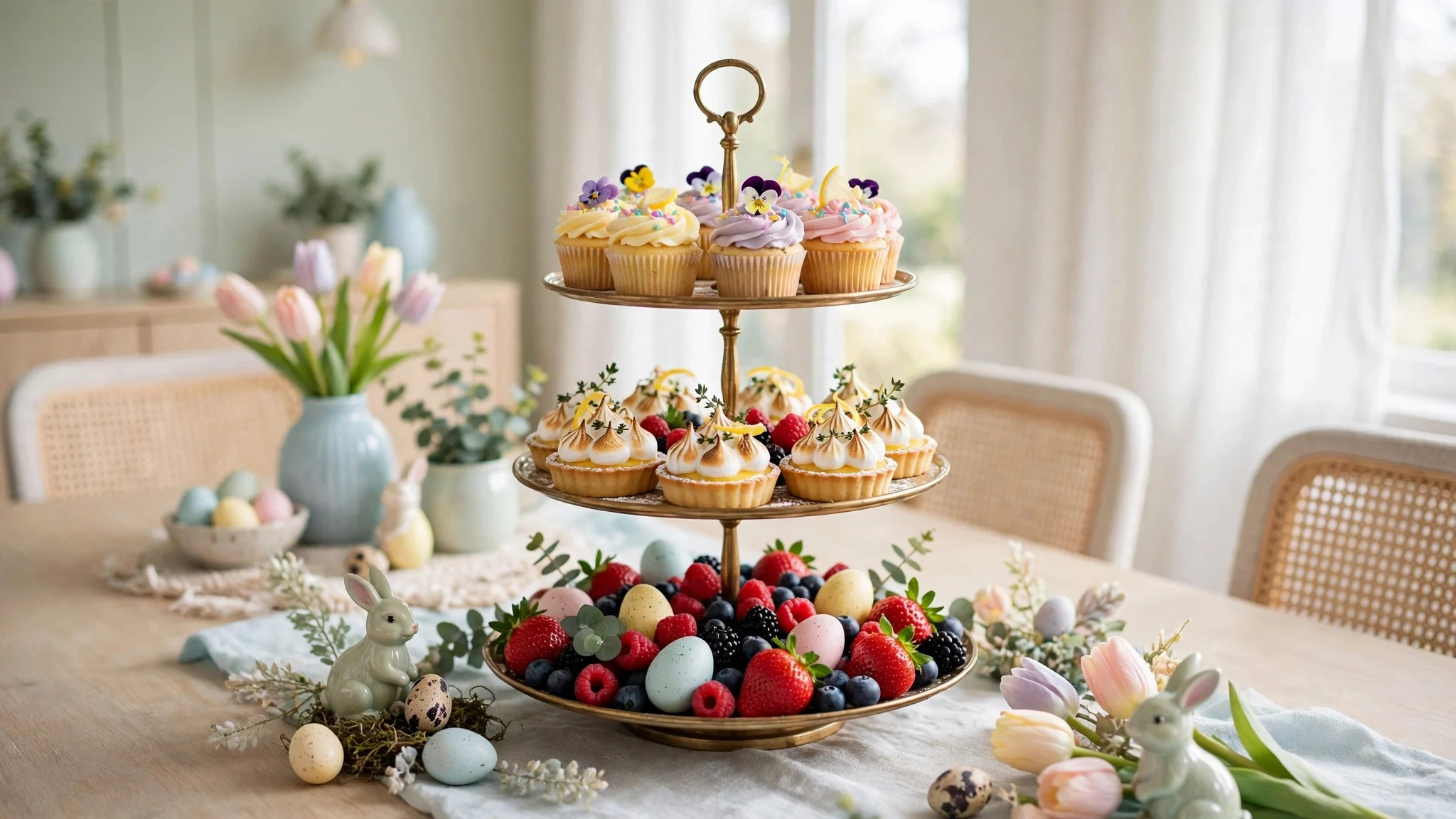
12. A Tiered Stand as the Dessert Centrepiece
Instead of a floral centrepiece that gets moved for dessert, make dessert the centrepiece. A tiered stand with mini cupcakes, lemon tarts or hot cross bun bites sits in the middle of the table and looks like decoration until it is time to eat. First, bake or buy small items that look good from all sides. Then arrange the tallest or most colourful pieces on top and plainer ones below. Finally, add a few fresh berries or edible flowers for colour. I did this last Easter and the stand was empty within twenty minutes of pudding being announced, which is exactly the point.
13. A Kids’ Corner with Crayons and Mini Eggs
If children are coming, give them their own end of the table rather than expecting them to sit still through a formal setting. Cover their section with kraft paper they can draw on, add a pot of crayons, and scatter a few mini eggs. First, keep their plates and cups unbreakable — melamine in pastel shades works well. Then put a small activity, like an egg-colouring sheet, at each place. Finally, seat one adult nearby, not hovering, just close enough. The adults get a calmer meal, the kids get to be kids, and the kraft paper drawings usually end up pinned to the fridge for weeks.

14. Take the Table Outside for a Garden Gathering
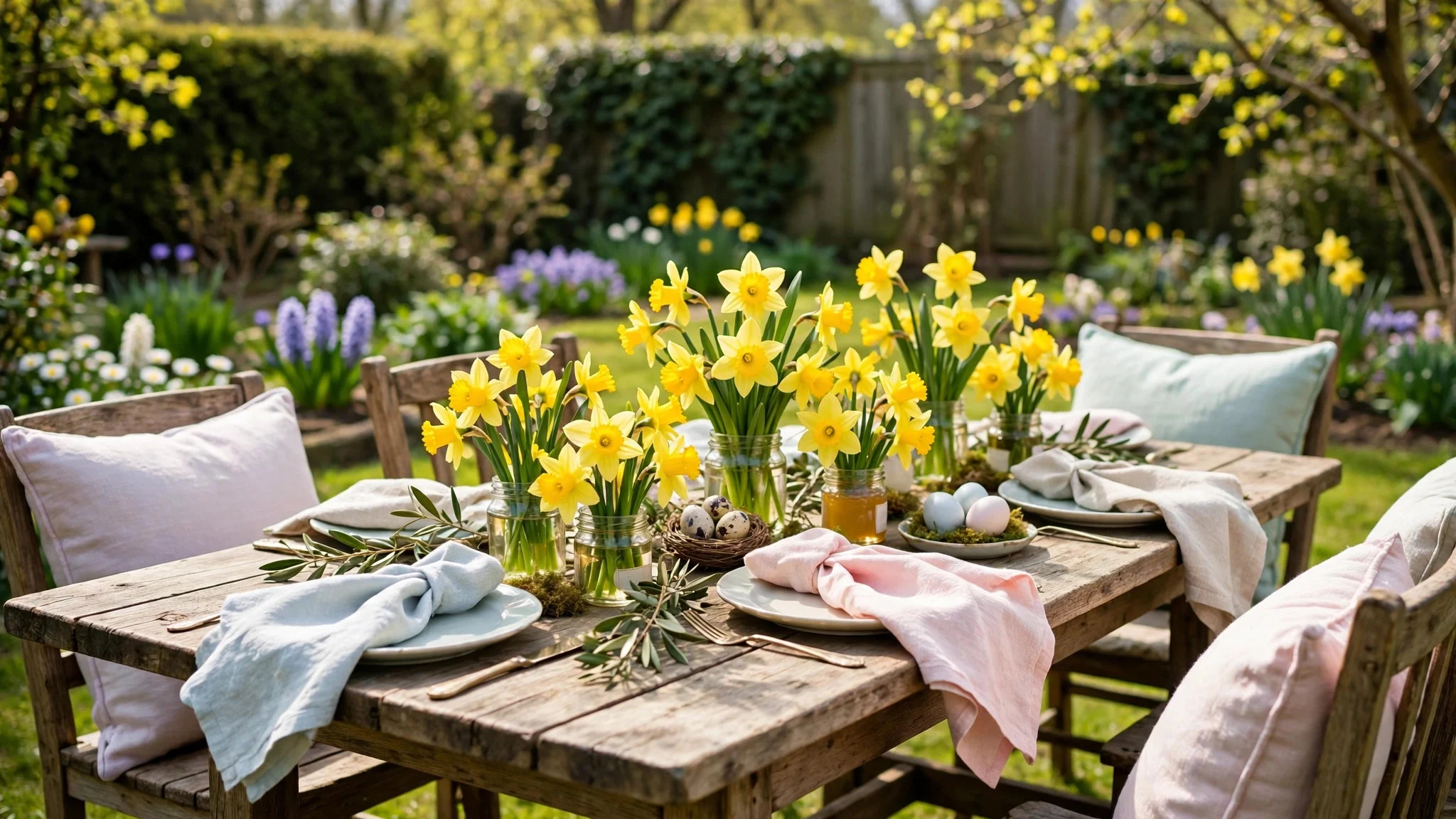
If the weather allows, Easter lunch tastes better outdoors. Move the same setting outside: a simple wooden table, linen napkins, jam jars of daffodils, and a few pastel cushions on the chairs. First, check the forecast and have a backup plan — a gazebo or the dining room ready to go. Then weigh the napkins down with a small stone or an egg so they do not blow away. Finally, keep the menu simple: cold meats, salads and bread travel better than anything that needs precise timing. My favourite Easter meal ever was eaten outside under a tree, with daffodils in jam jars and absolutely no fuss.
15. A Candlelit Evening Easter Table
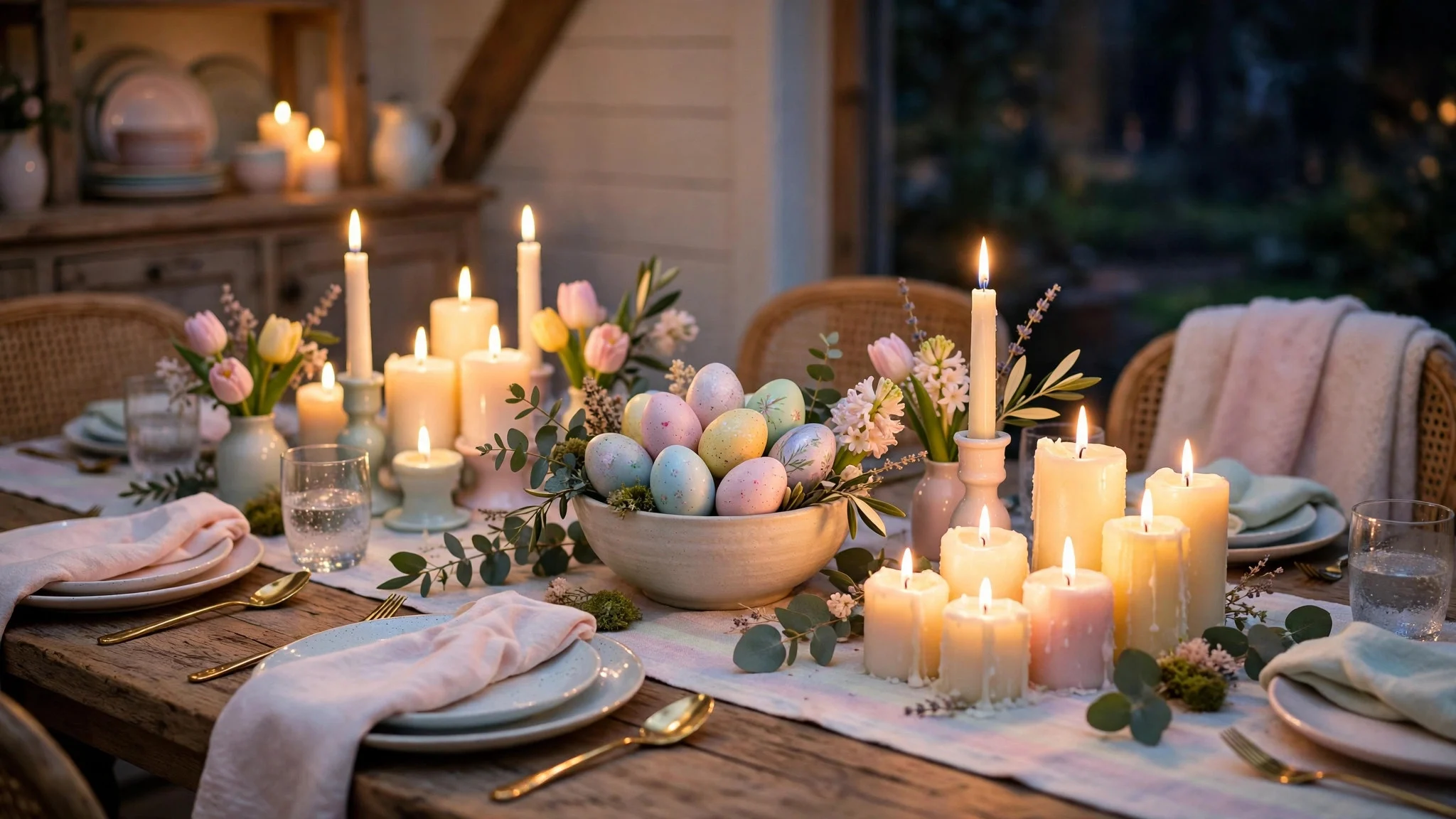
Easter does not have to end at lunch. For an evening gathering, dim the overhead lights, light every candle, and let the pastel table glow. Swap the bright daytime flowers for a few low candles and a bowl of painted eggs, and add a soft throw over the chair backs for guests who get chilly. First, clear the lunch dishes completely and re-lay the table fresh — a reset makes evening feel like a second event. Then light candles in clusters of three at different heights. Finally, put on a quiet playlist and bring out cheese, bread and something sweet. If your spring table needs a full refresh first, these tips on transitioning seasonal decor are a handy reminder that the best seasonal changes are gradual, not all at once.
Frequently Asked Questions
How far in advance should I set an Easter table?
Set the non-perishable parts — cloth, plates, cutlery, place cards — the night before. Add flowers, candles and food touches on the morning of the gathering so everything looks fresh and you are not rushing.
What colours work for an Easter table besides pastels?
White and green with natural wood is a lovely alternative, as is cream with gold accents. Pastels are traditional, but a fresh green-and-white table can feel more modern if pink and lilac are not your style.
How do I stop the centrepiece blocking conversation?
Keep it low — under about 30 centimetres — or use several small vases instead of one tall arrangement. If guests have to lean around it to talk, it is too big for the table.
Can I set a nice Easter table on a budget?
Absolutely. Use what you own, add one bunch of seasonal flowers, dye your own eggs, and cut herb sprigs from the garden. A tablecloth you already have plus fresh touches beats a trolley full of new decorations.
Should kids sit at the main table or their own table?
Either works, but a kids’ corner at the same table keeps everyone together while giving children space to be themselves. A separate small table is better for very large gatherings where space is tight.
Easter tables are about gathering people, not impressing them. Pick the ideas that fit your home, your guests and your budget, set the table the night before, and then actually enjoy the lunch instead of fussing over it. That, more than any centrepiece, is what guests remember.

2 Responses