

The gap between how a haircut looks leaving the salon and how it looks the next morning at home isn’t imagined, and it isn’t usually a bad haircut. Here’s what’s actually different.
Walking out of a salon with hair that looks noticeably better than it does a day or two later at home is such a common experience that it’s become a running joke, and it’s worth taking seriously rather than dismissing, since the gap is real and has several specific, identifiable causes — none of which mean the haircut itself was wrong or that home styling skill is fundamentally lacking. A salon blowout and a home styling routine are, in a real sense, different processes producing different results from the same haircut, and understanding why closes much of that gap.
Salon Styling Uses Professional Tools and Techniques Most People Don’t Replicate at Home
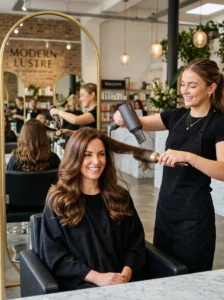
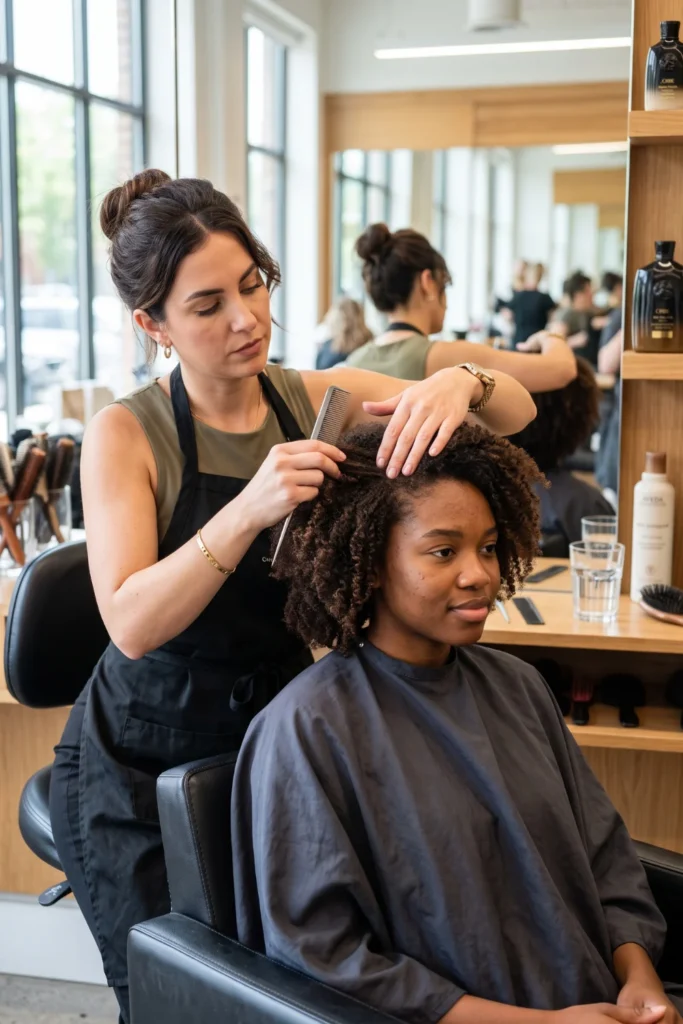
A salon blowout typically involves a higher-quality, more powerful dryer than most people own, used with a specific round-brush technique that creates tension and shape while the hair dries, a process that takes considerable practice to execute effectively and that most people, styling their own hair rather than someone else’s, physically struggle to replicate with the same precision.
Styling one’s own hair is genuinely more difficult than a stylist styling someone else’s hair, for a simple mechanical reason: a stylist has a full, unobstructed view of the entire head from multiple angles simultaneously, while a person styling their own hair is working primarily by feel and a single mirror angle, unable to see the back and sides with the same clarity a stylist has throughout the entire process.
This isn’t a skill deficiency so much as a structural limitation of the situation — replicating a salon blowout at home requires either developing genuine technical skill over considerable practice, or accepting that home styling will produce a different, generally less precise result than a professional blowout, and adjusting expectations or investing in specific tools and technique accordingly.
Product Application Differs Significantly Between Salon and Home Use
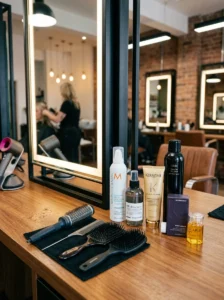
Salons typically use a specific combination and quantity of styling products — a heat protectant, a volumizing or smoothing product, sometimes a finishing product — applied in a particular sequence and amount that most people don’t replicate at home, whether due to not owning the same products, not knowing the specific application technique, or simply using a smaller quantity than what actually produces the salon’s characteristic result.
Asking a stylist directly what products they used and in what order, during or immediately after a cut and style, is a genuinely useful way to close this gap, since stylists are generally happy to share this information and it removes much of the guesswork involved in trying to reverse-engineer a salon result from home.
Salon Lighting Is Specifically Designed to Flatter Hair

Salon lighting is typically bright, warm, and positioned specifically to make hair look its best — shiny, well-defined, with visible dimension and movement — which is a deliberately curated lighting environment rather than the more variable, often less flattering lighting most homes have in the specific spot where styling and mirror-checking actually happens.
This is a related but distinct issue from the styling technique and product gap covered above — even an identically replicated blowout can look different under a home bathroom’s typical lighting than it did under a salon’s specifically chosen, hair-flattering lighting, which is worth recognizing as a genuine contributing factor rather than assuming the hair itself has actually changed in quality between the salon and home.
Hair Is Often Cut While Wet, Which Changes How the Finished Length and Shape Read
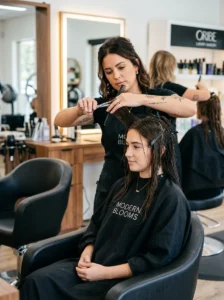
Many haircuts are performed on wet hair, and wet hair behaves differently than dry hair in both length (wet hair often appears longer before it dries and, for curly or wavy hair, shrinks upward) and how layers and shape actually read — a cut that looks precisely even and balanced while wet can shift somewhat once fully dry, particularly for curl patterns that contract meaningfully between wet and dry states.
A stylist experienced with a specific hair texture accounts for this shift during the cutting process, but the actual final dry result is still only fully visible once the hair has completely dried and, in a salon setting, been styled using the salon’s specific drying and styling technique — which means the “reveal” moment at the end of a salon visit is showing a fully finished, professionally dried and styled result, not simply the cut itself in a neutral, unstyled state.
The Gap Between “Just Cut” and “Regular Daily Styling” Is Often Underestimated
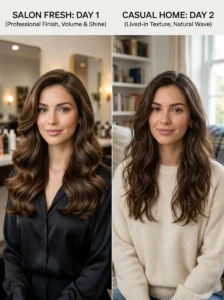
A salon visit typically represents the best possible version of a haircut — freshly cut, freshly washed, professionally dried and styled with salon-grade tools and products, under flattering lighting — while home styling on a random weekday represents a different, more routine scenario: hair that’s a few days past the cut, dried with home tools, under home lighting, styled in less time with less product. Comparing these two scenarios directly, rather than recognizing them as fundamentally different circumstances, sets up a comparison that isn’t actually fair to the home version, regardless of how well it’s executed.
A more realistic comparison is between a salon blowout and a genuinely careful, well-executed home styling attempt using similar tools, technique, and time investment — which, once actually compared on those more equal terms, usually shows a considerably smaller gap than the salon-visit-versus-random-weekday comparison most people are actually making without realizing it.
Closing the Gap Without Expecting a Perfect Match
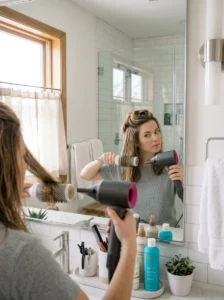
Learning the specific round-brush technique a stylist uses, through direct observation during a salon visit, a tutorial, or explicit instruction requested from a stylist, is the single highest-impact way to close the styling technique gap, though it genuinely requires practice and repetition to execute well, similar to any other developed physical skill.
Investing in a dryer with adequate power and a round brush appropriate for the hair’s length and thickness addresses part of the tool gap, though matching a salon’s specific professional-grade equipment exactly isn’t necessary to achieve a meaningfully improved result over lower-quality home tools.
Accepting that a perfect, identical match to the salon result isn’t a reasonable or necessary goal for daily home styling — a well-executed home version doesn’t need to replicate the salon’s absolute best-case result to look genuinely good, and setting that lower, more achievable bar reduces the disappointment that comes from comparing an average home effort against a professional’s best-case, ideal-conditions result.
Key Takeaways

- A stylist has full, unobstructed access to view a client’s entire head simultaneously, while styling one’s own hair is done largely by feel with a single mirror angle, which is a genuine structural limitation, not a skill failure
- Salons typically use a specific combination and quantity of products that most people don’t replicate at home — asking a stylist directly what was used and how removes much of the guesswork
- Salon lighting is specifically designed to flatter hair, which means even a well-replicated blowout can look different under typical home lighting, independent of any actual difference in the hair’s quality
- Hair is often cut wet, and the finished dry result — including how curl patterns contract — is only fully visible once the hair is completely dry and professionally styled, which is what a salon “reveal” actually shows
- Comparing a fresh salon blowout to routine weekday home styling isn’t a fair comparison, since these represent genuinely different circumstances in terms of tools, product, timing, and lighting
- Learning specific round-brush technique through observation or direct instruction is the highest-impact way to close the gap, though it requires practice, and a perfect match to the salon’s best-case result isn’t a necessary goal for good daily styling

Frequently Asked Questions
Is it possible to actually replicate a salon blowout at home? It’s possible to get considerably closer with the right tools, technique, and product, though an exact match is difficult given the structural difference between someone else styling your hair with full visual access and doing it yourself largely by feel. Learning specific round-brush technique and asking a stylist what products they used are the two most effective ways to close the gap.
Why does my hair look thinner or less voluminous at home than it did leaving the salon? This is often a combination of product application differences (salons frequently use more volumizing product and specific application technique than most people replicate at home) and simply the difference between a fresh, professionally dried style and hair a day or more past that initial styling, which naturally loses some volume and definition over time regardless of the original cut’s quality.
Does salon lighting actually make that big a difference? Yes, genuinely — salon lighting is deliberately bright, warm, and positioned specifically to flatter hair’s shine and dimension, which is a different lighting environment than most home bathrooms or styling areas provide. This is a real contributing factor to the perceived gap, separate from any actual difference in styling technique or product use.
Should I ask my stylist what products and tools they used? Yes, this is a genuinely useful and commonly welcomed question — most stylists are happy to share what products and techniques they used, and this information directly closes much of the guesswork involved in trying to replicate the result at home without that knowledge.
Is it normal for a haircut to look different once it’s fully dry compared to right after cutting? Yes, particularly for hair cut while wet — wet hair behaves differently than dry hair in both apparent length and how layers read, and curl patterns especially can shift meaningfully between wet and dry states. A stylist experienced with a given texture accounts for this during cutting, but the true final result is only visible once the hair is completely dry and styled.