

“Too often” means something different depending on what kind of color process is being used, and the actual damage mechanism is more specific than a vague sense that coloring is “bad” for hair. Here’s what’s actually happening.
“Coloring damages your hair” is treated as an established, general fact, without much explanation of the actual mechanism involved or why some coloring processes are considerably more damaging than others despite both being broadly labeled “hair color.” Understanding what’s actually happening at a structural level — and why frequency, process type, and hair’s starting condition all interact rather than any single “too often” threshold applying universally — makes it possible to color hair more strategically rather than either avoiding it entirely out of general caution or coloring without any real understanding of the cumulative effect.
The Cuticle Has to Be Lifted for Any Real Color Change to Occur
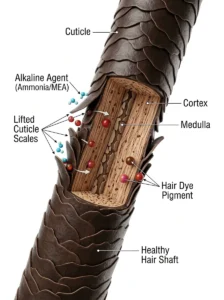
Hair’s outer layer, the cuticle, is made of overlapping layers that lie flat against each other in healthy, undamaged hair, giving hair its smooth texture and natural shine by reflecting light evenly. Any coloring process that changes hair’s underlying color — rather than simply coating the surface — requires lifting these cuticle layers open to allow color molecules to enter the hair’s inner cortex, where the actual pigment change happens.
This cuticle-lifting step is unavoidable for permanent color and for any lightening process, and it’s the fundamental reason these processes cause structural change to the hair, regardless of how carefully or professionally they’re executed — opening the cuticle is not itself damage, but a hair shaft that’s had its cuticle repeatedly lifted and only partially resealed after each color service accumulates cumulative structural change over time, which is the actual mechanism behind “coloring damages hair” as a general statement.
Different Color Processes Cause Meaningfully Different Levels of Structural Change
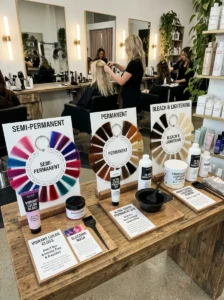
Semi-permanent and demi-permanent color, which don’t require significant cuticle lifting or use developer at a lower volume, cause considerably less structural change than permanent color or lightening processes, since they largely coat the hair’s surface or make only a modest, temporary change to the cuticle rather than requiring it to be substantially opened.
Permanent color requires genuine cuticle lifting and uses an oxidative process (typically involving ammonia and a developer) to both lift the cuticle and deposit new pigment into the cortex, which causes meaningfully more structural change than semi-permanent options, though considerably less than lightening.
Bleach and lightening processes are the most structurally significant, since they don’t just lift the cuticle to deposit color — they actively break down the hair’s natural melanin, a chemical process that also affects the protein structure of the hair shaft itself, which is why heavily bleached or lightened hair often shows more textural change (increased porosity, altered elasticity) than hair that’s only ever been colored darker or with permanent color that doesn’t require significant lightening.
Porosity Increases With Each Cuticle-Lifting Process, and This Compounds Over Time
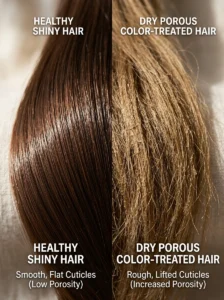
Hair porosity — how easily hair absorbs and releases moisture — increases each time the cuticle is lifted and doesn’t fully return to its original, tightly-sealed state, which means repeated coloring processes have a cumulative effect on porosity even if any single service seems reasonably gentle in isolation.
Increased porosity is why heavily colored hair often feels different — more prone to dryness, more likely to feel rough or frizzy, less able to hold moisture — compared to virgin, uncolored hair, and this is a structural, measurable change rather than a purely cosmetic one, which is why porosity-focused hair care (specific conditioning treatments, protein treatments, moisture-focused routines) becomes increasingly relevant and increasingly necessary as color processing accumulates over time.
Protein Loss Is a Distinct, Separate Damage Mechanism From Cuticle Damage
Beyond cuticle lifting and porosity increase, coloring processes — particularly those involving oxidation and lightening — also break down some of the protein (keratin) structure within the hair shaft itself, which is a separate mechanism from the cuticle-level changes covered above, affecting the hair’s internal strength and elasticity rather than just its outer surface texture.
This is why heavily colored or lightened hair is often more prone to breakage and snapping, particularly when wet (hair is naturally more elastic and more vulnerable when wet, and protein-depleted hair has less structural strength to withstand this vulnerability), and it’s the reason protein treatments — which temporarily fill in and reinforce the compromised protein structure — are specifically recommended for chemically processed hair rather than simply general moisture treatments alone.
What “Too Often” Actually Means Varies Considerably by Process
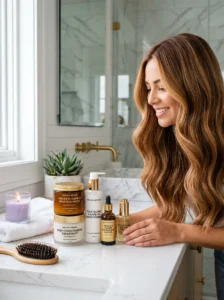
There’s no single universal frequency threshold that applies to all coloring processes, since the actual structural impact varies so significantly by process type — semi-permanent color can generally be applied more frequently with less cumulative concern than permanent color, and permanent color, in turn, causes less cumulative structural change than repeated bleaching or lightening sessions.
A more useful framework than a fixed time interval is monitoring hair’s actual condition directly — increasing dryness, reduced elasticity (hair that stretches and doesn’t spring back, or that feels weak when wet), visible breakage, or a rough, straw-like texture are all signs that the hair’s structural capacity is being outpaced by the frequency and intensity of the coloring process being used, regardless of what the calendar interval between appointments happens to be.
Hair that’s already been significantly lightened or has undergone substantial structural change from previous processing has less remaining capacity to withstand further chemical processing than virgin or minimally processed hair, which means the same coloring frequency that was sustainable early on may need to be reduced or supported with more intensive between-appointment care as cumulative processing history increases.
Recovery Strategies Support Structural Health Between Color Services

Protein treatments, used periodically rather than at every wash, help temporarily reinforce the compromised internal protein structure covered above, though it’s worth noting that protein treatments used too frequently or in a way that isn’t balanced with adequate moisture can themselves create a different kind of imbalance (hair that becomes too protein-heavy relative to its moisture content can feel stiff and become more prone to breakage in a different way).
Deep conditioning treatments focused specifically on moisture, rather than protein, address the porosity and dryness side of color-related structural change, and a rotation between protein-focused and moisture-focused treatments, rather than defaulting to one category exclusively, tends to support overall hair health more effectively than either approach used alone.
Extending the actual time between color services — even modestly, using root touch-ups or strategic placement techniques (like balayage or babylights, which don’t require full reprocessing of previously colored lengths) rather than full, all-over reapplication at every visit — reduces the cumulative structural impact considerably compared to a coloring approach that reprocesses the same hair repeatedly at short, regular intervals.
Key Takeaways

- Any coloring process that genuinely changes hair’s underlying color requires lifting the cuticle to allow pigment into the hair’s cortex, and this cuticle-lifting is the fundamental mechanism behind cumulative color-related structural change
- Semi-permanent color causes considerably less structural change than permanent color, which in turn causes less change than bleaching or lightening, which additionally breaks down the hair’s protein structure
- Porosity increases with each cuticle-lifting process and compounds over time, which is why heavily colored hair often feels drier and more prone to frizz than uncolored hair
- Protein loss is a separate, distinct damage mechanism from cuticle and porosity changes, affecting the hair’s internal strength and contributing to increased breakage, particularly when hair is wet
- There’s no single universal “too often” threshold — monitoring hair’s actual condition (elasticity, breakage, texture) is a more reliable guide than a fixed time interval, since the same frequency has different effects depending on process type and prior processing history
- Techniques that avoid reprocessing already-colored lengths (like balayage or strategic root touch-ups), combined with a rotation of protein and moisture treatments between services, meaningfully reduce cumulative structural impact
Frequently Asked Questions
Is semi-permanent color actually safer than permanent color, or is that overstated? It’s genuinely less structurally impactful in most cases, since semi-permanent color generally doesn’t require the same degree of cuticle lifting and typically doesn’t use the oxidative developer process permanent color relies on. This doesn’t mean semi-permanent color has zero effect on hair, but the cumulative structural impact is meaningfully lower than permanent color or lightening processes.
How do I know if my hair is being damaged by coloring, rather than just needing normal maintenance? Watch for reduced elasticity (hair that stretches when wet and doesn’t spring back, or feels notably weak), increased breakage, a rough or straw-like texture, or persistent dryness that regular conditioning doesn’t resolve. These are signs the coloring frequency and intensity may be outpacing the hair’s structural capacity, regardless of the specific time interval between color services.
Are protein treatments something I should use every time I wash my hair? Generally not — protein treatments are most useful used periodically rather than constantly, since overuse can create a different imbalance where hair becomes too protein-heavy relative to its moisture content, making it feel stiff and become prone to a different kind of breakage. Rotating between protein-focused and moisture-focused treatments tends to work better than defaulting to protein treatments at every wash.
Does bleaching really cause more damage than regular permanent color? Yes, meaningfully more in most cases — bleaching actively breaks down the hair’s natural melanin, a chemical process that also affects the protein structure of the hair shaft itself, beyond the cuticle-lifting that permanent color alone requires. This is why heavily bleached or lightened hair often shows more textural and structural change than hair that’s only been colored darker or colored without significant lightening.
Can I reduce hair damage from coloring without giving up coloring my hair entirely? Yes — using techniques that avoid reprocessing already-colored lengths at every appointment (like balayage, babylights, or strategic root touch-ups rather than full all-over color every time), extending the interval between services where possible, and supporting hair with a rotation of protein and moisture treatments between appointments all meaningfully reduce cumulative structural impact compared to frequent, full reprocessing.