


My first kitchen was barely wider than my armspan, with two drawers, one deep cupboard that swallowed everything, and a counter that disappeared the moment I put a chopping board down. I spent a year blaming the size before I realised the layout was doing most of the damage: the plates lived far from the dishwasher, the spices were behind the baking trays, and the gadgets I used once a year sat in front of the ones I used daily. Good small kitchen organization is not a renovation. It is a series of small, cheap moves that put each thing near the spot where you use it, and this guide walks through twelve of them in the order I would try them. None of them needs a drill into tile or a new cabinet, and most of them cost less than a takeaway dinner.
1. Empty the Counters Completely and Audit What Is There
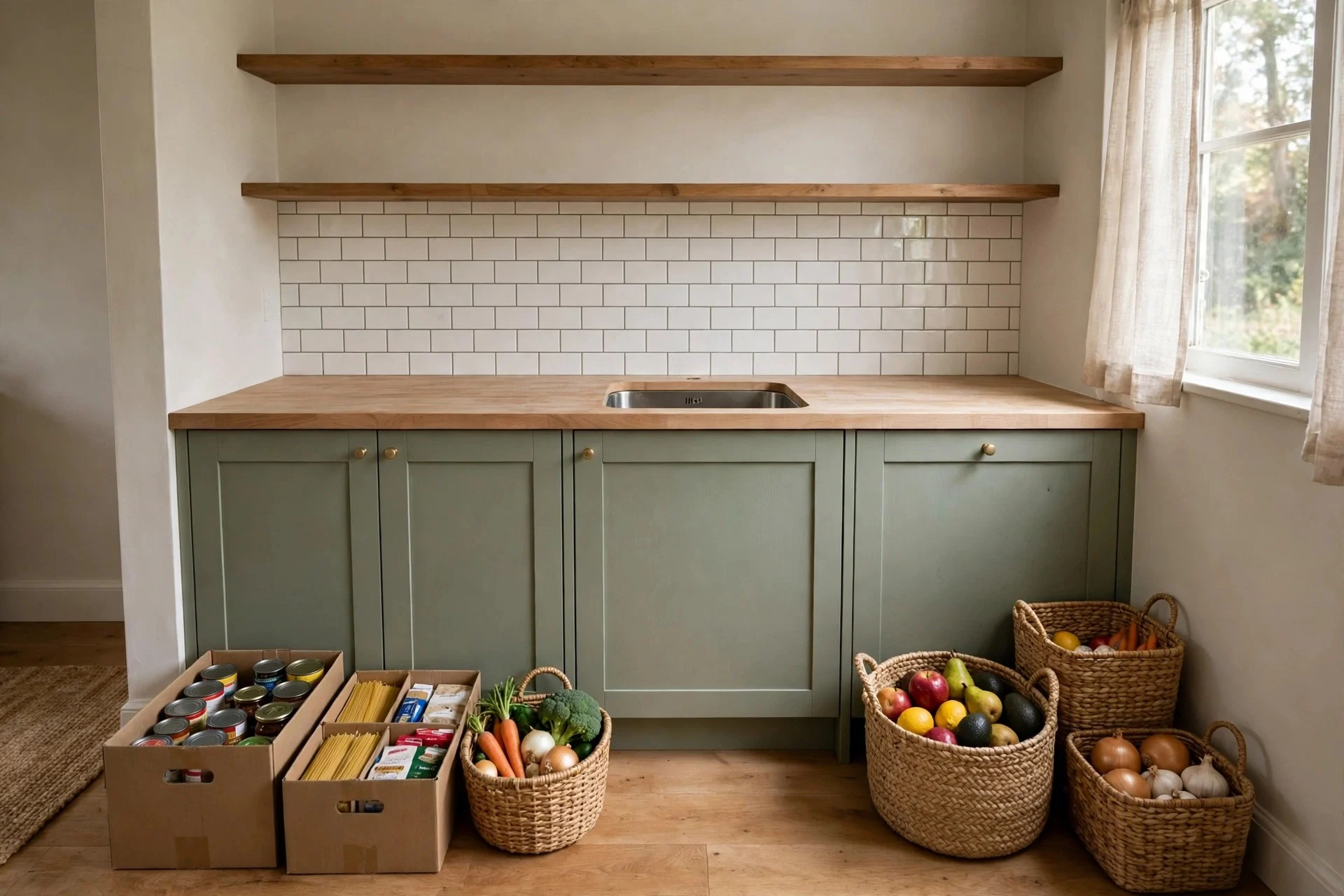
Before you buy a single organizer, take everything off the counters and sort it into three piles: used daily, used weekly, and used rarely or never. The daily pile earns counter space, the weekly pile earns a cupboard near the action, and the rarely pile goes to a high shelf, a box on top of the cabinets, or out of the kitchen entirely. I found a bread maker I had not touched in two years sitting next to the kettle, taking up the exact spot where I chop vegetables. Be honest about the gadgets: if you have not used it in three months, it does not need prime real estate. A clear counter also shows you the real problem areas, which are usually one drawer and one cupboard, not the whole kitchen.
2. Divide the Kitchen Into Zones by Task
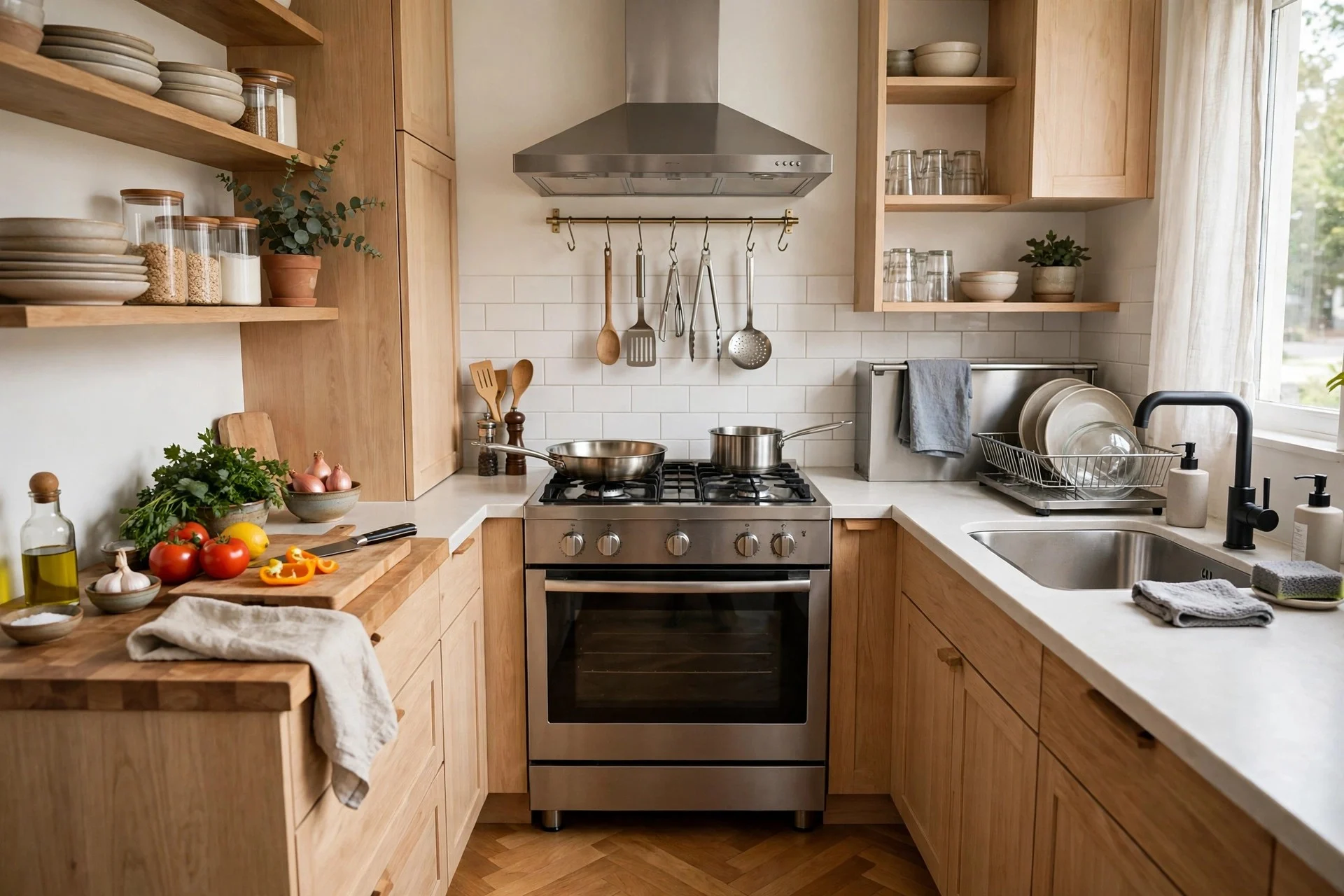
Professional kitchens run on zones, and a small home kitchen benefits from the same thinking on a smaller scale. Sketch four zones in your head: prep near the biggest counter stretch, cooking around the stove, cleaning around the sink, and storage where the pantry and fridge sit. Then move things so each zone holds what it uses: knives and boards in prep, oils and spatulas by the stove, dish soap and tea towels by the sink. You will stop crossing the kitchen ten times per meal, which matters more in a small space because every crossing is a collision with someone or something. This one change makes every other idea on the list work harder, because organizers only help if the things inside them belong in that spot.
3. Put Slim Racks on the Inside of Cabinet Doors
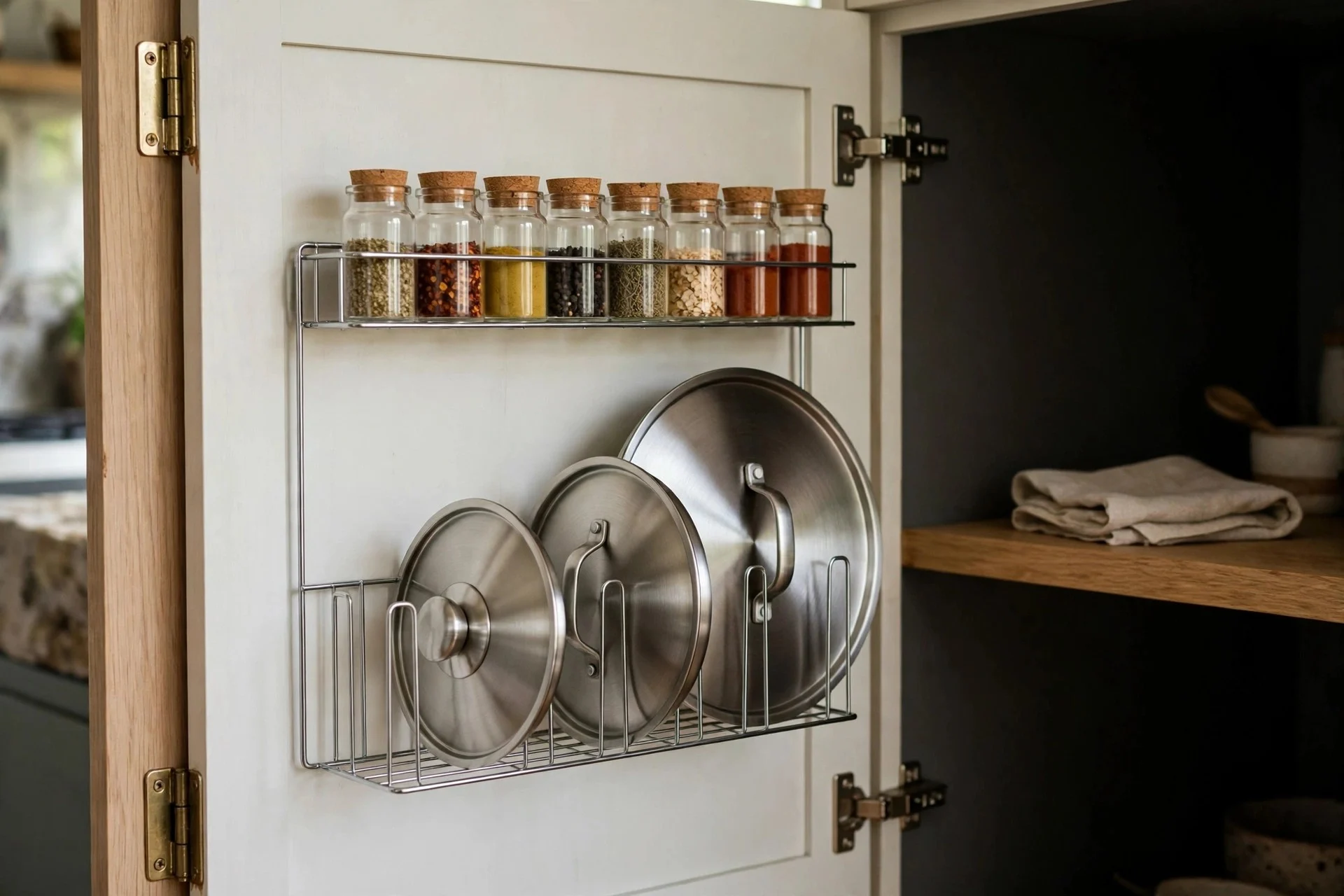
The inside of a cabinet door is free storage that most kitchens waste completely. A slim wire rack, no deeper than about eight centimetres, holds spice jars, pan lids, or rolls of foil and cling film, and it keeps them visible the moment you open the door. Measure the depth first, because a rack that is too deep stops the door closing or knocks into the shelf contents. Adhesive or over-door mounts work for renters, since they leave no holes, but check the weight rating before you load them with full jars. I put lids on the door of the pot cupboard and stopped the daily avalanche of lids sliding out every time I reached for a saucepan.
4. Get Knives and Utensils Onto the Wall
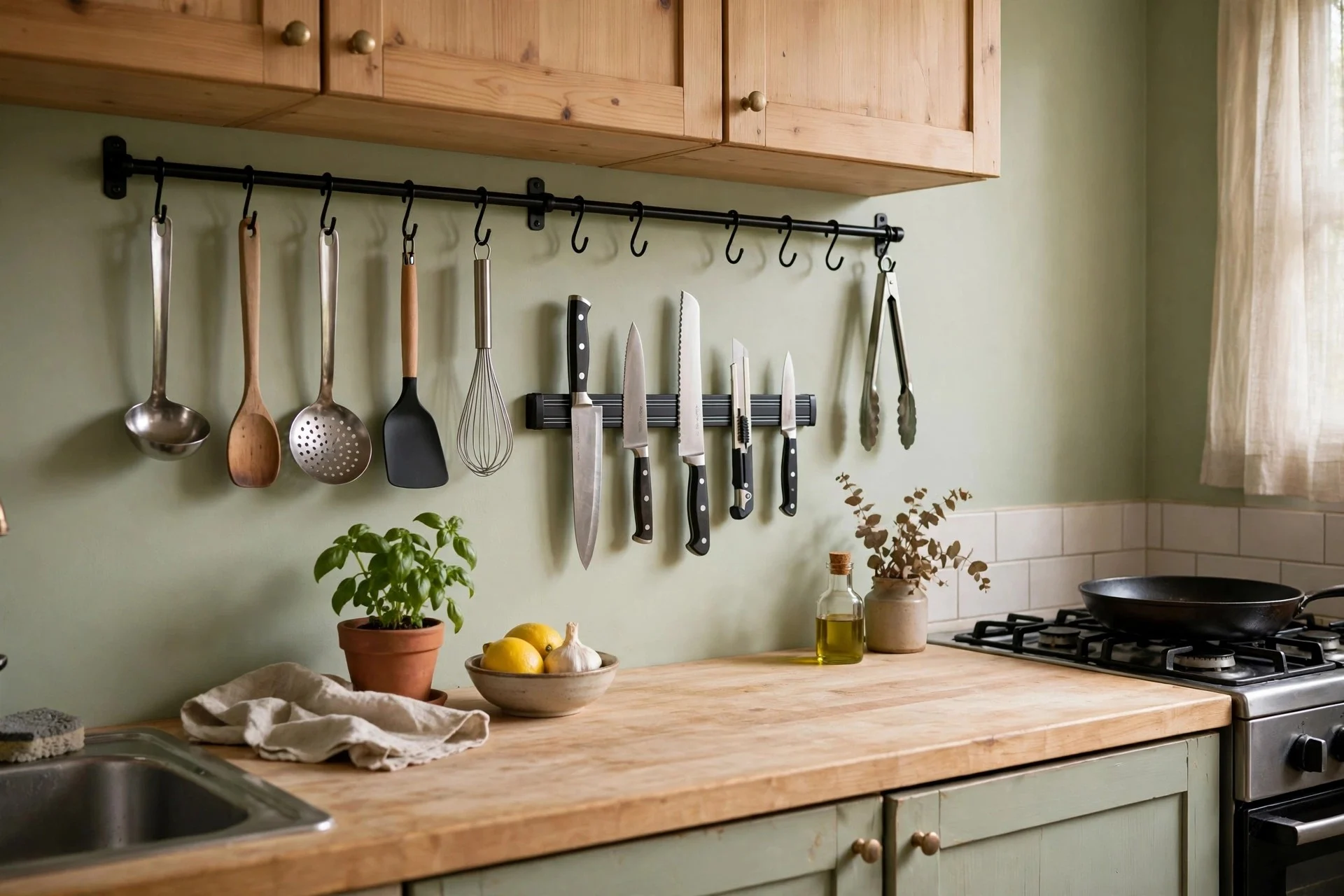
A knife block eats a surprising amount of counter, and a utensil crock eats more. A magnetic knife strip mounted at eye level holds the knives safely, frees a whole stretch of counter, and looks like a proper cook’s kitchen. A simple wall rail with hooks underneath takes the spatulas, ladles, and measuring cups that used to live in the crock, keeping them within arm’s reach of the stove. Keep the rail short and the hooks few, because a rail loaded with twenty tools becomes visual clutter again. If you rent and cannot drill, adhesive rails rated for kitchen weight work for lighter tools, though a knife strip really does need proper fixings for safety.
5. Fit Drawer Dividers Before You Buy Anything Else
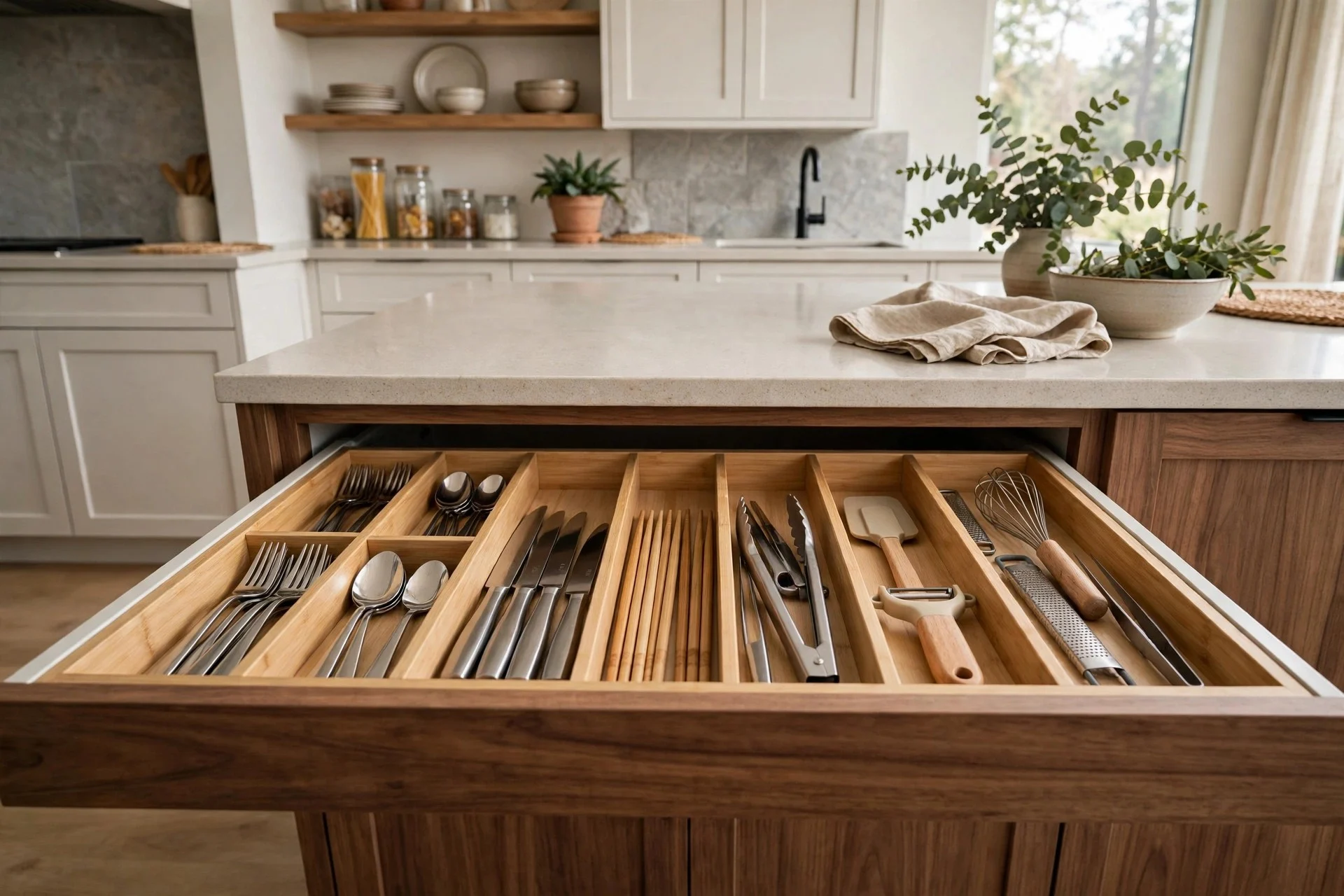
A drawer without dividers is a drawer that will be messy by Friday, no matter how neatly you arrange it on Sunday. Spring-loaded dividers or simple bamboo trays split the drawer into lanes: cutlery in one, cooking tools in another, and the odds and ends, scissors, twine, a thermometer, in a small box of their own. Measure the drawer first, because dividers a centimetre too long will spring out and annoy you every time you open it. Put the drawer you use most, usually cutlery, closest to the dishwasher or the prep zone, so unloading goes straight into place. This is the cheapest idea on the list and the one I would do first if I could only do one.
6. Decant the Pantry Into Clear Bins and Label Them
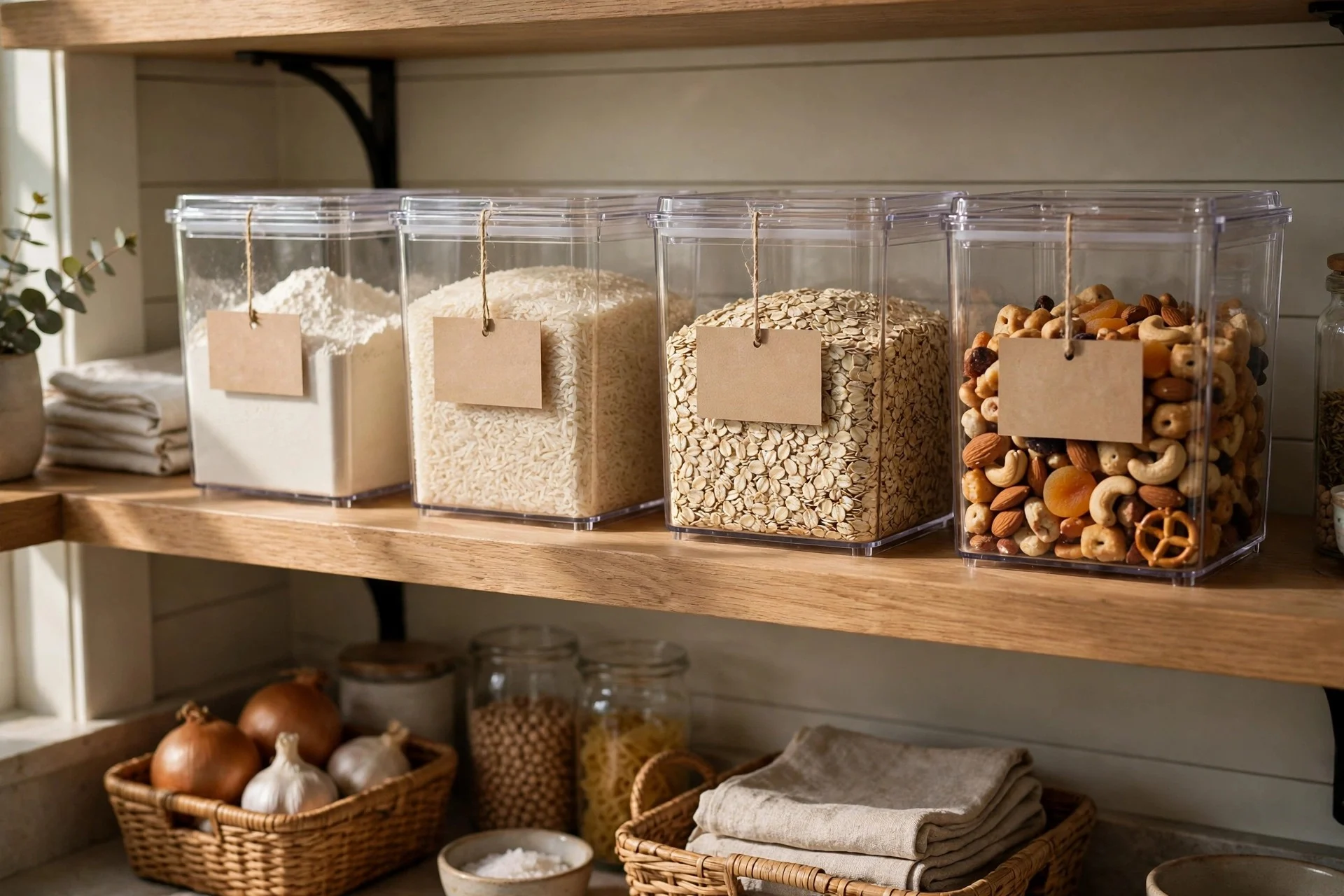
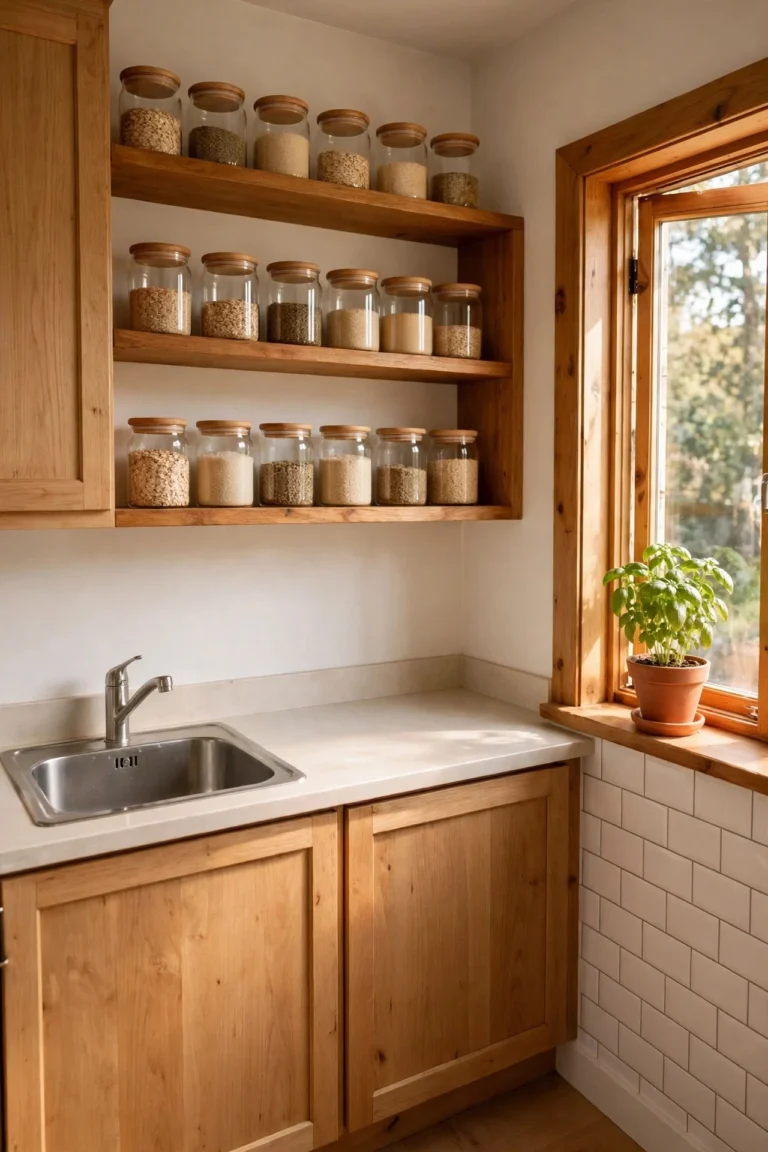
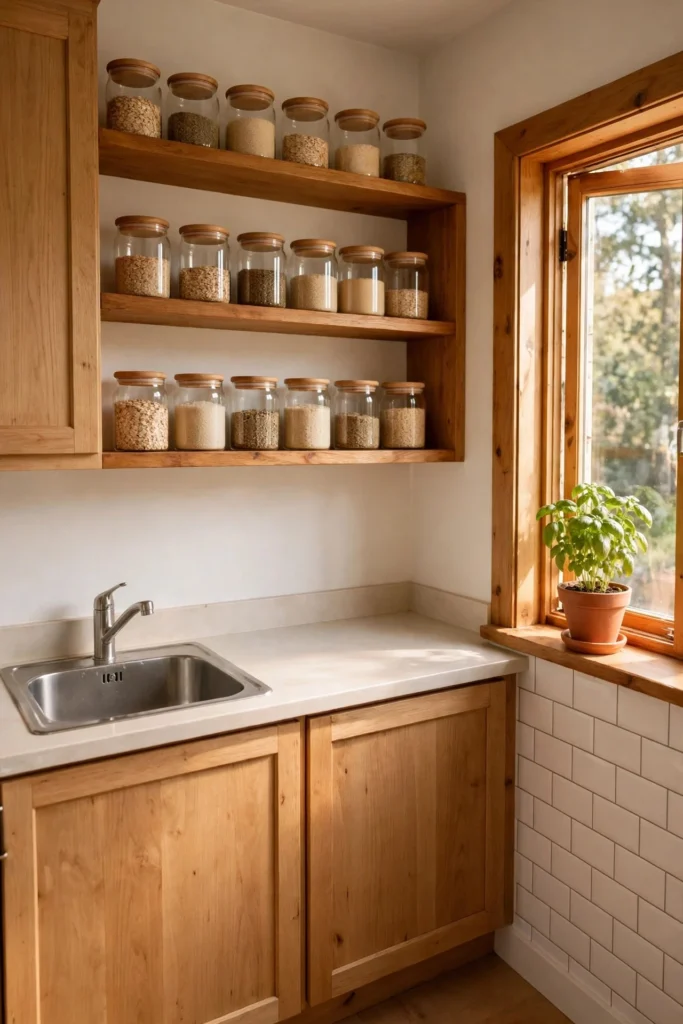
Open bags of flour, half-empty cereal boxes, and snack packets are what make a pantry look chaotic even when it is technically tidy. Decant dry goods into clear, square containers, square beats round because it wastes less shelf space, and label each one plainly: flour, rice, oats, sugar. Group them by use rather than by size, baking together, breakfast together, snacks together, so you reach for one zone per task. Keep a small bin for the half-used packets that do not decant well, and empty it once a month, or it becomes a graveyard of stale crackers. For more ideas in the same spirit, Habitatista’s kitchen organization hacks for tiny kitchens covers bins, pull-outs, and vertical storage in detail.
7. Give the Fridge Zones and Clear Bins Too
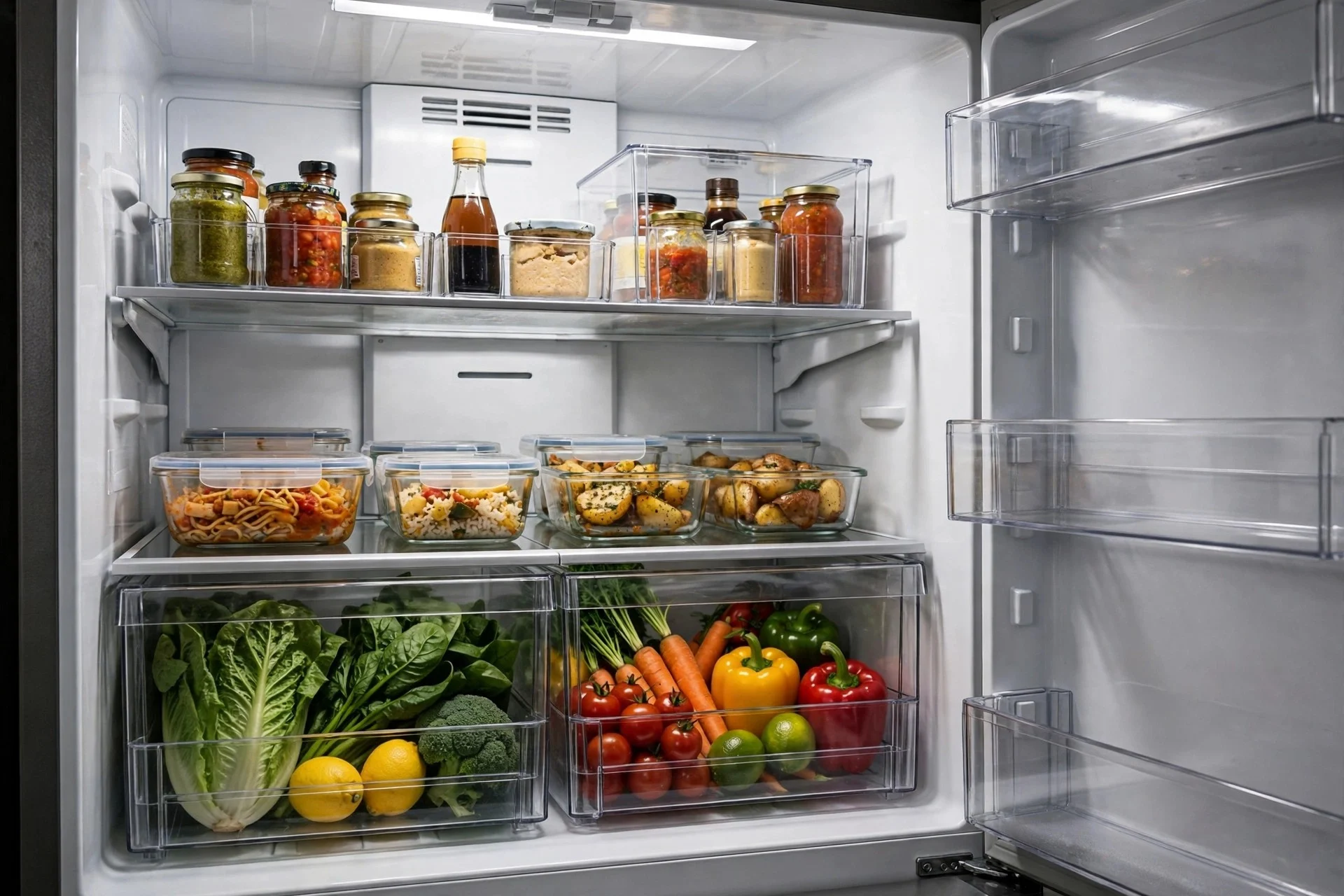
The fridge is a small kitchen in miniature, and it fails the same way: things pushed to the back, forgotten, and thrown away weeks later. Set zones by shelf: ready-to-eat food up top, raw ingredients in the middle, produce in the drawers, and condiments in the door. A clear bin for each zone, one for snacks, one for leftovers, one for sauces, stops small jars migrating to the back. Put new items behind older ones, so the oldest gets used first, and do a two-minute fridge check before the weekly shop, because that is when you discover the yoghurt that expired on Tuesday. The money saved on wasted food pays for the bins within a month in most households.
8. Tame the Under-Sink Cupboard With a Rod and Bins
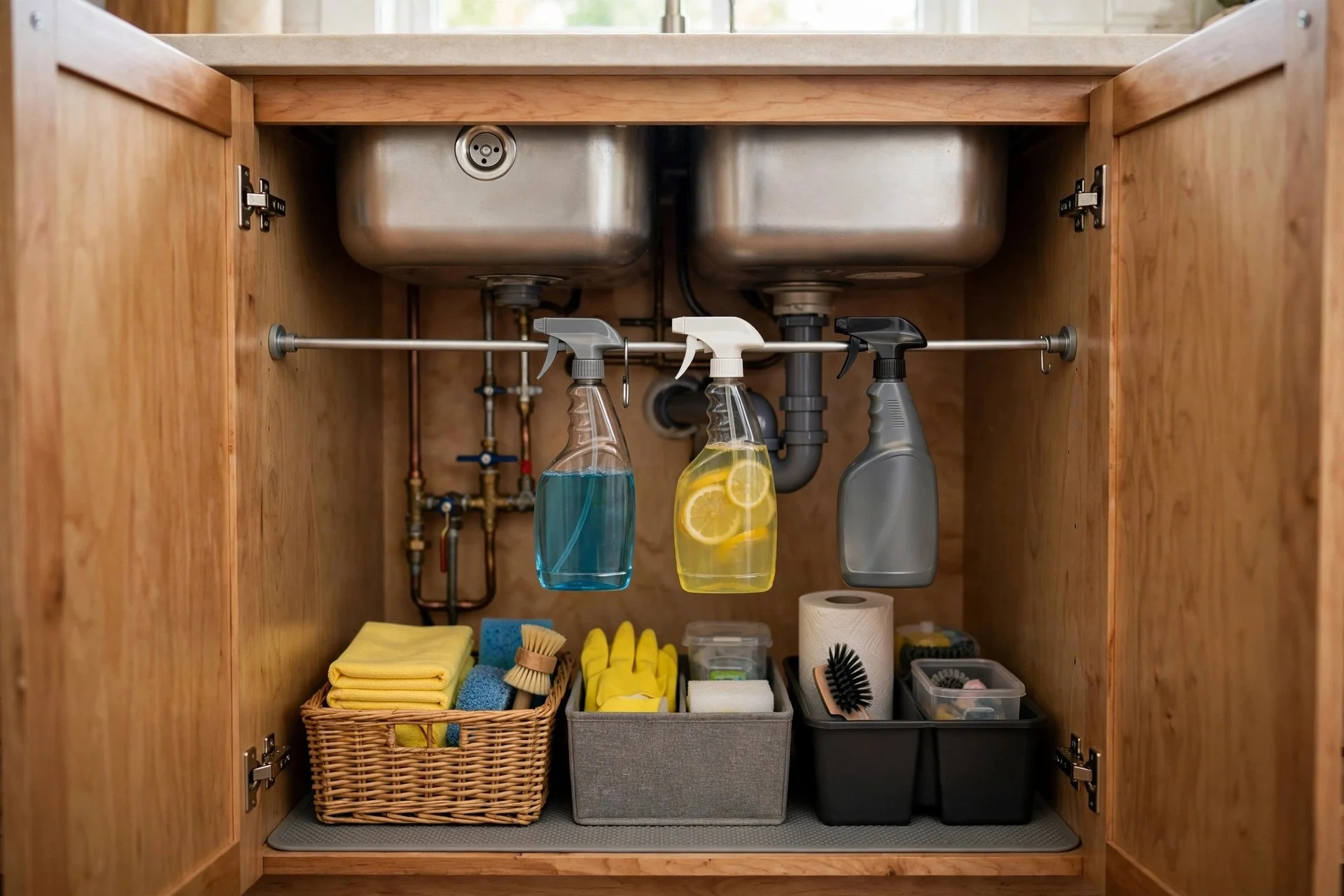
Under the sink is the most awkward cupboard in the kitchen: pipes in the middle, damp at the back, and cleaning bottles falling over every time you reach in. A tension rod fitted across the cupboard lets spray bottles hang by their triggers, which frees the floor of the cupboard entirely. Two small bins underneath, one for cloths and sponges, one for spare bin bags and dishwasher tablets, keep the rest contained. Put a small tray or an old baking sheet under the bins to catch drips, and check the pipes for leaks while you are in there, because a slow drip ruins cardboard boxes and warps the cupboard base long before anyone notices. Keep only cleaning things here, not food, because the damp and the chemicals do not mix.
9. Claim the Over-Sink Shelf and the Windowsill
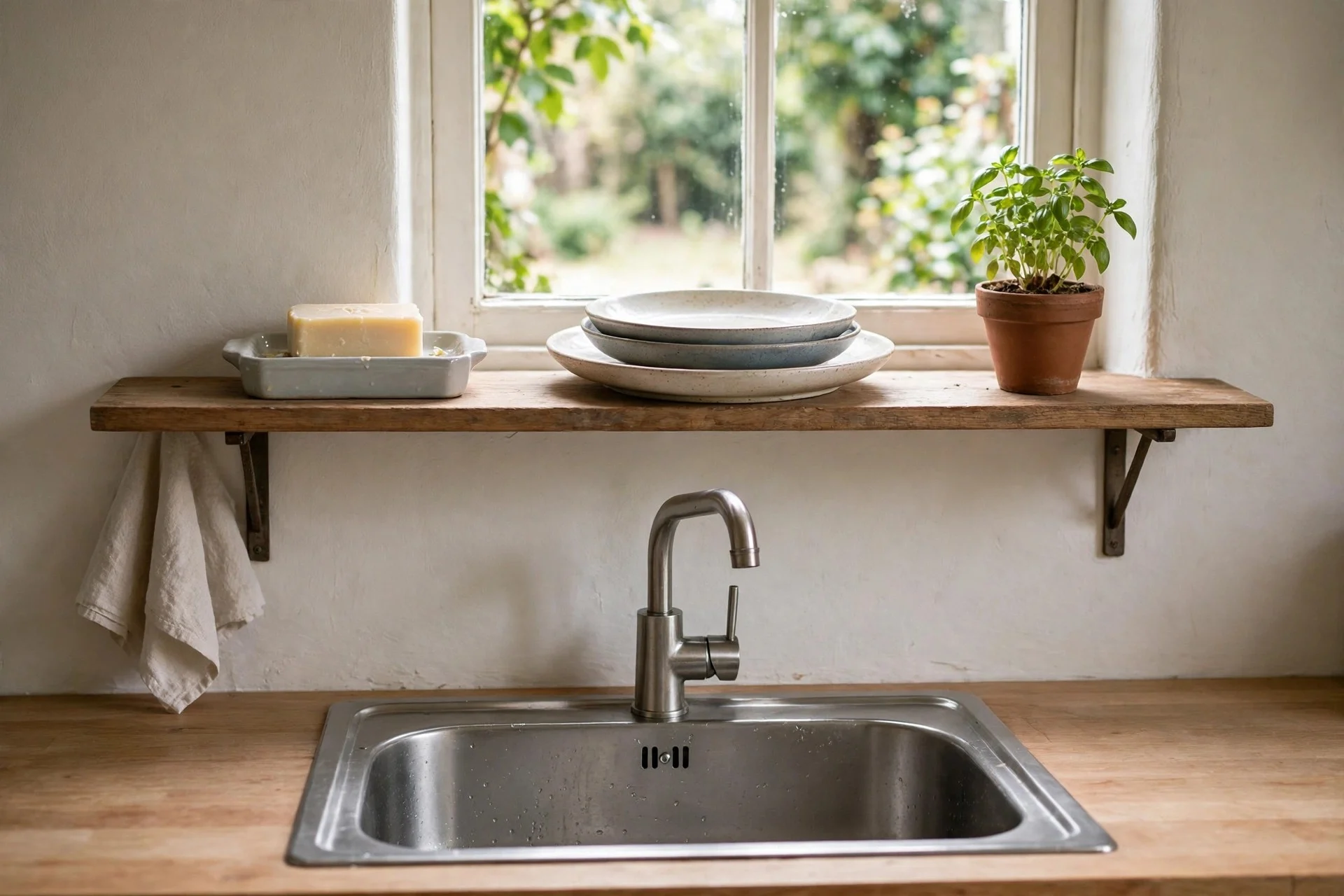
The wall above the sink and the windowsill beside it are dead space in most small kitchens, and both are perfect for the things you reach for constantly. A narrow shelf above the sink holds the soap, a small plant, and the two or three dishes you use daily, within arm’s reach while you wash up. The windowsill takes a herb pot, basil in summer is my pick, which earns its place by getting used in cooking rather than just looking pretty. Keep both spots ruthlessly small: one shelf, one pot, and nothing else, because a shelf that accumulates mugs and random jars becomes a second cupboard. Wipe the shelf weekly, since sink splash reaches further than you expect.
10. Slide a Rolling Cart Into the Gap
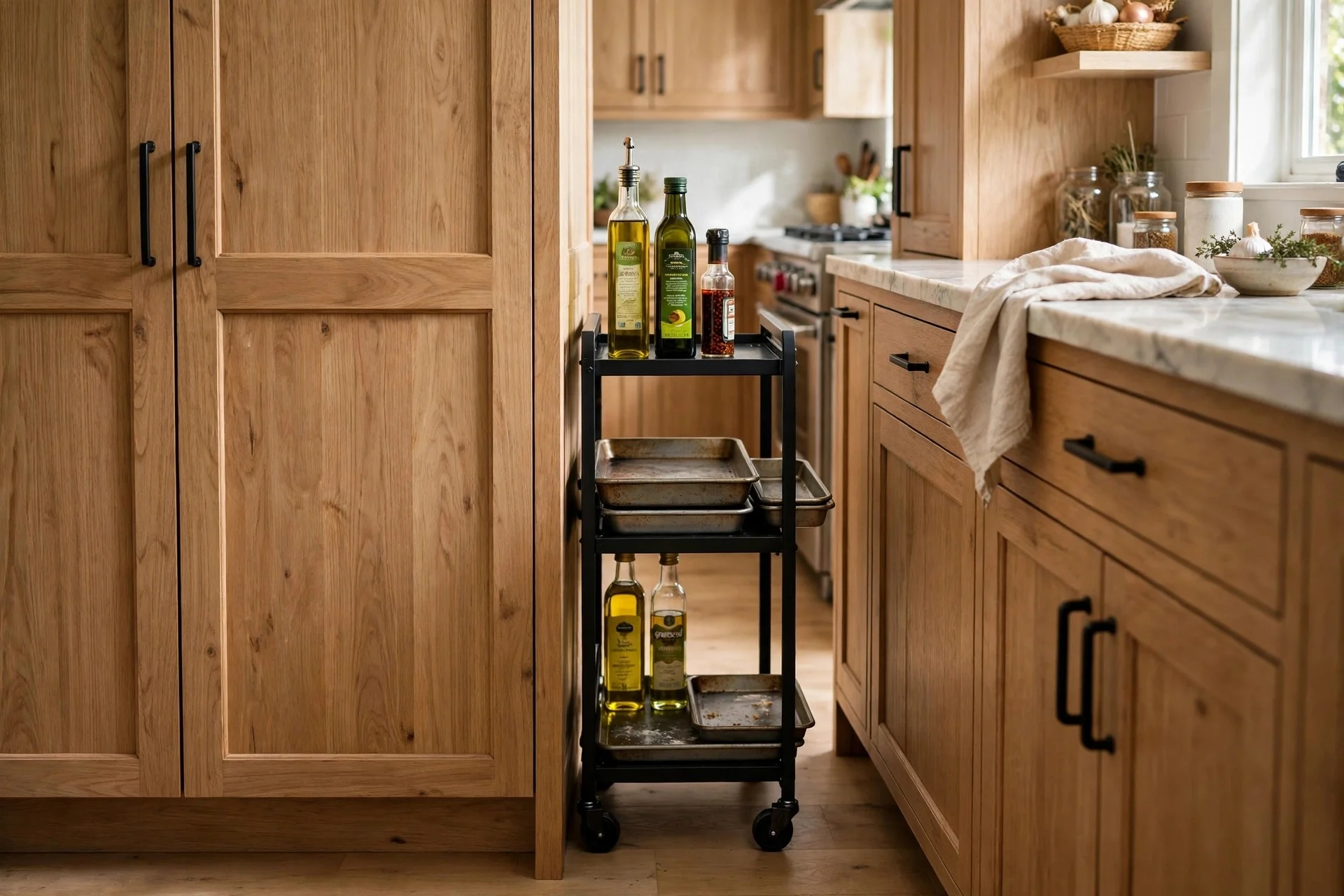
Almost every kitchen has a gap: between the fridge and the wall, beside the cabinets, or at the end of a run of units. A slim rolling cart, narrower than the gap by a centimetre or two, turns that dead strip into a pantry on wheels. Oils and vinegars on top, baking trays in the middle, and the bulky items you rarely need at the bottom is a combination that works well. The wheels matter, because a cart you have to drag will stay wherever it is, and a cart that rolls will actually get pulled out and put back. Measure the gap at the floor and at counter height, since skirting boards and handles can make the two measurements differ. Our guide to small living room storage ideas that hide clutter uses the same gap-hunting logic for rooms beyond the kitchen.
11. Use the Pantry Door and Hooks for the Small Stuff
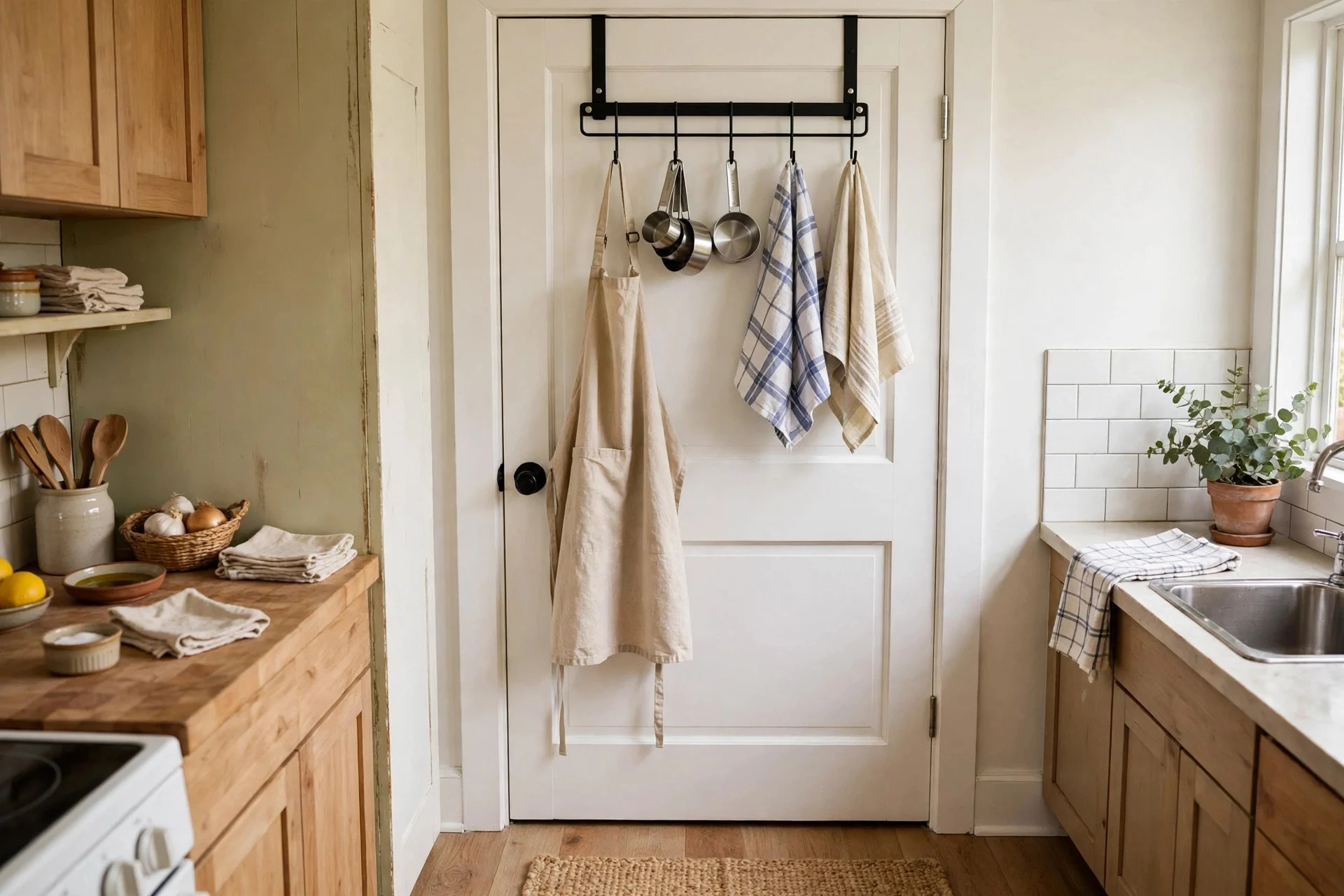
Aprons, measuring cups, tea towels, and the reusable bags all need a home, and none of them needs a drawer. An over-door rack on the pantry door holds them all without a single hole in the wall, which makes it ideal for renters. Keep it to five hooks at most, or the door will not close properly and the rack will sag, and put the items you grab on the way to cooking at the top. Small adhesive hooks inside a tall cupboard door do the same job for measuring spoons and scissors. Check the door still closes fully after you hang the rack, because a door that sticks is worse than a door with nothing on it, and it will annoy you every single day.
12. Small Kitchen Organization: Finish With a Five-Minute Reset
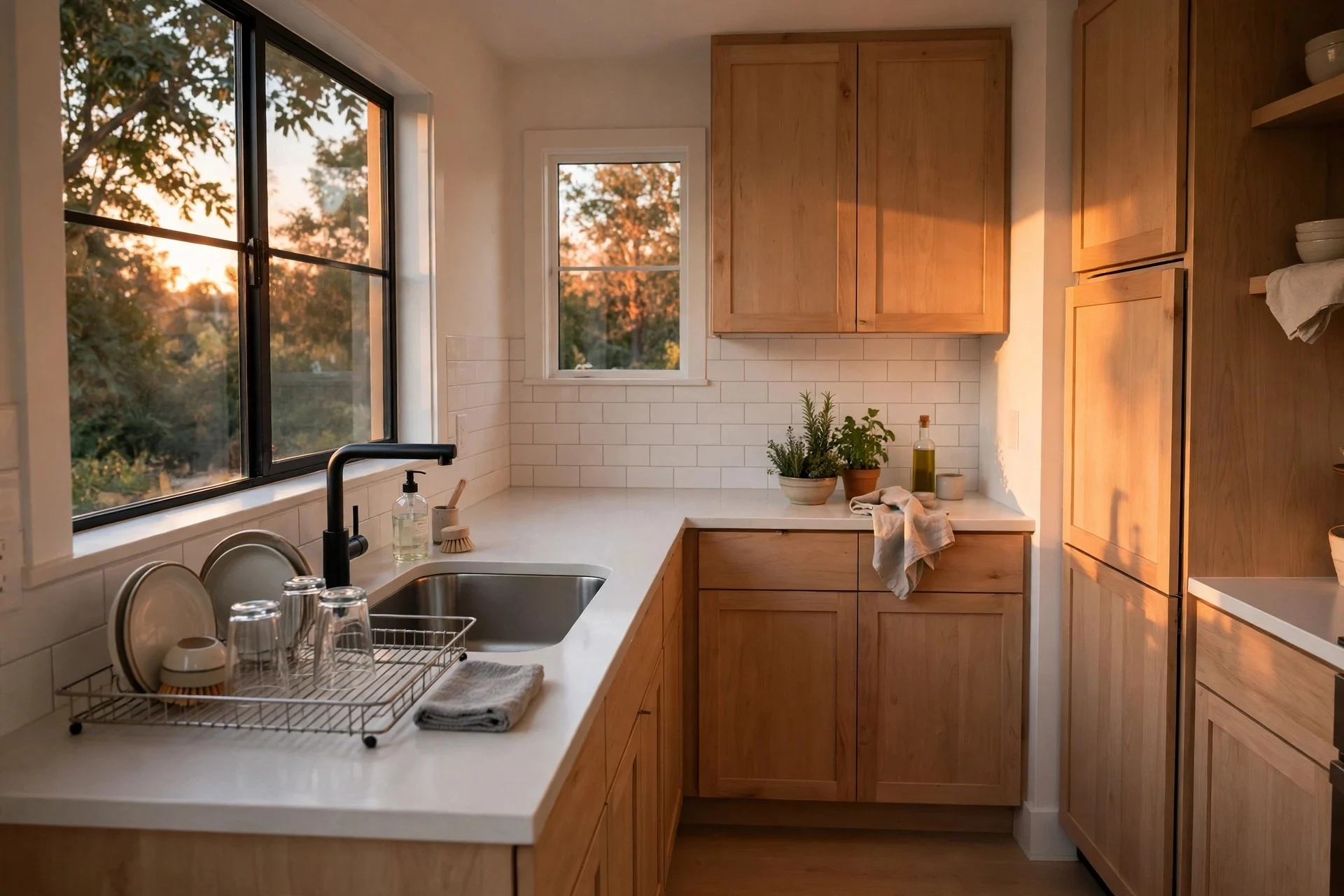
Organization fails without maintenance, and maintenance fails if it takes longer than five minutes. Build a nightly reset: dishes in the dishwasher, counters wiped, everything that migrated during cooking back to its zone, and the sink empty. Set a timer the first few nights, because five minutes feels longer than it is until it becomes a habit. Then adopt one-in-one-out for the kitchen: a new gadget arrives, an old one leaves, whether to a donation box or to a friend who will use it. That rule alone stops the slow creep that undoes every organizer on this list. A small kitchen stays organized not because it has clever products, but because everything in it has a place and a reason to be there. For the same discipline in a tight living space, our small-space spring refresh ideas show how one clear surface changes a whole flat.
Frequently Asked Questions
Where should I start organizing a small kitchen?
Start with the counters: empty them, sort everything into daily, weekly, and rarely used, and only put the daily items back. That single audit shows you which drawer and which cupboard actually need organizers, so you buy the right ones instead of a box of gadgets.
How do I organize a kitchen with almost no counter space?
Move things onto walls, cabinet doors, and the gap beside the fridge: a knife strip, door racks, a rolling cart, and a shelf above the sink. Keep the counter for active work only, prep and cooking, and store everything else within one step of where it is used.
What is the cheapest way to organize a small kitchen?
Drawer dividers, a tension rod under the sink, and clear labelled bins for the pantry cost little and change the most. Do those three before buying anything bigger, and check what you already own, a tray, a basket, a spare rail, before spending anything at all. For seasonal kitchens, our guide to Christmas kitchen decor ideas that don’t get in the way shows how to add festive touches without losing the workspace you just won back.
How do I keep a small kitchen organized long-term?
Do the five-minute nightly reset and the one-in-one-out rule, and audit one cupboard a month. Small, frequent resets beat one exhausting clear-out every six months, because clutter in a small kitchen grows back within days if nothing stops it.
A small kitchen does not need more space. It needs zones, a home for every tool, and a reset habit that keeps the system honest. Start with the counter audit this weekend, add one idea a week, and by the end of the month cooking in it will feel like less of a negotiation and more of a pleasure.