
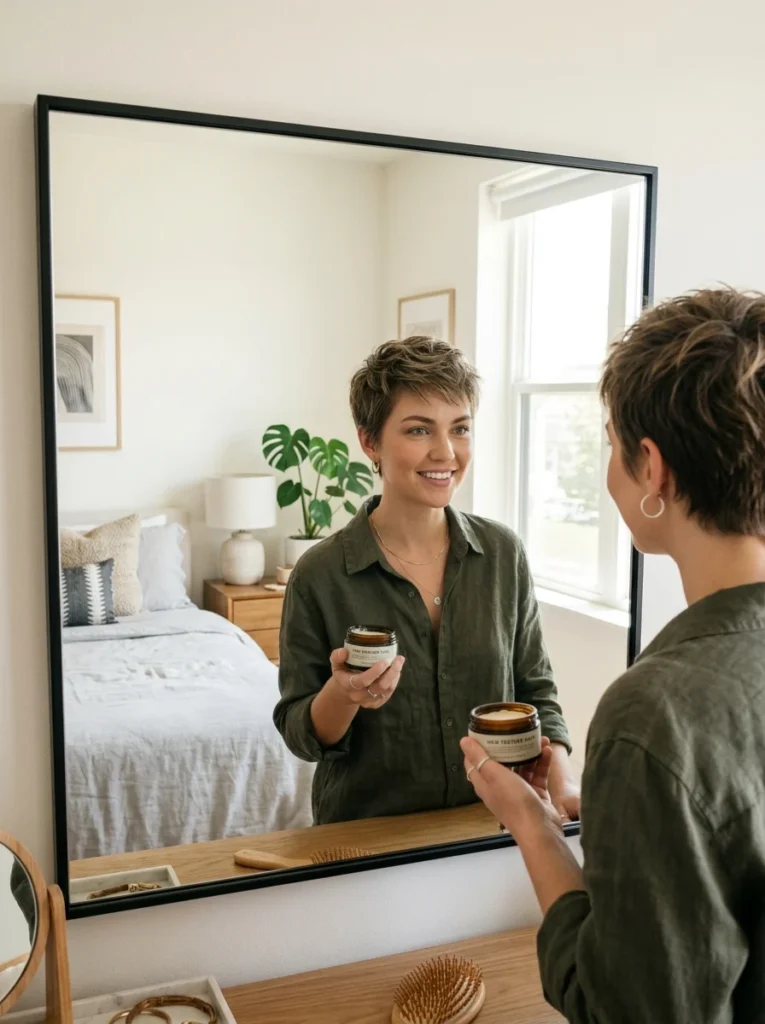
Short hair feels limiting mainly because most styling advice defaults to techniques built for longer hair. Here’s how to actually get real variety out of a short cut.
Short hair often feels like it offers dramatically fewer styling options than longer hair, and this feeling is real but somewhat misleading — the actual limitation isn’t short hair’s inherent versatility, it’s that most widely circulated styling advice, tutorials, and technique demonstrations are built around longer hair, which means short hair genuinely does have fewer directly applicable resources to draw from, even though the styling variety actually achievable within short hair is considerably greater than the visible advice ecosystem suggests.
Parting Changes Alone Create More Variety Than Most People Realize
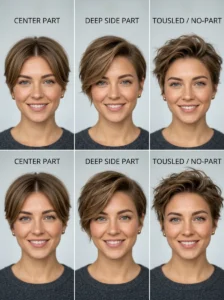
Shifting a part from center to deep side, or eliminating a defined part entirely in favor of a more tousled, undefined root area, changes the entire visual character of a short haircut significantly, and this is one of the lowest-effort, most immediately available styling changes available for short hair specifically, since it requires no product, tools, or technique beyond simply combing or finger-styling hair in a different direction than usual.
A deep side part tends to add asymmetry and a more dramatic, styled appearance to an otherwise simple short cut, while a center part on the same haircut reads as more casual and symmetric — trying both, rather than defaulting to whichever part happens to be the hair’s natural resting tendency, reveals genuine styling range within a single haircut that many people with short hair don’t fully explore.
Texture Products Create More Meaningful Variation Than Length Alone
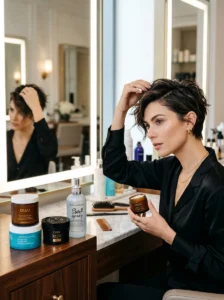
A texturizing paste, wax, or clay, worked through short hair to create deliberate separation and definition, produces a visually different result than the same hair styled smooth or left to dry naturally, and this textural variation is a genuinely significant styling tool for short hair specifically, since short hair has less overall length to manipulate into different shapes but considerable surface area where texture and definition can be varied.
Sea salt spray or a texturizing spray, used on damp hair before air-drying or diffusing, creates a more tousled, undone texture that reads quite differently from the same cut styled sleek with a smoothing product — building a small rotation of two or three different texture products, rather than relying on a single default styling approach every day, meaningfully expands the perceived versatility of a short haircut.
Accessories Provide Genuine Styling Range for Short Hair

Headbands, small clips, and hair pins — often associated primarily with longer hair styling — work well on short hair too, and they’re generally underused as a short-hair styling tool specifically, since short hair can incorporate a headband pushing hair back entirely, a small decorative clip pinning back a single section, or a scarf worn as a headband, each producing a genuinely different look from the same underlying haircut.
Even very short hair, including a pixie cut, can usually accommodate small clips or pins at the front or sides, and this is worth experimenting with directly rather than assuming accessories are exclusively a longer-hair styling tool, since the visual impact of even a single well-placed clip on short hair is often more noticeable and more transformative than the same accessory would be on longer hair, where it has more length to compete with visually.
Growing Out Selectively Adds Long-Term Versatility Without a Full Grow-Out Commitment
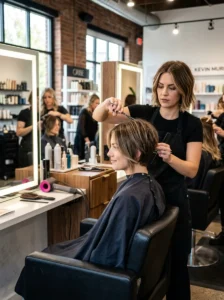
Growing out just the front, face-framing pieces while maintaining a shorter length throughout the rest of the cut — a common technique sometimes associated with a “shag” or heavily layered short style — allows some longer pieces to be styled separately (tucked behind ears, styled with texture, or left to fall differently) while the majority of the cut remains short, offering some of the styling variety associated with longer face-framing pieces without committing to fully growing out the entire haircut.
This is a genuinely useful middle-ground option for someone who enjoys their short length overall but wants slightly more styling flexibility around the face specifically, and it’s worth discussing directly with a stylist as an intentional cutting strategy rather than simply the natural result of uneven growth.
Different Short Lengths Have Different Realistic Styling Ranges
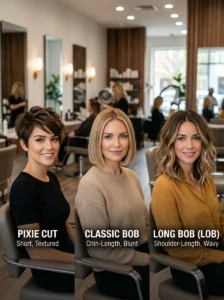
A pixie cut has the least length to work with and relies most heavily on texture product, parting changes, and accessories for variety, since there’s minimal length available for the kind of shape-changing styling longer cuts allow.
A bob, sitting at jaw-to-shoulder length, has meaningfully more styling range than a pixie — enough length to experiment with waves, a temporary sleek-versus-textured contrast, and some tucking or clipping variety, while still being considerably shorter and lower-maintenance than longer hair.
A lob (long bob), generally reaching toward the collarbone, offers the most styling range among commonly categorized “short” cuts, since there’s enough length for loose waves, a low ponytail or half-up style, and other techniques that shorter pixie and bob lengths genuinely can’t accommodate — recognizing which specific short length category actually applies helps calibrate realistic expectations about how much styling variety is genuinely available, rather than assuming all “short hair” has identical limitations.
Working With, Rather Than Against, a Cowlick or Strong Growth Pattern
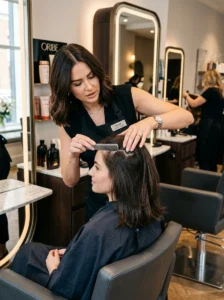
Short hair makes a strong cowlick or natural growth pattern more visually apparent than longer hair often does, since there’s less length and weight to pull hair down and disguise the growth pattern’s influence, which means working with a cowlick’s natural direction — rather than consistently fighting against it with product and heat styling — often produces a more consistently good-looking, lower-effort result for short hair specifically.
A stylist aware of a strong cowlick or growth pattern can sometimes cut the haircut itself to work with this pattern rather than against it, which is worth raising directly during a consultation if a specific styling frustration seems consistently tied to fighting the same growth pattern every single day regardless of styling technique used.
Sleep Habits Affect Short Hair’s Morning Starting Point More Than Longer Hair
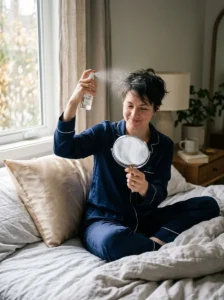
Short hair tends to show the effects of sleeping position more visibly than longer hair, since there’s less weight and length to smooth out flattened or displaced sections overnight, which means a slightly damp refresh in the morning (using a spray bottle or wet fingers to redampen and reshape key sections) or a silk pillowcase to reduce overnight friction and displacement can meaningfully improve the actual starting point for morning styling compared to hair that dried fully overnight in a compressed or displaced position.
Building a Personal Rotation Rather Than Searching for One Universal Technique
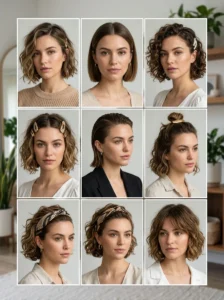
Given how much variety is actually achievable through parting, texture product, accessories, and working with the haircut’s specific length category and growth pattern, the most effective approach for someone feeling limited by short hair is building a small personal rotation of two or three genuinely different styling approaches — rather than continuing to search for a single technique or product that will unlock dramatically more variety than the haircut’s actual length allows.
Key Takeaways

- Changing where hair is parted — center, deep side, or no defined part at all — is one of the lowest-effort, most immediately available ways to create genuine visual variety in short hair
- Texture products (paste, clay, sea salt spray) create meaningful styling variation by changing definition and separation, which matters more for short hair given its limited length to manipulate into different shapes
- Accessories like headbands, clips, and scarves are underused specifically for short hair and often have a more noticeable visual impact than the same accessory would have on longer hair
- Selectively growing out just the front, face-framing pieces adds some longer-hair styling flexibility without requiring a full commitment to growing out the entire cut
- Different short-hair length categories (pixie, bob, lob) have genuinely different realistic styling ranges, and understanding which applies helps calibrate expectations accordingly
- Working with a strong cowlick or growth pattern, rather than fighting it daily, often produces a more consistent, lower-effort result specifically because short hair shows growth pattern influence more visibly than longer hair does
Frequently Asked Questions
Is it true that short hair just has fewer styling options than long hair? Not as dramatically as it often feels — much of the perceived limitation comes from most styling advice and tutorials being built around longer hair techniques, rather than short hair having inherently limited versatility. Parting changes, texture products, and accessories all offer genuine, underused variety specifically for short hair.
What’s the easiest way to make my short haircut look different day to day without much effort? Changing your part — center, deep side, or no defined part — requires no product or tools and is one of the fastest ways to meaningfully change a short haircut’s appearance from one day to the next.
Can I still use accessories like clips and headbands with a pixie cut? Yes, generally — even very short pixie cuts can usually accommodate small clips or pins at the front or sides, and accessories are often more visually noticeable on short hair than on longer hair, where they have more length to compete with visually.
Should I grow my hair out if I feel limited by my current short cut? Not necessarily a full grow-out — selectively growing out just the front, face-framing pieces while keeping the rest of the cut short is a genuine middle-ground option that adds some styling flexibility without requiring you to commit to a much longer overall length.
Why does my cowlick seem more noticeable now that my hair is short? Short hair has less length and weight to pull hair down and disguise a strong growth pattern’s influence, which is why cowlicks and similar patterns often become more visually apparent with shorter cuts than they were with longer hair. Working with the pattern’s natural direction, rather than consistently styling against it, often produces a more consistent daily result.