
Not all bobs are the same haircut with different lengths — the specific bob style matters as much as face shape does. Here’s which variations actually work for which face shapes, and why.
“Bob” functions as an umbrella term covering genuinely different haircuts — a blunt, chin-length bob and a longer, angled, textured bob share a general length category and very little else in terms of how they actually interact with face shape. The general face-shape principles covered elsewhere in this series regarding which proportions a haircut should balance apply here as a foundation, but choosing a specific bob variation requires a more targeted application of those principles than the general framework alone provides, since the specific length, angle, and texture of a given bob style changes how it interacts with a specific face shape considerably.
Blunt, Chin-Length Bobs Add Width at the Jaw, Which Matters for Shape Selection
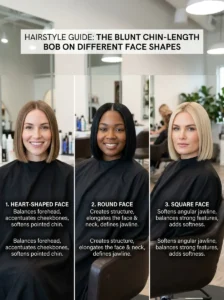
A classic blunt bob, cut straight across at chin length with minimal layering, adds visual width and weight right at the jawline, since the hair’s ends land at exactly that point and the straight, uniform line draws the eye directly to that horizontal band across the face.
This makes a blunt, chin-length bob a strong choice for a heart-shaped face — where the goal is adding visual width at the jaw to balance a wider forehead — but a more challenging choice for a square face, where the goal is generally softening the jaw’s existing angularity rather than adding a hard, straight-edged line that emphasizes it further, or for a round face, where the added width at the jaw’s exact width can emphasize rather than counteract the face’s existing roundness.
Angled Bobs (Longer in Front, Shorter in Back) Shift Visual Weight Downward
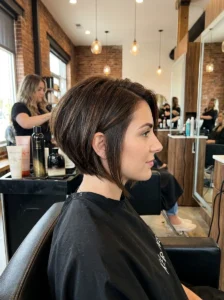
An angled bob, where the front pieces are cut noticeably longer than the back, creates a diagonal line that draws the eye downward and adds length to the lower portion of the face, which is a genuinely different visual effect than a blunt, uniform-length bob produces.
This angled structure works well for a round face, since the diagonal line and added length toward the chin counteract roundness by introducing verticality and elongation that a uniform blunt cut at the same overall length wouldn’t achieve, and it also works reasonably well for a square face, since the angle softens the hard horizontal line a blunt bob would otherwise create at the jaw.
The Lob (Long Bob) Offers the Most Flexibility Across Face Shapes
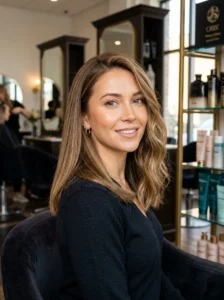
A lob, generally reaching the collarbone rather than the chin, sits far enough below the jawline that it has less direct interaction with jaw width specifically compared to a true chin-length bob, which makes it a more universally flexible length across different face shapes — the specific styling (blunt versus layered, straight versus wavy) matters more for a lob’s face-shape compatibility than the base length itself does, unlike a shorter bob where the length alone creates a strong interaction with jaw width.
This flexibility is part of why the lob has remained a consistently popular length across different trend cycles and face shapes — it avoids the more decisive, face-shape-specific commitment that a true chin-length bob represents, offering a longer runway for styling adjustment without requiring an entirely different haircut.
Textured, Layered Bobs Soften Any Base Length’s Interaction With Face Shape
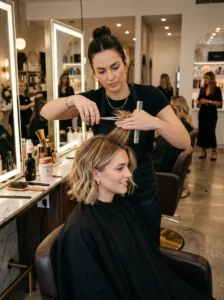
Adding layers and texture to a bob — regardless of its base length — softens the line where the hair ends, breaking up what would otherwise be a solid, uniform horizontal or diagonal edge, and this softening effect is broadly useful across face shapes, since it reduces the more decisive, potentially unflattering interaction a completely blunt, unlayered bob can have with a specific face shape’s proportions.
This is particularly useful for a square face specifically, where texture and soft layering at the ends prevents the bob from creating another hard, straight line that echoes and emphasizes the jaw’s existing angularity, and for an oblong face, where texture-driven volume added through layering helps add perceived width that a completely flat, sleek, unlayered bob wouldn’t provide.
The French Bob Adds Volume and Movement Higher Up, Away From the Jaw

A French bob — typically shorter, often chin-length or slightly above, with soft, face-framing layers and often worn with volume and texture rather than sleek and straight — tends to draw visual attention and add fullness higher on the face and around the cheekbones rather than concentrating weight and line specifically at the jaw the way a blunt bob does.
This makes a French bob a reasonable option for an oblong face, since the volume and fullness it typically carries adds width perception without the length that would otherwise emphasize the face’s existing verticality, though it requires more active styling to maintain the characteristic texture and volume compared to a straighter, lower-maintenance bob style.
Asymmetrical Bobs Provide a Deliberate, Non-Uniform Alternative

An asymmetrical bob, where one side is cut noticeably shorter than the other, introduces deliberate visual imbalance that can work well for a face genuinely close to symmetrical and proportionally balanced (an oval face, generally) as a stylistic choice, since there’s less need to actively correct a proportional imbalance the way there is for a more markedly round, square, or heart-shaped face where a specific corrective goal is generally the priority.
This isn’t a strict rule — an asymmetrical bob can be adapted thoughtfully for other face shapes as well — but it’s worth recognizing that an intentionally uneven cut is doing something different than the more directly corrective bob variations covered above, and the choice to wear one is often more about personal style preference than a specific face-shape corrective strategy.
Combining Bob Style Selection With Hair Texture, Covered Elsewhere in This Series
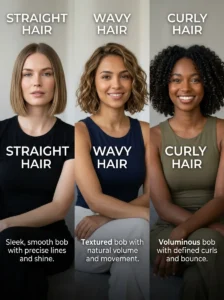
As covered in more detail elsewhere in this series regarding face shape and haircut selection generally, hair texture and density change how any given cut actually performs, and this applies directly to bob selection — a blunt bob on very straight, fine hair reads quite differently (sleeker, with a more graphic, defined line) than the same blunt cut on coarser or wavier hair, which will naturally soften and texturize the line somewhat regardless of the cutting technique used.
This means a bob recommendation based purely on face shape, without accounting for actual hair texture, may not translate as expected — a person with naturally wavy or curly hair choosing a bob style specifically for its sharp, graphic line effect may find that their natural texture prevents that exact effect from being achievable without significant daily styling effort, which is worth discussing directly with a stylist familiar with the specific hair texture involved.
Key Takeaways

- A blunt, chin-length bob adds visual width right at the jaw, making it well suited to a heart-shaped face but a more challenging choice for round or square faces where jaw width isn’t the goal
- Angled bobs, longer in front than back, add downward-drawing length that works well for round faces and softens the hard line a blunt bob would create on a square face
- The lob offers the most cross-face-shape flexibility, since its length sits below the jaw and has less direct interaction with jaw width than a true chin-length bob
- Texture and layering soften any bob’s base length, broadly useful across face shapes and particularly helpful for square faces avoiding an additional hard jaw-level line
- The French bob adds volume and fullness higher on the face, useful for oblong face shapes wanting width without added length
- Hair texture changes how any bob style actually performs, meaning a face-shape-based recommendation should also account for whether the hair is straight, wavy, or curly to be genuinely useful
Frequently Asked Questions
What’s the best bob length for a round face? An angled bob, longer in front than back, generally works well for a round face, since the diagonal line and added length toward the chin introduce verticality that counteracts roundness, more effectively than a uniform, blunt bob at the same overall length would.
Should I avoid a blunt bob if I have a square face? Not necessarily avoid entirely, but a completely blunt, unlayered bob can echo and emphasize a square jaw’s existing angularity, so adding some texture or soft layering at the ends is generally worth considering to soften that interaction rather than choosing a fully blunt cut without any softening.
Is the lob really more flexible than a shorter bob for different face shapes? Generally yes — since a lob’s length sits below the jawline, it has less direct interaction with jaw width specifically than a true chin-length bob does, which means the specific styling (texture, waves, layering) matters more for its face-shape compatibility than the base length itself, making it a reasonably flexible choice across different face shapes.
Does my hair texture actually affect which bob style will work for my face shape? Yes, significantly — a blunt bob on very straight, fine hair produces a sleeker, more graphic line than the same cut on wavier or curlier hair, which will naturally soften that line regardless of cutting technique. This is worth discussing directly with your stylist, since a face-shape recommendation alone doesn’t account for how your specific hair texture will affect the style’s actual appearance and required maintenance.
Is an asymmetrical bob only for people with oval face shapes? Not exclusively — while an asymmetrical bob works particularly naturally for an already-balanced oval face, since there’s less need for the cut itself to correct a specific proportional issue, it can be thoughtfully adapted for other face shapes as well. The choice to wear one is often more about personal style preference than a strict face-shape requirement.