

Most body shape advice recycles the same five silhouette categories and ignores everything that actually makes clothes work. Here’s what to focus on instead.
Forget the Shape Charts — This Is What Actually Determines Your Best Fit
Search “dressing for your body shape” and you’ll get the same five diagrams every time — apple, pear, hourglass, rectangle, inverted triangle — as if every body on earth sorts neatly into one of five outlines. Anyone who’s actually tried to shop by these categories knows the frustration: you don’t fit cleanly into one, the advice contradicts itself between sources, and half the “rules” assume a body type doesn’t shift with weight, age, or even the time of month.
The truth is these charts were never wrong, exactly — they were just incomplete. Shape is one variable among several that determine fit, and it’s not even the most useful one to start with. After years of watching this advice fail people who technically followed it perfectly, here’s what actually determines whether clothes work on a specific body — starting with the things the charts leave out entirely.
Why the Five-Shape System Breaks Down in Practice
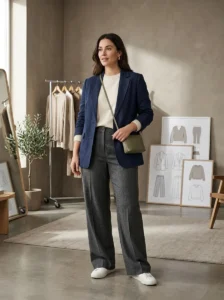
The classic shape categories assume a single, fixed silhouette, but real bodies carry weight and proportion differently even within the same broad category — which is exactly why two “pear-shaped” people can follow identical advice and get opposite results.
Shape charts ignore torso length entirely. Two people with an identical hip-to-shoulder ratio can have completely different torso-to-leg proportions, and torso length affects where a waistband, hemline, or jacket length should actually sit far more than the broad shape label does.
They treat the body as static. Bodies change with weight fluctuation, pregnancy, aging, and simply time of day — the advice built around a single fixed outline doesn’t account for a body that’s genuinely different in October than it was in June.
They’re built around minimizing, not dressing well. Most shape advice frames itself around “hiding” a stomach or “balancing” shoulders, which treats parts of a normal body as problems to disguise rather than simply features to work with — this framing alone causes a lot of the frustration people feel when the rules don’t produce clothes they actually like wearing.
Proportion Is the Variable That Actually Matters Most

Rather than starting with shape, starting with proportion — specifically, where the body’s natural “middle” sits — produces far more consistently useful results, and it applies regardless of which of the five categories someone technically falls into.
Find where your torso genuinely divides, not where your waist is. For some people this is close to the belly button; for others, due to torso length, it sits noticeably higher or lower. Where that midpoint falls determines whether high-rise or mid-rise bottoms will actually look proportionate, independent of shape category.
Longer torso, shorter legs benefits from visually lengthening the leg line. This means higher-rise bottoms, tops that end at or slightly above the natural waist, and vertical lines in the lower half — none of which depend on whether someone is technically an hourglass or a rectangle.
Shorter torso, longer legs benefits from the opposite. Slightly longer tops, lower or mid-rise bottoms, and belts placed at the natural waist rather than higher create balance for this proportion — again, independent of the traditional shape category.
This single adjustment — proportion over shape — solves more of the “why doesn’t this look right on me” frustration than any of the five-category advice, because it’s addressing the actual variable doing the visual work.
Fit Trumps Shape Every Single Time

This might be the most important point in this entire piece, and it’s the one most shape-based advice underweights almost entirely: an item that fits correctly will look better on any body than an item that’s “supposed to suit your shape” but doesn’t actually fit.
Shoulder seams on jackets need to sit at the actual shoulder point, not before or after it, regardless of what shape guide says a particular jacket style should flatter. A jacket that’s technically the “right” silhouette for a shape but wrong at the shoulder will look worse than a “wrong” silhouette that fits the shoulder correctly.
Waistbands should sit without gapping or digging in, and this is true no matter what the shape chart recommends about rise height. A high-rise trouser that gaps at the back because it doesn’t match someone’s actual waist-to-hip curve isn’t a shape mismatch — it’s a fit problem the chart doesn’t address.
Fabric weight and stretch change how “flattering” a cut reads far more than the cut itself. The same trouser style in a stiff, non-stretch fabric versus a fabric with a small percentage of stretch can look completely different on the same body — this is a fabric decision, not a shape decision, and it’s almost never mentioned in traditional shape advice.
Vertical Lines and Visual Weight Work Differently Than People Assume
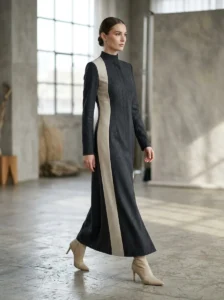
Shape advice frequently repeats “vertical lines are lengthening” and “horizontal lines add width” as universal rules, but the reality is more specific and more useful than that blanket version.
A vertical line only lengthens if it’s continuous. A single seam, placket, or color block running from shoulder to hem creates the lengthening effect; multiple short, interrupted vertical elements (several small buttons, a broken seam line) don’t produce the same result and can actually look busy instead.
Horizontal lines add width only at the widest point they cross. A horizontal stripe or hemline at a narrower point of the body — like just below the knee, or at the collarbone — doesn’t add width in a noticeable way; it’s specifically horizontal emphasis at the body’s widest point (often the hip or bust) that creates the width effect people are trying to avoid.
Color blocking is more effective than pattern for this purpose. A single solid color worn head to toe, or two colors divided at a strategic point, creates a cleaner visual line than pattern does, since pattern introduces its own visual noise that can compete with the lengthening or narrowing effect being attempted.
Building an Approach Instead of Following a Chart

Rather than identifying a shape category and shopping from a prescribed list, a more useful process starts with observation and adjusts from there.
- Notice which existing pieces already feel right, and identify what they have in common — rise height, sleeve length, where a hem falls. This is more reliable data than any chart, because it reflects an actual body rather than an averaged outline.
- Try one new proportion at a time rather than overhauling an entire wardrobe based on a shape label. Testing a higher rise for two weeks, for instance, gives clearer feedback than trying to apply five rules simultaneously.
- Prioritize tailoring over new purchases when something is close but not quite right. A hem, a waist take-in, or a shoulder adjustment frequently solves what looks like a “wrong shape for my body” problem, when it was actually just a fit problem specific to that one garment.
- Let proportion preferences shift over time. What felt right at one torso-to-leg ratio, one weight, or one age doesn’t necessarily stay fixed — revisiting the “what already feels right” question periodically is more useful than committing permanently to a single system.
Key Takeaways
- The five-category shape chart oversimplifies real bodies, especially by ignoring torso length and treating the body as fixed rather than variable over time
- Proportion — specifically where the torso’s natural midpoint sits — is a more useful starting point than shape category for choosing rise height and top length
- Correct fit at the shoulder and waistband matters more than whether a garment’s silhouette technically matches a shape chart’s recommendation
- Vertical lines only lengthen when continuous, and horizontal lines only add visual width where they cross the body’s widest point — both more specific than the blanket versions of these “rules”
- Observing which currently owned pieces already feel right provides more reliable guidance than any external shape chart
Frequently Asked Questions
If shape charts are incomplete, should they be ignored completely? Not necessarily — they’re not wrong so much as they’re a starting point rather than a complete system. Someone can use a shape chart as a rough reference while paying closer attention to proportion, fit, and how specific fabrics and cuts behave on their actual body, treating the chart as one data point among several rather than the final word on what will or won’t work.
How do I find my torso’s natural midpoint if I’m not sure where it is? A simple way to check is bending sideways at the waist and noticing where the body actually creases — that point is usually close to the natural midpoint, and it’s often higher or lower than the belly button depending on individual torso length. Comparing this point to where a favorite pair of trousers sits when it feels genuinely comfortable and proportionate is another practical way to confirm it.
Does this proportion-based approach apply the same way to all clothing categories, or mainly bottoms? It applies most visibly to rise height and top length, but the underlying principle extends further — sleeve length relative to arm length, jacket length relative to torso length, and even necklace length relative to torso all follow the same logic of working with actual proportions rather than a general shape category. The core idea, matching garment proportions to individual body proportions rather than a broad silhouette label, is consistent across almost every category.
Is it worth getting clothes tailored instead of just buying a different size or shape? In many cases, yes, particularly for structural pieces like blazers, trousers, and coats, where a small adjustment — a hem, a waist take-in, narrowing a sleeve — often resolves what initially looks like a shape mismatch. Tailoring tends to be significantly cheaper than repeatedly buying and returning pieces trying to find one that fits without alteration, and it usually produces a better final result than an off-the-rack fit ever would.
Does age or weight change change which proportion approach works best? Yes, and this is part of why a fixed shape category system struggles over time — torso length itself doesn’t change, but where weight sits, how fabric drapes over the body, and even posture can shift with age and weight fluctuation, which affects how a given proportion reads visually. Revisiting the “what feels right currently” observation every so often, rather than assuming one approach works permanently, accounts for this more accurately than any static shape chart could.