



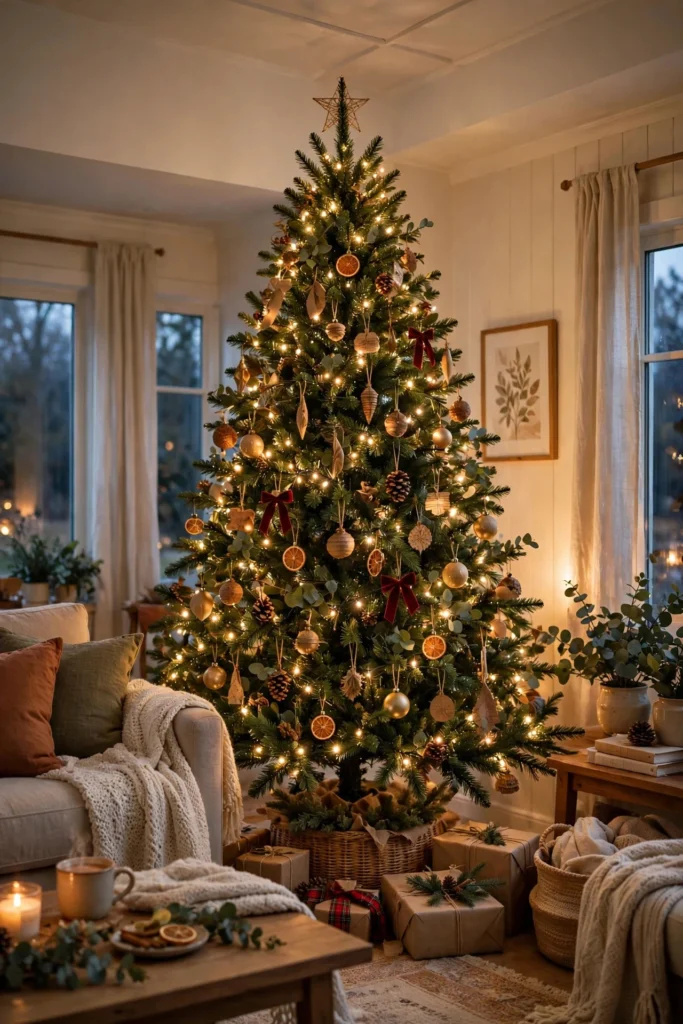
Buying a Christmas tree is one of those purchases where guessing goes wrong in public. Too tall, and the topper bends sideways against the ceiling like it’s apologising. Too small, and it sits in the corner looking like it gave up. I’ve made both mistakes — the year of the bent star is still a family joke — so this christmas tree size guide is the honest math I wish someone had given me before I dragged home a nine-footer for an eight-foot room.
Size isn’t just about height, either. A tree’s footprint, its profile, and the stand it sits in all decide whether it looks majestic or cramped. Work through the twelve steps below with a tape measure in hand, and you’ll buy once, buy right, and never wrestle a tree through a doorway twice.
1. Start With the One-Foot Rule
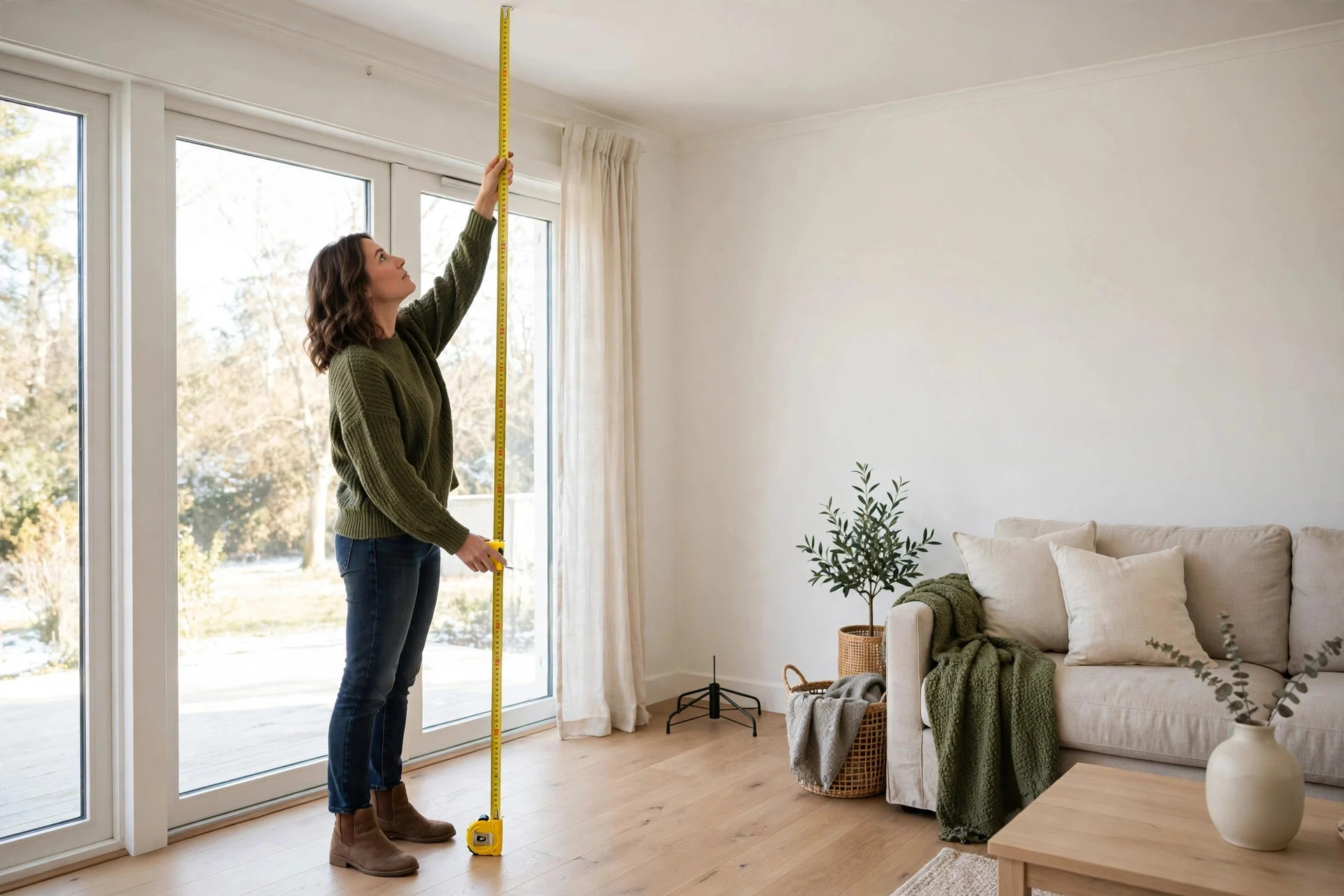
The golden rule of tree sizing: your tree should stand at least one foot shorter than your ceiling. That foot isn’t wasted space — about six inches goes to the tree topper, and the other six give the tree breathing room so the top doesn’t look squashed against the plaster. With standard 8-foot ceilings, that means a 7-foot tree; with 9-foot ceilings, you can go 7.5 to 8 feet. Measure your actual ceiling, not what you think it is — I was convinced mine were nine feet for years until a tape measure said eight-foot-two, which explained a lot about the bent-star incident. Write the number on your phone before you go shopping, because tree lots have a way of making every tree look smaller than it is.
2. Map the Spot With Painter’s Tape

Before you think about height, mark the floor. Take blue painter’s tape and outline the base diameter of the tree you’re considering right where it would stand. A full 7.5-foot tree needs a circle about 55 inches across; a slim one needs about 40. Stand back and look at the taped circle for a full day — walk past it, sit on the sofa, open the nearby doors. You’ll immediately feel whether the tree crowds the walkway or leaves the corner empty. I do this every year even though I’ve had the same tree for six years, because furniture moves and memory lies. The tape costs nothing, peels off clean, and has saved me from at least two bad purchases. Photograph the taped outline too — it helps enormously when you’re standing in the store second-guessing yourself.
3. Mind the Footprint, Not Just the Height
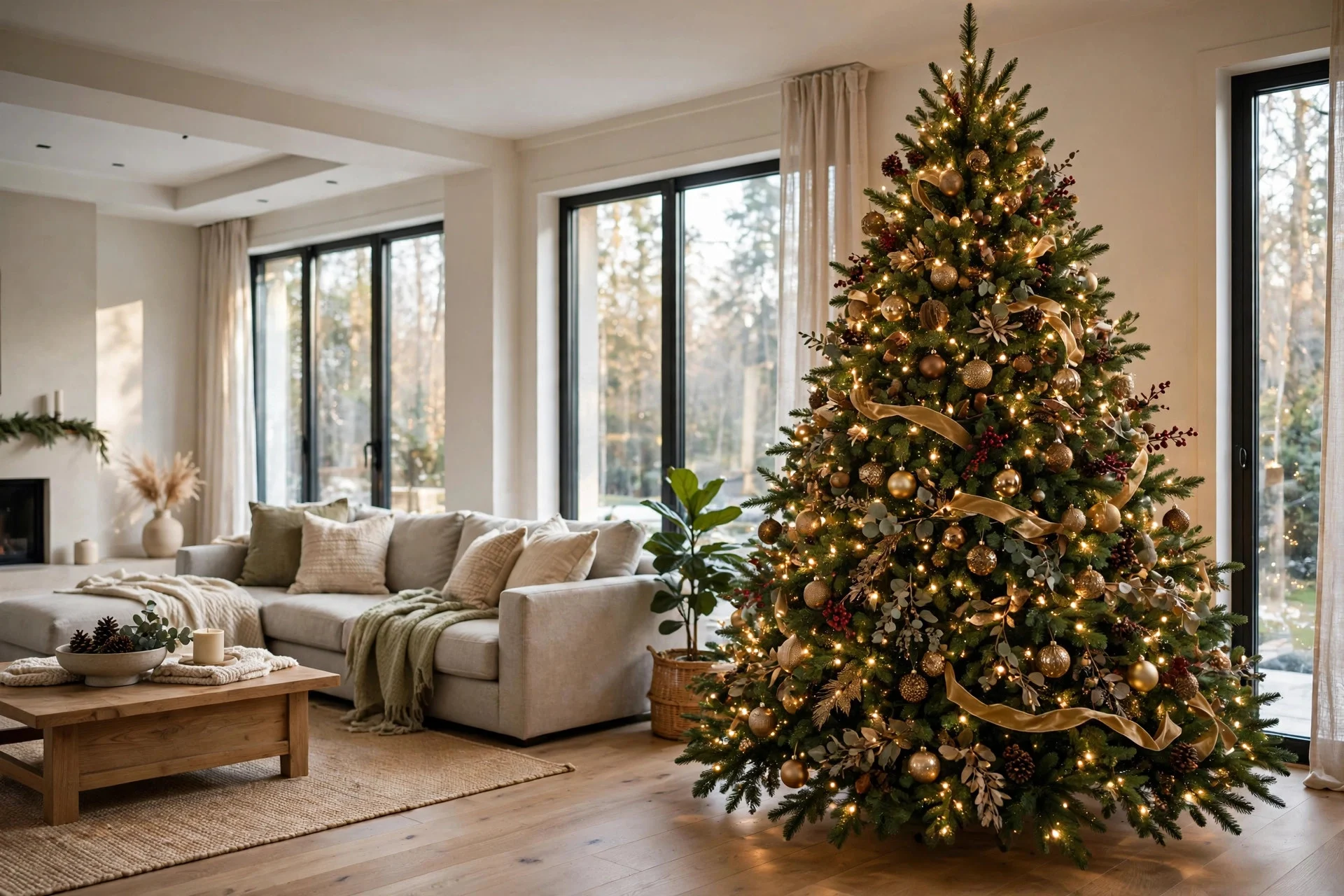
Everyone measures ceiling height; almost nobody measures floor space, and the footprint is what actually makes a room feel cramped. A full-profile 7.5-foot tree can spread 55 to 60 inches at the base — that’s wider than most sofas are deep. You need at least two to three feet of clear walkway around the tree’s widest point, or every trip past it becomes a game of dodge-the-ornament. Check door swings as well: a tree that blocks a closet or patio door will annoy you daily, not just on Christmas morning. Our cozy fall living room decor ideas talk about furniture flow, and the same rule applies — if you have to squeeze past the tree sideways, it’s too big for the spot regardless of what the ceiling allows.
4. Slim Trees: Full Height, Half the Footprint

A slim or pencil tree is the best invention in Christmas decorating for anyone with normal-sized rooms. You get the full 7 or 7.5 feet of height — the presence, the topper clearance, the drama — on a base only 35 to 40 inches wide instead of 55. That’s the difference between a tree that owns the room and one that shares it. Slim trees suit narrow living rooms, the gap between a sofa and a window, and any spot where a full tree would eat the walkway. The trade-off is ornament space: fewer, shorter branches mean fewer baubles, so slim trees look best with a lighter hand — ribbons, small ornaments, and fairy lights rather than a heavy collector’s display. In a tight room, a slim tree always looks more expensive than a cramped full one.
5. When a Full or Grand Tree Earns Its Keep

Full and grand profiles exist for one reason: big rooms. In a great room, an open-concept living space, or anywhere with ceilings over nine feet, a slim tree looks like a lamppost — all height, no presence. A full 7.5-foot tree spreads 55 inches and fills the visual weight a large room demands; grand profiles go wider still. These trees also hold the most ornaments, which matters if your collection has been growing for twenty years and needs branches to show it off. The honest catch: full trees need a bigger stand, more lights (plan on 100 lights per foot of height as a baseline), and more storage space in January. If your room is genuinely large, though, nothing else looks right — buy the full tree and enjoy it.
6. Small Apartments: Corners, Half Trees, and Tabletops

Small-space tree sizing is a different game, and the corner is your best friend — a tree tucked into a corner needs clearance on only two sides, effectively halving its footprint demand. A 4 to 6-foot slim tree in a corner works in most apartments, and a half tree (flat on the back, designed to sit against a wall) gives you a full-looking front in about 20 inches of depth. Tabletop trees — 2 to 3 feet on a side table or console — are underrated; dressed well, they read as a deliberate style choice rather than a compromise. The space-planning principles in our small apartment decorating guide apply here too: assign the tree one zone, and don’t let it sprawl. One more tip: measure your lift and stairwell before buying, because getting a boxed 7-footer up three flights of stairs is a December memory you don’t want.
7. Entryways and Foyers Need a Different Scale
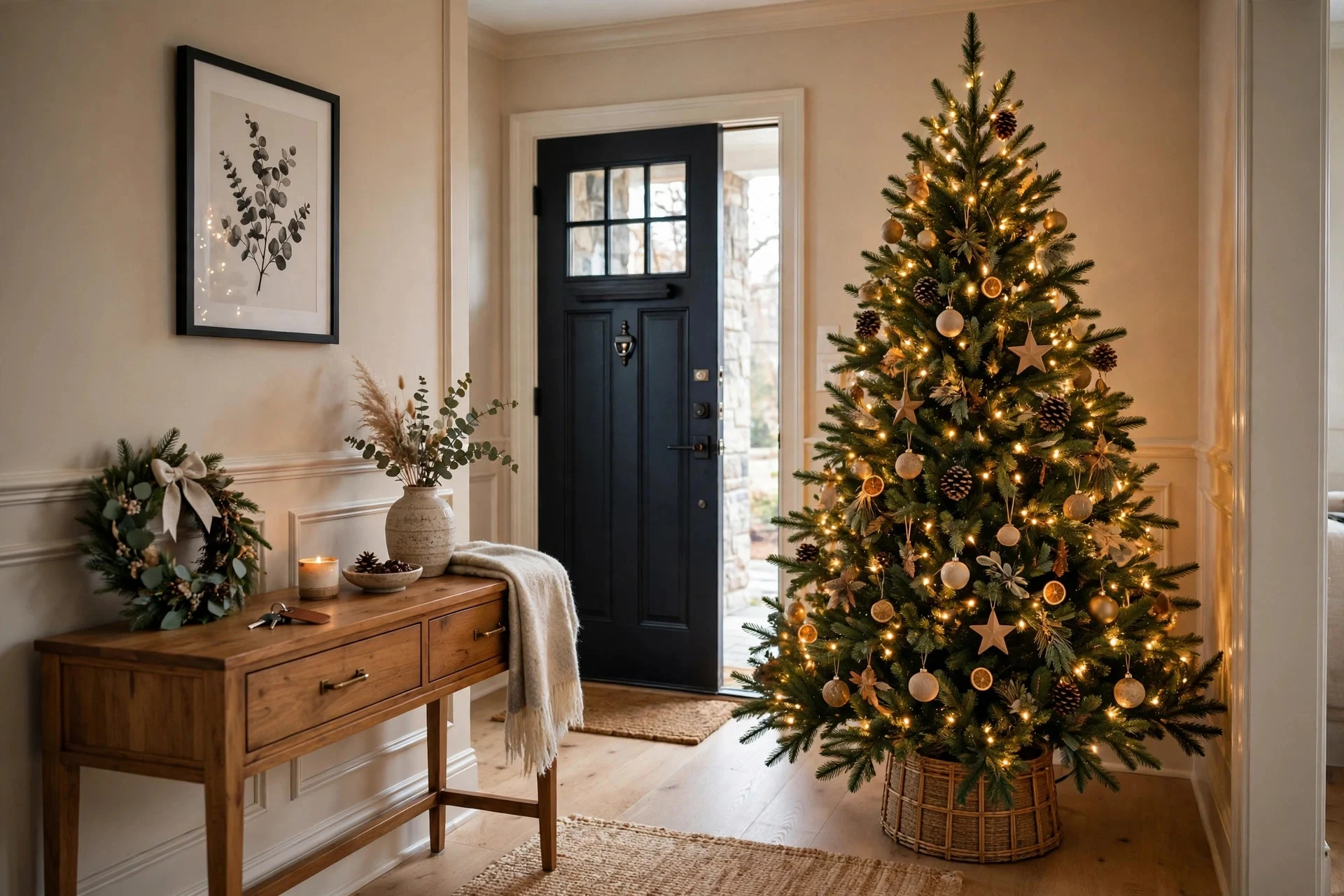
A tree in the entryway plays a different role than one in the living room — it’s a greeting, not the main event, so it should be smaller and tidier. Four to six feet is the sweet spot for most foyers: tall enough to be seen over the console table, short enough that it doesn’t block sightlines or crowd the door swing. Slim profiles work brilliantly here because foyers are usually narrow; a full tree in an entryway makes guests do an awkward sideways shuffle on arrival. Keep the footprint tight and the decorating simple — lights, a few ornaments, maybe a bow topper instead of a tall star. Our Thanksgiving entryway ideas make the same point about first impressions: the entryway sets the tone, and a right-sized tree says “welcome” where an oversized one says “watch your step.”
8. Size the Stand to the Tree — Then Add It to the Math
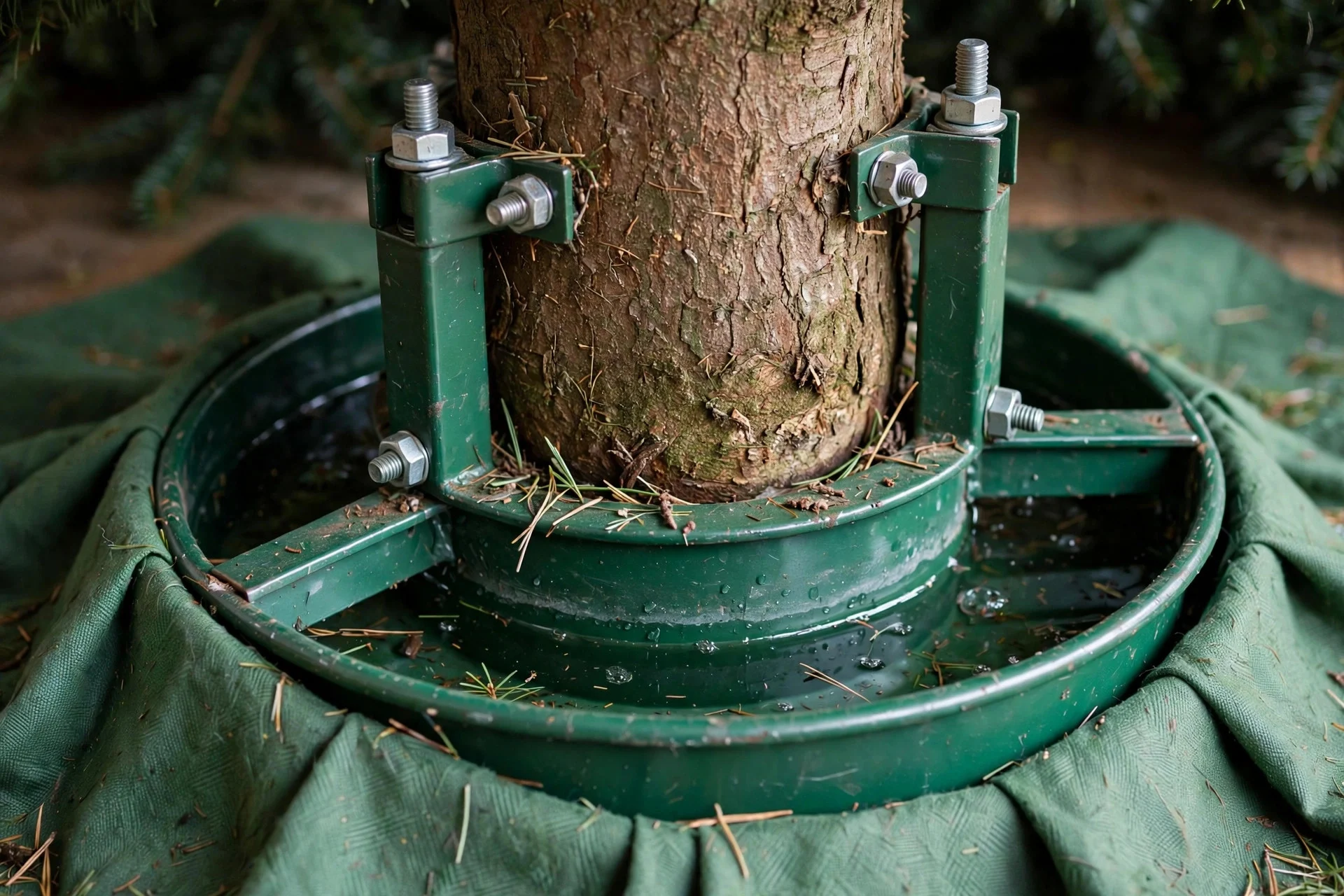
Here’s the detail that ruins more tree purchases than any other: the stand adds height. Most stands lift the tree 4 to 8 inches off the floor, and that counts toward your ceiling math — a 7-foot tree in a 6-inch stand is effectively 7-foot-6. Buy the stand rated for your tree’s height and weight, not the cheapest one on the shelf; an undersized stand on a full 8-footer is how trees end up horizontal on Christmas morning. For real trees, the stand’s water reservoir matters as much as its strength — a fresh tree drinks up to a quart of water per inch of trunk diameter daily in its first week, so a thimble-sized reservoir means daily refills. Artificial trees usually include a folding metal stand; check that its footprint fits your taped floor circle before assembly day.
9. Artificial vs. Real: Why Listed Sizes Differ

A “7-foot” artificial tree and a “7-foot” real tree are rarely the same height in your living room, and knowing why saves a return trip. Artificial trees are measured in the factory, usually including the stand, with branches fluffed to their ideal spread — what you see on the box is what you get, within an inch or two. Real trees are measured at the lot from the cut base to the tip, but you’ll trim the base, the stand adds height, and no two trees grow alike — a lot tree tagged 7 feet might be 6-foot-8 of actual tree plus a crooked top. Real trees also keep their natural taper, while artificial full profiles can be wider than any real fir. This Christmas tree size guide from Jackson’s Nurseries has a handy ceiling-height table if you want a second opinion on the math. Whichever you choose, re-measure at home — trust the tape, not the tag.
10. Vaulted Ceilings and Two-Story Rooms

Vaulted and two-story ceilings are the one case where the one-foot rule gets a friendly amendment: you can go bigger, and you should, because a 7-foot tree under a 16-foot ceiling looks like a houseplant. Nine to twelve feet is the natural range here, with 9-foot trees fitting comfortably and 10 to 12-foot trees making the statement the space is asking for. But before you commit, think about the logistics nobody mentions: you’ll need a tall ladder to decorate the top third, the tree will need a serious stand (and possibly guy-wires for real trees), and storing a 10-foot artificial tree requires serious garage real estate. Also check your light count — a 10-foot tree wants 1,000+ lights, which is a project, not an afternoon. If the logistics scare you, two medium trees (one per floor, or flanking the fireplace) often look better than one giant one.
11. Visual Tricks That Change How Big a Tree Feels
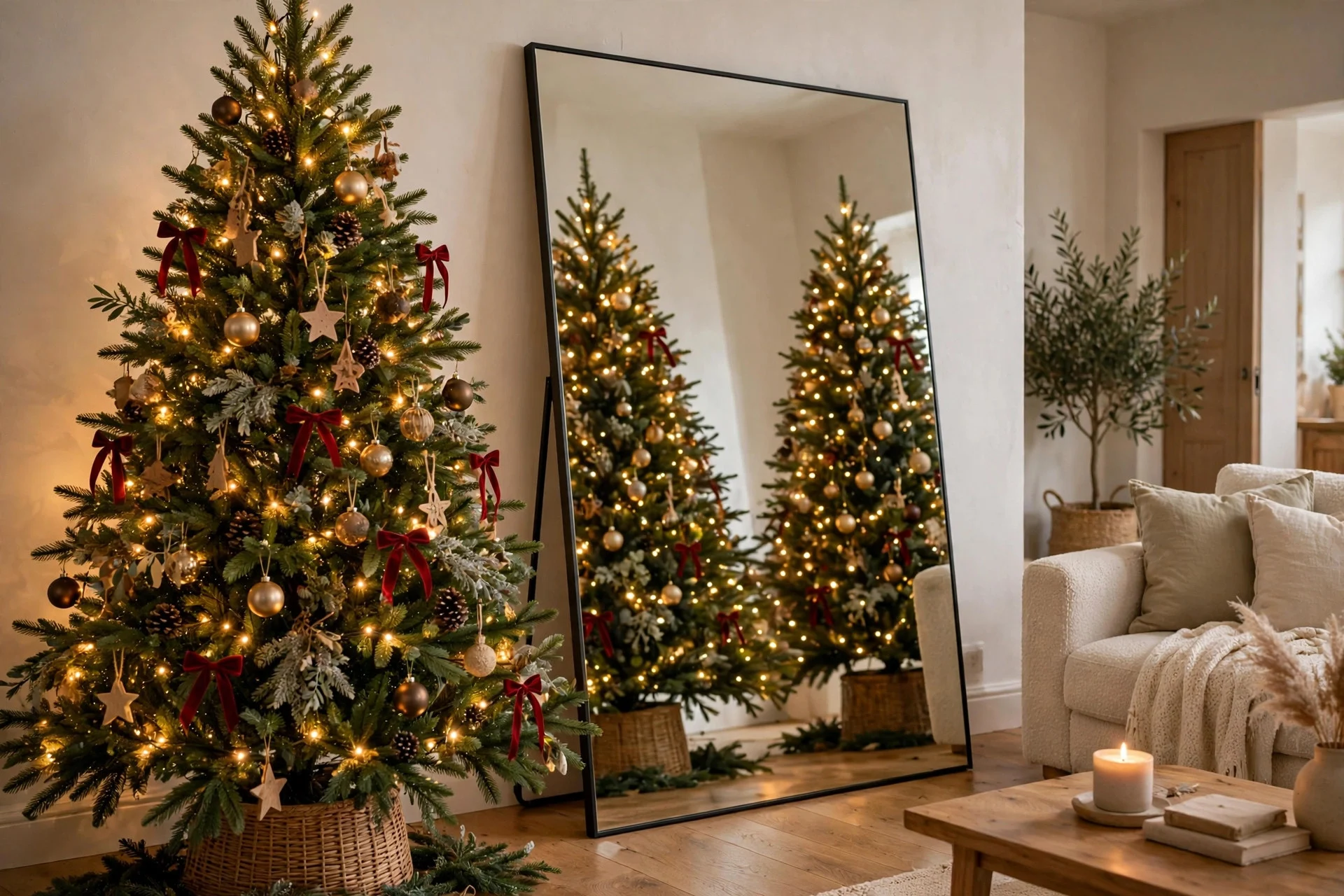
Perceived size and actual size are different things, and a few tricks let you bend perception in your favour. Raising the tree in a basket, crate, or collar adds 6 to 12 inches of visual height without buying a bigger tree — it also hides ugly stands and catches fallen needles. A large mirror or mirrored tray behind the tree doubles its visual presence and bounces the lights around the room. Sparse, open-branch trees (the trendy “Scandi” look) read smaller than dense trees of the same height, so if your tree feels like too much, thinning the lower branches’ ornaments lightens it visually. And colour matters: all-white or all-gold trees look larger than multicolour ones because the eye reads them as one mass. These tricks won’t fix a genuinely wrong size, but they fine-tune a close call beautifully.
12. The Quick Cheat Sheet

If you’ve skimmed everything above, here’s the whole guide on one mental index card. Seven-foot ceilings: go 6 feet (5.5 if you love a tall topper). Eight-foot ceilings: 7 to 7.5 feet — the most common setup in the country, and the reason 7.5-foot trees are the best-selling size. Nine-foot ceilings: 7.5 to 8 feet. Ten feet and up: 9 feet minimum, and don’t be shy. Remember the stand adds 4 to 8 inches, the topper needs 6, and you want 6 inches of air above that — which is exactly where the one-foot rule comes from. When torn between two sizes, go smaller for narrow rooms (footprint wins) and bigger for tall rooms (proportion wins). And buy the tree for the room you have, not the room in the catalogue photo — the catalogue room has twelve-foot ceilings and no sofa.
FAQs
Should I measure for the tree with or without the topper?
With. Measure your ceiling, subtract 12 inches, and that final number needs to cover tree + stand + topper together. A topper adds 4 to 8 inches, and it’s the most commonly forgotten part of the math — which is why so many toppers end up bent against the ceiling in January photos.
What size tree fits a standard 8-foot ceiling?
A 7 to 7.5-foot tree. Seven feet leaves comfortable room for any topper; 7.5 feet works if your topper is small and your stand is low. This is the single most common tree size sold, so you’ll have the widest choice of profiles and prices.
Are slim trees cheaper than full trees?
Usually, yes — a slim 7.5-foot tree typically costs 20 to 30% less than a full tree of the same height, because it uses fewer branches and less material. You also save on lights and ornaments, since a slim tree needs fewer of both to look finished.
How wide is a 7.5-foot Christmas tree?
It depends on the profile: a full 7.5-foot tree spreads 50 to 60 inches at the base, a standard one about 45 to 52 inches, and a slim version 35 to 40 inches. Always check the listed diameter, not just the height — two “7.5-foot” trees can differ by nearly two feet in width.
Real or artificial — which is easier to size correctly?
Artificial, by a mile. The box height includes the stand, the profile is standardised, and what you measure at home is what you get every year. Real trees vary tree to tree, lose height to base trimming, and gain it back from the stand — always re-measure a real tree at home before you commit to the spot.
The right tree size is just arithmetic plus honesty about your room — measure the ceiling, tape the footprint, count the stand, and buy for the space you actually live in. Do that, and the tree looks like it was made for the room, because it was. What size are you going with this year?

2 Responses