



How to Mix Patterns in a Living Room Without Chaos
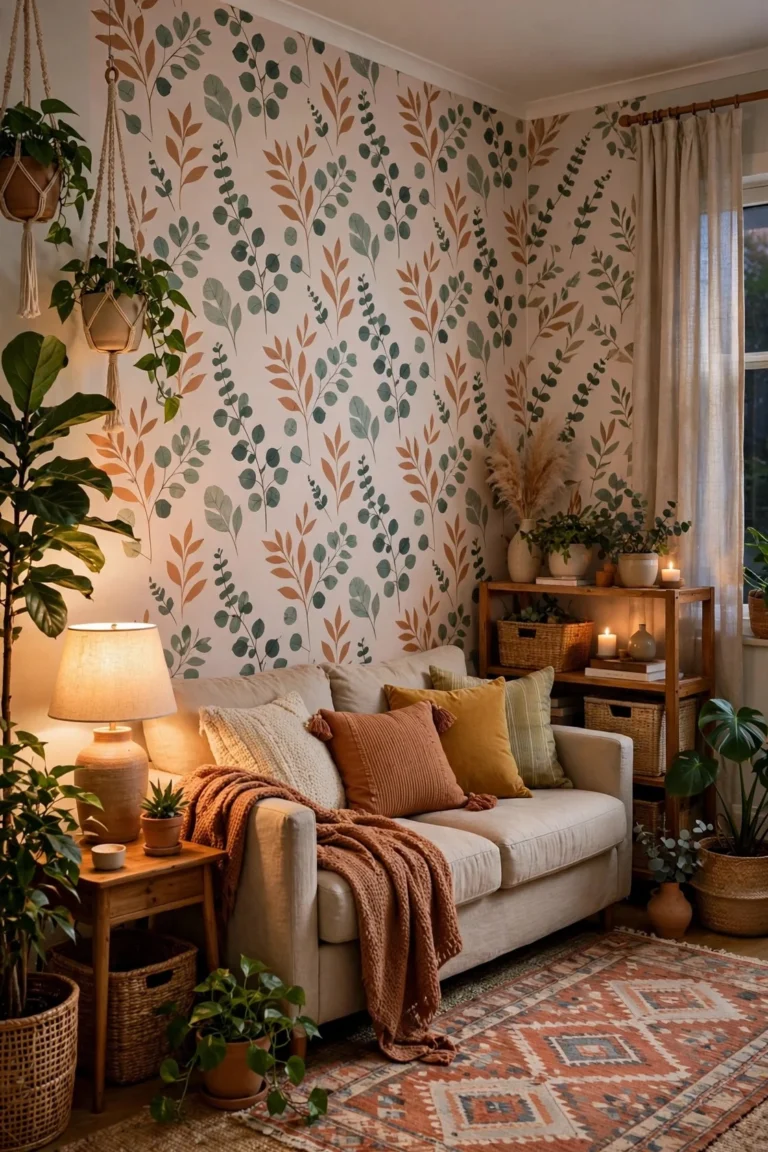
Most rooms that look chaotic do not have too much pattern. They have pattern with no plan. When I first tried mixing patterns living room style, I bought every cushion I liked, brought them home, and watched the sofa turn into a shouting match. Nothing matched, nothing rested, and the room felt smaller. The fix was not to give up on pattern. It was to give each pattern a job, a size, and a colour it had to answer to. The twelve steps below do exactly that, and they work with pieces you already own as well as new ones.
1. Start With One Hero Pattern for Your Mixing Patterns Living Room Plan
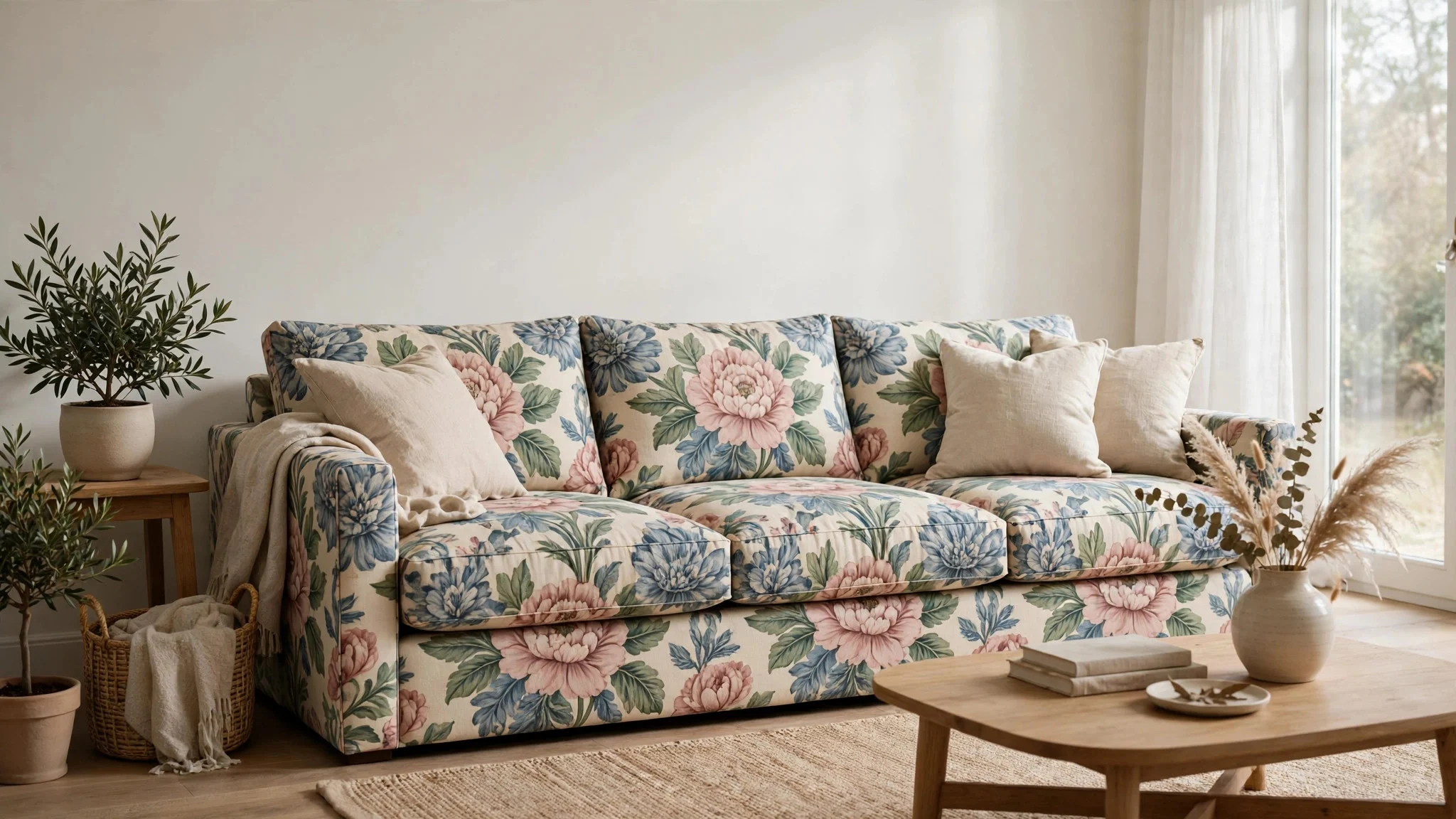
Pick the loudest pattern first and let it lead. It might be a floral sofa, a bold rug, or curtains with a strong print. Everything else in the room should support that one piece, not compete with it. Stand back and ask which pattern your eye lands on first. If two patterns fight for that spot, one of them needs to move to another room or go into storage for a season. Once the hero is clear, shopping gets easier too, because you have a reference point to hold up against every new cushion or throw. My own hero is a faded floral armchair I found secondhand. It sets the tone, and I have never regretted building around it.
2. Use the Large, Medium, and Small Scale Rule
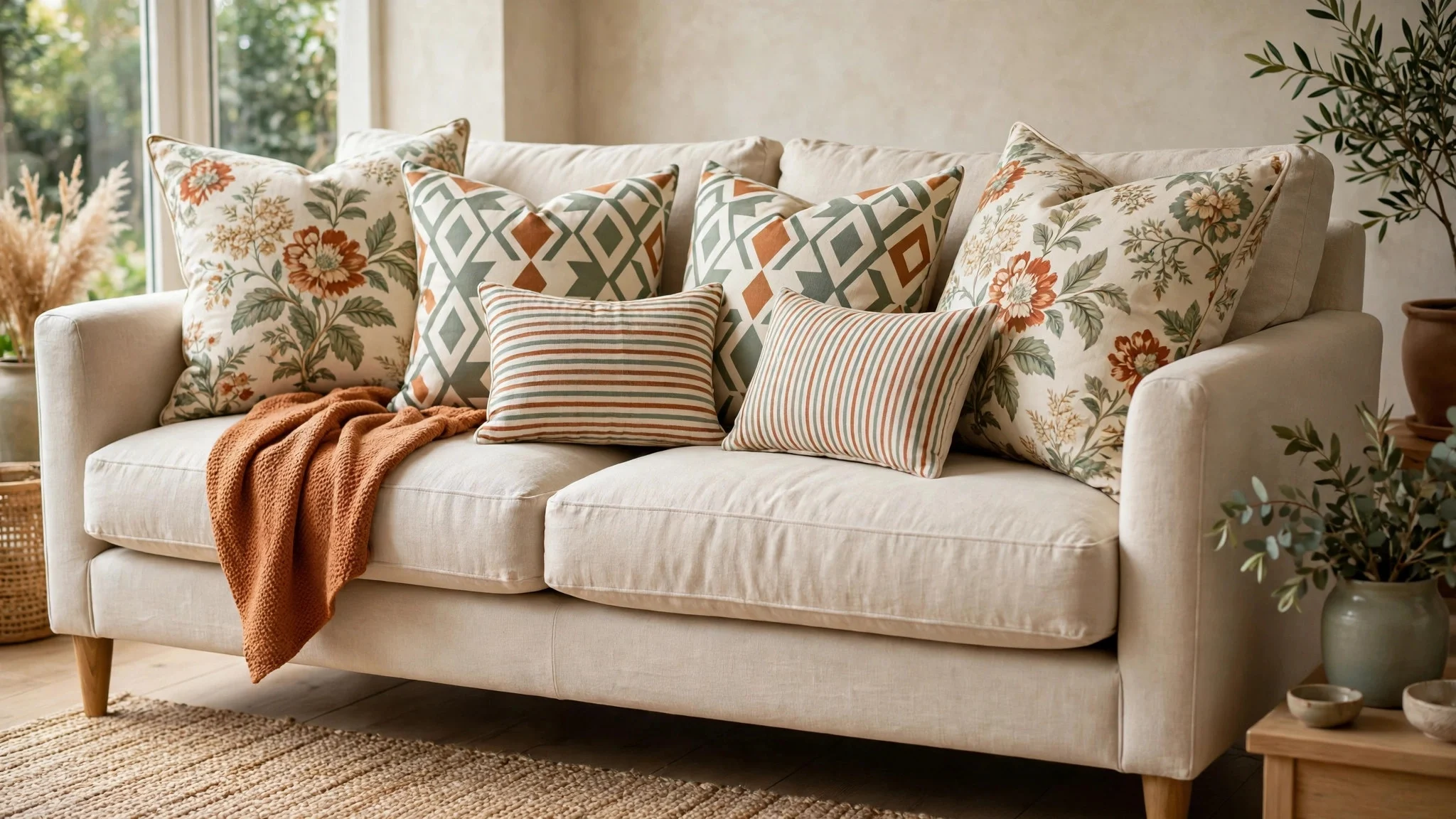
Scale is the quiet rule behind almost every room that mixes patterns well. Choose one large-scale pattern, one medium, and one small. A big floral on the sofa, a medium geometric on two cushions, and a fine stripe on a smaller cushion is a classic combination. The different sizes stop the eye from getting stuck, because each pattern reads at a different distance. If all your patterns are the same size, they blur into noise, even when the colours match. To test this, lay your cushions on the bed in a row. If they look like one busy block, swap one for a much larger or much smaller print and watch the group settle.
3. Keep the Palette to Three or Four Colours
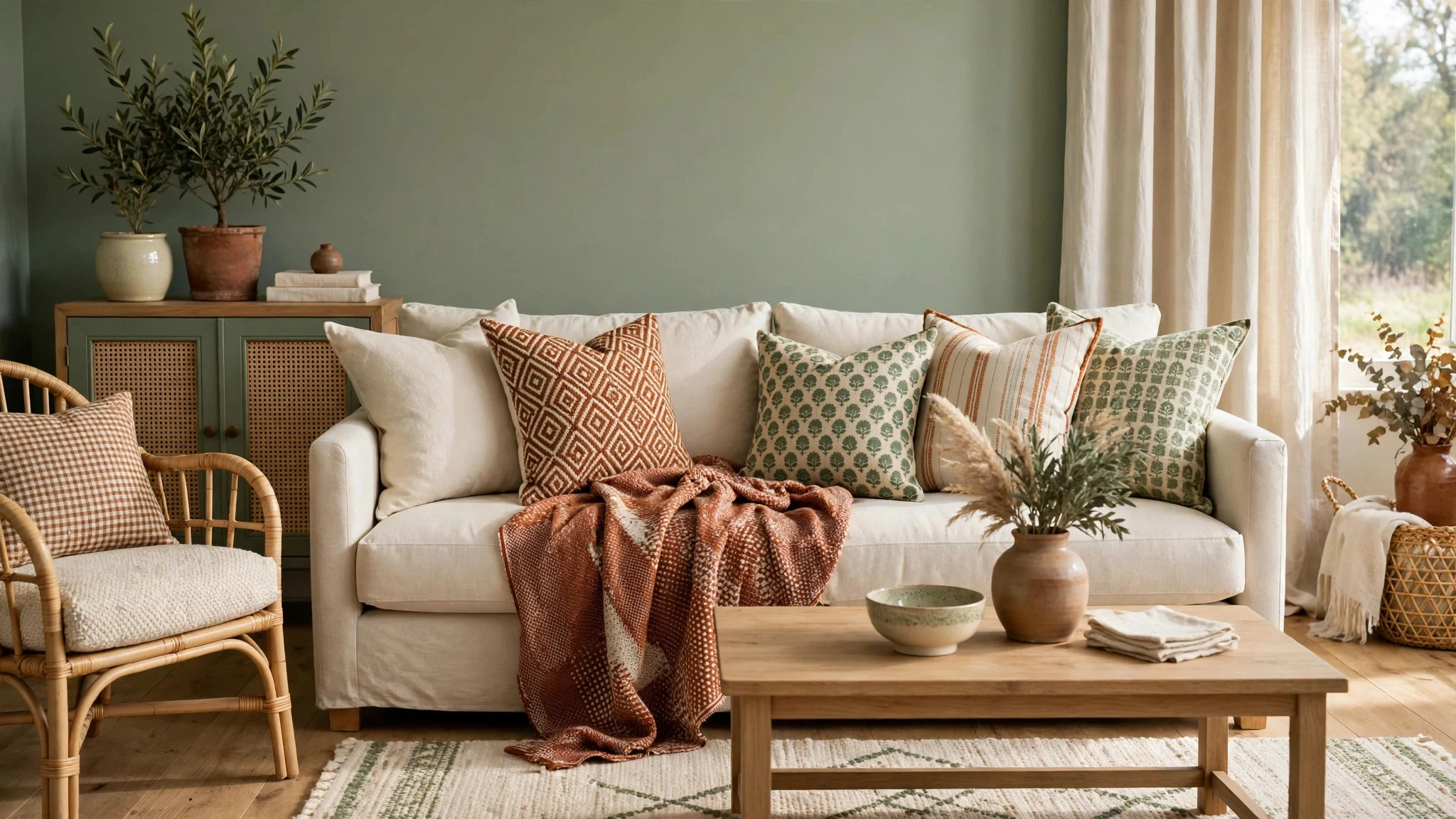
Colour is what holds mixed patterns together. Limit the room to three or four colours, counting neutrals like cream, grey, and natural wood as part of the count. Write the palette on a scrap of paper before you shop: cream, sage, rust, and charcoal, for example. Then check every patterned piece against it. A cushion can have a wild print as long as its colours stay inside the list. The moment a random bright pink or electric blue sneaks in, the whole mix starts to feel accidental. This rule also saves money, because you stop buying one-off pieces that never quite fit anywhere else in the house.
4. Mix Pattern Families, Not Just Colours
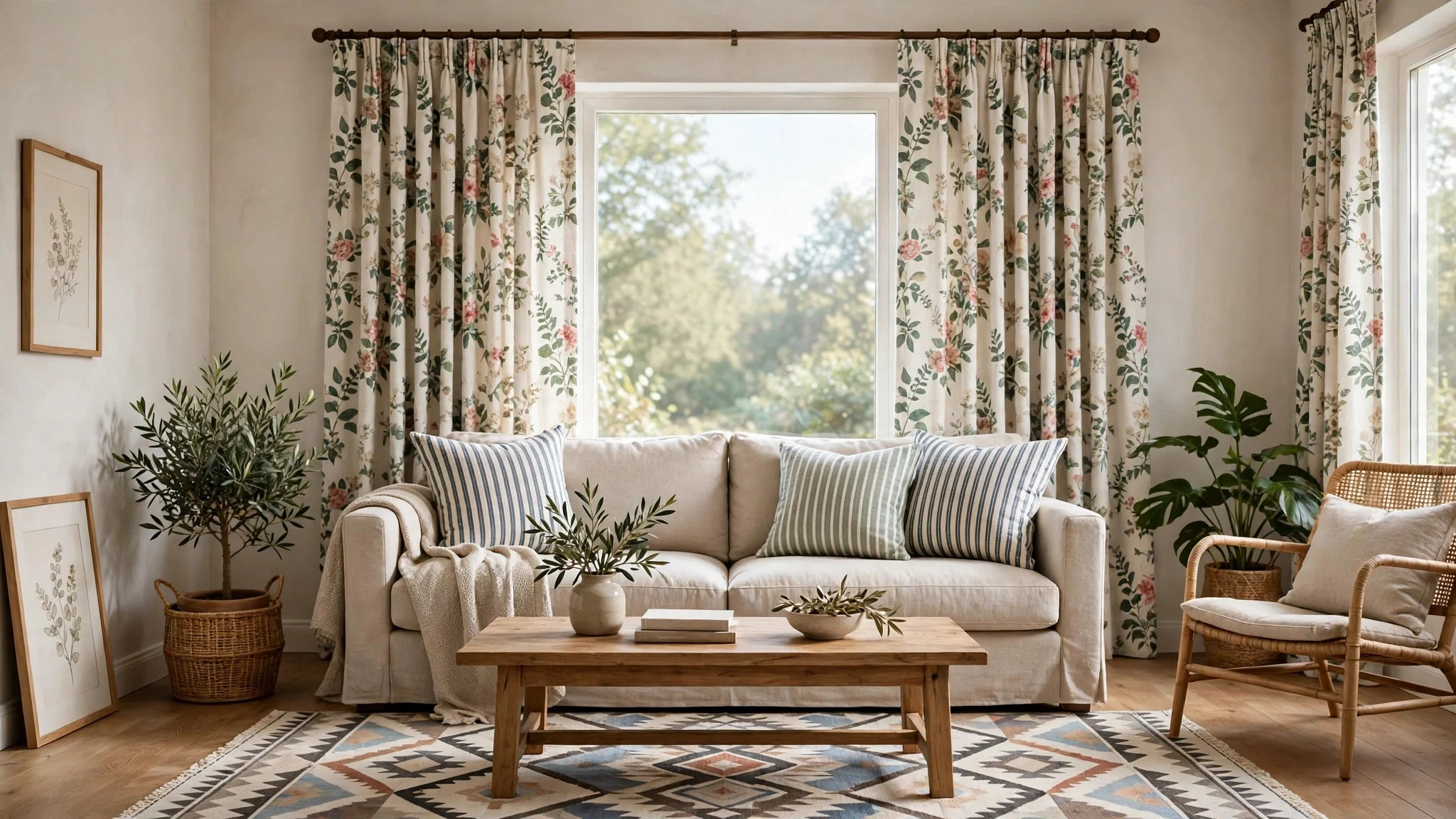
A room with five florals is not really mixing patterns, even if the colours differ. Aim for different families: something organic like a floral or botanical, something straight like a stripe or check, and something geometric like diamonds, dots, or a trellis. The contrast between families creates interest, while the shared palette keeps it calm. Try floral curtains with striped cushions and a geometric rug, or a botanical throw with checked cushions. Birch Lane’s guide to mixing patterns makes the same point: start with one pattern, then add companions that share its colours. If you already own mostly one family, add just one piece from another. That single outsider often unlocks the whole room, and it costs far less than starting over.
5. Vary the Scale on Purpose, Not by Accident
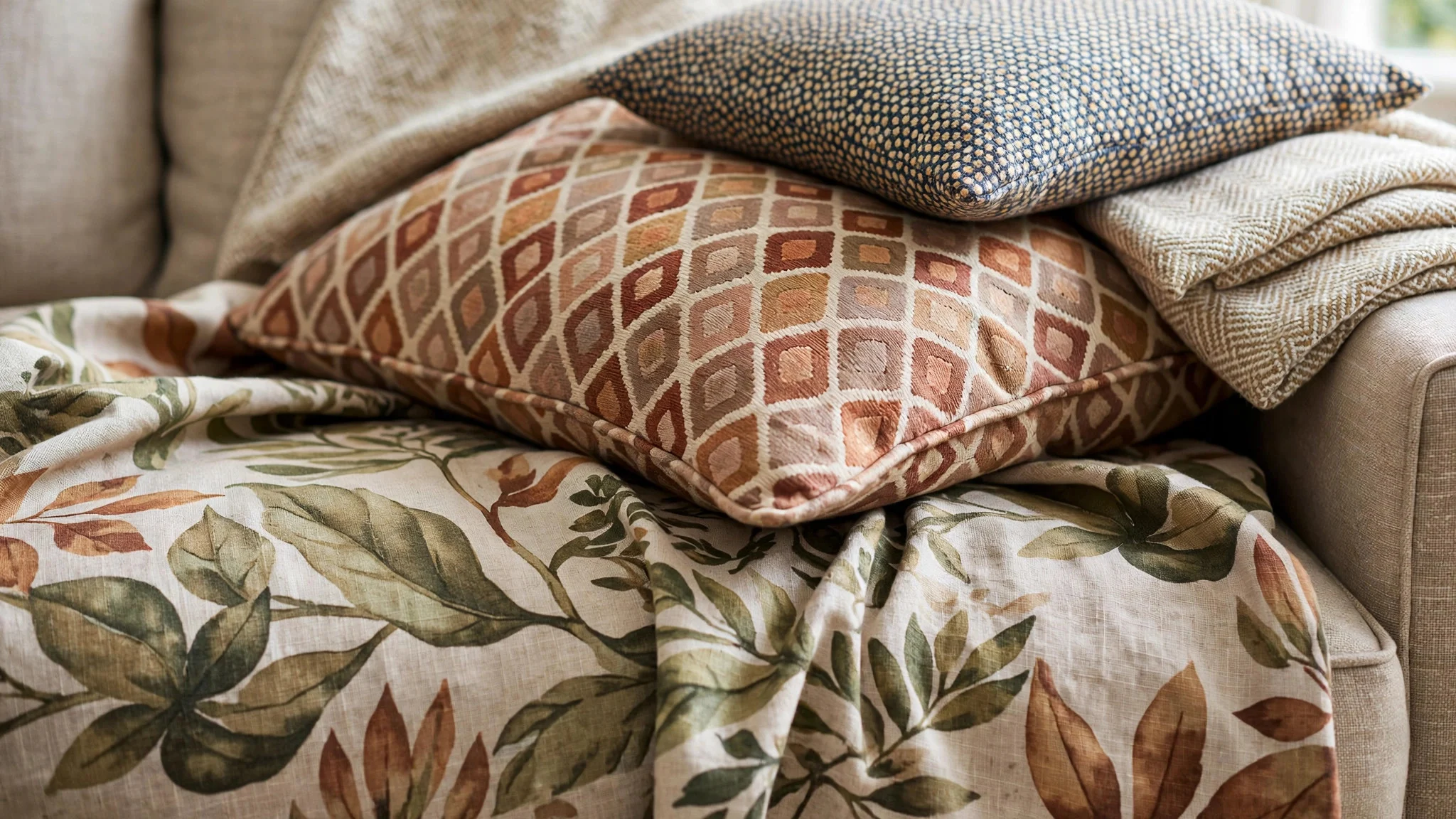
It helps to be deliberate about scale in each seating area, not just across the room. On one sofa, put the largest print at the back, the medium print in the middle, and the smallest print at the front or on a side chair. That layering gives the eye a path to follow instead of a wall of competing print. Pay attention to the rug too. A rug with a tiny, dense pattern under a sofa covered in large florals can look restless, because both fight at floor level. A rug with a simpler, larger motif usually calms the base of the room and lets the sofa prints breathe.
6. Let Solid Pieces Do the Quiet Work
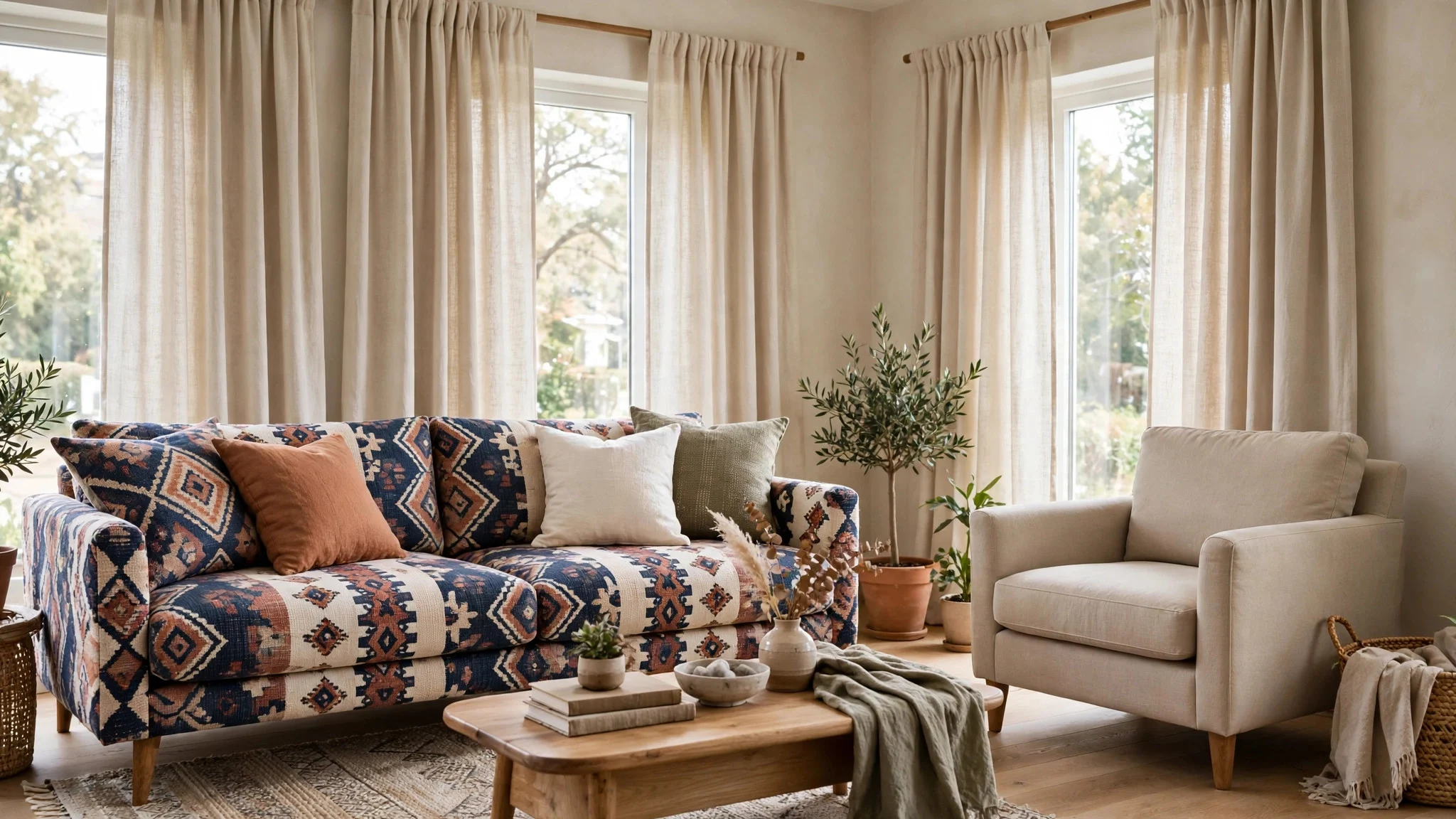
Pattern needs plain neighbours. A solid armchair, plain curtains, or a bare wooden coffee table gives the eye somewhere to rest, and that rest is what makes the patterns look intentional. Aim for roughly half the large surfaces in the room to stay solid: walls, the biggest sofa if it is patterned, or the curtains. I learned this the hard way in a flat where the sofa, curtains, and rug were all printed. Removing the patterned curtains for plain linen changed nothing else, yet the room suddenly looked designed. Solids are not boring here. They are the frame around the picture.
7. Repeat Each Pattern at Least Twice
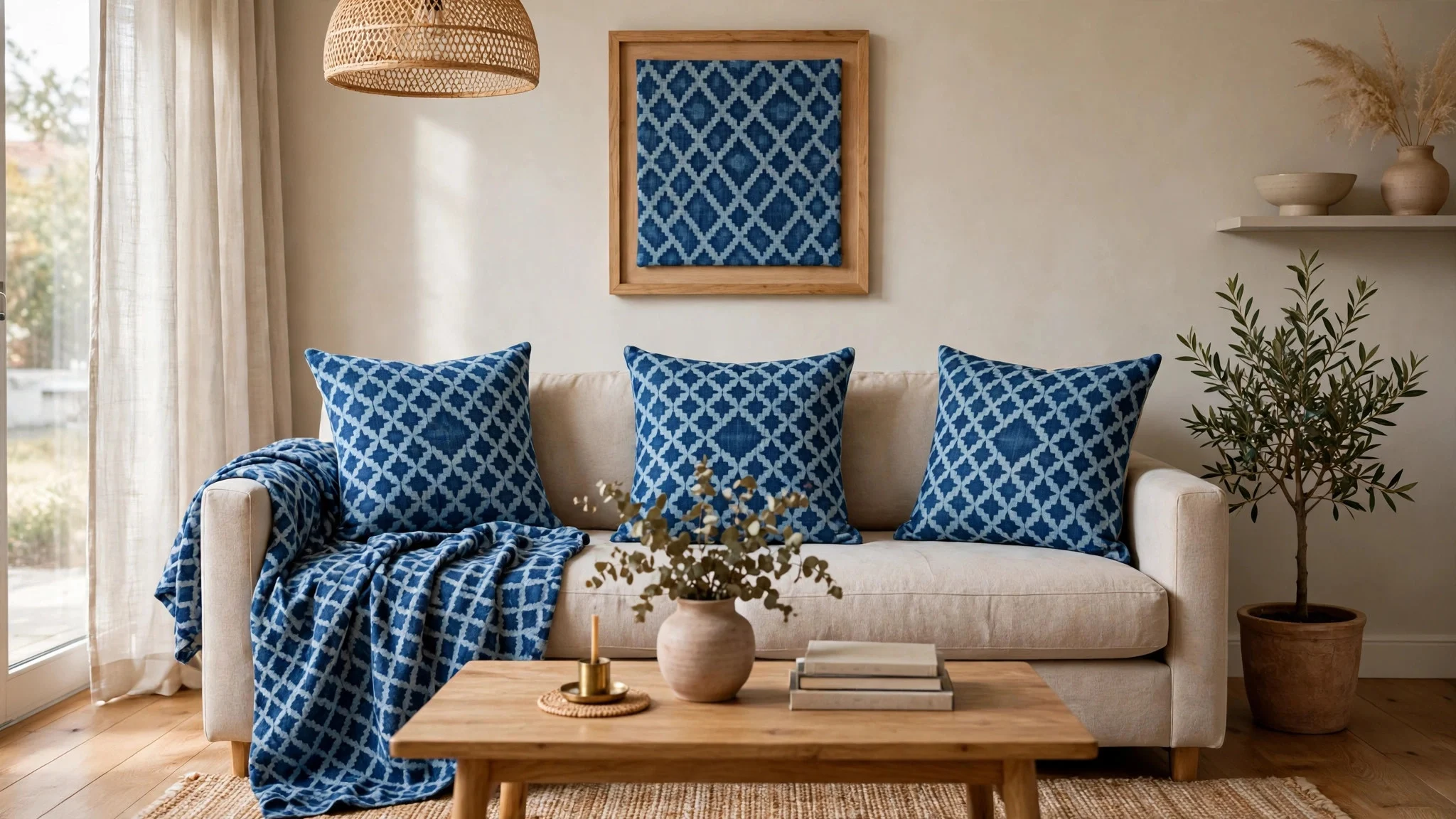
A pattern that appears only once looks like a mistake, even if it is beautiful. Repeat each main pattern in at least two places, at different sizes if you can. A geometric print on two cushions and a small framed fabric swatch across the room reads as a choice. The same print on a single cushion in a corner reads as a leftover. Repetition does not mean matching sets. A stripe on a cushion and the same stripe, thinner, on a lampshade or a basket trim counts. Walk the room and count: if a pattern scores one, find it a partner before you buy anything new.
8. Ground the Mix With a Calm Rug

The rug is the largest pattern surface in most living rooms, so it sets the ceiling for how busy the room can be. If your sofa and cushions are already patterned, choose a rug that is plain, lightly textured, or very low contrast. A natural jute, a flat wool rug in one warm tone, or a subtle tone-on-tone weave all work. If the rug is the hero pattern, then keep the sofa and cushions calmer instead. One hero at floor level plus one at seat level is usually one too many. For sizing help, our guide on how to choose the right rug size for your living room covers the front-legs rule and the tape test in detail.
9. Add Texture So Prints Do Not Fight Alone
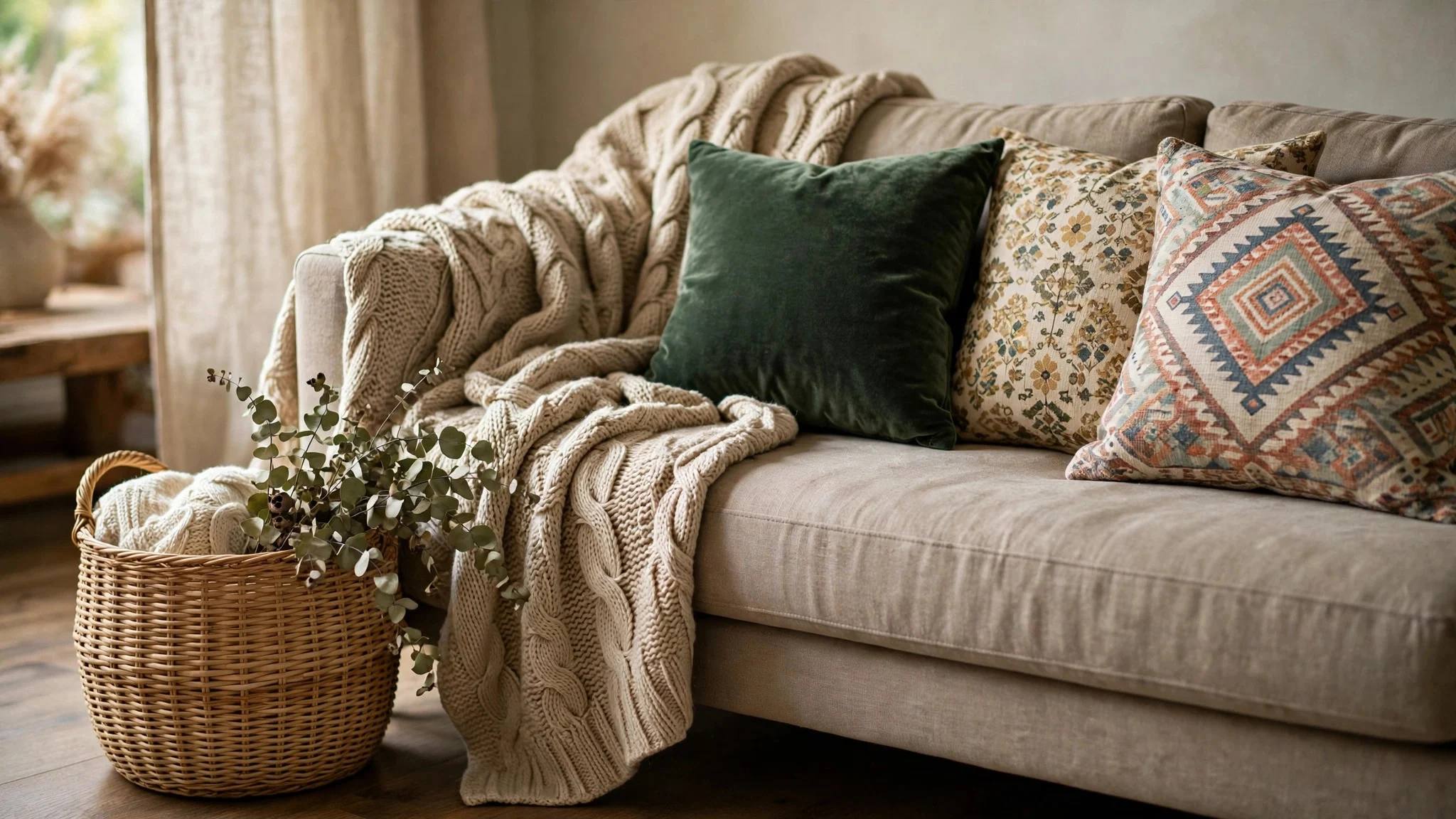
Texture is pattern’s best friend, because it adds richness without adding another print. A chunky knit throw, a velvet cushion in a solid colour from your palette, a woven basket, and a rough linen curtain all soften the edges between prints. When two patterns sit side by side and still clash, try putting a textured solid between them. A plain velvet cushion between a floral and a stripe often solves the argument. Texture also helps in photos and in real life at night, when lamplight flattens printed detail but still shows weave, pile, and grain clearly.
10. Check the Room From the Doorway

We style rooms from three feet away and then live in them from ten feet away, which is why the doorway test matters. Stand in the doorway, squint slightly, and notice where your eye goes. You should see one hero, a few supporting patterns, and calm patches in between. If the whole room buzzes as one block, the patterns are too similar in scale or too high in contrast. Try removing one cushion, swapping a bright throw for a plain one, or moving the busiest cushion to a chair across the room. Small moves from this distance reveal what close-up arranging hides, and they cost nothing.
11. Give Busy Areas a Calm Neighbour
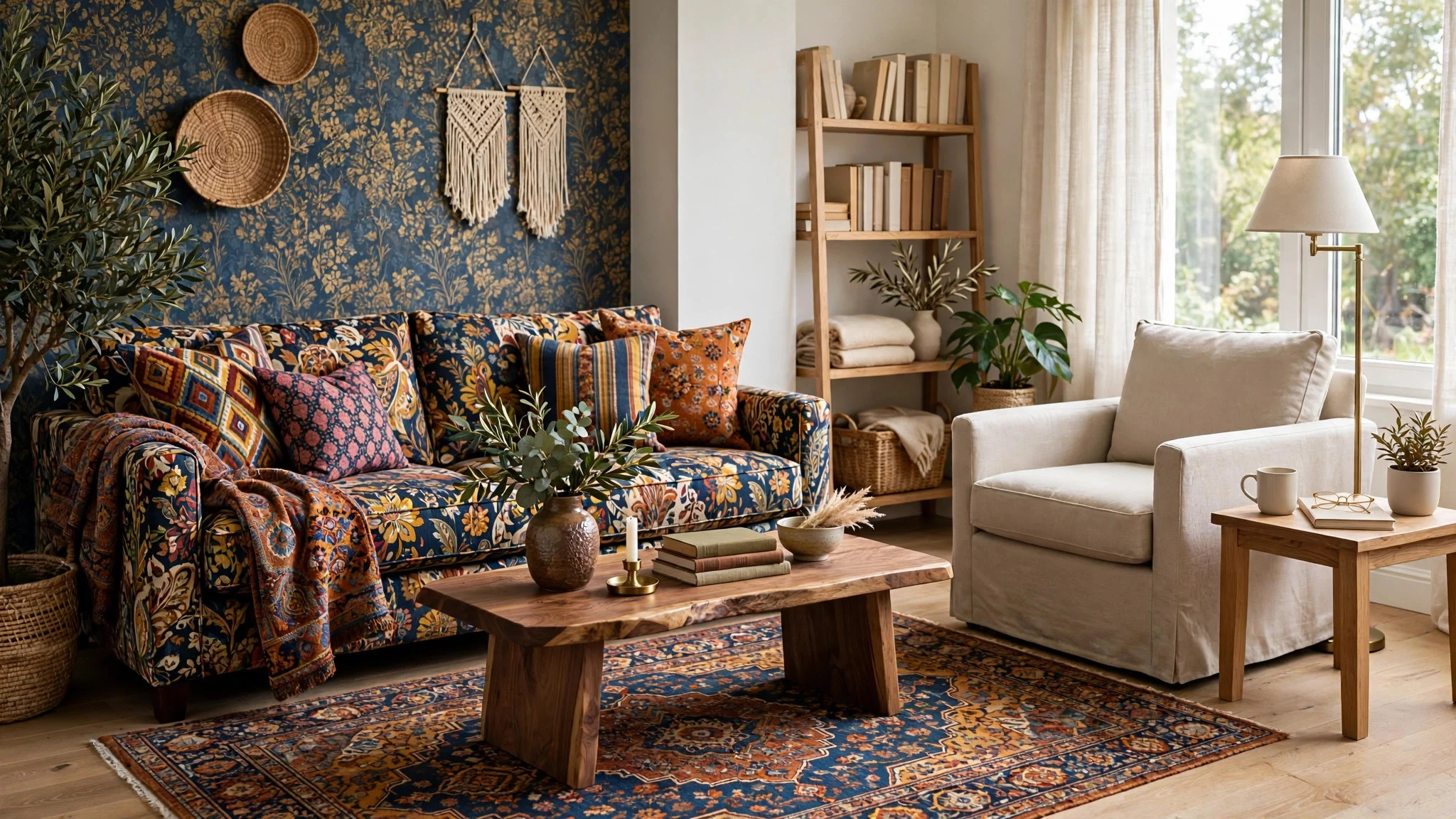
Not every corner needs the same energy. Let the main seating area carry most of the pattern, and keep the reading corner, the TV wall, or the window seat calmer. That contrast makes the patterned area feel like a destination rather than a takeover. In a small room this matters even more, because there is nowhere for the eye to escape. Our guide on how to arrange a small living room for maximum space shows how zones, walkways, and one calm wall can make a compact room feel generous. Keep the calm zone in the same palette, so it feels connected, just quieter.
12. Edit Ruthlessly: Remove One Thing
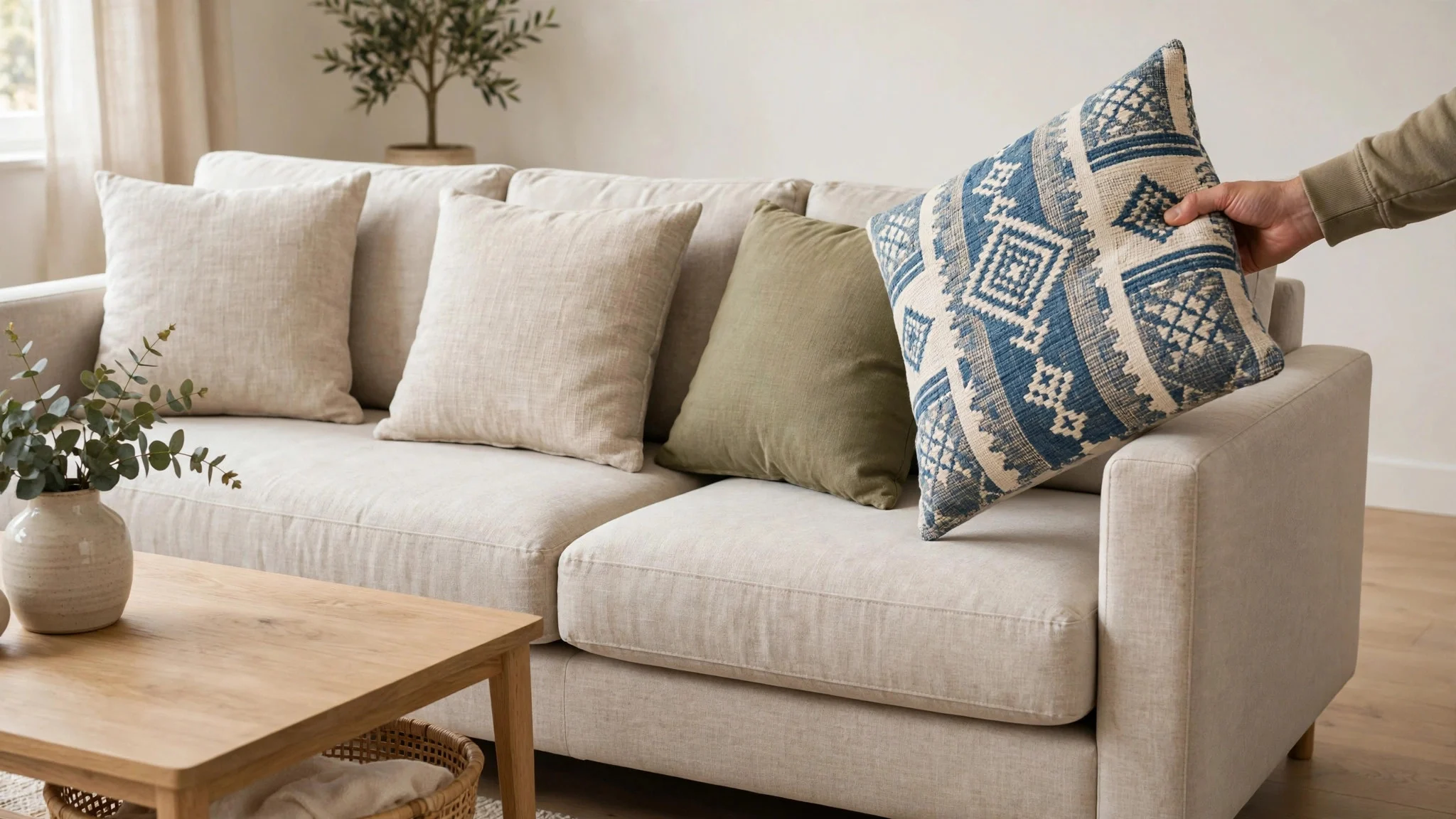
When a mixed room still feels off, the answer is almost always subtraction, not addition. Take one patterned piece out of the room entirely, live with it for two days, and see if you miss it. Nine times out of ten, you will not, and the room will feel finished rather than full. Put the removed piece in another room, where it might become a hero, or store it for a seasonal swap. This edit is also the cheapest way to refresh a room: rotate one pattern out and one stored pattern in, and the seating area looks new. If you are working on a budget at the same time, our 21 cozy living room ideas on a budget has plenty of low-cost swaps that pair well with this step.
Frequently Asked Questions
How many patterns can I mix in a living room?
Three to five patterns usually work well, provided they share a palette and differ in scale and family. More than five can still work in a large room with plenty of solid surfaces, but it gets harder to keep the mix calm. Start with three and add one at a time.
Should the rug match the sofa pattern?
It should relate, not match. Pick up one colour from the sofa in the rug, or choose a rug in a neutral from the same palette. An exact match in pattern and colour often looks like a set bought in one trip, which flattens the room.
What if my sofa is already patterned and I cannot change it?
Build around it as the hero. Keep the rug calm, use plain curtains, and add smaller patterns only in its colours. Solid cushions in tones pulled from the sofa print will tie the room together without adding another loud voice.
Can I mix patterns in a small living room?
Yes, with tighter discipline. Use a smaller palette, keep the largest pattern low contrast, and leave more solid space. One patterned sofa or rug, plus two or three smaller patterned cushions, is usually enough for a compact room.
Pattern mixing rewards patience more than spending. Choose a hero, limit the colours, vary the scale, repeat each print, and leave room for plain surfaces to breathe. Then step back to the doorway, remove one thing, and live with the result for a few days before you change anything else. The room that looked chaotic last week often just needed a plan, and now it has one.