


How to Decorate Above Your Couch Like a Designer
The wall above the couch is the first thing most people notice when they walk into a living room, and it is also the spot most of us leave blank the longest. I lived with a bare wall for two years because every option felt either too big, too expensive, or too permanent. Then a friend who styles homes for a living came over, stood in my doorway, and pointed out that my problem was not taste. It was scale. Once I learned a few simple rules for above couch decor, the whole room pulled together in one afternoon, using frames I already owned and one print I had been saving for the right wall.
This guide walks through those rules in the order a designer would actually use them. You will measure first, pick one anchor, and then layer in the details that make the wall feel finished instead of decorated for a photo shoot. Nothing here needs a contractor, and most of it can be undone in ten minutes if you change your mind.
Start With the Rules of Above Couch Decor
1. Measure First, Hang Second
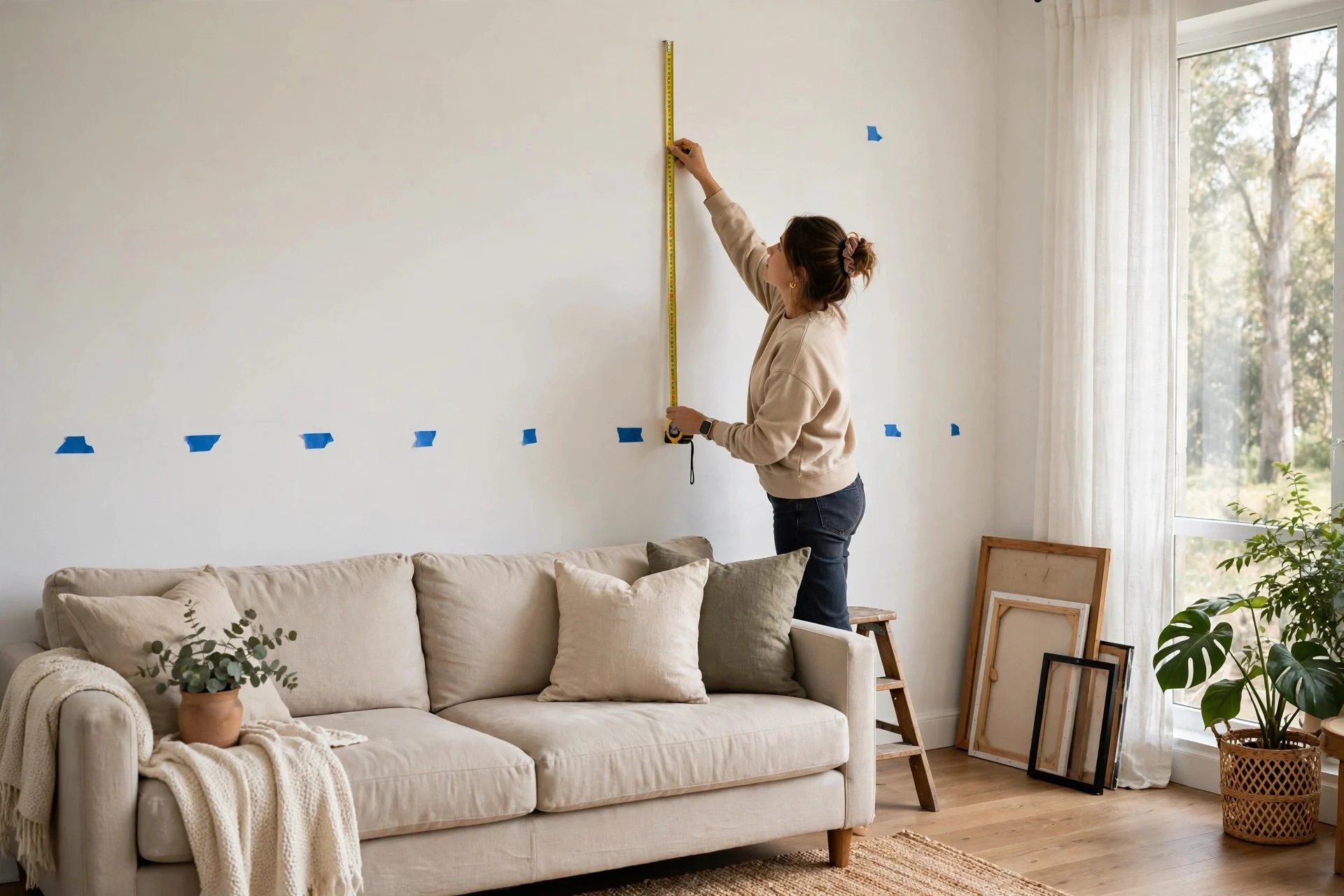
Grab a tape measure before you buy a single frame. Measure the width of your sofa, then aim for art that spans roughly two-thirds of that width. A 72-inch sofa wants something around 48 inches wide, whether that is one piece or a group measured together. Mark the outline on the wall with painter’s tape and live with it for a day. I skipped this step once and ended up with a print that looked like a postage stamp over a three-seater. The tape outline costs nothing and saves you a return trip. While you are at it, note where the studs are and how high the ceiling sits, because both will shape what you hang next.
2. One Big Piece Beats a Cluster of Small Ones

When in doubt, go big. A single large piece gives the eye one place to rest, and it makes a small room feel more settled, not smaller. Look for art that is at least 30 inches wide for a standard sofa, and hang it so its center sits about 57 to 60 inches from the floor, which is roughly eye level for most people standing in the room. Leave six to eight inches between the bottom of the frame and the top of the sofa cushions. Hunker’s guide to the 57-inch hanging rule explains the same centre-height maths in more detail. That gap is what keeps the art connected to the seating instead of floating near the ceiling. If big original art is out of budget, a large framed print, a stretched fabric panel, or even a beautiful poster in a simple frame does the same job. For more budget-friendly room ideas, see our cozy living room ideas on a budget.
3. Build a Gallery Wall That Stays Calm
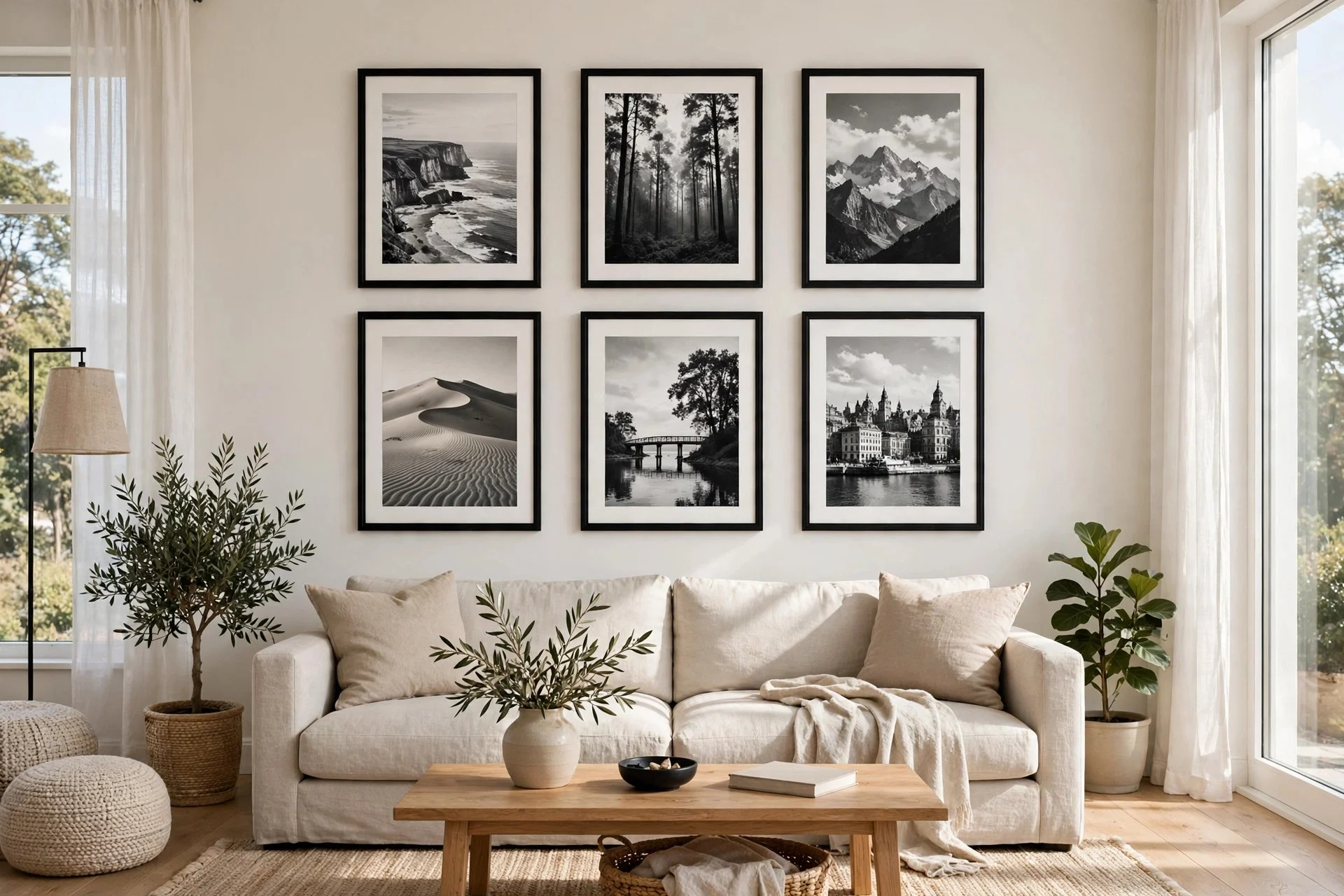
A gallery wall works when it has one rule holding it together. Pick matching frames, or one colour family, and keep the spacing even, about two to three inches between frames. Lay the whole arrangement on the floor first and photograph it from above, so you can shuffle pieces without making new holes. Start with the largest piece slightly off-center, then build outward, keeping the outer edges roughly rectangular. That rectangle is what stops a gallery wall from looking like clutter that crept up the wall. Mix in one personal photo or a small object, like a pressed leaf, but keep the rest of the pieces in the same visual family. If a frame keeps sliding crooked, a tiny felt pad behind the bottom corner will hold it steady.
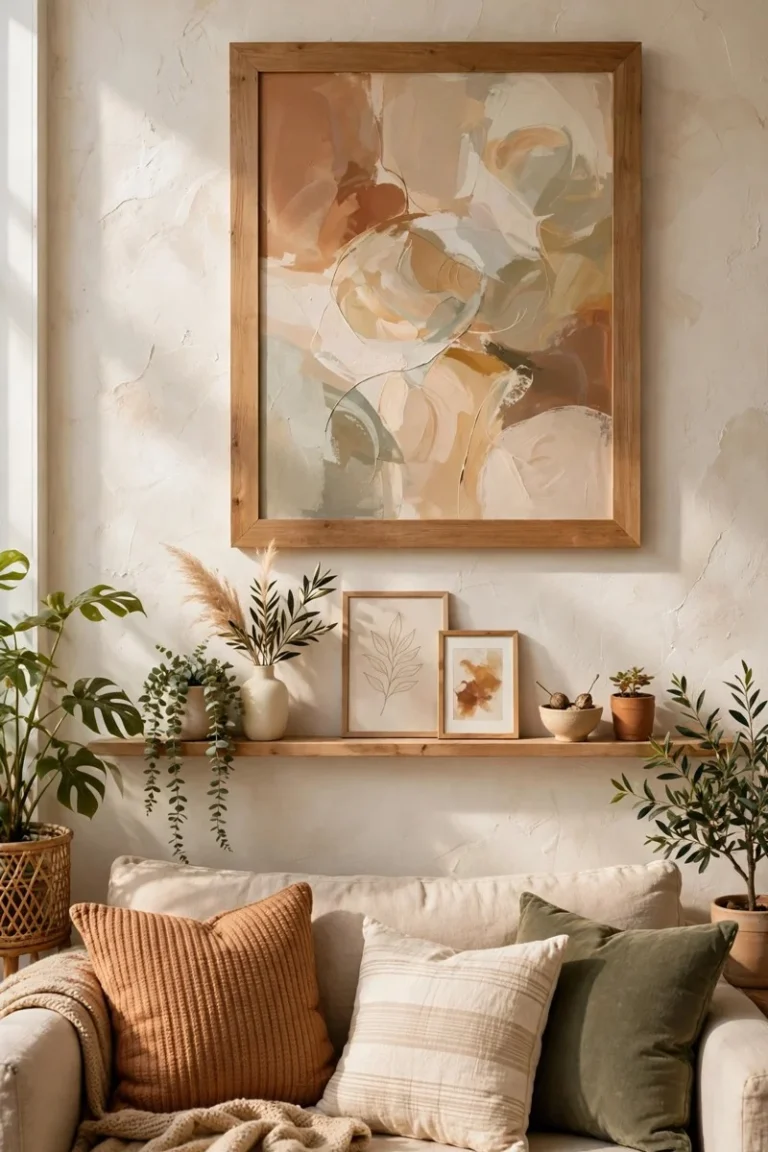
4. Try a Picture Ledge
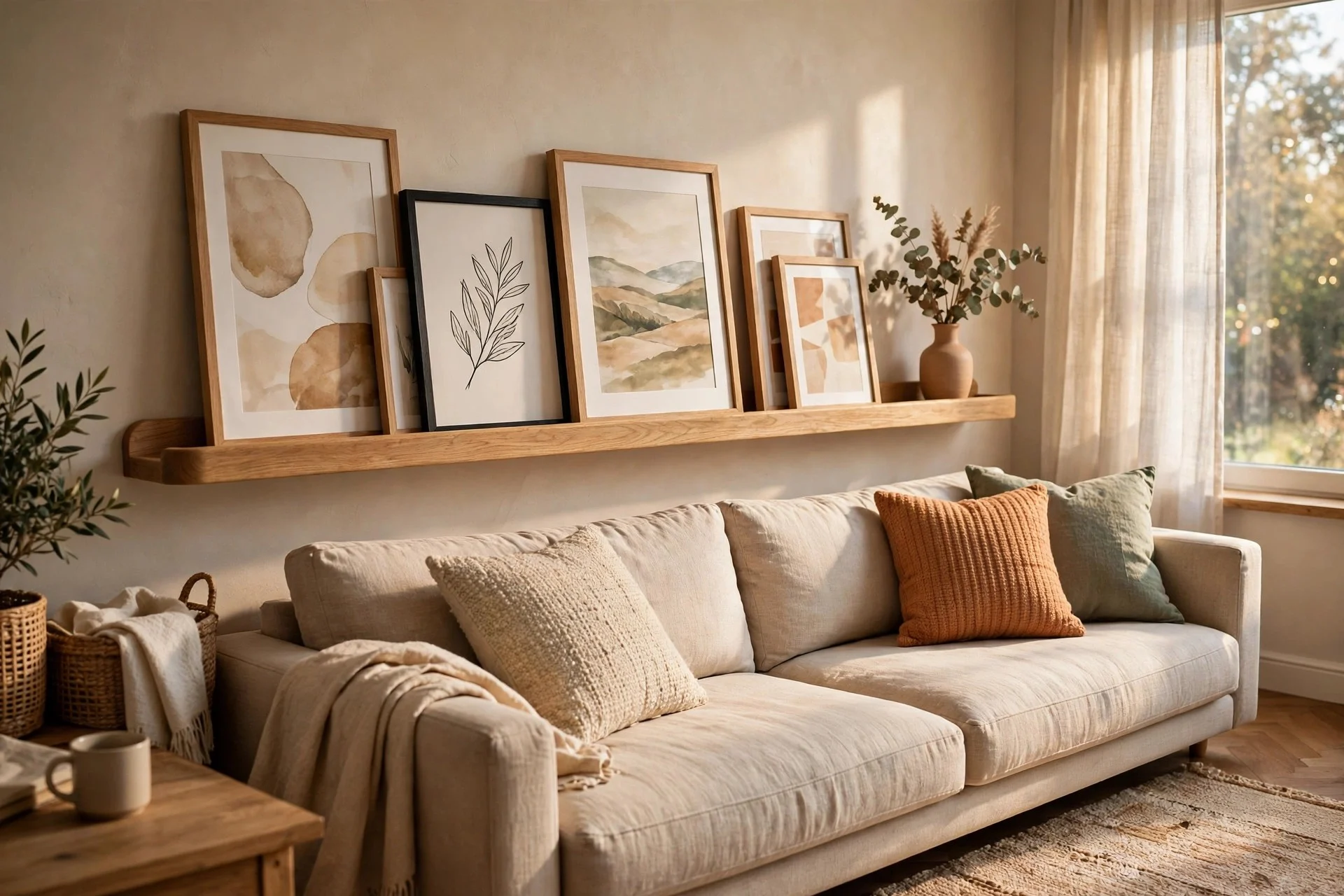
A picture ledge is the best choice if you change your mind a lot. It is a narrow shelf with a lip, fixed to the wall once, and after that you just lean art on it and swap pieces whenever you like. Hang the ledge six to eight inches above the sofa back, and choose one that is about two-thirds the sofa’s width. Layer a large print at the back, a medium one in front of it, and a small object, like a vase or a candle, at one end. The overlap is what makes it look styled rather than stored. Dust the ledge when you swap pieces, because a shelf at eye level shows dust fast. Two ledges stacked, one above the other, work well on a tall wall, but leave at least a foot between them so each row can breathe.
5. Hang a Mirror to Bounce Light
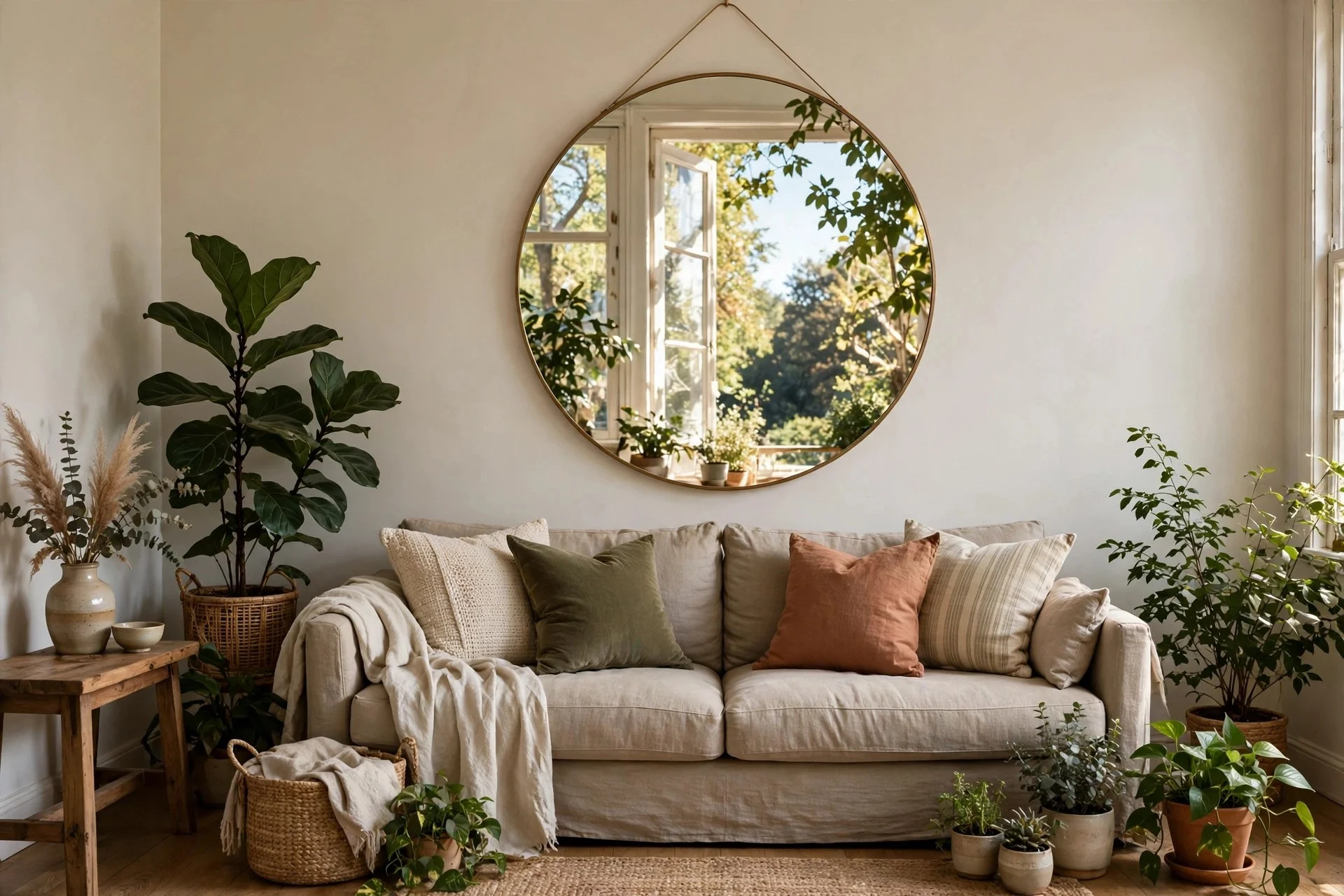
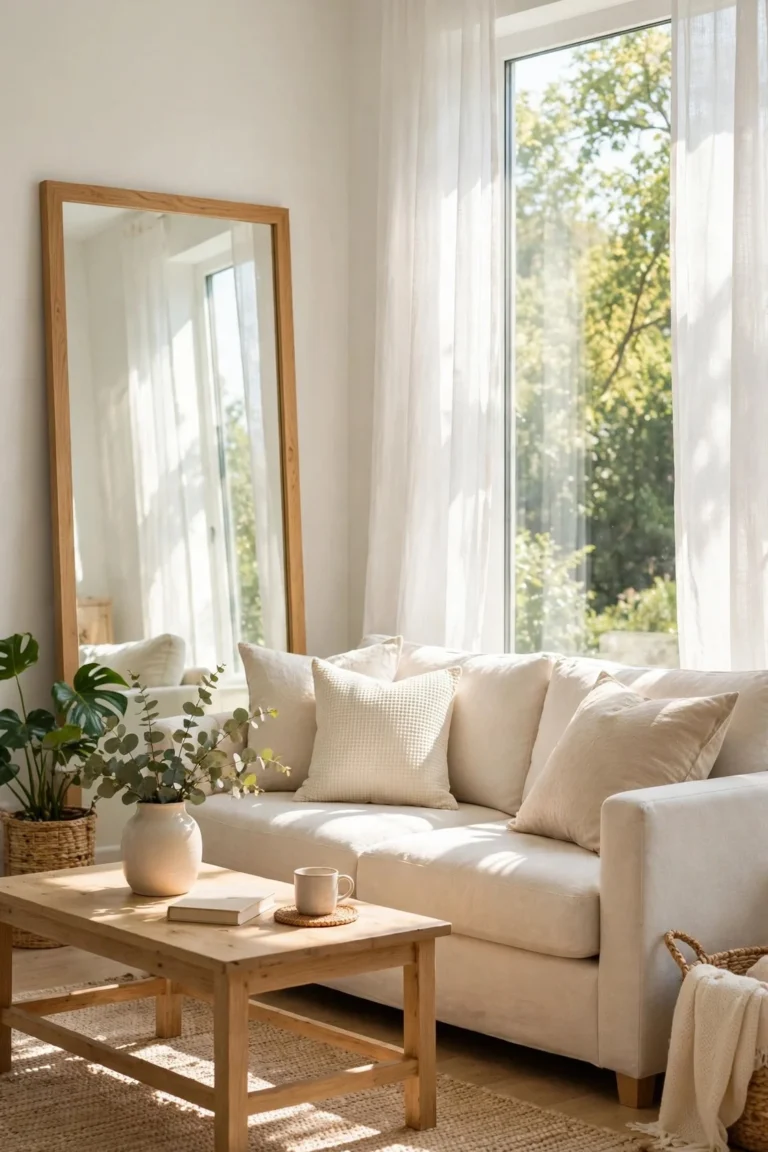
A mirror above the sofa does two jobs at once: it fills the wall and it throws light around the room. Hang it opposite or beside a window, not on the same wall as the window, so it actually reflects daylight instead of a blank wall. A round mirror softens a room full of rectangles, while a wide rectangular mirror suits a long, low sofa. Keep the mirror’s width close to that two-thirds rule, and check what it reflects before you fix it in place. You want it to catch a plant, a window, or a pretty corner, not the television or a cluttered shelf. Wipe it with a dry microfiber cloth once a week. In a dark room, a mirror will not create light, but it will make the light you have travel further, which often feels just as good.
6. Go Sculptural When Art Feels Flat
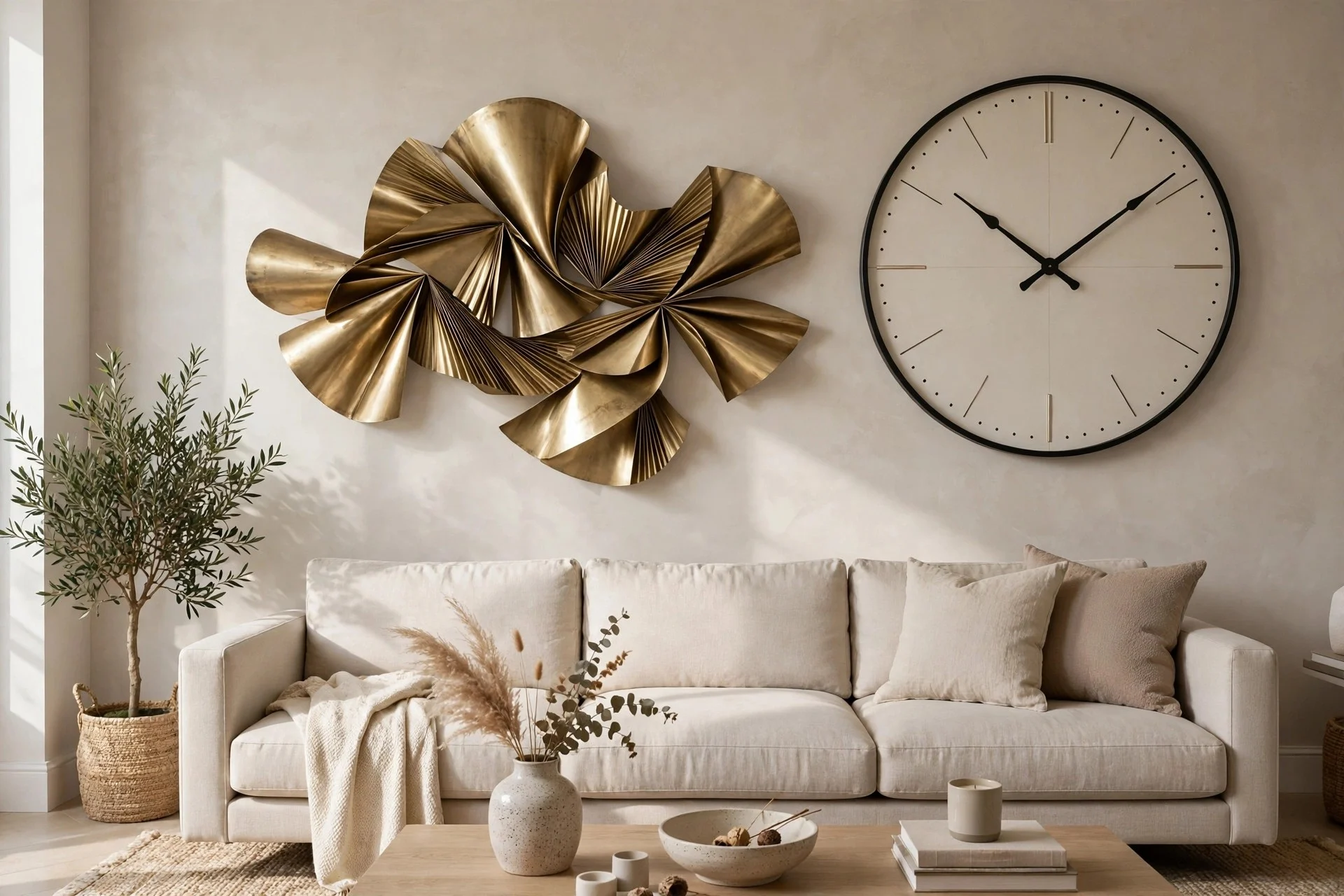
Some walls need texture more than another flat print. A metal wall sculpture, a set of wooden discs, or a large woven piece adds shadow and depth that a photograph cannot. This is a good move in a room that already has plenty of framed prints elsewhere, or where the sofa fabric is heavily patterned and another busy print would fight it. Keep the sculpture’s footprint similar to a large frame, and hang it at the same height you would hang art. One strong sculptural piece beats three small ones competing for attention. If you buy secondhand, check the fixings on the back before you hang it, because sculptural pieces are often heavier than they look, and a picture hook rated for a poster will not hold a metal panel.
7. Soften the Wall With Textile
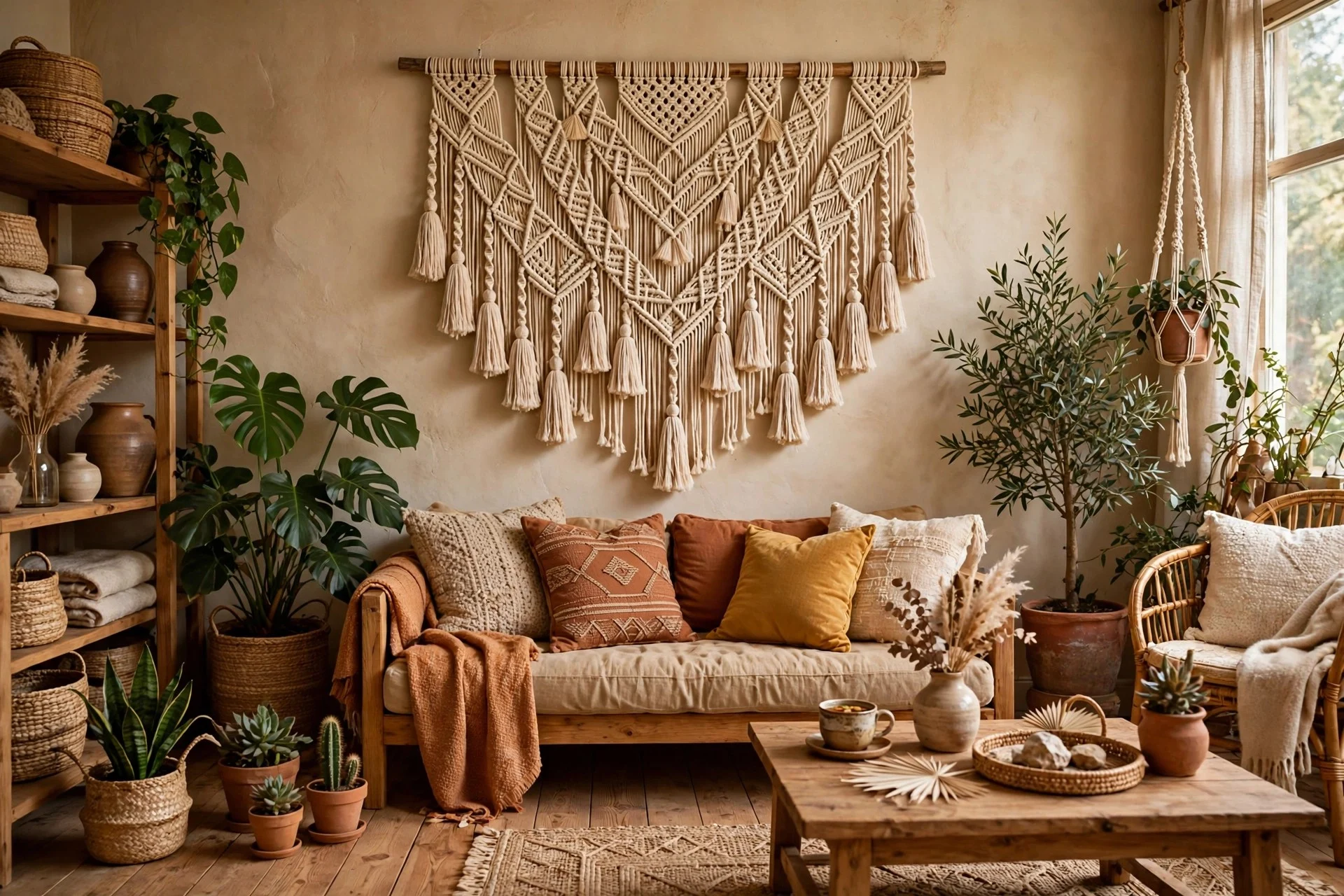
A textile wall hanging is the softest way to fill the space above a couch, and it is forgiving in a way glass is not. Macrame, a woven tapestry, or a quilt hung from a wooden dowel adds warmth and absorbs a little sound, which helps in a room with hard floors. Hang it from a single rod or a pair of small hooks, and let it fall straight rather than stretching it tight, which can distort the weave over time. Keep it out of direct sun if the dyes matter to you, because a south-facing wall will fade bright colours within a year or two. I hung a woven piece in our reading corner after a framed print kept glaring in the afternoon sun, and the room instantly felt quieter. Shake it outside now and then instead of vacuuming it aggressively.
8. Frame Art With Sconces
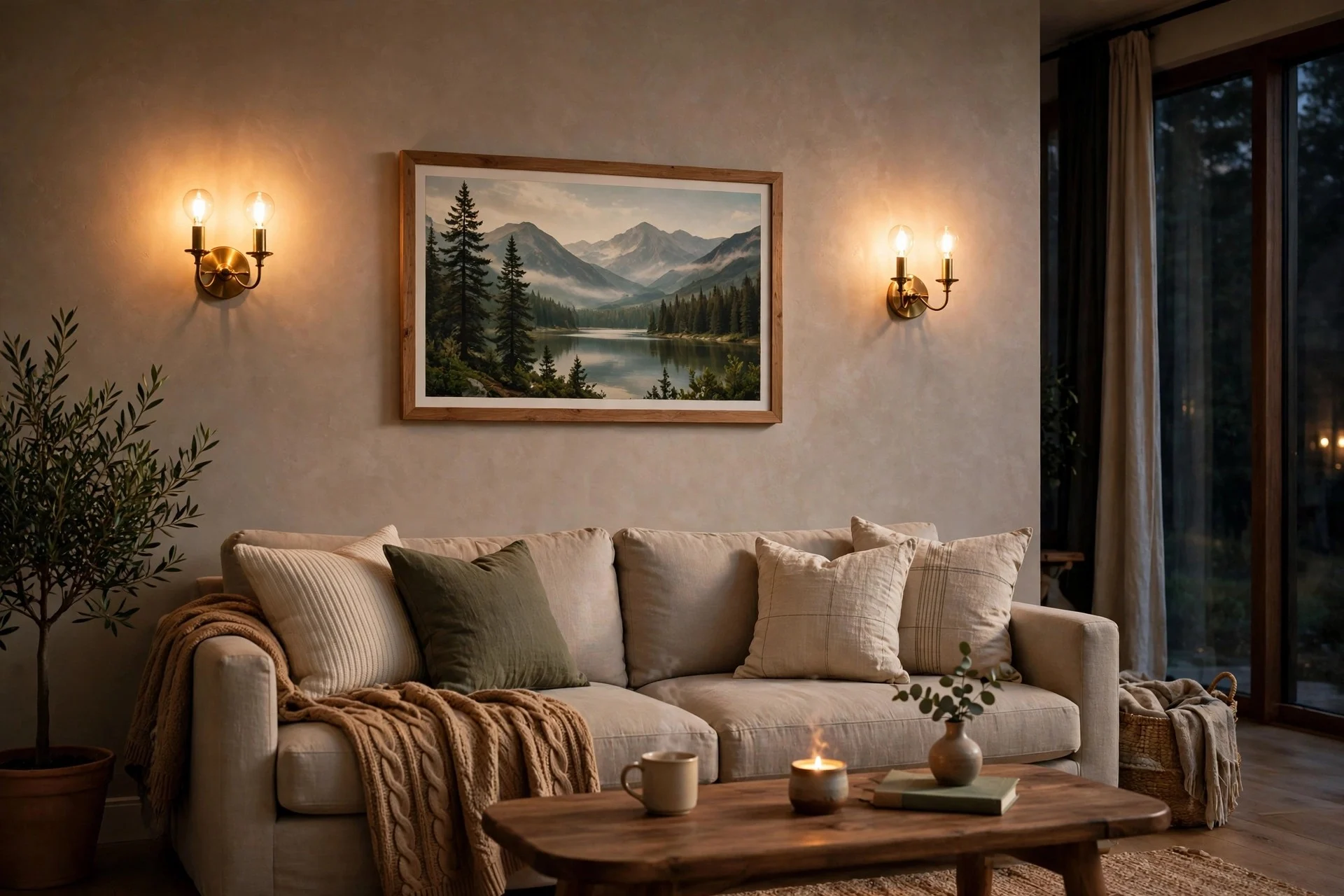
Wall sconces turn a single print into a proper focal point, especially in the evening. Battery-powered sconces with a remote are a simple option if you do not want an electrician, and many now look convincingly like wired fittings. Hang them at the same height as the middle of your art, about a foot out from each side of the frame, and use warm bulbs around 2700K so the light flatters skin tones and wood. The trick is symmetry: if one sconce sits higher than the other, the whole wall looks tilted, even when the art is level. Use a small level and measure from the floor, not from the sofa, because sofa cushions sag unevenly. Sconces also give you a low light option for movie nights, which is a bonus in a room with only one harsh ceiling light.
9. Lean, Don’t Hang
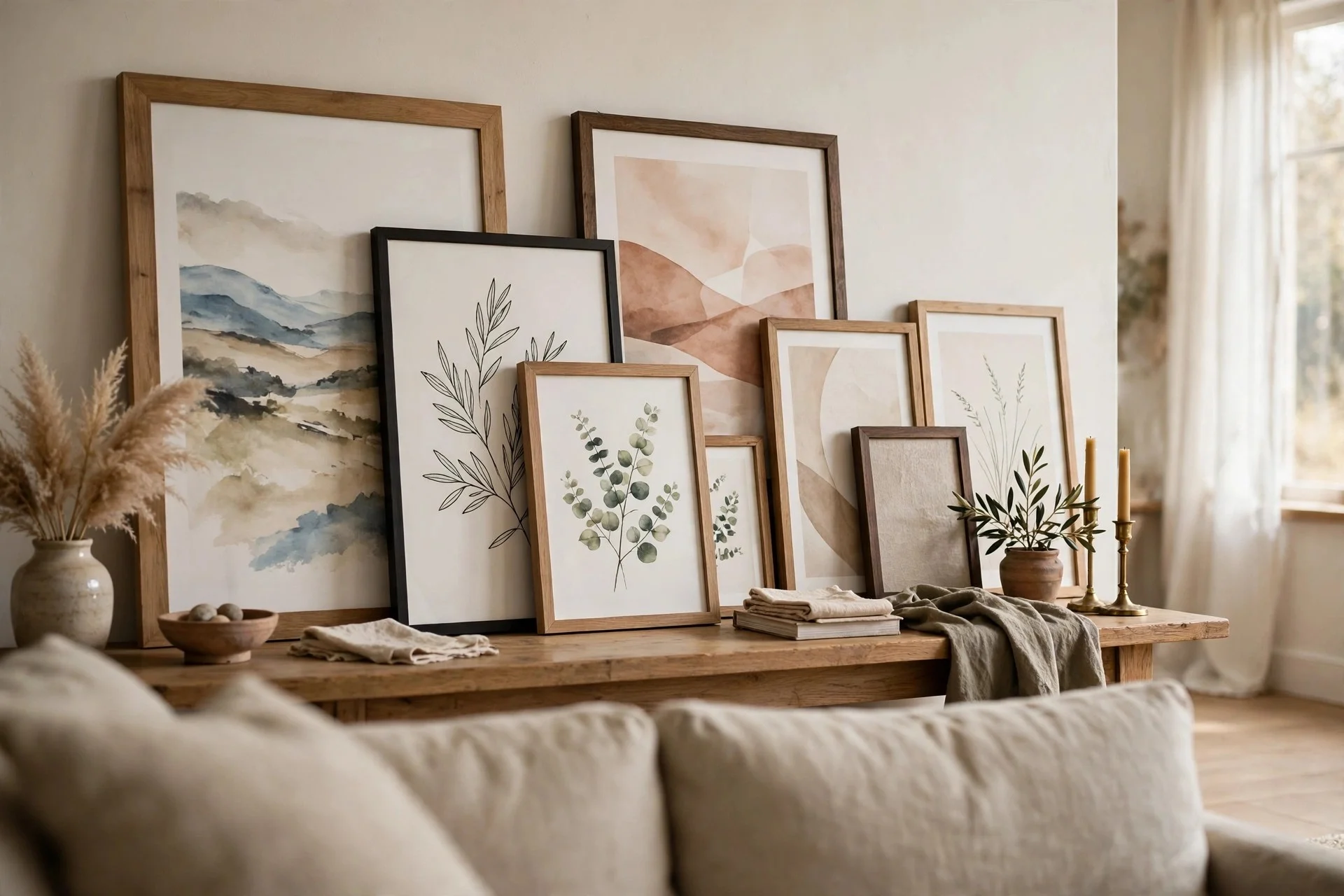
Leaning art is underrated, and it suits heavy frames, rented walls, and anyone who rearranges furniture every few months. Set a slim console table behind the sofa, or use the sofa back itself if it is firm and flat, and lean a large frame against the wall with its bottom edge a few inches out from the skirting board. The frame needs to be tall enough that its top clears the sofa back by a good margin, or it will look like it slipped. Anchor the top corner to the wall with a small adhesive hook or a picture wire if you have kids or pets who bump into furniture. I lean art in our hallway for the same reason: it takes thirty seconds to swap, and there are no holes to fill when I change my mind again next season.
10. Add a Plant Shelf Above the Sofa
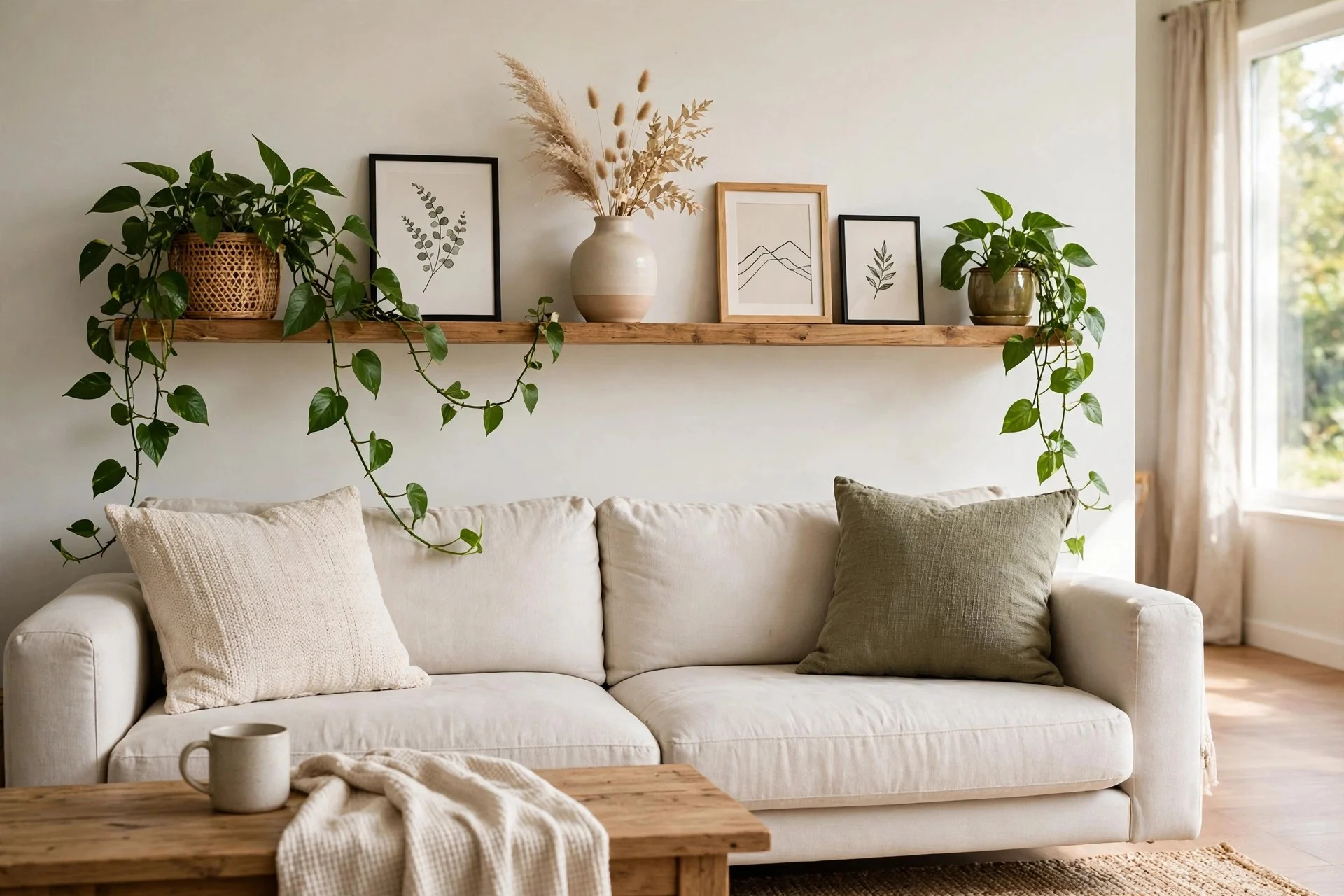
A shelf with trailing plants softens the hard line between wall and sofa, and it brings a bit of life to a wall that art alone can make feel formal. Fix the shelf at least a foot above the sofa back so nobody bumps their head, and choose plants that trail rather than grow upright, like pothos or a string of hearts. Put them in pots with a saucer, or use a waterproof liner inside a decorative pot, because a drip onto sofa cushions ruins the effect fast. Keep the shelf shallow, around six inches deep, so it holds plants and a small print without looming over anyone seated below. For ideas that keep the rest of a small room tidy, see our small living room storage ideas that hide clutter. Water on a schedule you will actually keep, and rotate the pots monthly so growth stays even.
11. Swap Art With the Seasons
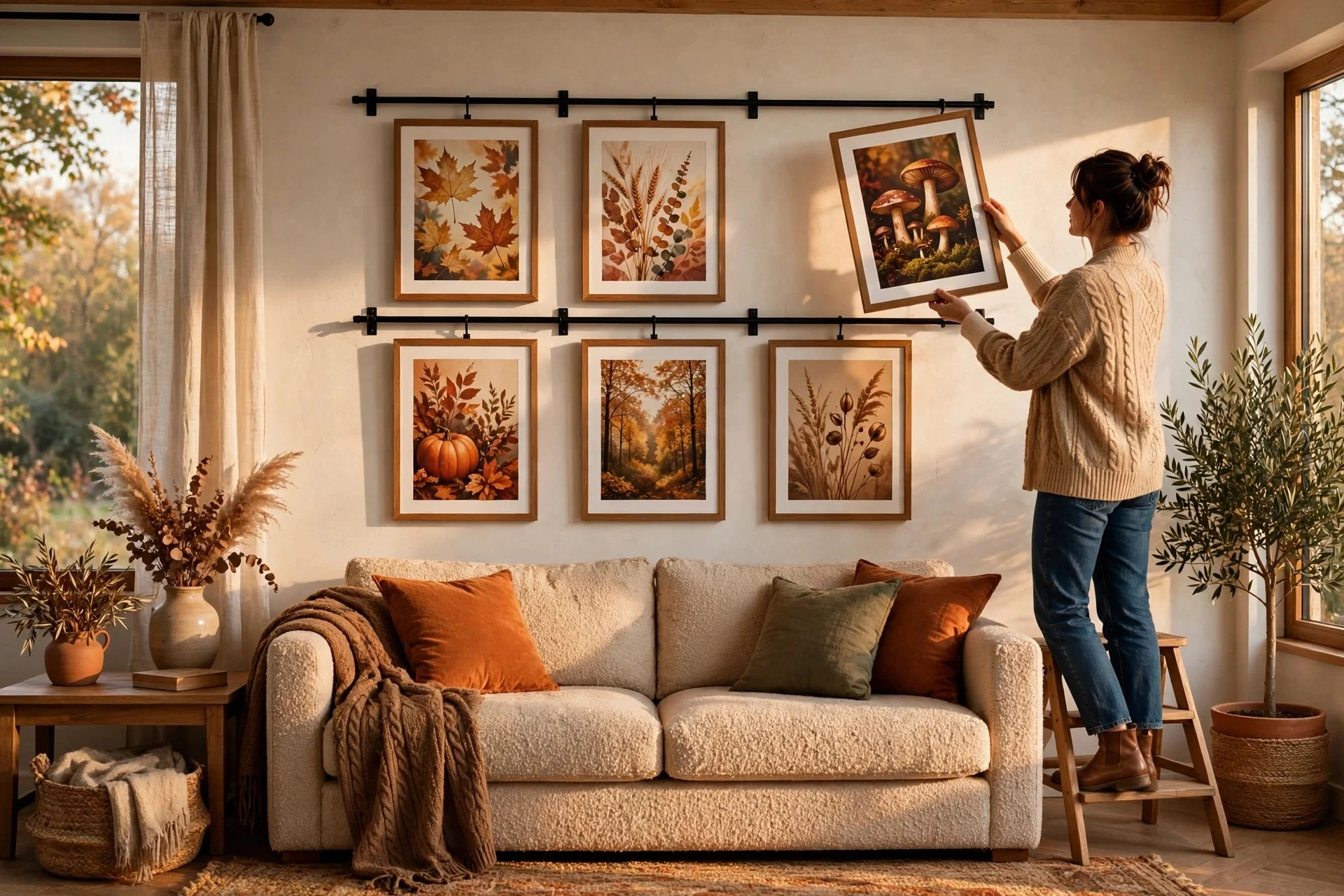
You do not need new art for every season, just a rotation system. Keep two or three sets of prints in the same frames and swap the inserts: warm, earthy tones for autumn, lighter botanical prints for spring, and something coastal or abstract for summer. Standard frame sizes make this cheap, because you buy the print, not a new frame each time. Store the off-season prints flat between sheets of tissue paper, not rolled in a tube, which curls them permanently. I keep ours in a portfolio case under the bed, labelled by season, and the swap takes about fifteen minutes including a quick dust of the frames. The room feels refreshed without a single new purchase, and guests notice the change even when they cannot quite name it.
12. Renter-Friendly Hanging That Holds
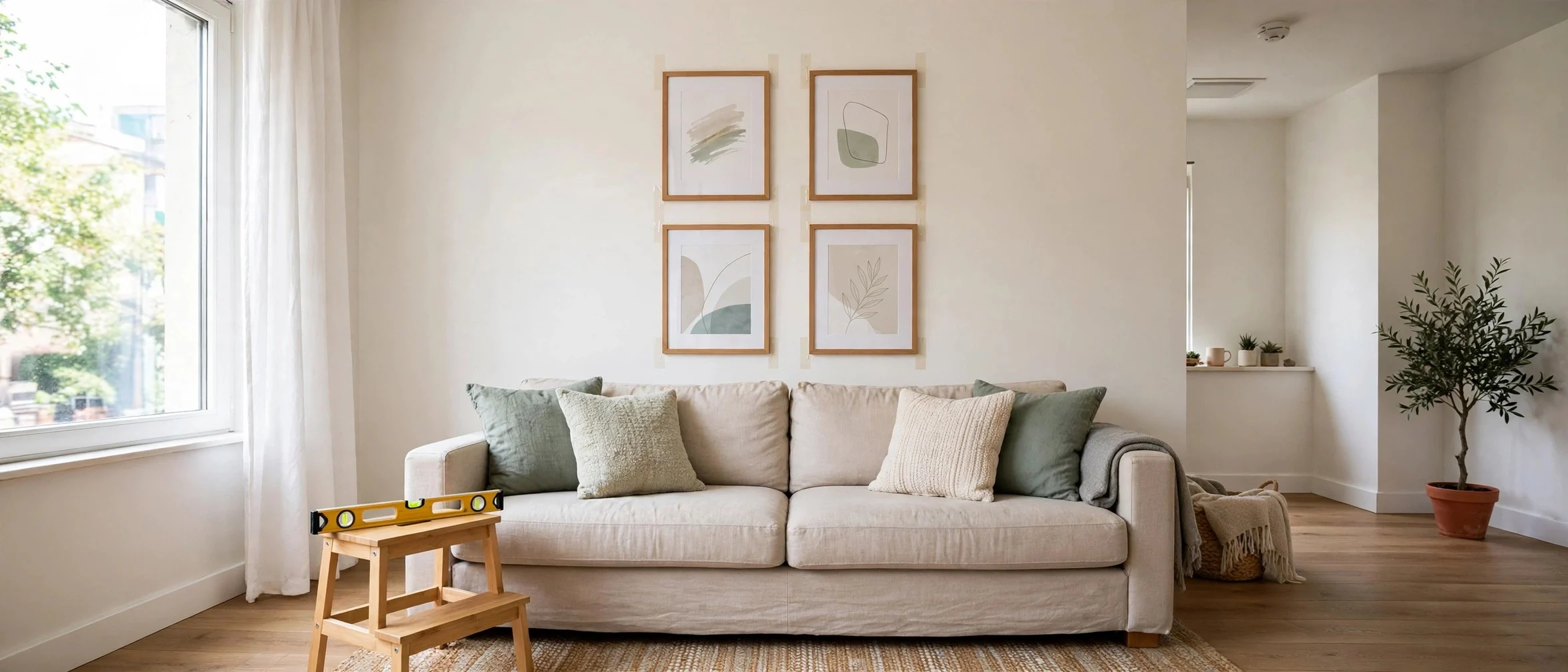
Renters can still hang a proper display, as long as the weight matches the method. Adhesive strips work well for lightweight frames up to the rating printed on the pack, but they fail on textured walls, fresh paint, or in steamy rooms, so test one strip in a hidden spot first. For heavier pieces, a single small nail in a stud leaves a hole the size of a pinhead, which most landlords accept when filled with a dab of filler at move-out. Always clean the wall with rubbing alcohol before applying a strip, press for a full thirty seconds, and wait an hour before hanging the frame. That waiting step is the one most people skip, and it is why strips fall down at 2 a.m. If you are arranging the whole room around a new display, our guide on how to arrange a small living room for maximum space helps with the layout underneath it.
Frequently Asked Questions
How high should art hang above a couch?
Six to eight inches above the top of the sofa cushions is the usual range, with the center of the piece around 57 to 60 inches from the floor. If your sofa back is unusually tall, measure from the cushions rather than the frame, since that is the line your eye actually reads.
How wide should art be above a sofa?
About two-thirds of the sofa’s width works in most rooms. For a 72-inch sofa, that is roughly 48 inches of art, measured as one piece or as a group. A little narrower is fine; much narrower starts to look lost.
Can I hang art above a sofa without drilling?
Yes, for lightweight frames. Adhesive strips hold well on smooth, clean walls when you follow the weight rating and the waiting time. Heavier frames, mirrors, and sculptural pieces still need a proper hook or a stud, so do not force a strip to do a nail’s job.
Should the art match the sofa cushions?
It should relate to them, not match them exactly. Pick up one colour from the cushions or the rug in the art, and let the rest of the palette stay calm. An exact match across cushions, rug, and art tends to look like a showroom set rather than a lived-in room.
What if my sofa sits under a window?
Then the window is already the feature, so keep the wall treatment light. A slim ledge on the side wall, a pair of small prints flanking the window, or nothing at all can all work. Forcing a large frame into the narrow strip above a window usually looks cramped, so let the window breathe.
Start with the tape outline and the two-thirds rule, and the rest gets easier. Pick one anchor you genuinely like, hang it at the right height, and live with it for a week before adding anything else. A wall that grows slowly, one honest choice at a time, ends up looking more like a designer did it than a wall filled in a single shopping trip ever will. And if you are still choosing the rug underneath it all, our guide to choosing the right rug size for your living room will help the floor and the wall work together.