


14 Ways to Make a Dark Living Room Feel Brighter
A dark living room can feel cosy for about a week, and then it starts to feel like a cave. Ours faced north, had one small window, and swallowed every lamp we owned. Learning how to brighten dark living room spaces took longer than I expected, because the answer was never one big fix. It was a stack of small ones: lighter fabric, a mirror in the right place, and light coming from more than one spot. None of these ideas needs a renovation, and most of them cost less than a new piece of furniture.
Brighten Dark Living Room: 14 Changes That Actually Work
Start with the free and cheap changes first, then move to paint and furniture only if the room still feels dim. Work in daylight where you can, since a room judged at night will always look darker than it really is. Take a photo of the room before you start, so you can see the difference a week later when your eyes have adjusted.
1. Swap Heavy Curtains for Sheer Ones
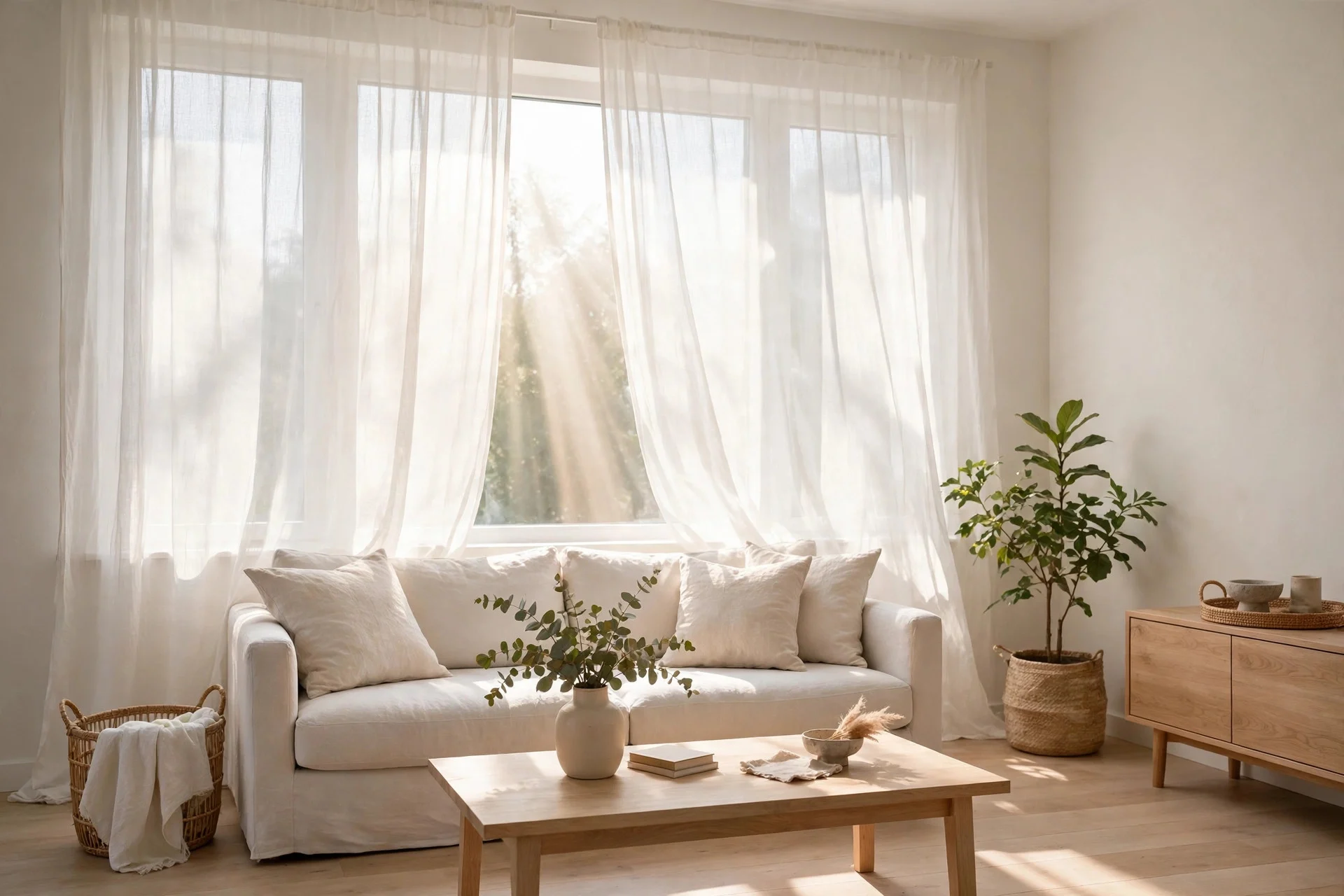
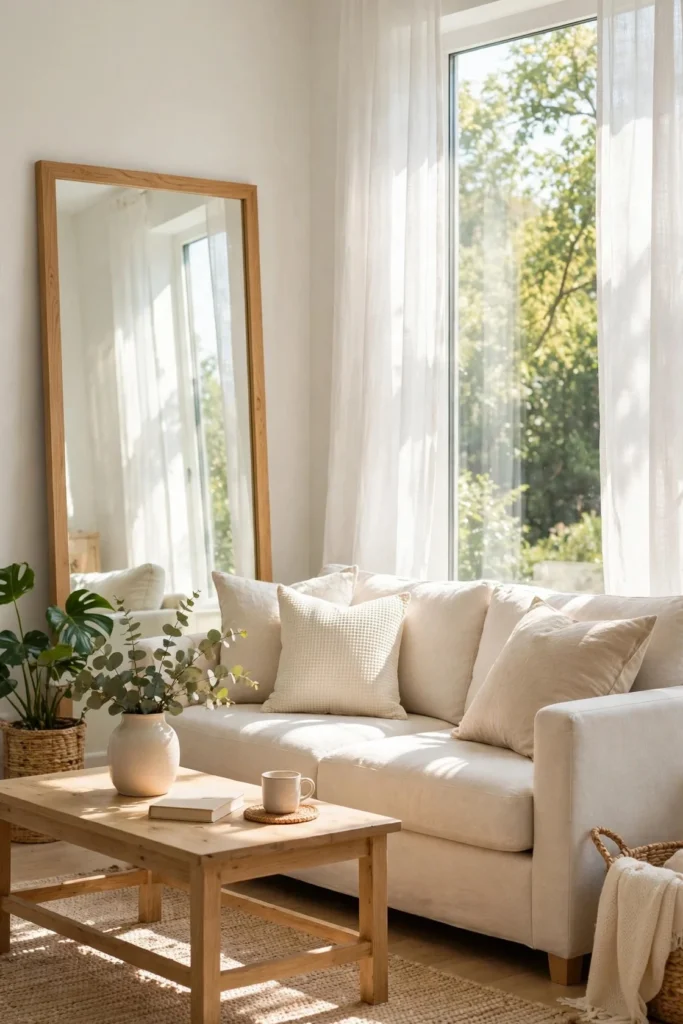
Heavy curtains are often the main reason a room feels dark, even with the curtains open, because thick fabric still blocks light at the edges of the window. Sheer white or cream curtains let daylight through while keeping privacy, and they soften harsh sun into a gentle glow. Hang them high and wide, so the window looks bigger and the fabric frames the light rather than covering it. In the evening, close a heavier curtain over the sheers if you have one, or just enjoy the glow from inside. Plain sheers are cheap, wash well, and suit almost any style. I swapped ours on a Saturday morning, and by lunchtime the room looked like it had gained a second window.
2. Hang a Mirror Directly Opposite the Window
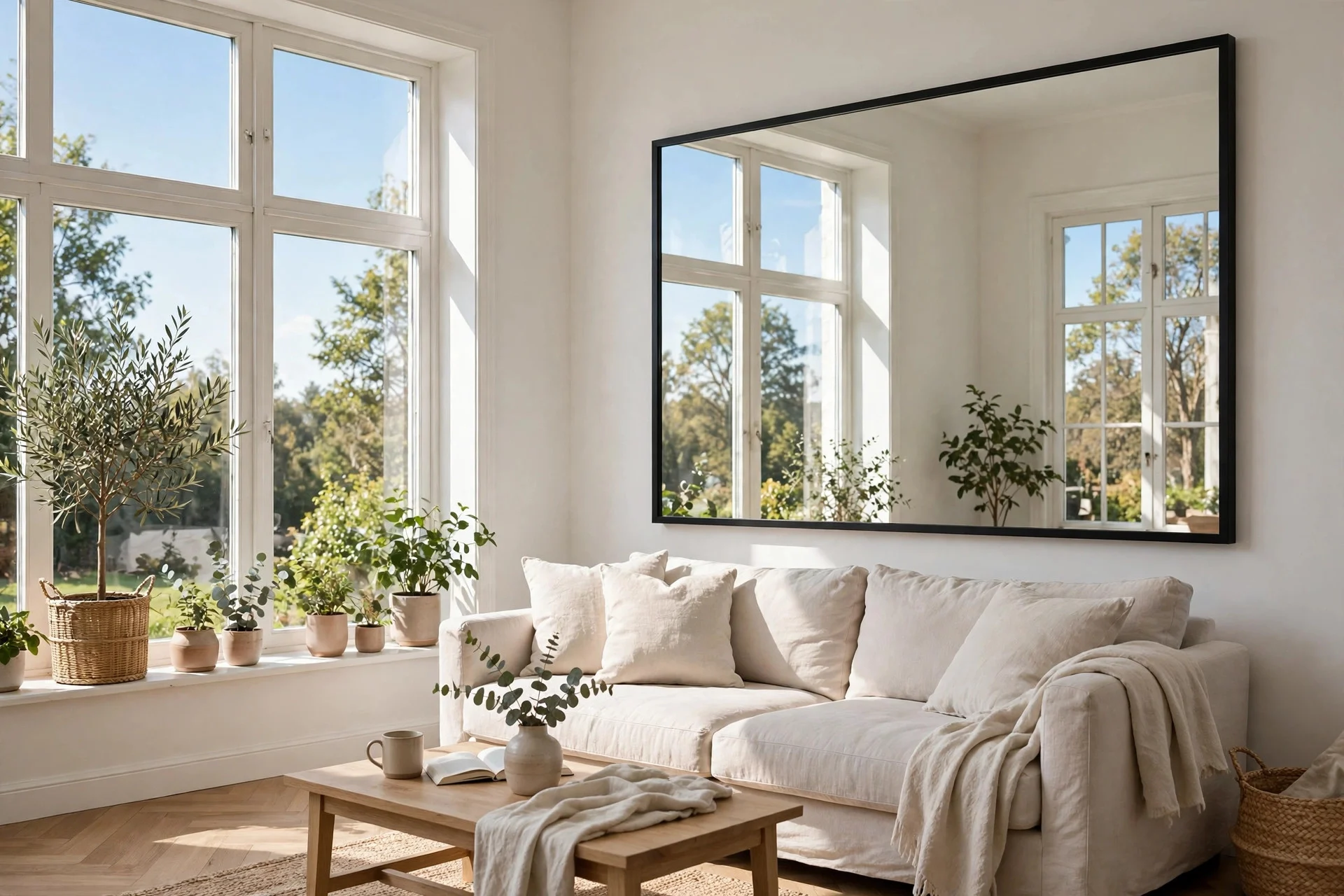
A mirror opposite a window is the oldest brightening trick there is, and it works because it doubles the light rather than just decorating a wall. Choose the largest mirror you can fit and afford, since a small mirror reflects a small patch of light and mostly reflects the room back at itself. Hang it so it catches the window, not the television or a blank wall, and check the reflection from your usual seat. A leaning floor mirror works well in rentals, and a thrifted frame painted cream or white keeps the cost down. Avoid hanging mirrors where they reflect clutter, since a mirror doubles whatever it faces, good or bad.
3. Repaint in a Light Warm White
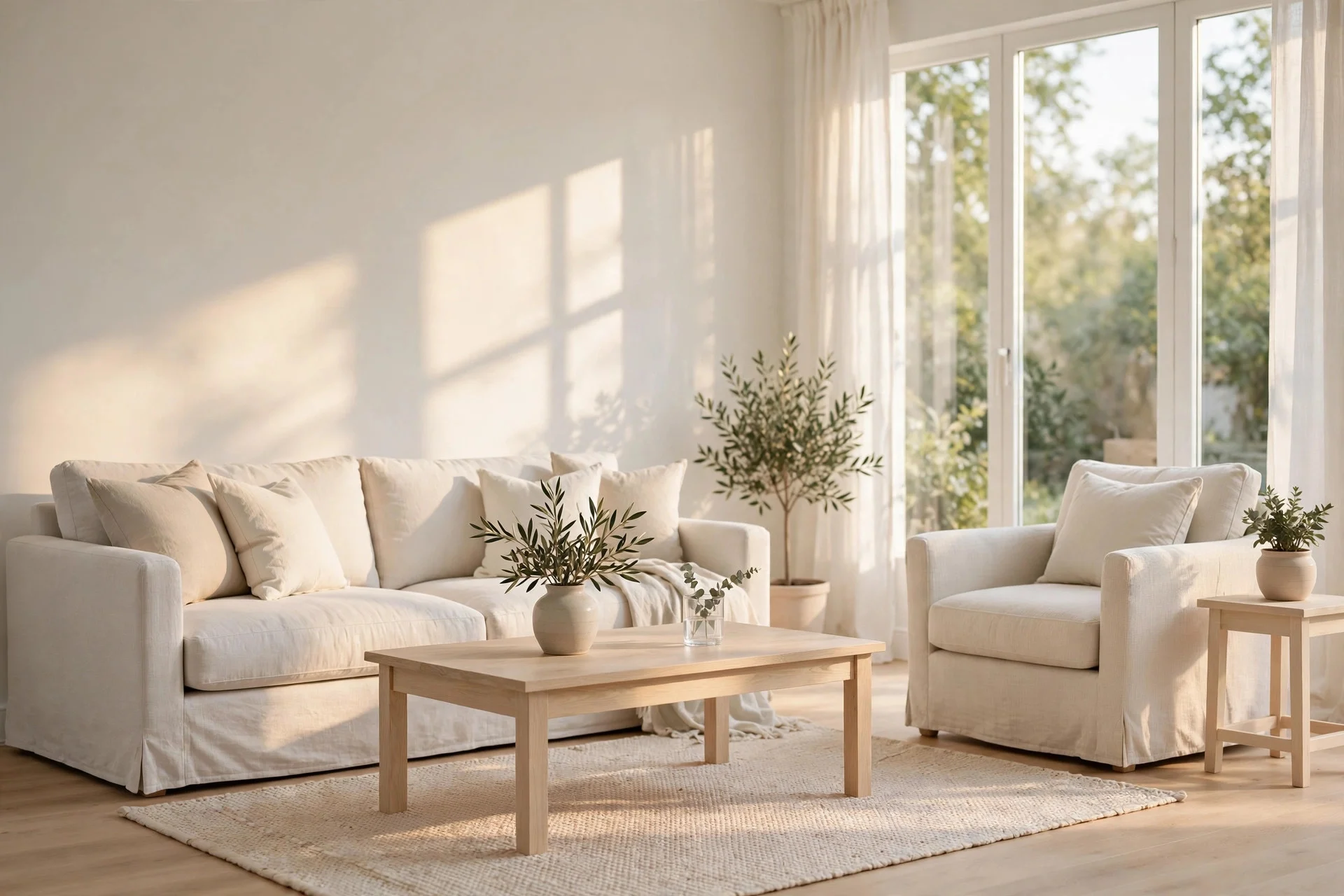
Dark wall color absorbs light, while a light warm white bounces it around the room. Choose a warm white with a hint of cream rather than a stark, blue-white, which can feel cold in a north-facing room. Test three sample pots on different walls and look at them in morning and evening light before committing, since paint changes dramatically with the light in the room. You do not need to paint every wall at once: the wall opposite the window matters most, because it reflects light back into the room. One weekend, two coats, and a roller will do it, and the difference in daylight is usually obvious before the furniture goes back.
4. Layer Your Lighting Instead of Relying on One Ceiling Light
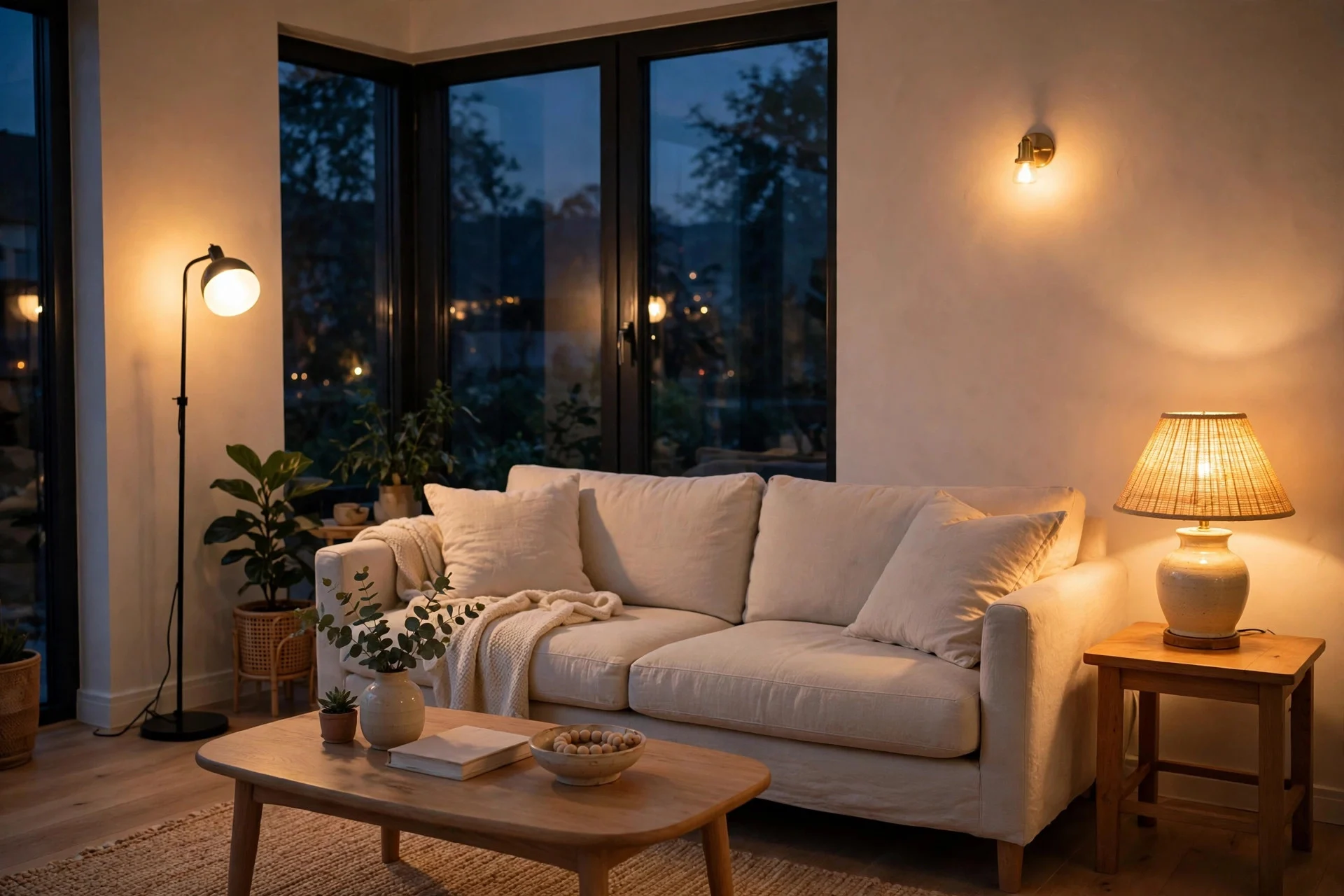
One bright ceiling light flattens a dark room and highlights every flaw, while layered light fills it evenly. Combine a floor lamp behind the sofa, a table lamp on a side table, and a small wall light or a candle-height glow in the evening. Put the brightest light where you read and the softest where you relax, and add a dimmer if you can, since dimmers let you tune the room rather than living with one harsh setting. Warm bulbs around 2700K feel inviting in the evening, while a daylight bulb in a reading lamp helps for tasks. Good lighting can make a ten-year-old sofa look intentional and a dim room feel like a place you want to stay. For more on bulb choices, see the U.S. Department of Energy’s guidance on efficient lightbulbs.
5. Lay Down a Pale Rug
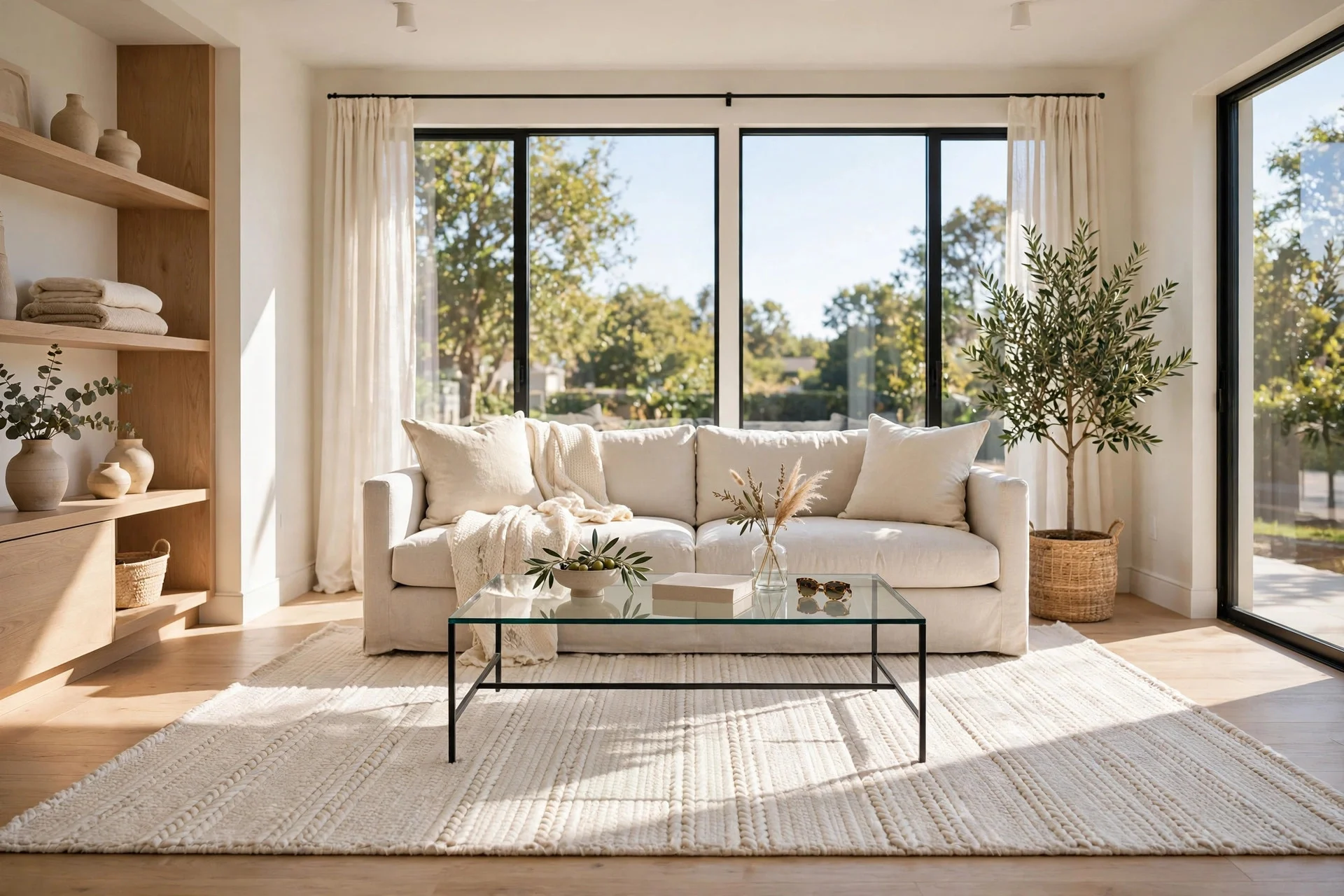
A dark rug swallows light at floor level, while a pale rug reflects it back up into the room. Choose a large cream, oatmeal, or pale grey rug, big enough for the front legs of your sofa and chairs to sit on it, since a small pale rug floating in the middle of a dark floor looks like an island rather than a foundation. If you are unsure about size, our guide on how to choose the right rug size explains the front-legs rule step by step. A flat-weave or low-pile rug in a light tone is easier to keep clean than it looks, especially with a washable cover or a rug pad underneath. The floor is the largest surface in the room, so changing its tone changes everything above it.
6. Choose Leggy, See-Through Furniture
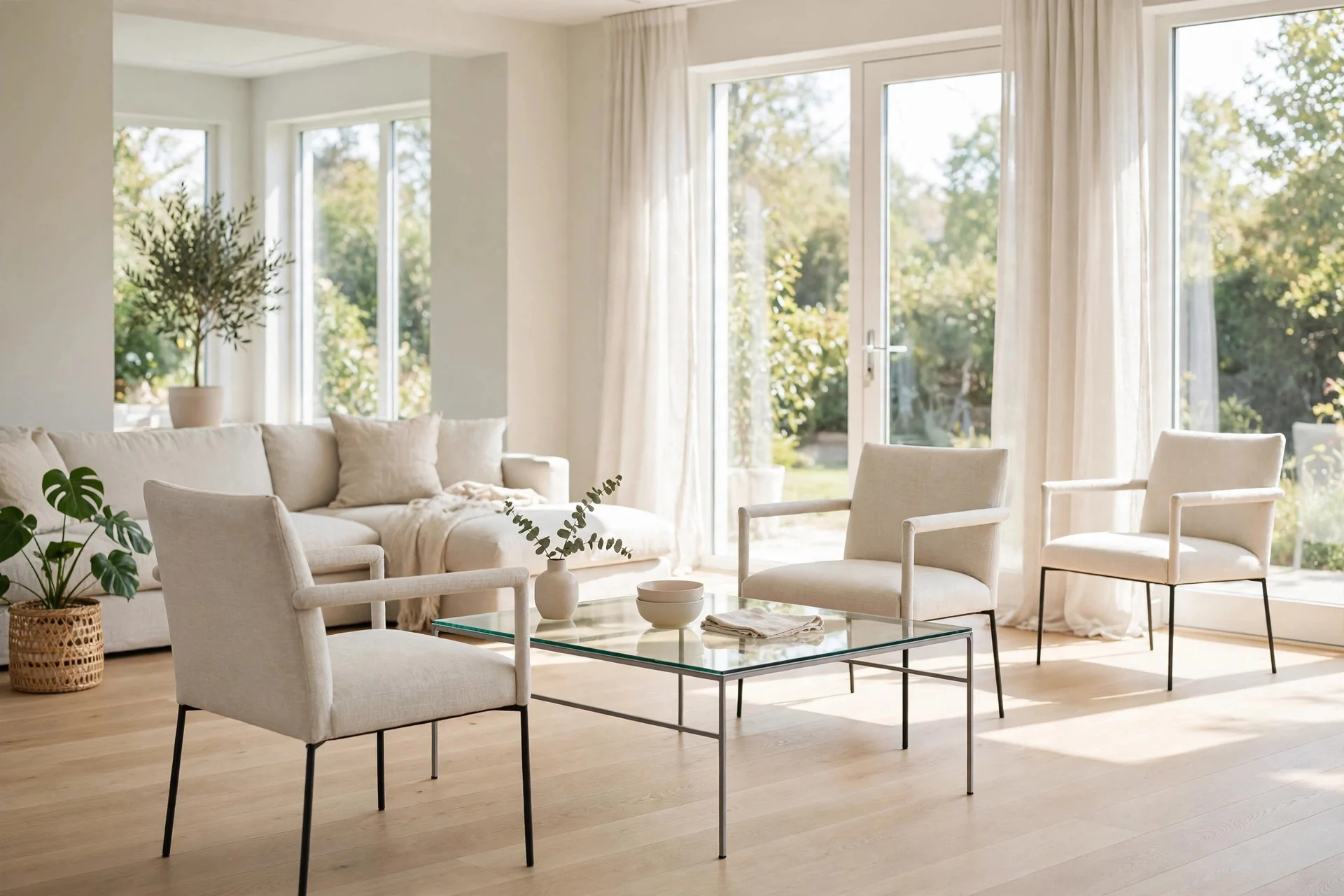
Furniture that sits flat on the floor looks like a solid block and stops light at every edge. Furniture on slim legs, or made of glass or acrylic, lets light and sightlines pass through, and the room feels lighter at once. A glass coffee table, a chair with slim wooden legs, and an open console all help, and you do not need to replace everything to get the effect. Swap one heavy piece, usually the coffee table, and the room opens up. Mix one or two see-through pieces with warmer, solid ones, like a fabric sofa and a wooden side table, so the room stays cosy rather than cold. This is also why leggy furniture suits small rooms so well, as our guide to arranging a small living room for maximum space explains.
7. Clear the Clutter and Open Up the Layout
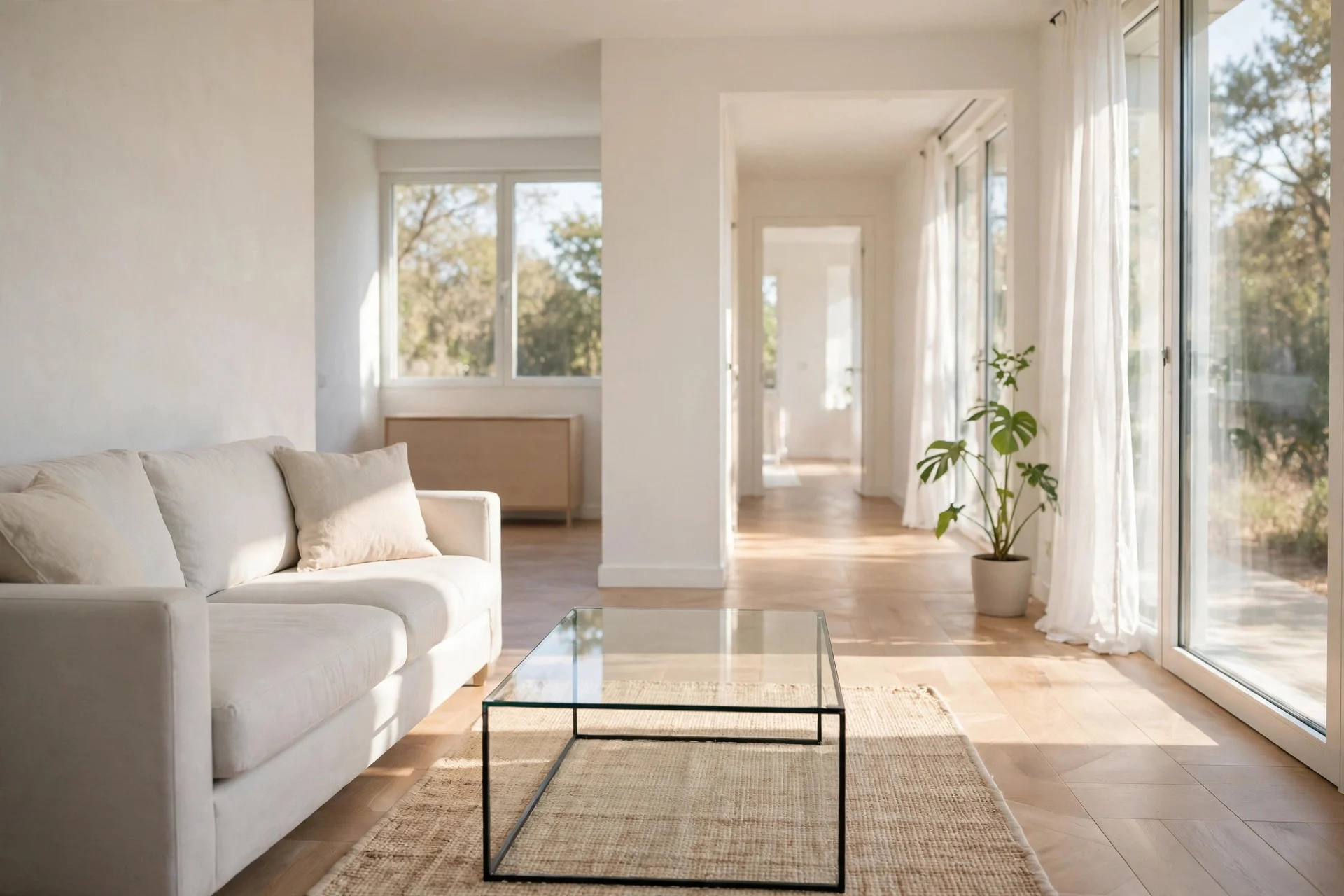
Clutter blocks light in a literal way: piles on surfaces, furniture crowded against windows, and stacks in corners all cast shadows. Clear one surface at a time, starting with the windowsill and the coffee table, and give everything else a home behind a door or in a basket. For hidden storage that does not add visual weight, see our small living room storage ideas that hide clutter. Then pull furniture a few centimetres away from the window wall so daylight can travel past it instead of stopping at a sofa back. The room will look larger simply because light can move through it, and tidying takes far less time once every object has a place to go.
8. Dress the Sofa in Pale, Washable Covers
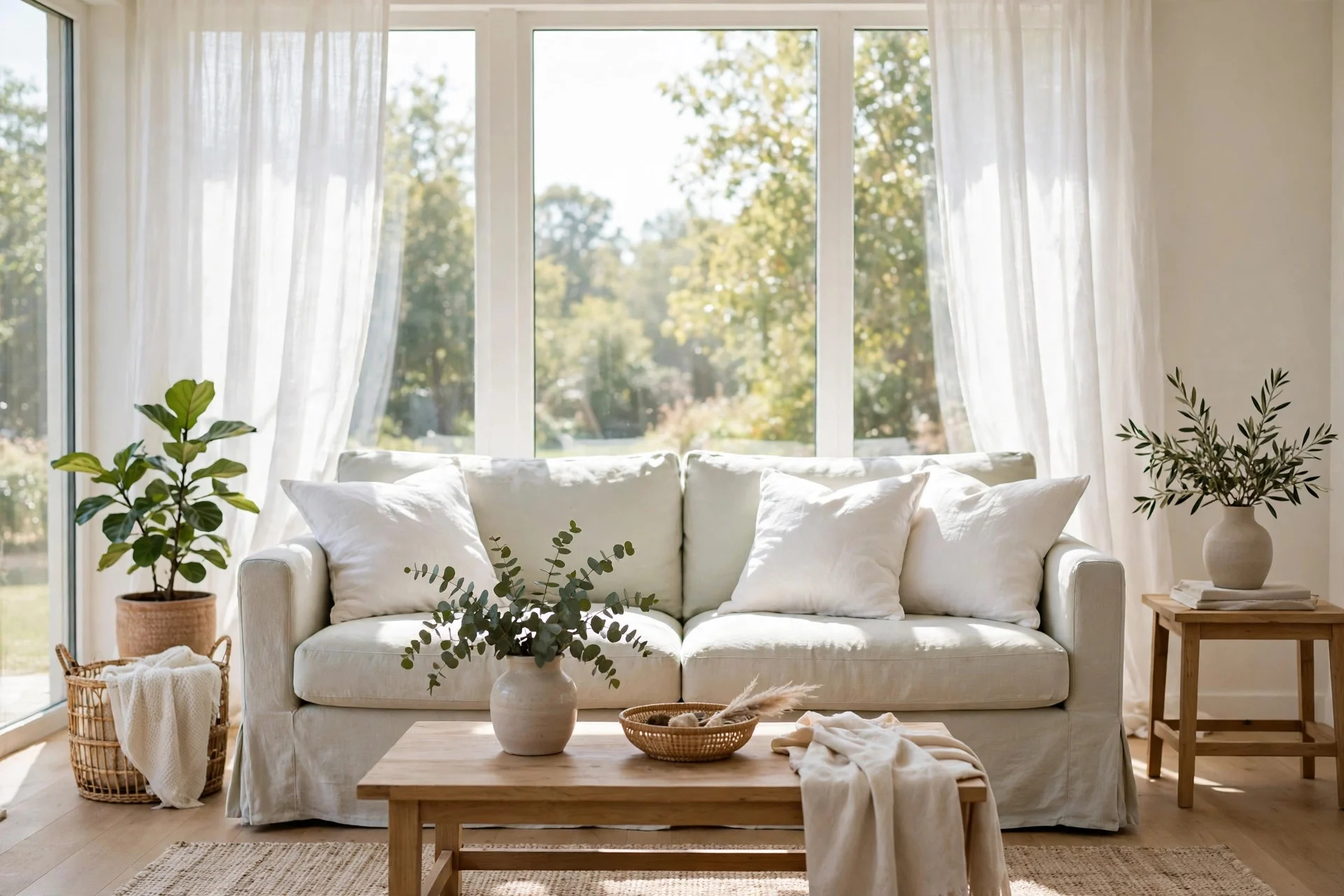
A dark sofa is the largest dark object in most living rooms, and it absorbs a surprising amount of light. A pale slipcover in oatmeal, cream, or light grey changes the whole balance of the room without replacing the sofa. Choose a washable fabric, since pale covers show marks, and wash the cover before first use so it softens and sits properly. Tuck it in around the cushions rather than leaving it loose, so it reads as upholstery. Add two pale cushions and one soft accent color, such as sage or dusty blue, so the sofa does not look washed out. This one change, combined with a pale rug, can lift a room more than a new lamp ever will.
9. Add Reflective Metallic and Glass Accents
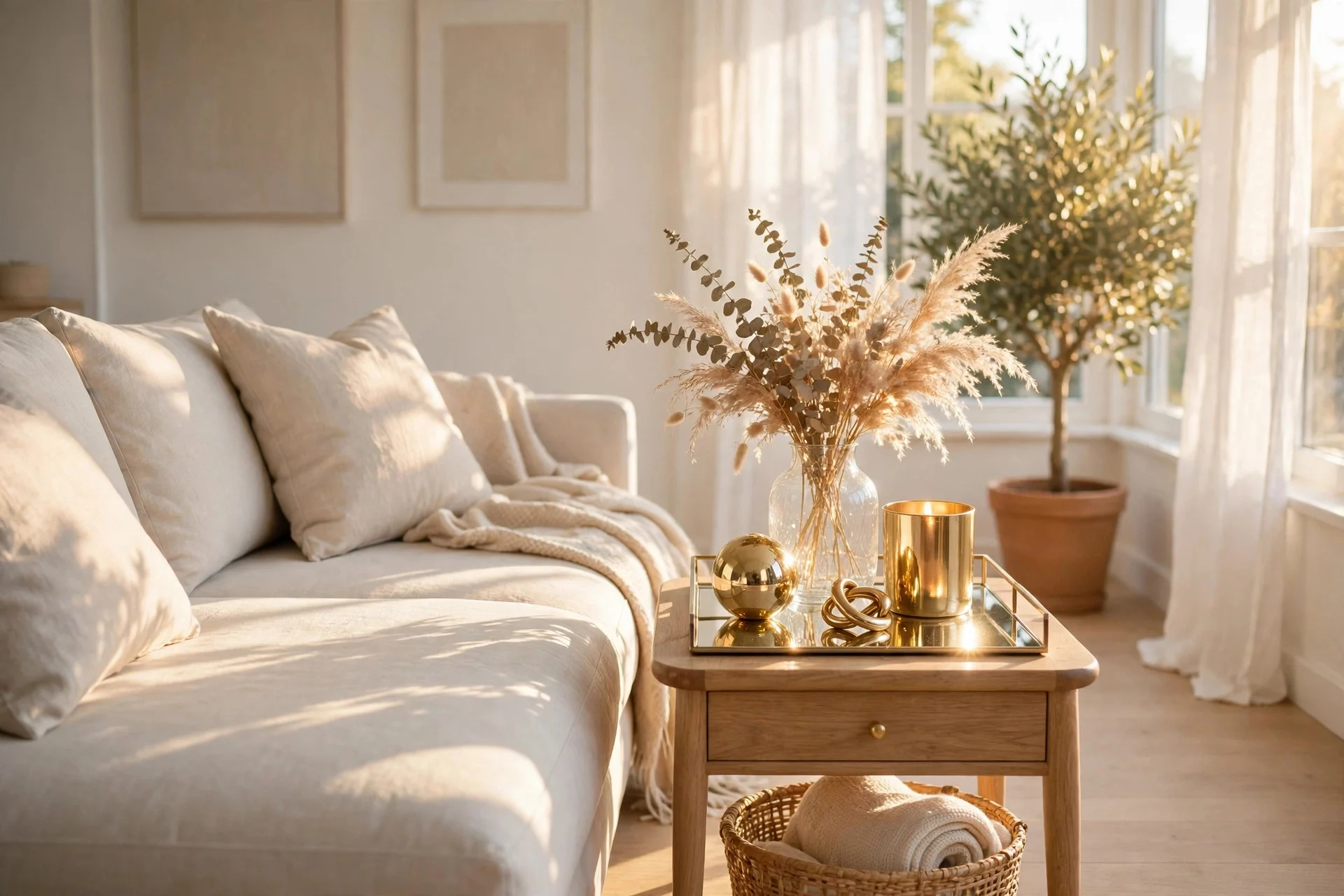
Small reflective surfaces bounce light into corners that lamps never reach. A mirrored tray on the coffee table, a glass vase on a shelf, a metallic picture frame, or a brass lamp base all catch daylight and throw it back into the room. Keep the accents small and repeat them two or three times, so they look deliberate rather than random. A mirrored tray with a candle, a glass vase with a few stems, and a metallic frame on the opposite wall are enough. Avoid covering every surface in shine, since too much reflection feels cold and busy. The goal is a few bright sparks in a room that used to swallow light, not a hall of mirrors.
10. Replace Dark Drapes With Light Blinds or Sheers
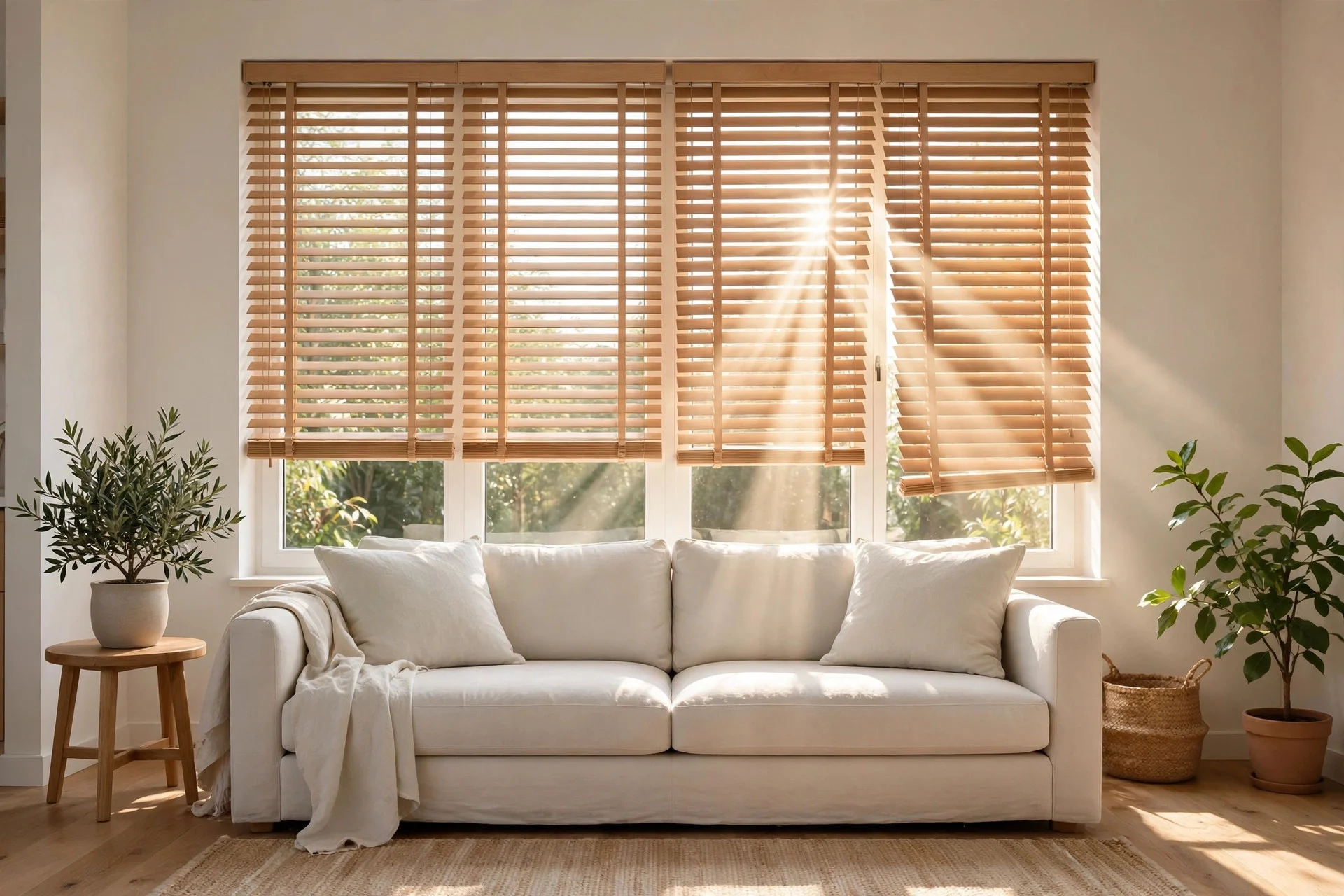
If sheers alone do not suit your window, light wooden blinds or a pale roller blind are a good middle ground. Light wood blinds tilted half open let daylight through while keeping privacy, and they look far lighter than dark fabric or heavy shutters. Choose a pale wood tone or white, and keep the slats tilted upward during the day so light bounces off the ceiling rather than straight into your eyes. Measure the window carefully, since blinds that are too narrow leave dark gaps at the edges. Clean the slats every few weeks, because dust dulls the wood and dims the light they reflect. This is a practical change for bedrooms and street-facing rooms in particular.
11. Hang Bright, Light Artwork Instead of Dark Prints
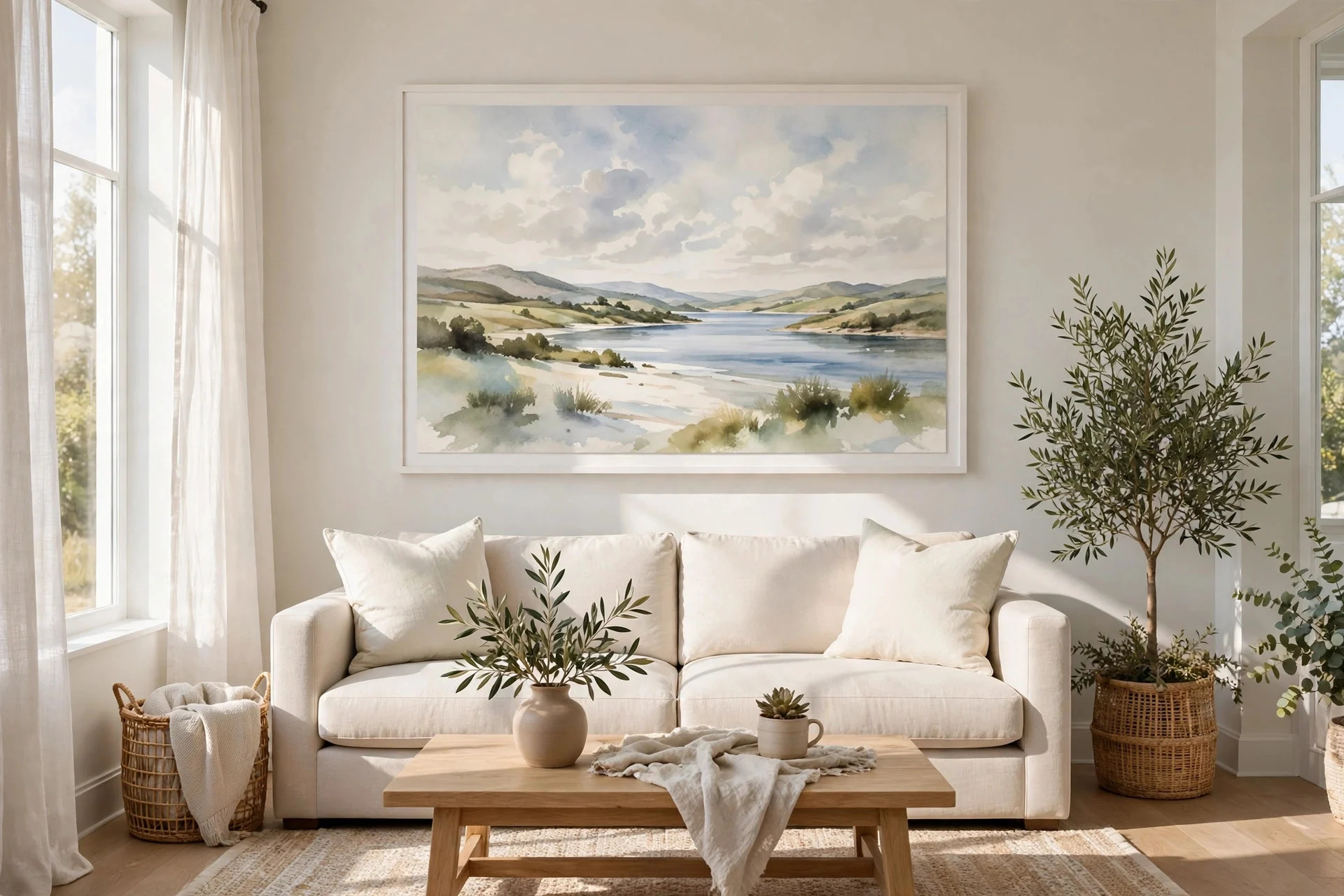
Dark artwork on a dark wall disappears, and it drags the wall down with it. Swap one large dark print for a bright landscape, a pale abstract, or a white-framed photograph with plenty of light space in it. The frame matters too: a white or pale wood frame keeps the wall feeling open, while a heavy dark frame adds another dark block. Hang the art at eye level from your usual seat, not high near the ceiling, so it becomes part of the room rather than a distant decoration. You do not need expensive art for this. A large print from a local shop, or a photograph you took yourself and had printed big, works just as well.
12. Clean the Windows and Trim What Blocks Them Outside
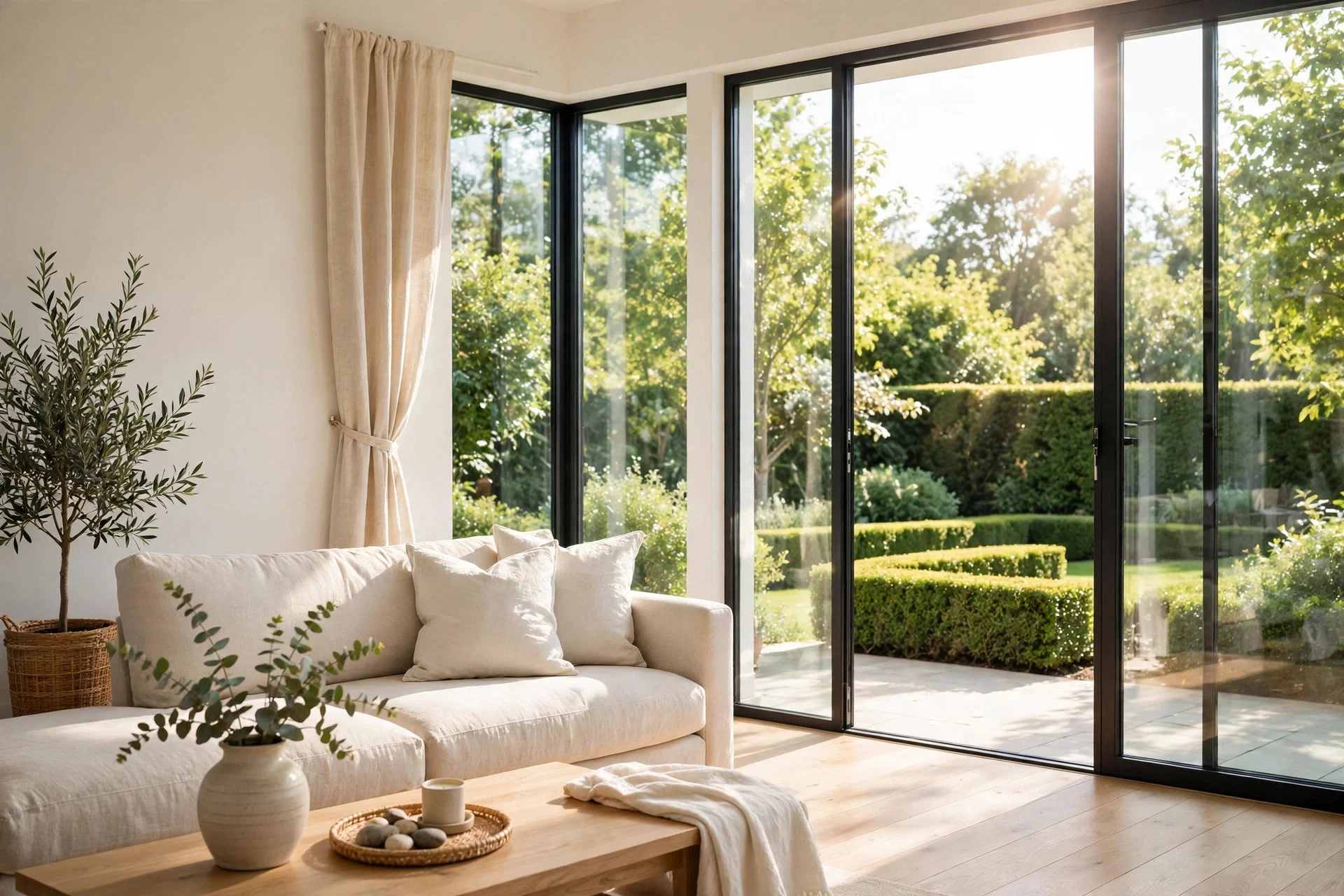
This is the least glamorous idea on the list, and often the most effective. Dirty glass can cut daylight noticeably, and a bush pressed against the window blocks more light than most people realize. Clean both sides of the glass, including the frames and sills, and trim any shrubs or branches that touch the window. If you rent, ask your landlord about overgrown plants outside, since trimming communal greenery may not be your job. Inside, keep the windowsill clear of tall objects that cast shadows into the room. I cleaned our windows one spring morning expecting a small difference, and the room stayed brighter all summer. It costs nothing but an hour and a bucket.
13. Paint or Replace One Dark Piece of Furniture in White
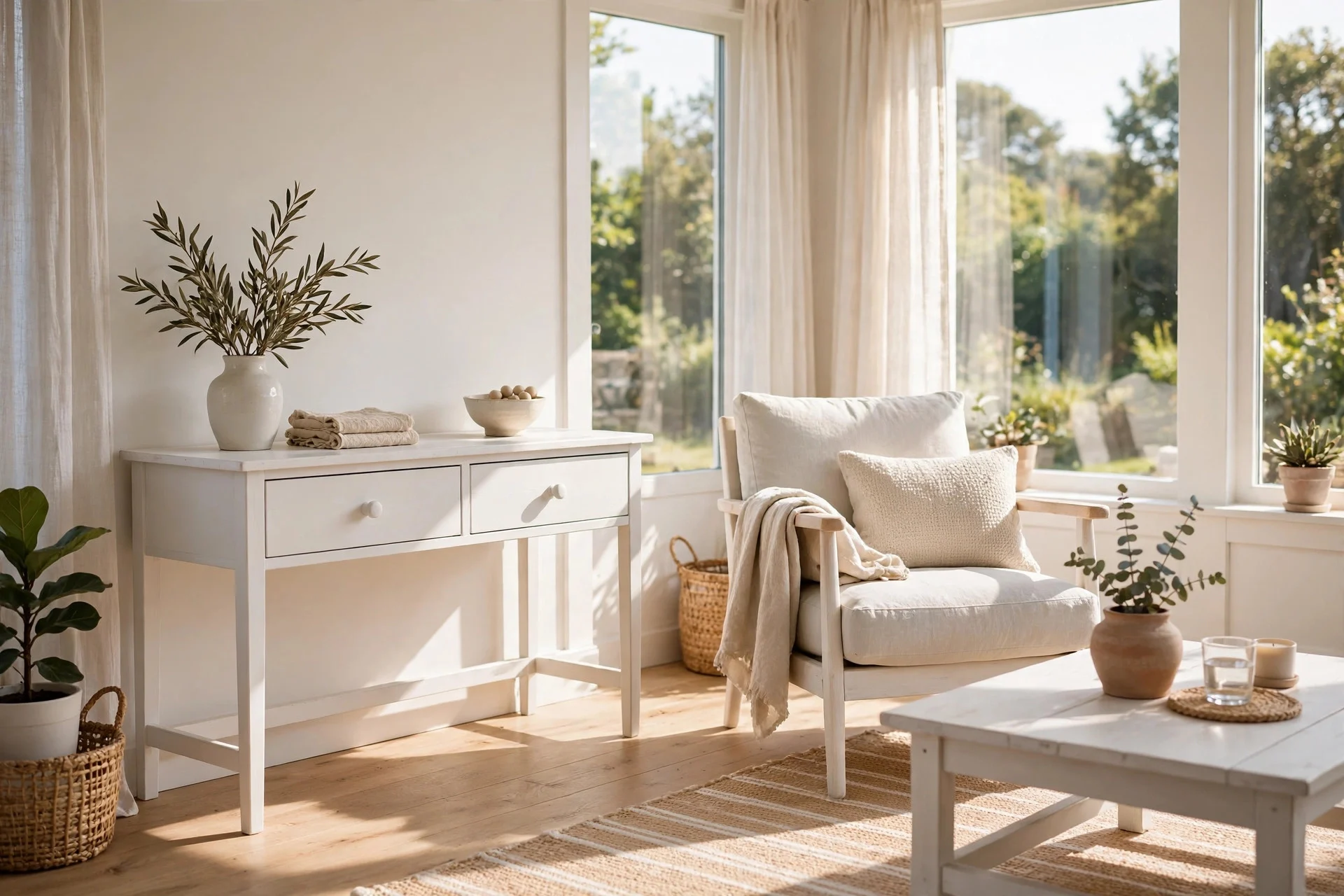
One dark bookcase or media console can anchor a room in shadow, even when the walls are light. Painting that single piece white or cream, with a primer and two coats of furniture paint, lifts the whole wall it stands against. Start with the piece nearest the window, since that is where light hits first, and leave the rest of the furniture alone so the room does not turn into an all-white box. Sand lightly, prime properly, and use a matte or eggshell finish rather than high gloss, which shows every fingerprint. If painting feels like too much, swap a dark console for a pale open shelf unit instead. Either way, one lighter piece changes the balance of the room.
14. Add a Daylight Bulb Where You Actually Sit
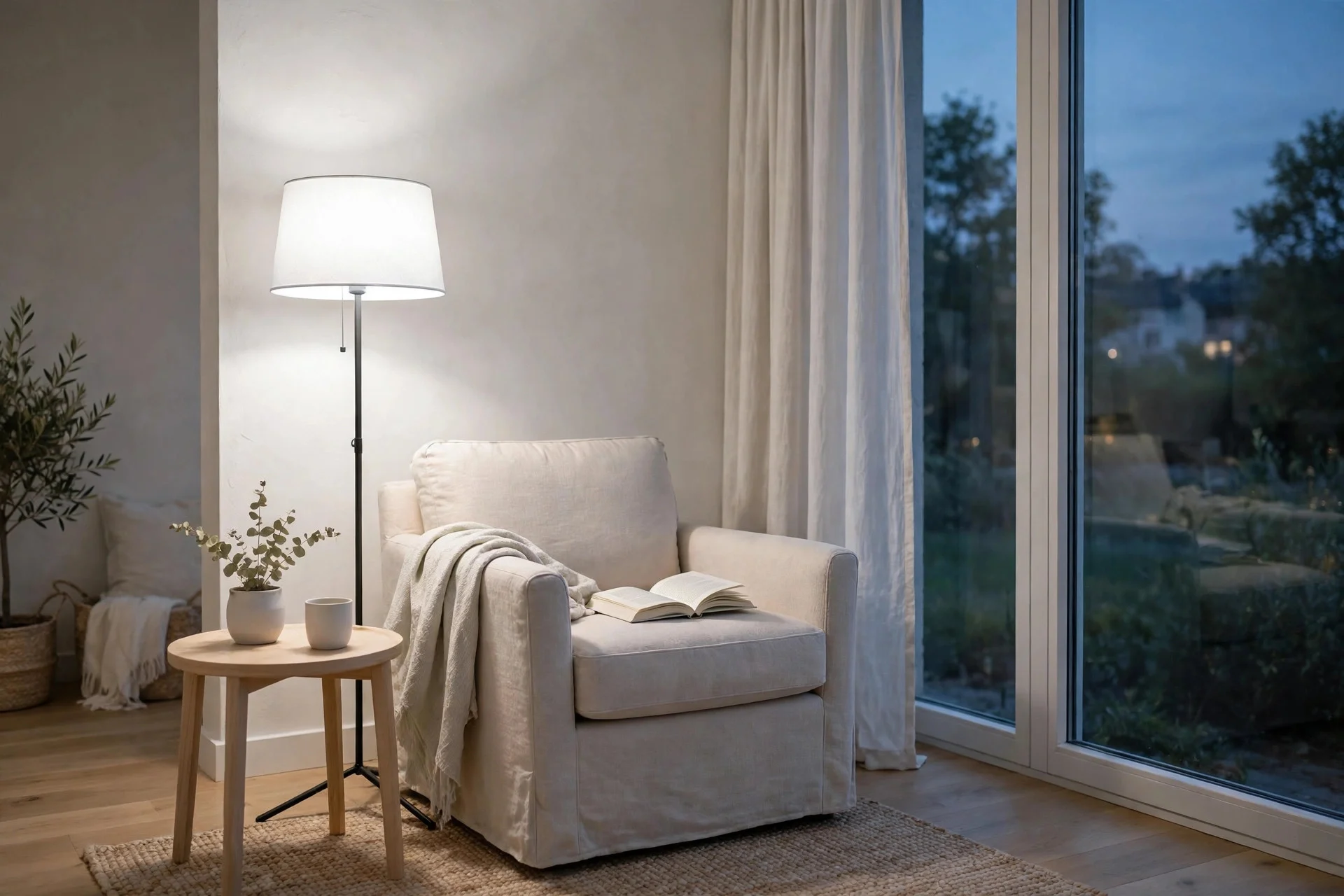
Even with every other change in place, a dark room still needs good task light where you sit. Put a daylight bulb, around 5000K, in a floor lamp or table lamp beside your usual chair, and keep warm bulbs everywhere else. The contrast matters: warm light for relaxing, daylight for reading, working, or doing anything that needs clear vision. Check that the lamp shade is light-coloured inside, since a dark shade absorbs the very light you just paid for. A clip-on reading light works well if floor space is tight. This is the cheapest fix on the list after cleaning the windows, and it is the one you will notice every single evening.
Start with the free changes: clean windows, clear the clutter, and move furniture away from the glass. Then add sheers, a mirror, and one good lamp, and see how the room feels for a week before you paint anything. A dark living room rarely needs a renovation. It needs light given more places to go, and surfaces that send it back into the room instead of swallowing it. If your room is also small, our guide to arranging a small living room for maximum space pairs well with these ideas, and for a softer, warmer feel once the light is fixed, see our cozy living room ideas on a budget.
Frequently Asked Questions
What is the cheapest way to brighten a dark living room?
Clean the windows, clear clutter from the windowsill, and swap heavy curtains for sheers. Those three changes cost almost nothing and often make the biggest difference in daylight. After that, a mirror opposite the window is usually the best value purchase.
Should I use warm or daylight bulbs in a dark room?
Use both, in different places. Warm bulbs around 2700K suit relaxing and evening light, while a daylight bulb around 5000K suits a reading chair or work spot. Avoid using only cool daylight bulbs everywhere, since the room can feel clinical rather than bright.
Will painting the walls white always make a room brighter?
Usually, but the shade matters. A warm white reflects light without feeling cold, while a stark blue-white can feel harsh in a north-facing room. Test sample pots in morning and evening light, and paint the wall opposite the window first if you want to try one wall.
Can a mirror really make a room brighter?
Yes, if it faces a window or a light source. A mirror opposite a window effectively doubles that window’s light in the room. A mirror facing a blank wall or clutter will only double the wall or the clutter, so placement matters more than size alone, though larger is usually better.