


18 Open Shelving Kitchen Ideas and When to Skip Them
Open shelving looks effortless in photos and asks for real effort in daily life. That gap is the whole story. Done well, open shelving kitchen storage makes a small room feel larger, puts your everyday dishes within reach, and turns a plain wall into the prettiest part of the room. Done without thinking, it turns into a dusty display of things you stopped liking years ago. The eighteen ideas below cover both sides: how to style shelves that work, and the honest cases where closed cabinets are simply the better choice. I have lived with both, and the shelves I kept are the ones holding things I touch every single day.
1. Keep Everyday Dishes Within Easy Reach
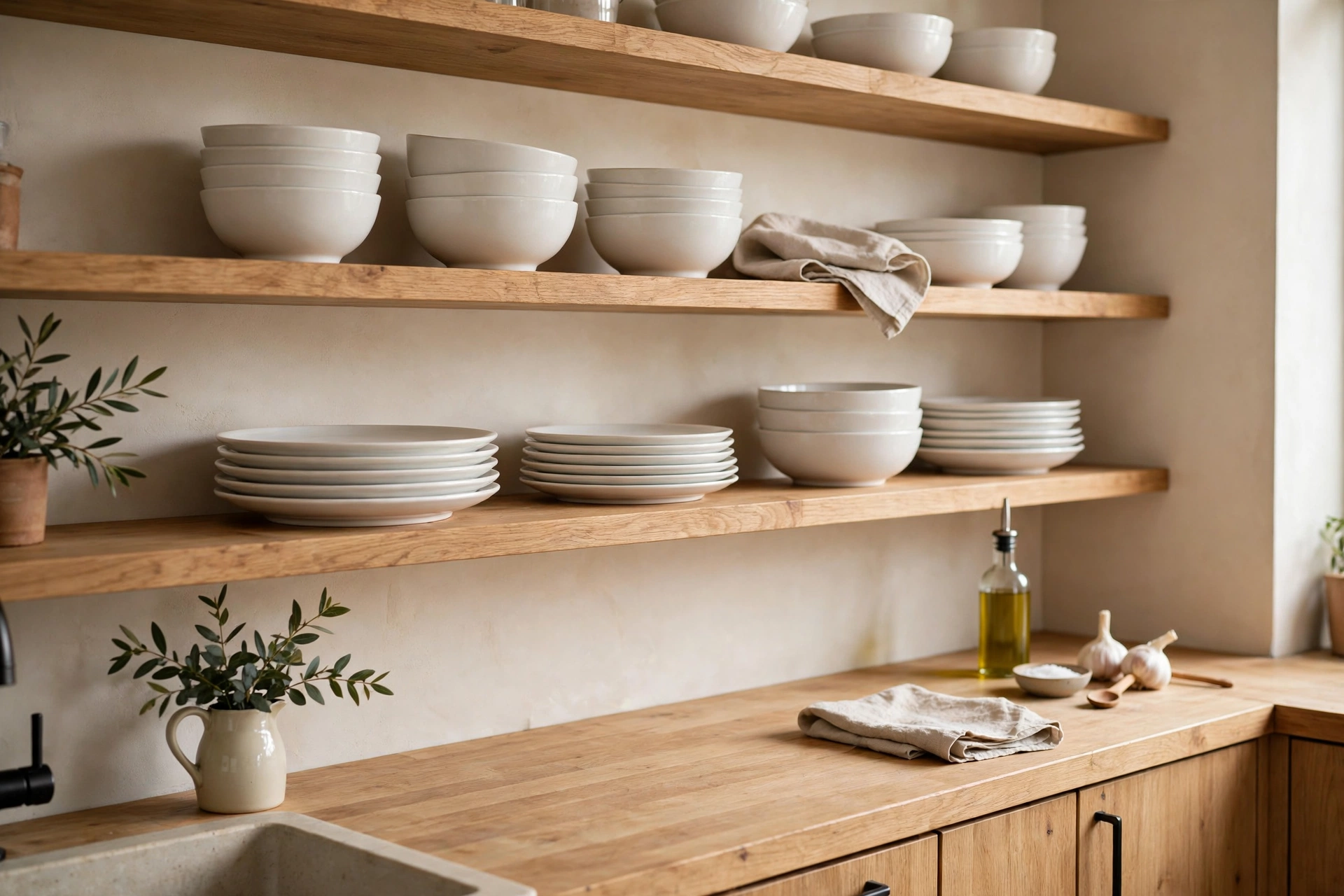
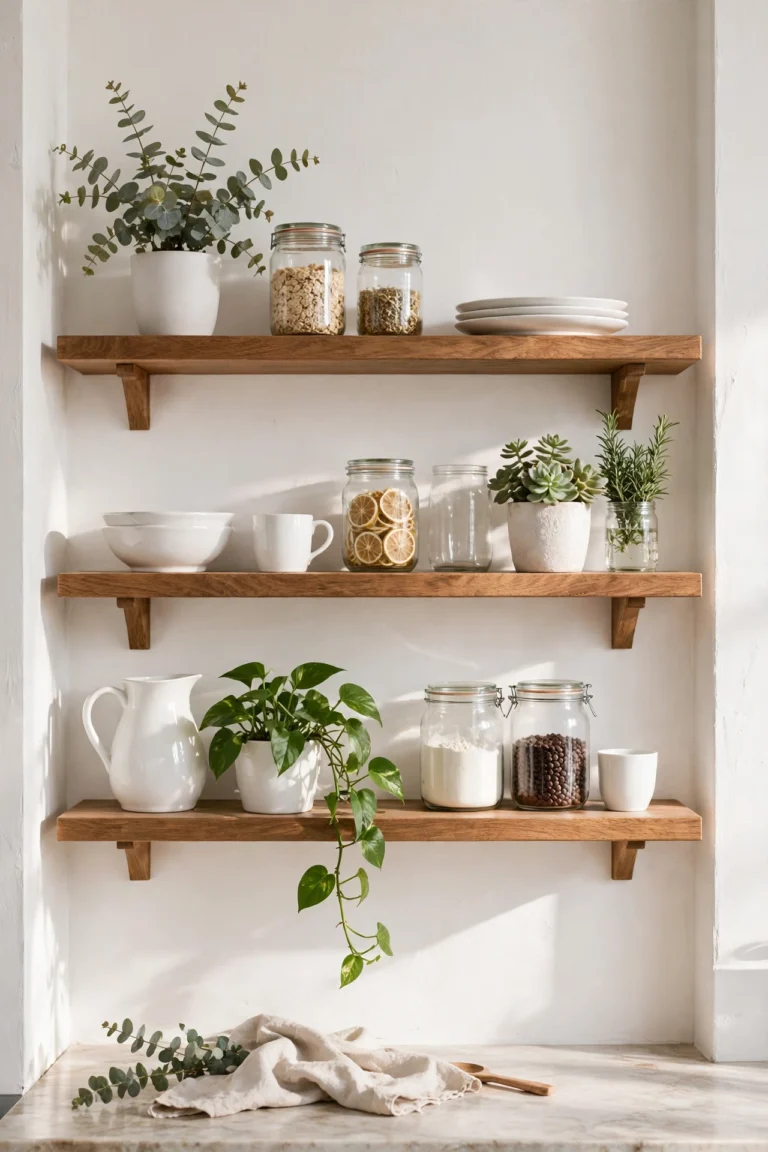
The first rule of open shelving is the simplest: only display what you use constantly. Everyday plates, bowls, and glasses earn their place because they get washed and put back so often that dust never gets a chance to settle. Put daily dishes on the lowest shelf, at shoulder height or below, so grabbing a plate is one motion, not a stretch. Anything you use less than once a week belongs behind a door. This one rule, applied honestly, prevents most of the clutter that gives open shelving a bad name.
2. Give the Coffee Station Its Own Shelf
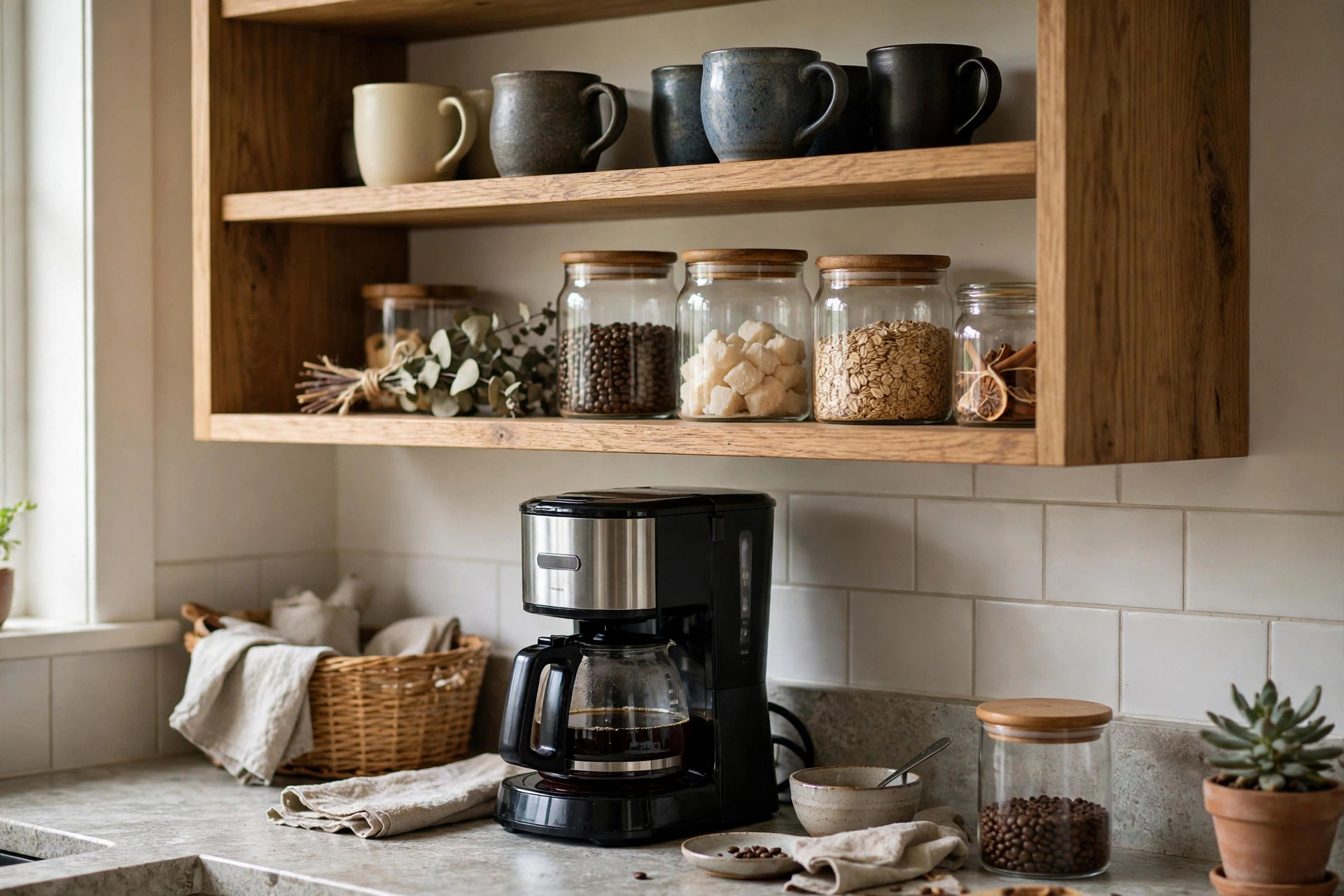
A coffee station is the easiest open-shelf win there is. Mugs, a jar of beans, a small sugar bowl, and the machine below it, and one corner of the kitchen suddenly looks deliberate. Keep the mug count honest: six to eight mugs you actually drink from, not the twenty you have collected. Hang the prettiest two from hooks under the shelf if space is tight. The coffee corner gets used every morning, so it stays clean on its own, and guests always end up standing near it anyway.
3. Use Glass Jars for Dry Goods
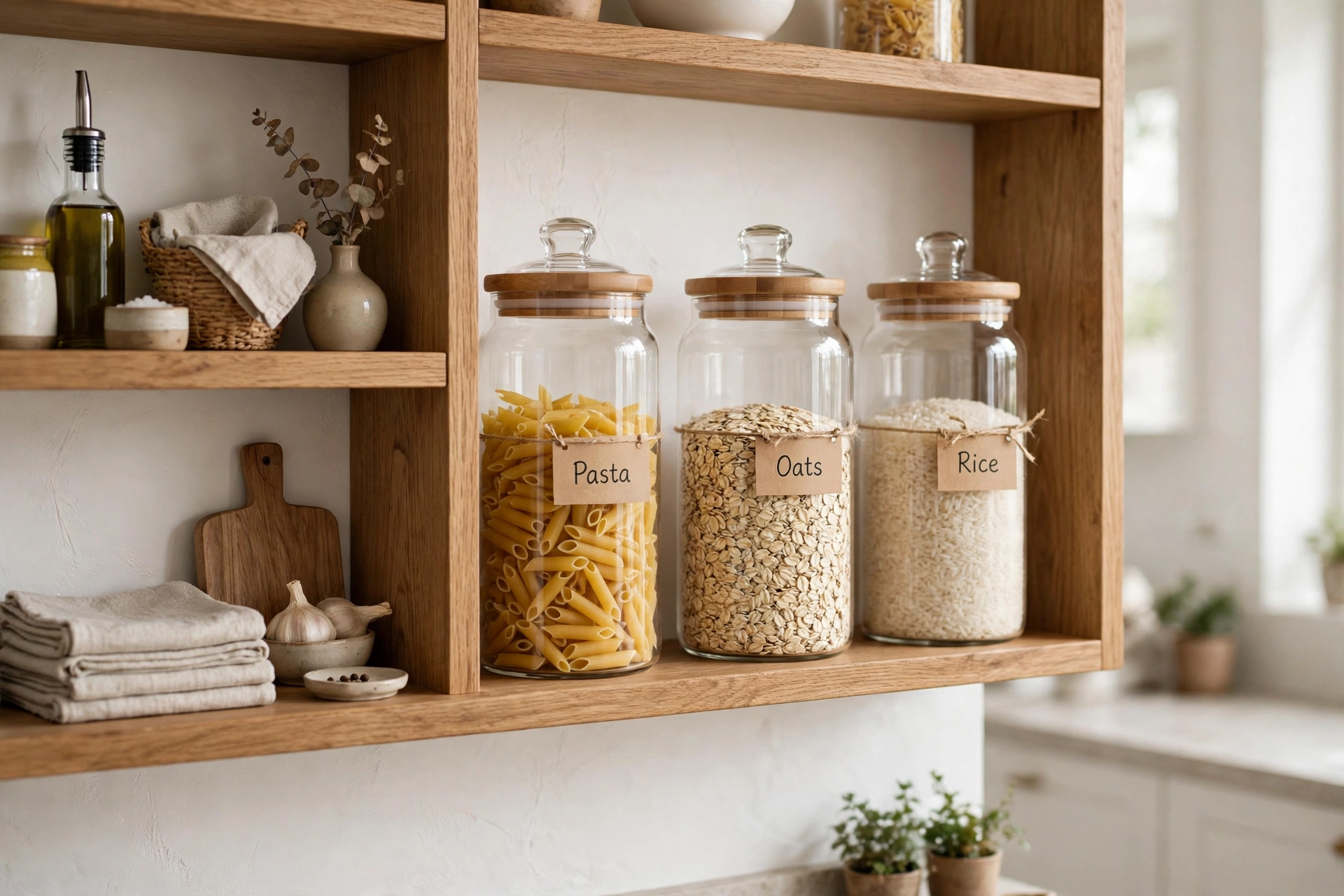
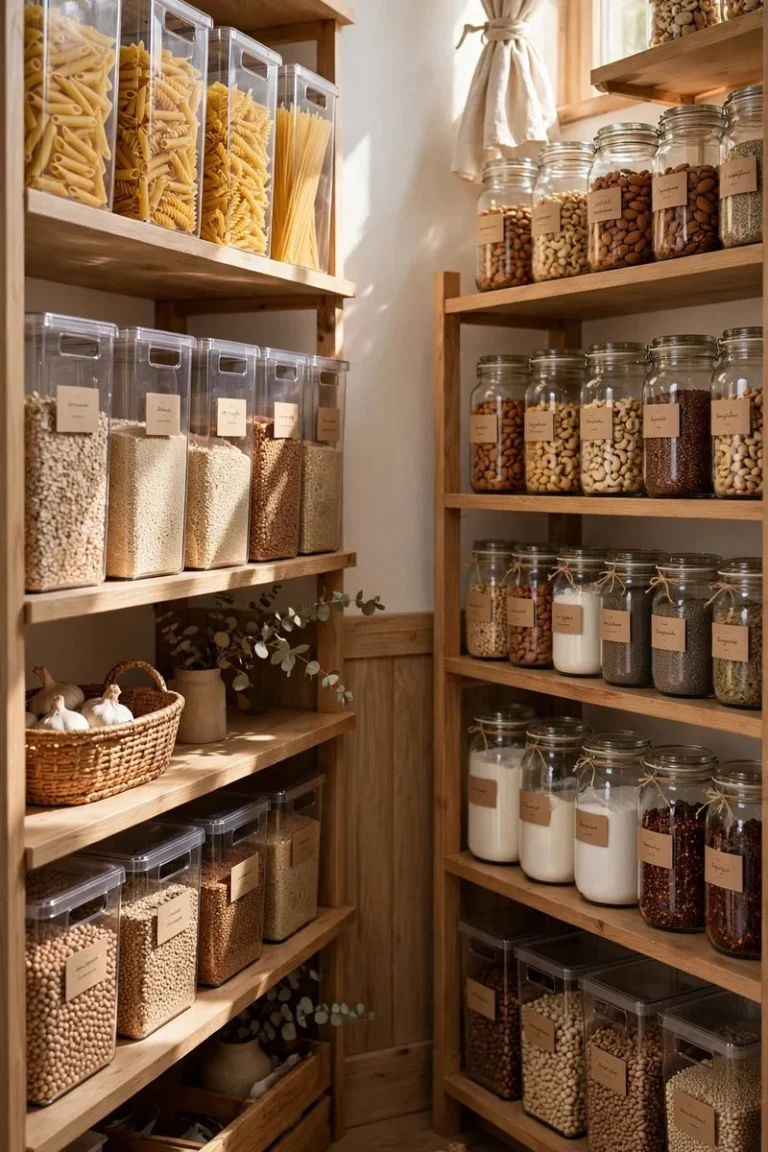
Glass jars turn pantry staples into decoration. Pasta, oats, rice, flour, and lentils look surprisingly good lined up in matching jars, and you can see at a glance what needs restocking. Use jars with tight lids, keep them away from direct sunlight, and do not decant anything you use slowly, because light and air shorten shelf life. The visual trick is matching jars: same shape, same lid, different contents. Three mismatched jars look like a cupboard spilled onto a shelf. Six matching ones look like a plan.
4. Stack Bowls Instead of Scattering Mugs
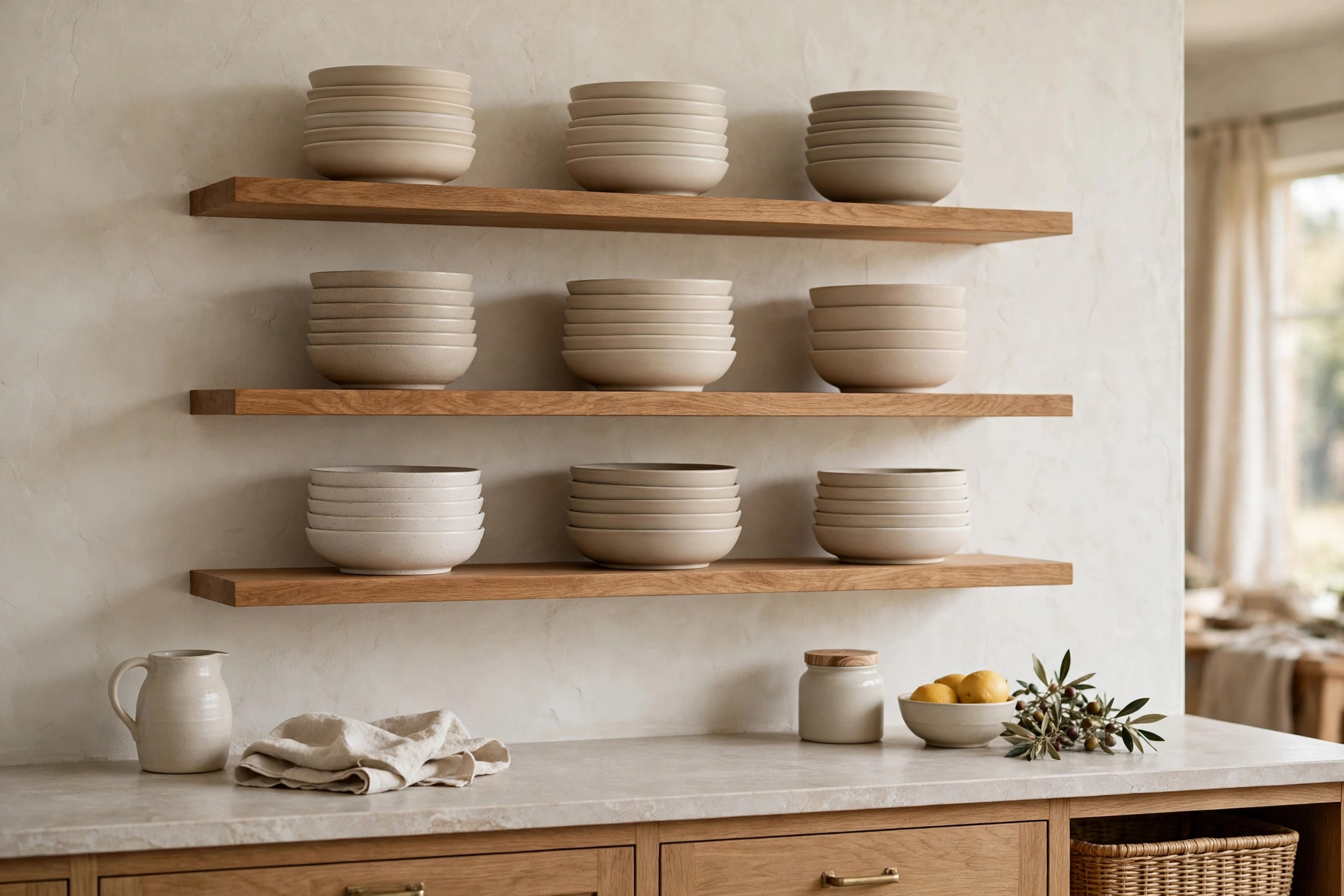
Stacks read as calm; scattered singles read as clutter. Bowls stack neatly, take up little width, and come in colours that repeat across a shelf. Mugs, by contrast, are awkward: handles stick out, heights vary, and a row of them looks busy fast. If you love mugs, keep them to one short row, handles facing the same way, and let the bowls do the heavy visual lifting. I learned this after a year of a mug wall that looked charming for a week and chaotic ever since.
5. One Row of Cookbooks, Not a Library
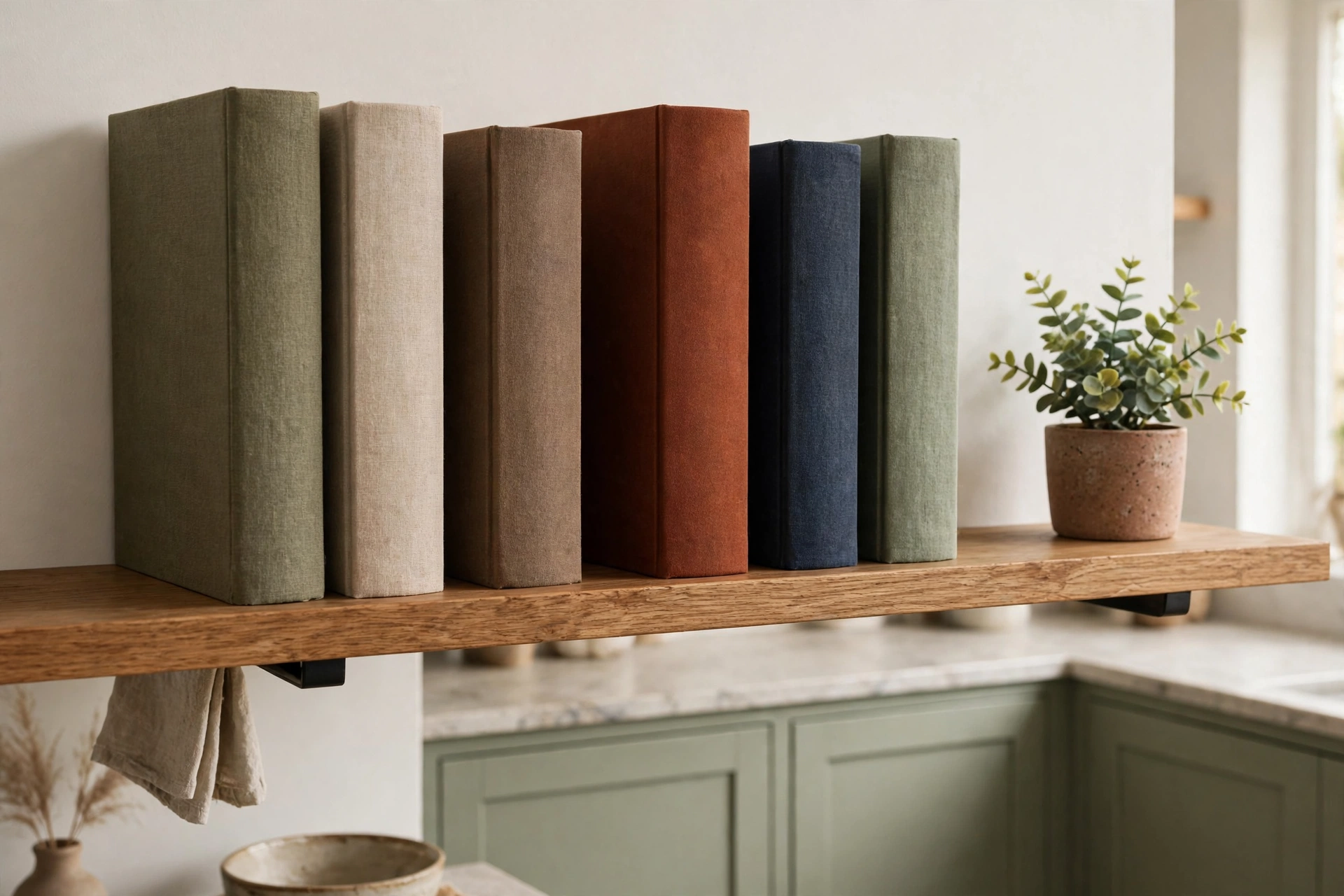
A single row of cookbooks adds colour and personality to a shelf without taking over. Pick the five or six you actually cook from, stand them upright, and add a small plant or a bookend at the end. Leave a little space at one end of the row so it does not look crammed. Cookbooks you have not opened in a year belong on a bookshelf elsewhere, not in the kitchen. The kitchen row should be the books with stained pages and folded corners, the ones that prove they get used.
6. Lean Cutting Boards Against the Wall
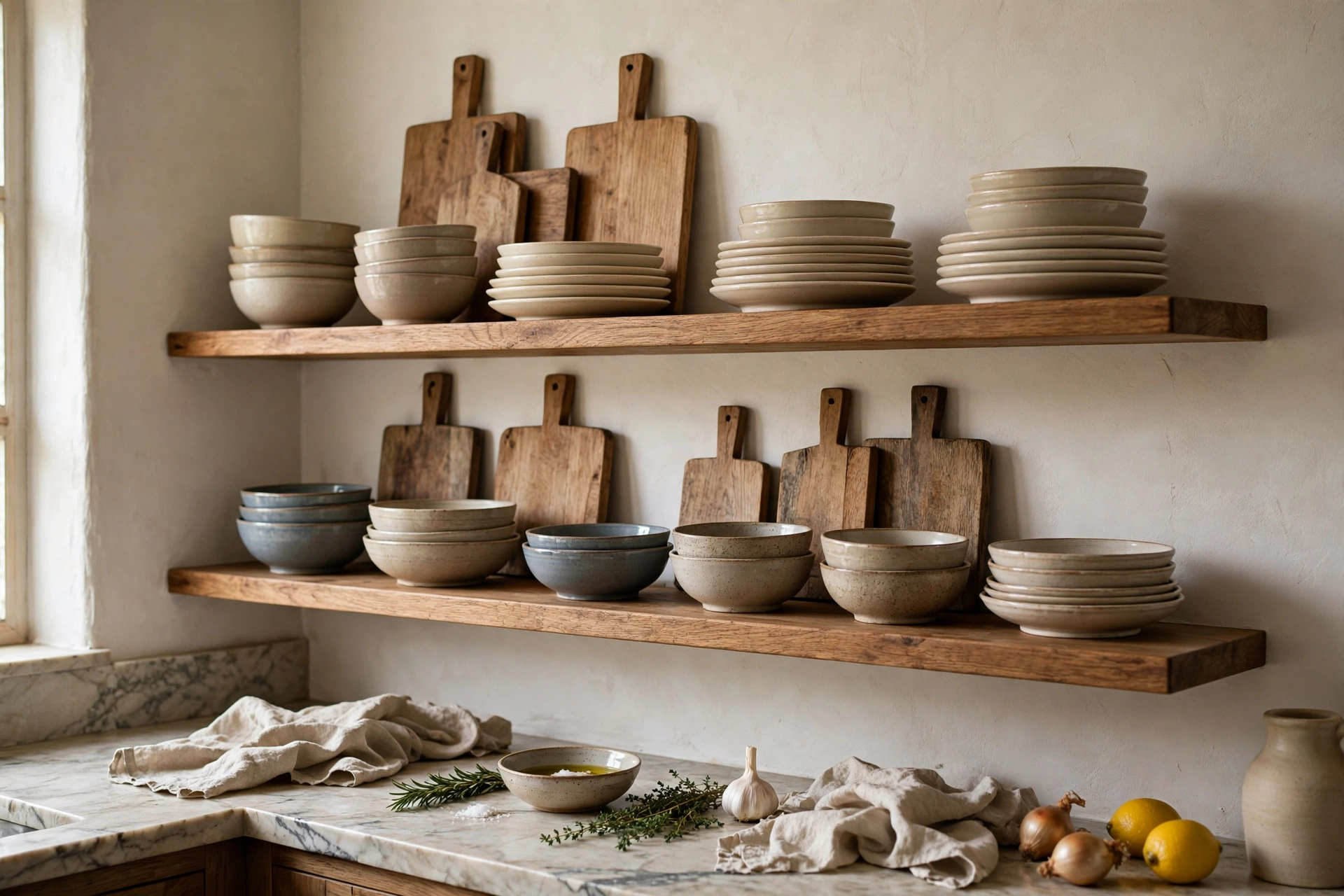
Cutting boards are the best backdrop open shelving has. Lean one large board and one medium board against the wall at the back of a shelf, and the dishes in front instantly look layered rather than lined up. Wood adds warmth that ceramics alone cannot, and boards are things you already own, so this costs nothing. Choose boards in good condition, with the nicest side facing out, and keep them dry: a board that lives behind dishes and never fully dries will warp. Rotate them out when you actually use them, and put them back clean.
7. Add a Trailing Plant at the End
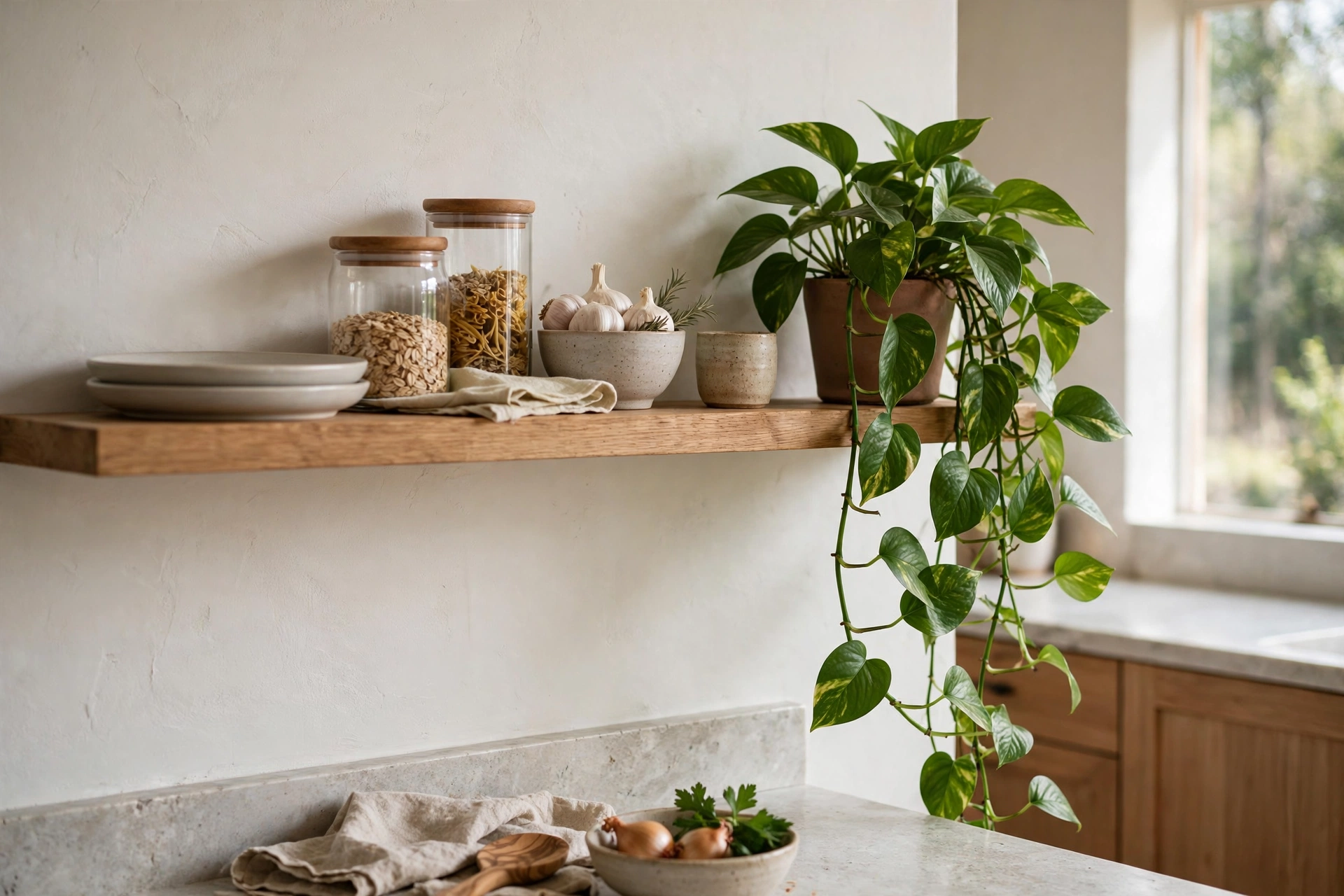
A trailing plant softens the hard straight lines of shelves like nothing else. Pothos is the forgiving choice: it tolerates low light and missed watering, and its vines trail down beautifully within a few months. Set the pot at the end of a shelf, not in the middle, so the vines hang free instead of draping over your dishes. If the shelf gets no natural light at all, a good faux trailing plant reads fine from two steps back. One plant per wall of shelving is enough. Three plants and you have a greenhouse, not a kitchen.
8. Match Your Ceramics for a Calmer Look
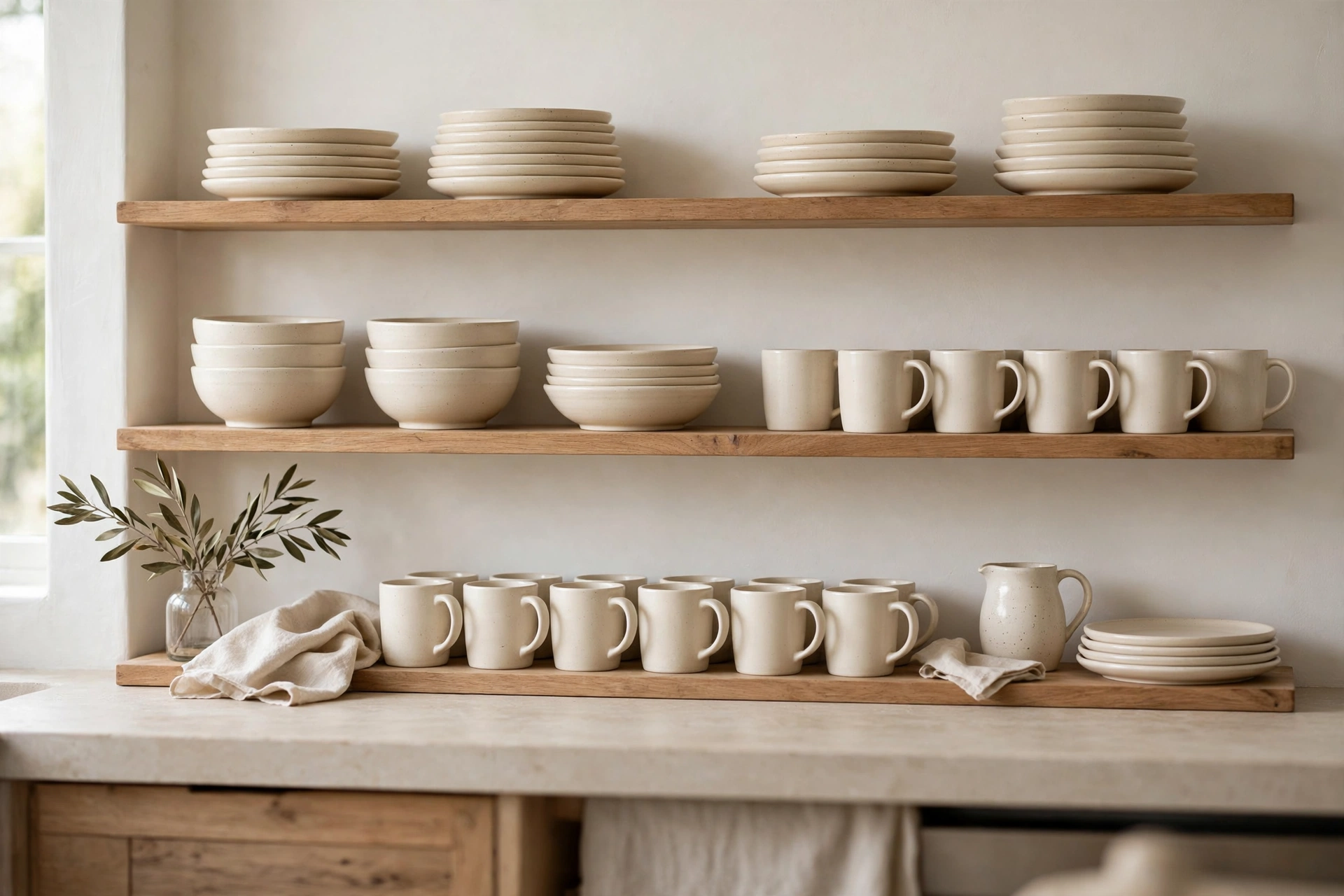
Matching ceramics are the closest thing to a cheat code for open shelving. A set of cream or white dishes, same shape, same colour, makes a shelf look calm even when it is fully loaded. You do not need a full matching set to get the effect: one stack of matching bowls among patterned pieces pulls the whole shelf together. If your everyday dishes are a joyful mix of patterns and colours, that is fine too, but keep the shelf shorter and the pieces fewer, because pattern needs breathing room that a matching set does not.
9. Try a Shelf Above the Sink
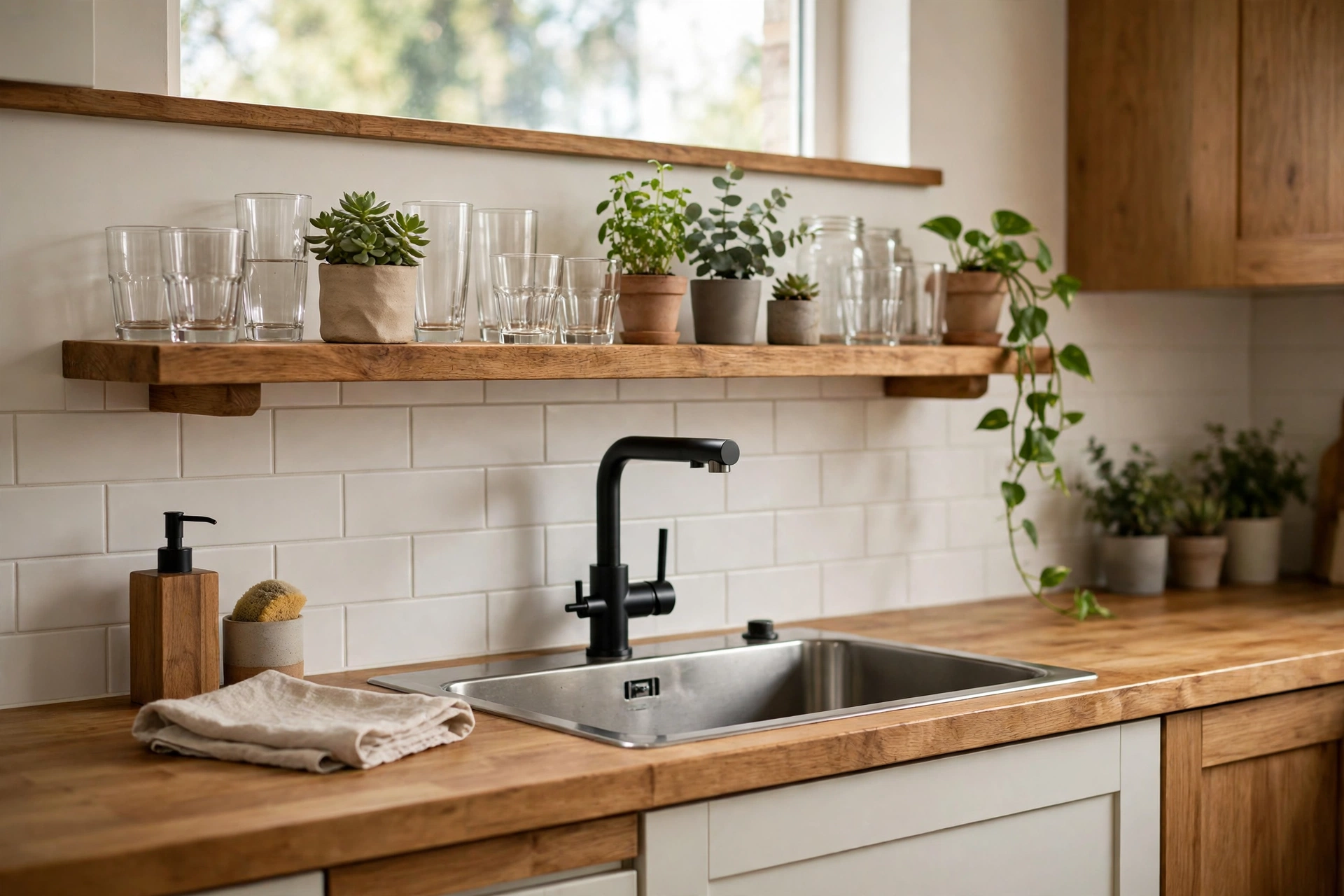
The wall above the sink is often empty, and one shelf there is genuinely useful: glasses you rinse and reach for, a small plant that likes the humidity, a soap dish. Keep it to one shelf, not two, because anything above the sink gets splashed, and a second shelf doubles the wiping. Choose glasses and plants, not plates, for this spot, and wipe the shelf when you wipe the sink. It is a thirty-second habit that keeps the prettiest shelf in the kitchen from turning into the grubbiest.
10. Open Shelving Kitchen Ideas for a Small Kitchen
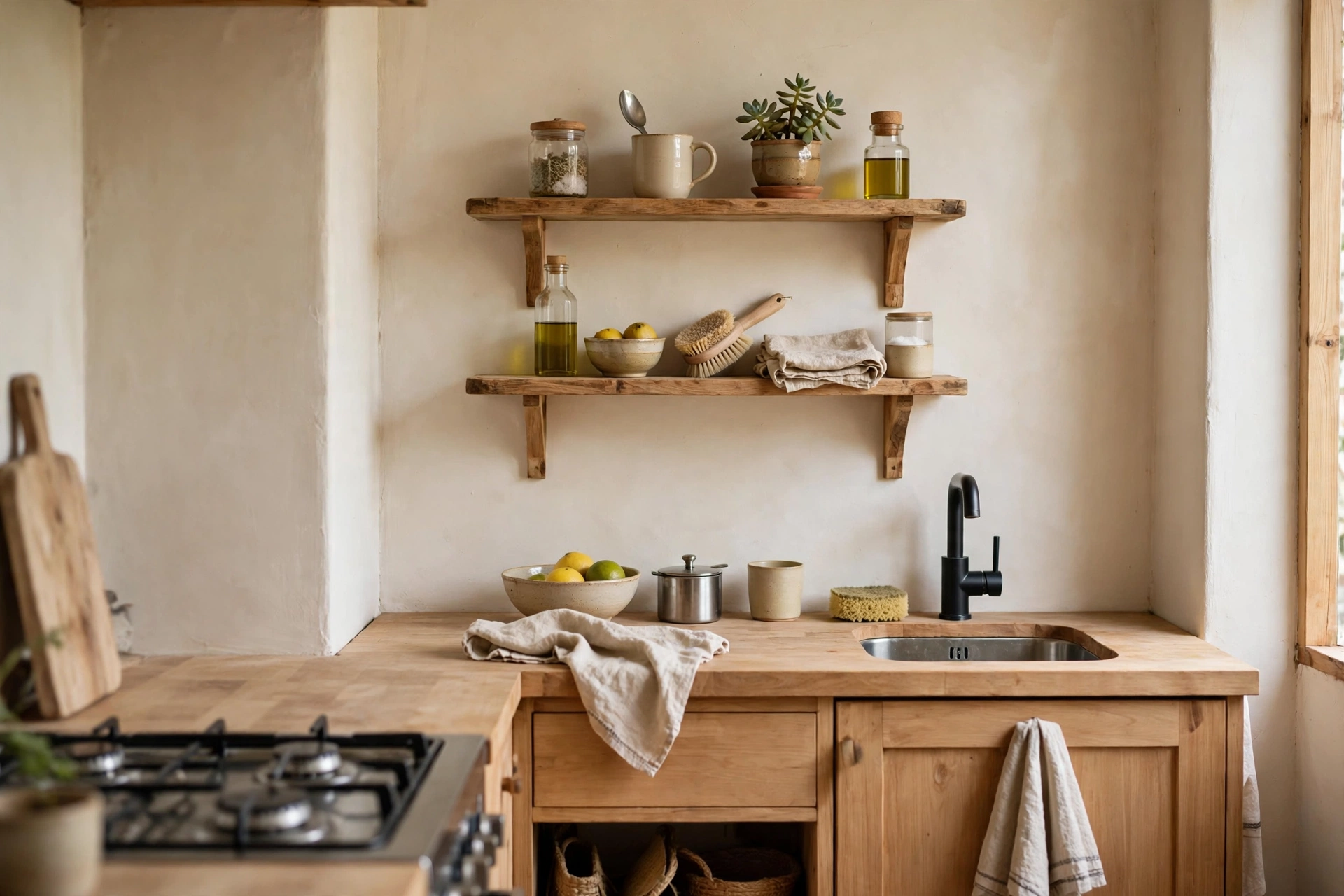
Small kitchens benefit most from open shelving, and suffer most when it goes wrong. Removing a bulky upper cabinet opens up sightlines and makes the wall feel taller, which is real relief in a tight room. But a small kitchen has no room for display pieces that do nothing. Keep two short shelves, not a whole wall, and hold them to daily essentials only. If a small kitchen shelf holds anything you have not touched in a month, that item is costing you space you do not have. For more on making a small room work harder, see our small-room storage ideas that hide clutter.
11. Mix Open and Closed Storage
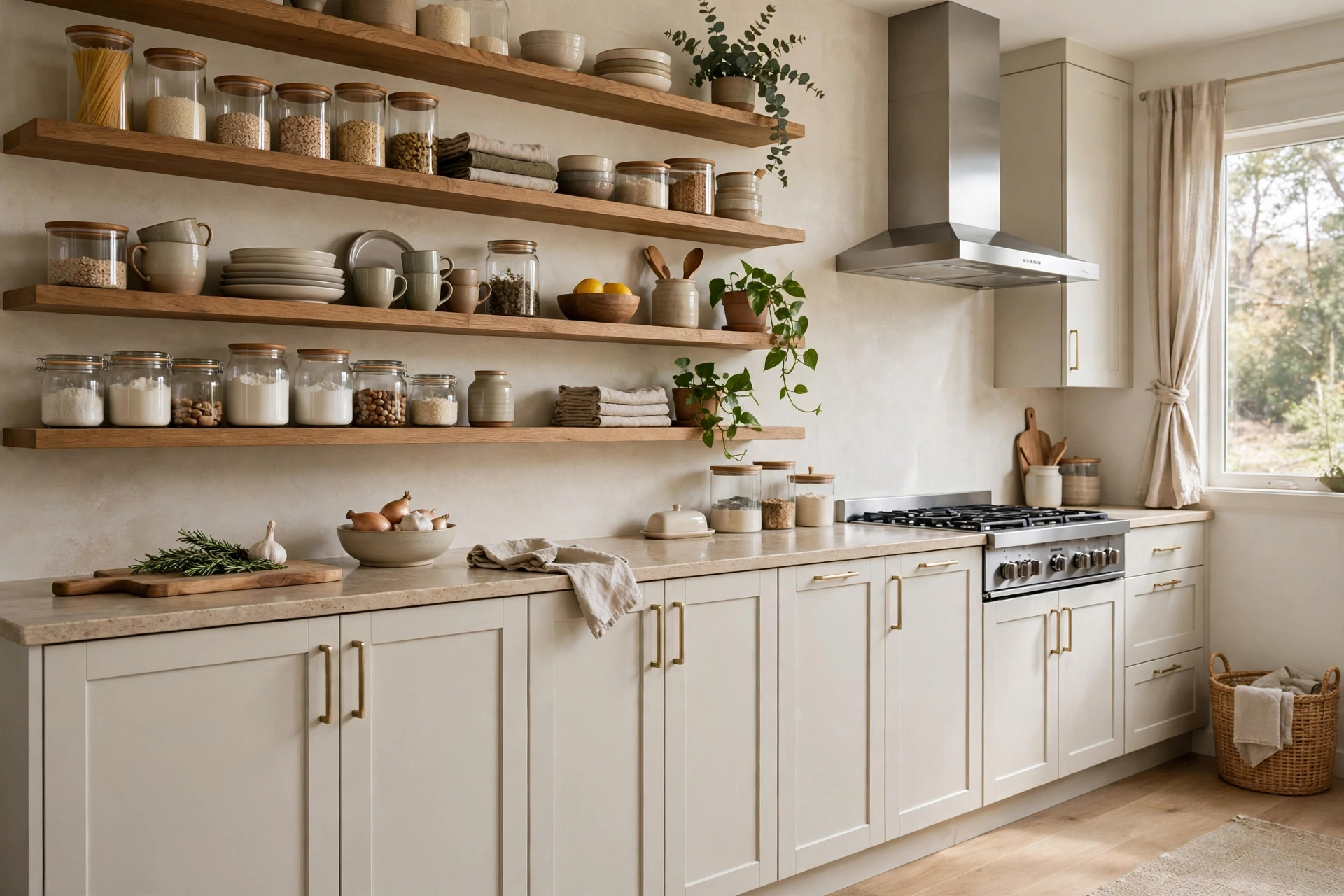
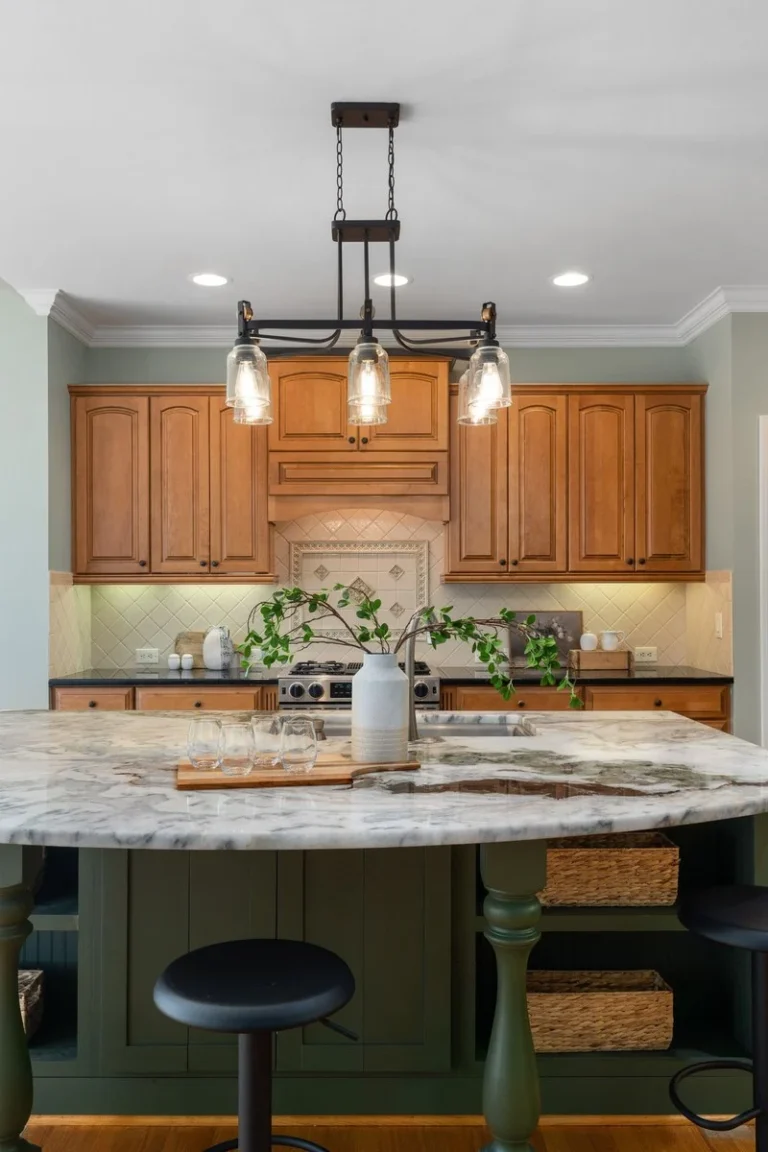
The happiest kitchens I know do not choose between open and closed storage. They mix them: open shelves for daily dishes and a few pretty pieces, closed cabinets for pots, small appliances, and everything ugly or bulky. This hybrid is also the most forgiving. When life gets busy and the shelves get messy, the mess is limited to one wall, and the rest of the kitchen still looks tidy behind its doors. If you are renovating, try one run of open shelving first and live with it for six months before removing more cabinets. You can always take another cabinet down. Putting one back up is a bigger job.
12. Swap One Shelf With the Seasons
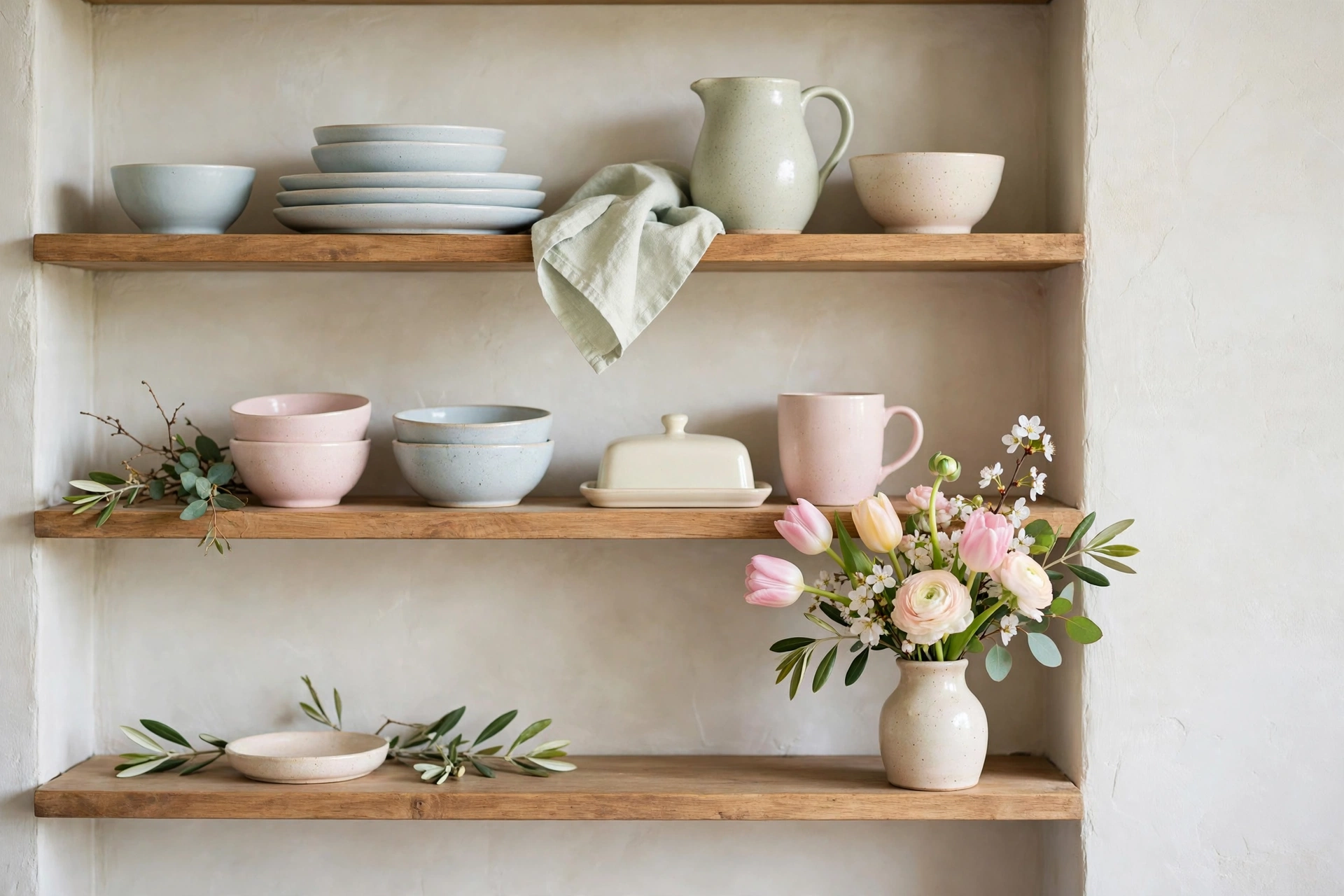
You do not need to restyle every shelf to make the kitchen feel seasonal. Pick one shelf, the one at eye level, and swap two or three pieces on it: lighter ceramics in spring, a small vase of fresh flowers, a warmer-toned bowl in autumn. The rest of the shelves stay as they are, doing their daily job. This keeps the seasonal feeling without turning your kitchen into a decorating project four times a year. Our guide to styling open shelves for spring walks through the same light-touch approach in more detail.
13. A Low Shelf Kids Can Actually Use
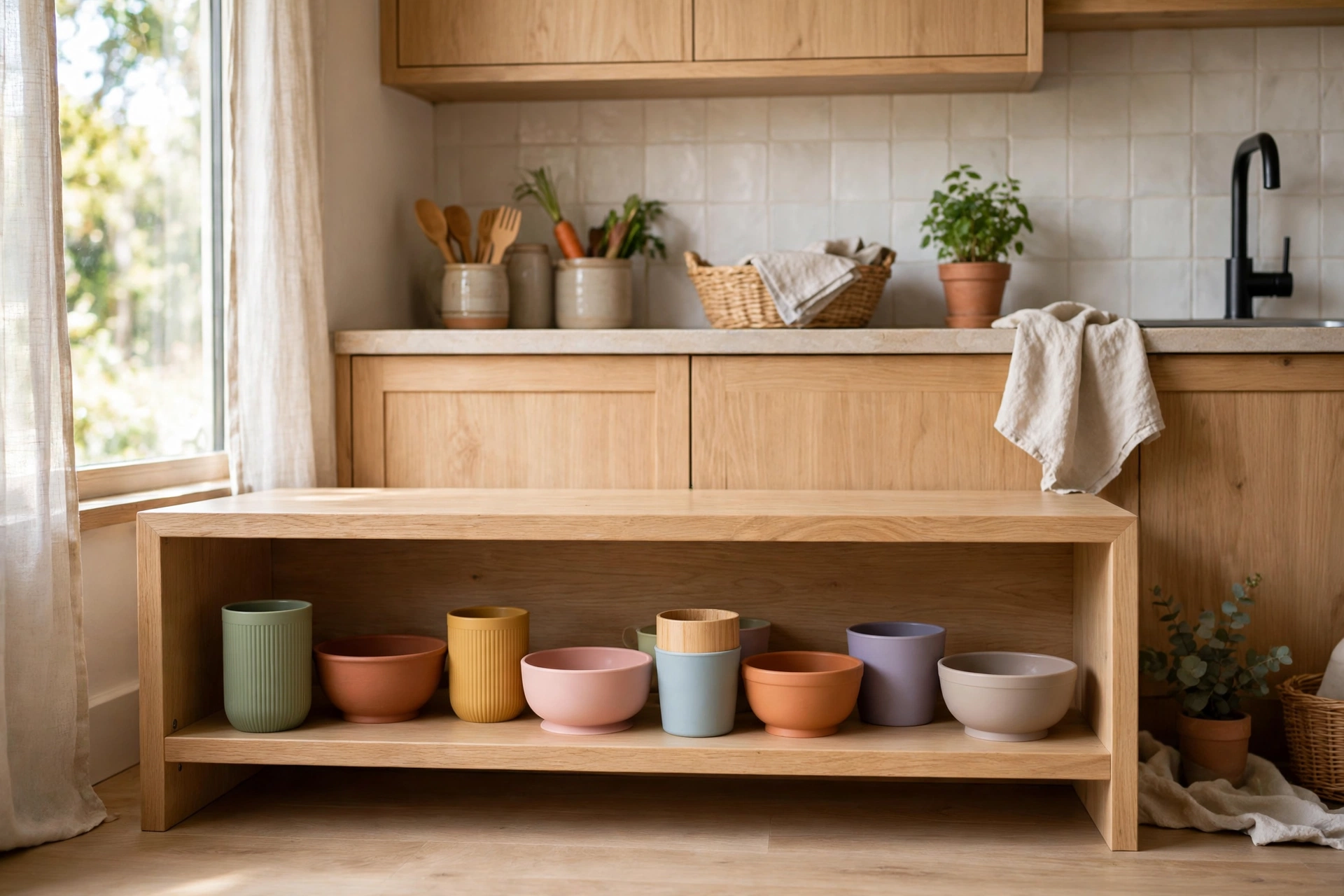
If children set their own places at the table, a low open shelf at their height is a small independence win. Keep it to their cups, bowls, and plates, nothing breakable above them, nothing sharp within reach. Use sturdy, unbreakable pieces, and keep the shelf low enough that they never need to climb. The shelf will not stay perfectly styled, and that is fine. Its job is not to look good in a photo. Its job is to let a child get their own bowl without asking, and to put it back in the same spot afterwards.
14. Display Vintage Finds, Sparingly
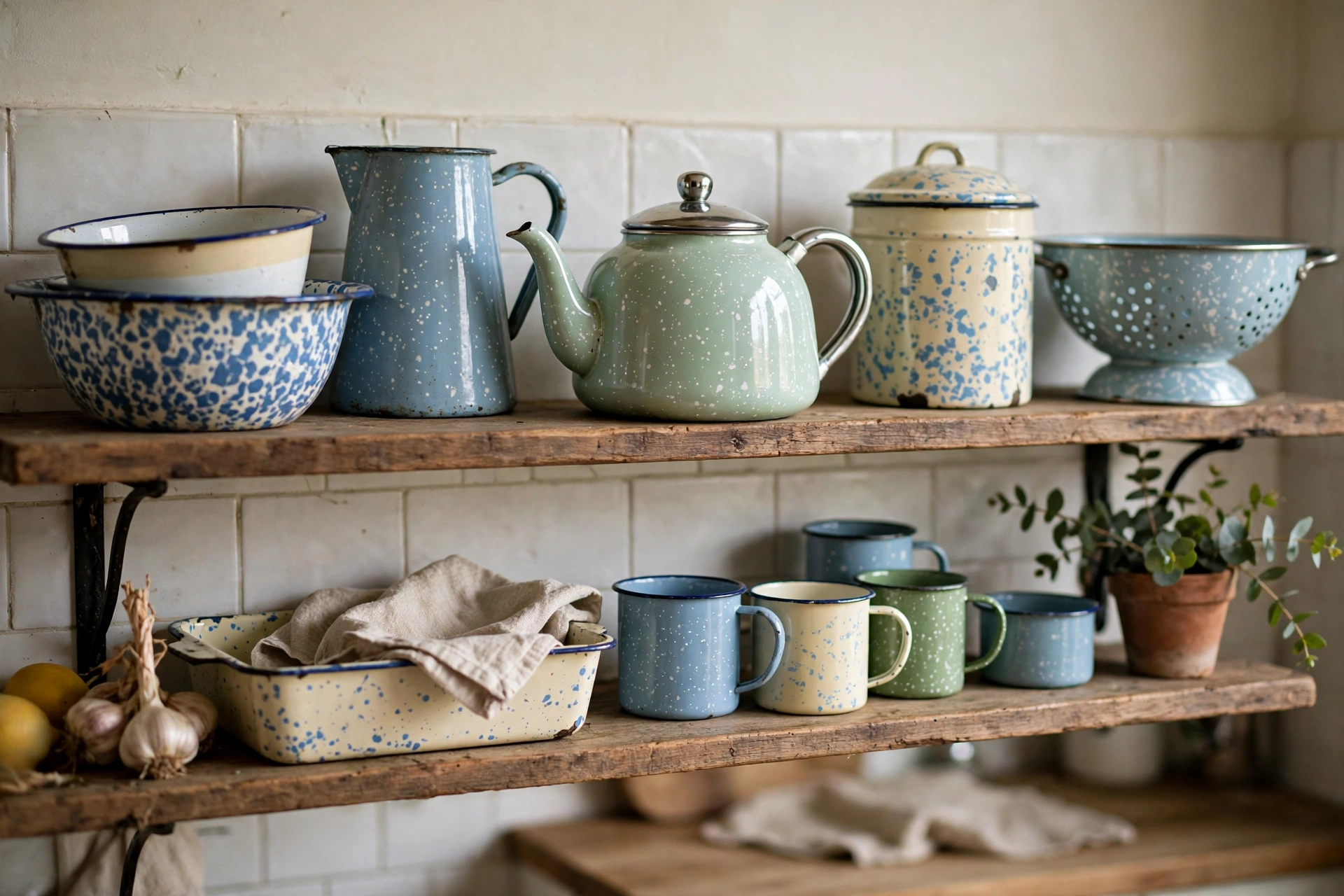
One shelf of vintage pieces, an enamel pot, a retro teapot, a couple of old jars, gives a kitchen character that new dishes cannot. The key word is one shelf. Vintage collections expand to fill every available surface if you let them, and a kitchen full of display pieces is a kitchen with nowhere to put dinner. Keep the vintage shelf high, out of the daily workflow, and dust it weekly, because old enamel and glass show dust fast. If a piece is genuinely valuable or fragile, it belongs in a closed cabinet, not above a stove.
15. Shelves Around a Window
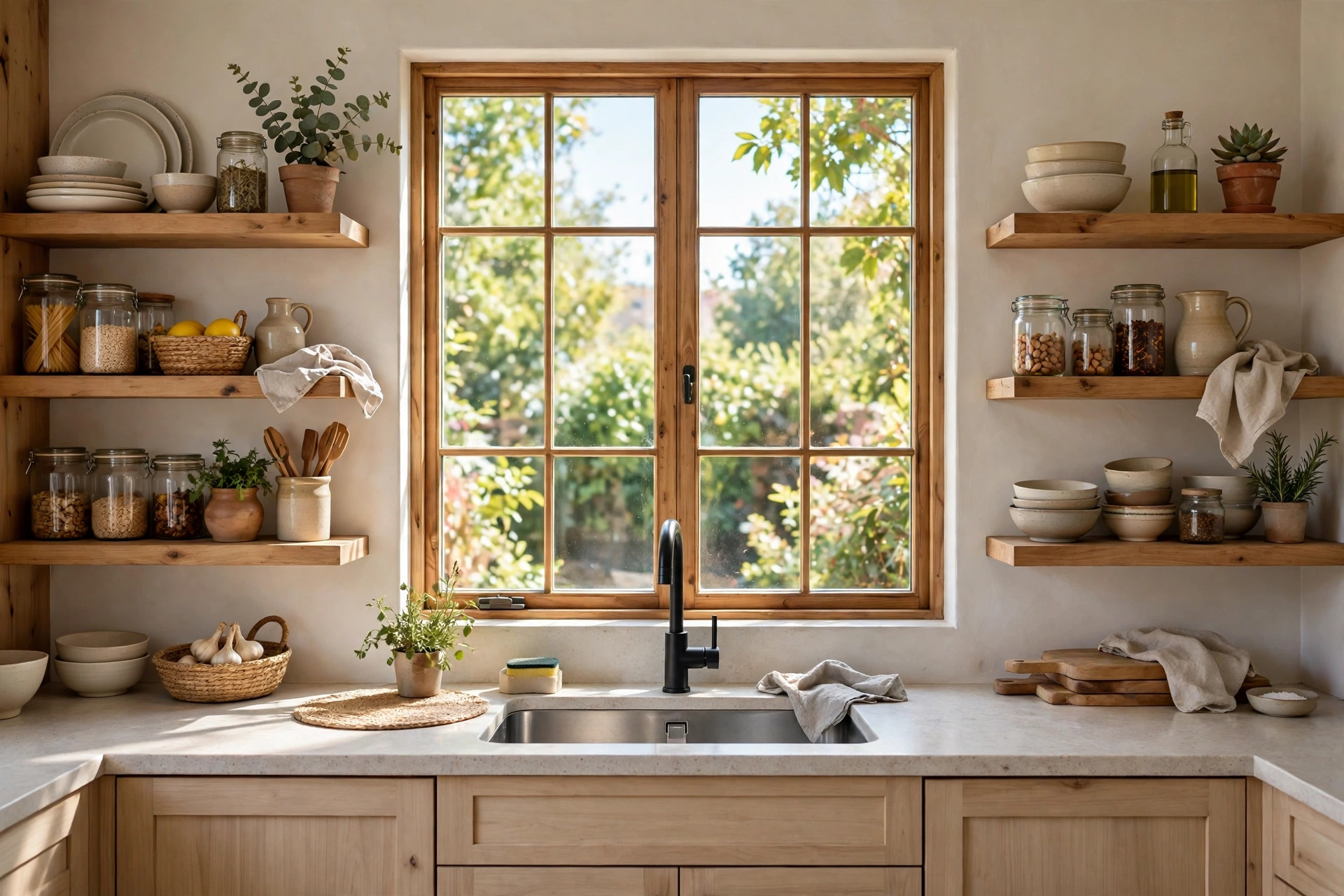
Shelves flanking a window above the sink use wall space that cabinets would block, and they frame the light beautifully. Keep the shelves shallow and the pieces light-coloured, glass and white ceramics, so they do not darken the window. This is a display spot more than a workhorse spot: plants, a few glasses, one pretty bowl. Anything heavy here blocks light and risks a fall into the sink. If your window gets strong afternoon sun, skip the plants that scorch and use glassware, which looks better in sunlight anyway.
16. A Narrow Shelf Just for Spices
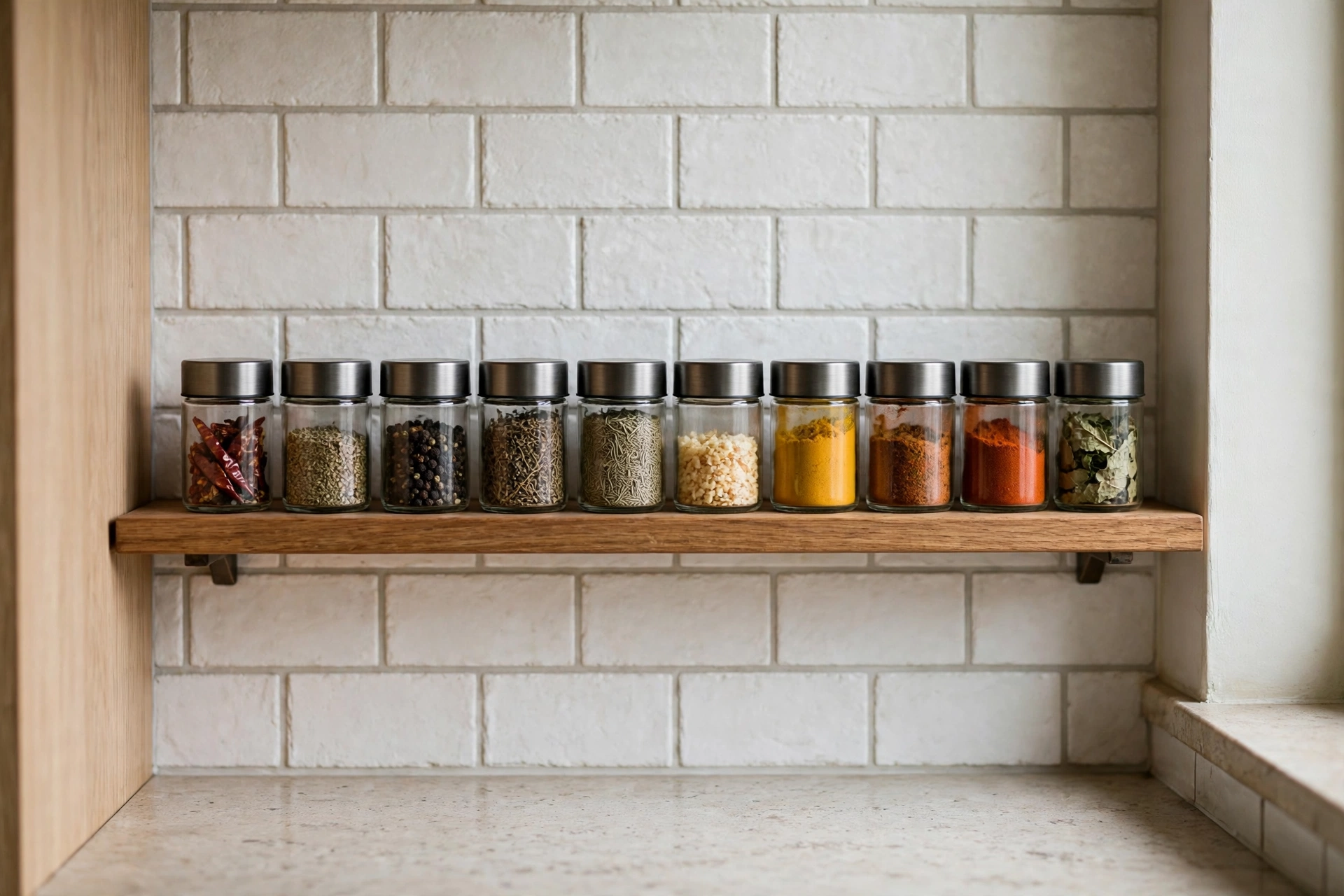
Spices are made for open shelving, with one condition: matching jars. A narrow shelf with a row of small, identical jars, labels facing forward, is both useful and good-looking, and it ends the daily hunt through a dark cupboard. Keep the shelf away from the stove, because heat and steam fade spices faster, and keep it out of direct sunlight for the same reason. Buy small jars and refill them often rather than displaying a year’s supply. Spices lose flavour over time, and a shelf of faded, half-empty jars helps nobody.
17. Renter-Friendly Shelves Without Drilling
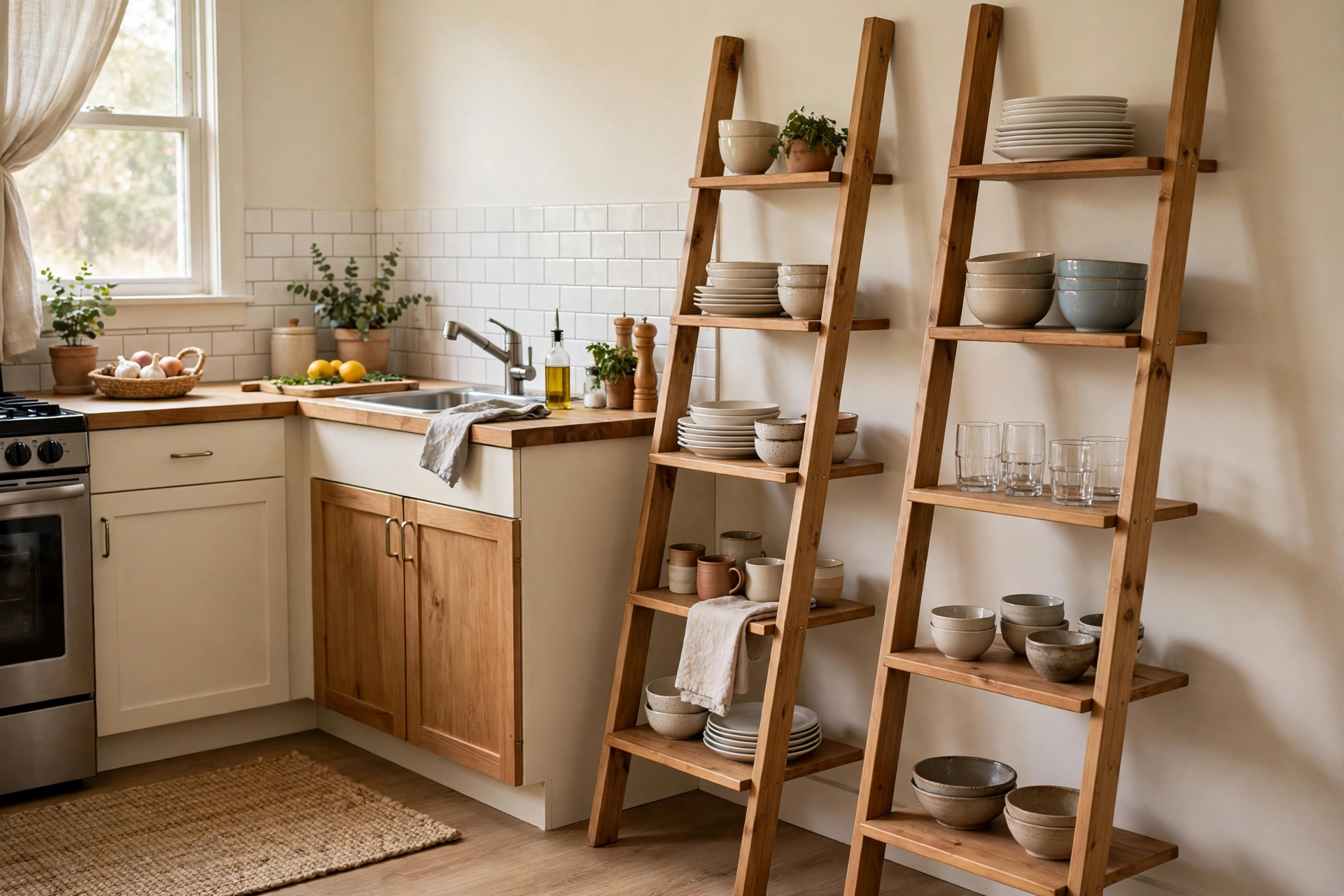
Renters can get the open-shelf look without losing a deposit. A leaning ladder shelf, a freestanding baker’s rack, or a tension-rod shelf unit gives you display space with no holes in the wall. Anchor tall units to the wall with removable straps if you have children, and check your lease before installing anything fixed. Freestanding shelves also have an advantage owners forget: you can take them with you when you move, and rearrange them without patching plaster. Keep them lighter than wall-mounted shelves, though. A leaning unit loaded with stoneware is a tipping risk, not a storage solution.
18. Know When to Skip Them Entirely
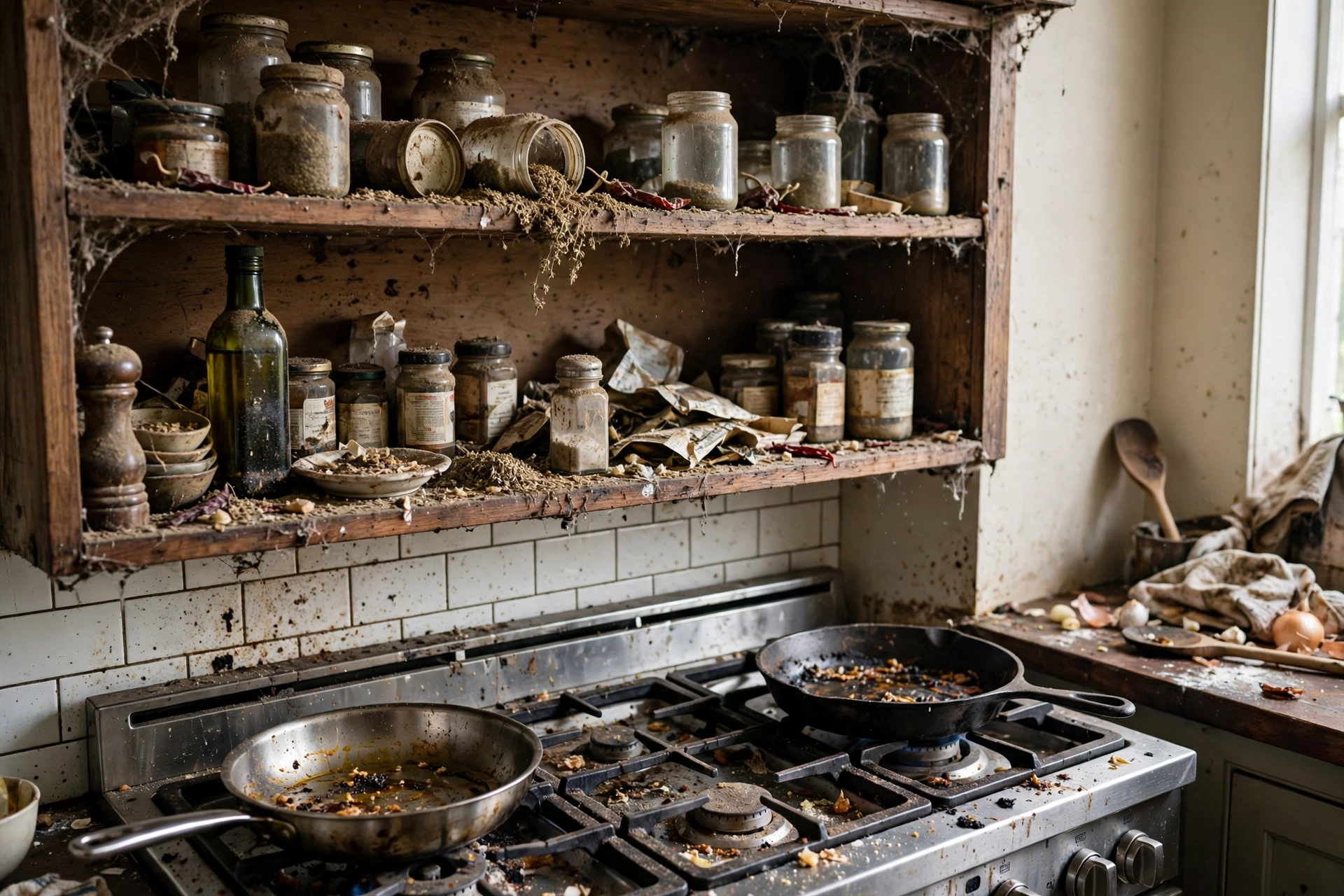
Here is the honest part. Open shelving is not for every kitchen, and pretending otherwise helps nobody. Skip it, or keep it to a single shelf, if you fry food often: airborne grease settles on everything near the stove and turns dust into a sticky film that needs wiping, not just dusting. Skip it if your kitchen is dusty, near a busy road, or in a dry climate, because open dishes collect that dust daily. Skip it if you hate tidying, because an open shelf shows every shortcut, while a closed cabinet forgives them. And skip it for anything you use rarely: a platter that sits for months will need washing before every use. A balanced take on these trade-offs is covered in this open shelving versus closed cabinets comparison, which matches what I have seen in real kitchens: daily-use items thrive on shelves, everything else is happier behind a door.
When to Skip Open Shelving: The Honest Checklist
Before you remove a single cabinet door, run through this list. If you tick more than two, keep your cabinets and add one display shelf instead of a whole wall. One: you cook with oil, frying, or roasting most nights, and your range hood is modest. Grease travels further than you think. Two: your kitchen sits near a road, a building site, or open windows that stay open all day. Dust is a daily fact, not a weekly chore. Three: the shelves would sit within arm’s reach of the stove, where steam and splashes land first. Four: you have more dishes than daily use justifies, and editing down feels like a chore rather than a relief. Five: anyone in the house has dust allergies, because open dishes mean more surface to clean. Six: you need maximum storage, not display, because a small kitchen with no pantry cannot afford to lose cabinet space to looks. None of these make open shelving wrong. They make it a bad fit for that particular kitchen, and knowing the difference saves you a renovation you regret. Glass-front cabinets are a good middle ground here: they show off pretty dishes while keeping dust and grease out, and our Christmas kitchen decor ideas show how to decorate a working kitchen without losing counter space, which is the same principle.
Frequently Asked Questions
Do open shelves make a kitchen look bigger?
They can, because removing bulky upper cabinets opens up sightlines and makes walls feel taller. The effect reverses if the shelves are cluttered, so keep them edited and leave breathing room between pieces.
How often do open kitchen shelves need cleaning?
Plan on a quick wipe once a week, more often near the stove. Dishes you use daily stay clean through use; decorative pieces gather dust fastest, so keep those to a minimum.
What should not go on open kitchen shelves?
Anything rarely used, heavy, fragile, or grease-sensitive: specialty bakeware, holiday platters, small appliances, and anything stored near the stove. Those belong behind closed doors.
Are open shelves practical for families with children?
Yes, if the shelves hold daily, unbreakable items at safe heights. Keep breakables and sharp objects in closed storage, and put the kids’ shelf low enough that nobody climbs for it.
Can I mix open shelves with regular cabinets?
Absolutely, and it is usually the best setup. Open shelves for daily dishes and display, closed cabinets for pots, appliances, and clutter. Try one run of shelving first and live with it before removing more cabinets.