


12 Pantry Organization Ideas That Actually Stick
Good pantry organization is not the pantry you see in a photo on a Sunday afternoon. It is the pantry you still like on a Wednesday night, when you are tired, the rice bag has a tear in it, and somebody put the crackers back in the wrong place. I have rebuilt my pantry three times. The first two looked great for a week and then slid back into chaos, because I organized for the camera instead of for the way my household actually cooks. The twelve ideas below are the ones that survived real life: kids grabbing snacks, a partner who cooks differently from me, and a weekly shop that never quite matches the plan.
One rule runs through all of them. Organize for the cook, not the container. A system only sticks when putting something back is easier than dropping it anywhere else. If a bin needs two hands and a lid, it will not get used at 7 p.m. Keep that test in mind as you read, and pick the three ideas that fix your worst daily friction first. The rest can wait until next month.
Why Most Pantry Organization Fails by March
Most pantry resets fail for the same boring reason: they start with shopping. A cart full of matching bins feels like progress, but bins do not fix a pantry that holds food nobody eats, in quantities nobody measured for. The reset that lasts starts with an honest clear-out. Pull everything out, bin what is stale or past its best, and put the duplicates in one pile. I found four half-used bags of the same pasta sauce base last time I did this, plus two bottles of soy sauce hiding behind the tinned tomatoes. That pile tells you what to stop buying before a single bin enters the house.
Then, and only then, measure. Shelf height, shelf depth, and the width between shelf supports all decide which containers actually fit. A bin that is a centimetre too tall for the shelf is a bin that lives on the counter. Our guide to home organization resolutions that stick makes the same point for the whole house: small, repeatable habits beat one dramatic weekend. The pantry is where that lesson pays off fastest, because you open it three times a day.
1. Zone by How You Cook, Not by Food Type
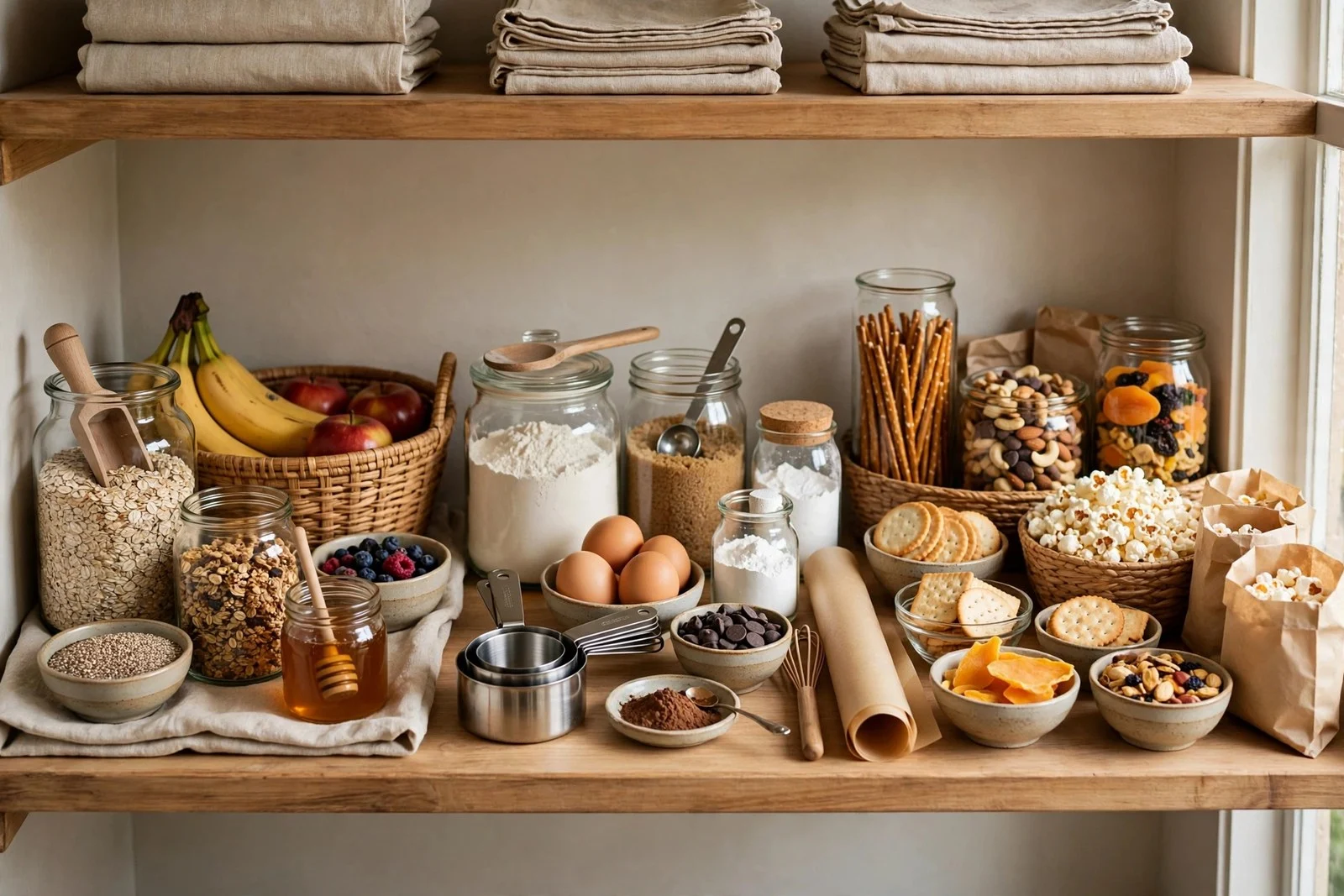
Sorting by food type sounds logical until you cook dinner. Flour lives with baking, but you reach for it on pasta night too. Zones built around meals work better: a breakfast zone with oats, cereal, honey and coffee; a weeknight zone with pasta, tinned tomatoes, stock cubes and the oil; a baking zone with flour, sugar and cocoa. Each zone holds everything one kind of cooking needs, so you grab from one shelf instead of four.
Keep the zones loose. A zone is a stretch of shelf, not a sealed box, and items can move when your cooking changes. I cook far more curries in winter, so the spice zone grows in November and shrinks again in May.
2. Use Clear Bins for the Stuff You Buy in Bulk
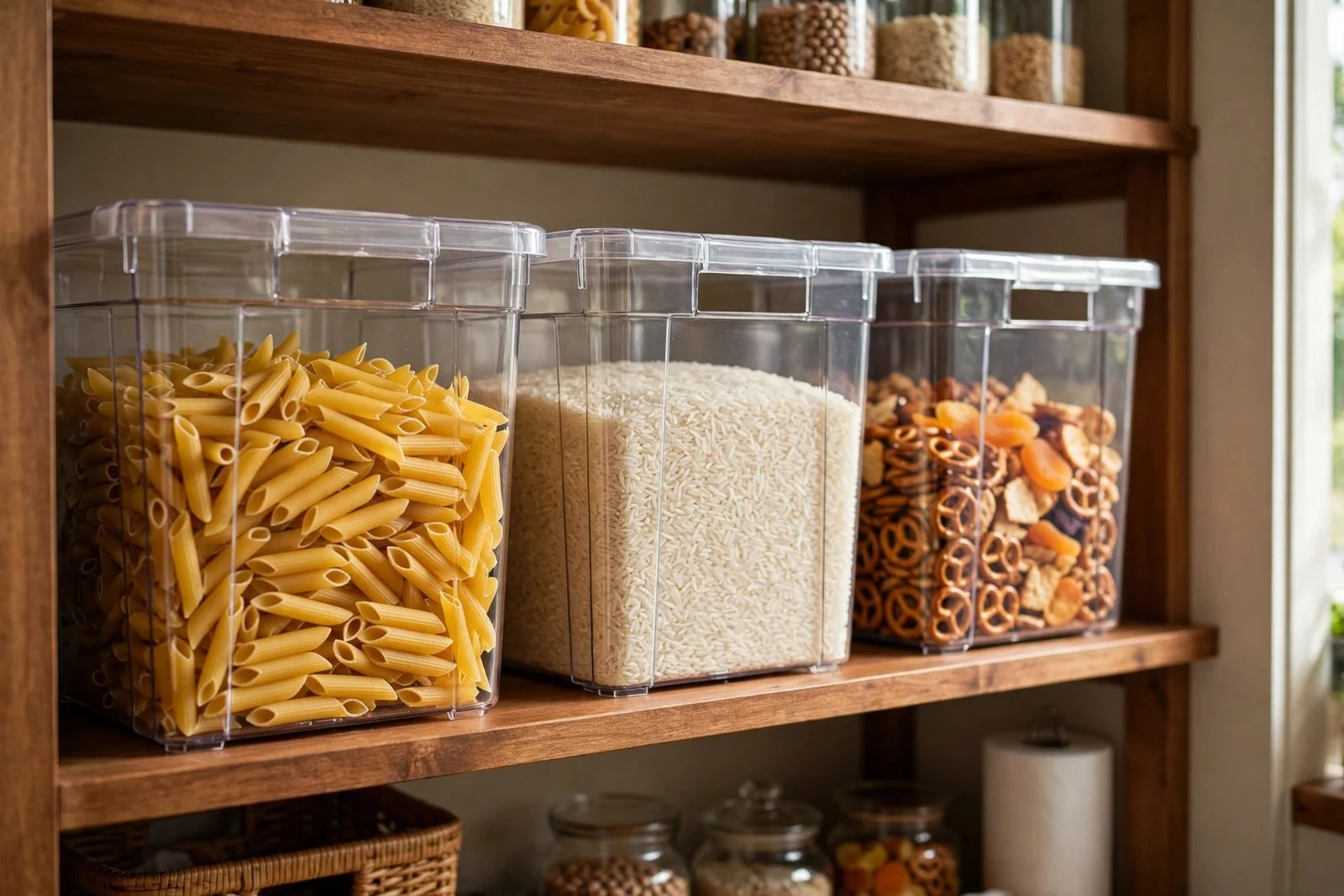
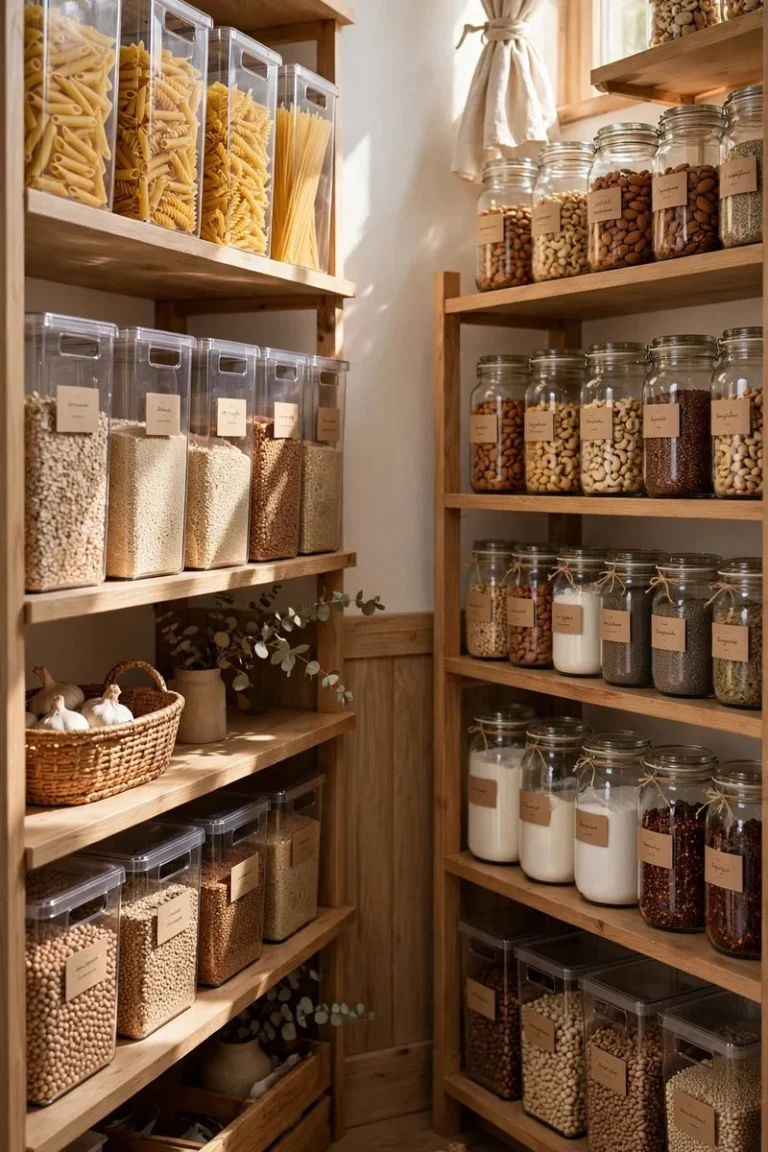
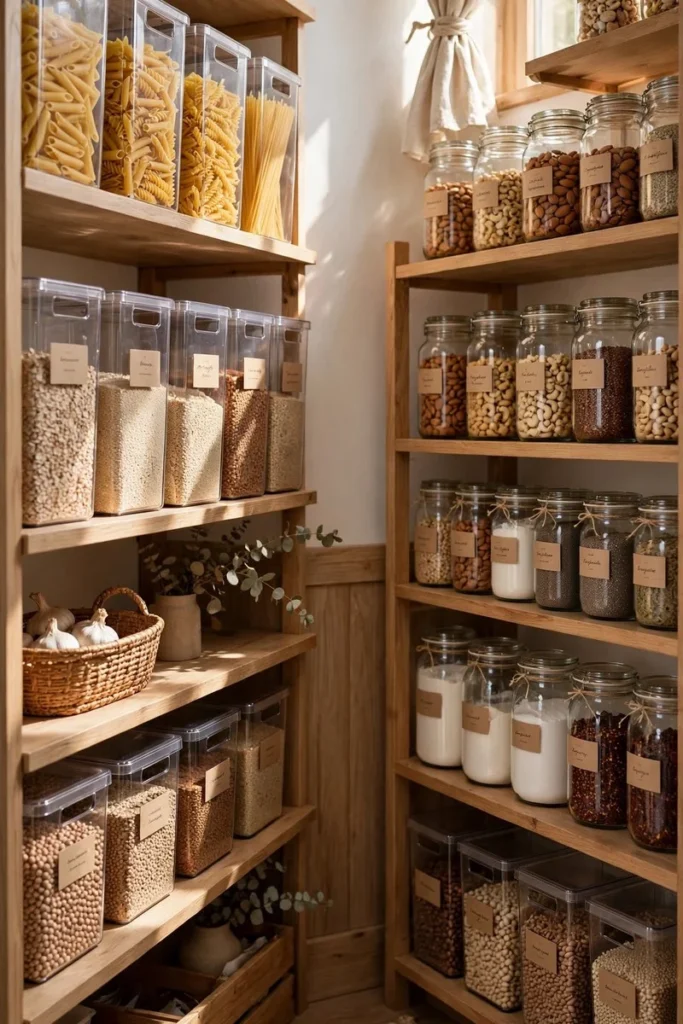
Clear bins earn their place for exactly one job: bulky, awkward packaging. Cereal boxes, crinkly rice bags and multipacks of snacks all collapse, spill and hide each other. A clear bin corrals them, and because you can see inside, you know when you are running low without opening anything. Opaque bins look tidier in photos, but in a working pantry they turn into mystery boxes that get opened and forgotten.
Do not decant everything into bins, though. Keep the original packaging for anything with cooking instructions you still need, and only bin the items you buy often enough to know by sight. One bin per category is plenty.
3. Label for the Next Person, Not for Yourself
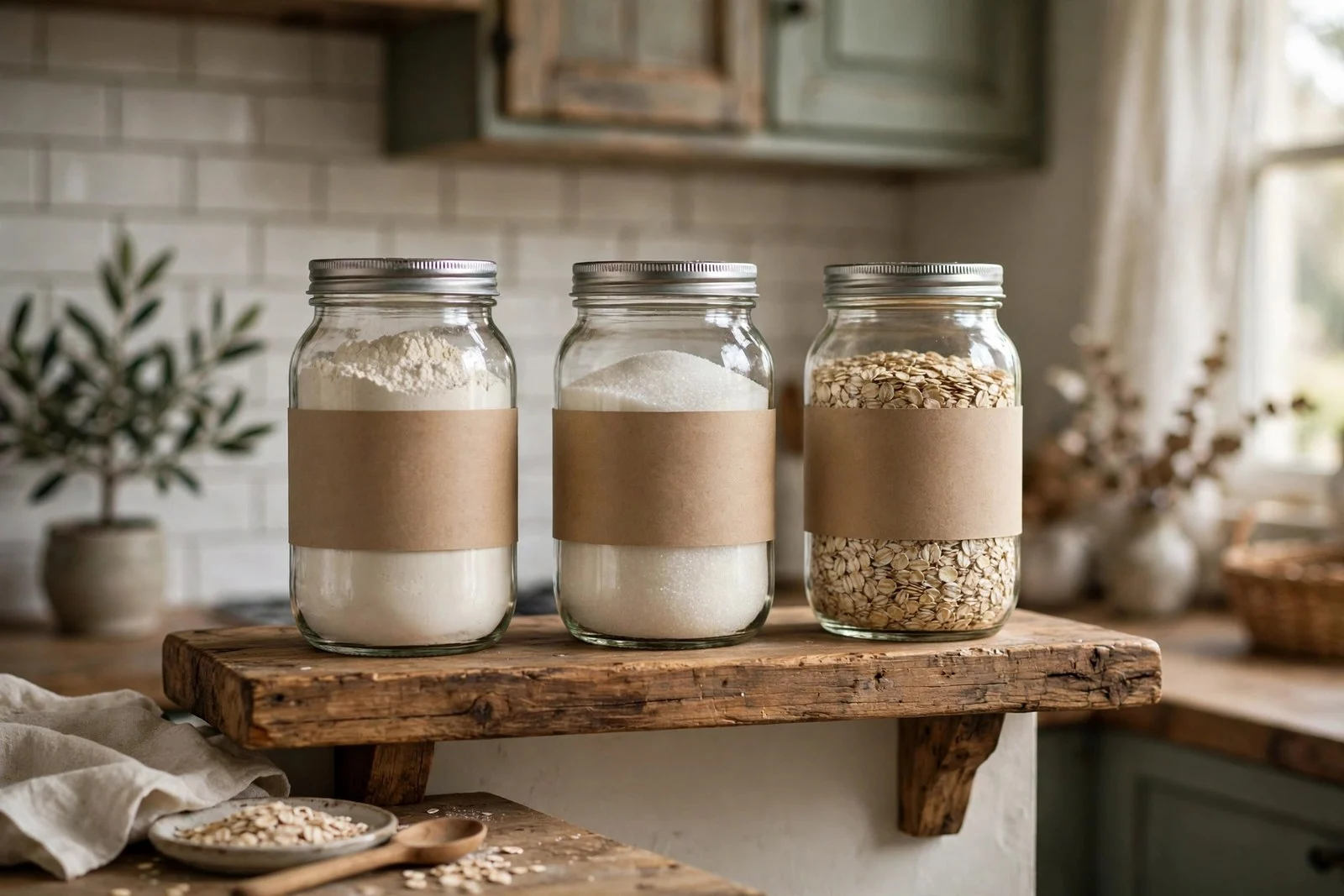
You know what is in every jar in your pantry. The rest of the household does not, and that is where systems fall apart. Label for the person who cooks least, in plain words: “plain flour”, not “flour blend”, and “basmati” rather than just “rice” when you keep two kinds. A label maker is nice, but masking tape and a marker do the same job and survive a wash.
Label the shelf as well as the container when you can. A small label on the shelf edge keeps the zone intact even when a jar is in the dishwasher. And date anything you decant. A strip of tape with the month on it stops the quiet problem of flour that has sat there since last spring. For more on the same logic in other rooms, our bedroom organization ideas use labelled baskets the same way, so anyone can put things back correctly.
4. Put a Turntable on Deep Shelves
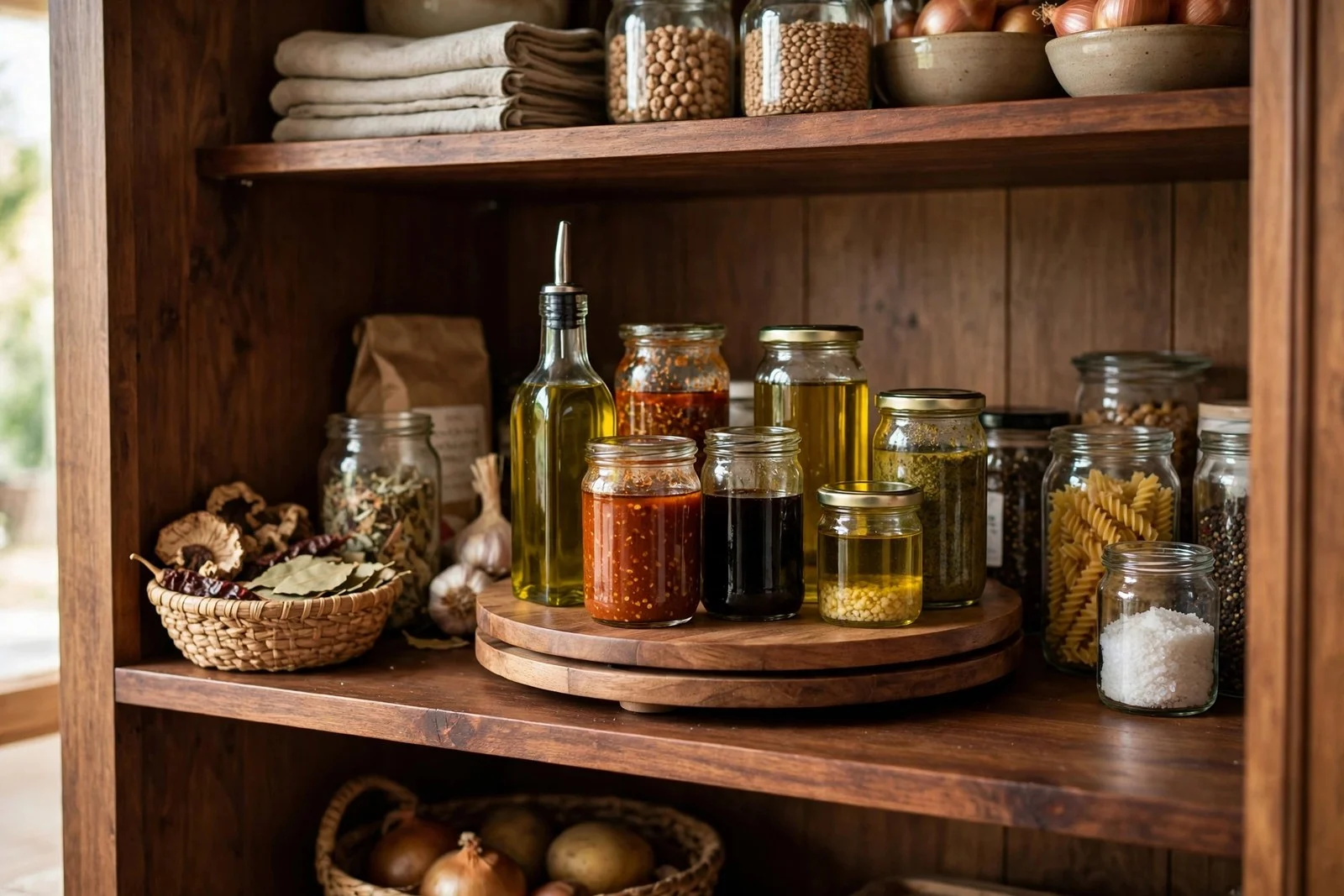
Deep shelves are where sauces go to be forgotten. You push a jar to the back in January and rediscover it, sticky and expired, in September. A turntable fixes the geometry: one spin brings the back row forward, and nothing hides behind anything else. It works best for the tall, narrow things that fall over in rows, like oils, vinegars and hot sauces.
Measure the shelf depth before you buy, and leave a finger’s width of clearance so the turntable spins without scraping the shelf above. Keep the everyday sauces on the turntable and the rarely used ones on a higher shelf, where reaching for them feels like a choice rather than an accident.
5. Add Tiered Risers So Cans Stop Hiding
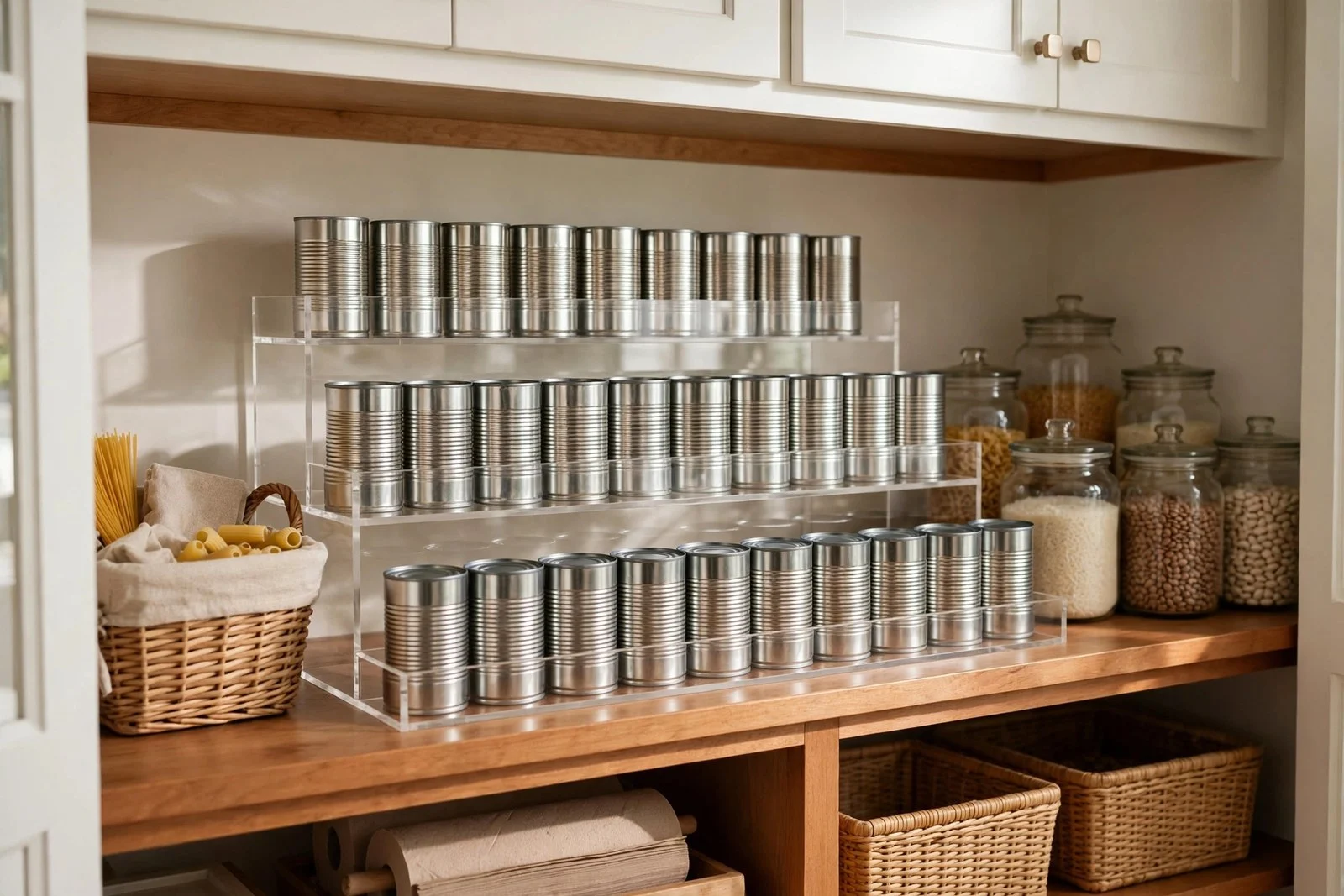
Cans are the worst pantry citizens. They are heavy, they all look alike from the front, and a single row hides two more rows behind it. A tiered riser lifts the back rows so every label shows, like steps in a small stadium. You stop buying a third tin of chickpeas because you can finally see the two you already own.
Keep one riser per shelf, and group by use rather than by brand. Soups together, beans together, tomatoes together. If a riser starts collecting random tins, that is a sign the category is too vague. Split it or move the strays to their real zone. The riser also makes a good early-warning system: when the front row empties, the shopping list writes itself.
6. Hang a Rack on the Door for Spices
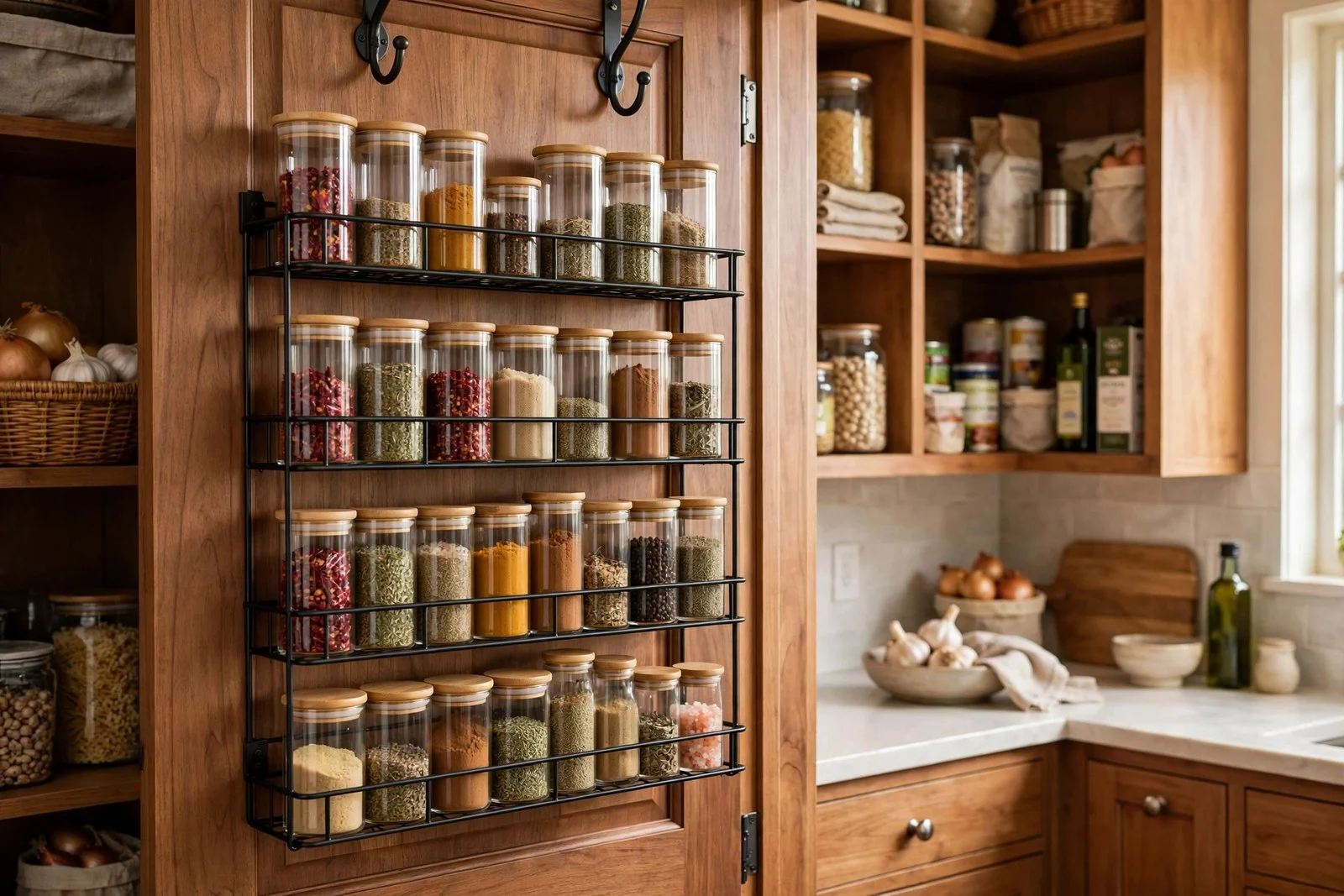
The inside of the pantry door is free storage that most kitchens ignore. A slim rack there holds spices at eye level, where you can read every label without crouching. It also frees a whole shelf for bigger things. Spices are ideal door cargo because they are light, used often, and small enough that the door still closes properly.
Check the door clearance first. A rack that is too deep stops the door closing, and a door that does not close gets the rack removed within a week. Keep the rack to one or two tiers of small jars, and put the heavy spice grinders and large containers on a shelf instead. If you rent, an over-door rack needs no screws, which is one more reason it survives longer than most pantry gadgets.
7. Give Snacks Their Own Baskets, One Per Person Type
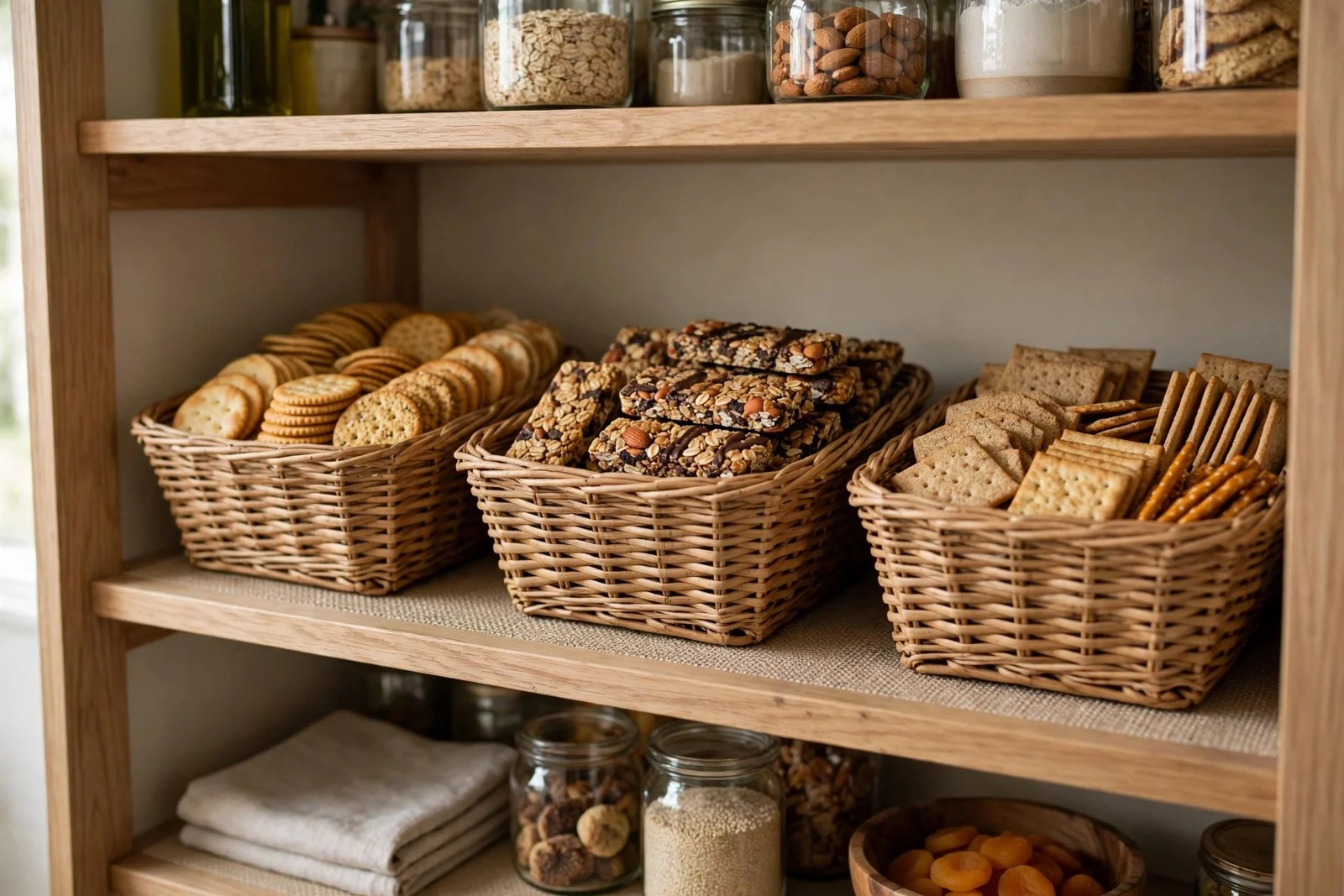
Snacks are what wreck a pantry fastest, because everyone grabs them in a hurry and nobody puts them back neatly. Separate baskets fix the traffic: one for kids’ snacks, one for adults, one for the “anyone can eat this” stock like crackers and rice cakes. When a basket empties, it is obvious, and refilling it takes thirty seconds from the shopping bags.
Keep the baskets low enough for the people who use them. A kids’ snack basket on the top shelf is a basket that gets climbed for, which ends with a tipped shelf and a mess. Put the kids’ basket at their eye level and the baking chocolate well out of reach, and the pantry mostly polices itself. I learned this after finding our good chocolate in a school lunchbox three days running.
8. Decant Only What You Actually Use Every Week
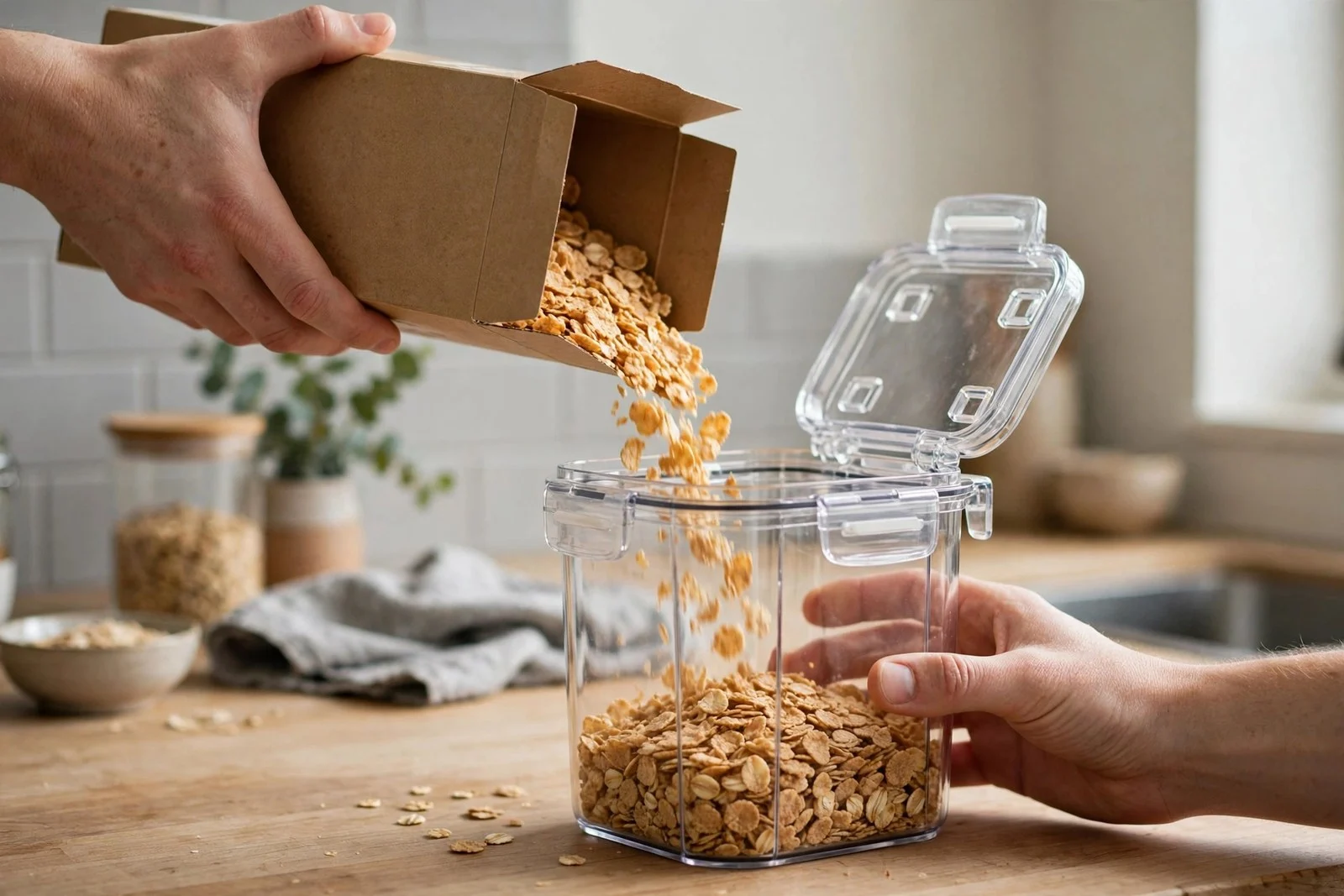
Decanting looks satisfying, but it is work, and work that does not pay off for food you touch once a month gets abandoned. Decant only the five or six staples you reach for weekly: the oats, the rice, the flour, the sugar, the coffee. Those containers earn their keep because they get refilled on a rhythm, and airtight lids keep them fresh.
Leave everything else in its original packaging. It carries the cooking times, the allergy information and the expiry date, all of which you lose the moment you tip it into a pretty jar. A good test: if you cannot name the last time you cooked with it, do not decant it. Buy less of it instead, or move it to a “use first” spot where it gets noticed.
9. Rotate Stock Like a Small Shop Would
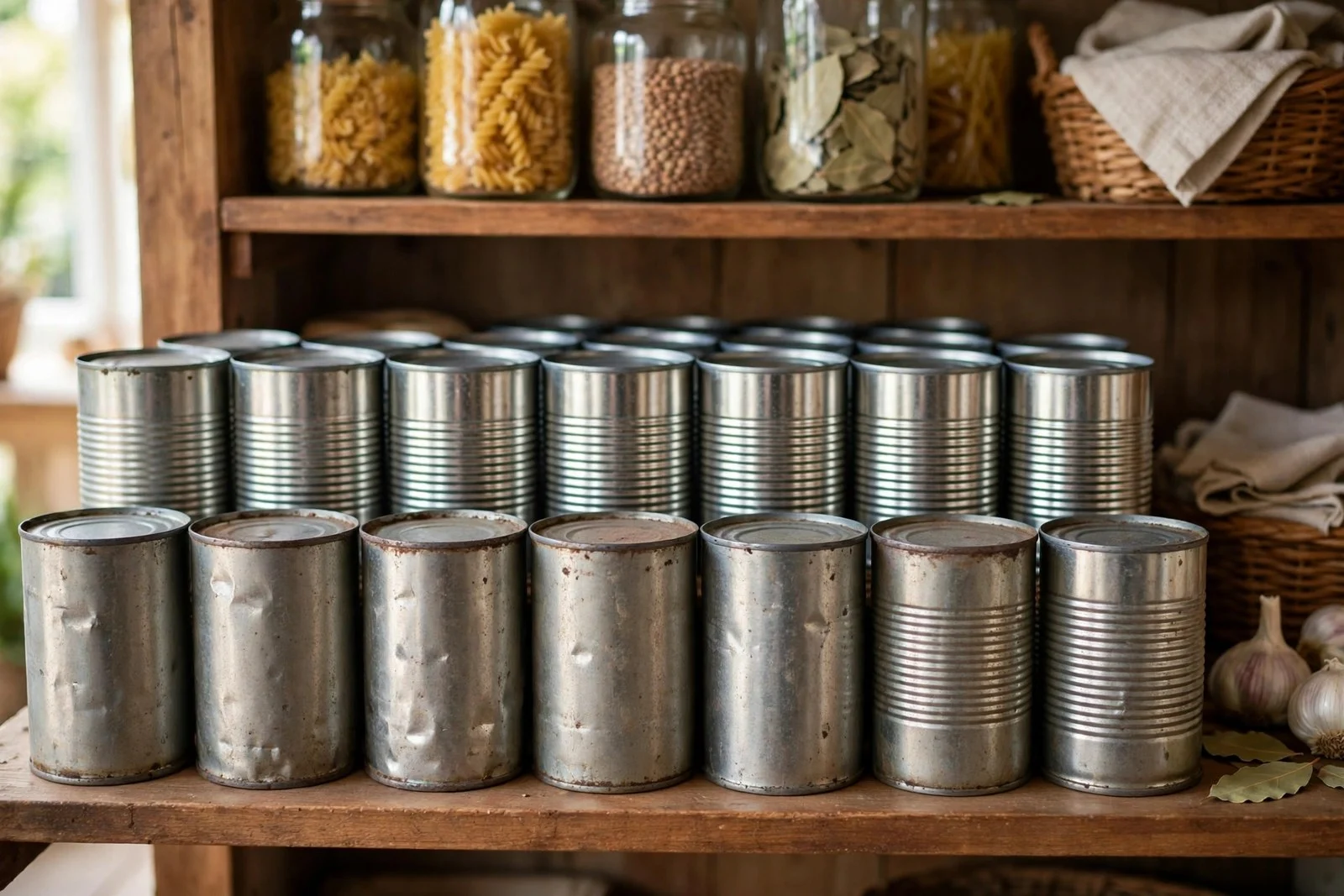
Shops put new stock behind old stock for a reason, and a home pantry benefits from the same habit. When the shopping comes in, new tins and packets go behind what is already there. The front row is always the oldest, so it gets used first and nothing quietly expires at the back. It takes about ten extra seconds per bag of shopping.
This pairs well with the tiered risers from idea five, because you can see at a glance what is front and what is back. Once a month, do a quick scan of the front rows for anything close to its date. That scan is also when I catch the duplicates: two jars of the same jam, one opened and one not, which is a small sign the shopping list needs a look. Guidance on how food storage and rotation work backs the same principle, since using the oldest stock first is what keeps stored food safe and fresh.
10. Keep a Small “Use First” Bin for Odds and Ends
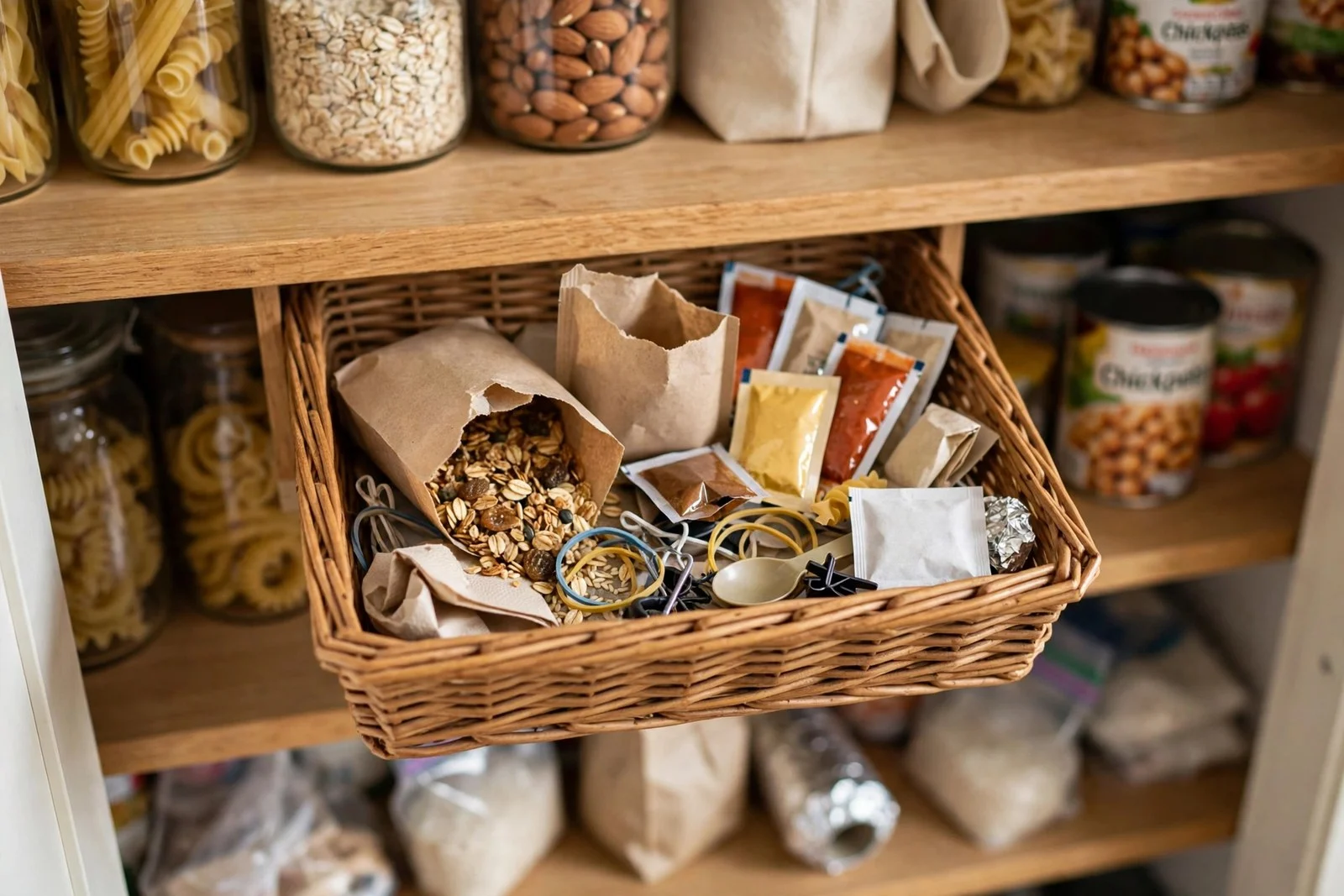
Every pantry breeds odds and ends: half a packet of noodles, three sauce sachets, the last of a spice blend, a single stock cube. None of them deserves a zone of its own, but together they clog shelves for months. One small open bin, kept at eye level and labelled “use first”, gives them a home with a deadline.
The rule is simple: when you cannot decide what to cook, you cook from the bin first. A stir-fry from the half packets, a soup from the stray tins. Empty the bin once a month by cooking from it deliberately, and it never overflows. If it does overflow, that is useful information too. It means the household is buying variety it does not finish, and the shopping list should shrink.
11. Book a Ten-Minute Weekly Reset
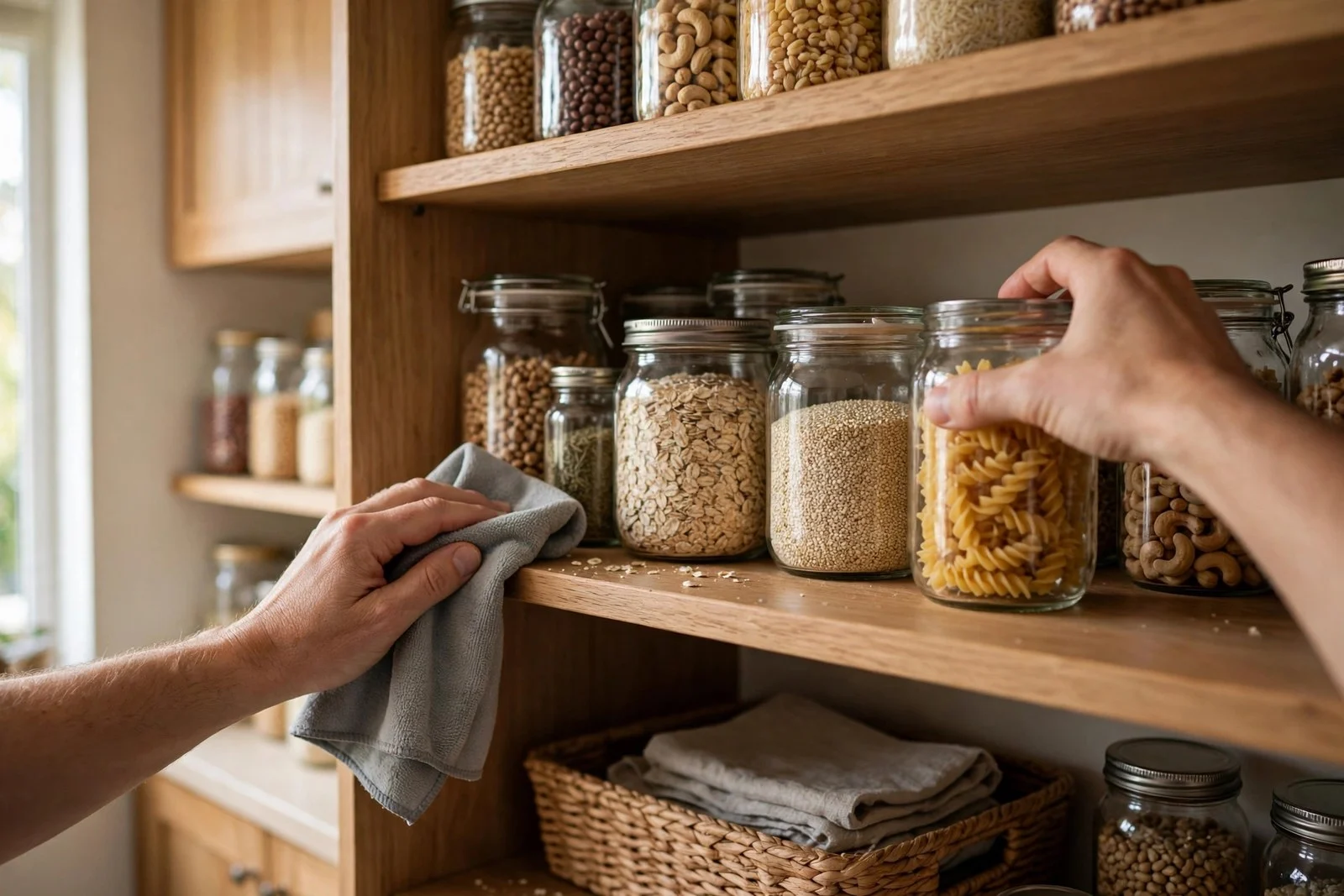
No pantry system maintains itself, and the difference between a pantry that stays organized and one that slides is a tiny weekly habit. Ten minutes, once a week, same day: wipe one shelf, return strays to their zones, toss anything stale, and note what is running low. I do ours on Sunday evening while the kettle boils, and it has held for over a year now, which is longer than either of my two grand resets lasted.
Keep the reset small on purpose. A ten-minute job gets done; a forty-minute deep clean gets postponed until it becomes a weekend project that never happens. If a zone keeps falling apart every week, that zone is wrong, not you. Change the zone, move it lower, split it, or give it a bigger bin. The system should bend toward the household, not the other way around. The same habit-first thinking runs through our small living room storage ideas, where hidden storage only works when the daily reset is shorter than the mess it prevents.
12. Measure Before You Buy a Single Bin
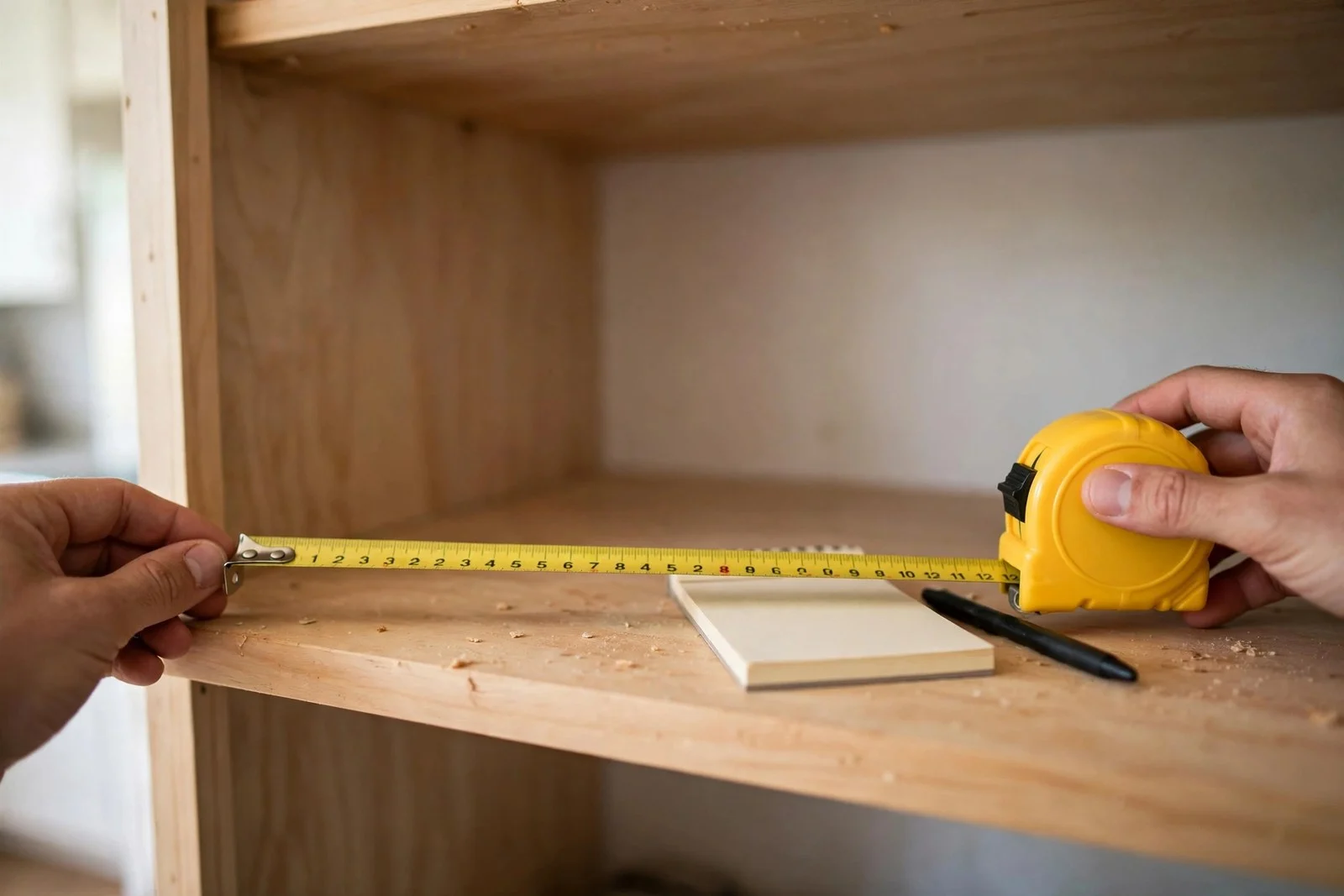
This is the least exciting idea on the list and the one that saves the most money. Measure every shelf: height, depth, and the gap between supports. Write the numbers on your phone before you go near a home store. Bins that do not fit do not get returned, in my experience. They get stacked in a cupboard, which is just a second disorganized pantry.
Measure twice for door racks and turntables, where a few millimetres decide whether the door closes or the turntable spins. And measure what you actually store, too: the tallest bottle, the widest cereal box. A system built around real measurements fits the first time, and a system that fits the first time is a system you keep. That is the whole secret. Pantries do not stay organized because someone tried harder. They stay organized because the containers fit, the labels make sense to everyone, and putting things back is the easiest option in the room.
Frequently Asked Questions
How do I start organizing a pantry that feels overwhelming?
Start with one shelf, not the whole pantry. Pull everything off that shelf, bin what is stale, group what is left by meal, and put it back with the front row as the oldest stock. One finished shelf gives you a visible win in twenty minutes, and it teaches you what the rest of the pantry needs.
Should I buy matching containers for my pantry?
Only for the staples you use weekly, like flour, rice and oats. Matching containers for everything looks tidy for a week and then becomes a chore, because every new packet needs decanting. Clear bins for bulky packaging and original packets for everything else is a cheaper system that lasts longer.
How often should I clean out the pantry?
Do a ten-minute reset weekly and a proper clear-out twice a year, when you check dates, toss stale items and rethink any zone that keeps falling apart. The weekly reset is what stops the twice-yearly clear-out from turning into a full-day job.
What is the best way to store spices in a small pantry?
On the inside of the door in a slim rack, or on a small turntable if your shelves are deep. Both keep labels visible at eye level. Keep spice jars small and few: most ground spices lose their punch after six months to a year, so a huge collection is usually a stale collection.
Pick three ideas from this list and start this weekend. Zone by meals, label for the next person, and book the ten-minute reset. A pantry that works on a tired Wednesday night is worth more than a pantry that photographs well once, and it is much easier to live with.