


My bathroom shelves used to look great for about four days after a tidy-up, and then slowly slide back into a jumble of half-empty bottles and things I forgot I owned. The problem was never that I lacked baskets. It was that I had no system for what belonged where, or for what happened when a new product arrived. Once I fixed the system, the shelves stayed tidy with about five minutes of effort a week.
That is what this guide is about: bathroom shelf organization that survives real life. Not a photo-ready shelf you cannot touch, but a working shelf where everything has a home, the things you reach for daily are at hand height, and the extras live somewhere they will not creep back onto the display shelf. Work through the sections in order — the early ones are the foundation, the later ones are the polish.
The System First, the Shopping Second
It is tempting to buy matching jars before you know what you own. Resist that for one afternoon. A shelf that stays organized starts with fewer, better-chosen items in the right zones, and only then with containers that fit them.
Take Everything Off and Sort It Honestly
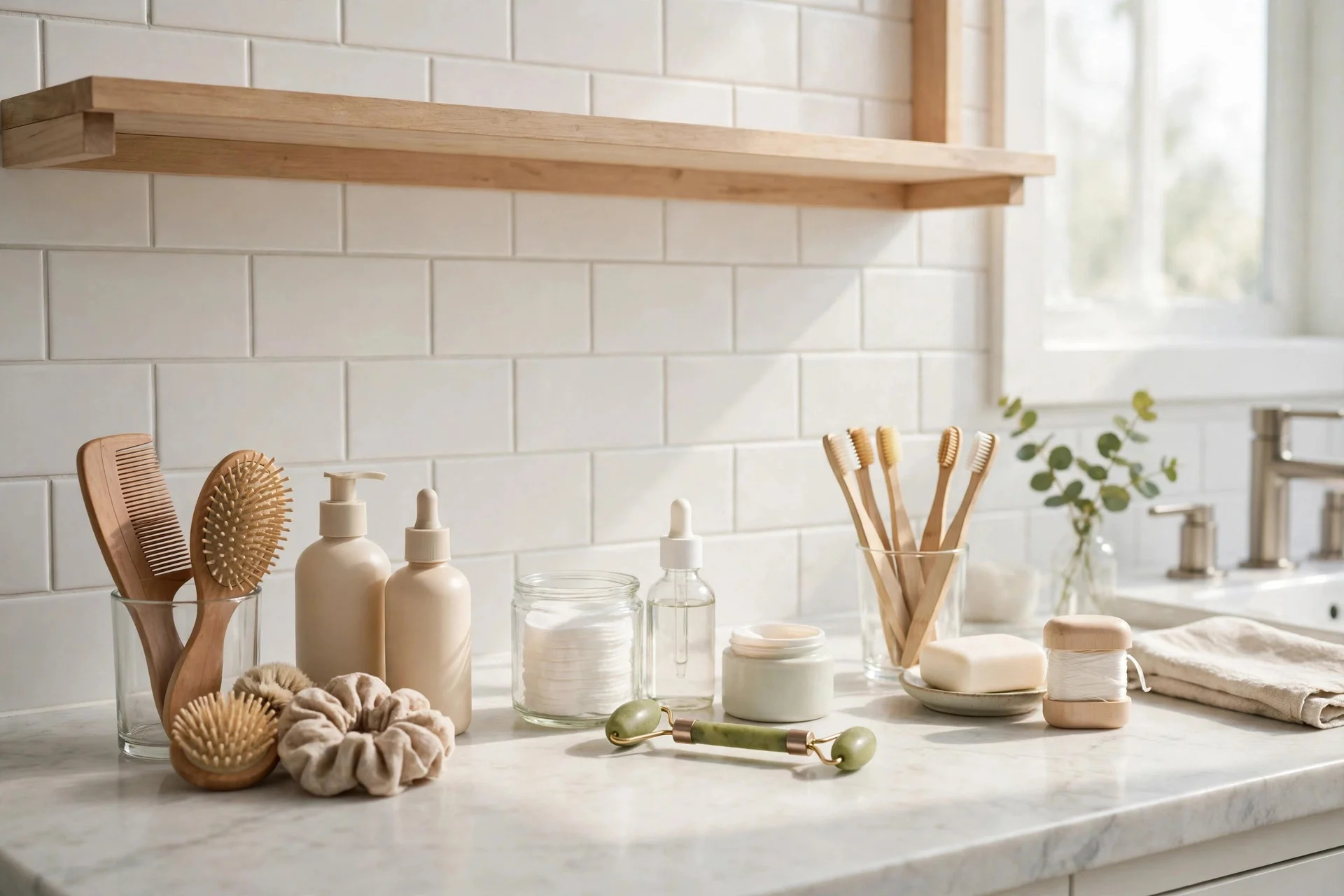
Pull every single item off the shelves and group it on the counter: daily skincare, hair care, medicines, cleaning supplies, extras and backups. You will find duplicates — two half-used conditioners, three lip balms — and things that expired two years ago. Throw out the expired and the empty, combine duplicates, and move anything that does not belong in a bathroom (that stray screwdriver, the candle from another room) back where it lives.
This step feels slow, but it is the only one that actually reduces clutter instead of rearranging it. In my case it cut the shelf contents by a third, which meant everything left had room to breathe. If you skip it, you are just buying prettier boxes for the same mess.
Give Every Shelf a Job
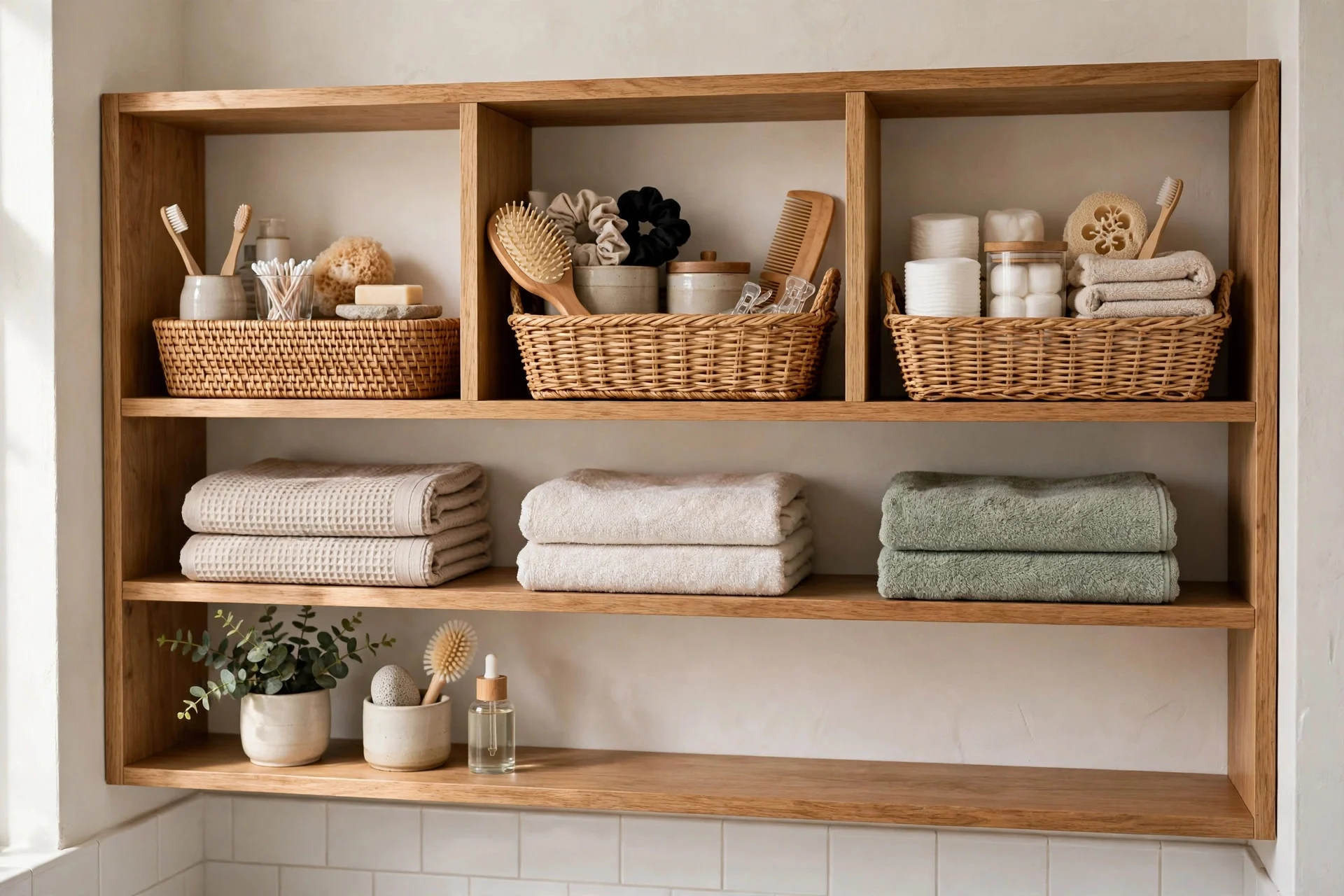
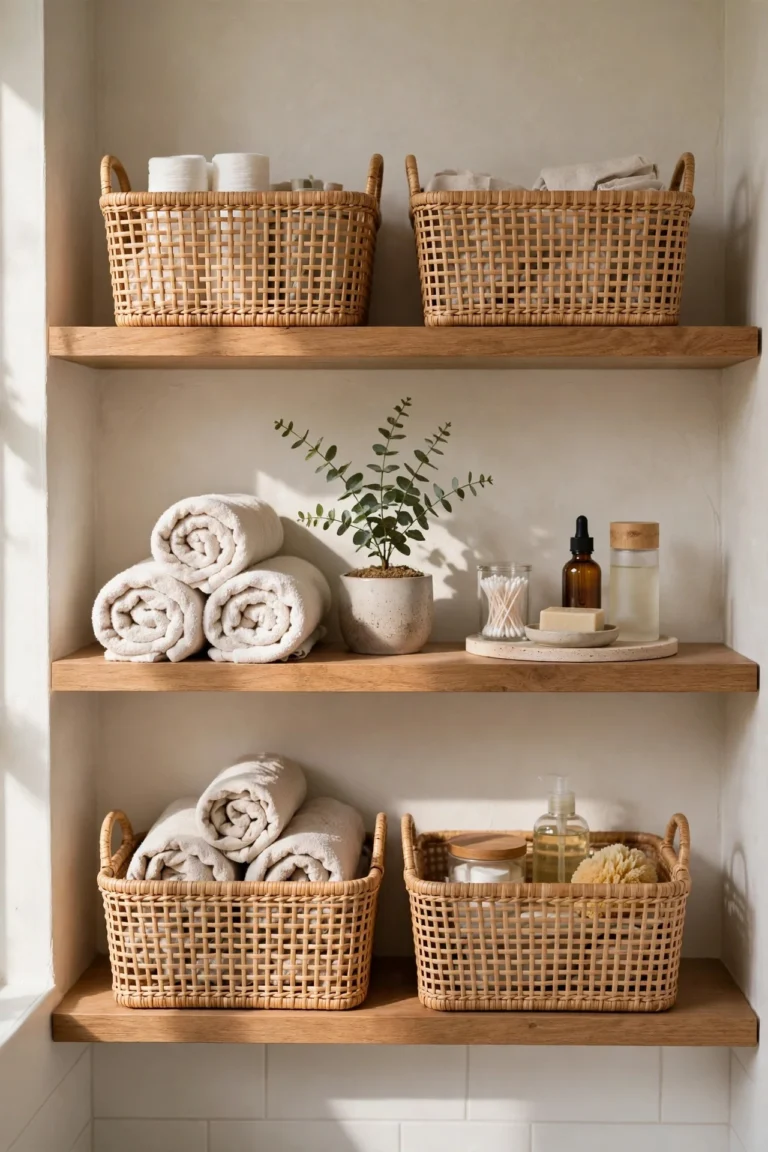
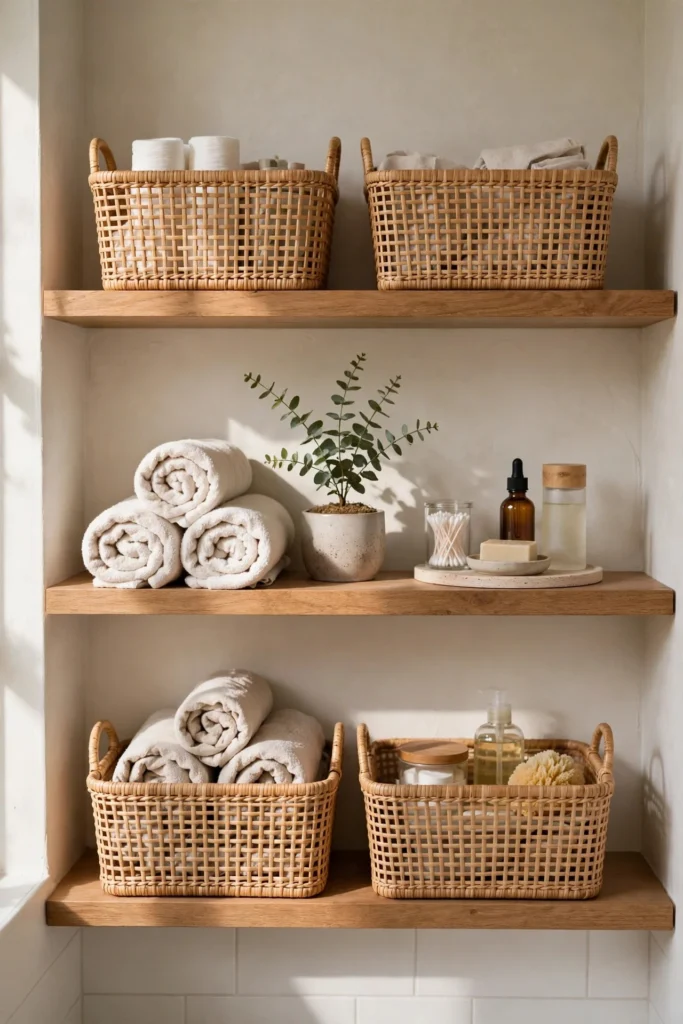
Assign each shelf a role and stick to it. Top shelf: things you use least, like backups and seasonal items. Eye-level shelf: daily essentials only. Lowest shelf: heavier items and cleaning supplies. When a shelf has a job, you notice immediately when something lands in the wrong place, and putting it back takes seconds instead of a whole reorganization.
If you share the bathroom, give each person a zone — a basket or one shelf section — rather than mixing everything together. Shared shelves fail when nobody knows whose bottle is whose, and a simple division ends most of that friction.
Keep Daily Items at Hand Height
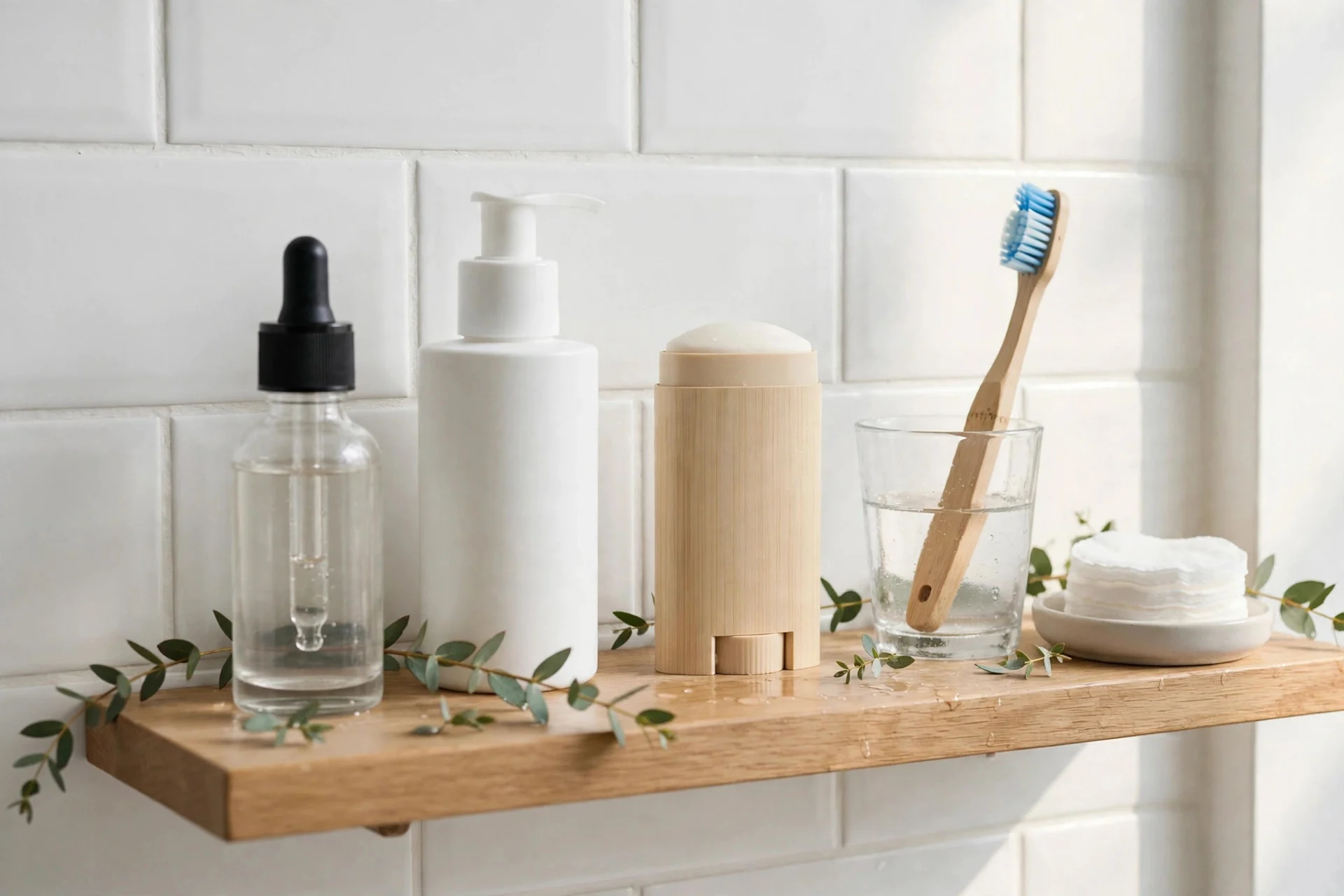
The items you use every morning and night should be reachable without stretching or crouching: cleanser, moisturizer, toothbrush, deodorant. Put them at eye to chest height, in the order you use them, left to right if that matches your routine. This one change cuts morning fumbling more than any container will.
Anything you use less than once a week — a hair mask, a special treatment — moves up or down a shelf. It is still accessible, but it is not competing for prime space with your toothpaste. That hierarchy is what keeps a shelf looking calm instead of crowded.
Decant Only What You Actually Use Up
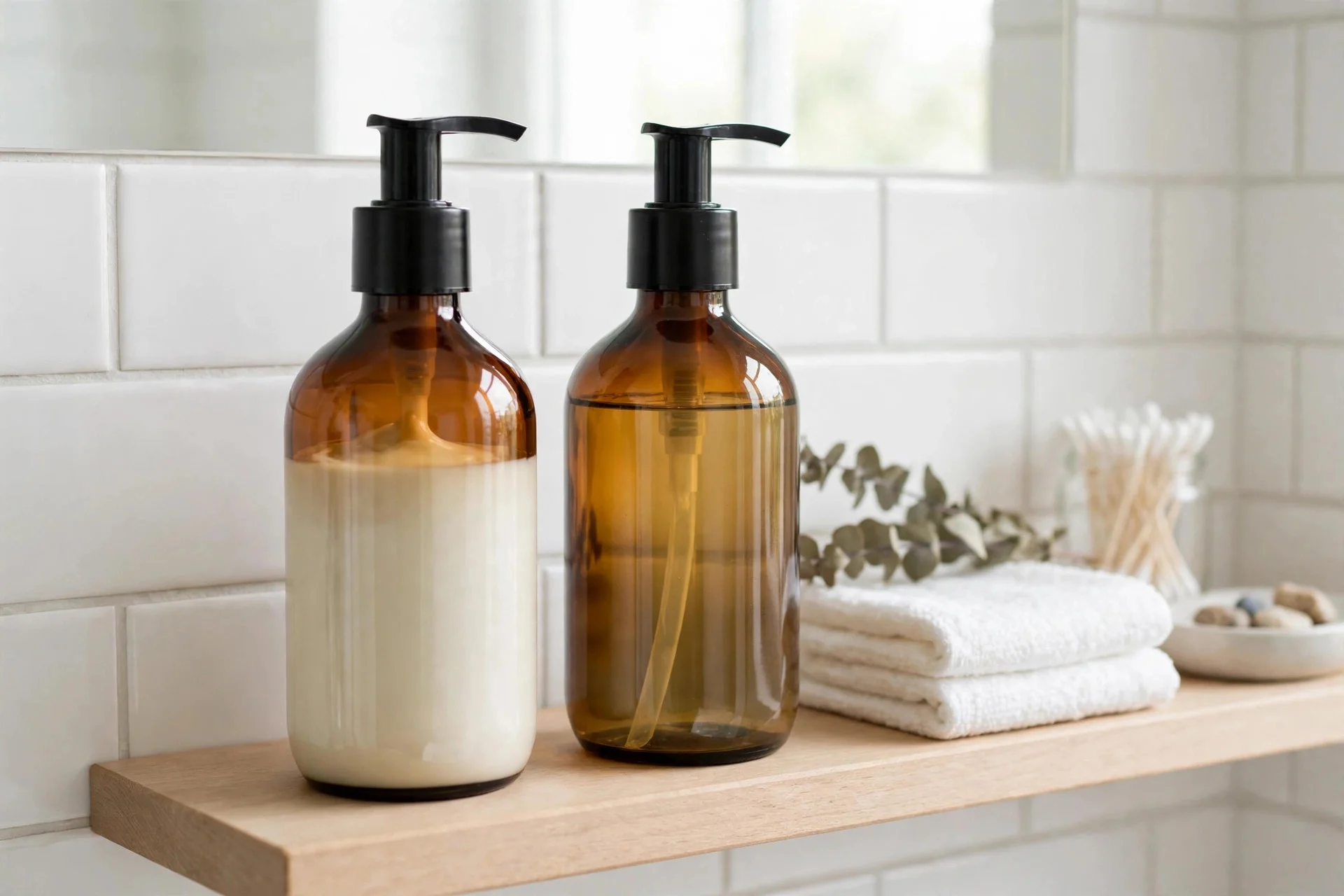
Matching bottles look wonderful on camera, but decanting everything is a trap. Only decant products you finish regularly — hand soap, shampoo, body lotion — where a refill routine is easy. For everything else, keep the original packaging so you can read instructions, expiry dates, and ingredients.
If you do decant, label the bottle on day one, not “later.” A small waterproof label with the product name and the date you filled it prevents mystery bottles and allergic surprises. And keep one spare pump or cap; a broken pump on a full bottle is a small annoyance that somehow derails a whole morning.
Use Baskets as Drawers, Not Dumping Grounds
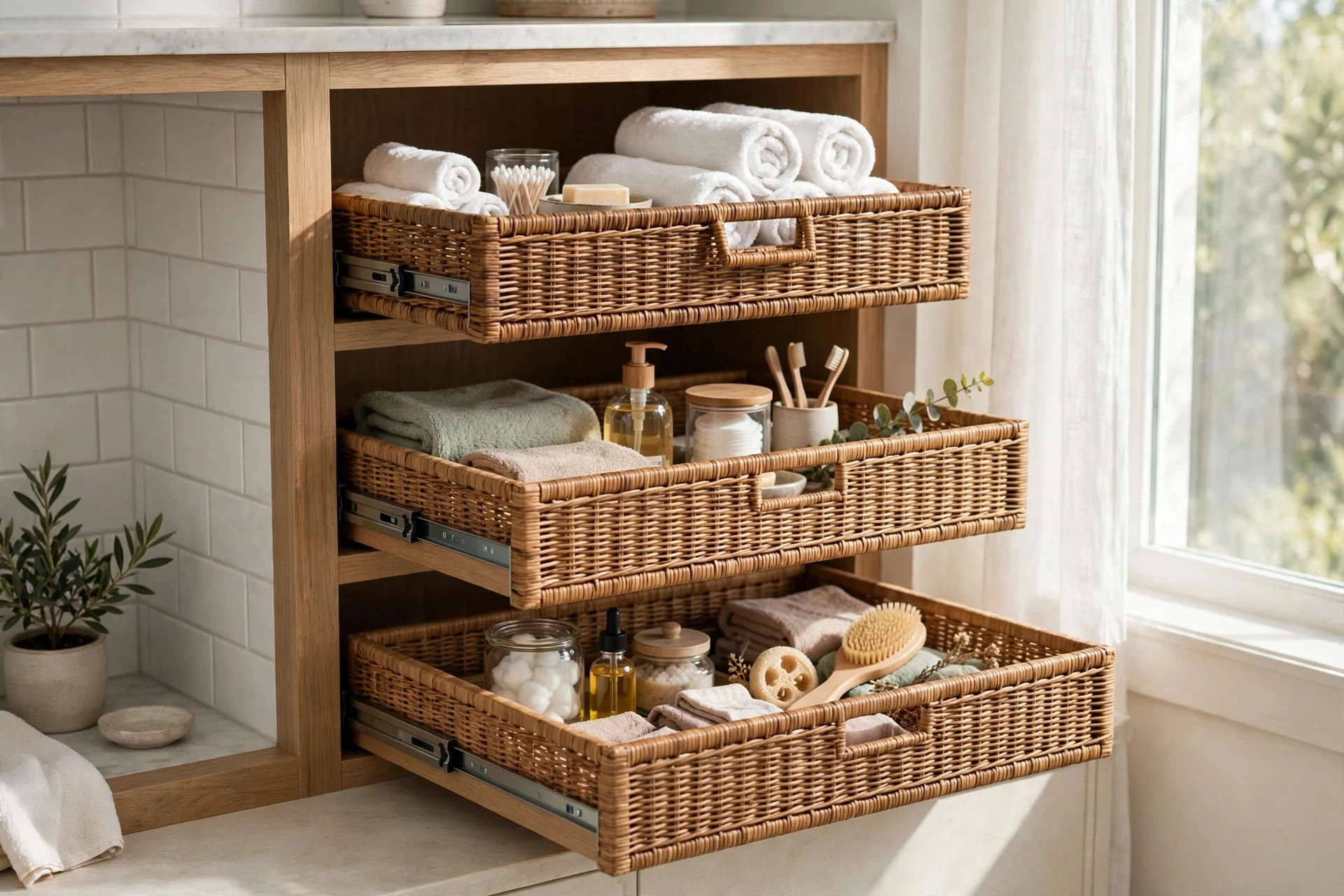
Open shelves work best when baskets act like drawers you can pull out, look inside, and slide back. One basket per category — hair tools, first aid, nail care — keeps small items from scattering across a shelf. Choose baskets that fit the shelf depth with a little room to spare, so they slide without catching.
The rule that saves baskets from becoming junk drawers: if you cannot name what belongs in a basket in one phrase, it is too vague. “Hair stuff” is vague; “styling tools and heat protectant” is a real category. Relabel when the contents drift.
Label the Spots Guests and Family Will Use
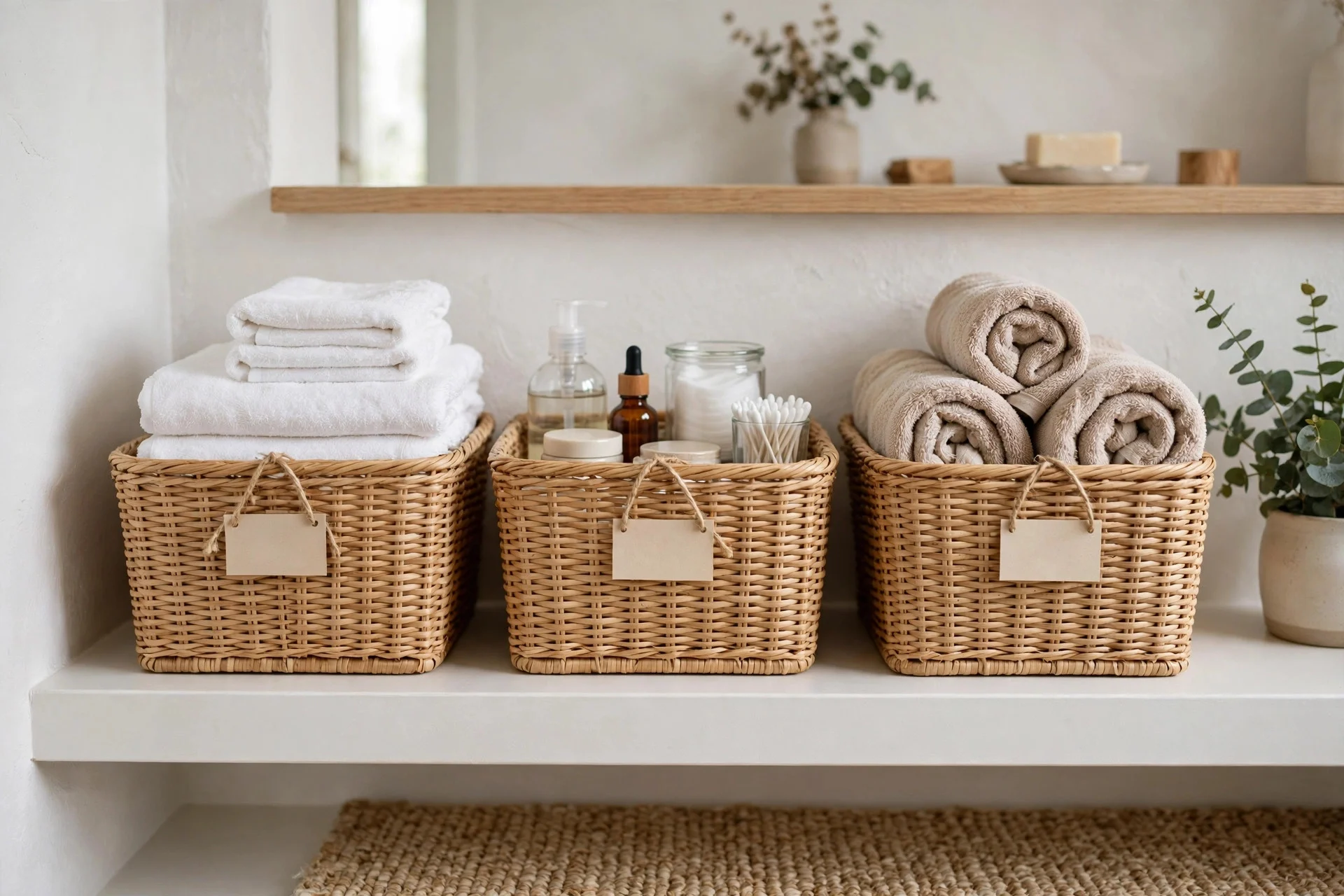
Labels feel fussy until someone else puts things away. A small tag on a basket — “spare towels,” “cleaning,” “first aid” — means a partner, a housemate, or a guest can put something back correctly without asking you. In a shared bathroom, this is the difference between a system that lasts and one that only you understand.
Keep labels short, consistent, and easy to change. Chalk tags, clip-on labels, or a label maker all work; the format matters less than the fact that the label matches what is actually inside. Update a label the week the contents change, not six months later.
Leave Breathing Room on Every Shelf
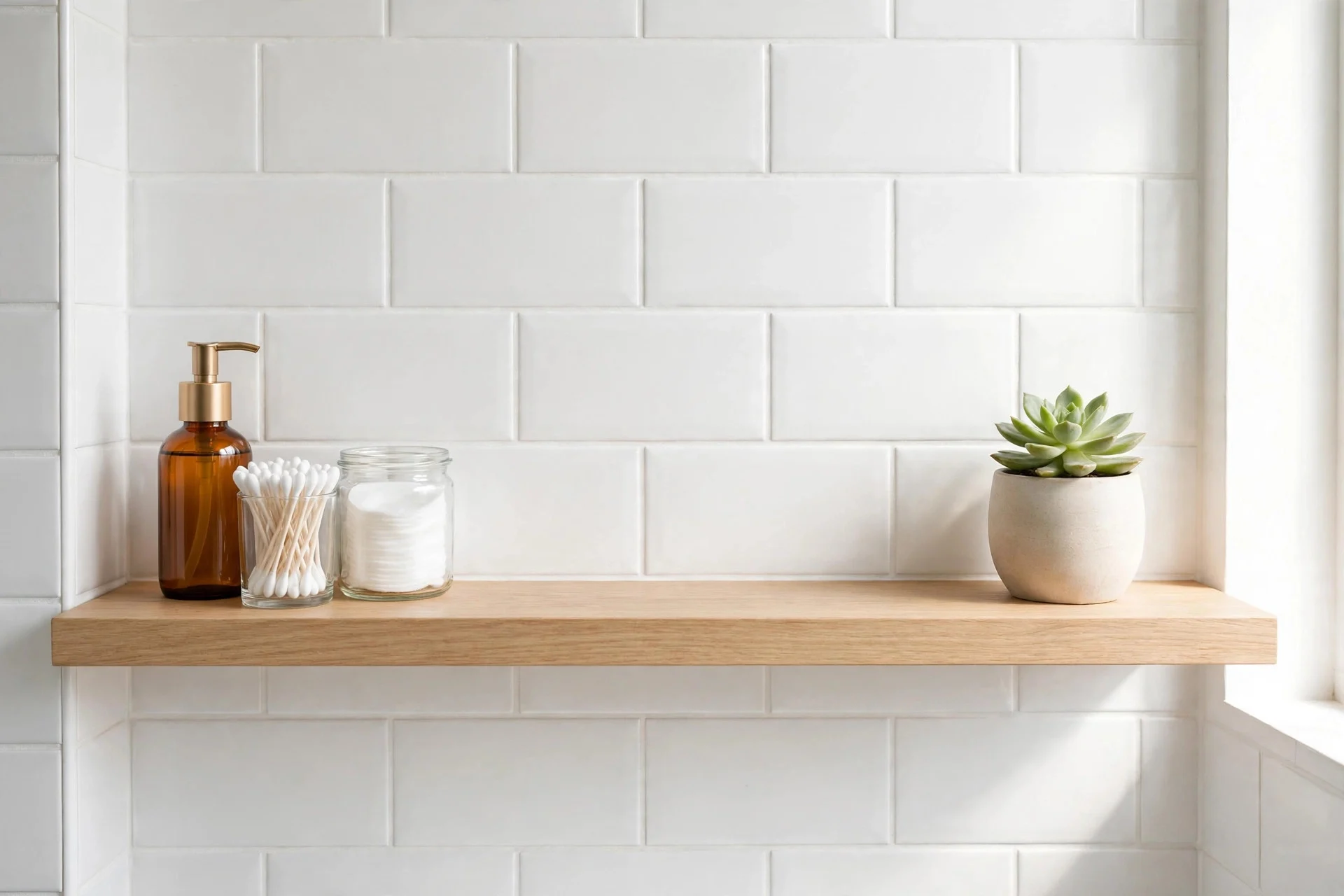
A shelf packed edge to edge looks tidy for a photo and chaotic in real life, because there is nowhere to set something down. Leave about a fifth of each shelf empty. That gap is your landing zone for a new product, a wet bottle, or the thing you are mid-routine with.
Breathing room also makes cleaning possible. You can wipe a shelf without removing twelve bottles first, which means you will actually wipe it. Aim for a quick wipe once a week and a deeper sort once a month — both are five-minute jobs when the shelf is not crammed.
Contain the Small Things Before They Scatter
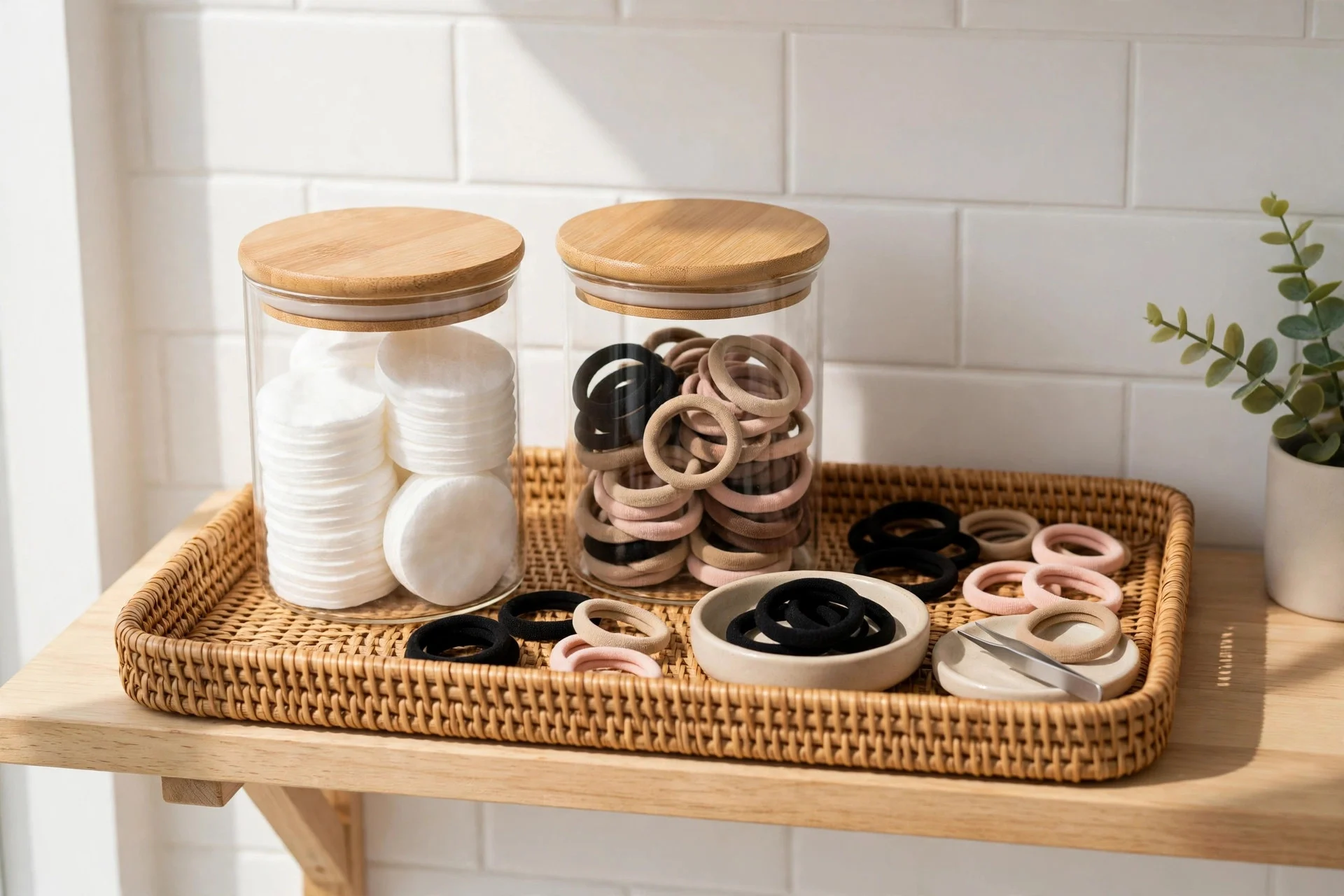
Bobby pins, cotton pads, hair ties, and safety pins are the items that turn a shelf messy fastest, because they are small and numerous. Corral them in one place: a small tray on the shelf, a lidded jar for cotton pads, a magnetic strip inside a cabinet door for bobby pins if you have one.
The trick is a single home per tiny category. Cotton pads live in the jar, full stop — not half in the jar and half in a drawer. When you finish a pack, the empty jar is your reminder to restock, instead of discovering you are out mid-routine.
Store Backups Separately From Daily Stock
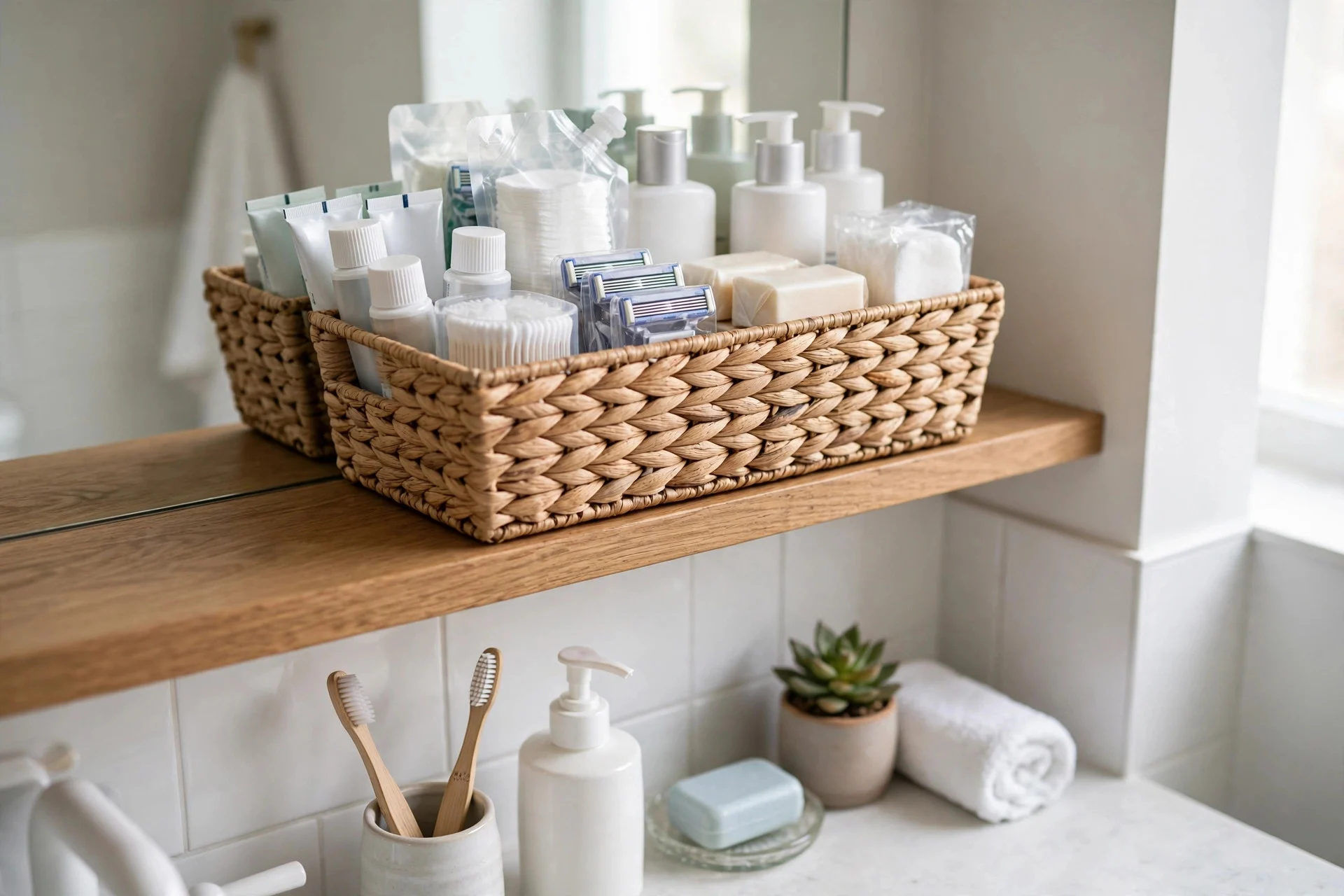
Backups are the silent shelf-fillers. A spare shampoo, an extra toothpaste, and two backup moisturizers quietly take over a shelf meant for daily use. Keep backups in one separate spot — a higher shelf, a basket in a linen closet, or a box under the sink — and bring out one replacement only when the current bottle is empty.
This also saves money. When backups are visible in one place, you stop buying a third bottle of something you already own two of. Do a quick backup check once a month when you do your deeper sort.
Make the Shelf Easy to Clean
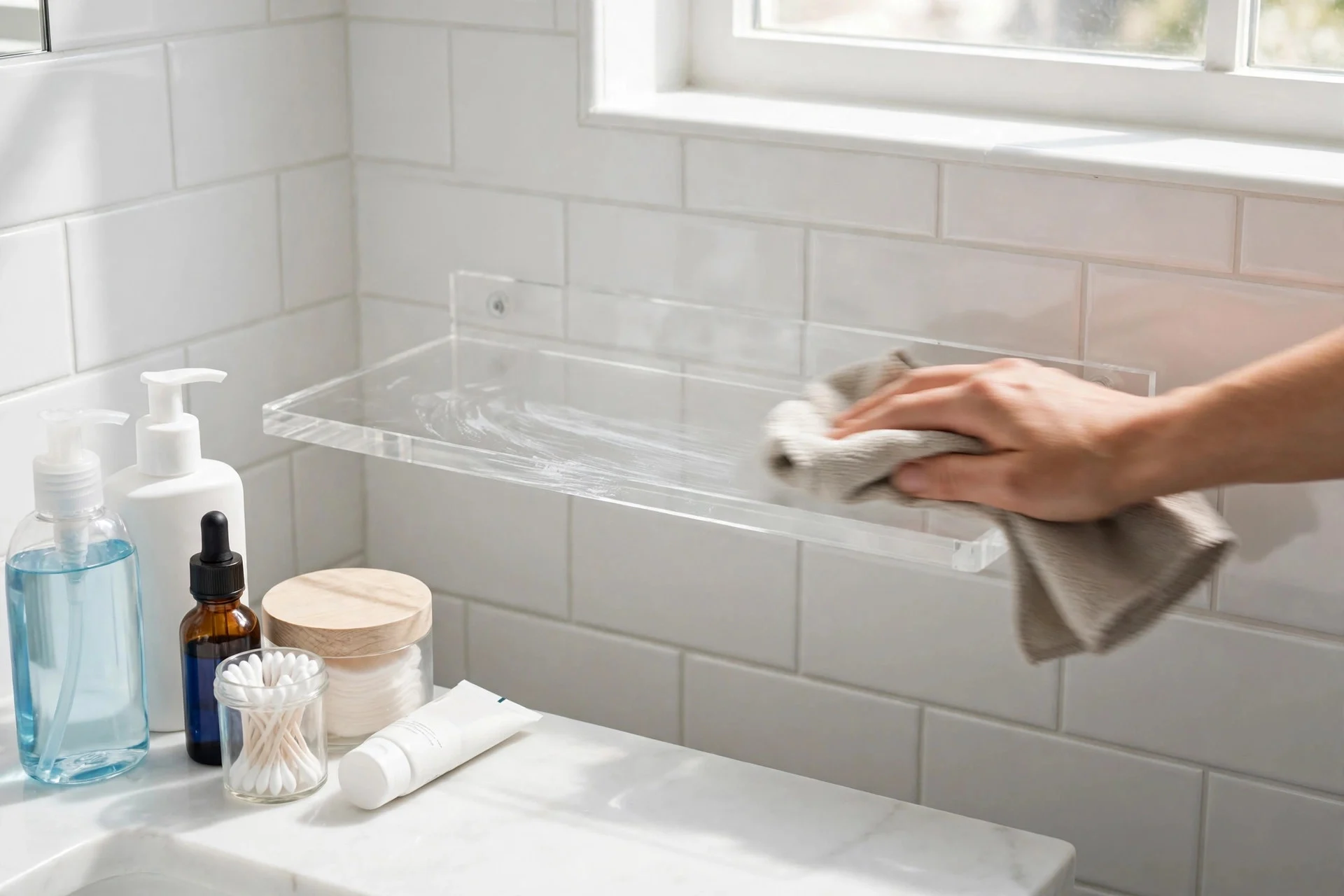
Choose shelf surfaces and containers you can wipe in seconds. Glass and sealed wood wipe clean; raw wood and fabric baskets near a sink absorb splashes and stains. Put a small tray under anything that leaks — oils, serums, hair treatments — so one drip does not mark the whole shelf.
Keep a microfibre cloth in the bathroom, not in another room. If the cloth is at hand, the weekly wipe happens. If it lives in a kitchen drawer, it does not. That is not laziness; it is friction, and good systems remove friction wherever they find it.
Style One Shelf, Keep the Rest Practical
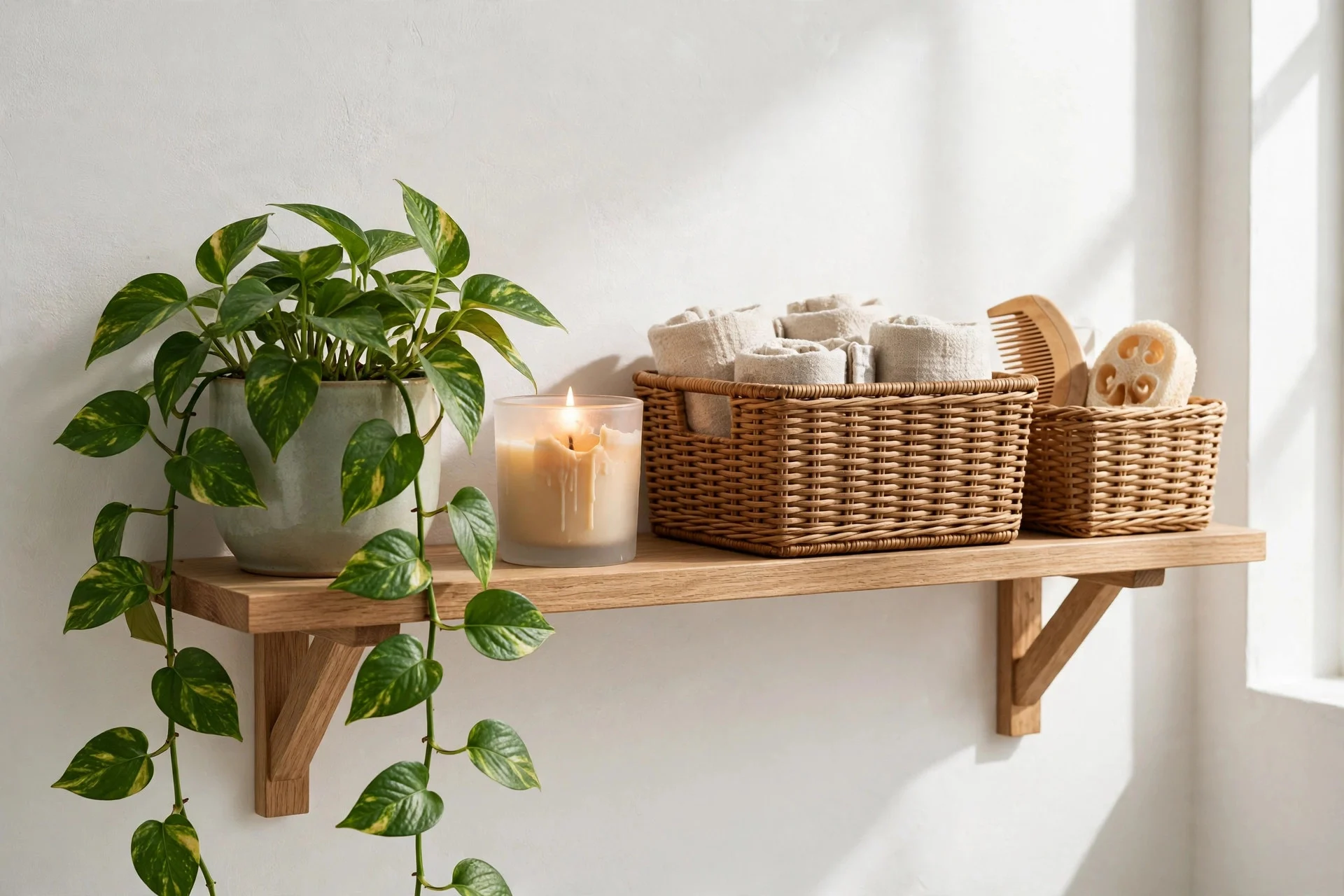
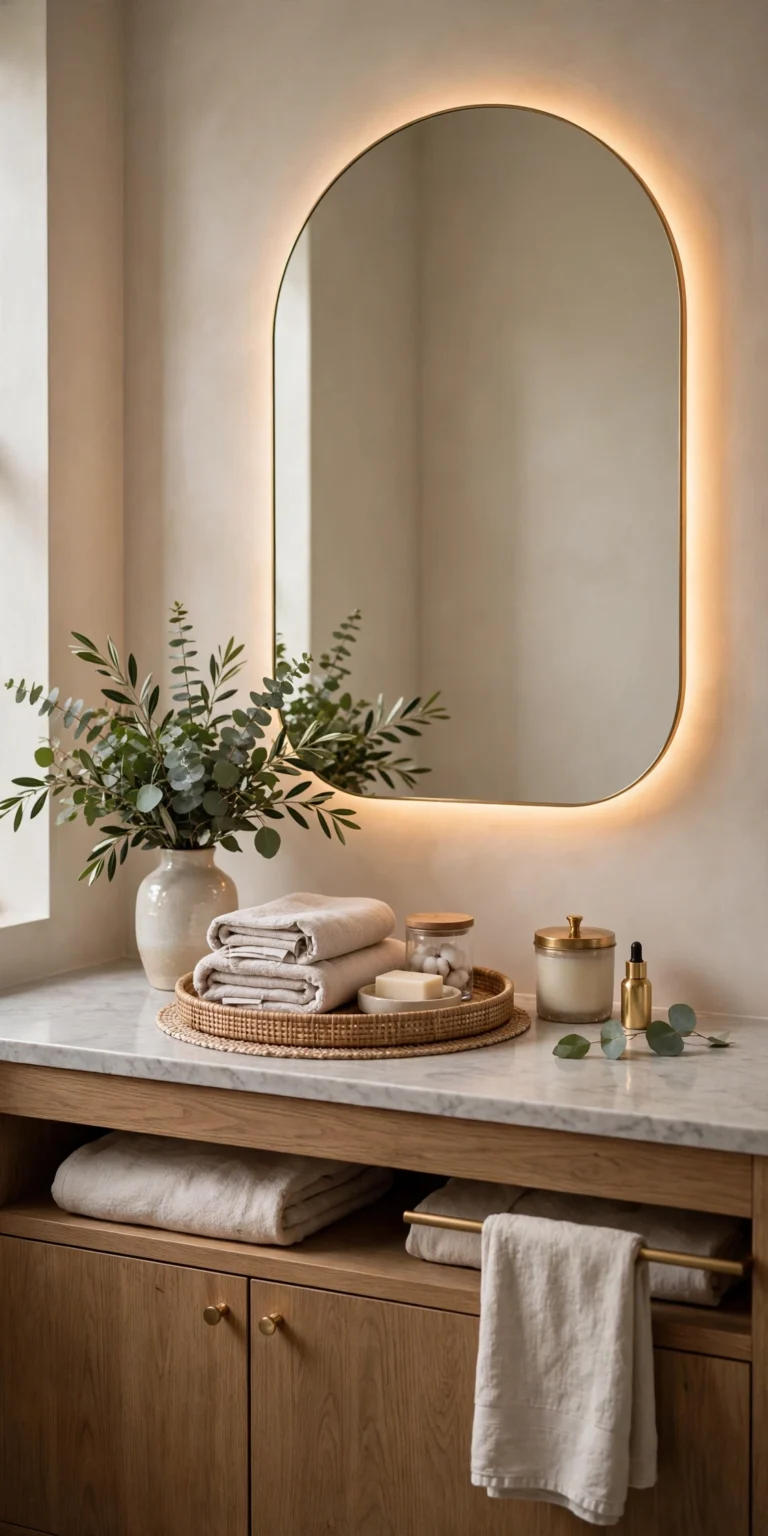
A shelf that is all storage feels like a warehouse; a shelf that is all styling feels unusable. The compromise that works: style the top shelf or one end of a shelf — a small plant, a candle, a rolled towel — and keep the rest purely functional. You get the calm, finished look without sacrificing a single centimetre of working space.
Plants that tolerate humidity, like pothos, do well here, and a candle you actually light beats a decorative one gathering dust. If styling starts creeping onto every shelf, that is your sign to move a few decorative pieces to another room.
Build a Five-Minute Weekly Reset Into Your Routine
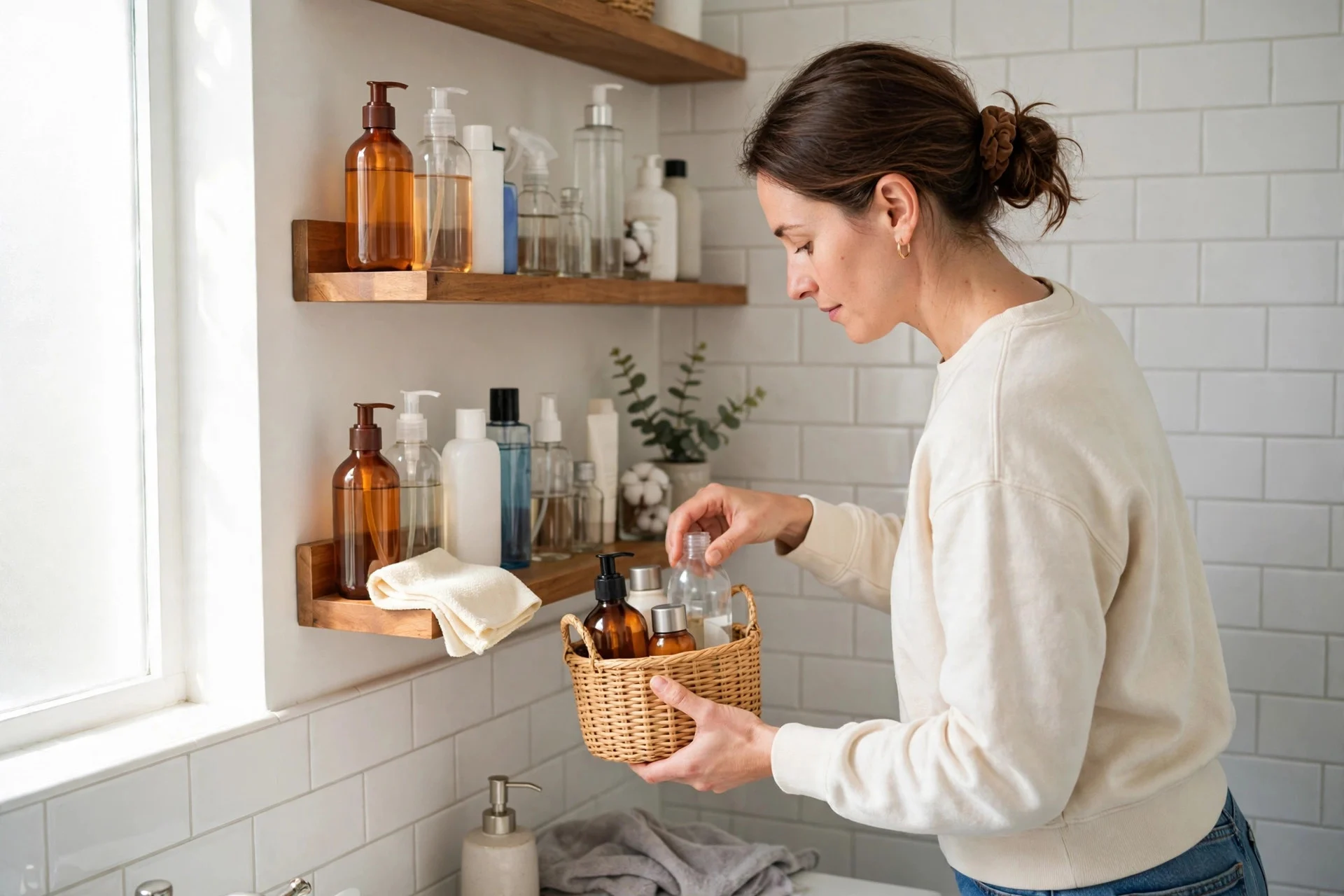
Even the best system drifts. The fix is a tiny weekly reset: once a week, walk the shelves with a small basket, return strays to their zones, toss empties, and wipe one shelf. Tie it to something you already do — Sunday night, or while a hair mask sets — so it becomes a habit instead of a chore.
Five minutes is honest. If your reset regularly takes twenty minutes, the system is too complicated or you own too much for the shelf space. Simplify the zones or move backups out, and the reset shrinks back down. For more inspiration on making small bathrooms work harder, these bathroom storage ideas for tiny spaces cover the same ground from the storage angle.
Handle New Products With a One-In, One-Out Rule
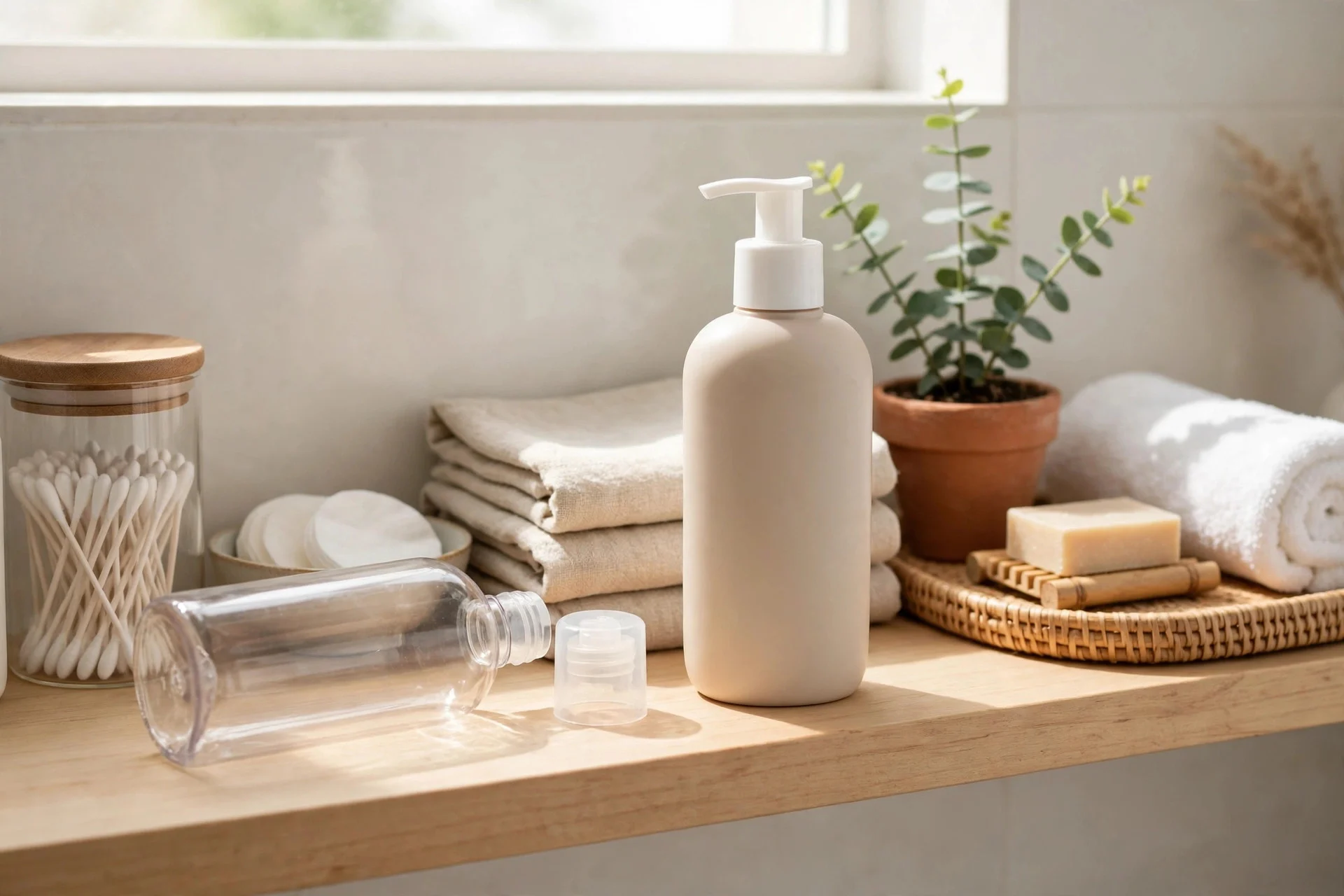
Every new product that enters a bathroom should push an old one out — finished, passed on, or thrown away. Without this rule, shelves fill up one “just trying this” bottle at a time until the system collapses. It is not about minimalism for its own sake; it is about keeping the shelf at a size you can actually maintain.
Keep a small bag or box for products to pass on, and clear it monthly. Trying a new serum is fun; keeping six half-used serums “just in case” is how a shelf becomes a museum of good intentions.
Check the System Monthly and Adjust Without Guilt
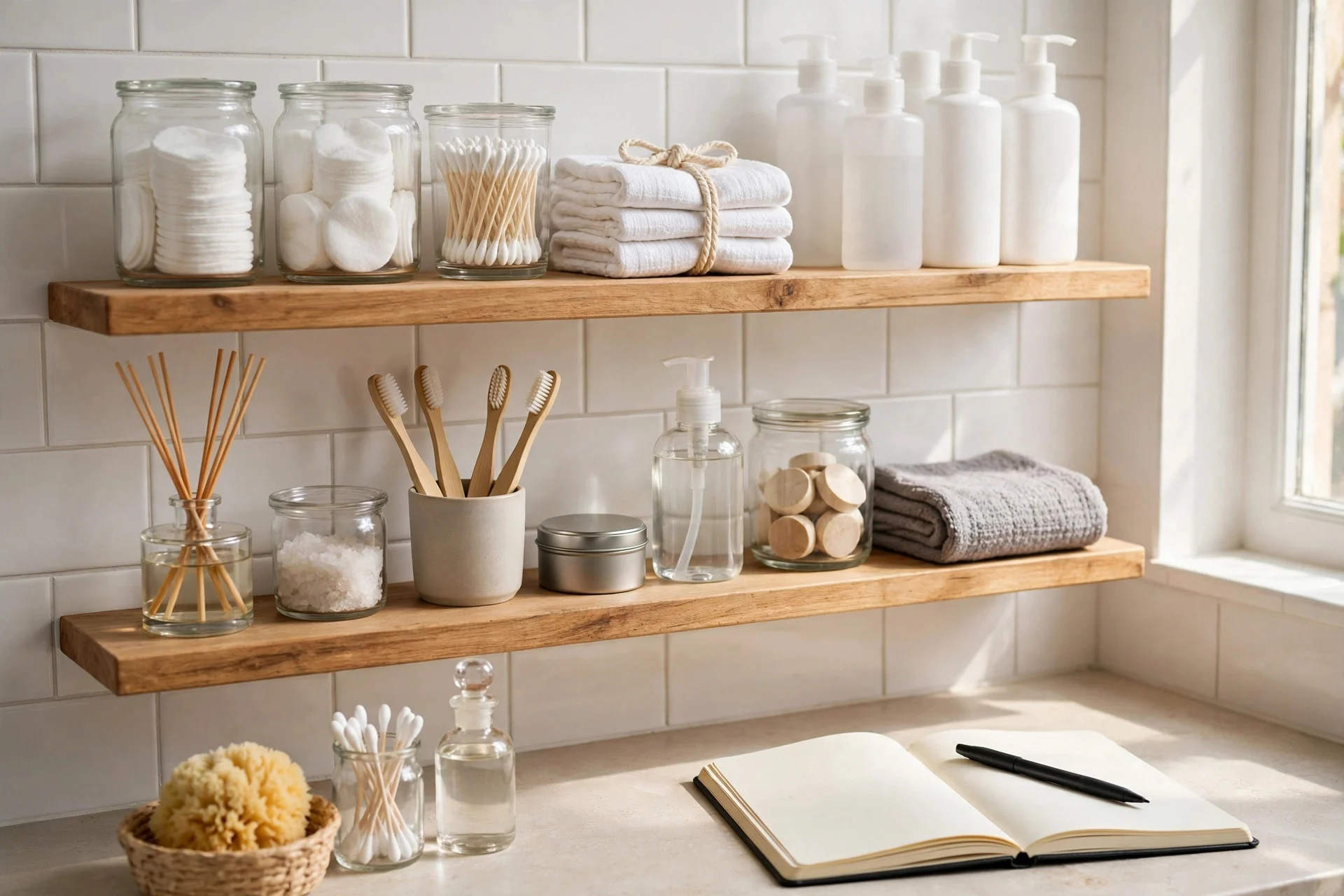
Routines change — a new skincare routine, a housemate moving in, a season shifting what you reach for. Once a month, ask whether each zone still matches how you actually live. Move the sunscreen to eye level in summer, the heavy moisturizer up in winter, the guest towels to a more accessible spot before visitors arrive.
Adjusting is not failure; it is maintenance. A system you update stays useful, while a rigid one gets abandoned. If open shelving itself starts feeling like too much upkeep, styling open bathroom shelves has ideas for keeping them looking intentional rather than exposed, and a budget bathroom makeover can rethink the whole room around the storage you actually need.
Bathroom Shelf Organization: Frequently Asked Questions
How often should I reorganize bathroom shelves?
A full sort every few months, plus a five-minute weekly reset. Daily tidying is unnecessary if the zones are right.
What belongs on open shelves versus behind a door?
Daily items and pretty things go on open shelves; medicines, backups, and anything you would rather guests not see go behind a door.
Are baskets or clear bins better for bathroom shelves?
Baskets look warmer and suit display shelves; clear bins work better inside cabinets where you need to see contents at a glance. Many bathrooms use both.
How do I stop shelves from getting cluttered again?
One-in, one-out for new products, backups stored separately, and a weekly five-minute reset. Those three habits do most of the work.