

There’s a real difference between relaxed and unfinished, and it’s not about wearing fewer casual pieces. Here’s what actually separates the two.
Casual Isn’t the Problem — Careless Is
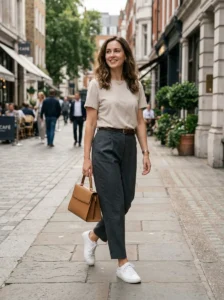
Nobody sets out to look sloppy. It happens by accident, usually on the days that feel lowest-stakes — running errands, working from home, meeting a friend for coffee — when “casual” quietly slides into “whatever was closest to the door.” The strange part is that genuinely well-dressed casual outfits often use nearly identical pieces: the same jeans, the same sneakers, the same basic top. The difference isn’t the wardrobe. It’s a handful of decisions happening underneath the surface that most people never notice they’re skipping.
I’ve worn the exact same sweatshirt on two different days and gotten completely different reactions — “you look put together” one day, nothing at all the other — and the sweatshirt never changed. What changed was everything around it. That’s the whole argument here: casual and sloppy aren’t opposite ends of a formality scale. They’re two different outcomes from the same relaxed starting point, and the gap between them is smaller and more fixable than people assume.
The Real Difference Isn’t Formality, It’s Intention
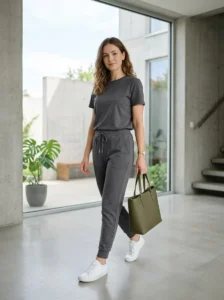
This is worth establishing clearly before anything else, because most casual-dressing advice wrongly assumes the fix is simply “dress up more,” which misses the actual issue entirely.
Sloppy isn’t caused by casual pieces — it’s caused by pieces that look unintentional. A hoodie chosen deliberately, in good condition, sized correctly, reads completely differently from a hoodie that’s simply the first thing grabbed off a chair, even if it’s the identical garment. The eye picks up on intention, not formality level.
Effort and formality are two separate dials, not one. It’s entirely possible to dress casually with high effort (a well-considered, relaxed outfit) or formally with low effort (a suit that’s wrinkled and ill-fitting looks worse than clean, well-fitted casualwear). Sloppy dressing specifically comes from low effort, not from low formality.
The goal isn’t to dress less casually — it’s to bring the same intention to casual pieces that gets automatically applied to dressier ones. Nobody grabs a blazer off the floor without thinking about it; the same care simply needs to extend to a t-shirt and jeans.
Fit Is Doing More Work in Casual Outfits, Not Less
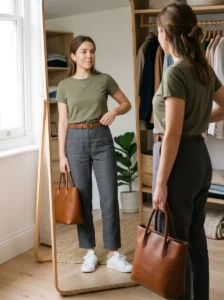
There’s a common assumption that fit matters more for formal clothing and less for casual pieces, when the opposite is often true — casual garments have fewer structural elements (no blazer lapel, no tailored waist) doing visual work, which means fit differences show up more obviously, not less.
Oversized casualwear needs to be intentionally oversized, not just large. There’s a real, visible difference between a hoodie cut deliberately loose with proportional sleeves and shoulder seams, and a hoodie that’s simply too big — the intentional version has structure even in its looseness, while the too-big version looks like it’s wearing the person rather than the reverse.
Sagging or stretched-out fabric reads as sloppy regardless of the original fit. A t-shirt that’s lost its shape from repeated washing, with a stretched neckline or sagging hem, looked fine originally but no longer fits the way it did — this is one of the most common, least noticed causes of a casual outfit tipping into sloppy, since the wearer often doesn’t register the gradual change.
Proportion balance still applies to casual pieces exactly as it does to dressier ones. Loose sweatpants with an equally loose, long top creates the shapeless silhouette that reads as unintentional; the same loose sweatpants with a more fitted top creates the same comfort level with a silhouette that reads as deliberate.
Condition Matters More Than People Admit
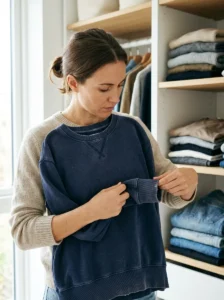
This is the category most people underestimate, largely because it requires noticing details about clothing they already own rather than making a new purchasing decision.
Visible wear in the wrong places reads differently than visible wear in expected places. Slight fading on well-worn denim reads as lived-in and normal; a stretched-out collar or visible pilling on a sweater reads as neglected — the difference is whether the wear looks like a natural byproduct of good, worn-in fabric or like the garment wasn’t maintained.
Wrinkles matter even in casual fabric, though less than in structured fabric. A wrinkled t-shirt reads as more casual than sloppy in most contexts, but a heavily wrinkled button-up or linen piece, even worn casually, reads as unfinished — the fabric type determines how much wrinkling is tolerable before it crosses the line.
Shoes carry a disproportionate amount of the “put together” signal in casual outfits. Clean, well-maintained sneakers or flats elevate an otherwise simple outfit noticeably, while visibly worn-down, dirty, or damaged shoes undercut even a well-chosen top and bottom — shoes are often the first thing people notice, consciously or not, and the easiest fix with the highest visual return.
The Three Small Additions That Change Everything
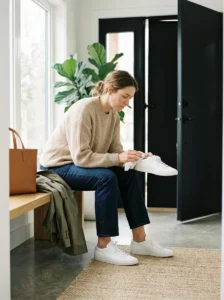
There’s a specific, small set of additions that consistently move a casual outfit from “thrown on” to “chosen,” without requiring more formal pieces at all.
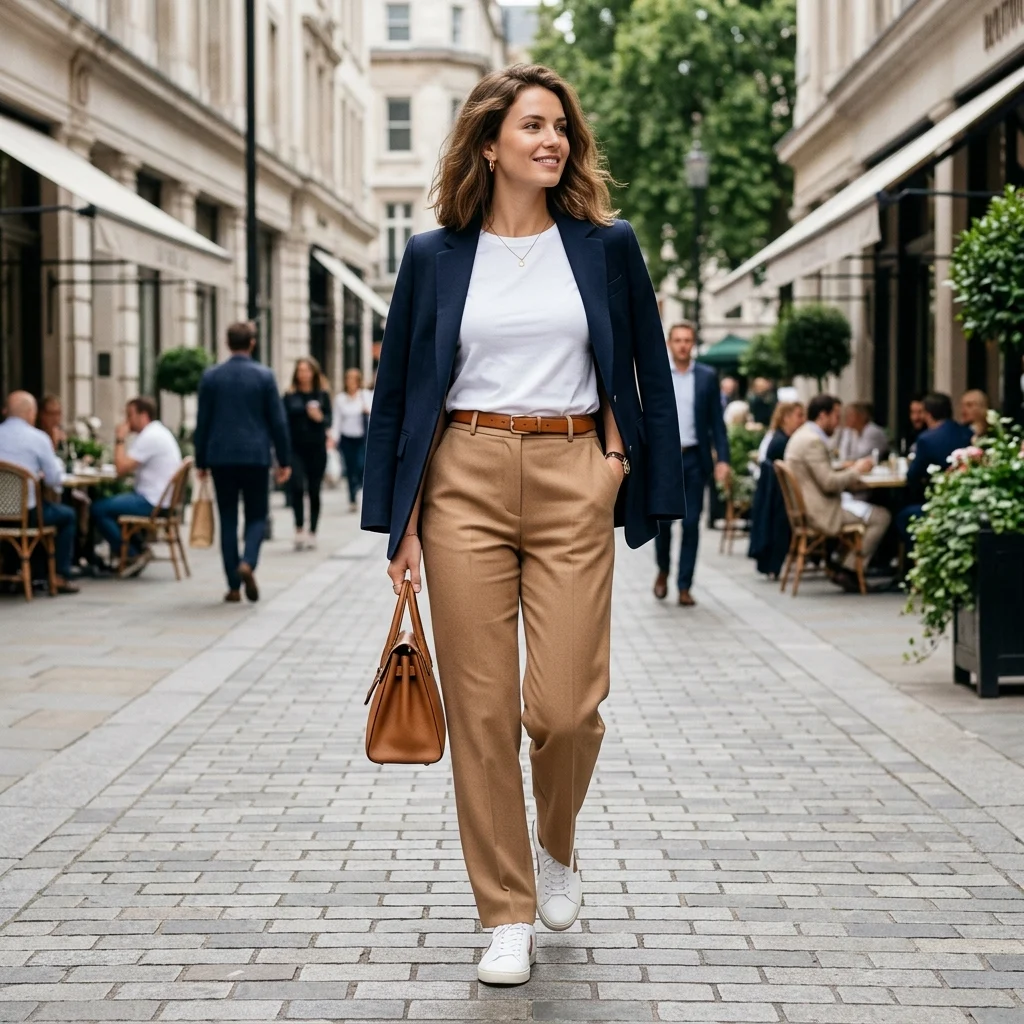
One structured piece anchors an otherwise soft outfit. A structured tote instead of a soft bag, a leather belt with soft denim, a slightly structured jacket over a loose t-shirt — a single piece with more defined shape gives the eye something to register as intentional, even when everything else is deliberately relaxed.
A visible waistline, even a soft one, prevents the shapeless read. Tucking in a t-shirt, half-tucking it, or adding a belt over a loose top creates a waist definition that an entirely untucked, loose silhouette doesn’t offer — this single adjustment does more to change how “finished” an outfit looks than almost any other single change available.
One small detail signals the outfit was chosen, not defaulted into. This can be as minor as rolled sleeves, a specific accessory, or a deliberate color pairing — something that couldn’t have happened purely by accident. It’s a small signal, but it’s the kind of detail the eye registers as evidence of a decision being made.
What Sloppy Actually Looks Like, Specifically
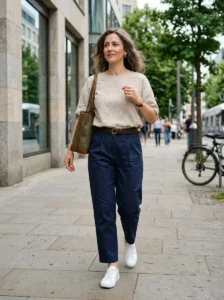
It helps to name the specific patterns rather than leaving “sloppy” as a vague feeling, since naming them makes them much easier to catch before leaving the house.
- Mismatched formality levels within one outfit — gym shorts with dress shoes, or a going-out top with worn-through slippers — reads as an outfit that wasn’t actually decided on, since the pieces are answering two different questions about the day.
- Visibly stretched or misshapen fabric, particularly around the neckline, waistband, or cuffs, signals a garment past its useful life rather than a deliberately relaxed fit.
- An entirely shapeless silhouette with no waist definition anywhere in the outfit tends to read as sloppy even when every individual piece is clean and in good condition.
- Shoes that clash in maintenance level with the rest of the outfit — worn-down, visibly dirty, or damaged footwear under an otherwise clean outfit — pulls the entire look down to the shoe’s level rather than the shoe blending in.
Key Takeaways
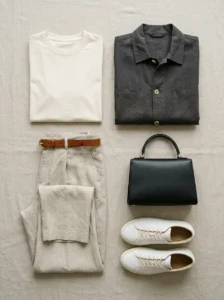
- Sloppy dressing comes from low effort and lack of intention, not from casual pieces themselves — effort and formality are separate variables, not one sliding scale
- Fit matters as much or more in casual clothing as in formal wear, since casual pieces have fewer structural elements to compensate for a poor fit
- Garment condition — stretched fabric, pilling, worn shoes — is one of the most overlooked causes of an outfit tipping from relaxed into neglected
- A single structured piece, a defined waistline, and one small deliberate detail consistently shift a casual outfit from “thrown on” to “chosen”
- Mismatched formality levels within one outfit, more than any individual piece, is one of the clearest signals of an outfit that wasn’t actually decided on
Frequently Asked Questions
Can loungewear or athleisure ever look put together, or is it inherently sloppy? It can absolutely look put together, and the same principles apply directly — well-fitted, unstretched pieces in good condition, one item with more defined structure (a belt, a structured bag, a jacket), and clean shoes elevate loungewear the same way they elevate any other casual category. The material being soft or sporty isn’t what determines sloppy versus put-together; condition and intention still do the same work.
How do I tell if a piece is too worn to keep wearing, versus having a good, lived-in look? The distinction usually comes down to whether the wear is even and expected, or specifically at stress points like collars, cuffs, and waistbands. Even, gentle fading across a whole garment, especially denim, generally still reads as fine; localized stretching, pilling, or thinning specifically at the neckline, underarms, or seat is the kind of wear that tends to read as worn out rather than worn-in, and is usually the signal it’s time to replace the piece.
Is it possible to overcorrect and make a casual outfit look like it’s trying too hard? Yes, and this usually happens when too many “intentional” signals are added at once — a structured bag, a belt, rolled sleeves, statement jewelry, and a tucked shirt all together can tip from “effortlessly considered” into “visibly effortful,” which reads almost as awkwardly as sloppiness does. Generally, one or two of the small additions described above are enough; stacking several simultaneously starts to undercut the relaxed quality that made the outfit casual in the first place.
Does this apply the same way for men’s and women’s casual dressing, or are the specifics different? The underlying principles — fit, condition, structural anchoring, avoiding mismatched formality — apply equally across genders, though the specific pieces used to execute them differ. A structured piece anchoring a men’s casual outfit might be a leather watch or a structured jacket, while for women’s casual dressing it might be a structured bag or belt; the mechanism is identical even though the specific wardrobe pieces achieving it vary.
What’s the fastest fix if I’m running late and need to avoid looking sloppy in under a minute? Tucking in or half-tucking the top and checking that shoes are reasonably clean covers the two highest-impact, lowest-effort fixes available. These two adjustments alone address the waist-definition issue and the shoe-condition issue, which are two of the most common causes of a casual outfit reading as sloppy, and both take only seconds to execute even when there’s no time for a more considered outfit decision.