



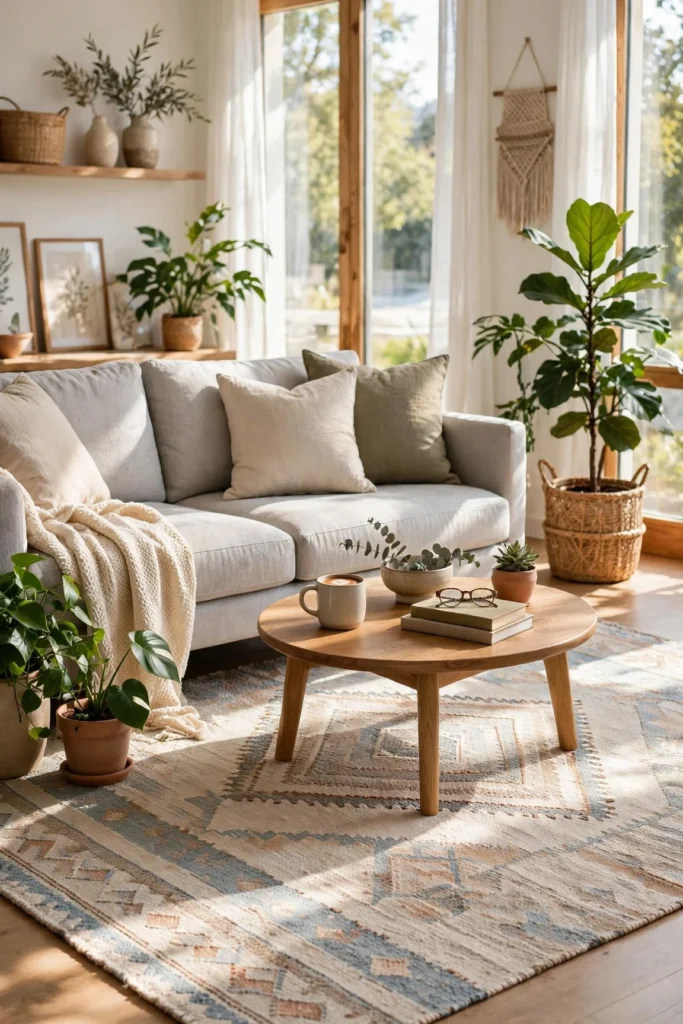
Walk into a room with a rug that is too small and something feels off straight away, even if you cannot name it. The furniture floats, the floor takes over, and the whole seating area looks like it drifted apart overnight. Getting the living room rug size right is one of the cheapest ways to make a room feel finished, because a rug is what pulls separate pieces of furniture into one conversation area. It also protects your floor, softens sound, and gives bare feet somewhere pleasant to land. This guide walks through measuring, the classic placement rules, and the mistakes I see most often, so you can buy once and stop second-guessing.
1. Measure the Room and the Seating Area First
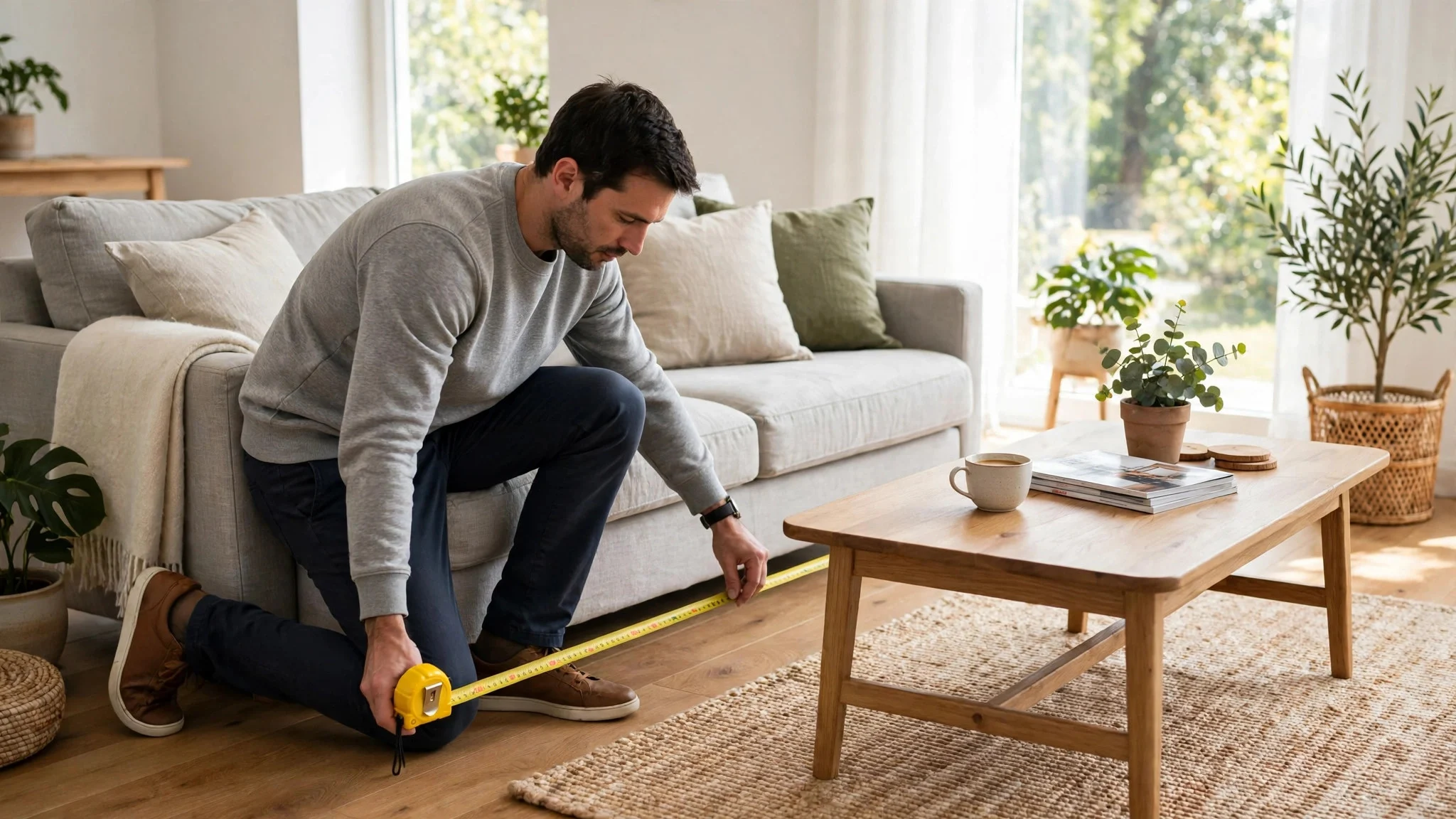
Before you look at a single rug, grab a tape measure and write down two sets of numbers: the full room, and the footprint of your seating group. The seating footprint means the outer edges of the sofa, chairs, and coffee table as they actually sit, not how they look in a catalogue photo. I once skipped this step and ordered a rug that looked generous online, only to watch it disappear under the sofa legs and leave the armchairs stranded on bare floor. Measure the length and width of that group, then add at least 15 to 20 centimetres on each side. That extra margin is what stops the rug from looking like a postage stamp under your furniture.
While you are at it, note where doors swing, where heating vents sit, and how far the sofa sits from the wall. A rug that blocks a door or covers a vent will annoy you every single day, no matter how pretty the pattern is. Sketch the room on a scrap of paper with the measurements marked. It takes five minutes and it saves you from the most common rug-buying regret, which is guessing.
2. Use the Front-Legs Rule as Your Starting Point
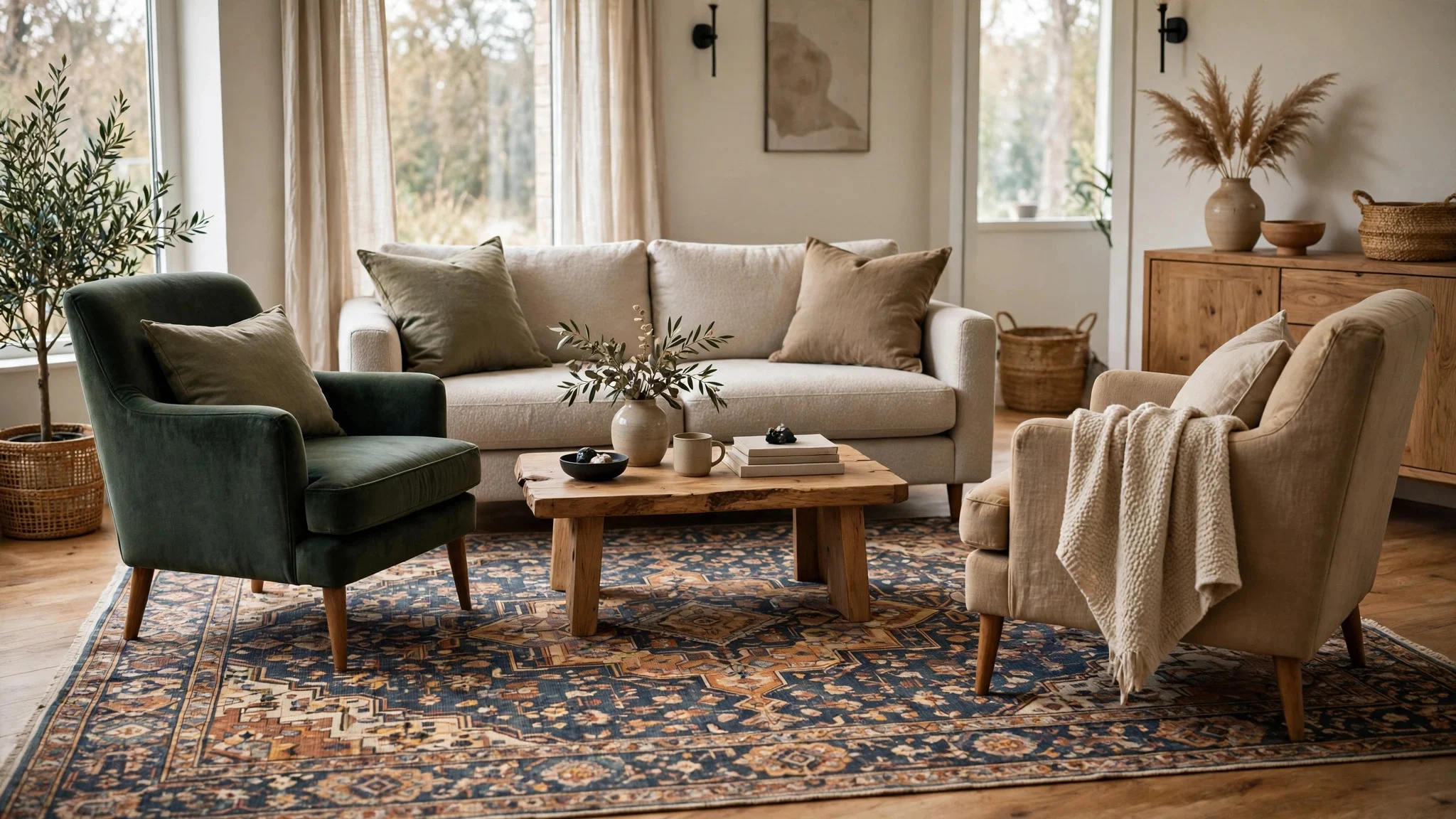
The front-legs rule is simple: the front legs of every seat in the group should sit on the rug, while the back legs can stay on the floor. This one rule fixes most sizing problems on its own. When only the front legs are on the rug, the furniture reads as a single group, and the rug anchors the arrangement without swallowing the whole floor.
Test it before you buy. Slide your coffee table and chairs into place, then mark where the front legs land with painter’s tape on the floor. Measure between those tape marks and you have your minimum rug width and length. If the tape outline looks cramped, go up a size. Rug sizes jump in standard steps, and the next size up is almost always the safer choice.
3. Small Living Room Rug Size: Start With a 5 by 8 Rug
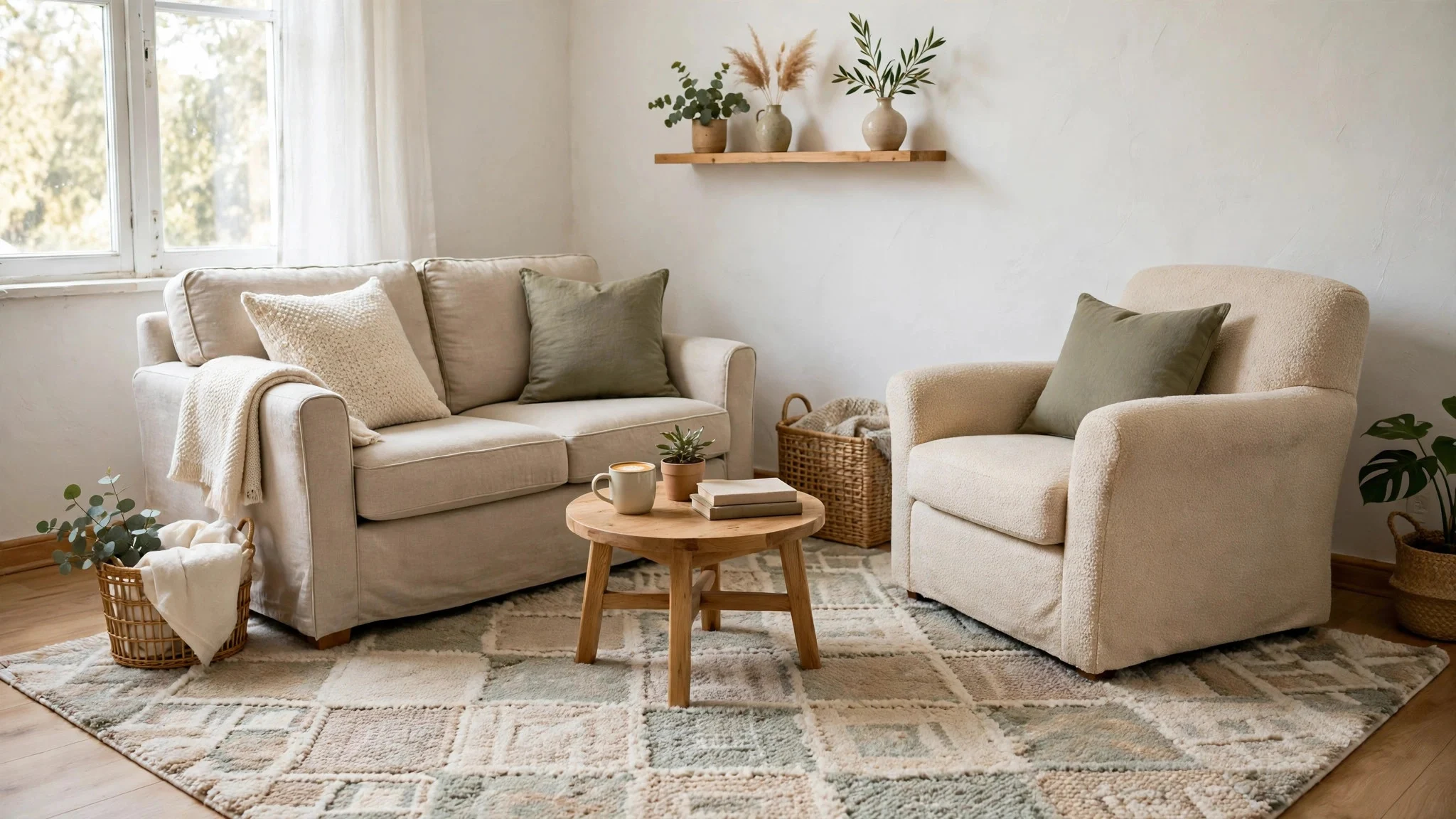
In a small living room, a 5 by 8 foot rug is usually the sweet spot. It is big enough to sit under the front legs of a loveseat and one armchair, with the coffee table in the middle, without creeping up to the walls on every side. Leave at least 20 centimetres of bare floor showing between the rug edge and the wall, or the room starts to feel like it is wearing wall-to-wall carpet that stopped short.
If a 5 by 8 still feels tight, check your furniture first. Pulling the sofa even 10 centimetres off the wall, or swapping a bulky coffee table for a slimmer one, can change what fits. And resist the urge to buy a tiny 4 by 6 rug just because the room is small. A small rug in a small room makes the room look smaller, which is the opposite of what you want. For more ideas on making a compact space feel fresh, see our spring decor ideas to freshen every room.
4. Medium Living Rooms: The 8 by 10 Workhorse
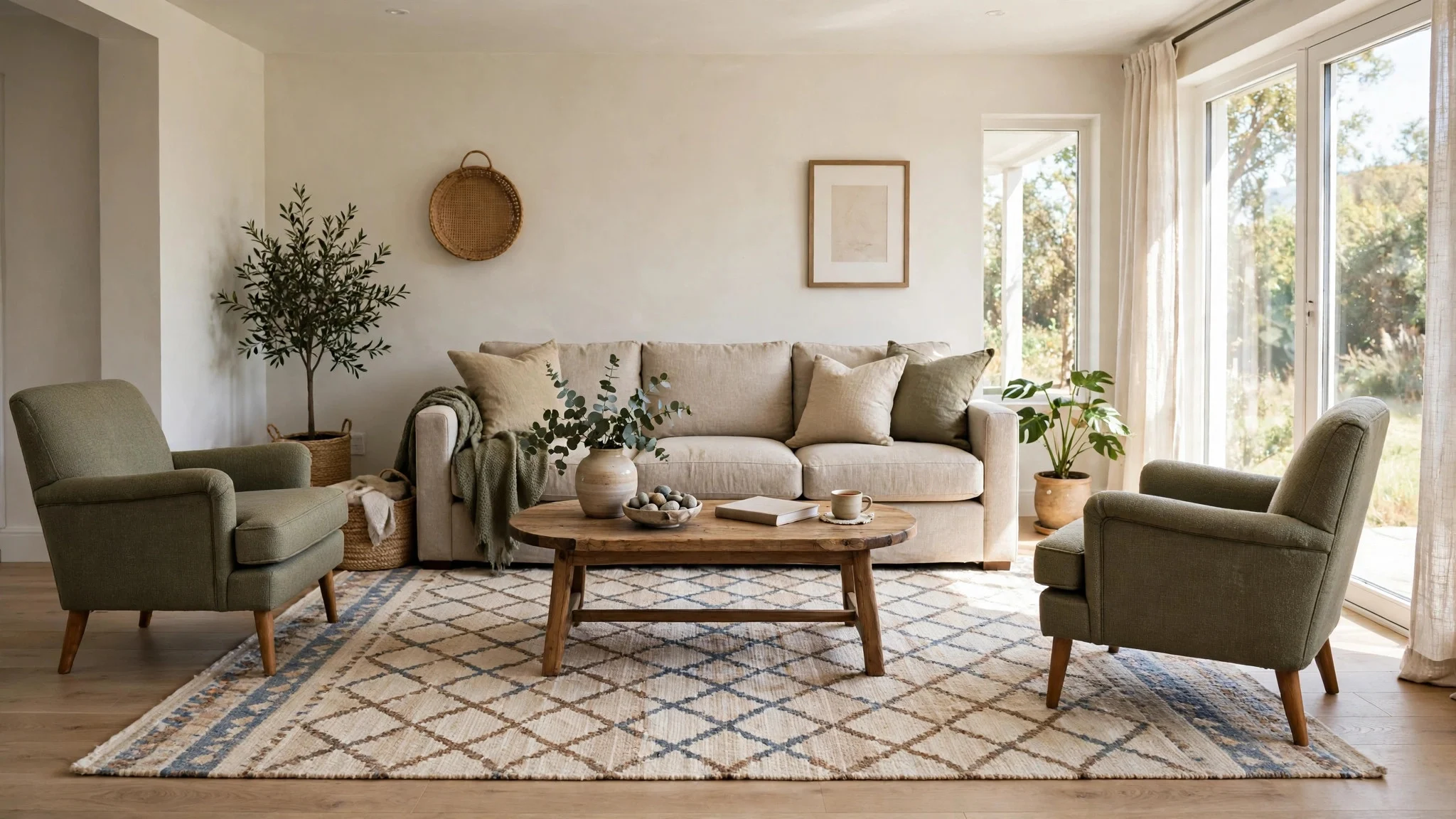
For the average living room with a three-seater sofa and two chairs, an 8 by 10 foot rug is the workhorse size. It comfortably holds the front legs of all the seating plus the coffee table, with a bit of rug showing around the edges. That border of rug beyond the furniture is what makes the arrangement look intentional rather than crowded. In my own living room, switching from a 6 by 9 to an 8 by 10 was the single change that made guests stop saying the room felt “a bit bare” and start saying it felt cosy.
An 8 by 10 also gives you room to float furniture away from the walls, which is worth doing if you have the space. Even 15 centimetres of breathing room behind a sofa makes a layout feel designed rather than pushed to the edges. Just check that walkways around the rug stay clear, ideally 60 to 75 centimetres wide, so nobody has to shuffle sideways past the coffee table.
5. Large and Open-Plan Rooms: Go 9 by 12 or Bigger
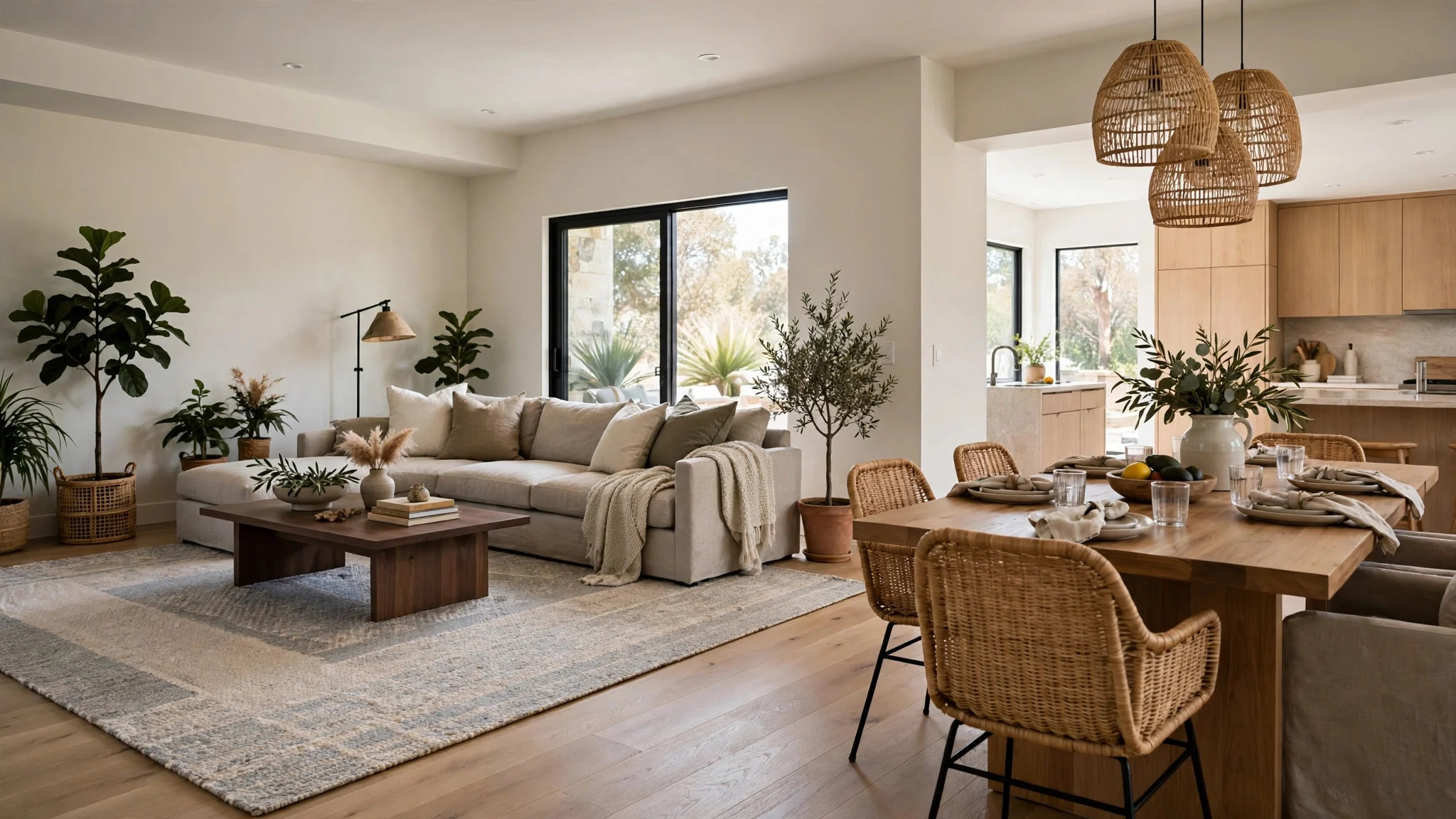
Big rooms punish small rugs. In an open-plan space, the rug does the job walls used to do: it tells everyone where the living area ends and the dining area begins. A 9 by 12 foot rug is the usual starting point here, and in a very large room you may need a 10 by 14. With this much floor, you can often fit all four legs of the sofa and chairs on the rug, which looks generous and grounded.
The trap in a large room is buying a rug that is big in absolute terms but still small for the space. A 8 by 10 that looked huge in the shop can look lost in a room with high ceilings and a long sofa. Measure the seating zone, not the room, and remember that the rug should be at least as long as your sofa. If your sofa is 2.4 metres long, a rug shorter than that will look like it shrank in the wash.
6. Leave the Right Gap Around the Coffee Table
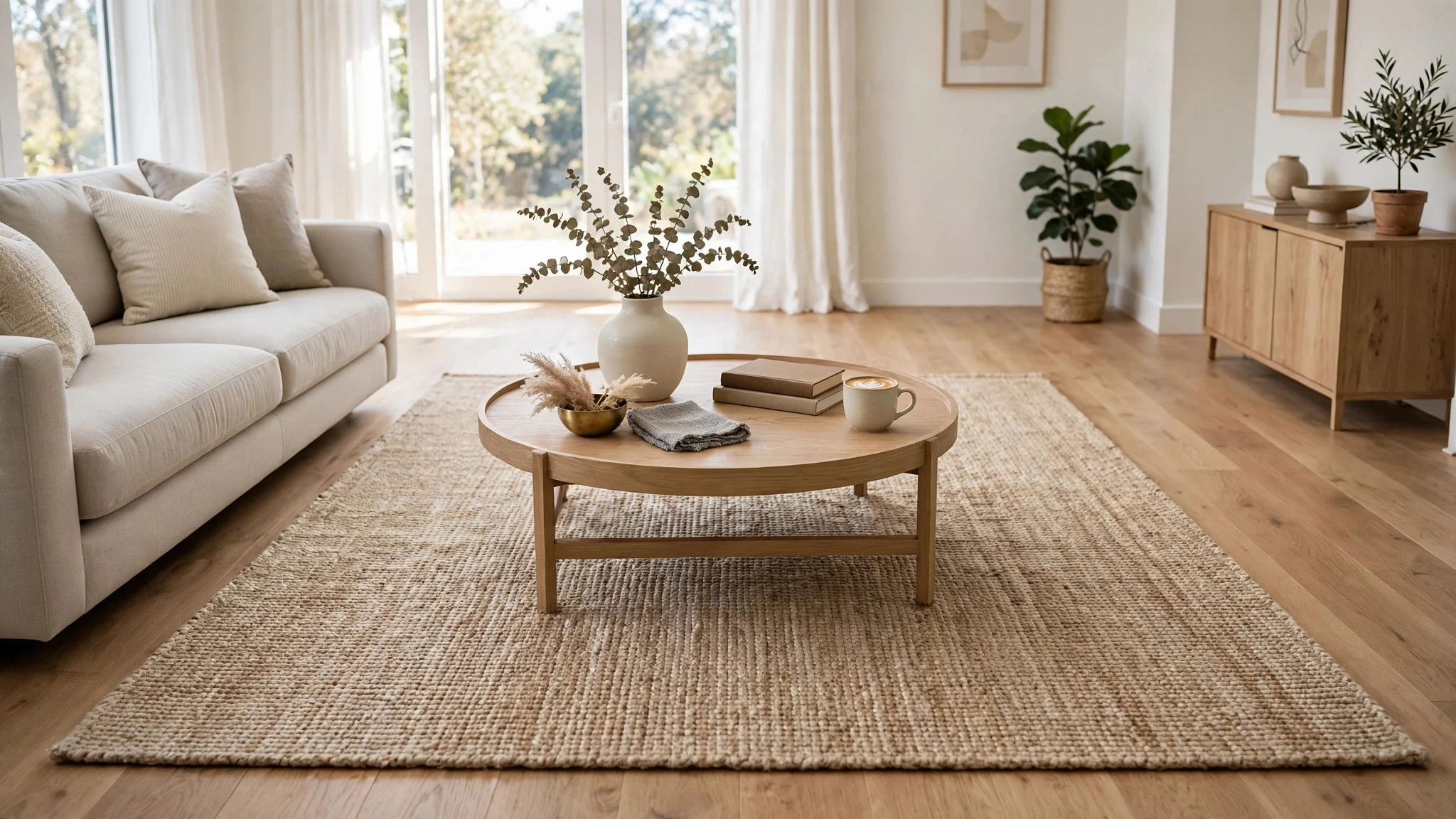
The coffee table sits in the middle of the rug, so its clearance matters more than people think. Aim for roughly 30 to 45 centimetres between the edge of the coffee table and the edge of the rug on each side, and about 35 to 45 centimetres between the sofa and the coffee table itself. That spacing lets you walk around the table, put your feet up, and reach your cup without stretching.
When the rug barely extends past the coffee table, the table looks like it is balancing on a mat. When the rug extends too far past the seating, the extra bare rug in the walkway collects dust and trips. Centre the table on the rug first, then check the gaps with your tape measure. It is a two-minute check that prevents a permanent niggle.
7. Pick a Shape That Follows Your Furniture
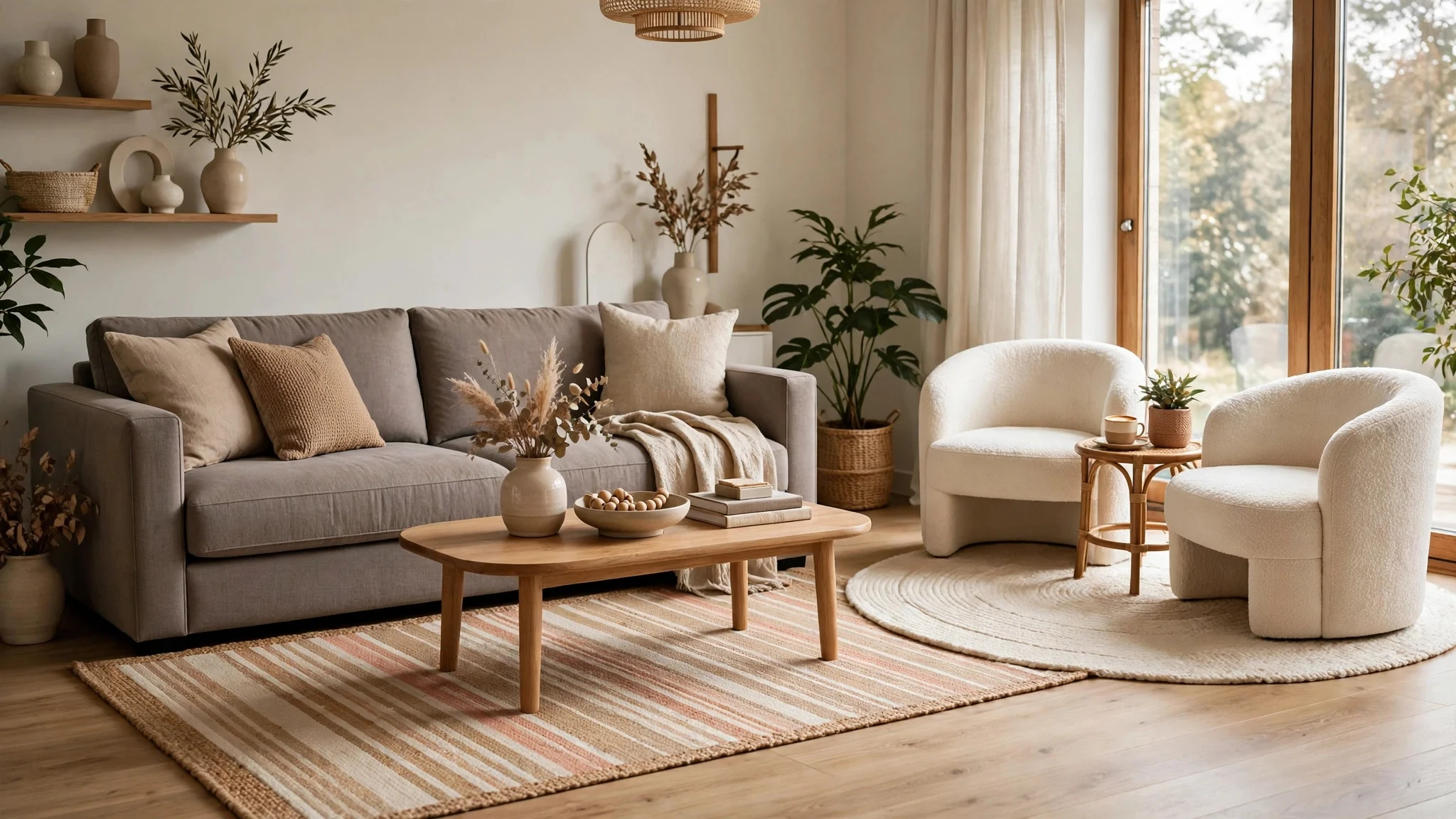
Rectangular rugs suit most living rooms because most sofas and rooms are rectangular. The rug echoes the shape of the furniture, and the straight edges make placement obvious. Round rugs, on the other hand, shine under a curved arrangement: two swivel chairs angled toward each other, a round coffee table, or a reading nook tucked into a bay window. A round rug under a long rectangular sofa usually looks wrong, because the corners of the sofa stick out past the curve.
Runner rugs have their own job. A slim runner works in a galley-style seating area, along the side of a sofa in a narrow room, or in front of a fireplace where a full rug would be too much. Square rugs suit square rooms and square seating groups, though they are harder to find in large sizes. When in doubt, match the rug shape to the shape of your seating group, not the shape of the room.
8. Layer Rugs When One Size Does Not Fit
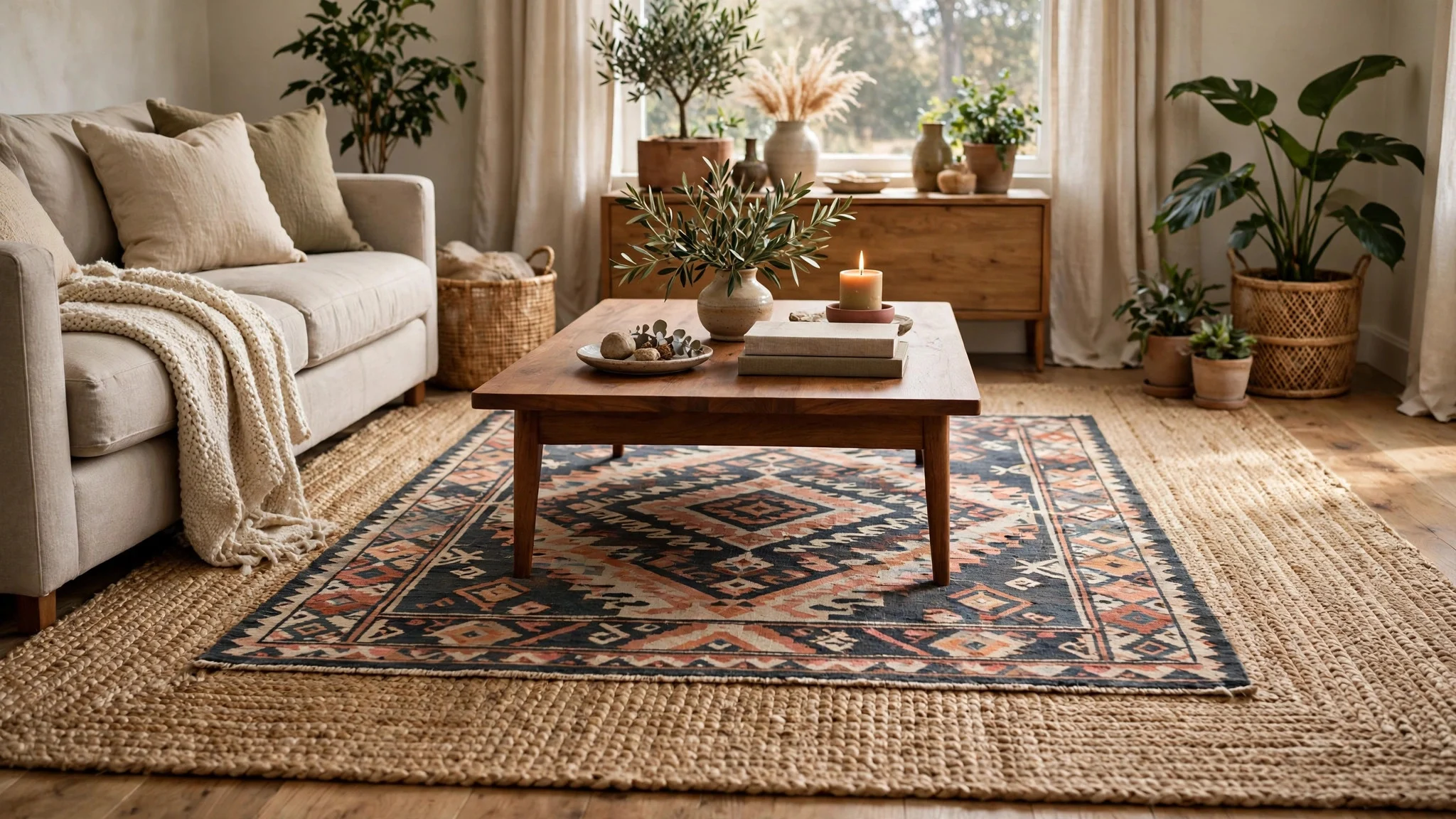
Layering solves two problems at once: you need a big rug but love a smaller patterned one, or the rug you already own is slightly too small. Start with a large, flat, neutral base rug in jute, sisal, or plain wool, sized to your seating group. Then layer a smaller patterned rug on top, centred on the coffee table, with at least 15 centimetres of the base showing on all sides. The top rug adds colour and personality, the base rug fixes the size problem.
Keep the top layer thin and flexible, or chairs will wobble on the ridge where the two rugs meet. A rug pad under the base layer stops the whole stack from sliding, which matters a lot on hard floors. I layered a flat jute rug under a vintage-style wool rug in a rental once, and it was the only decorating move that made the room feel like mine rather than the landlord’s.
9. All Legs On Versus Front Legs Only
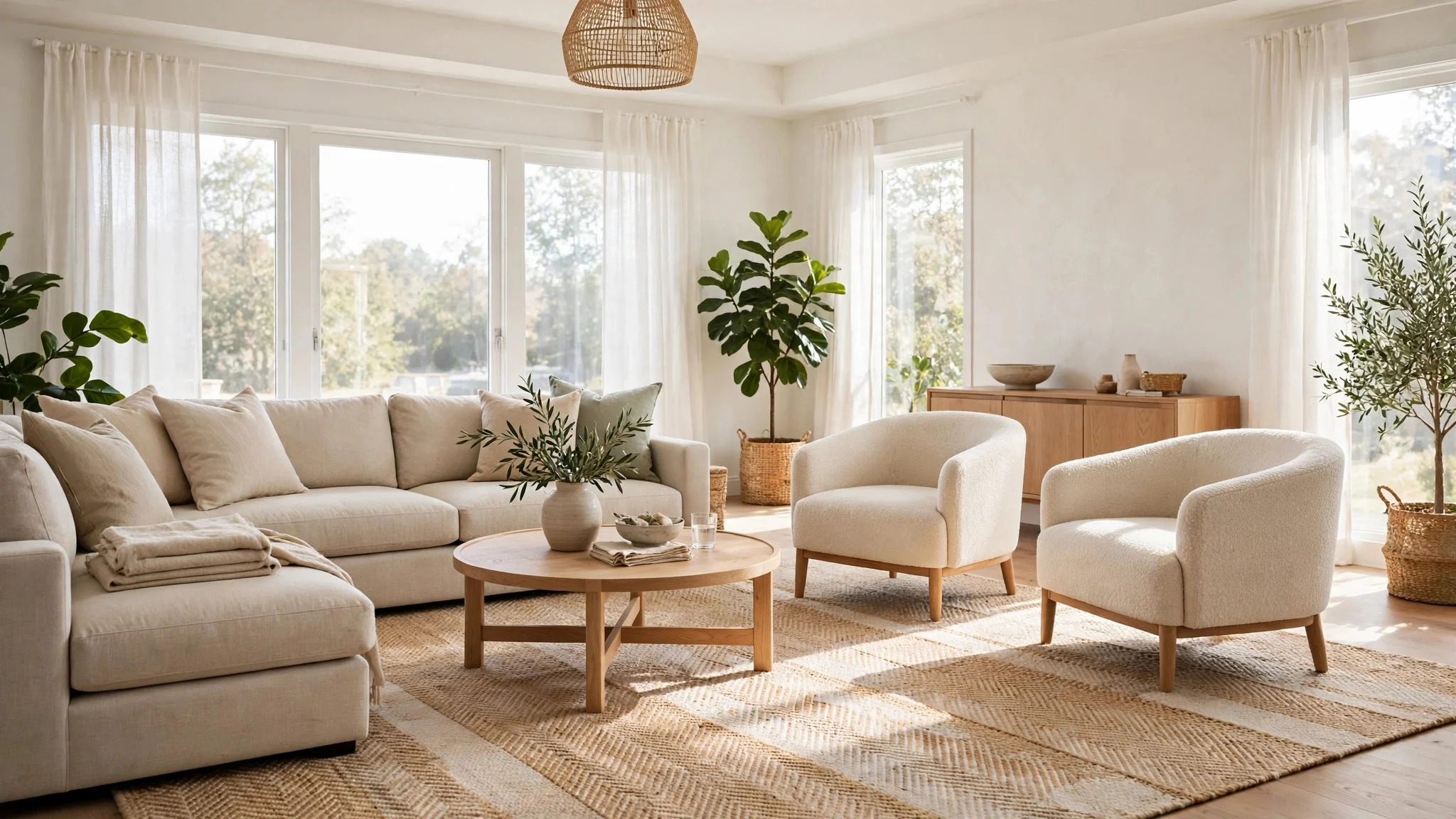
There are two classic placements, and the right one depends on your room. Front legs only works in most rooms and saves you from buying an enormous rug. All legs on, where every piece of furniture sits fully on the rug, looks luxurious and works best in large rooms where the rug can be 9 by 12 or bigger without touching the walls. It also suits rooms where you want the seating area to feel like a distinct island.
What does not work is a mix within one group: the sofa fully on the rug while the armchairs dangle half off it. That half-on, half-off look is what makes a room feel unsettled, even when the rug itself is beautiful. Pick one rule for the whole group and stick to it. If budget forces a compromise, front legs only for everything beats all legs on for some and nothing for others.
10. Think About Pile, Material, and Foot Traffic
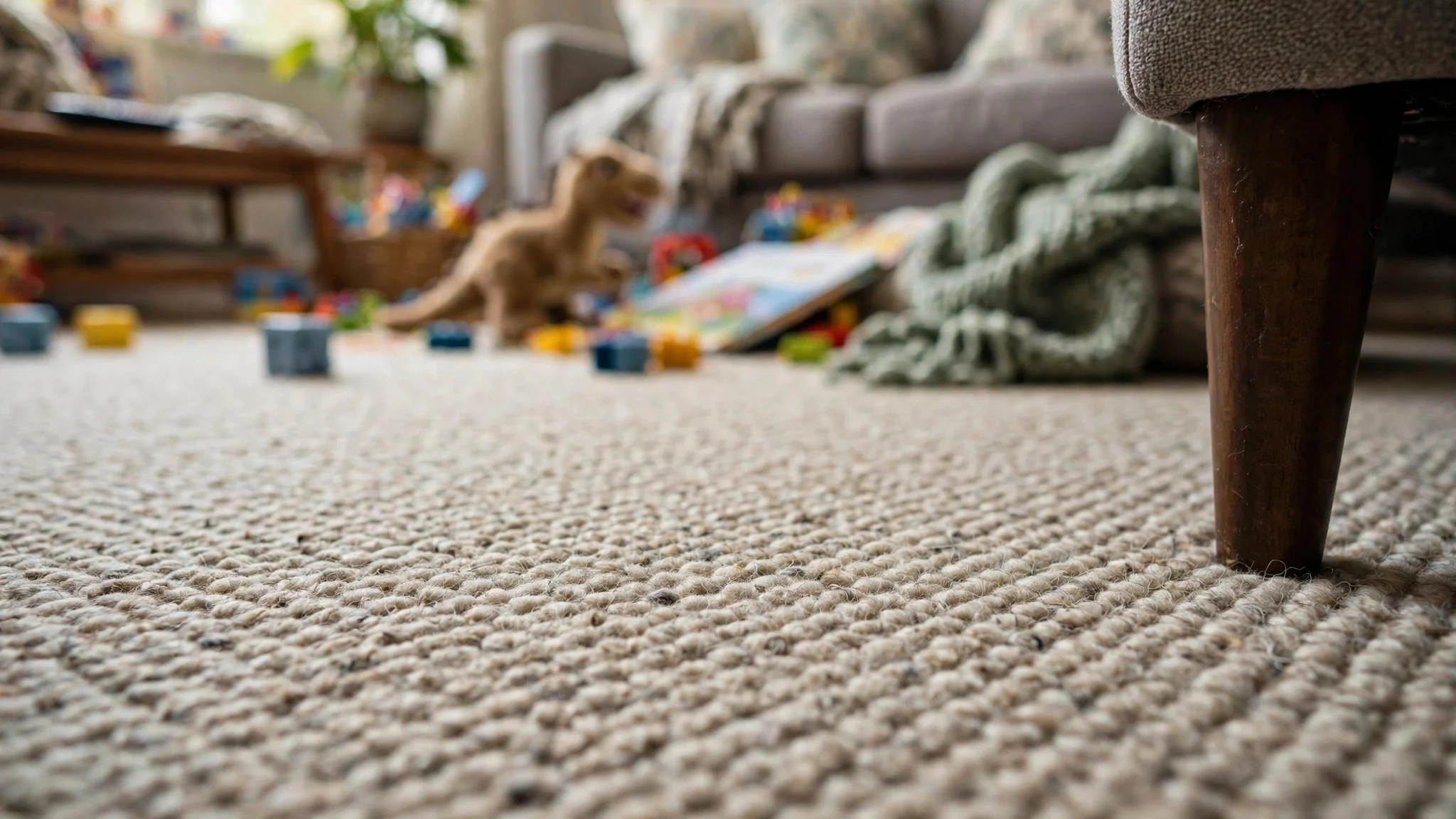
Size is not just length and width. A thick, high-pile rug under a door that swings inward will jam the door, and a rug that is too thick under dining chairs will make them rock. In high-traffic living rooms, a low-pile wool or a flat-weave rug holds up better and is easier to vacuum. Save the plush, deep-pile rugs for low-traffic corners or rooms where you mostly sit rather than walk through.
Material also affects how big a rug feels. A dark, heavy rug visually shrinks a space, while a light, flat rug keeps it feeling open. If you have pets or children, a washable or easy-clean rug in the right size beats a delicate showpiece in the wrong size every time. For a softer, modern palette to pair with a new rug, see our pastel spring decor ideas that feel modern. Measure the door clearance too: leave at least a centimetre under a swinging door, or plan to trim the door, which nobody wants to do for a rug.
11. Use Colour and Pattern to Change How Big the Room Feels
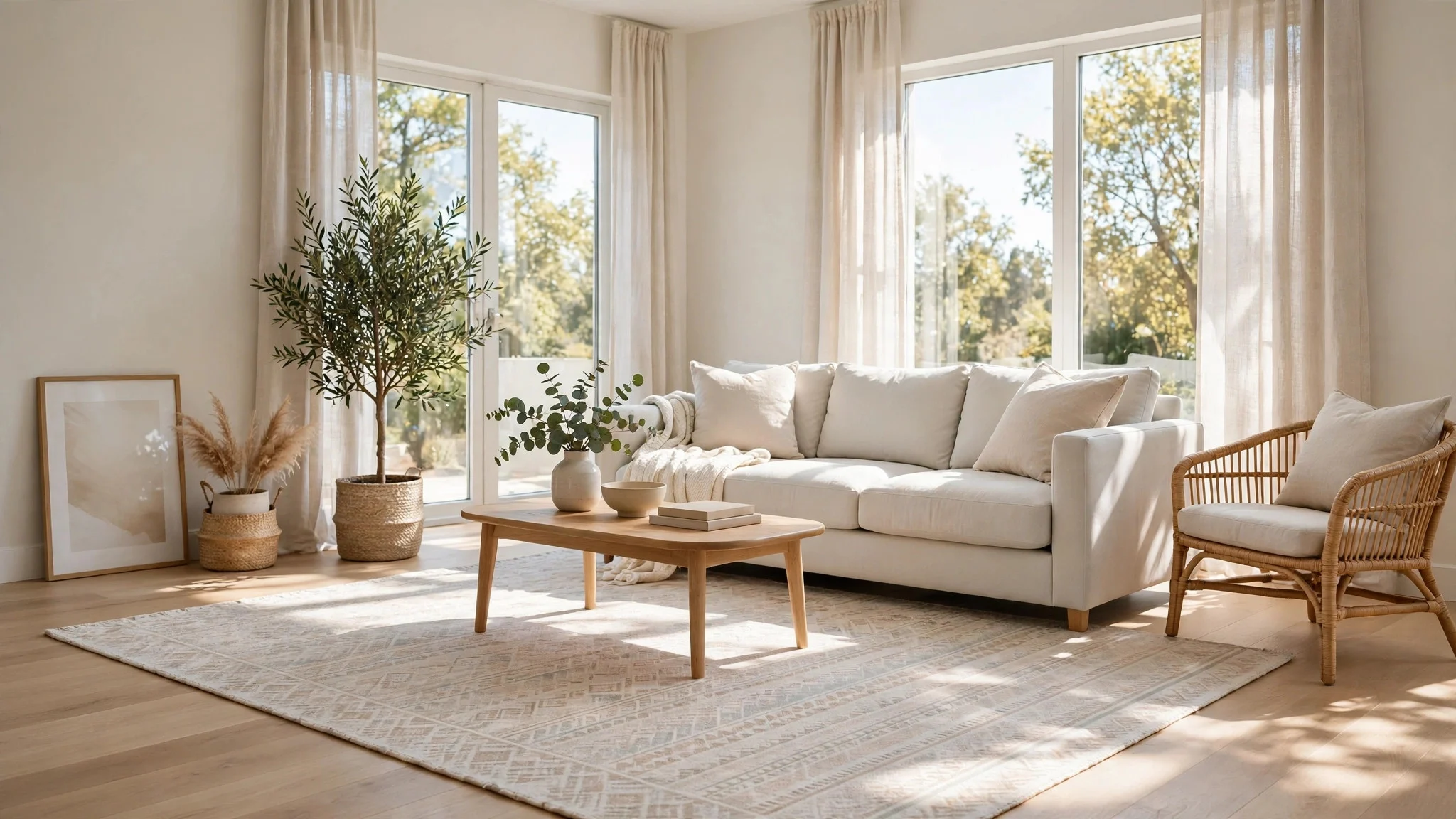
A rug’s colour changes how large it reads. Light, neutral rugs with a subtle pattern make a small room feel wider, because the eye travels across them without stopping. A bold, dark, high-contrast pattern anchors a large room and stops it from feeling empty, but the same pattern in a small room can chop the floor into pieces. If your room is small and you love pattern, choose a pattern with a light background and keep the contrast gentle.
Stripes deserve a special mention. Stripes running along the length of the room make it feel longer, while stripes across the width make it feel wider. It is a small trick, but in a narrow living room it genuinely helps.
12. Do the Painter’s Tape Test Before You Buy
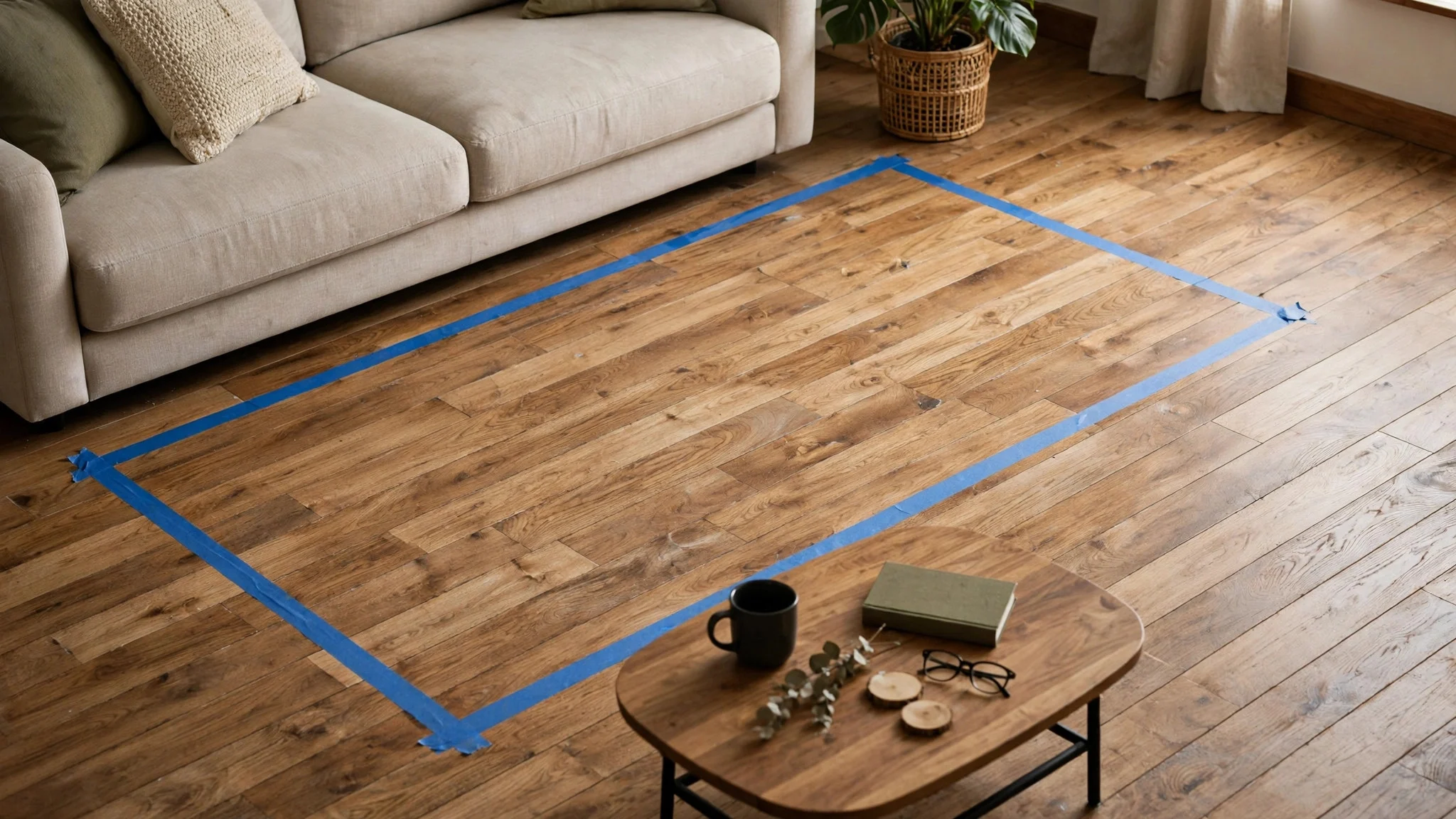
Here is the test that prevents almost every sizing mistake: outline your planned rug size on the floor with painter’s tape and live with it for a day. Tape the rectangle where the rug would go, put the furniture back, and walk around it. Sit down, put your feet where they would rest, and check whether the front legs land on the tape. You will spot problems in minutes that a measurement alone would miss, like a tape edge that cuts across a walkway or a corner that pokes into a doorway.
I do this every time now, even when I am fairly sure of the size. It costs a roll of tape and ten minutes, and it has saved me from at least two returns. If the taped outline looks too small, try the next size up in tape before you order. Your future self, the one who does not have to wrestle a rolled rug back into its packaging, will be grateful.
Frequently Asked Questions
What is the most popular living room rug size?
The 8 by 10 foot rug is the most popular size for a standard living room, because it fits a three-seater sofa, two chairs, and a coffee table under the front-legs rule. For smaller rooms, 5 by 8 is the common choice, and for large open-plan rooms, 9 by 12 is the usual step up.
Should a rug go under the sofa completely?
It does not have to. In most rooms, having the front legs of the sofa on the rug is enough to anchor the seating group. Putting all four legs on the rug looks generous in a large room, but it requires a much bigger rug, so choose one rule for the whole group and keep it consistent.
How much floor should show around a rug?
Leave at least 20 centimetres of bare floor between the rug edge and the wall in a small room, and 30 to 45 centimetres in a larger room. That border of floor frames the rug and stops the room from looking carpeted. In very large rooms, a border of up to 60 centimetres still looks balanced.
Can a rug be too big for a living room?
Yes. A rug that touches the walls on all sides looks like wall-to-wall carpet that fell short, and it makes the room feel smaller rather than grander. If your ideal rug size leaves less than 15 centimetres of floor showing, drop down a size or rearrange the furniture so the seating group is tighter.
Start with your tape measure, not the rug shop. Measure the seating group, tape the outline on the floor, and choose the size that puts the front legs of every seat on the rug with floor showing around the edges. Get that right and the pattern, colour, and material become fun choices instead of guesses. Your living room will feel settled, grounded, and put together, and you will wonder why the old rug ever looked right at all.

2 Responses