



How to Host a Small New Year’s Gathering at Home
A new year’s gathering at home doesn’t need a caterer, a DJ, or fifty guests to feel special. Some of the best New Year’s Eves I’ve had involved eight people, a kitchen table that was slightly too small, and a playlist somebody made at 11pm. This guide walks you through hosting an intimate New Year’s Eve party step by step: how many people to invite, a timeline for the week before, food and drink setups that don’t require professional help, the flow of the evening, and a cleanup plan that won’t ruin January 1st.
1. Cap the Guest List at What Your Kitchen Can Feed

Six to twelve people is the sweet spot for a home gathering. Any more and you stop being a host and start being a venue manager. Here’s my rule: count your dining chairs, add the sofa, and that’s your number. For eight guests I plan food for ten — people graze more on New Year’s Eve than they do at dinner parties, and running out at 10pm is worse than leftovers on January 1st.
How to do it: open your phone’s group chat or a free Evite, and write an actual headcount request, not “let me know sometime.” Ask for a yes or no by three days before. I tried the casual “just swing by” approach once and ended up with seventeen people and nine chairs. Don’t make that mistake — small is the whole point.
2. Send Invites a Week Out With Real Details

People need to know four things: the date, the arrival time, whether they should bring anything, and when you’ll probably wind down. I write mine like this: “New Year’s Eve at ours, come from 7:30. We’ll have food and drinks. Bring nothing but yourself — or dessert if you insist. We usually wrap around 12:30.” That last line matters. It tells people this isn’t an all-night rager and gives you an exit plan.
How to do it: send a text or a simple digital invite seven days out, then a friendly reminder the day before with the address and parking note. If someone asks “can I bring a plus-one,” say yes if your number allows it — small gatherings flex better than big ones. Confirm your headcount 48 hours before so you can shop accurately.
3. Build Food Stations That Don’t Need a Caterer

Forget a sit-down dinner. Stations let guests eat when they’re hungry and stand where they want. Three stations cover everything: a grazing board with cheeses, cured meats, crackers and fruit; a warm tray of sliders or meatballs in a slow cooker; and a sweet corner with cookies or a simple chocolate fondue pot. All of it can be bought mostly ready-made.
How to do it: set stations in different spots so people circulate — the island, the dining table, a sideboard. Keep the slow cooker on warm from 6pm and refill once. Put small plates near each station, not stacked in one place. I learned this the hard way: if plates live only in the kitchen, guests hoard food on napkins instead. Total cost for eight people runs about $60–90 at a regular grocery store, and Trader Joe’s frozen appetizers are your best friend here.
4. Set Up a Drink Station With Mocktails and Sparkling Cider

A self-serve drink station is one of the easiest wins in hosting. Fill two large pitchers: one with a simple punch (ginger ale, cranberry juice, orange slices) and one with sparkling apple cider over ice. Add a bowl of frozen berries as garnish, some mint, and a stack of glasses. It looks festive, costs almost nothing, and nobody is waiting on you for a refill.
How to do it: set the station up by 7pm before anyone arrives, with an ice bucket alongside. Label the pitchers with little tent cards — “Cranberry Citrus Punch” sounds a lot better than “the red one.” If some guests prefer to bring their own beverages, that’s fine; just keep the station stocked and uncluttered. If you’re looking for table styling to go with it, our New Year’s Eve table decor ideas pair perfectly with a drink station setup.
5. Do the Day-Before Reset: Clean, Clear, and Chill

The day before is for the boring stuff that makes the party feel easy: clean the two bathrooms guests will use, clear every surface food might touch, empty the dishwasher so there’s room for the night’s dishes, and chill the cider and punch ingredients. Do laundry too — you want clean hand towels in the bathroom, not the ones from Tuesday.
How to do it: work room by room for about two hours, then stop. Close bedroom doors so guests don’t wander. Put a small trash can in each bathroom (this is the detail people forget). I once hosted without emptying the dishwasher and spent the whole night hand-washing glasses. Never again. Finish by setting out everything you can — plates, napkins, the punch bowl — so the day-of is just food and ice.
6. Plan the Flow: Coats, Trash, and Traffic

Guests arrive with coats, bags, and shoes, and if there’s no plan for them, your living room becomes a coat closet. Clear one closet rod or set up a rolling rack near the door. Put a shoe tray out if it’s wet outside. Set a trash can in the kitchen and one near the food stations — people won’t walk across the house to throw away a napkin.
How to do it: walk your own route from the front door to the food to the bathroom, like a guest would. Move anything fragile off the path. If you have a narrow hallway, keep it lit — dark hallways make guests hesitate. Our guide to entryway ideas that welcome guests has simple tricks for a first impression that works for any holiday, not just Thanksgiving.
7. Set the Mood With Light and Music

You don’t need decorations everywhere — you need warm light. Turn off the overheads and switch on lamps, string lights, and a few candles (real or LED, your call). One dimmer or a couple of smart bulbs set to warm white changes the whole room. Music should be background, not the main event: start a playlist around 7pm at conversation volume.
How to do it: make a 4-hour playlist ahead of time so you’re not DJ-ing at midnight. Mix familiar songs with a little energy after 10pm. Light candles at 7:30, not earlier — you want them fresh at midnight. If you’re going beyond lights into actual decor, our guide to decorating for New Year’s Eve at home covers the room-by-room approach without going overboard.
8. Follow a Day-Of Timeline, Hour by Hour

A loose timeline keeps the evening from feeling chaotic. Here’s the one I use for a 7:30 arrival: 4pm — pick up ice and any last items; 5pm — set out room-temperature food; 6pm — start the slow cooker, chill glasses; 7pm — shower, get dressed, light candles; 7:30 — doors open, music on, punch pitcher filled. After that, you’re done. Eat, talk, and stop working.
How to do it: write the timeline on your phone’s notes app the night before so you’re not deciding in the moment. The biggest mistake I made my first year was cooking something that needed the oven at 7pm — by the time guests arrived, the kitchen was a disaster zone. Everything on your menu should be fully ready or self-heating by 7. Hosting in a tight space? The strategies in hosting Thanksgiving in a small dining room translate directly to small New Year’s gatherings.
9. Keep the Midnight Moment Simple

Midnight doesn’t need a choreographed production. At 11:55, gather everyone with a glass — the sparkling cider you already have chilling — and put the countdown on the TV. Have a bag of confetti poppers or party blowers ready. That’s it. The cheers, the hugs, the toasts to the new year are the moment, not the props.
How to do it: designate one person (a partner, a friend, anyone) to handle the countdown stream so you’re not fiddling with a remote at 11:59. Keep a camera or phone handy for one group photo right after midnight — people scatter fast. If you have party hats or tiaras, put them out around 11, not at 7:30, or they’ll be lost under the sofa by midnight. Keep the music playing through the countdown; silence at midnight feels like a power outage.
10. Put the Cleanup Plan in Place Before Anyone Arrives
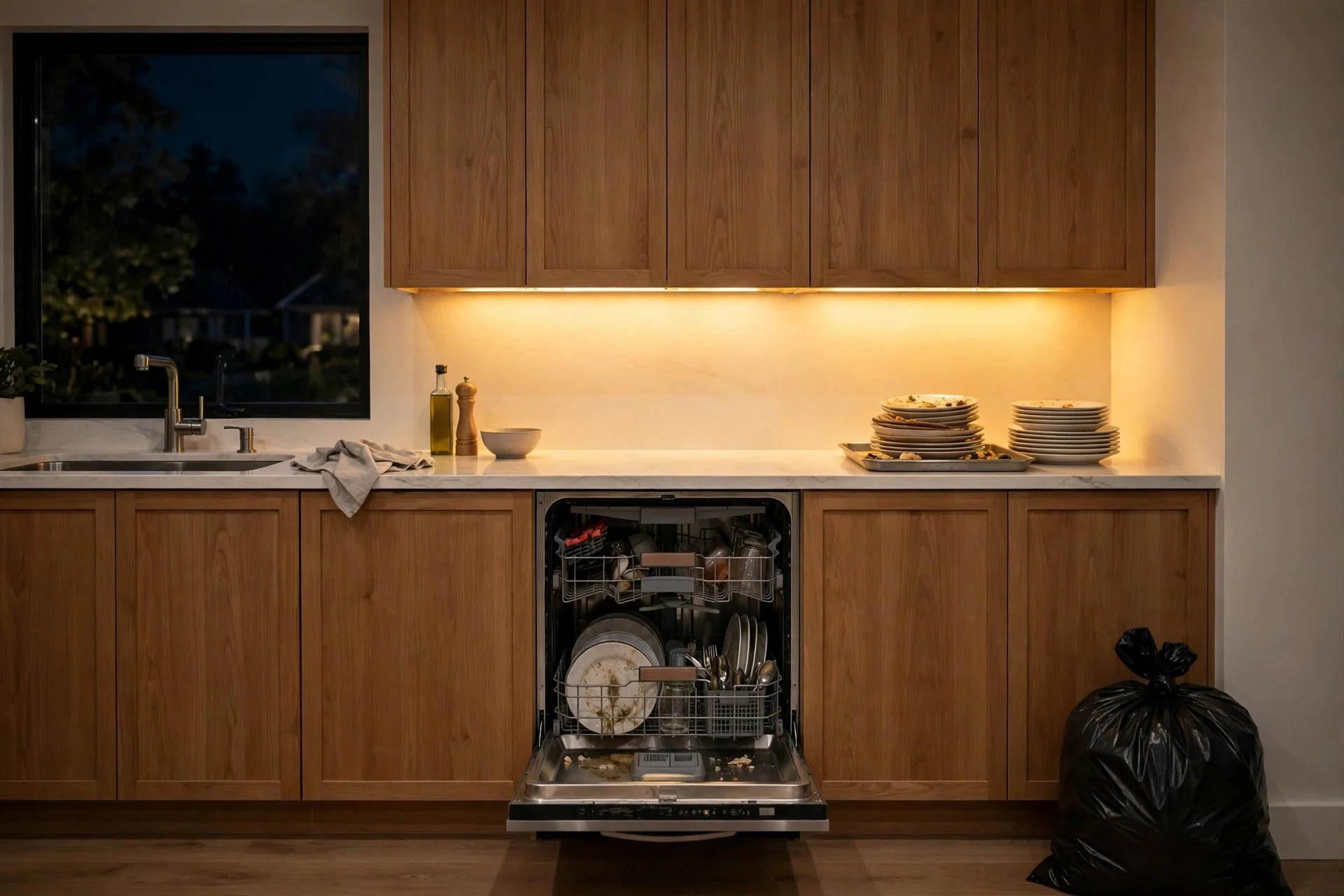
Cleanup is 80% preparation. Line your trash cans with bags before guests arrive. Put a big bowl of warm soapy water in the sink for quick glass rinses. Stack a tray near the kitchen for dirty plates so they don’t pile up on the coffee table. And here’s the real secret: give yourself permission to leave the deep clean for tomorrow.
How to do it: at the end of the night, do the 15-minute reset — trash bagged, food covered and refrigerated, dishwasher loaded and started. Everything else waits for January 1st. For food safety, don’t leave perishable food out more than two hours at room temperature (the USDA’s cold food storage charts are a handy reference). Ask one trusted friend to stay ten minutes and help — most people offer anyway, and accepting is easier than doing it alone.
11. Be a Guest at Your Own Party

The hosts people remember are the relaxed ones. Once the door opens, your job is done — eat the food, drink the punch, sit down. If something runs out, it runs out; nobody remembers the exact appetizer count, but everyone remembers whether the host looked stressed or happy. I give myself a hard rule: no kitchen work after 8:30pm.
How to do it: keep your phone on the charger and your apron off. If you’re tempted to fuss, grab a glass and go talk to the quietest person in the room — that’s what a host is actually for. At midnight, stand in the middle of your friends and be glad you did this instead of going out. Small gatherings are the ones people talk about in March.
FAQ
How many people counts as a “small” New Year’s gathering?
Most hosts find 6–12 guests ideal — enough for energy, few enough that everyone talks to everyone. If you’re over 15, treat it as a full party with more food and a clearer plan.
What time should I tell guests to arrive?
7:30 or 8pm works best for a midnight-centered evening. Earlier than 7 and the night drags; later than 8:30 and dinner feels rushed before the countdown.
How do I handle guests with dietary restrictions?
Ask in your invite message, then label the dishes — little tent cards take two minutes. One vegetarian option and one gluten-free snack cover most needs without cooking separate meals.
What if some guests want alcoholic drinks?
Let them bring their own. Provide your mocktail and cider station for everyone, and keep a few extra glasses handy. There’s no rule that says the host has to supply everything.
Do I need to decorate a lot for it to feel festive?
No. Warm lighting, candles, and a few metallic accents do more than a room full of banners. Save your energy for food and flow — that’s what guests actually notice.
Hosting a small New Year’s gathering at home is really about three things: enough food, a clear plan, and actually enjoying yourself. Get the guest list right, feed people without catering, and keep midnight simple — the rest takes care of itself. Happy hosting, and happy New Year.