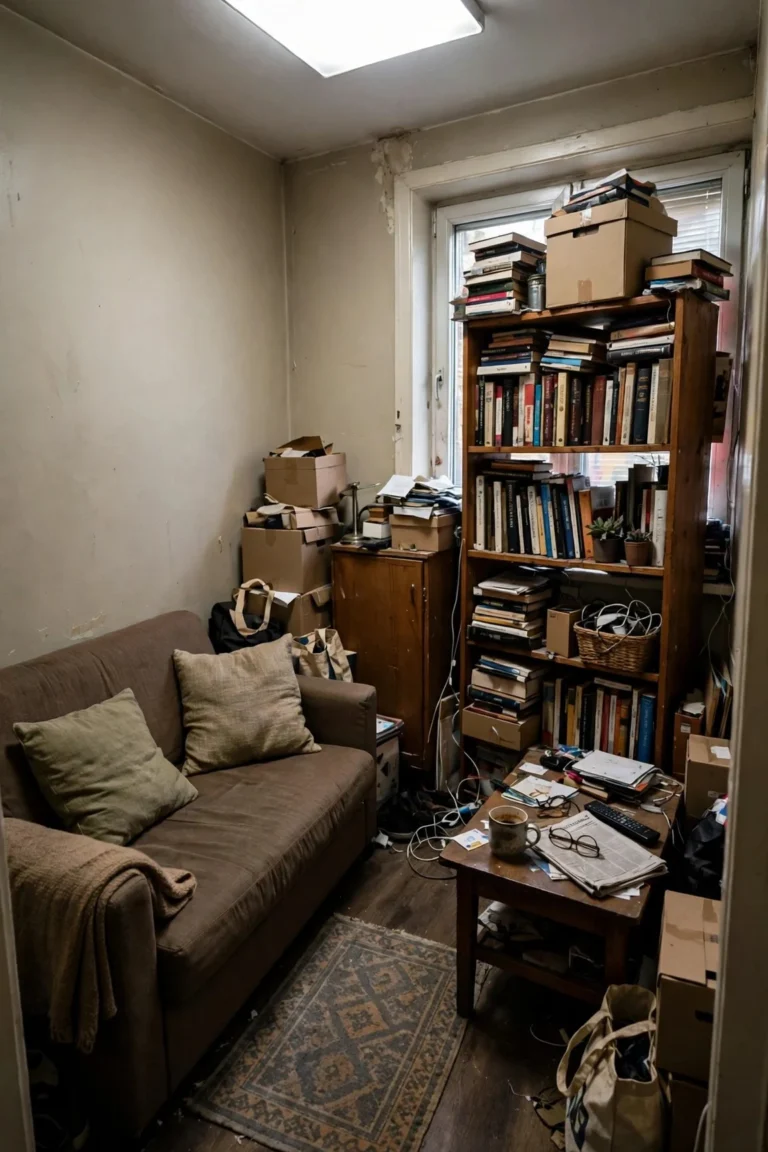




How to Make Your Home Feel Warm All Winter Long
There is a difference between a house that is technically heated and one that is a warm home, winter after winter. The first one shows 71 on the thermostat and still feels cold when you kick off your shoes. The second one wraps around you the moment you walk through the door — golden light, soft textures, the faint smell of something good. I spent one February convinced my furnace was broken before I realized the air was fine; the light was just harsh and the rooms were visually freezing. That winter taught me what actually works — and almost none of it was on the thermostat. Here are eleven steps that fix it.
1. Swap Your Bulbs for Warm Light Temperatures
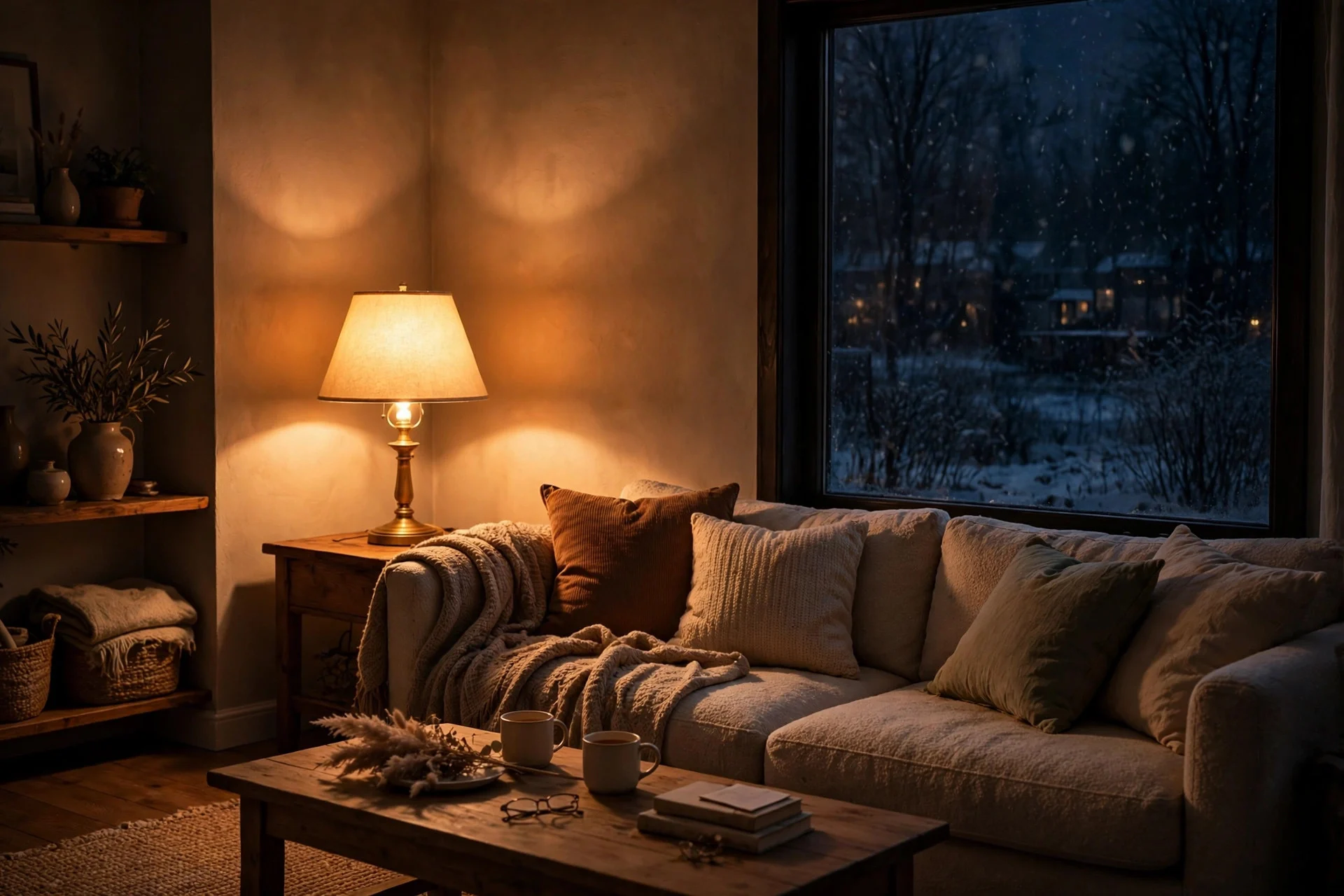
Daylight-white bulbs (5000K) make a room feel like an office cafeteria. Drop to 2700K or lower and the same room suddenly feels like evening in a cabin. Swap the overhead bulbs first — that is the one light you notice most — then match every lamp in the room so nothing clashes. I changed just four bulbs in my living room for about $18 and it was the single biggest warmth upgrade I made that year. While you are at it, check that every lamp in sight is actually turned on after dark. One glowing lamp in a corner does more for the feeling of warmth than a chandelier blasting white light from the ceiling. Dimmers help too: a $12 plug-in dimmer on a floor lamp gives you dusk-to-midnight control without rewiring anything.
2. Stop Relying on the Ceiling Light
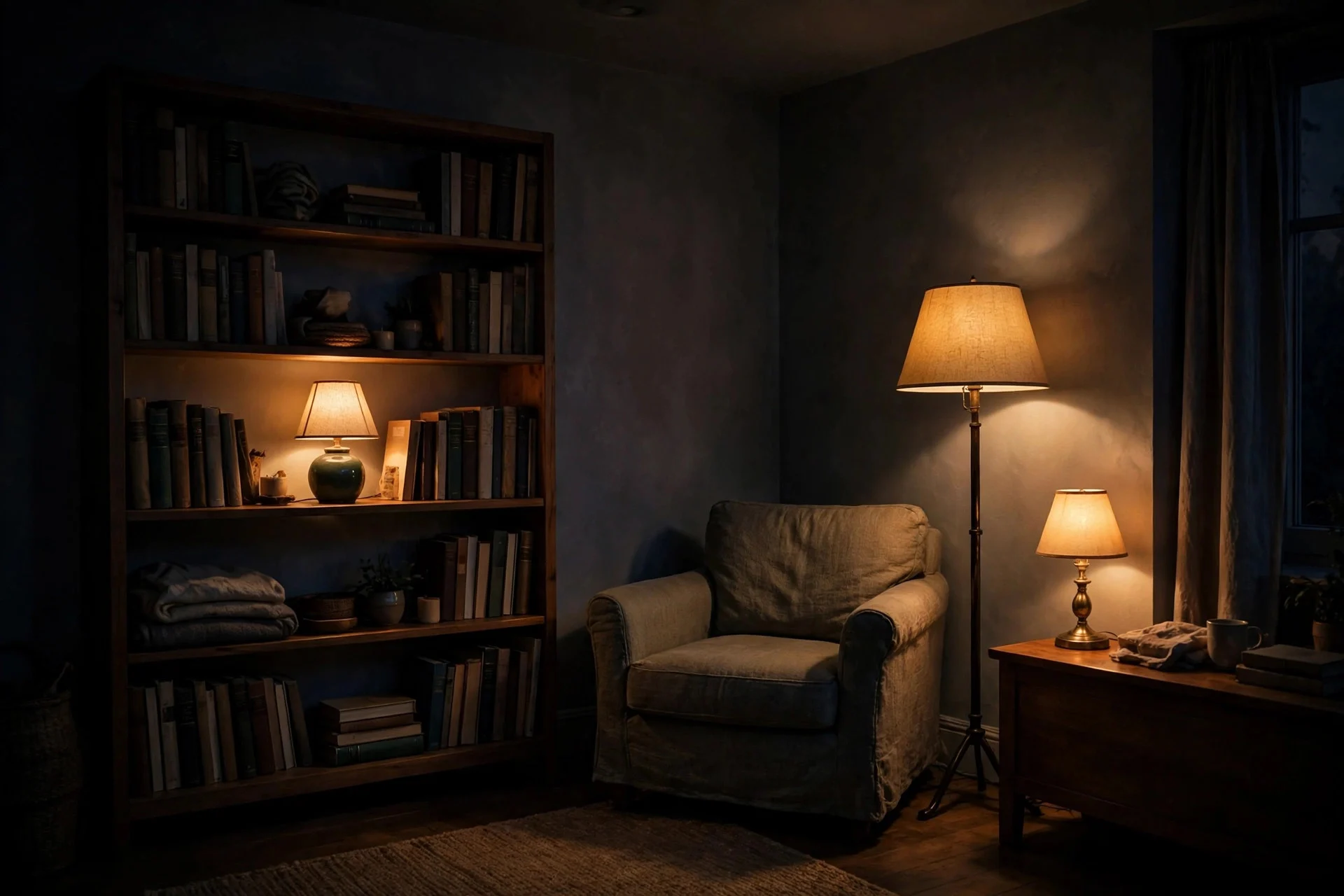
One overhead light flattens a room and makes everything feel exposed — which your brain reads as cold. Real warmth comes from pools of light: a lamp by the sofa, a small one on the bookshelf, a string of warm fairy lights along the mantel. Aim for three light sources per room at different heights. In my old apartment, the ceiling light was so aggressive I literally stopped turning it on in December and lived on lamps for three months. Guests kept saying the place felt “so cozy” and nothing had changed except the lighting layers. If your rooms need more guidance on this, these living room lighting ideas walk through lamp placement that actually works in real floor plans.
3. Add Humidity to the Air
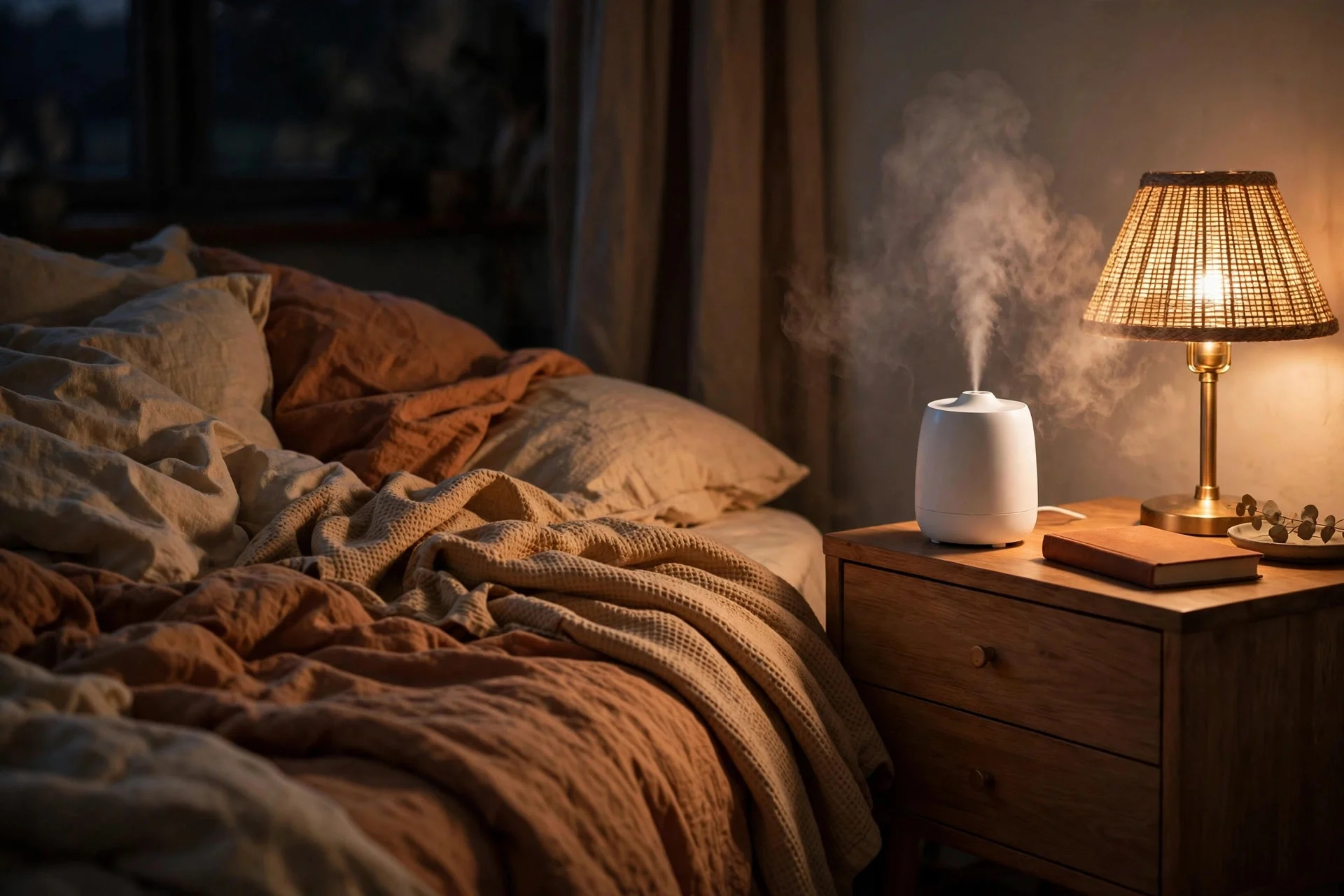
Dry winter air at 68°F feels noticeably colder than humid air at the same temperature, because dry air pulls moisture from your skin and speeds up evaporation. A hygrometer (under $10) will tell you where you stand; most homes drop to 20–25% humidity in January, and comfort lives around 40–50%. A small cool-mist humidifier in the bedroom changed my sleep more than any blanket upgrade. Run it a few hours before bed rather than all day — damp walls are nobody’s friend, and you want to stay under 50% to keep windows clear of condensation. The side effects are free: less static in your hair, skin that does not itch all evening, and wood furniture that stops creaking. Warmth you can feel, from a $35 gadget.
4. Layer Textiles: The Fastest Way to a Warm Home This Winter

Your brain judges a room’s temperature largely through touch and sight, not a thermometer. A leather chair in January reads as cold before you even sit down. Drape a washable throw over it and the verdict changes instantly. Prioritize the contact points: the sofa arms, the seat of your favorite chair, the floor beside the bed. A $40 washable area rug over cold floors does more than double-socks ever will. I keep one basket of throws in the living room and rotate them — flannel and knit in January, lighter cotton in March. Wash them often; a pile of clean, soft blankets is the cheapest form of insulation you will ever buy, and guests will gravitate to the draped chair every single time.
5. Bring in Warm Colors Where Your Eye Rests
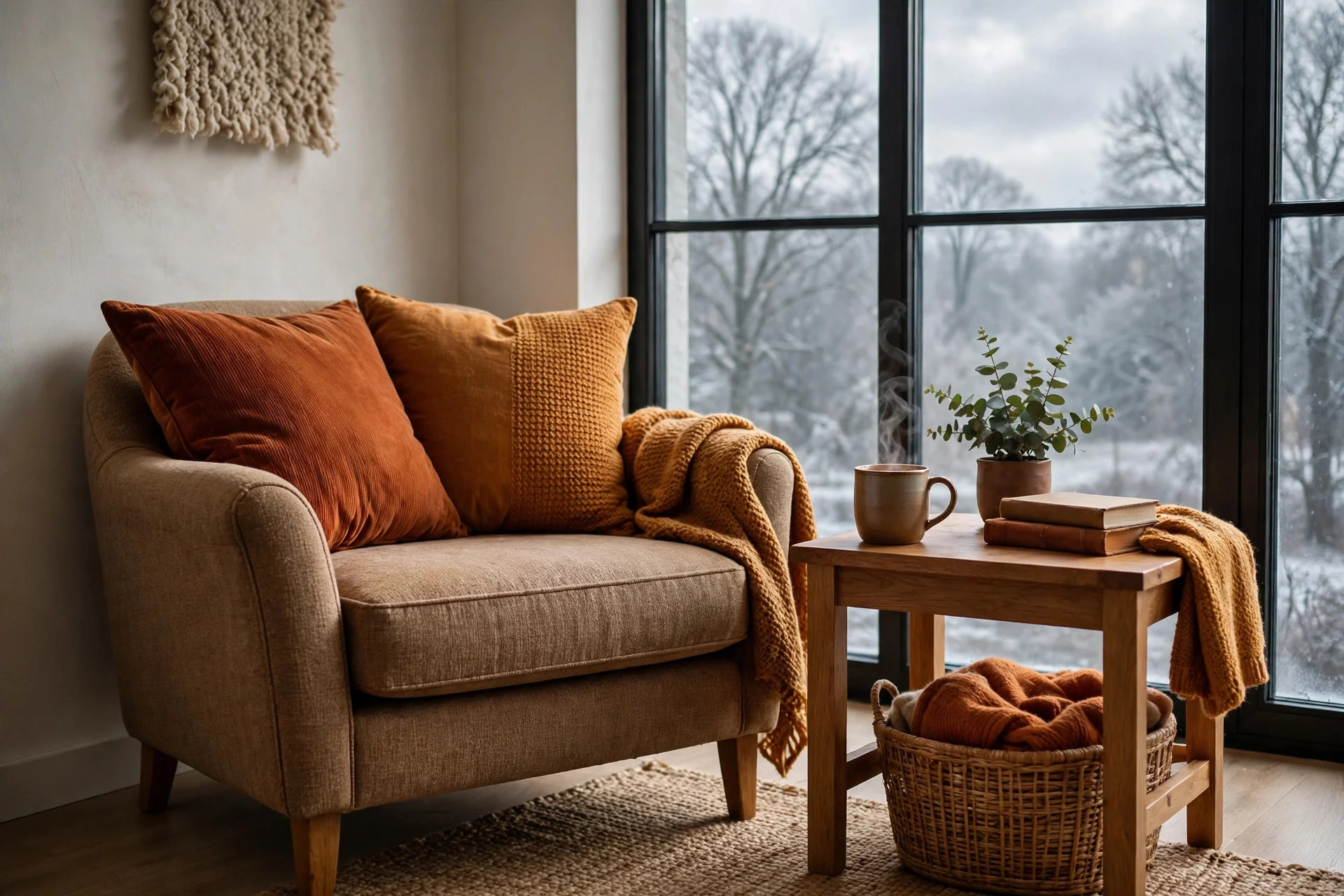
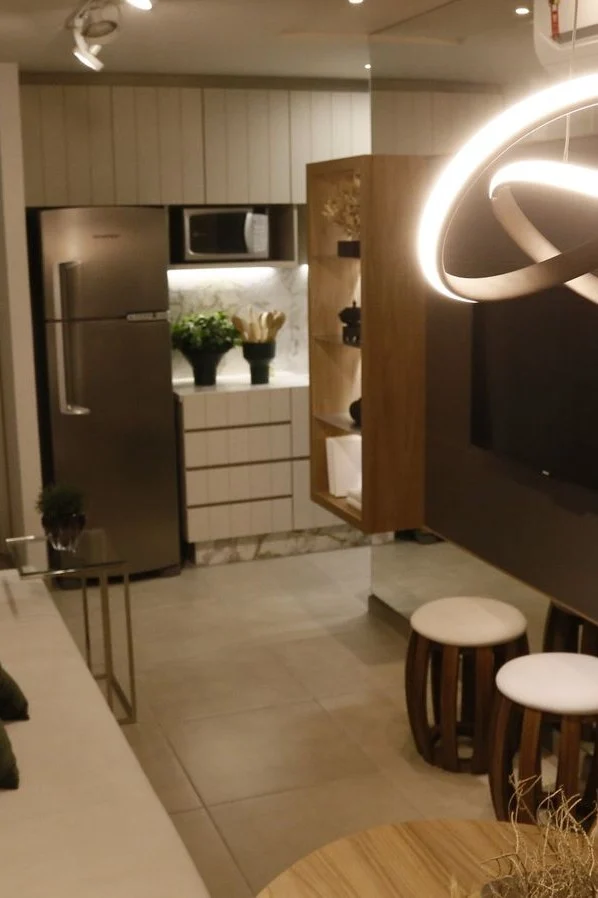
You do not need to repaint the whole house. Warmth comes from the accent layer your eyes land on: rust, amber, terracotta, deep gold, cognac. Swap out cool gray pillow covers for two in burnt orange, trade the black tray on the coffee table for a wooden one, add a caramel-toned throw. I swapped four pillow covers in my living room — total cost about $30 — and a friend asked if I had repainted. Warm colors literally read as warmer to the brain; studies on color perception keep confirming what decorators have always known. The kitchen benefits too, and this guide on how to warm up a modern kitchen has tricks for adding warmth to the coldest-looking room in most homes.
6. Use Scent to Suggest Warmth

Smell bypasses logic entirely. Cedar, vanilla, clove, cinnamon, and baked-apple scents tell your brain “warm room” before the heat even registers. One lit candle near the entry does more psychological warming than a space heater in the corner — I have watched guests visibly relax within a minute of walking into a cinnamon-scented room. Be practical: a $15 soy candle lasts 40+ hours; simmer pots (orange peel, cloves, a cinnamon stick) cost almost nothing and make the whole house smell like you baked something. Just ventilate sensibly — scent should be a whisper, not a fog. If anyone in the house is scent-sensitive, switch to beeswax candles, which smell faintly of honey without added fragrance.
7. Carve Out One Proper Cozy Corner

A warm home is not uniformly warm — it is warm in the right spots. Give yourself one corner that is unambiguously cozy: a real chair (not a dining chair), a lamp behind it, a throw within reach, a small side table for tea. Mine is three feet of space by the window with a $60 armchair from a thrift store, and I use it every single evening from November to March. The psychology works because the corner becomes associated with winding down — your body starts relaxing the moment you sit there. If you are figuring out what actually makes a spot feel restful, this piece on what makes a living room feel cozy versus just comfortable breaks down the difference beautifully.
8. Get Real (or Realistic) Flames in Sight

Nothing reads as warm like visible flame. If you have a fireplace, clean it and use it — even a small fire on Friday nights changes the whole week’s mood. No fireplace? Cluster pillar candles of different heights on the hearth or in a firebox, and you get 80% of the effect. I have done the candle-cluster trick in two rentals with fake fireplaces and every guest assumed it was the real thing from across the room. Flameless LED candles have genuinely improved in the last few years — the ones with a flicker mode and a wax exterior fool most people at a glance. Put them on a timer so they glow every evening at six. Warmth you can see beats warmth you can only feel.
9. Hunt Down and Seal the Drafts

All the cozy lighting in the world cannot compete with a cold draft across your ankles. On the next windy evening, walk the house slowly and feel along door bottoms, window frames, and outlets on exterior walls — your hand will find every leak. A $10 draft stopper under the front door and some $8 removable window film made my hallway measurably warmer; the film goes on with a hairdryer in about twenty minutes per window and peels off in spring without residue. Heavy curtains over drafty windows work double duty: they insulate and they look warm. Start with the rooms you sit in longest — bedroom and living room — and ignore the guest room until the rest of the house is sealed.
10. Build a Warm Evening Routine Into the House
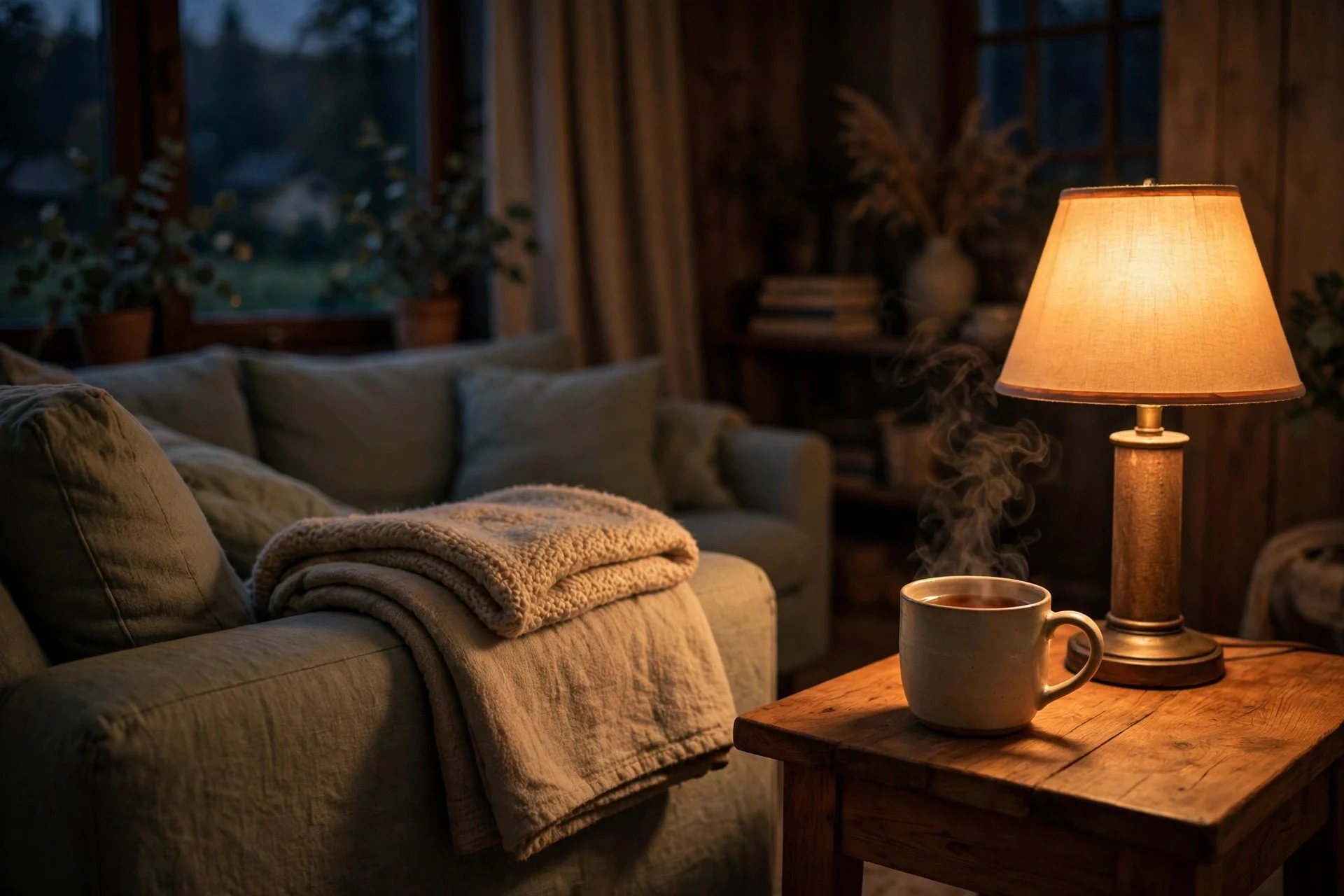
Warmth is partly a ritual. When you do the same comforting things every evening, your body starts unwinding before the kettle boils. Build the routine into the space: keep the tea, the mugs, and the honey in one obvious spot; leave the cozy-corner lamp on a smart plug that clicks on at sunset; stash a soft blanket exactly where you will be sitting at eight. Mine is embarrassingly simple — lights dimmed, tea made, phone left in the kitchen — and by the third night it felt like the house itself was telling me to relax. The routine does something a thermostat never can: it makes warmth feel intentional rather than incidental. After a few weeks, just walking into the dim, warm living room at dusk starts the wind-down.
11. Warm the Bedroom Last, Because It Matters Most

Apply everything to the bedroom and you sleep better all winter. Flannel sheets (real ones, not the thin imposters) are the upgrade people underestimate most — cotton flannel holds body heat the way a good sweater does. Add a rug beside the bed so your feet never touch cold floor at 2 a.m., keep one extra blanket folded at the foot of the bed, and run the humidifier a few hours before sleep as in step three. Bedside lamps at 2700K replace the overhead light entirely. I made this switch two winters ago and stopped dreading getting into bed in January. The bedroom is the last room you see each night and the first each morning — if any room earns the full warm treatment, it is this one.
FAQ
What temperature makes a home feel warm in winter?
Most people feel comfortable between 68 and 72°F indoors, but perceived warmth depends on humidity, lighting, and textiles as much as the thermostat. A 68°F room with warm lighting, 45% humidity, and soft textures feels warmer than a 72°F room with white light and dry air.
Does a humidifier really make a room feel warmer?
Yes, within reason. Keeping indoor humidity around 40–50% slows moisture evaporation from your skin, which is a major source of that “bone cold” feeling in dry winter air. Stay under 50% to avoid condensation on windows.
What is the warmest light bulb color for a cozy home?
Look for 2700K or lower (labeled “warm white” or “soft white”). Bulbs at 2200K or “amber” give an even cozier, candle-like glow — ideal for lamps in living rooms and bedrooms.
How can I make my home feel warm without raising the heating bill?
Seal drafts first (doors and windows are the biggest leaks), layer textiles at contact points, switch to warm lighting, and keep humidity around 40–50%. Together these cost under $100 and change how warm the house feels without touching the thermostat.
A warm home in winter is never about one big change. It is a stack of small ones — the right bulbs, a little humidity, fabrics you actually want to touch, a corner that is yours. Start with whatever costs the least in your house (for most people, that is the bulbs and the draft stoppers), and let the feeling compound from there. By February, your place will be the one friends linger in.