



12 Christmas Decor Storage Mistakes to Avoid
Last January I opened my ornament box and found a sound I never want to hear again: the soft crunch of glass under tissue paper. Three of my favourite baubles — the hand-painted ones from a market in Edinburgh — were dust. Not because I was careless, but because I’d made a string of small Christmas storage mistakes the year before that quietly added up. The fix, I’ve since learned, isn’t buying fancier boxes. It’s stopping the specific habits that wreck decor while it sits in the dark for eleven months.
Every January, thousands of pounds’ worth of baubles, lights, wreaths and candles get quietly ruined in lofts, garages and under-bed bins. Not by age. By storage. These are the twelve mistakes I see people make most — and the simple fixes that keep everything intact until next December.
1. Tossing Ornaments Loose Into a Bag or Box

This is the fastest way to lose your favourites. Glass baubles knocking against each other in transit will chip, crack or shatter — especially on the trip up the loft ladder. Even “shatterproof” plastic ones scuff each other into a matte finish when they’re piled loose. The mistake isn’t just about breakage; every scratch on a metallic finish shows up under tree lights.
Fix it properly: wrap each ornament individually. Acid-free tissue paper costs a few pounds for a hundred sheets and works fine, or reuse the paper from parcels all year. Nest them in divided storage trays — the cardboard wine-box dividers work brilliantly — so nothing touches its neighbour. I tried this last year after my Edinburgh casualties, and opening the box this December felt like unwrapping presents. Not a single chip. If you love decorating a Christmas tree like a professional, protecting the ornaments starts eleven months earlier.
2. Cramming the Artificial Tree Into Its Original Box
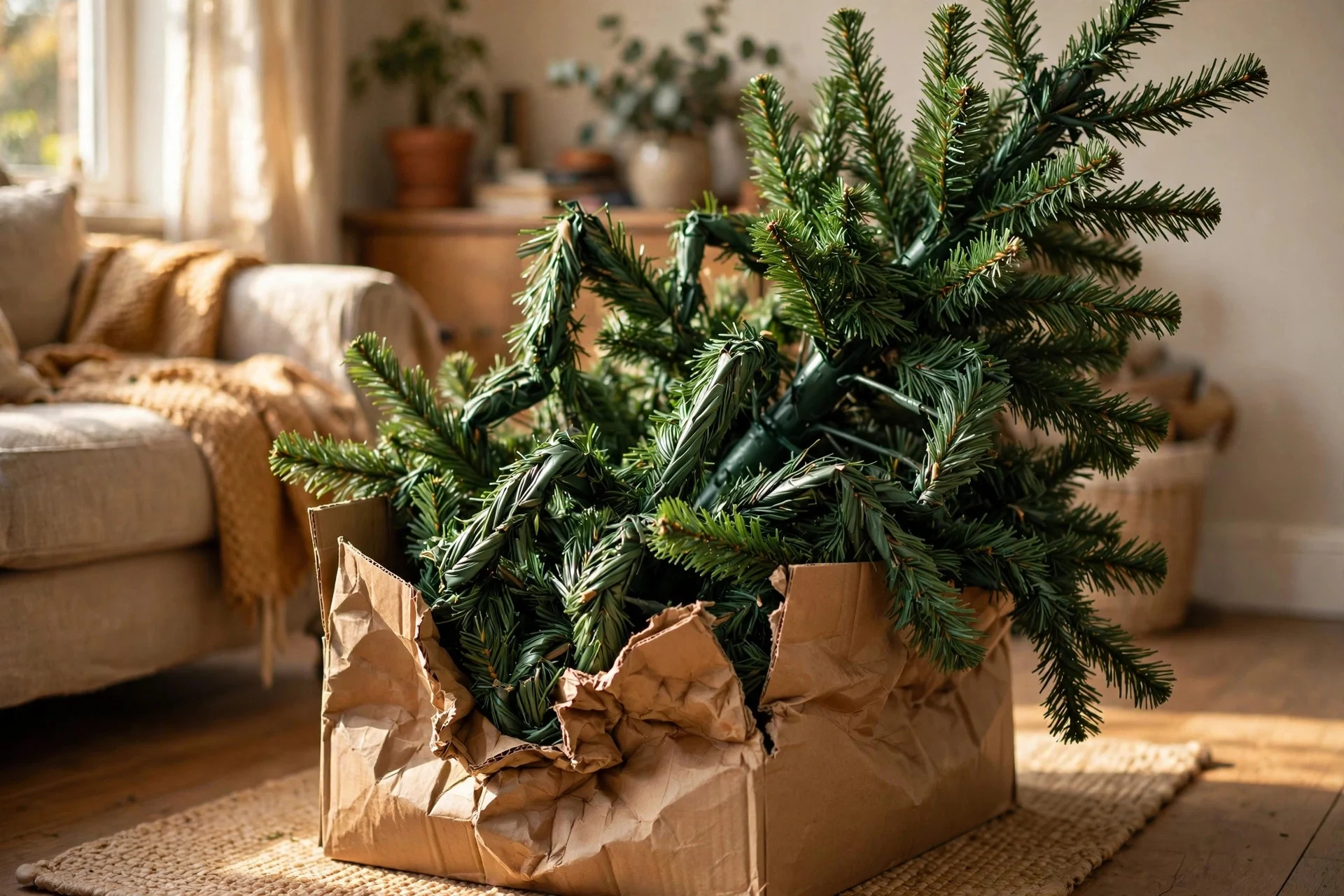
That slim box the tree came in was designed by packaging engineers with one goal: getting it onto a lorry. It was never meant for five years of repeated packing. Every January you squash the branches flat, and every December the tree looks a little more tired, a little more “bent wire,” because the branch tips have permanent creases where you forced them.
Get a proper tree bag or a tall storage box instead. Leave the branches partly fluffed and compress them gently rather than folding them backwards. Some people use an upright tree keeper bag and just wheel the whole tree, cover and all, into the garage — no disassembly at all. If you’re choosing a tree, our guide to the right Christmas tree size for your room matters here too: a tree that barely fits your room is even harder to store.
3. Winding Lights Up in a Tangled Ball
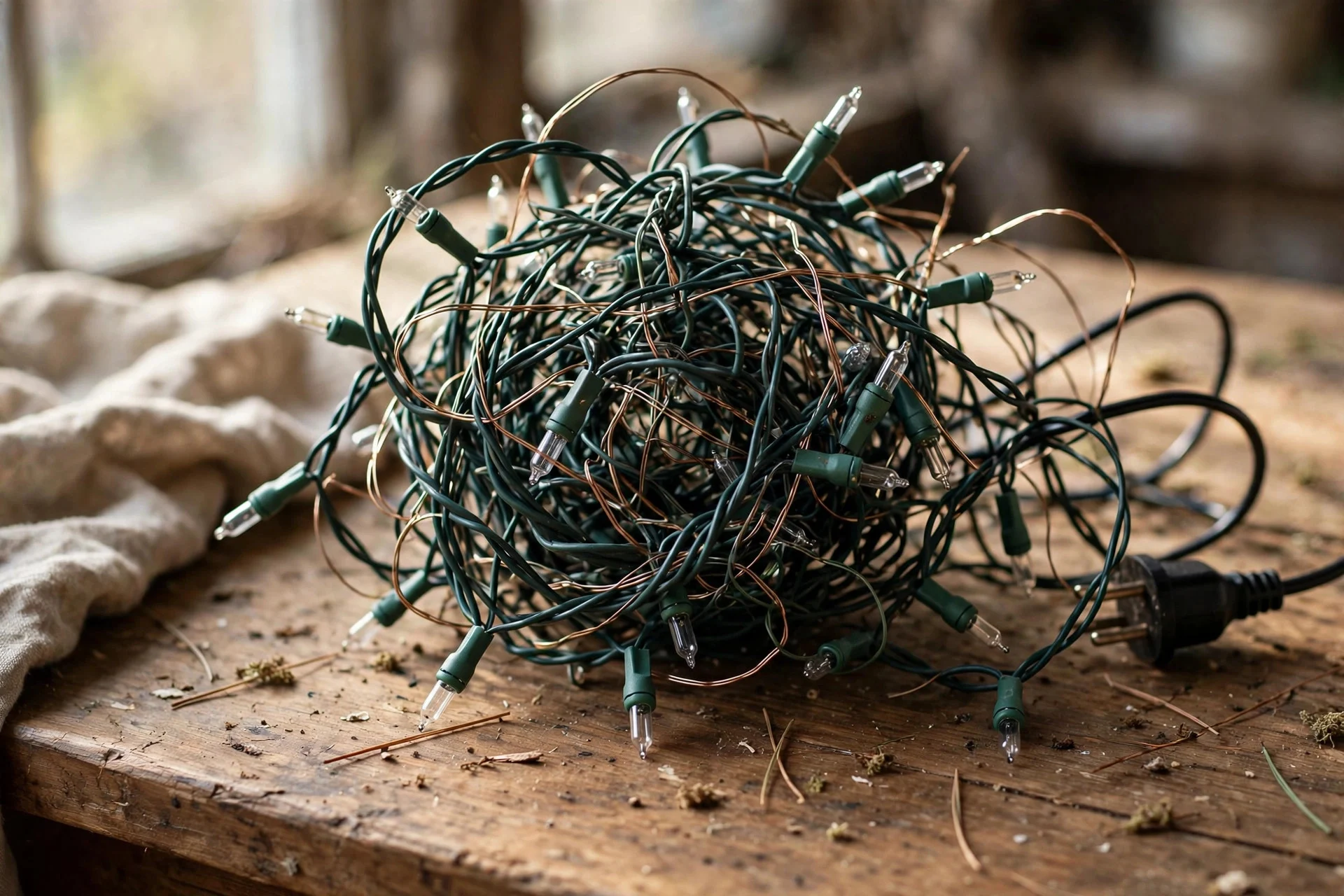
You know this one. December arrives, you pull out the lights, and forty-five minutes later you’re on the floor with a knot the size of a hedgehog while everyone else hangs baubles. Worse, a tight tangle puts strain on the wire at exactly the spots where it bends hardest, which is why so many strings fail one section at a time.
Wrap each string around a piece of sturdy cardboard — a wrapping-paper tube cut in half is ideal — and secure the plug end with a bit of tape. Label which set is which: tree lights, outdoor, the short porch string. And test every strand before you pack it away. A dead string takes up just as much space as a working one; better to replace it in the January sales than discover it on December 23rd. We cover testing and layout in our guide to decorating with Christmas lights without looking tacky.
4. Storing Everything in a Sweltering Loft — The Christmas Storage Mistakes Most People Repeat Every January
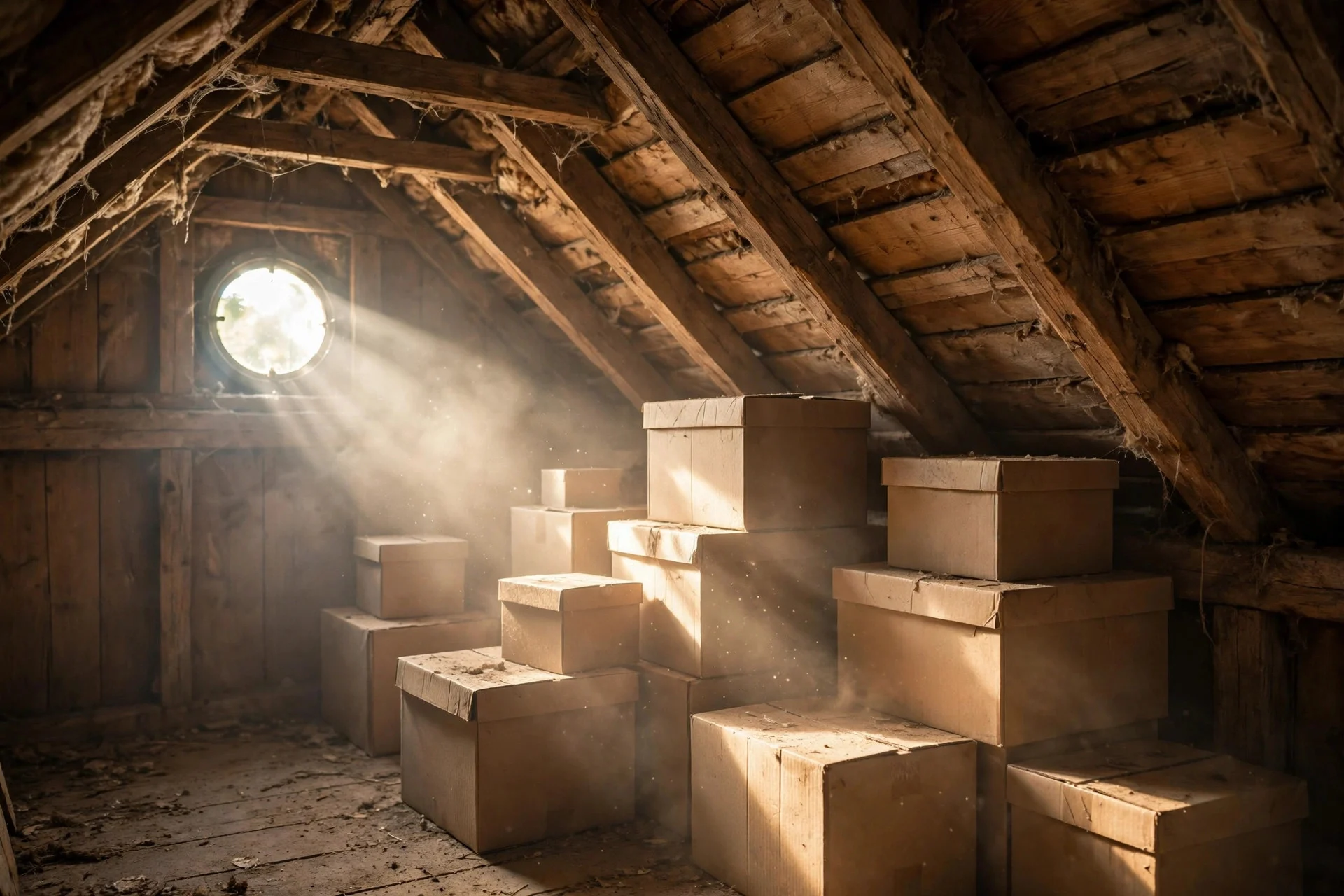
Lofts are convenient and absolutely brutal. On a summer afternoon the temperature up there can pass 50°C, which is more than enough to soften candle wax, melt glue on garlands, warp plastic ornaments and yellow white fabric. Adhesive on ribbons gives up. Batteries left inside things leak faster in heat. I once found a scented candle had slumped sideways and fused itself to a garland — a £14 decoration turned into a waxy brick.
Choose the coolest, driest spot you’ve got: an under-bed drawer, a hallway cupboard, a climate-stable spare room corner. If the loft is your only option, at least avoid storing candles, melts, adhesives and batteries up there. And never store anything directly under the roof slope where the heat concentrates; the floor level of the loft is meaningfully cooler than the eaves.
5. Keeping Decor in the Original Cardboard Shipping Boxes
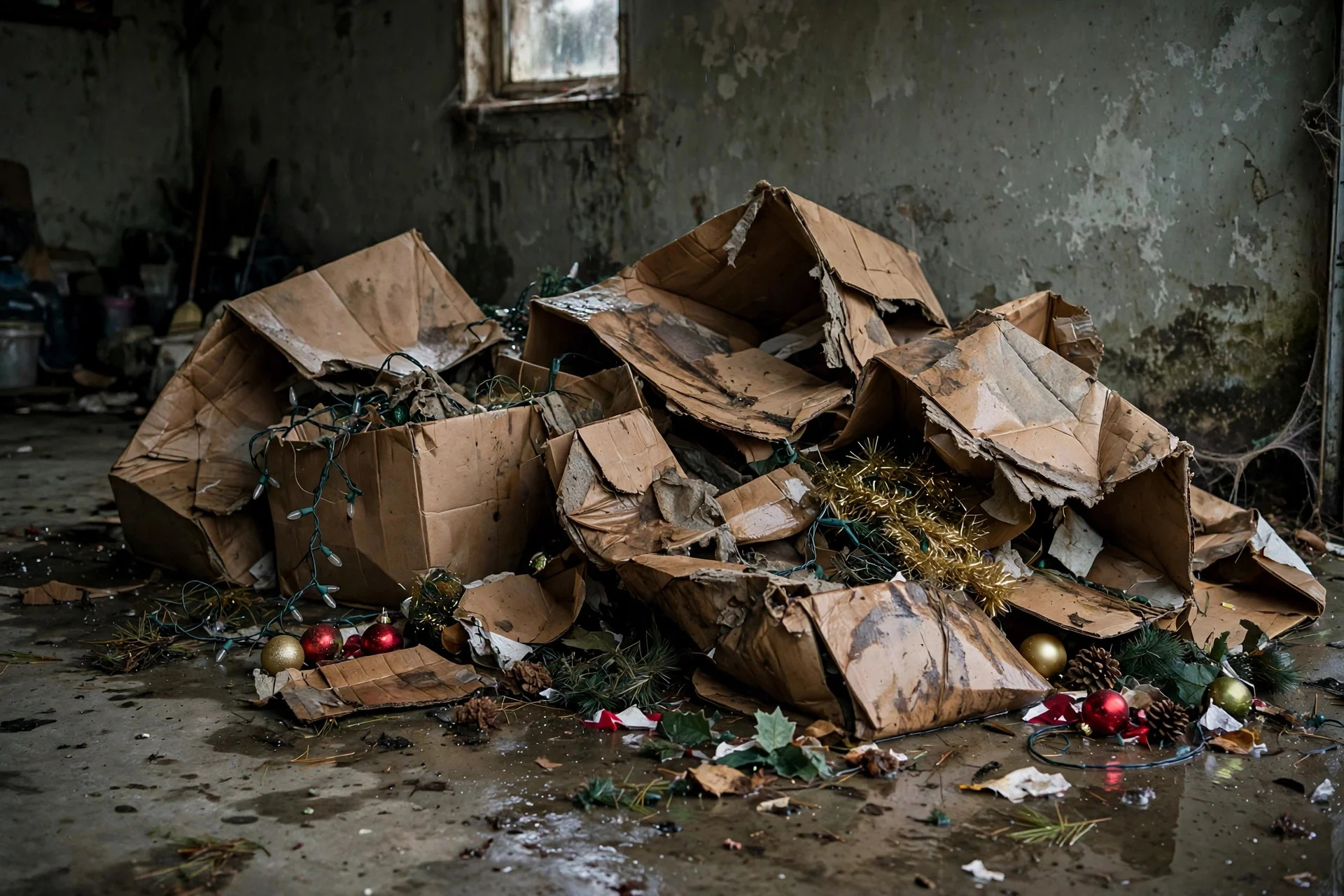
Cardboard is a sponge, a snack, and a nesting site. One damp winter in the garage and those flimsy ornament boxes go soft at the corners. Silverfish and mice find cardboard irresistible, and if there’s any moisture at all you’ll get that musty smell soaked permanently into fabric decorations. The fancy printed box your baubles came in was designed to sell them, not to store them.
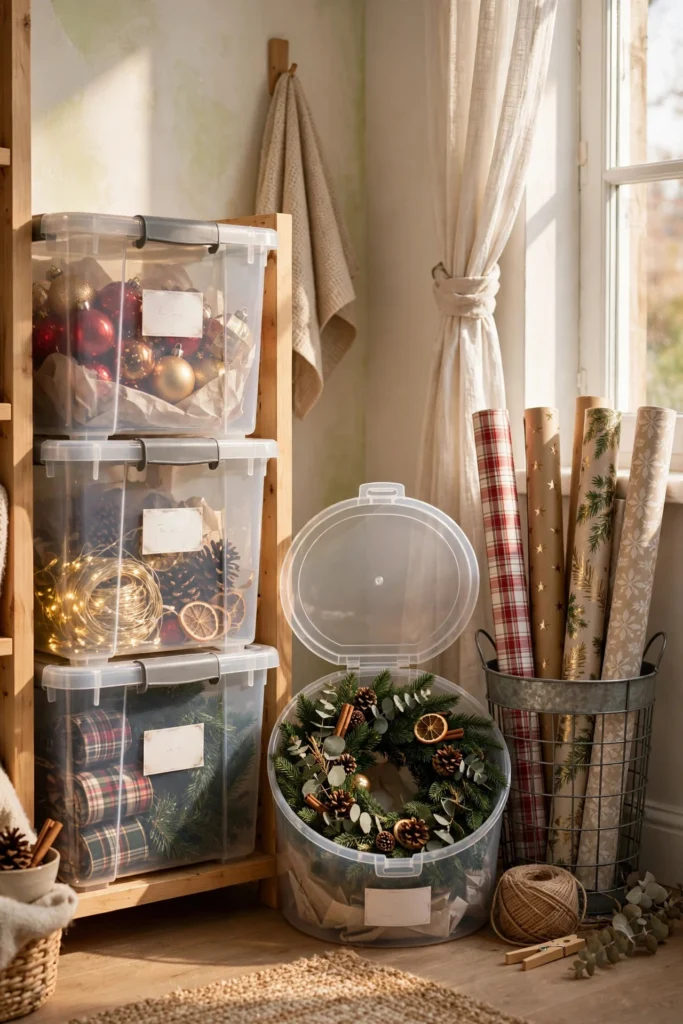
Decant everything into rigid plastic bins with snap lids. Clear ones are worth the small premium — you can see what’s inside without opening them. Line the bottom with a layer of packing paper for cushioning and toss in a silica gel packet or two, especially in garages and sheds. A 10-litre pack of silica gel costs under a fiver and lasts for years if you dry them out occasionally.
6. Packing Everything Away With Zero Labels

Future-you, on a freezing December evening with the tree waiting, does not remember which of the six identical grey bins holds the tree skirt and which holds the outdoor lights. Unlabeled storage turns decorating day into an archaeological dig. You open every box, everything comes out onto the floor, and suddenly you’re “organising” until 11pm.
Label both the top and one side of every bin with a thick marker or, better, printed labels that won’t fade. Be specific: “Tree ornaments — gold & red” beats “Decorations.” I keep a list taped inside the cupboard door of what lives where, and updating it takes thirty seconds in January. If you ever want the full orderly system rather than just avoiding the mistakes, see how to store Christmas decorations without the chaos.
7. Storing Candles and Wax Melts With Everything Else

Wax is a slow-motion disaster. Even in a normal room, a candle left leaning against a fabric garland will soften on the first warm day of spring, and by summer it has migrated into the fibres. Scented wax melts and candles also bleed fragrance oils that stain anything porous — that “Christmas morning” scent becomes a permanent greasy mark on your tree skirt.
Store candles upright in their own sealed bag or box, away from fabric, paper and anything with a finish you care about. Keep them out of the loft entirely (see mistake 4). If a candle has already leaked, freeze the affected fabric for a few hours, then scrape and iron the residue out through brown paper. It mostly works, but the fabric is never quite the same — prevention is genuinely easier.
8. Putting Away Dirty, Dusty Decor
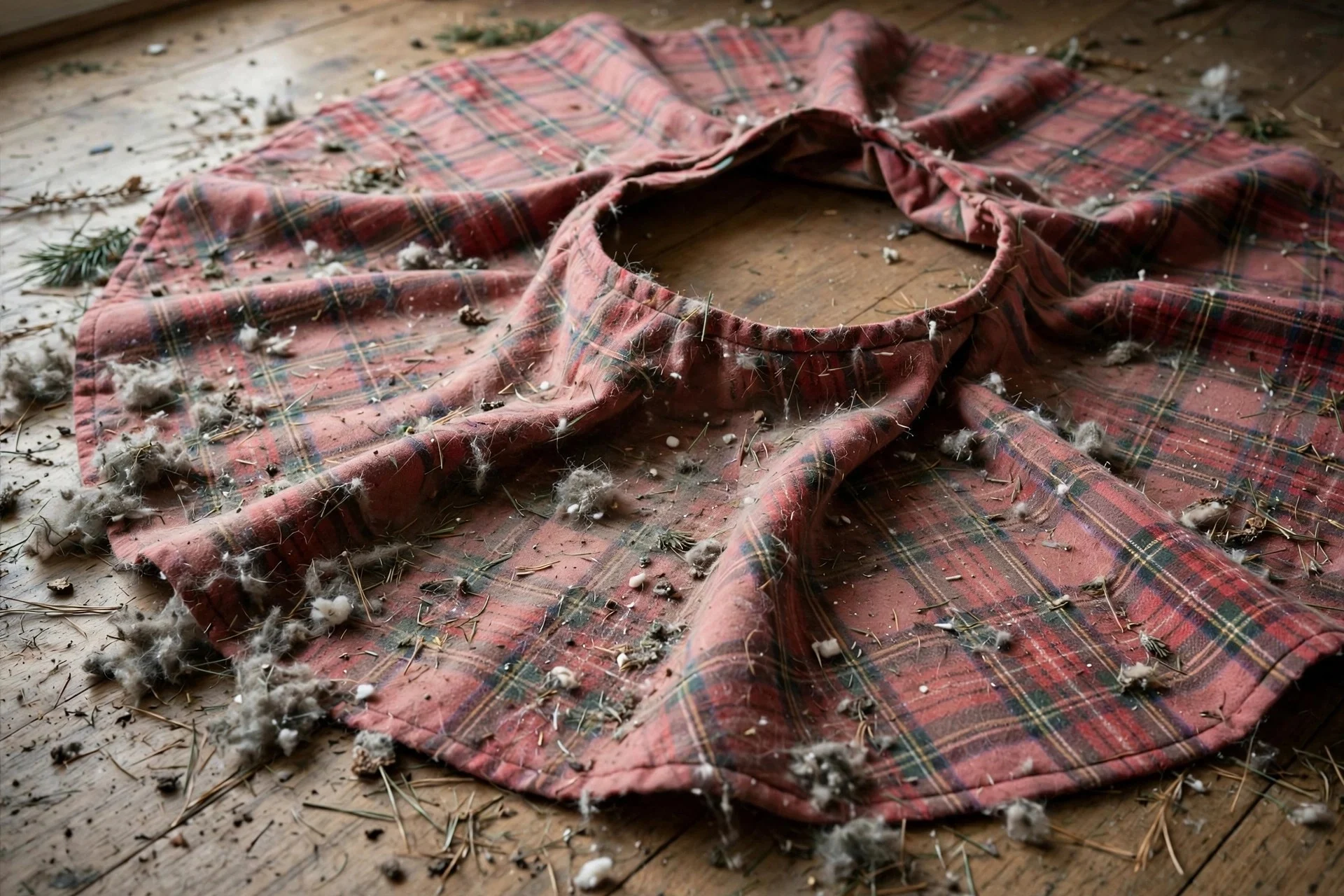
Eleven months of dust becomes a permanent resident if you pack it in. Dust contains fine grit that abrades metallic finishes every time the box shifts, and damp dust on garlands and wreaths turns into mould spots you won’t notice until December. Tree skirts and stockings packed with fireplace soot or pine resin get stains that set harder the longer they sit.
Before anything goes into a box, give it a once-over: shake out garlands outdoors, wipe baubles with a dry microfibre cloth, vacuum the tree skirt, spot-clean any marks. It takes maybe twenty minutes for a whole tree’s worth of decor. Think of it as part of undecorating day, not a separate chore — I do it with a podcast on and the kettle going, and it’s honestly the least painful part.
9. Leaving Batteries in Battery-Operated Decorations
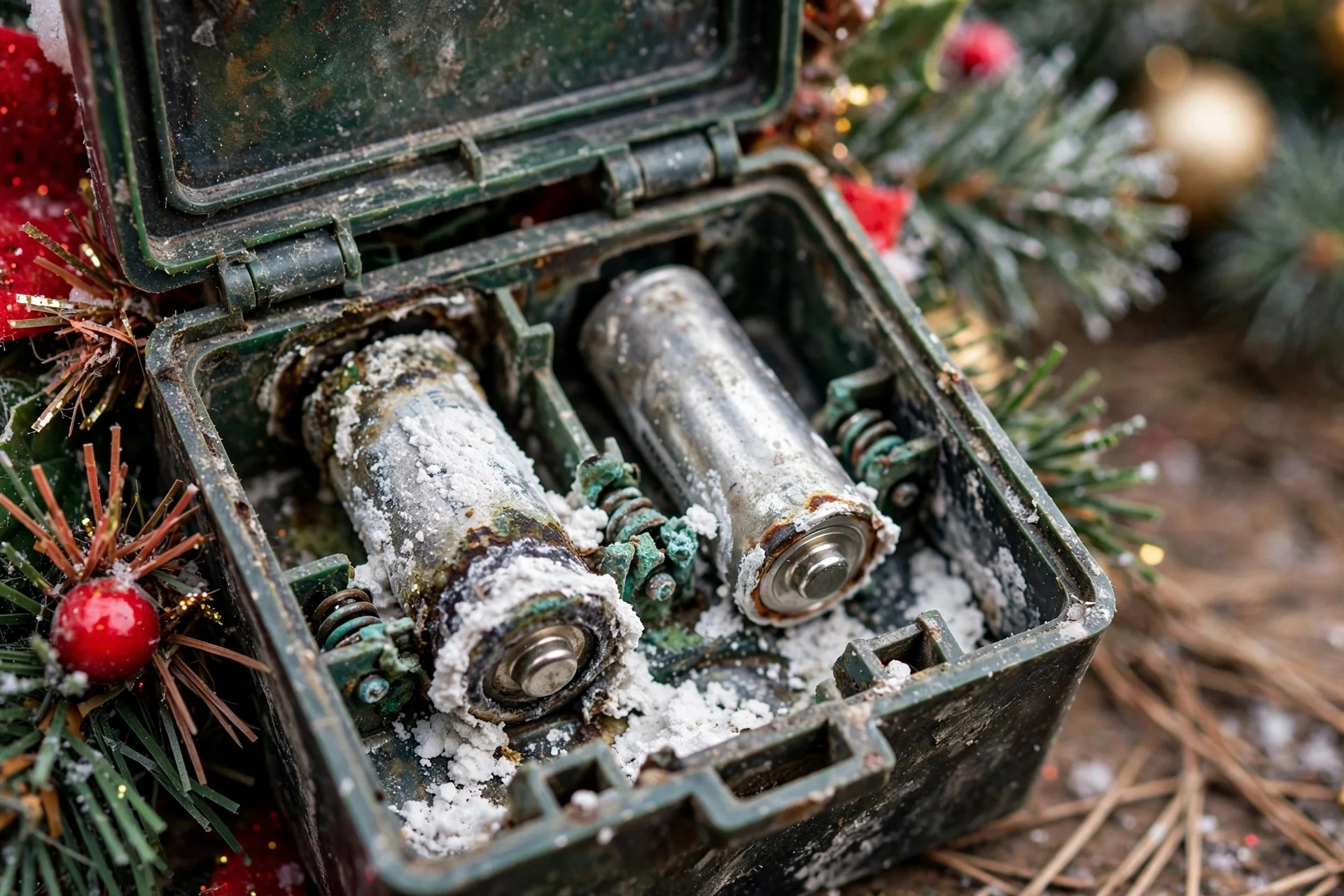
This is the silent killer of LED candles, musical ornaments and those little light-up village houses. Alkaline batteries left in a device for months will leak potassium hydroxide, which crusts over the contacts in a white or green crust and can eat through the metal entirely. I’ve lost two sets of window candles this way — the kind that cost £18 a set and are never quite the same colour when you replace them.
Remove every battery in January. Every single one. Check the musical snow globe, the star on the tree top, the motion-sensor Santa. Store the batteries separately in a labelled bag (test them next December before trusting them), or recycle spent ones. A strip of painter’s tape over the empty compartment reminds you next year that it needs fresh cells.
10. Squashing the Wreath Into a Bag That’s Too Small
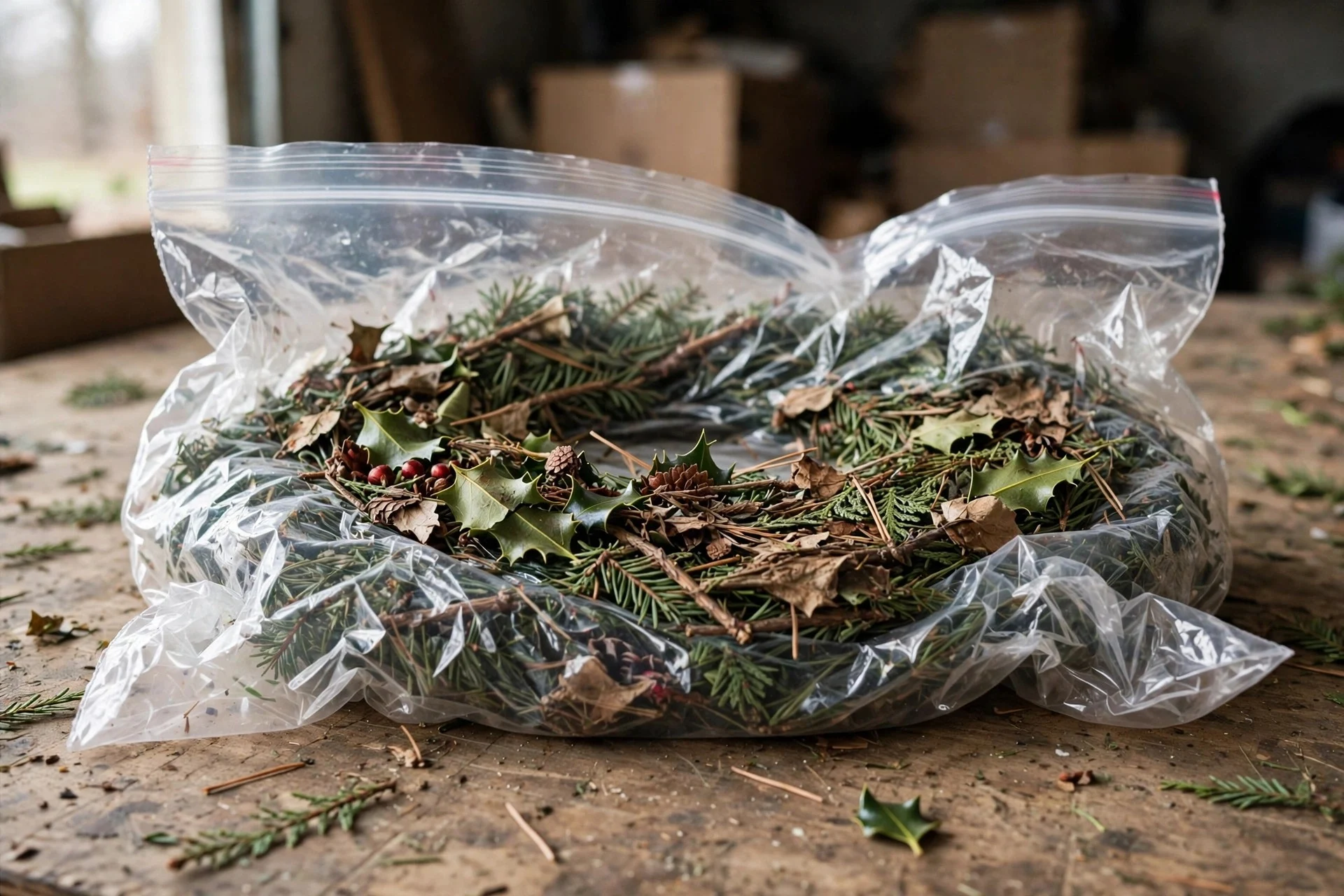
A wreath’s whole job is to look full and round, and nothing defeats it like eleven months folded in half. Artificial wreaths packed into undersized bags come out with a permanent flat side, bent branches and berries snapped off. Once the wire frame kinks, it never sits flush against the door again.
Store wreaths flat in a container wider than the wreath itself — a dedicated wreath box is about £12 and lasts for years. If you’re improvising, hang the wreath on a sturdy hanger inside a garment bag and suspend it in a wardrobe or from a hook in the garage; gravity does the fluffing for you. For real evergreen wreaths, compost them — they were never going to survive until next year.
11. Folding Wrapping Paper Instead of Rolling It

Leftover wrapping paper is money sitting in a drawer, but folded paper is nearly worthless. Every crease becomes a permanent white line that shows through, especially on foil and kraft papers. And rolls stored loose roll around, get crushed at the ends, and emerge in December looking like they’ve been through a tumble dryer.
Keep rolls rolled. A tall kitchen bin, an under-bed wrapping-paper organiser, or even a length of wide PVC pipe holds rolls upright and protected. Slide a cardboard tube inside flimsy rolls so they don’t collapse. Store ribbons on their spools, not in a tangled heap — ribbon flattened under a heavy box loses its curl permanently.
12. Putting Outdoor Decor Away Damp
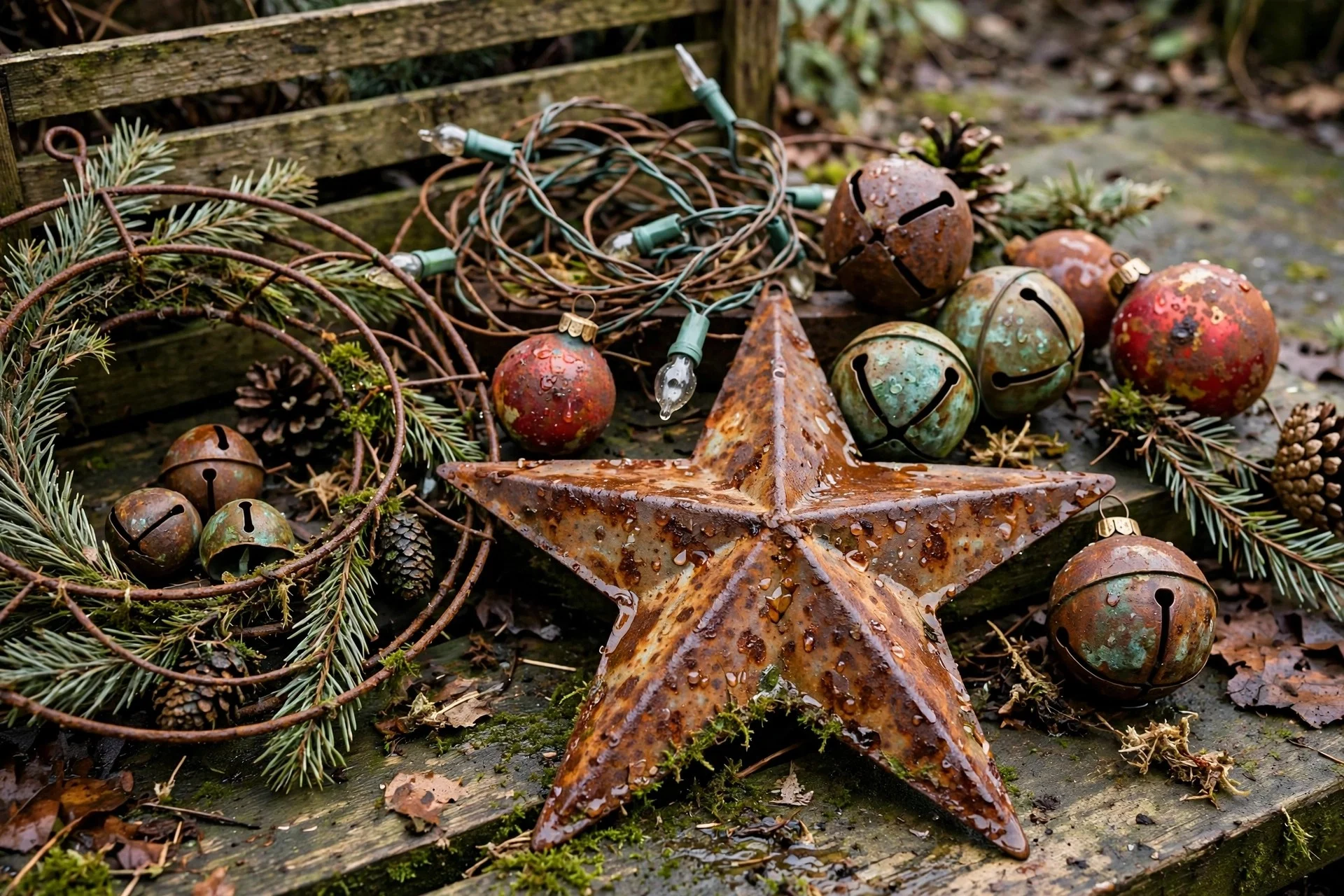
Outdoor pieces come in wet — from rain, frost, or just January damp — and go straight into a sealed bin, where they marinate for eleven months. Metal frames rust, salt residue from de-iced paths corrodes wire, and any trapped moisture breeds mould on fabric elements. The reindeer that looked charming on the lawn looks tragic when it emerges orange with rust.
Dry everything before it goes in. Bring outdoor decor inside for 24–48 hours, wipe down metal parts, and check for salt residue if you’re near a gritted path. Spray metal frames with a light coat of WD-40 or a rust inhibitor before storage — it takes five minutes and adds years of life. Then store outdoor pieces in ventilated bins rather than airtight ones, so any residual damp can escape.
Frequently Asked Questions
When is the best time to pack away Christmas decorations?
Twelfth Night (5th or 6th January, depending on tradition) is the classic date, but honestly the best time is the first dry, unhurried day after New Year. Don’t rush it on New Year’s Day when you’re tired — that’s exactly when mistakes 1, 3 and 8 happen.
Is it okay to store Christmas decorations in the garage?
Yes, with conditions. Garages are cooler than lofts but can be damp, so use sealed plastic bins with silica gel, keep boxes off the concrete floor on a pallet or shelf, and never store candles or batteries there in summer heat. Check the space after heavy rain the first year.
How do I stop my artificial tree from looking squashed after storage?
Store it in a proper tree bag or tall box without folding branches backwards, and fluff it branch by branch next December. If tips are permanently bent, a little steam from a kettle (held at a distance) can relax crushed branches — just don’t scorch them.
What’s the cheapest way to store ornaments safely?
Egg cartons for small baubles, divided wine boxes for medium ones, and tissue paper from parcels as wrapping. A set of clear plastic bins plus these free dividers protects ornaments as well as anything sold specifically for the job.
None of these fixes is expensive or complicated — most take minutes and cost nothing. The expensive part is always the replacement bauble, the new string of lights, the wreath that never recovered. Pack things away like you actually want to see them again, and next December starts with joy instead of a repair bill. Your future self, standing in front of a perfect tree with a cup of tea, will be glad you bothered.



One Response