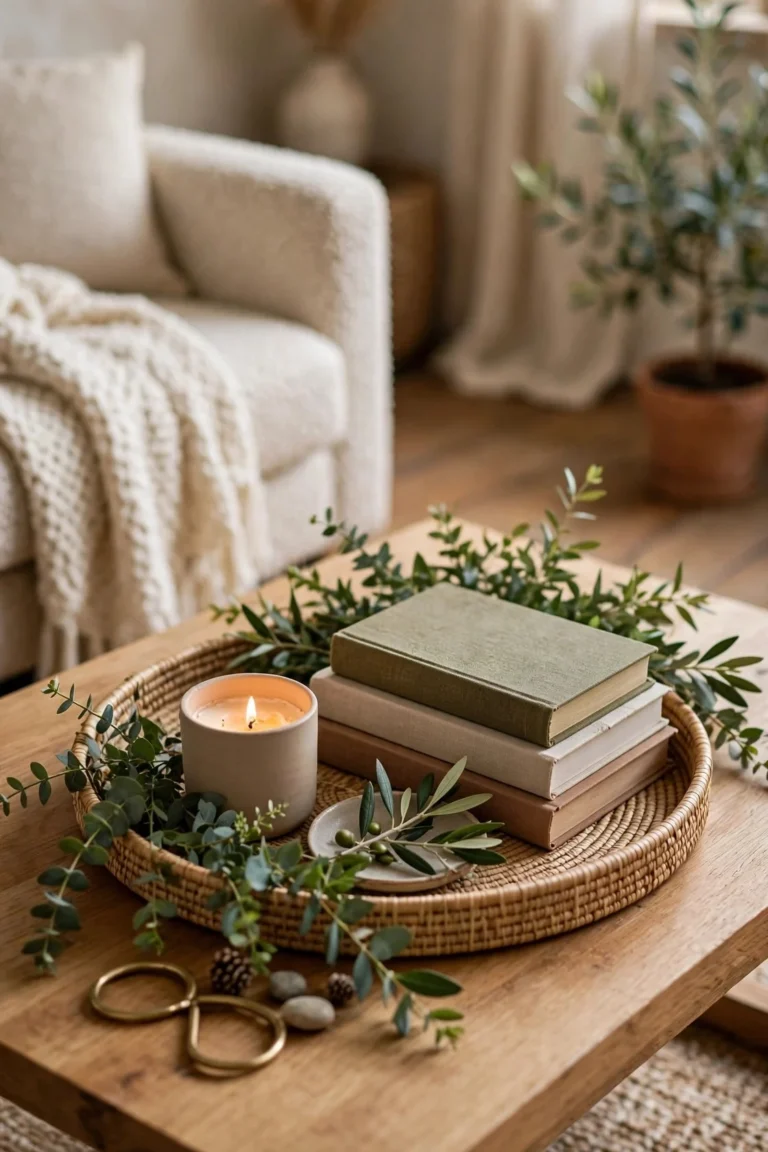



Here’s a secret from someone who has styled a lot of holiday tables: the centerpieces that get photographed are almost never the expensive ones. These 18 thanksgiving centerpieces prove a budget is an advantage, not a limitation — every one costs under $25 to put together, most under $15, and each looks like it came from a stylist’s van instead of a grocery run.
The trick isn’t spending more. It’s knowing which cheap materials photograph expensive: candlelight, brass, fruit with deep color, and anything foraged. A $12 grocery run arranged with confidence beats a $120 florist arrangement nobody notices. Here’s exactly what to buy, where to find it, and what it actually costs.
1. Grocery-Store Mums in a Thrifted Brass Bowl
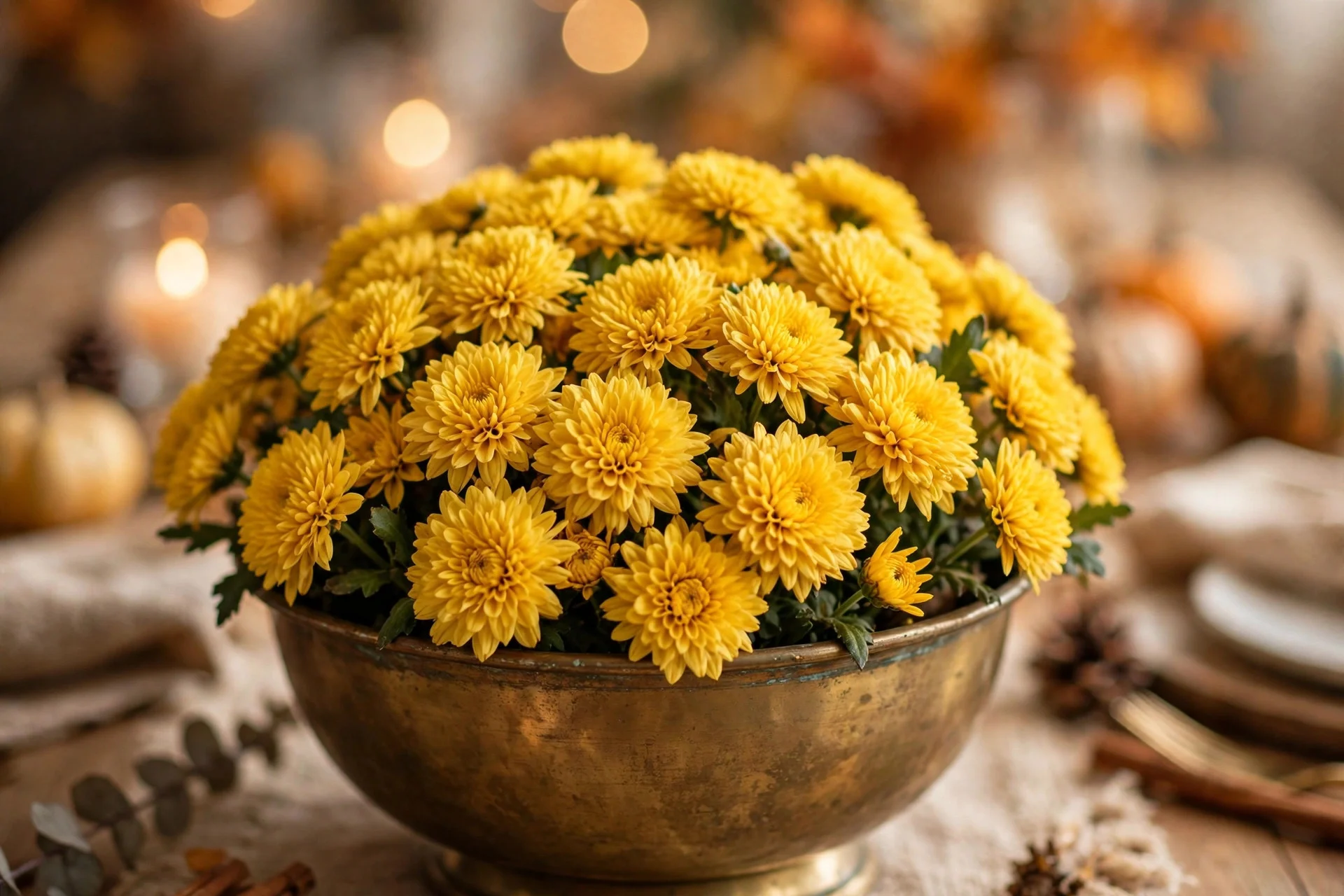
A $4.99 pot of mums from Trader Joe’s or Kroger is the hardest-working flower deal of fall. Drop the whole nursery pot into a thrifted brass bowl — Goodwill and estate sales always have them for two or three dollars. Choose deep rust, gold, or burgundy; the saturated colors are what make it look expensive.
2. A Pillar Candle Trio on a Wooden Cutting Board

Three ivory pillar candles grouped on the wooden cutting board you already own. Height variation matters: 3, 6, and 9 inches reads as styled, while three identical candles reads as an afterthought. Scatter loose nuts or dried leaves around the base. At dusk this $10 setup outshines centerpieces costing ten times more.
3. Foraged Branches in a Tall Glass Cylinder
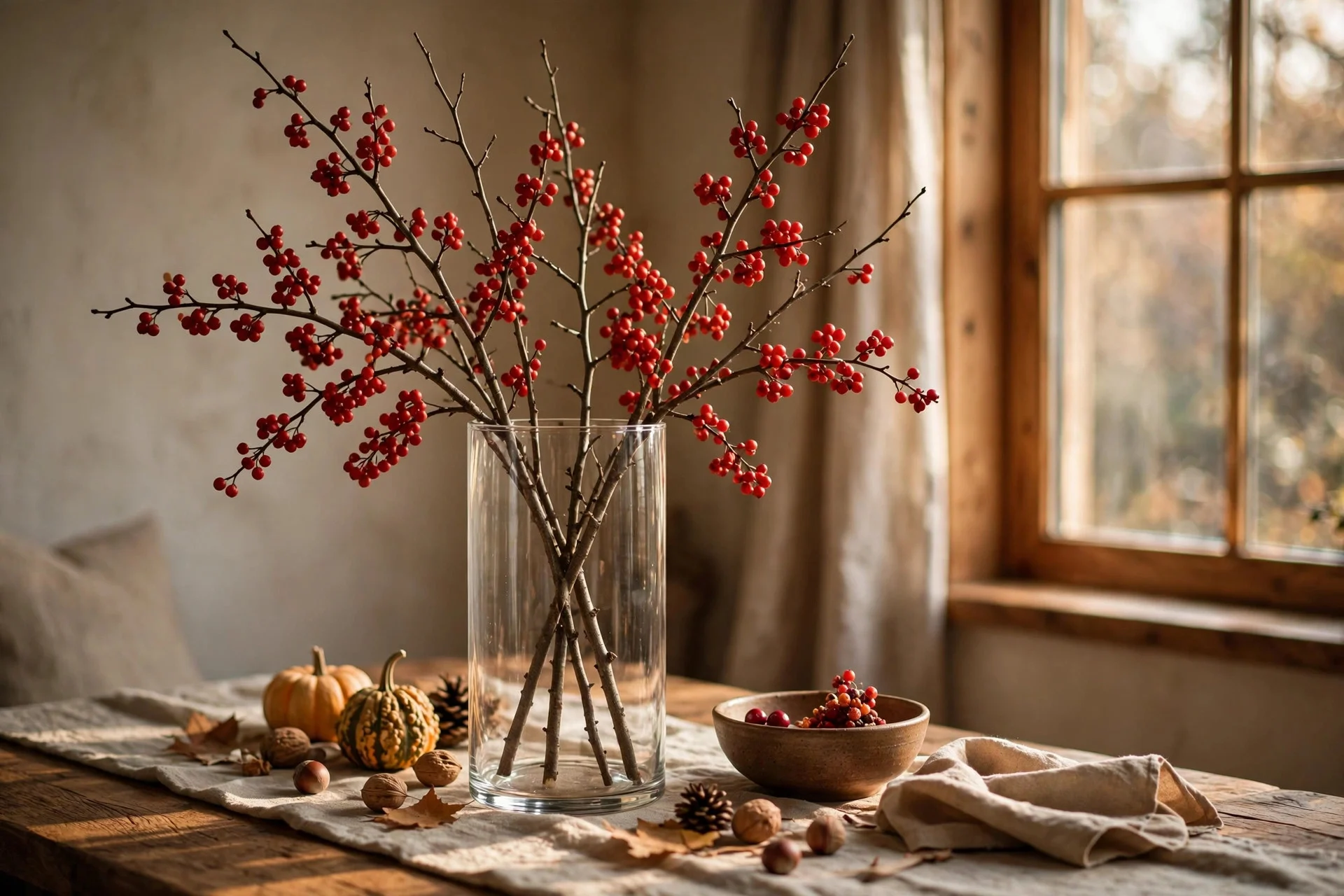
Tall and airy beats short and wide on a crowded table. Cut bare branches with interesting shapes from your yard, ideally ones with red berries or textured bark. Stand five to seven stems in a tall cylinder vase (around $8 with a coupon). Less than a sandwich, and it looks like a floral designer did it.
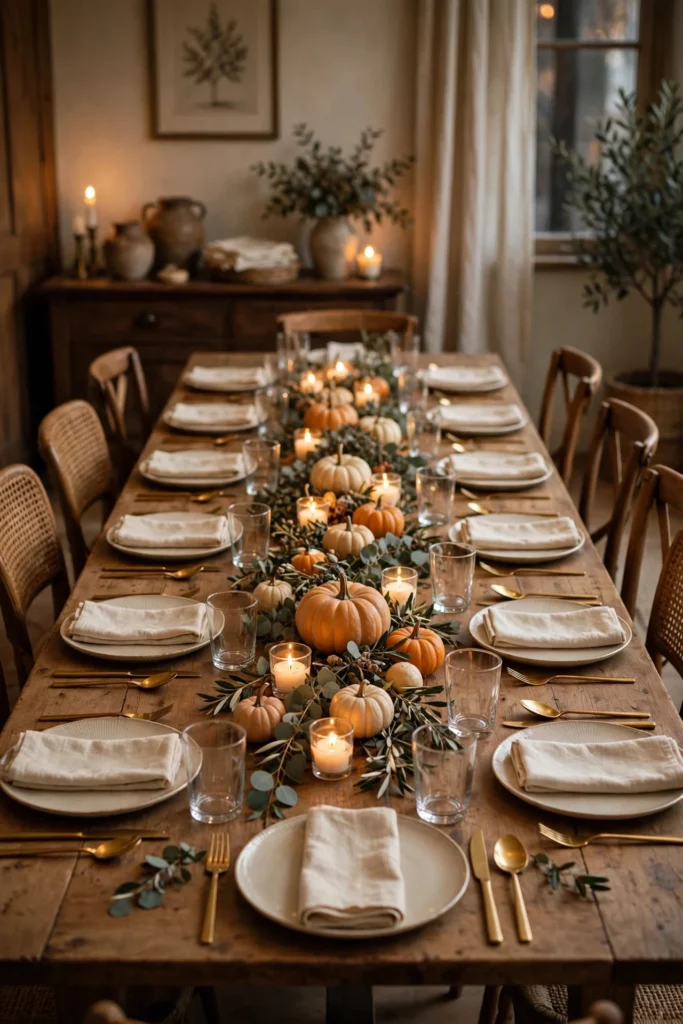
4. A Mini-Pumpkin and Eucalyptus Runner
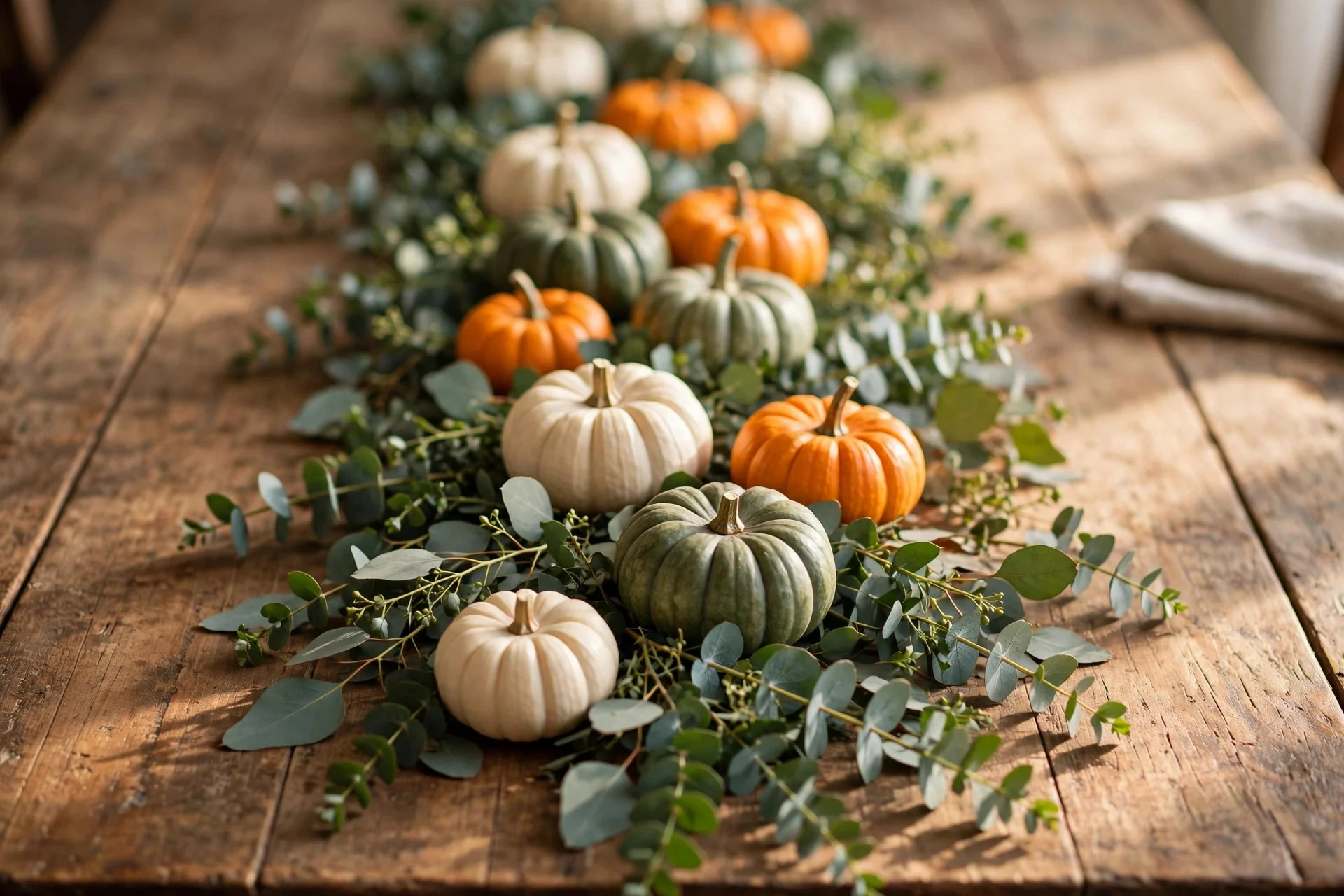
Skip the fabric runner and make one from produce. Lay eucalyptus sprigs end to end down the table’s center, then nestle mini pumpkins into the greenery. White, orange, and green-striped minis mixed together look curated. Under $10, and it all composts afterward.
5. Orchard Fruit Piled in a Footed Compote
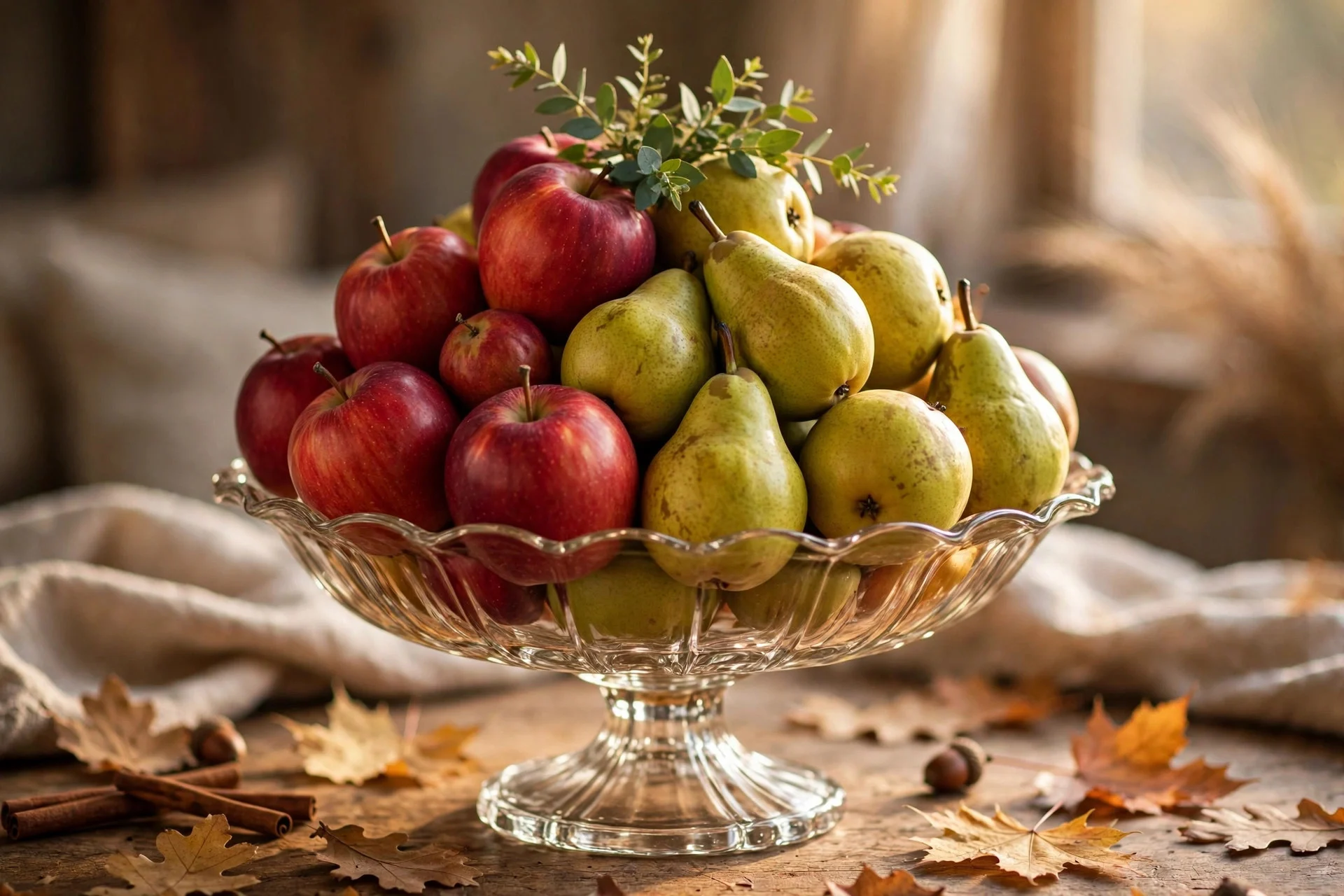
A thrifted footed compote (three dollars secondhand) piled high with apples, pears, and persimmons. The height of the foot elevates grocery-store fruit into something sculptural. Polish the fruit with a dry cloth so it shines. Guests can eat it — zero waste, zero storage.
6. A Row of Bud Vases With Single Stems
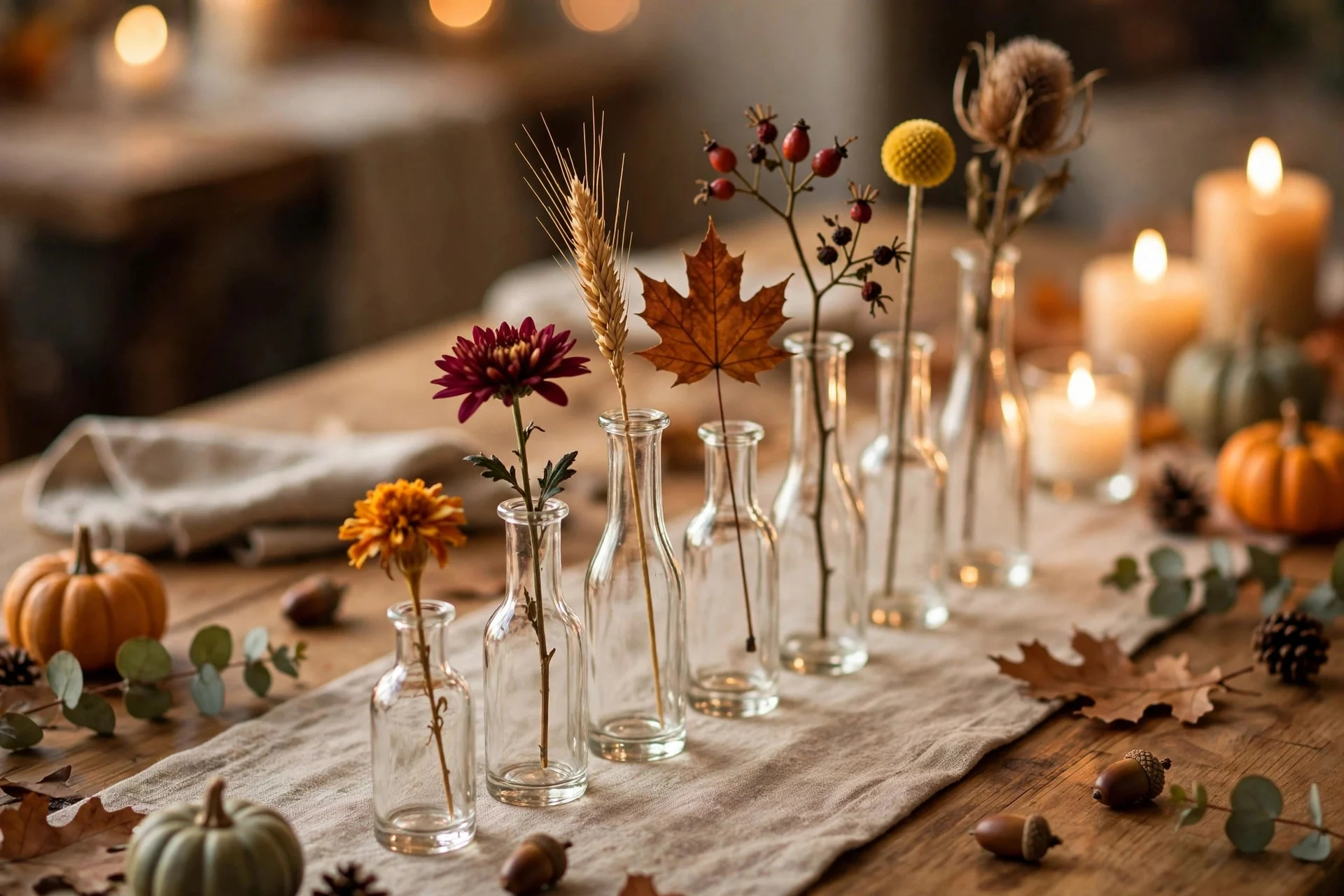
One $8 grocery bouquet, divided across eight to ten bud vases (dollar stores sell them $1.25 each). A single stem per vase looks deliberate and modern, and it stretches one bouquet across a six-foot table.
7. Thrifted Brass Taper Candlesticks

Brass is the cheat code for “expensive.” Thrift stores price brass candlesticks at one to three dollars each. Group five to seven in mixed heights down the table with ivory tapers, and you’ve built the most high-end-looking centerpiece on this list for under $15.
8. A Wheat Sheaf in a Stoneware Pitcher
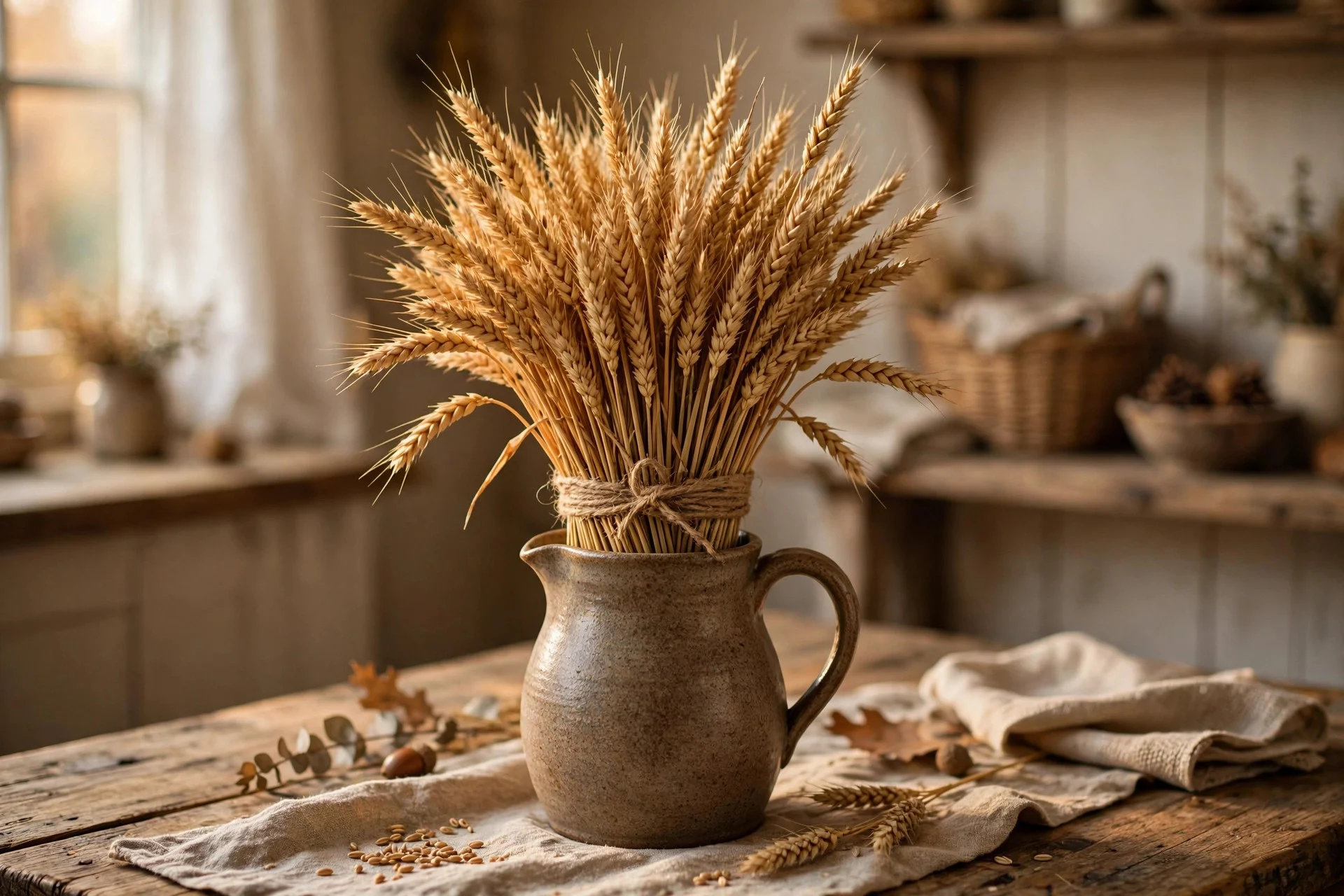
A bundle of dried wheat (about $6) tied with twine and stood in a stoneware pitcher is pure harvest-table energy. It keeps forever — a one-time purchase you reuse every November. Fan the stalks so the heads arc outward.
9. Pomegranates and Dark Grapes on Linen
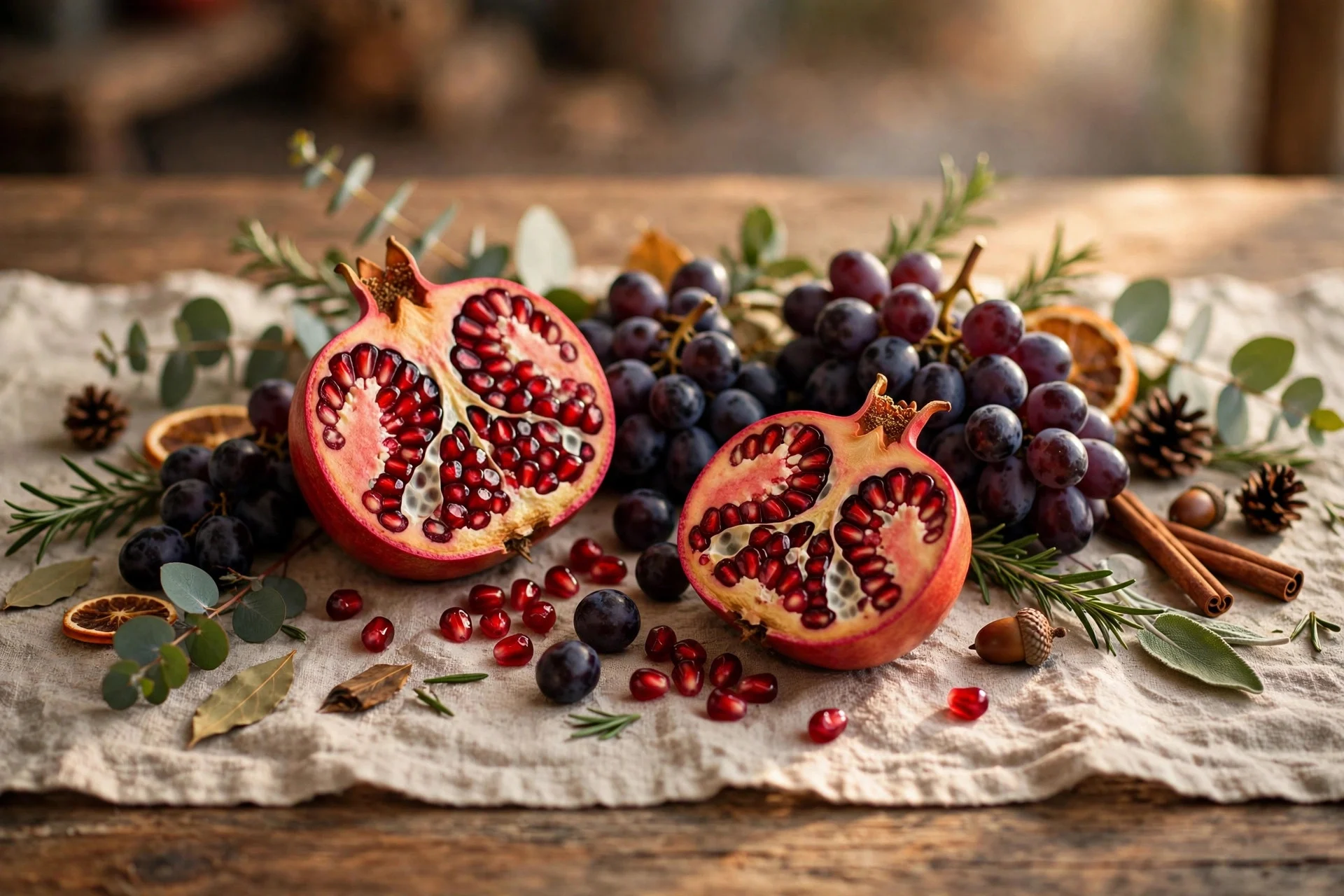
Pomegranates are at their peak — and cheapest — in November. Cut two or three open to show the seeds, pile dark red grapes alongside, arrange on a linen runner. Under $10, ten minutes with a knife, looks like a Dutch still life.
10. Floating Cranberries With Tea Lights
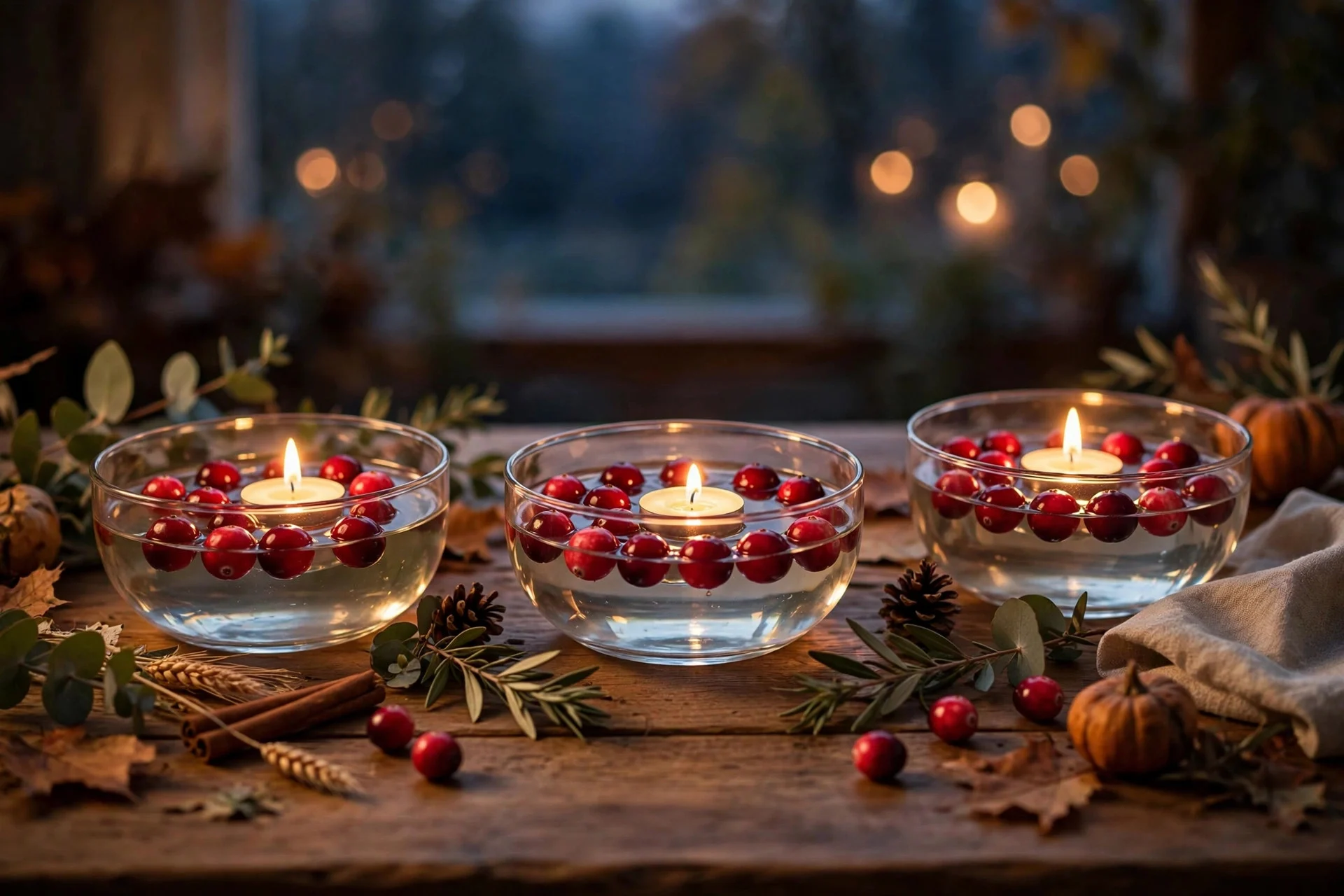
A $3 bag of fresh cranberries, low glass bowls you already own, water, tea lights. The berries glow ruby-red around the flame; a row of three bowls down the table looks magical at dusk. Make them the day of.
11. Dried Orange Slices and Cinnamon Bundles

Slice oranges a quarter-inch thick, dry at 200°F for two to three hours. Tie three slices with two cinnamon sticks and a rosemary sprig. They smell like the holidays, cost almost nothing, and keep for months.
12. An Ornamental Kale “Bouquet”
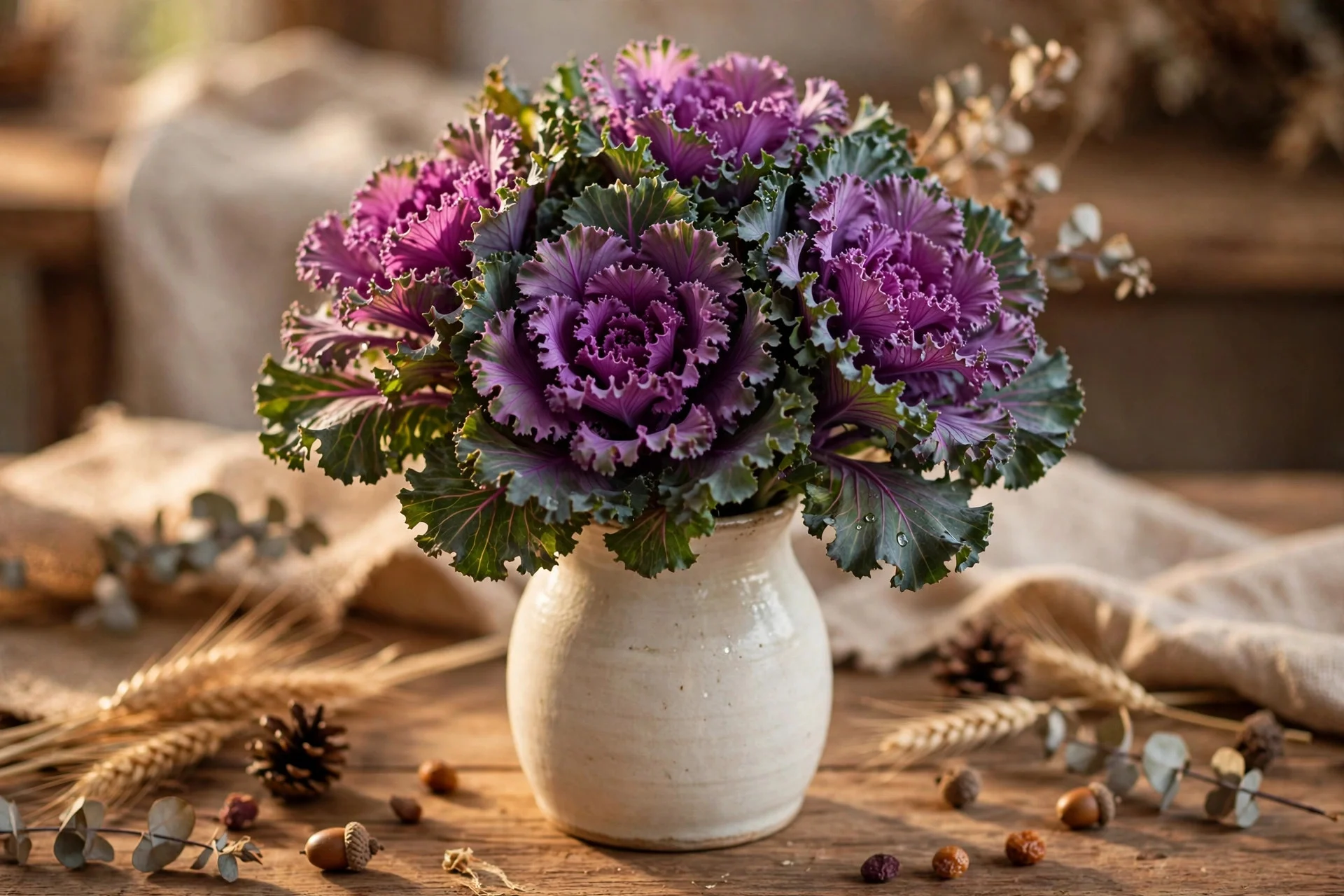
A $3.99 bunch of purple kale trimmed and arranged like a bouquet looks astonishingly like ruffled designer blooms. The purple-and-green coloring is peak autumn. It’ll outlast any cut flower by a week.
13. Gold-Dusted Pinecones in a Dough Bowl
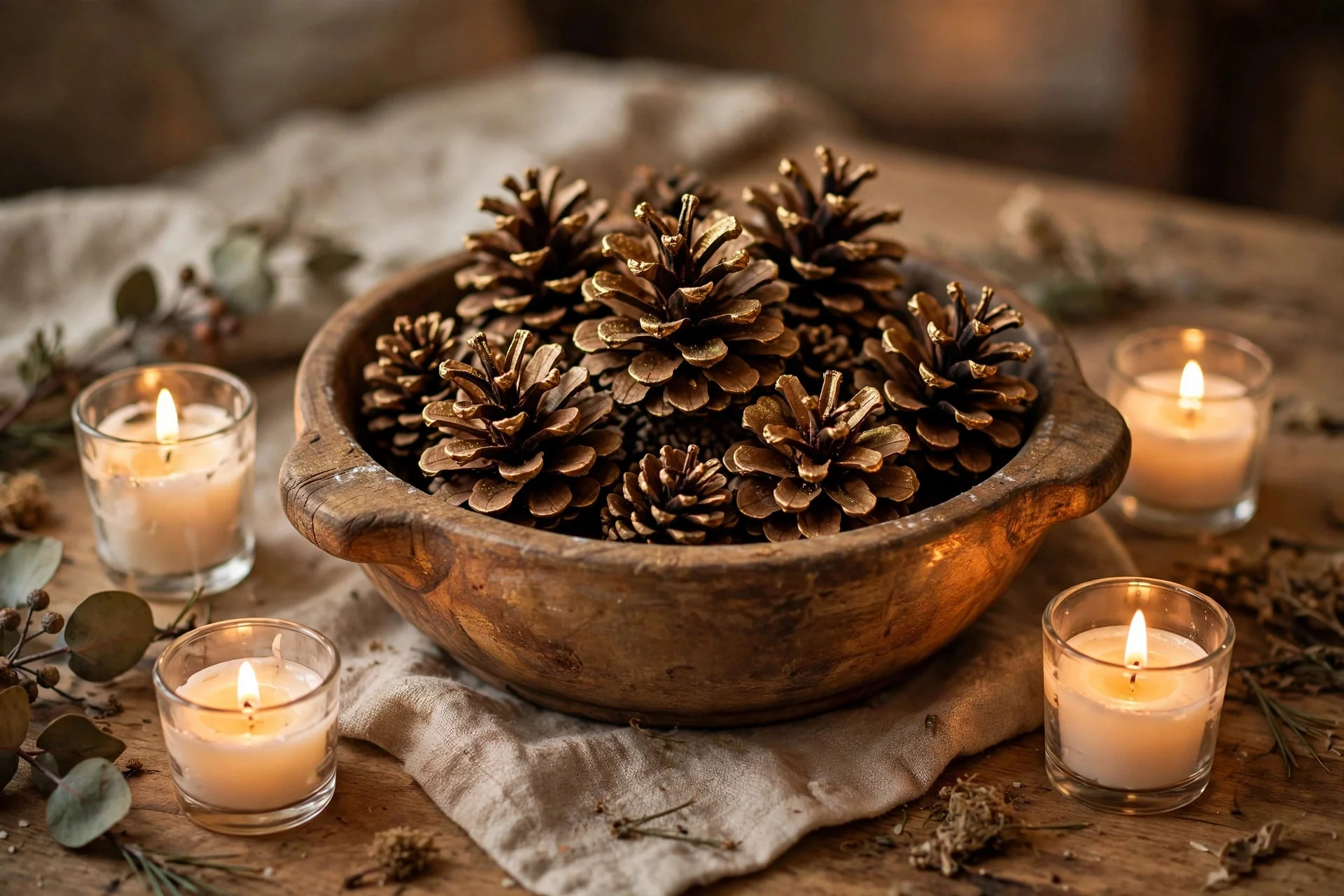
Foraged pinecones plus a $5 can of gold spray paint: dust lightly (hints of gold, not full coverage), pile into a wooden dough bowl. Under $10, most of which was paint you’ll reuse for years.
14. A Mirrored Tray With Votives and Champagne Grapes
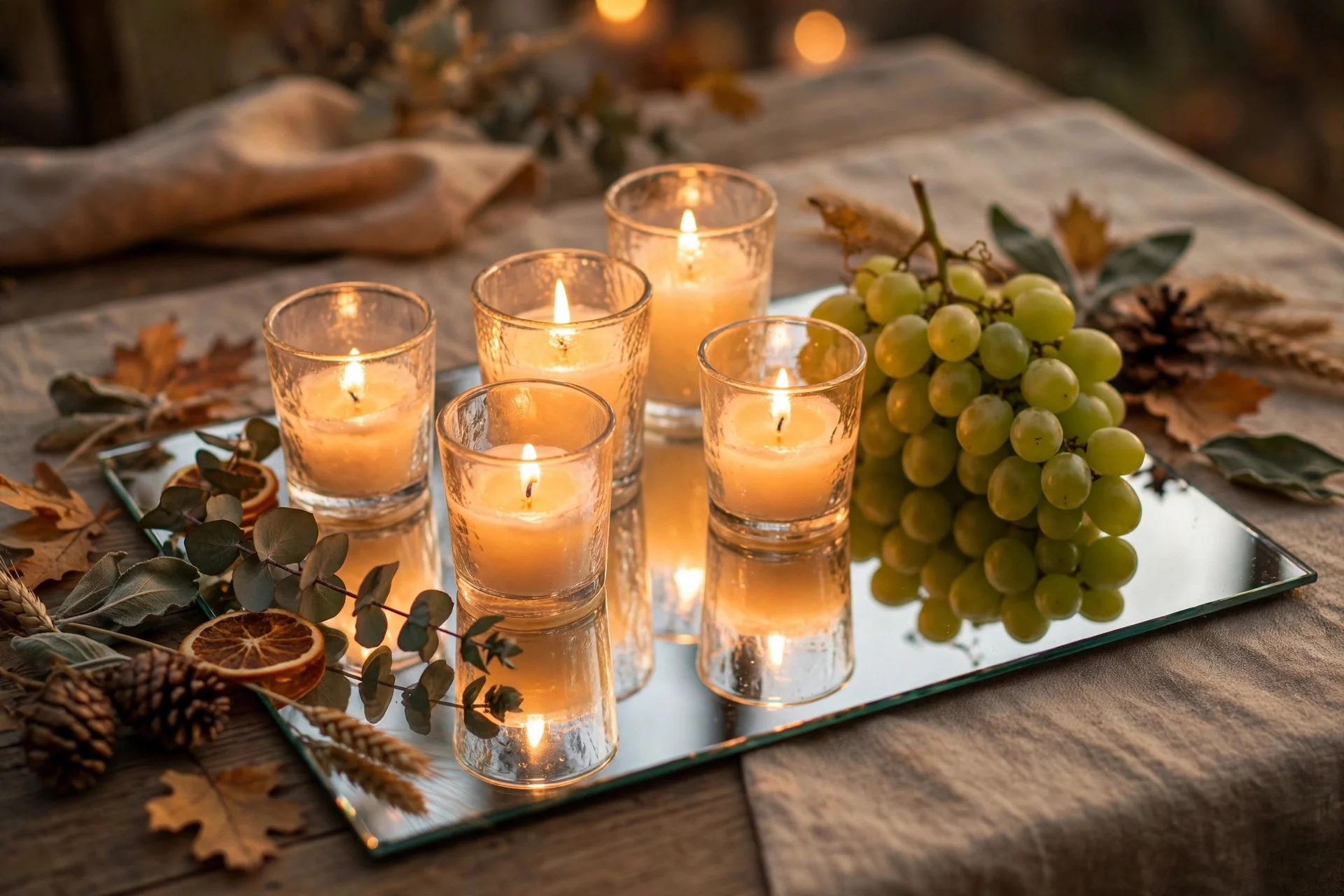
A mirrored tray ($8-$10) doubles every candle you put on it. Cluster glass votives with champagne grapes and one short flower stem; the reflection makes a modest grouping look twice as lush.
15. Artichokes Grouped With Candles

Three or four artichokes (about $1.50 each in November) grouped with pillar candles. Nobody expects artichokes on a Thanksgiving table, which is exactly why guests remember them.
16. Dried Corn and Husks in a Stoneware Crock

A $5 bundle of Indian corn stood upright in a stoneware crock with the husks pulled back. The deep reds, oranges, and purples do all the work. Stores dry and comes back every year.
17. Persimmons Resting on Olive Branches
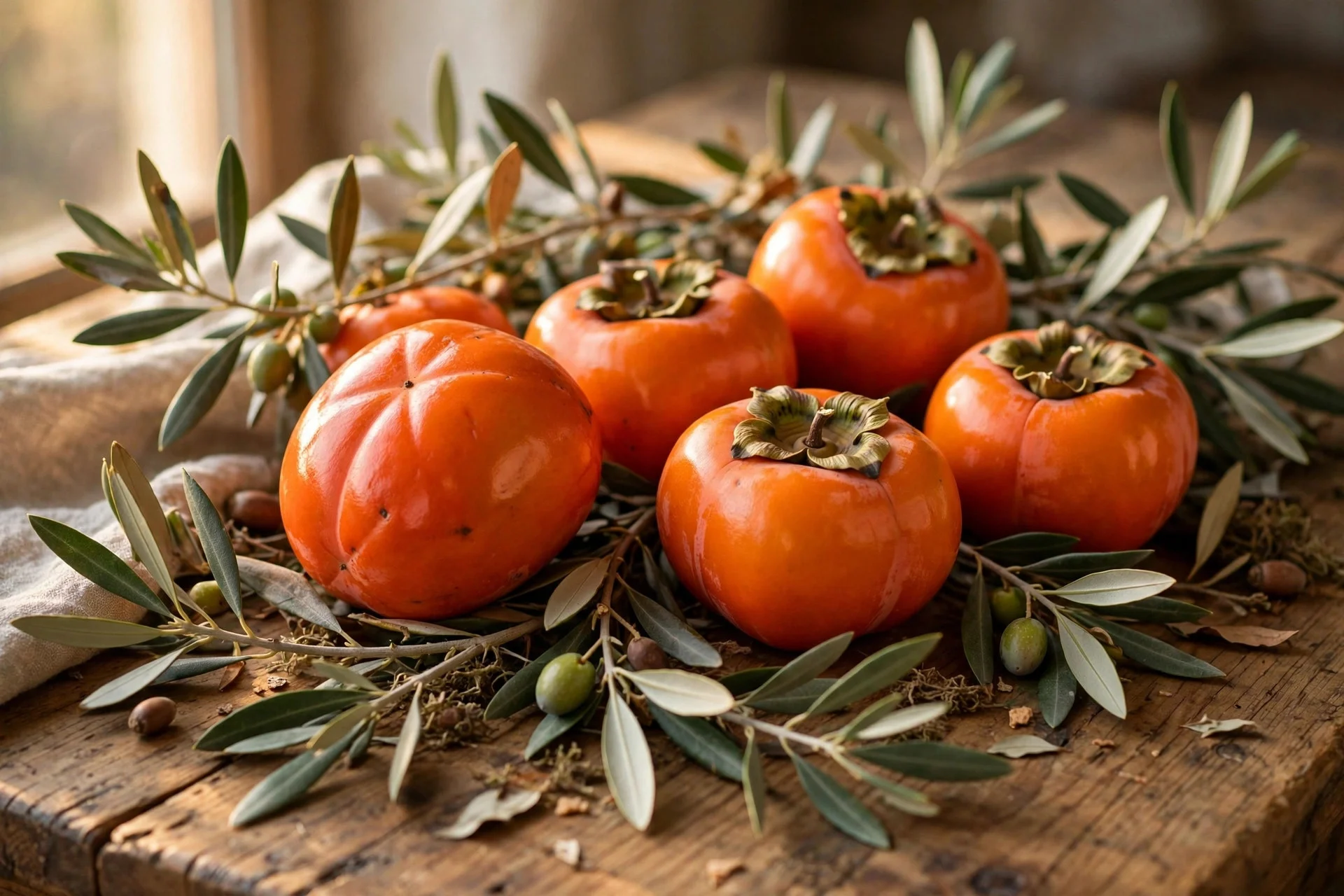
Fuyu persimmons hit stores in November for about $1 each. Lay olive branches down the table and rest six or seven persimmons along them. Five minutes, still perfect when dessert is served three hours later.
18. Living Herb Pots From the Produce Aisle

4-inch pots of rosemary, thyme, and sage ($3.99) grouped down the table in nursery pots inside paper bags. About $20 total. Send each guest home with a pot as a favor — the definition of a budget win.
Frequently Asked Questions
How much should I spend on a Thanksgiving centerpiece?
The sweet spot is $10 to $25. Below $10 you’re in foraged-and-candle territory, where the best ideas live. A $40 pre-made arrangement rarely photographs better than the $12 version you built yourself.
How far in advance can I make my centerpiece?
Produce-based: 2-3 days in a cool room. Cut grocery flowers: the day before. Candle-only groupings and dried elements: a week ahead.
How tall should a Thanksgiving centerpiece be?
Under 12 inches, or tall and airy above 24 inches. The dead zone is 14-20 inches at eye level. When in doubt, go low.