


Every November my front door gets more compliments than any other part of my house, and it’s never because of anything expensive. It’s the wreath. These fall wreath ideas are the result of six years of hanging, tweaking, and occasionally rescuing wreaths from the wind — twenty different looks for Thanksgiving, from foraged twigs to fresh magnolia. Each one works on a real door, in real weather, and none of them need a florist’s license.
Below, every wreath gets its own lane — different materials, doors, and rooms, nothing repeated — with costs, hanging spots, and my mistakes so you don’t repeat them. If you’re dressing the rest of the entrance, our Thanksgiving entryway ideas pair with any wreath on this list.
1. Classic Grapevine and Dried Wheat
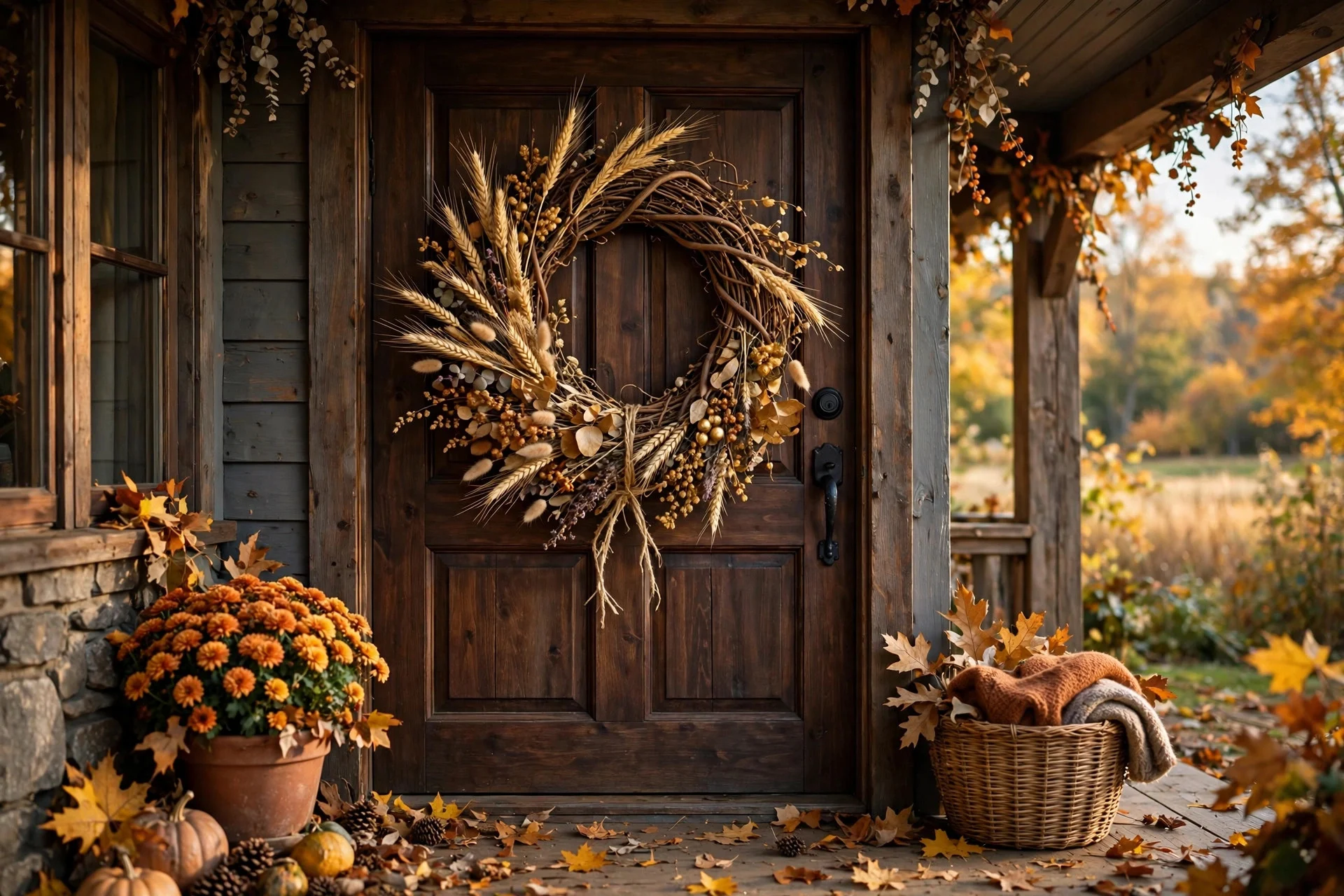
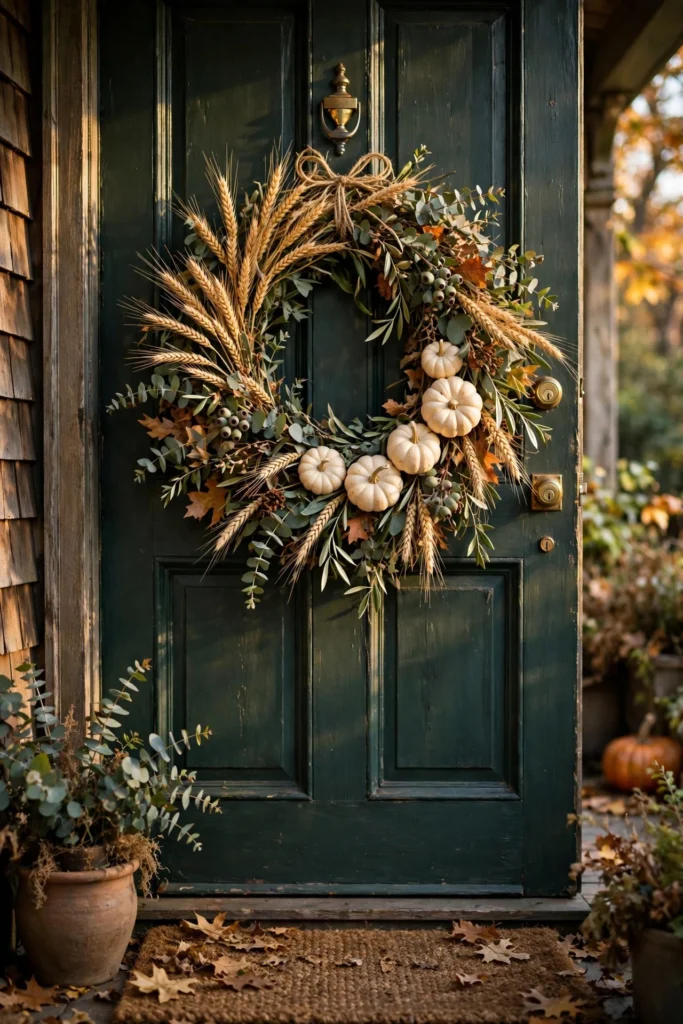
This is the workhorse of fall wreaths, and for good reason: a grapevine base costs about $8 at any craft store, and dried wheat wired into it looks like you paid forty. Wire small bunches of dried wheat into the grapevine at an angle so they all sweep one direction — shake the wheat outside first, because it sheds. Hang it with a loop of jute twine; mine survived three Novembers with a yearly stem refresh. If the whole holiday landed on you out of nowhere, our last-minute Thanksgiving decorating guide starts with exactly this kind of one-trip wreath.
2. Fresh Eucalyptus and Mini White Pumpkins — Easy Fall Wreath Ideas for Beginners
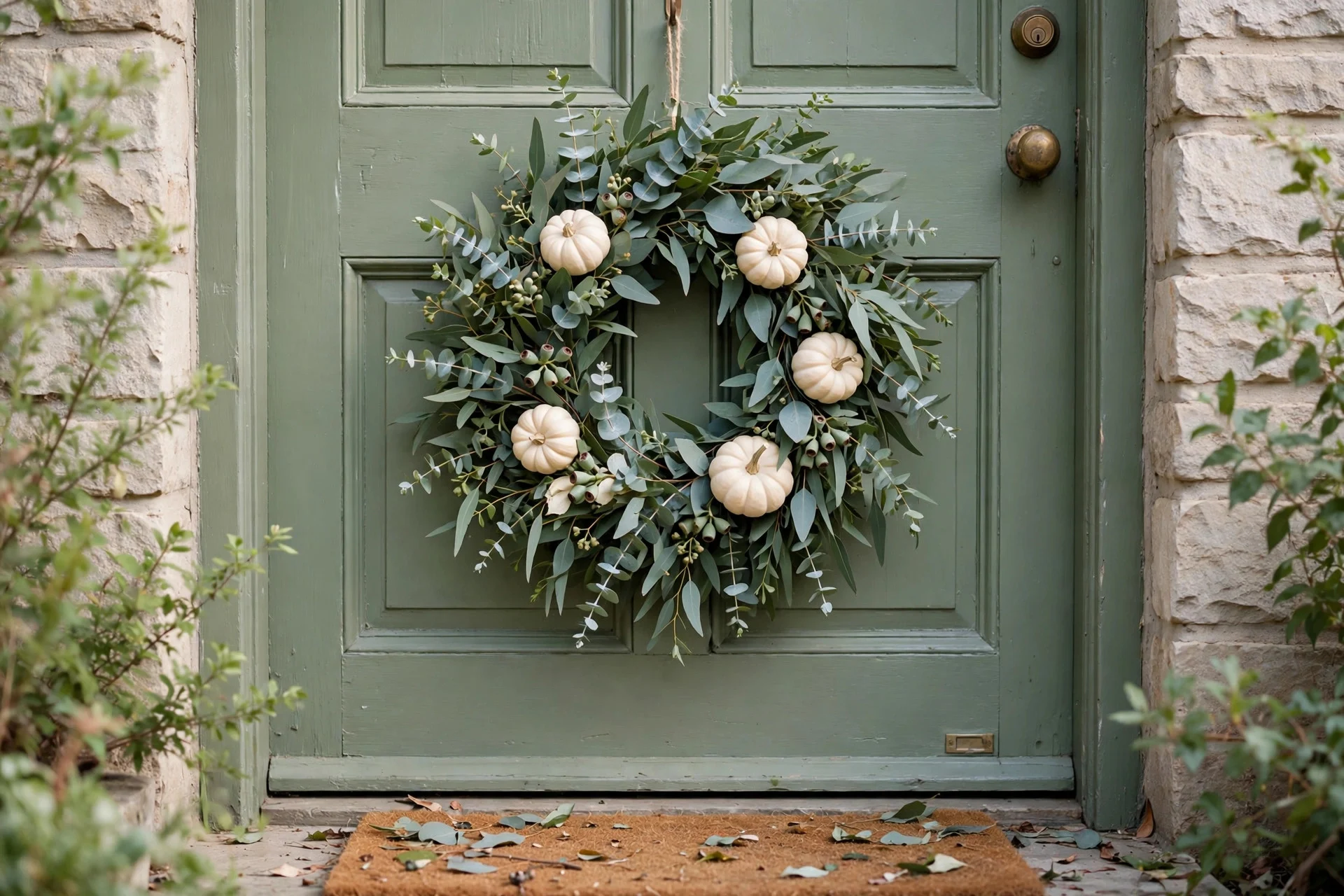
If you’ve never made a wreath, start here. Buy two bunches of fresh eucalyptus (about $4 each at Trader Joe’s), a 12-inch wire wreath form, and a bag of mini white pumpkins. Wrap the eucalyptus around the form with floral wire, working in one direction and overlapping generously — sparse is the only way to mess this up — then wire six mini pumpkins evenly around the ring. Twenty minutes, and it smells incredible. The eucalyptus dries in place over a week and keeps its shape; mine lasted into early December with the pumpkins still firm.
3. Dried Orange Slice and Cinnamon Stick Wreath
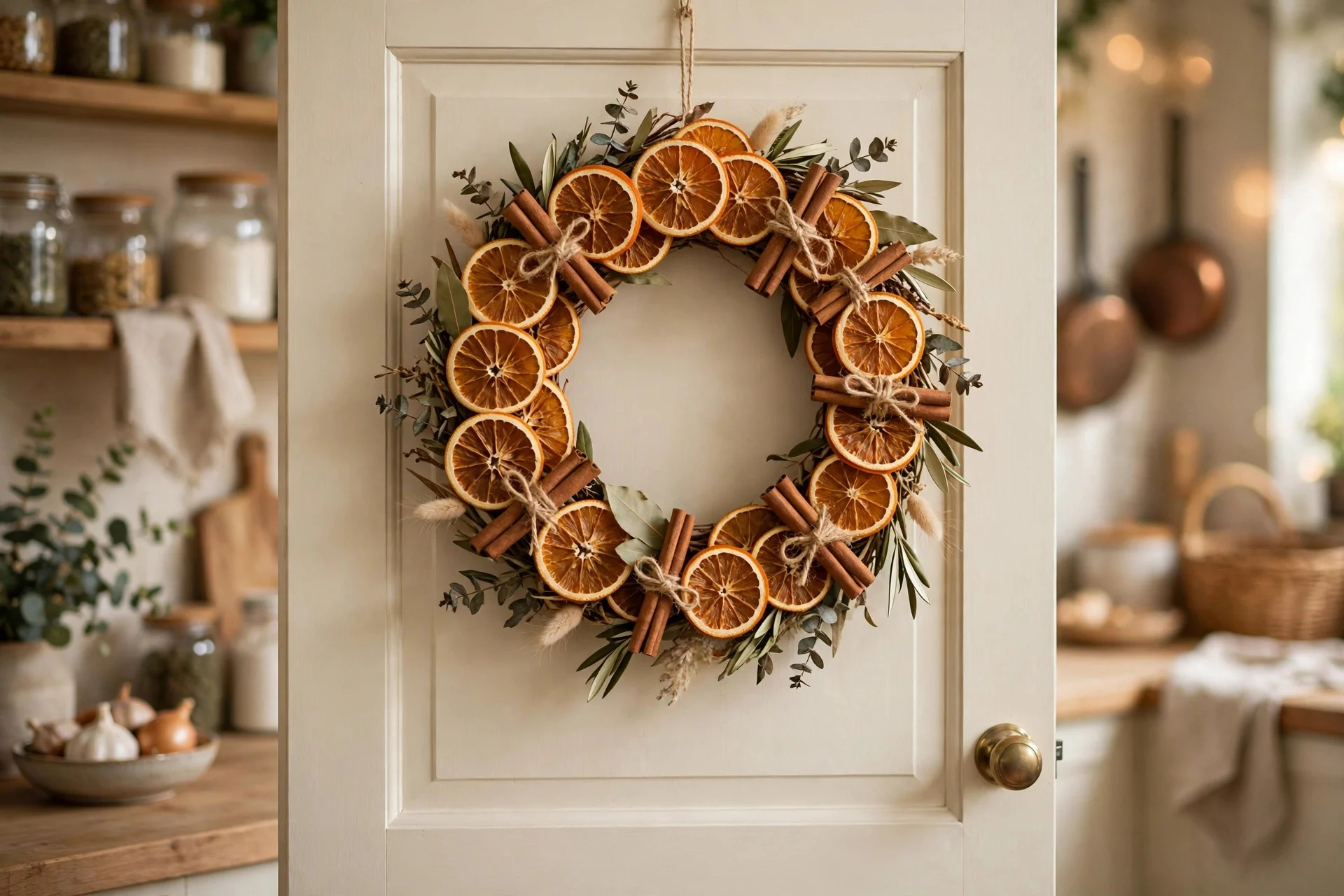
Hang this one in the kitchen — on a pantry door, clear of the stove’s heat — because it makes the whole room smell like November. Dry orange slices at 200°F for three hours, flipping once — low and slow; my rushed batch at 250°F came out brown and bitter. Wire the cooled slices onto a grapevine base like shingles and tuck cinnamon sticks between them with hot glue — the translucent orange glows in kitchen light. Total cost: two oranges and a $3 bag of cinnamon sticks. It lasts the full season indoors.
4. Fresh Magnolia Leaf Wreath With a Copper Bow
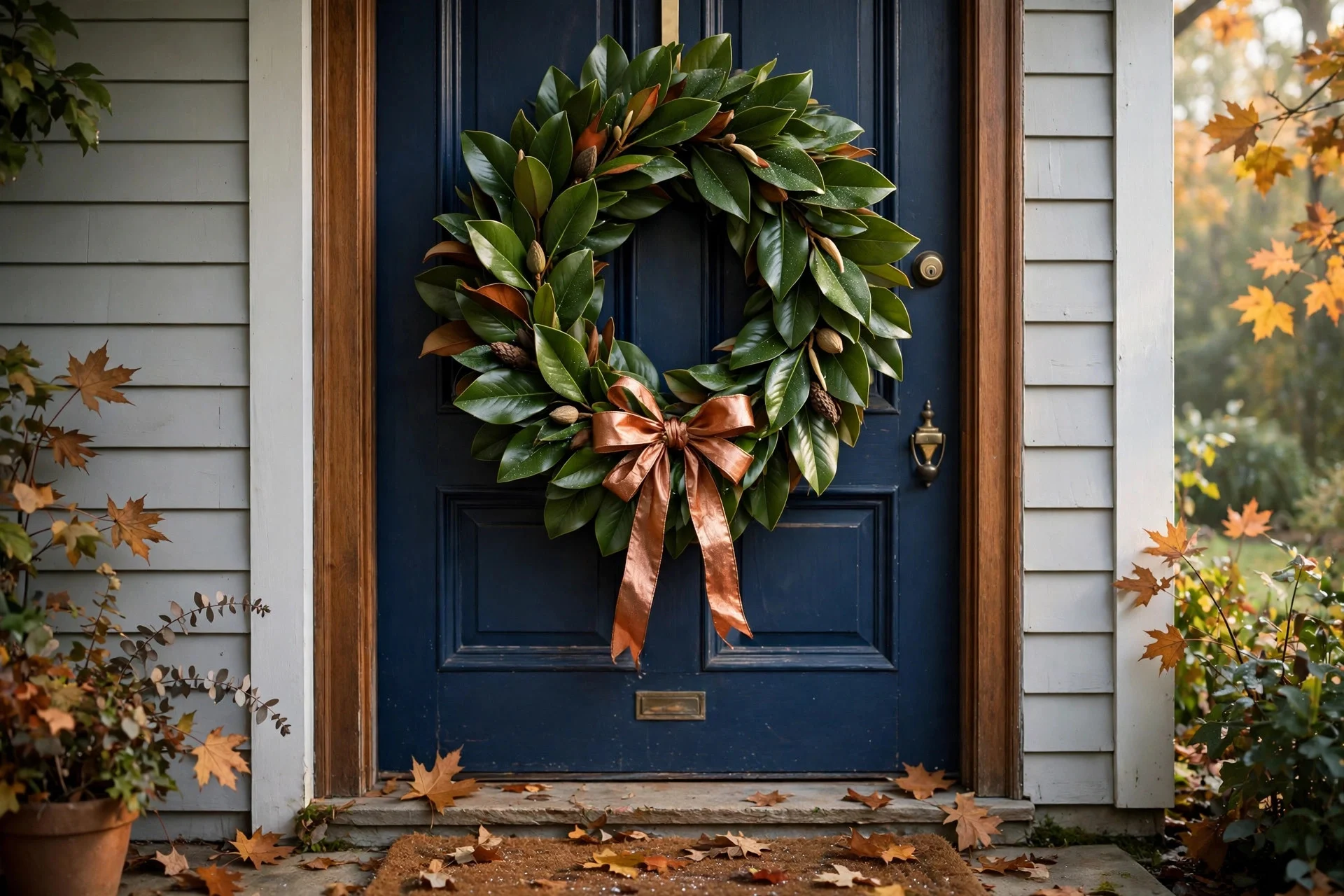
This is the wreath that makes people slow down on the sidewalk. Fresh magnolia leaves are glossy green on top and velvety bronze underneath — flip every third leaf for a two-tone wreath with zero extra materials. Wire the leaves onto a form in overlapping rows, all pointing the same way, and finish with a wide copper satin bow — copper or bronze ribbon, not orange, keeps it elegant instead of crafty. Mist lightly every few days and hang in shade; mine looked fresh for nearly three weeks on a north-facing door.
5. Corn Husk Wreath for the Farmhouse Porch
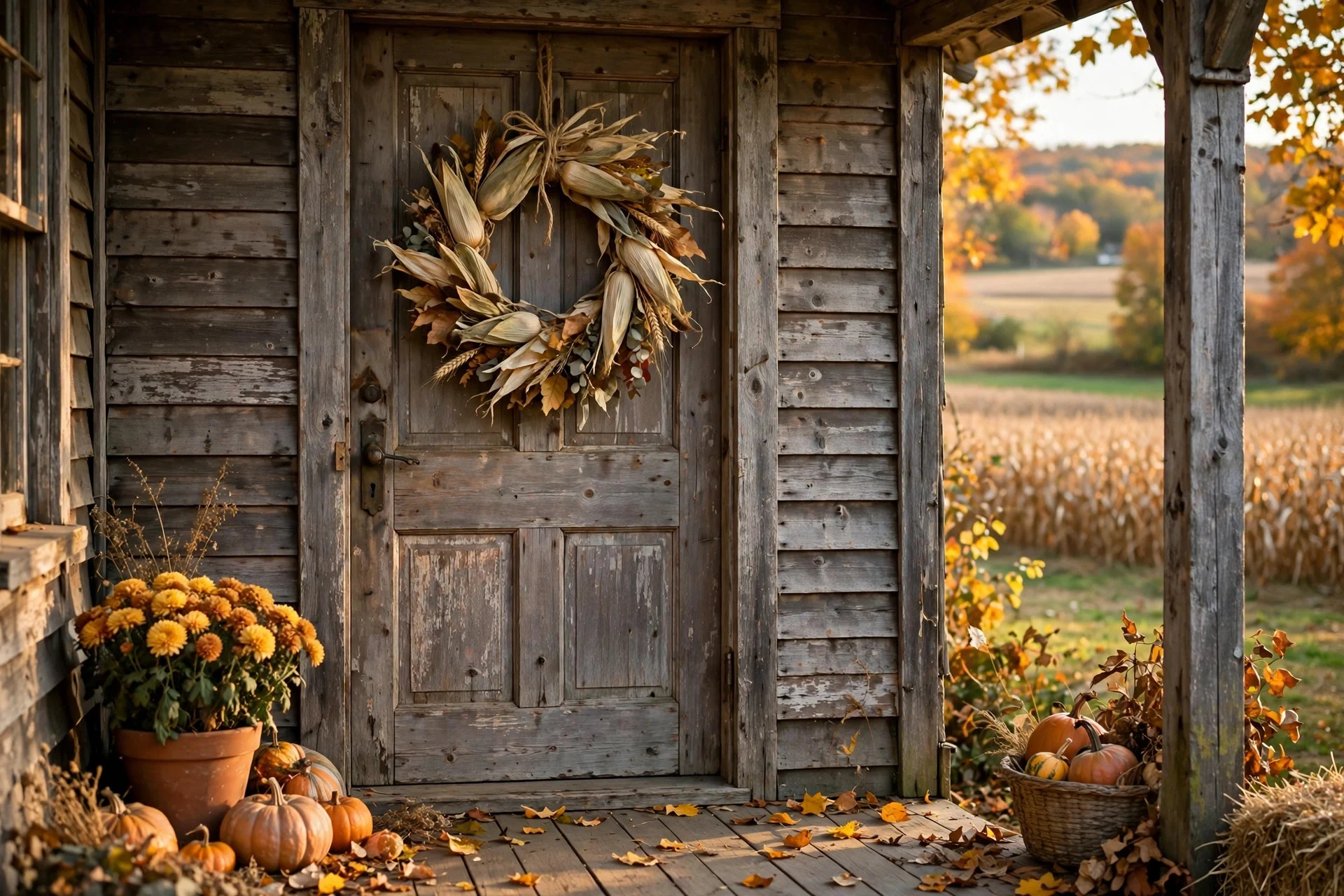
Corn husks give you the most texture per dollar of anything on this list. Soak dried corn husks in warm water for ten minutes until pliable, then wrap them around a foam wreath form, overlapping and pinning with floral pins as you go. Let it dry overnight — it stiffens into a golden, ruffled ring that looks like it came from a high-end farmhouse store. A bag of husks costs a few dollars, or nothing if you know anyone who grows corn. Keep it on a covered porch — heavy rain softens it — and finish with a simple burlap bow. Under $10, forty minutes, and it photographs beautifully.
6. Felt Ball Wreath in Rust and Amber
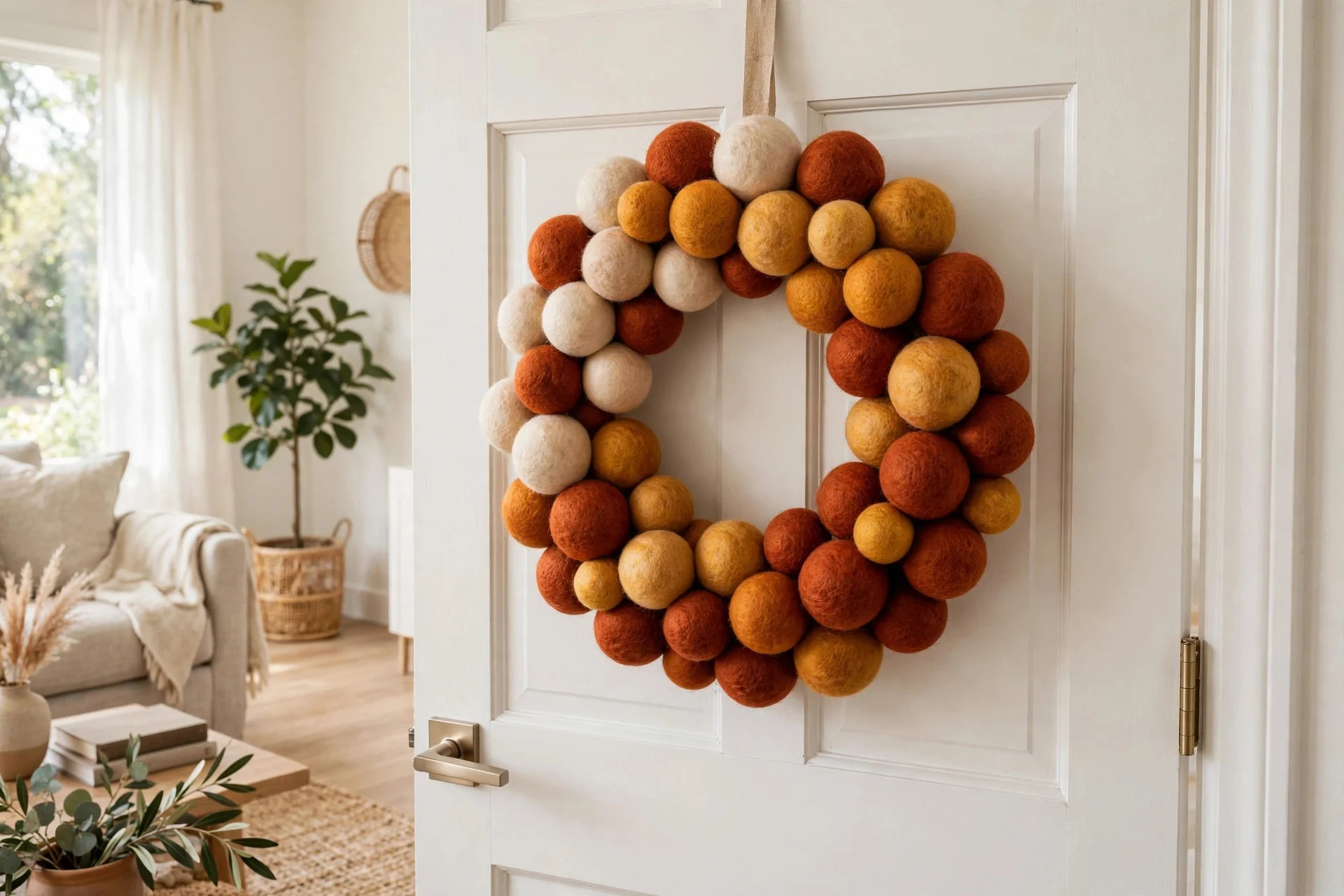
For an interior door — a bedroom, a home office, the inside of the front door — felt is perfect. It doesn’t shed, it survives toddlers and cats, and the colors stay exactly as vivid in December as the day you hung it. String wool felt balls in rust, amber, mustard, and cream onto heavy thread, packing them tightly around a foam form — a 14-inch wreath needs roughly 60 to 80 balls, cheapest in bulk bags online. I made mine during a movie: no glue, no mess. It weighs almost nothing, so one removable hook holds it, and it’s the wreath I recommend for allergy sufferers — zero pollen, zero dust.
7. Pinecone and Burlap Rustic Wreath
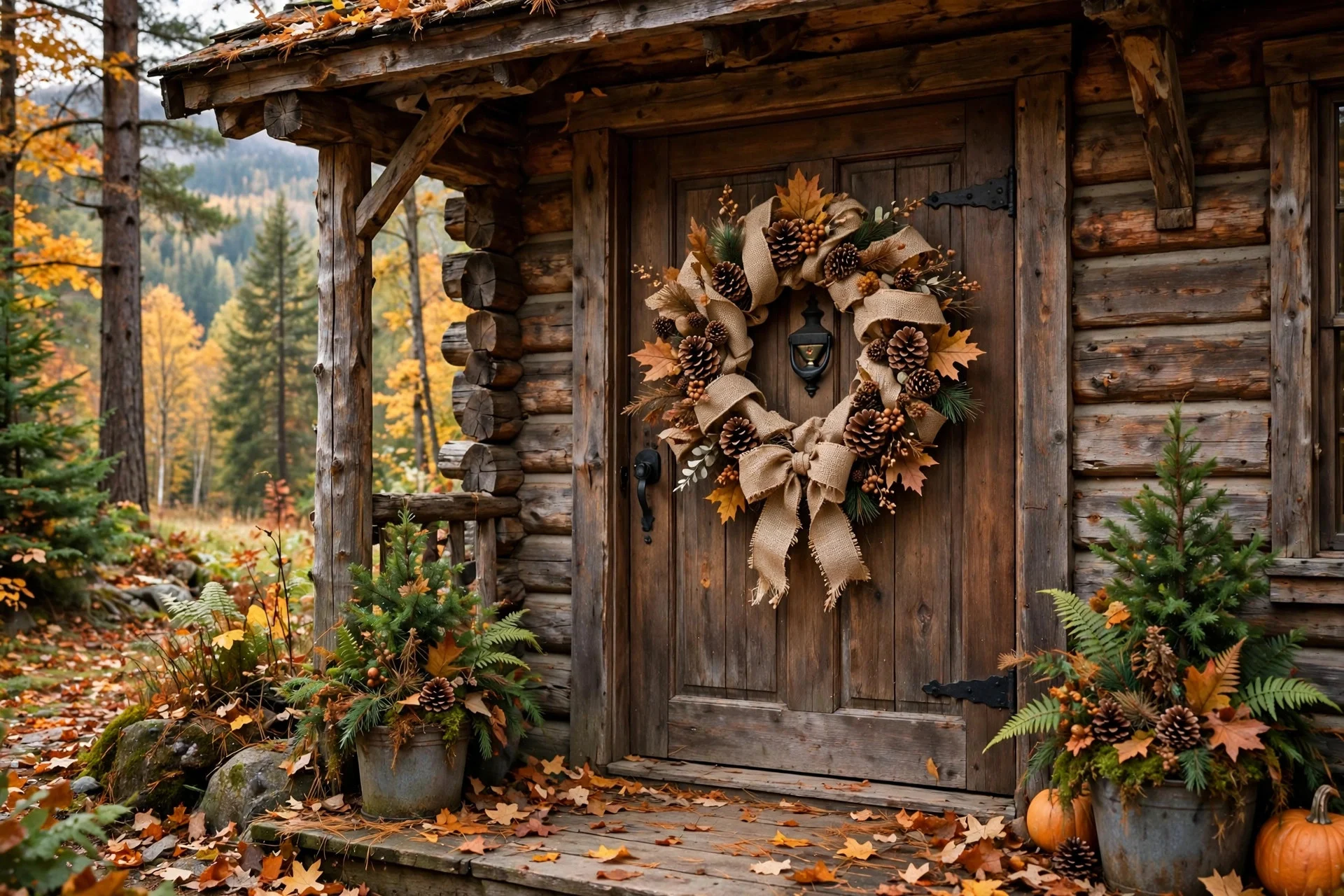
Foraged pinecones, a grapevine base, and burlap ribbon — the cabin-core classic. If you gather your own cones, bake them at 200°F for an hour first — it kills hitchhiking bugs and opens the scales. I learned this after skipping the step once. Hot-glue the cones onto the grapevine in clusters of three, mixing sizes, then weave wide burlap ribbon through the gaps and finish with a loose bow. It’s fully outdoor-proof and only looks better as it weathers — just use a sturdy hook, because a loaded pinecone wreath is heavier than it looks.
8. Dried Hydrangea Wreath in Dusty Rose
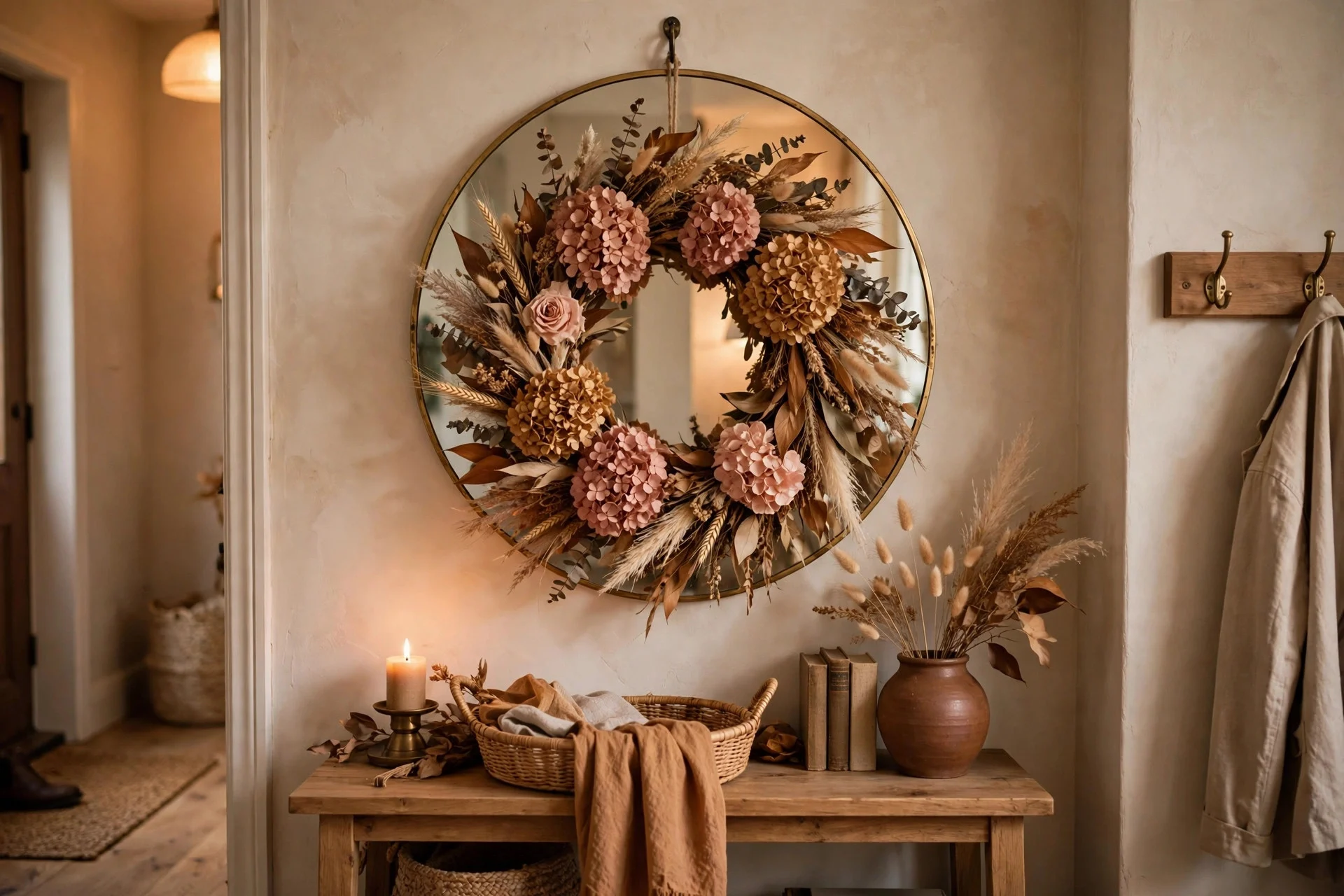
Hang this one inside, where the light is gentle — I keep mine on the round mirror in our entryway, and the dusty rose and caramel tones glow against the glass. Dry hydrangea blooms yourself for the best color: cut them in late summer when the petals feel papery, hang them upside down in a dark closet for two weeks. Wire the dried heads onto a grapevine form, packing them close — sparse is the one way to ruin a hydrangea wreath — and handle it gently, because dried petals bruise. For more styling in the same dusty palette, see our cozy fall living room ideas. Stored in a box (not a bag) over summer, it lasts for years.
9. Faux Apple and Berry Harvest Wreath
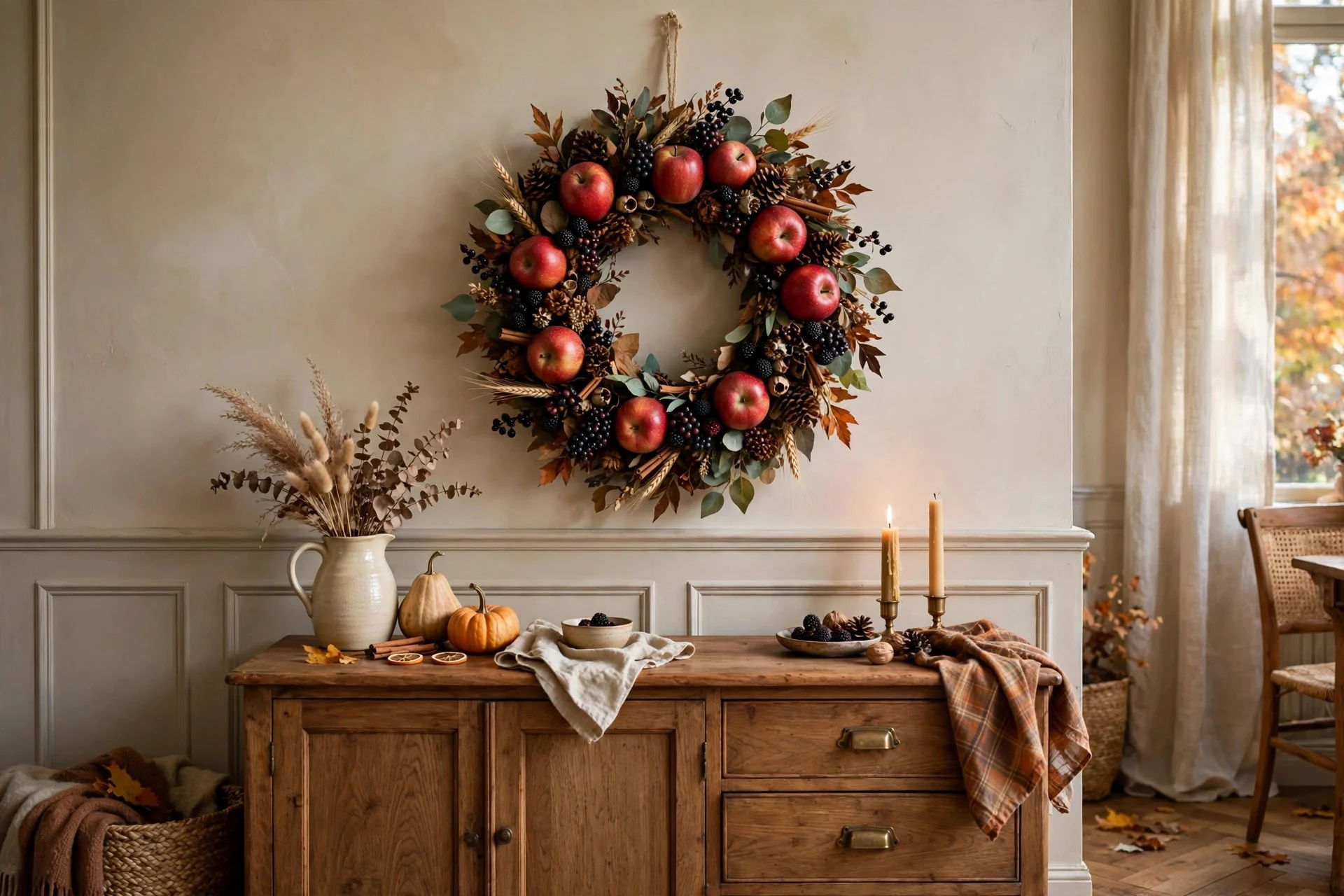
The dining room deserves its own wreath, and this one reads as pure abundance. Wire faux apple picks, dark berry sprays, and a few faux maple leaves into a grapevine base — the October craft-store fall aisle is basically a wreath kit. Cluster the apples in odd numbers and let the berries trail for movement. Buy decent faux fruit — matte and slightly imperfect fools everyone; shiny plastic ruins it. Mine has come out every November for four years and still looks new. Hang it on the dining room wall or above a sideboard, centered at eye level.
10. Preserved Boxwood With a Plaid Ribbon
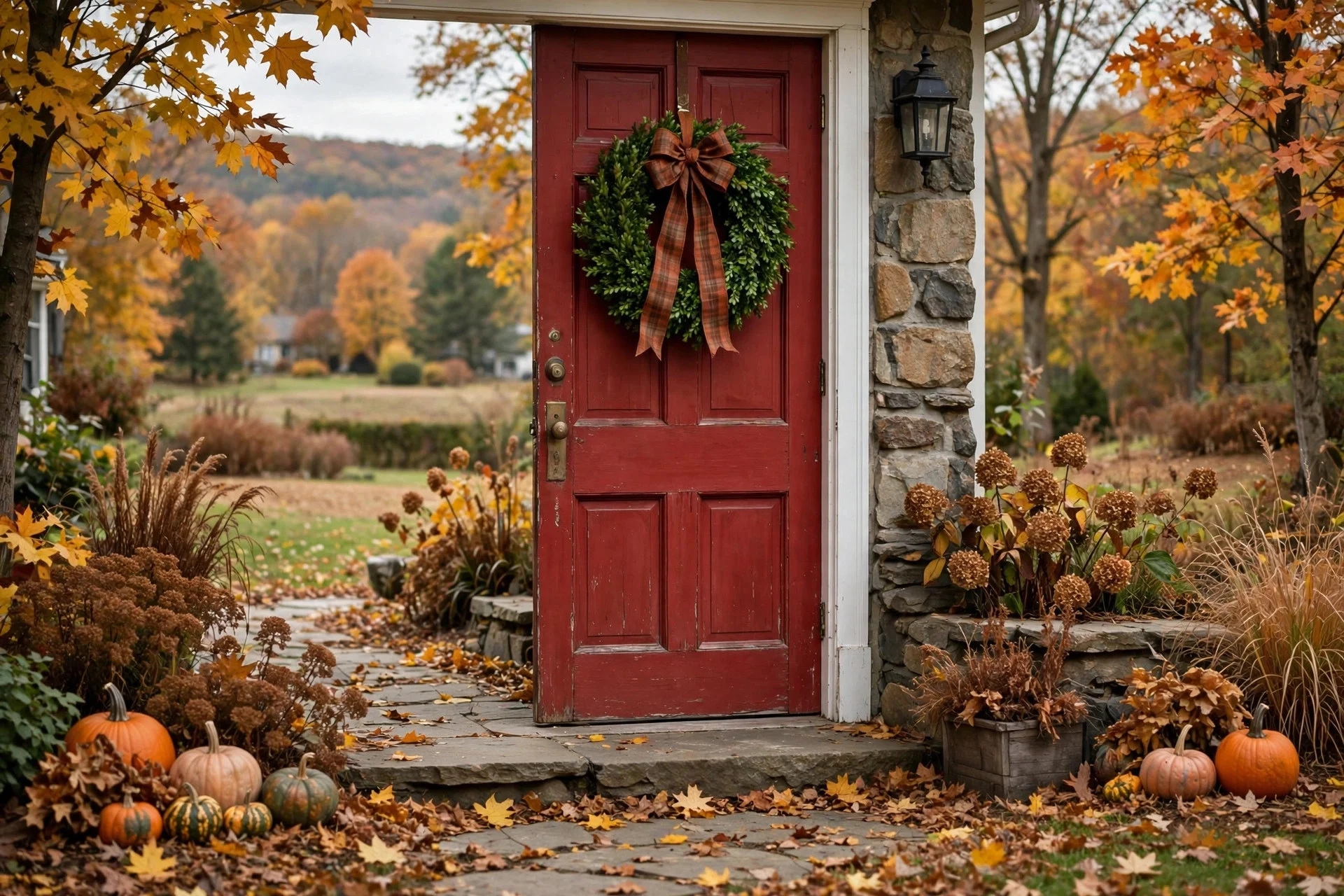
A preserved boxwood wreath is the capsule wardrobe of wreaths — buy it once, wear it all year, change the accessories. The green base works for every season; for Thanksgiving, tie on a wide rust-and-cream plaid ribbon bow and tuck in three dried wheat stems. Come December, swap the bow for red velvet. Preserved boxwood (not faux plastic — the real preserved leaves) holds its color for years if kept out of direct sun. It costs $30 to $50 upfront, but over a decade it’s the cheapest wreath you’ll own. Hang it on a red or black door where the green pops.
11. Pampas Grass Halo Wreath
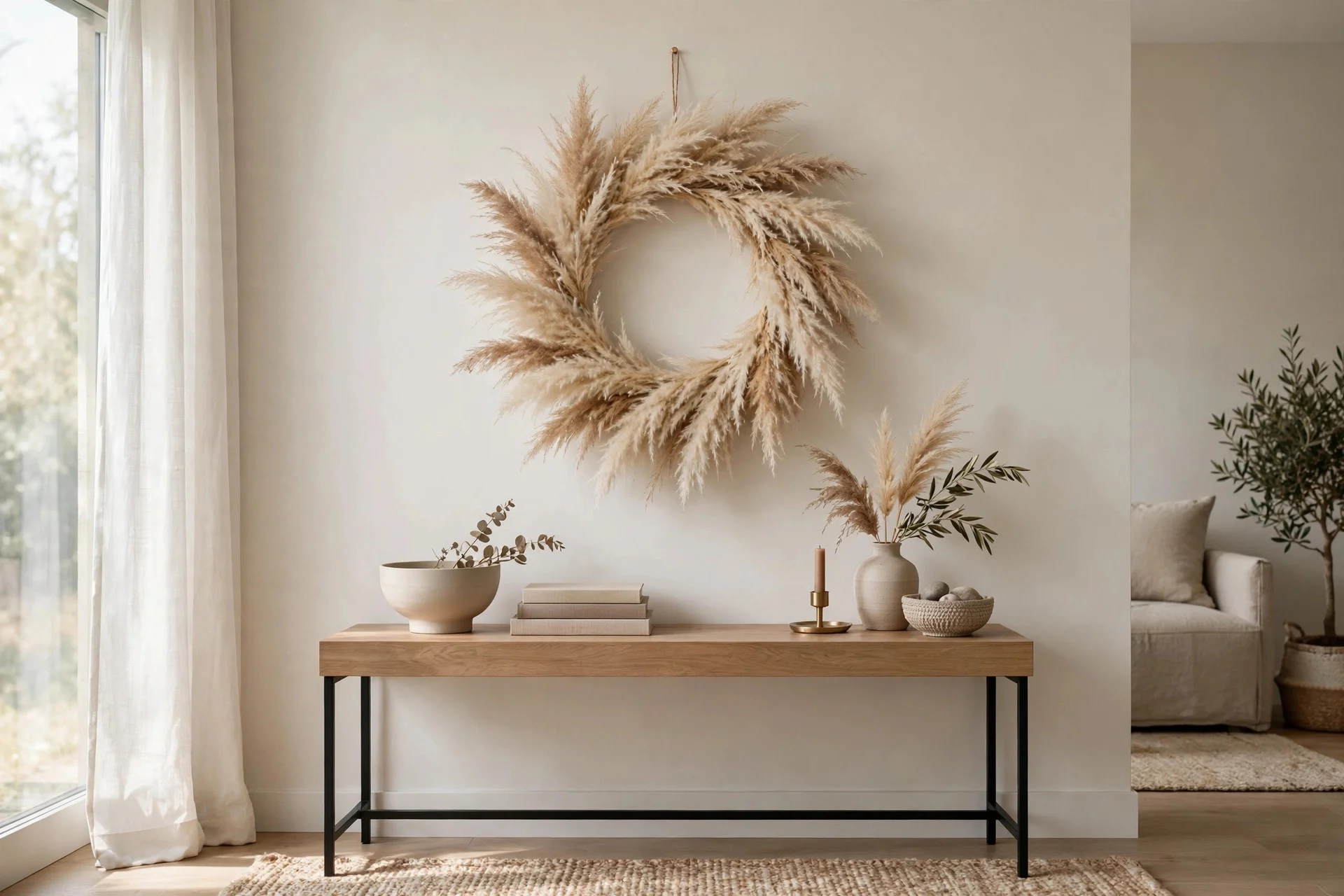
For modern homes, skip the dense traditional wreath and go airy. A pampas grass halo — plumes wired around a thin metal ring so they float outward — looks like a sunburst and suits minimalist rooms that would be overwhelmed by a chunky grapevine. Use a 14-inch gold or brass hoop and wire pampas stems all the way around, trimming nothing — the wild silhouette is the point. Shake each plume hard outside first; pampas sheds fluff for days, and I once decorated an entire hallway in stray fibers. Hang it above a console table with breathing room around it. It weighs almost nothing and lasts for years.
12. Dried Lavender and Wheat Bedroom Wreath
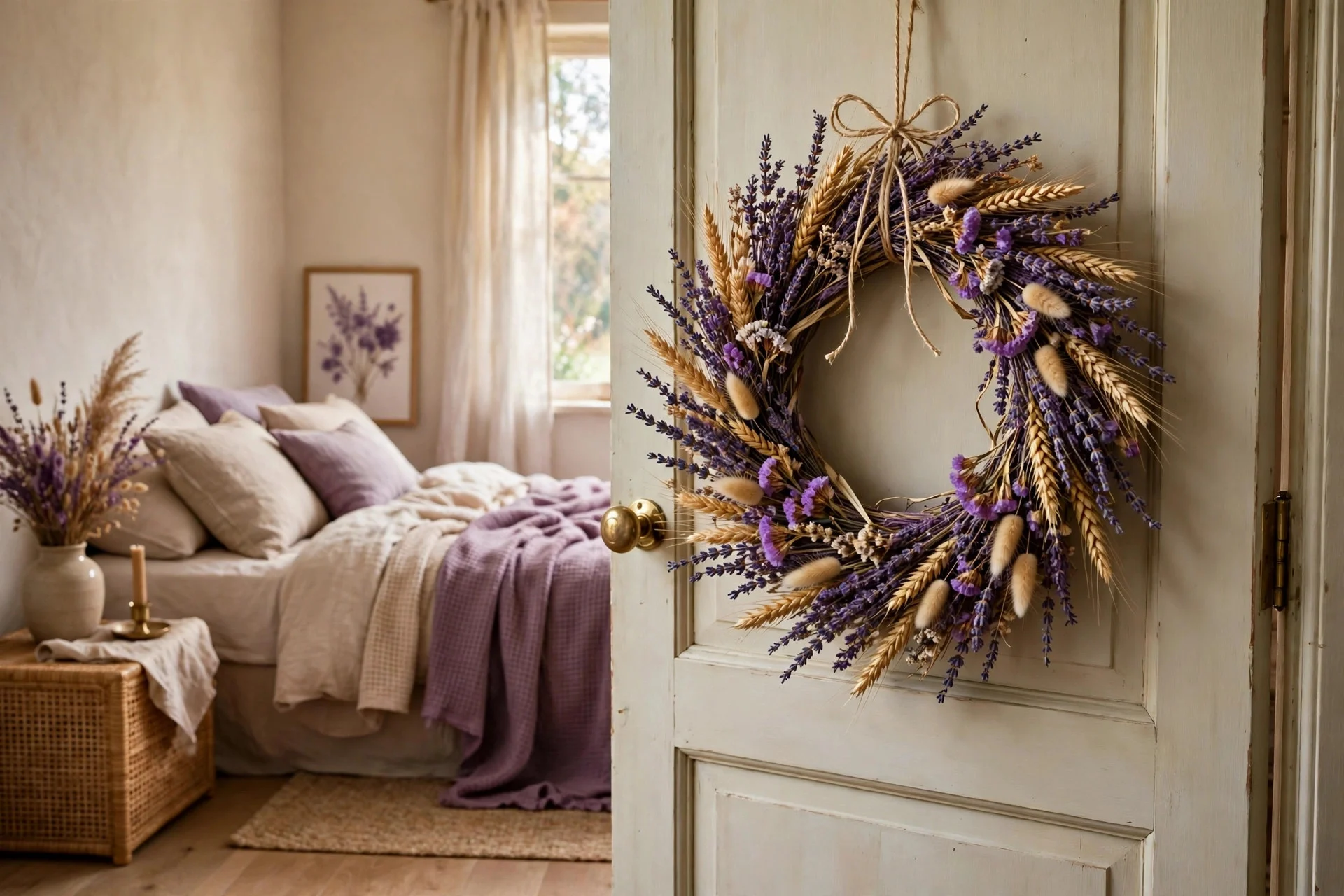
Not every wreath has to shout from the front door. A small dried lavender and wheat wreath on a bedroom door brings the season into your private spaces, and the lavender scent is genuinely calming at bedtime. Bundle dried lavender and wheat stems with twine and wire the bundles around a small 10-inch form. Keep the palette tight — purple-gray, gold, natural twine — so it reads intentional, not leftover. Dried lavender holds its scent for months; squeeze the wreath as you pass and the hallway smells like Provence. Mine lives on our bedroom door from October through January.
13. Flocked Pine With Mini Pumpkins
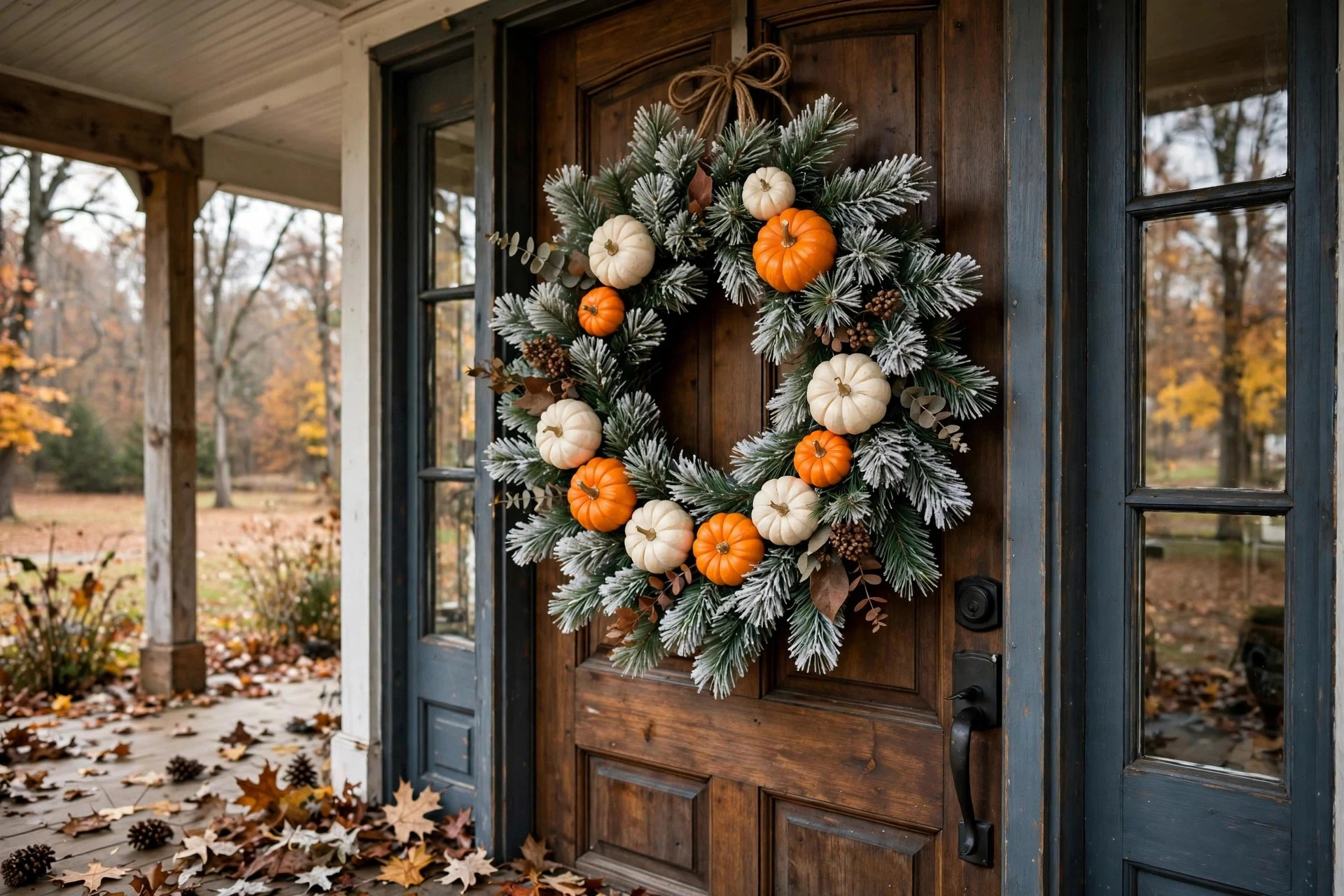
Late November sits in an awkward gap — full fall feels tired, but Christmas decorating feels early. The bridge is a lightly flocked pine wreath dressed with mini pumpkins: the snowy tips whisper winter while the pumpkins keep it firmly in fall. Buy a pre-flocked faux pine wreath and wire in orange and white mini pumpkins plus a few dried orange slices — intentional, not indecisive, which is the whole trick of transitional decorating. Keep it on a covered porch so rain doesn’t mat the flocking. Come December, pull the pumpkins off and you’ve got a Christmas wreath for zero extra.
14. Burlap Ruffle and Sunflower Wreath
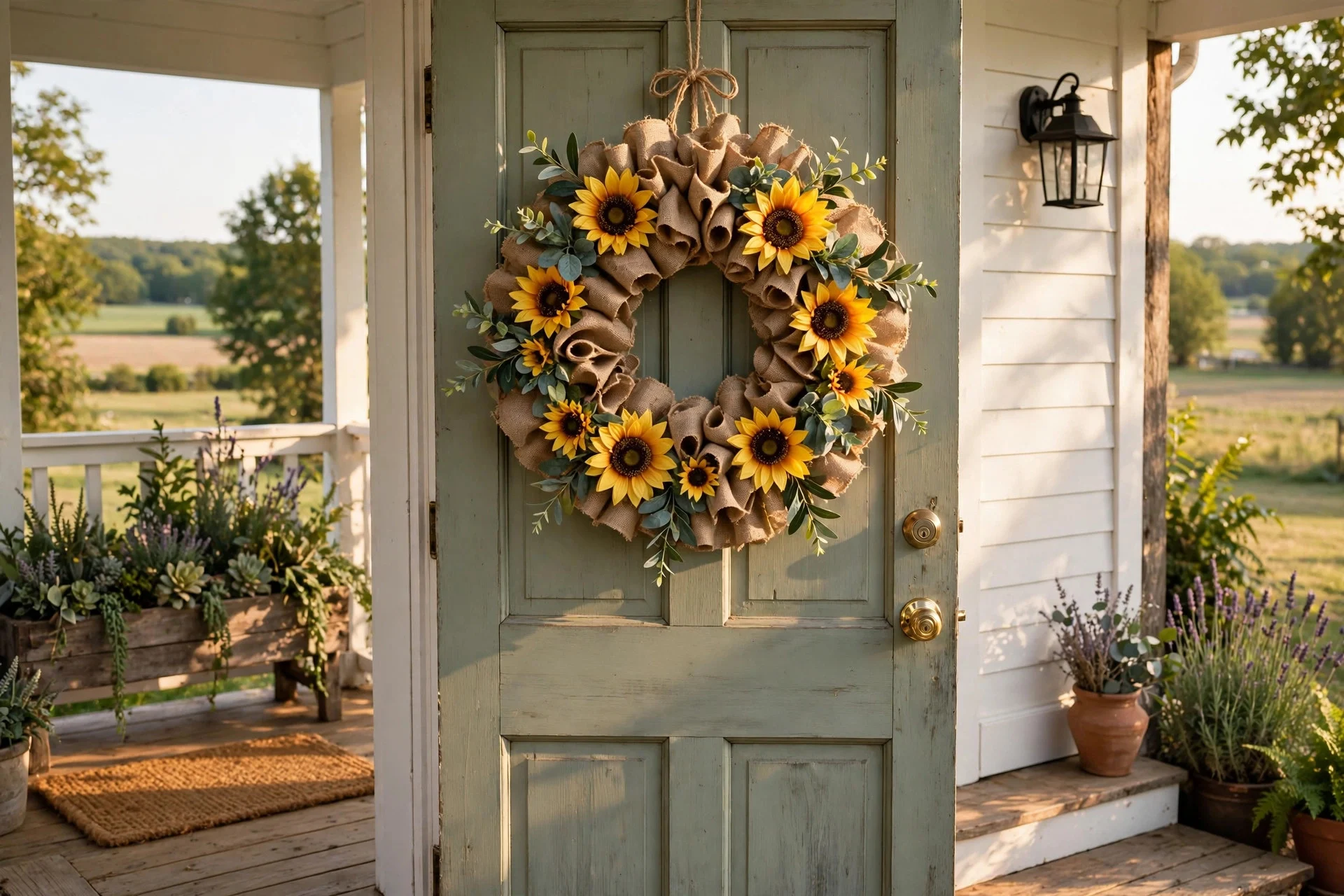
This is the cheeriest wreath on the list, and the easiest to make look full. Cut burlap into 4-inch strips and pin them, gathered, around a wire form until the ring is fully ruffled — it takes about two yards, so buy the wide roll. Wire in five or six faux sunflowers and tuck dried wheat between them. The ruffles hide every imperfection, making this the most forgiving beginner project here. Hang it where the golden sunflowers pop; the burlap weathers beautifully by December.
15. Foraged Twig and Acorn Wreath
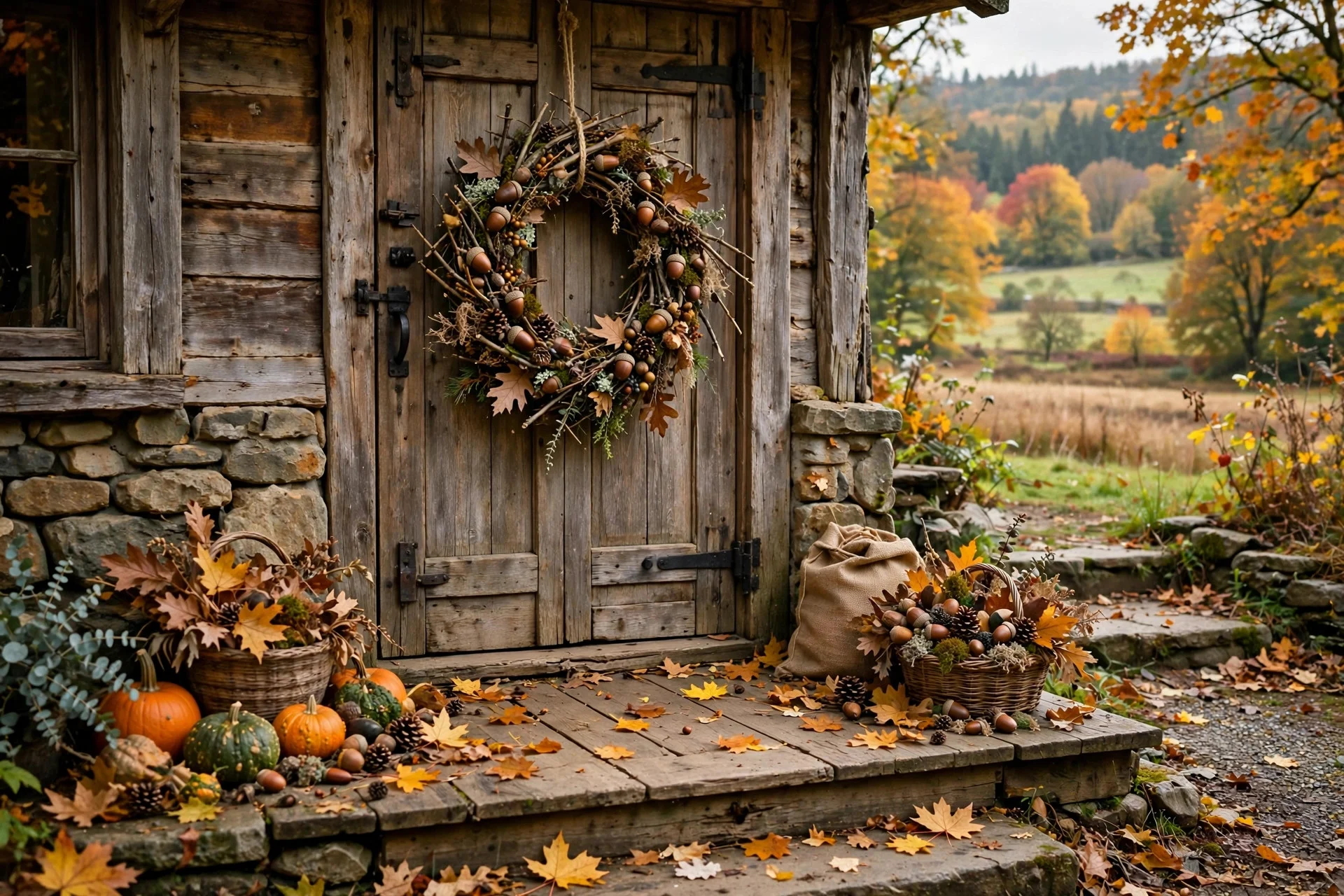
My favorite wreath cost exactly zero dollars. On an October walk I gathered bendy twigs, acorns, and seed pods, wove the twigs into a rough ring (fresh twigs hold each other — no form needed), and hot-glued acorns into the gaps. It’s crooked and lumpy, and guests ask about it more than any store-bought wreath I own. Gather more than you think — a grocery bag barely made a 14-inch ring — and bake the acorns at 200°F for an hour first. Hang it on a natural wood door where its wildness looks deliberate. Free and one of a kind.
16. Dried Chili Pepper Kitchen Wreath
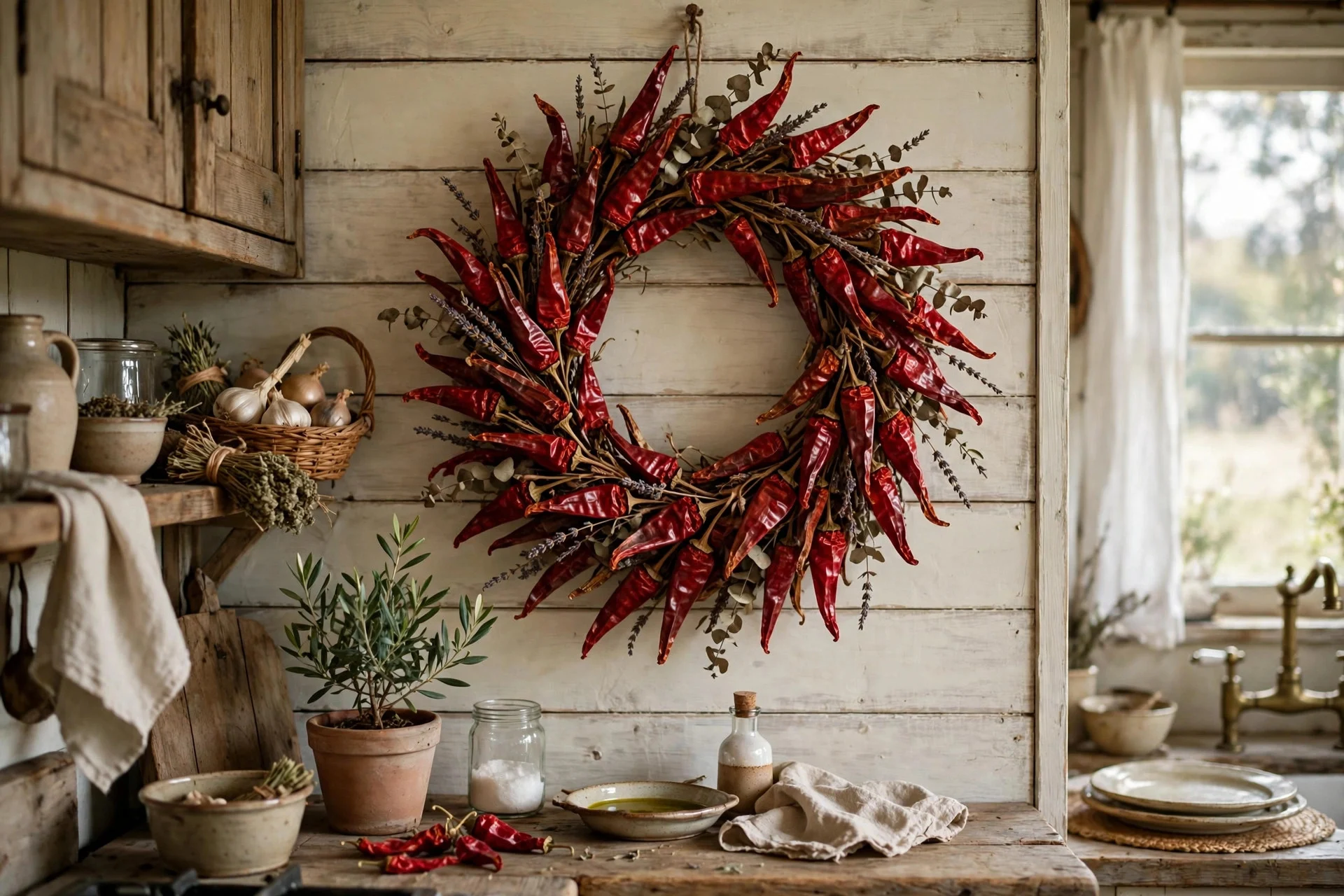
A ristra-style wreath of dried red chilies brings deep, glossy color to a kitchen wall and nods to Southwestern harvest traditions. Buy dried chili bundles — or string your own with a needle and twine through the stems — and wire them in overlapping layers around a grapevine form, all pointing downward like a traditional ristra. The deep red against warm kitchen wood is stunning, and it’s genuinely useful: snip a chili off for cooking all winter. Keep it clear of the stove’s direct heat. I made a small one for my sister last year and she still talks about it.
17. Velvet Pumpkin Wreath
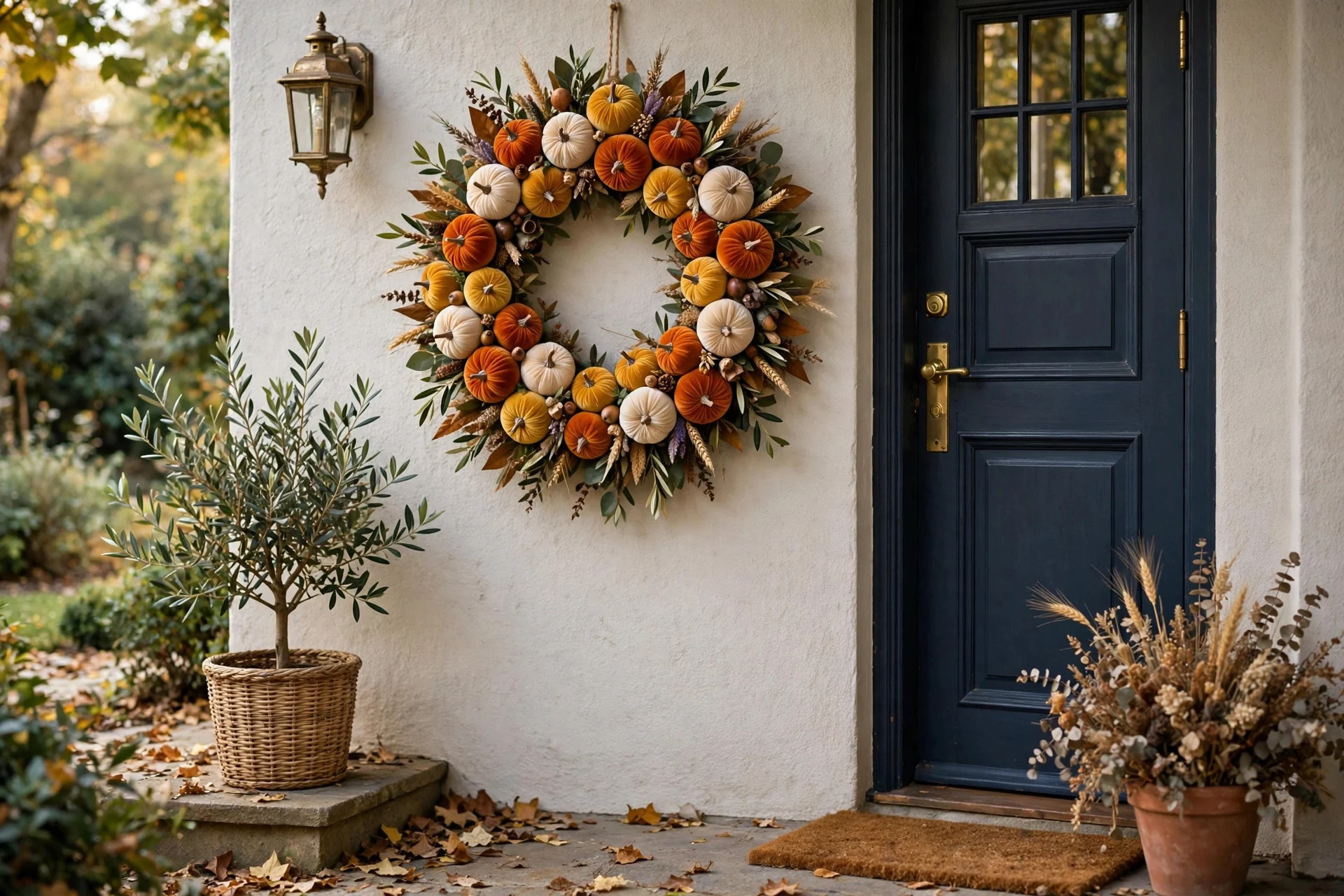
Velvet pumpkins are the jewel tones of fall decor, and wired into a wreath shape they’re pure luxury. Buy mini velvet pumpkins in burnt orange, mustard, deep plum, and cream — the craft-store kind with real stems — and hot-glue them tightly onto a foam form, alternating colors, until no foam shows. A 12-inch wreath needs about 25 minis; October sales drop the cost fast. Hang it where velvet catches lamplight. It never rots, never attracts fruit flies, and packs flat for next year — the wreath for people who love fall but hate the mess.
18. Woven Willow and Dried Grass Wreath
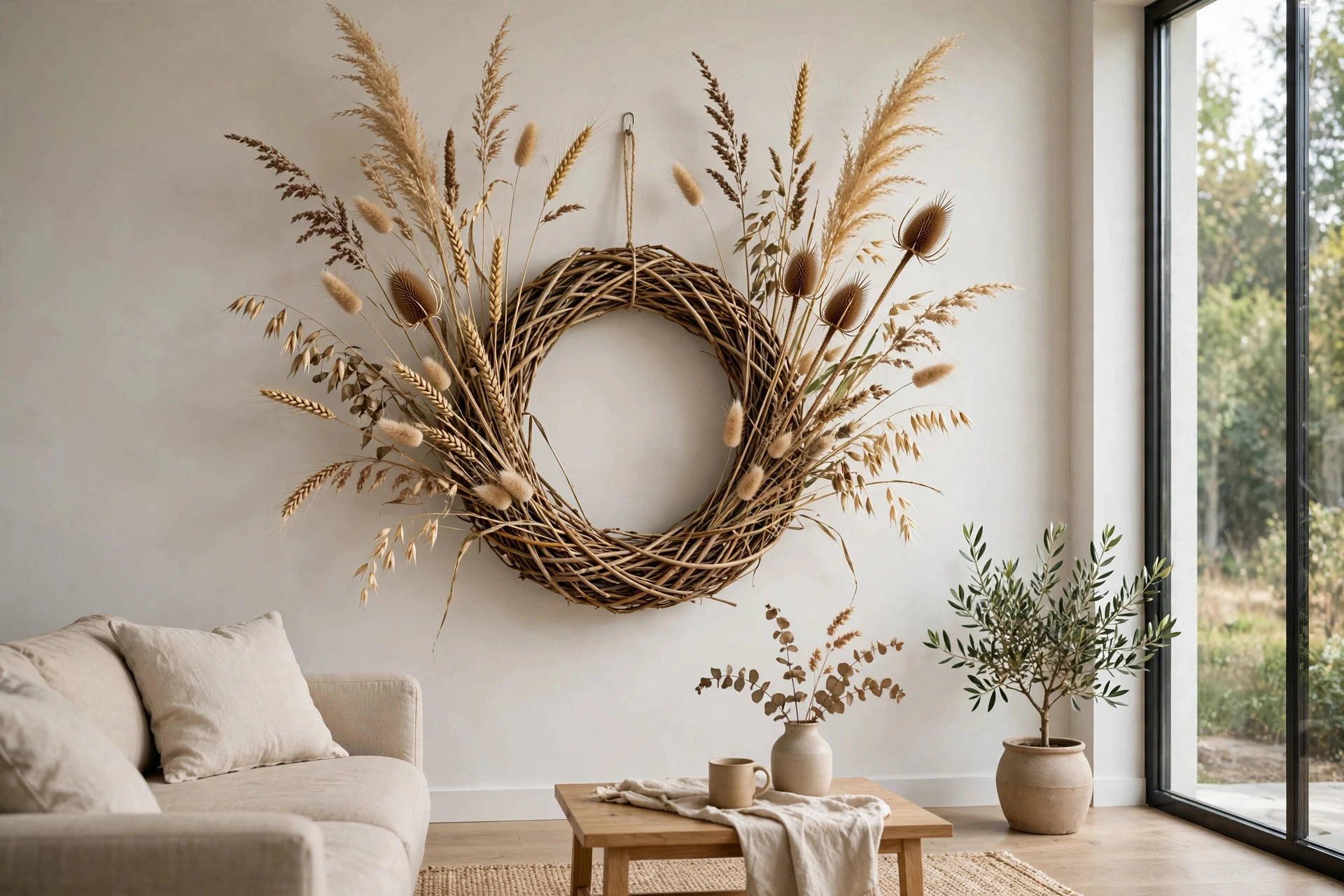
Scandinavian-inspired and sculptural, a woven willow wreath with tall dried grasses suits modern living rooms where a traditional harvest wreath would feel fussy. Wire tall dried grasses — pampas, bunny tail, wheat — into a willow wreath form so they rise above the ring like a crown. Keep the palette neutral: natural willow, cream grasses, maybe one stem of dried lunaria for its silver discs. Hang it on a plain wall with empty space around it; the restraint is the design. It lasts for years and never looks dated.
19. Faux Succulent and Moss Wreath
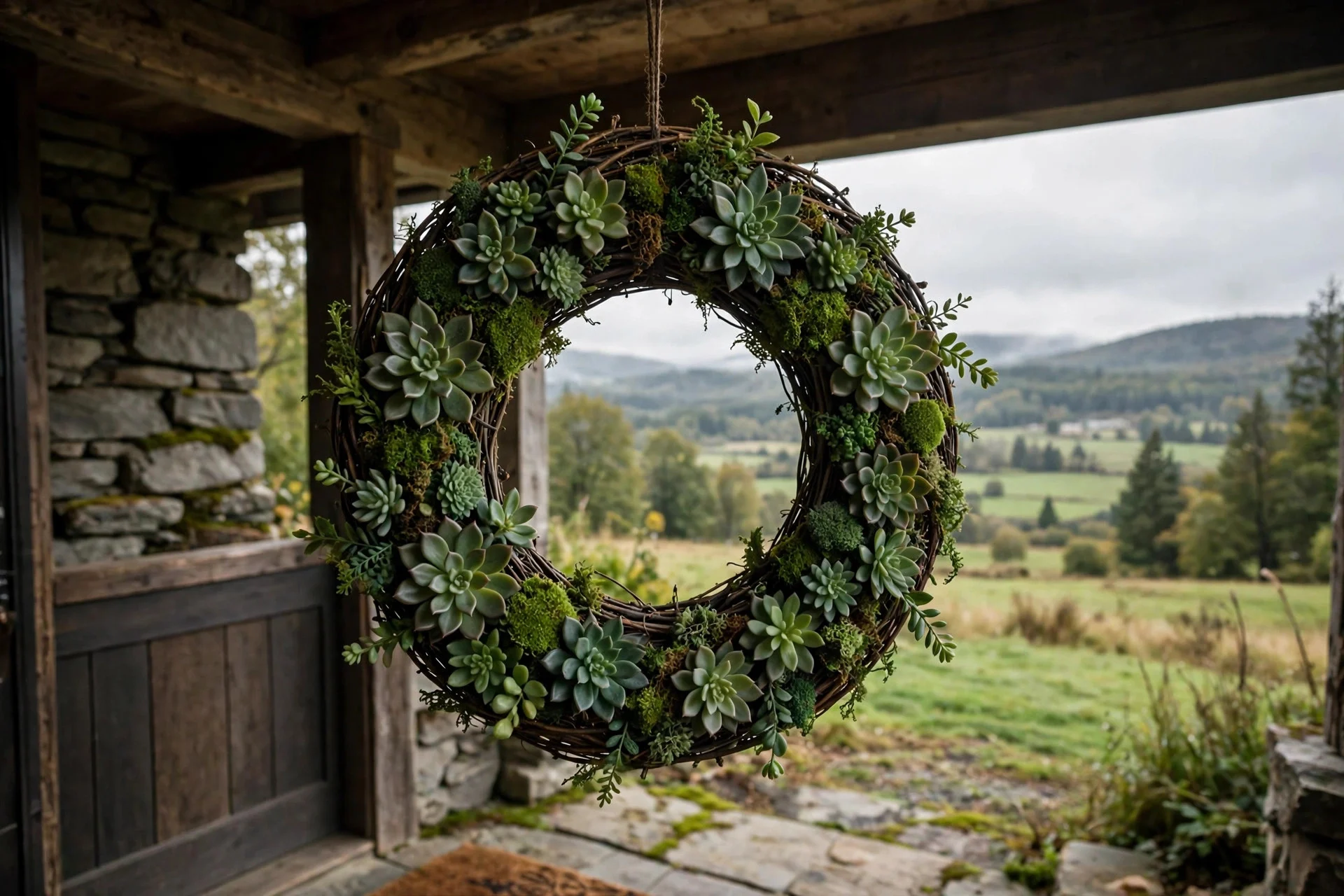
Green in November feels unexpected, which is exactly why this wreath works. Pin sheet moss over a foam form (pinned, not glued — glue and moss are a permanent marriage), then hot-glue faux succulents across the surface in clusters, like a living wall. Dusty blue-green echeveria rosettes with trailing faux string-of-pearls look incredibly real. Hang it somewhere sheltered — rain loosens moss — and in January add faux frosted berries to keep it up. Everyone asks my friend if hers is real. Every time.
20. Wood Bead and Brass Bell Wreath
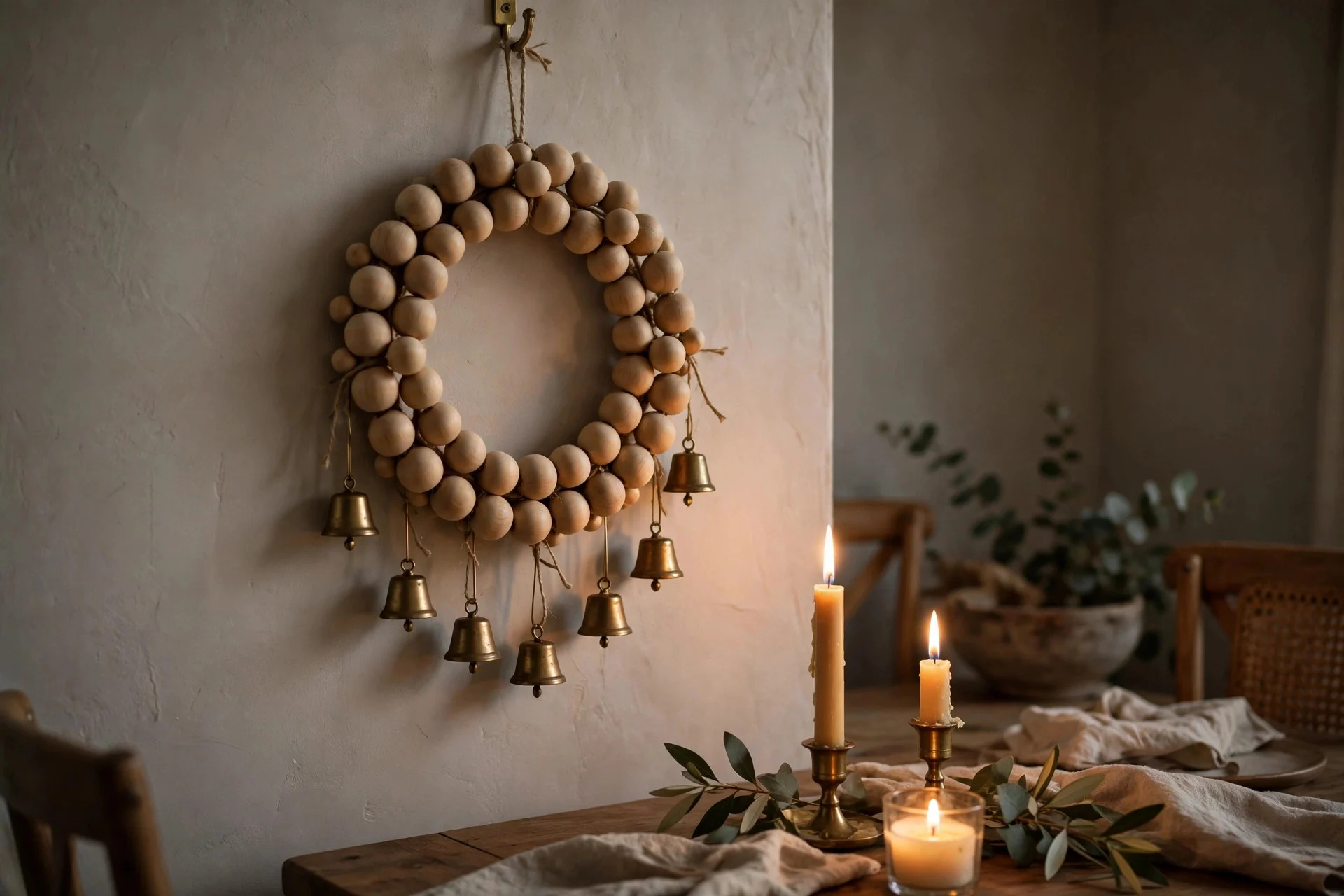
For the dining room, something that sounds as good as it looks. String large natural wood beads onto heavy wire to form a ring, wiring in a small brass bell every fifth bead. An hour, under $15. On the dining room wall it catches candlelight and gives the softest jingle when the door opens — guests always smile. The wood and warm metal sit beautifully with a Thanksgiving table without competing. It’s the lightest wreath here; one small hook holds it. Simple, musical, quietly elegant.
FAQs
How do I hang a wreath without damaging my door?
An over-the-door wreath hanger is the classic answer — no holes, no adhesive, ten seconds to hang. For glass or metal doors, a large suction-cup hook rated for the wreath’s weight works well; clean the glass first or it’ll slide. Inside, removable adhesive hooks hold most wreaths up to a few pounds. For heavy pinecone or pumpkin wreaths, use two hooks or a hanger to distribute the weight.
How long will a fresh wreath last outside?
Once it looks tired, compost it — a crispy wreath is worse than no wreath.
What’s the cheapest way to make a fall wreath?
Forage the decorations and buy only the base — an $8 grapevine form plus free twigs, acorns, pinecones, and dried seed heads from a walk. Hot glue is your only other cost. Or refresh last year’s wreath: pull the tired picks, wire in $10 of new dried stems, and it reads as brand new.
Can I use the same wreath from Halloween through Thanksgiving?
Absolutely — just design it without Halloween-specific elements. A grapevine, eucalyptus, wheat, or boxwood wreath works for the entire season; add Halloween picks in October, swap them for mini pumpkins November 1st. One good base wreath plus two $5 bags of seasonal picks covers you from October through December.
Twenty wreaths, zero florist required. Pick the one that matches what you already own and hang it this weekend — the front door is the handshake of your house. Which wreath are you trying first?