


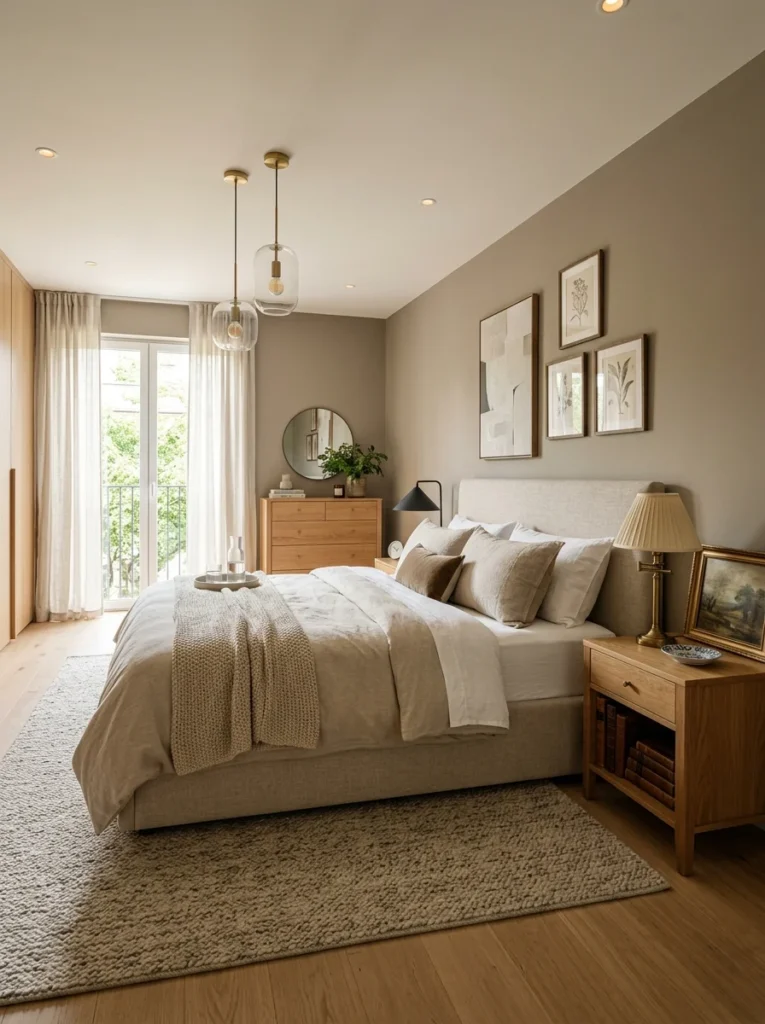
A shared bedroom between two people with genuinely different aesthetic tastes doesn’t have to become a compromise neither person likes. Here’s a practical way to actually resolve it.
A master bedroom shared by two people with different tastes is a different problem than the shared bedroom division covered elsewhere in this series, which deals primarily with allocating physical space fairly between two occupants. Here, the two people are generally sharing the same bed and the same overall room, not dividing it into separate zones — the tension isn’t about territory, it’s about which aesthetic vision the room actually reflects when both people have a genuine, legitimate stake in liking the space they sleep in every night.
This is a genuinely common situation, and the households that resolve it well rarely do so by one person simply winning the disagreement. They tend to land on a structure where both people’s taste is authentically present in the room, even when those tastes don’t naturally overlap.
Separate the Room Into What Needs Agreement and What Doesn’t

Not every decision in a shared bedroom actually requires both people to like it equally — some choices are structural and benefit from consensus, while others are personal and can reasonably reflect one person’s preference without requiring the other’s full endorsement. Distinguishing between these two categories early avoids relitigating every single decision as if it required the same level of joint agreement.
Large, expensive, and hard-to-change elements — the bed frame, the wall color, major furniture, window treatments — generally warrant genuine two-person agreement, since both people live with these choices constantly and changing them later is costly and disruptive, the same practical logic covered elsewhere in this series regarding sofa color longevity applied here to shared bedroom furniture.
Smaller, more personal, or more easily changed elements — a nightstand’s contents and styling, a reading chair in one corner, a personal collection of objects, one side’s specific bedding texture within a shared overall palette — can reasonably reflect one person’s individual taste without needing the other partner’s full agreement, in the same way personal territory within a shared space, covered elsewhere in this series, doesn’t require identical taste on both sides.
A Neutral, Shared Foundation Lets Both Tastes Coexist
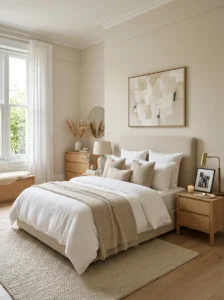
The most reliable structural solution to genuinely different tastes is a foundation — walls, major furniture, flooring — kept intentionally more neutral and restrained than either person’s individual taste might naturally lean, with each person’s more distinctive preferences introduced through smaller, layered elements rather than the room’s largest and most permanent choices.
This mirrors the accent color principle covered elsewhere in this series: a stable, neutral base with color and personality introduced through pillows, art, and smaller objects gives each person room to express their own taste without either person’s stronger preference overwhelming the shared foundation both people have to live with. A partner who loves bold color and a partner who prefers minimal, muted spaces can both find genuine satisfaction in a neutral-walled room with each person’s preferred intensity expressed through their own nightstand, their own side’s textiles, or a shared but restrained accent color both people can agree to.
This is a more sustainable structure than either person’s full aesthetic vision applied wholesale to the room, since a room built entirely around one person’s taste tends to produce quiet, ongoing resentment in the other partner, even if that partner initially agreed to the arrangement to avoid conflict.
Find the Genuine Overlap Before Assuming There Isn’t One
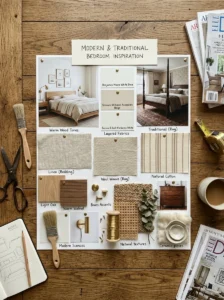
Two people who feel like they have “completely different tastes” often share more actual overlap than the disagreement suggests, once the conversation moves from broad aesthetic labels — “modern” versus “traditional,” “minimal” versus “maximalist” — to specific, concrete preferences within those categories. A self-described minimalist and a self-described maximalist might both, for instance, prefer warm wood tones, dislike a particular color, or agree on wanting a calm rather than stimulating bedroom environment once the conversation gets specific rather than staying at the level of broad style labels.
A useful practical exercise is each partner independently gathering images or examples of bedrooms they respond to, then reviewing them together specifically looking for common threads — a shared preference for a certain wood tone, a particular fabric texture, a similar color family — rather than assuming the entire aesthetic vocabulary is in conflict just because the overall style labels differ.
Trading Priorities Rather Than Splitting Every Decision in Half
Splitting every decision down the middle — a literal compromise on each individual choice — often produces a room that satisfies neither person fully, since a diluted version of two different visions tends to read as indecisive rather than considered. A more effective approach is trading priorities: one partner gets more direct say over the elements that matter most to them specifically, in exchange for deferring more on the elements that matter more to the other partner.
This requires each partner being honest about which specific elements they actually care about most, which is often a shorter and more specific list than “everything,” and identifying this list explicitly makes the negotiation considerably more productive than a vague, generalized disagreement about the whole room. A partner who cares most about the bedding and textiles and a partner who cares most about the furniture style and wall color can each get real authorship over the area that matters most to them, rather than both partners having partial, unsatisfying input into every single decision.
Where Genuine Compromise Objects Work Well
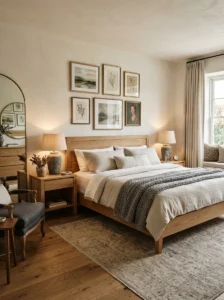
Certain categories of bedroom object are particularly well suited to functioning as a genuine midpoint rather than requiring either person to fully defer. Art is one of the more flexible categories — a piece that doesn’t perfectly match either person’s default style but that both people respond to on its own merits functions as a genuinely shared choice rather than a compromise either person settled for.
Natural materials — wood, stone, linen, wool — tend to bridge stylistic differences more easily than trend-specific finishes or bold patterns do, since these materials read as appropriate across a wide range of style categories from traditional to modern to minimalist, and a shared bedroom built around natural material choices for its major furniture often accommodates a wider range of each partner’s more specific style preferences layered on top.
When to Bring in Outside Input
A couple who has genuinely reached an impasse — repeated disagreement without progress toward either the overlap-finding or priority-trading approaches above — sometimes benefits from a third party, whether a professional designer or simply a trusted friend with design sensibility, who can propose options neither partner arrived at independently and who isn’t emotionally invested in either person “winning” the disagreement. This isn’t a sign of failure to work it out together; it’s a practical tool for genuinely difficult cases, in the same way outside input is a reasonable resource for any decision two people can’t resolve well on their own after a fair, honest attempt.
Key Takeaways

- Distinguish between large, expensive, hard-to-change decisions that benefit from genuine two-person agreement and smaller, more personal elements that can reasonably reflect one partner’s individual taste
- A neutral, restrained shared foundation — walls, major furniture — with each partner’s distinctive taste introduced through smaller, layered elements lets both people’s preferences coexist without either person’s stronger taste overwhelming the room
- Broad style labels like “modern” versus “traditional” often obscure genuine overlap in specific preferences — comparing concrete examples together, rather than staying at the label level, frequently reveals more common ground than the disagreement initially suggests
- Trading priorities — each partner getting more direct say over the specific elements that matter most to them — generally produces a more satisfying result than splitting every individual decision down the middle
- Art and natural materials tend to function well as genuine midpoint choices that both partners can respond to, rather than compromises either person settles for reluctantly
- A couple at a genuine impasse can reasonably bring in outside input — a designer or a design-savvy friend — as a practical tool rather than a sign that the disagreement couldn’t be worked out directly

Frequently Asked Questions
Should we split every decision fifty-fifty when we disagree on bedroom style? Generally not recommended as a strategy for every individual choice — literally splitting each decision down the middle tends to produce a diluted result that satisfies neither person fully. Trading priorities, where each partner has more direct say over the specific elements that matter most to them, tends to produce a more genuinely satisfying room for both people than an even compromise applied to every single decision.
What if we genuinely can’t find any overlap in our tastes at all? This is less common than it initially seems once the conversation moves from broad style labels to specific, concrete preferences — most couples share more actual overlap in materials, colors, or textures than “modern versus traditional” style labels suggest. Comparing specific images or examples together, rather than staying at the level of broad category labels, is worth trying before concluding there’s genuinely no shared ground.
Is it okay for one partner to have more control over the bedroom’s overall look? It can work if it’s a genuine, explicit trade rather than one partner simply deferring by default — for instance, one partner having more say over furniture and wall color in exchange for the other partner having more say over bedding and textiles. A room built entirely around one person’s taste without this kind of explicit trade tends to produce ongoing resentment in the partner who didn’t get meaningful input, even if they initially agreed to avoid conflict.
Does keeping the room neutral mean it will feel boring or impersonal? Not necessarily — a neutral foundation is meant to be a stable base that both people’s more distinctive tastes are layered onto, not the room’s entire final look. The personality and warmth come from the smaller, more personal elements — bedding, art, individual nightstand styling — that each partner introduces on top of that shared neutral structure, similar to the accent color approach covered elsewhere in this series.
Is it worth hiring a designer just to settle a taste disagreement with my partner? For a couple genuinely stuck after a fair attempt at finding overlap and trading priorities, yes, it’s a reasonable and practical option — a third party who isn’t emotionally invested in either person winning the disagreement can often propose solutions neither partner considered independently, and this is a legitimate tool rather than an admission that the couple failed to resolve it themselves.