


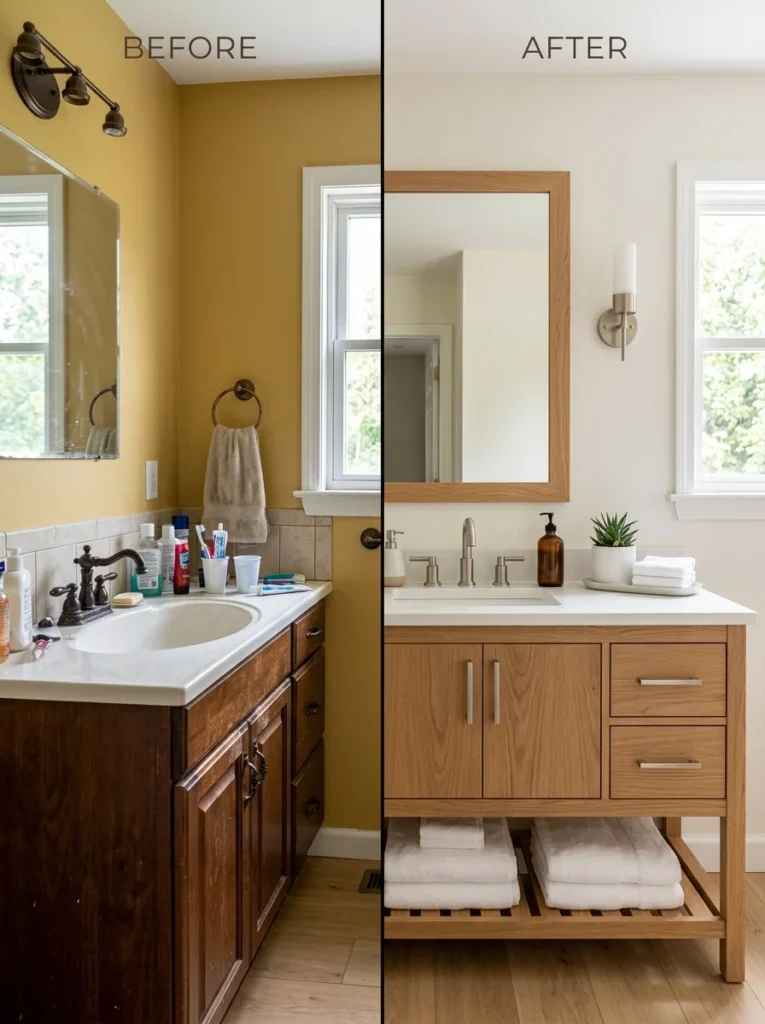
A full bathroom renovation is expensive, disruptive, and usually unnecessary for making a dated bathroom feel new again. Here’s what actually changes a bathroom’s feel without touching plumbing, tile, or layout.Most bathrooms that feel dated aren’t structurally or functionally wrong — the tile is intact, the plumbing works, the layout is fine. What’s actually dated is a narrower set of surface-level decisions: a finish that was fashionable a decade ago, hardware in a color that’s since fallen out of favor, lighting that’s the wrong temperature, or simply a room that hasn’t been edited in years. A full renovation solves this, but it also solves a hundred problems the bathroom doesn’t actually have, at a cost and disruption that a surface-level dating problem doesn’t require.
The useful question before starting any bathroom project isn’t “what would make this bathroom perfect” — it’s “what specifically is making this bathroom feel dated or tired, given that the tile and layout are staying exactly as they are.” That second question usually has a much shorter, much cheaper answer.
Hardware Is the Highest-Leverage, Lowest-Cost Change
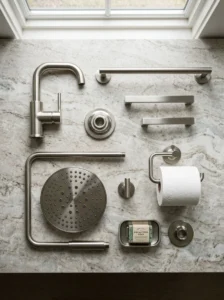
Cabinet pulls, faucet, showerhead, towel bars, and toilet paper holder are, collectively, a small financial investment relative to a full renovation, and they’re disproportionately responsible for how dated or current a bathroom feels. This is because hardware finish trends move faster and more visibly than tile or fixture trends, and a bathroom with 2010s-era oil-rubbed bronze or polished brass hardware reads as dated even when everything else in the room is neutral and timeless.
Replacing hardware alone, without touching anything else, often produces the single largest before-and-after visual change available at this price point. A faucet, cabinet pulls, and a showerhead in a current finish — matte black, brushed nickel, or unlacquered brass, depending on the room’s existing tone — can shift a bathroom’s entire feel in an afternoon of work that most homeowners can do themselves with basic tools.
Consistency across the hardware matters more than any individual piece. A new faucet in one finish paired with old cabinet pulls in a different finish looks more disjointed than leaving everything in its original, dated-but-consistent state. If budget only allows replacing some hardware, it’s worth grouping the replacement by what’s most visible — faucet and cabinet pulls together, for instance — rather than replacing one prominent piece and leaving a mismatched neighbor in place.
Paint Changes More Than the Walls
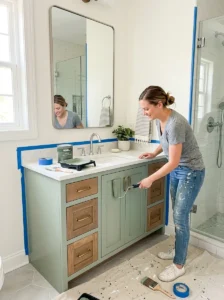
Bathroom walls are often a smaller surface area than in other rooms, since tile frequently covers much of the wall space, which means paint is a comparatively fast and cheap project even in a bathroom that feels otherwise fully built out.
A dated wall color — the beige, the specific shade of green, the color that was standard a decade or two ago — is one of the most common single causes of a bathroom reading as tired, independent of the tile or fixtures. Repainting in a current neutral or a considered color changes the room’s entire tone without touching anything structural.
The ceiling is frequently overlooked and worth including. A ceiling painted the same builder-grade white as every other ceiling in the house, in a bathroom that’s otherwise been updated, can read as an unfinished detail. A ceiling painted to match or complement the wall color, or a soft off-white rather than the stark original white, is a small addition to a repainting project that meaningfully raises the finished quality of the result.
Cabinetry can be repainted rather than replaced. A vanity in a dated wood tone or an outdated painted color is a strong candidate for refinishing rather than replacement — sanding, priming, and repainting a vanity in a current color is a fraction of the cost of a full cabinet replacement and, done carefully, is difficult to distinguish from a new piece.
Lighting Changes the Room’s Entire Feel Without Any Construction
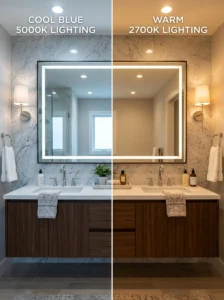
Swapping a light fixture is electrical work but not structural work in most cases, and it’s one of the fastest ways to shift a bathroom’s tone. A dated builder-grade fixture — a boob light, a basic vanity strip — replaced with a current fixture in an appropriate scale and finish changes the room’s character disproportionately to its cost.
Bulb color temperature is an even cheaper version of the same fix. As covered in more detail elsewhere in this series, replacing cool-toned bulbs with warm 2700K-3000K, high-CRI bulbs can shift how a bathroom feels without replacing the fixture at all — sometimes the fixture itself isn’t dated, the light coming out of it is simply the wrong temperature for how the room reads.
Adding a dimmer, where the fixture and wiring allow it, adds a sense of considered design to a room without visibly changing anything, since it’s a functional and experiential upgrade that doesn’t show up in a photo but is noticeable every time the room is used.
Mirror and Accessories Do More Work Than Their Cost Suggests
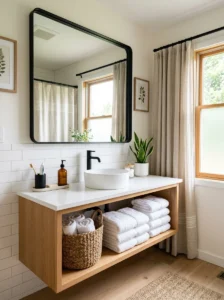
A standard builder-grade mirror — typically a plain rectangular or slightly bullnose-edged mirror with no frame — is one of the more common markers of an unrenovated bathroom, and replacing it with a framed mirror or a more considered shape is a project that usually takes an afternoon and doesn’t require altering the wall behind it.
Textiles are a fast, fully reversible refresh. New towels, a new bath mat, and a new shower curtain, chosen in a coordinated palette rather than whatever’s accumulated over time, change the room’s color story immediately and cost very little relative to almost any other change on this list. This is also the easiest category to get wrong through mismatch — a new shower curtain in a bold pattern paired with old, mismatched towels looks more disjointed than a fully coordinated but modest palette.
Removing visual clutter is a free refresh that’s frequently skipped. A bathroom accumulates half-used products, expired items, and objects that no longer serve a purpose over years of daily use, and clearing this out — independent of any purchase — often makes as much visible difference as some paid changes on this list, particularly when combined with the storage and shelving strategies covered elsewhere in this series.
Grout and Caulk Refresh a Tired Bathroom Without Retiling
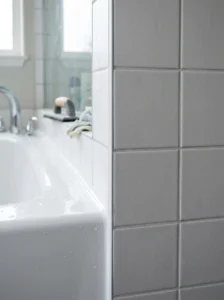
Tile itself is expensive and disruptive to replace, but the grout and caulk around it age faster than the tile does and are a comparatively minor project to address.
Re-caulking around the tub, shower, and sink removes yellowed, cracked, or mildew-stained caulk lines that are one of the most visible signs of an aging bathroom, and it’s a project most homeowners can complete in an afternoon with basic tools and materials.
Grout can be cleaned, refreshed with a grout colorant, or in more involved cases, removed and replaced without touching the tile itself. Discolored or stained grout is frequently mistaken for a tile problem when it’s actually a grout problem, and addressing the grout alone — considerably cheaper than retiling — often resolves what looked like a larger issue.
What to Skip Unless There’s an Actual Functional Problem
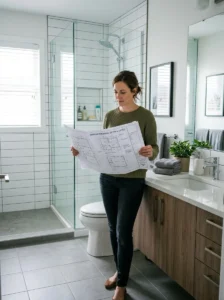
Layout changes, moving plumbing, and full retiling are the projects that turn a refresh into a renovation, in cost, disruption, and timeline. These are worth doing when there’s a genuine functional problem — a layout that doesn’t work, a tub that’s failing, tile that’s cracked or has water damage behind it — but they’re not necessary simply because a bathroom feels dated. A bathroom with sound tile, working plumbing, and a reasonable layout rarely needs any of these changes to feel current again; it needs the surface-level attention covered above.
The test worth applying before starting any bathroom project: is the thing being changed actually broken or non-functional, or does it simply look outdated? The first category justifies a genuine renovation. The second category, in the large majority of cases, can be addressed through hardware, paint, lighting, mirror, textiles, and grout — a project that takes days and a modest budget rather than weeks and a renovation-level one.
Key Takeaways
- Hardware — faucet, cabinet pulls, showerhead — is the single highest-leverage, lowest-cost change for shifting how dated a bathroom feels
- A dated wall or ceiling color is a common standalone cause of a tired-feeling bathroom, independent of tile or fixtures, and repainting is fast and cheap relative to any structural change
- Swapping a light fixture or simply changing bulb color temperature changes a room’s entire feel without any construction
- A framed mirror, coordinated textiles, and general decluttering are inexpensive, fully reversible changes that disproportionately affect how finished a bathroom feels
- Re-caulking and grout refreshing address the most visible signs of an aging bathroom without the cost or disruption of retiling
- Reserve full renovation — layout changes, retiling, moving plumbing — for genuine functional problems, not for a bathroom that simply looks outdated
Frequently Asked Questions
What single change makes the biggest visible difference for the lowest cost? Hardware — faucet, cabinet pulls, and showerhead in a current, consistent finish — generally produces the largest before-and-after shift relative to its cost, because finish trends are one of the most visibly dating elements in a bathroom and hardware is comparatively inexpensive and fast to replace.
Is it worth repainting a bathroom vanity instead of replacing it? In most cases, yes, if the vanity itself is structurally sound and simply outdated in color or finish. Sanding, priming, and repainting a vanity is a fraction of the cost of full replacement, and a careful paint job is difficult to distinguish from a new piece, especially when paired with updated hardware.
Can changing light bulbs really make a noticeable difference? Yes — color temperature and CRI affect how every surface and finish in the room reads, and a bathroom lit with cool, low-CRI bulbs can look dated or clinical even if the fixture itself is fine. Switching to warm, high-CRI bulbs is one of the cheapest changes available and often makes a bathroom feel meaningfully more current without touching the fixture at all.
How do I know if my bathroom actually needs a full renovation versus a refresh? The distinguishing question is whether anything is genuinely broken or non-functional — cracked tile with water damage behind it, a failing tub, a layout that doesn’t work for the household — versus simply looking outdated while functioning fine. A bathroom in the second category can almost always be addressed through hardware, paint, lighting, mirror, textiles, and grout work rather than a full renovation.
Is re-caulking a project a homeowner can do themselves? Generally yes. Removing old caulk, cleaning the surface thoroughly, and applying new caulk in a straight, even line is a project most homeowners can complete with basic tools, some patience, and attention to letting it cure properly before the area is used. It’s one of the more approachable projects on this list and one of the more visibly impactful ones, since aged caulk is a common, highly visible sign of a tired bathroom.