

Throw pillows generate a disproportionate amount of decision paralysis for how low-stakes and reversible they actually are. Here’s a simple, practical framework for choosing them without overthinking it.
Throw pillows generate a surprising amount of decision paralysis relative to how genuinely low-stakes they actually are — unlike a sofa or a paint color, a pillow is inexpensive, fully reversible, and easy to change again in a few months if the choice doesn’t work out. Despite this, many people spend a disproportionate amount of time agonizing over pillow choices, largely because there’s an overwhelming amount of pattern, color, and texture variety available with no obvious starting framework for narrowing it down. A simple, practical set of guidelines resolves most of this paralysis without requiring the level of consideration that actually higher-stakes decisions, like the ones covered elsewhere in this series regarding sofa color, genuinely warrant.
Start With Size and Fill, Which Matter More Than Most People Expect
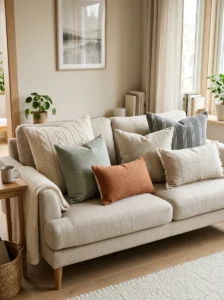
Pillow size affects how a seating arrangement reads more than most people initially assume — standard sizes generally run from 18×18 inches for a smaller accent pillow up to 24×24 inches or larger for a substantial, statement-making piece, with 20×20 and 22×22 as common middle-ground options. A sofa with pillows sized too small for its scale looks under-furnished, while pillows sized appropriately or slightly larger than expected tend to look more intentional and full — erring slightly larger, within reason, is generally a safer choice than erring too small.
Lumbar pillows — rectangular rather than square, typically used for back support or as a layering element in front of larger square pillows — add variation in shape that a room of only uniform square pillows doesn’t achieve, and this is one of the easiest ways to add visual interest without needing to make any complicated color or pattern decisions at all.
Fill quality affects both how a pillow looks and how long it looks that way — a down or down-alternative insert holds its shape and plumpness considerably better over time than a basic polyester fill, which tends to flatten and look tired within months of regular use. Since the insert is separate from the cover in most quality pillows, it’s worth prioritizing insert quality even on a modest overall budget, since the insert affects the pillow’s daily appearance more consistently than the cover fabric does.
The Simplest Reliable Formula: One Anchor, One Pattern, One Texture
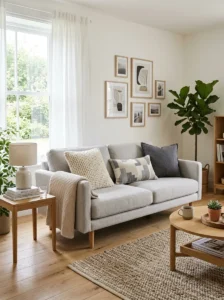
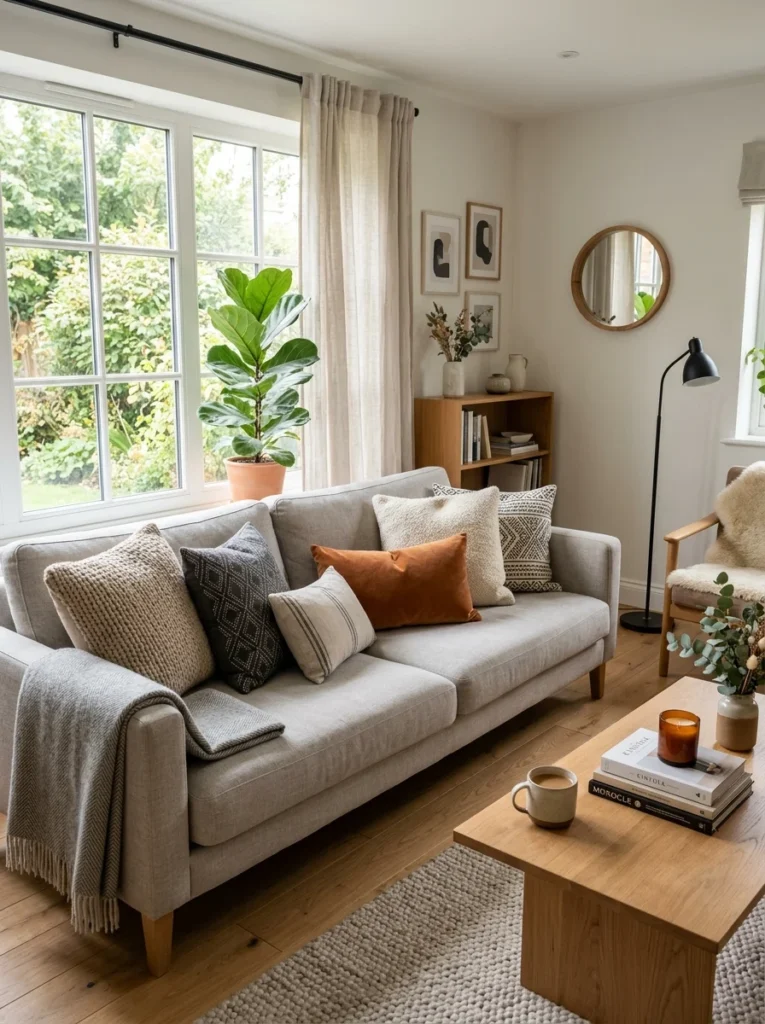
A workable, low-effort default formula for a small grouping of pillows — three to five on a standard sofa, for instance — is one solid “anchor” color that relates to the room’s existing palette, one patterned pillow that incorporates that anchor color along with one or two others, and one textured solid, in a complementary but not identical color, that adds tactile variety without adding visual busyness. This formula reliably avoids both the flatness of an all-solid, all-matching grouping and the chaos of too many competing, unrelated patterns, without requiring an extensive design background to execute.
This same formula scales down easily for a smaller grouping — a single patterned pillow paired with a single solid, or even a solid pair in two coordinating but not identical tones for a simpler, lower-effort approach — and scales up for a larger arrangement by adding a second pattern that shares a color with the first rather than introducing something entirely unrelated.
Odd Numbers, Applied Loosely Rather Than as a Strict Rule
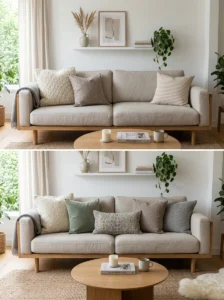
The general design principle of odd-numbered groupings, covered elsewhere in this series regarding shelf and coffee table styling, applies to pillow arrangements as a loose guideline rather than a strict rule — three or five pillows on a standard sofa tends to look more intentional than an even number, though this isn’t a rule that needs rigid enforcement, and a symmetrical two-pillow-per-side arrangement on a large sectional, for instance, has its own logic that doesn’t need to force an odd count where it doesn’t naturally fit.
Symmetry and asymmetry are both legitimate approaches — a formal, symmetrical arrangement with matching pillows on each side reads as more traditional and structured, while an asymmetrical grouping of varied pillows reads as more casual and collected — and choosing between them is more a matter of the room’s overall style than a rule with one universally correct answer.
Pulling Colors From What Already Exists Removes Most of the Guesswork
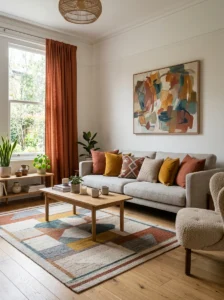
As covered in more detail elsewhere in this series regarding accent color for a living room generally, pulling pillow colors from something already present in the room — a rug, existing art, another textile — removes most of the guesswork involved in choosing colors from scratch, since the color is being tested against the room’s actual existing palette rather than selected in isolation and hoped to work. This is a particularly useful shortcut for pillows specifically, given how quickly a household can otherwise get lost comparing an overwhelming number of color and pattern combinations with no anchor point to narrow the search.
Pillows Are the Right Place to Take Risks Precisely Because They’re Low-Stakes
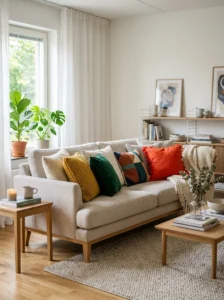
Given how inexpensive and easy to change pillows are relative to almost anything else in a room, they’re one of the best places in the entire home to experiment with a bold color, a strong pattern, or a current trend without the longer-term commitment risk that the same choice would carry on a larger, more expensive piece — a principle covered throughout this series regarding where to concentrate trend-forward choices versus where to stay more restrained. A household paralyzed by a pillow decision is often overweighting the actual stakes involved; a pillow that doesn’t work out in a few months is a low-cost, easily corrected choice, not a lasting mistake on the scale of a sofa or a wall color.
Seasonal Swapping Is a Reasonable, Low-Effort Refresh Strategy
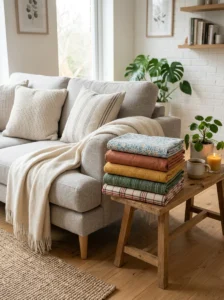
Pillow covers, purchased separately from inserts, allow a household to swap the visible color and pattern seasonally or simply when a refresh is wanted, without needing to replace the entire pillow each time. This is a genuinely practical, low-cost way to keep a room feeling current or seasonally appropriate without the larger investment a furniture or wall color change requires, and it takes advantage of exactly the low-stakes, easily reversible nature that makes pillows a reasonable place to experiment in the first place.
A Practical Decision Sequence for Someone Genuinely Stuck
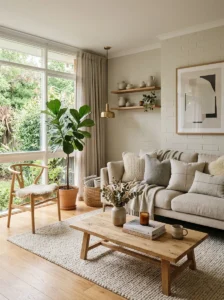
Identify one color already present in the room to use as the anchor. Choose one patterned pillow that includes that anchor color. Choose one textured solid in a complementary but not identical tone. Size the pillows slightly larger than initial instinct suggests, within the room’s actual scale. Arrange in an odd number where the furniture naturally allows it, or a symmetrical pair where it doesn’t. Following this sequence, rather than attempting to evaluate the full range of available options simultaneously, resolves most pillow-selection paralysis by narrowing the decision at each step rather than facing the entire decision space at once.
Key Takeaways
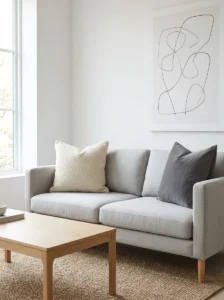
- Pillow size affects how a seating arrangement reads more than expected — erring slightly larger, within the room’s scale, generally looks more intentional than pillows sized too small
- Insert quality (down or down-alternative versus basic polyester) affects a pillow’s appearance over time more consistently than the cover fabric does, and is worth prioritizing even on a modest budget
- A simple formula — one anchor solid color, one pattern incorporating that color, one textured solid — reliably avoids both flatness and visual chaos without requiring extensive design consideration
- Pulling pillow colors from something already in the room removes most of the color-selection guesswork, the same principle covered elsewhere in this series regarding accent color generally
- Pillows are one of the best places in a home to take a color or pattern risk, precisely because they’re inexpensive and easy to change if the choice doesn’t work out
- Pillow covers purchased separately from inserts allow low-cost seasonal or periodic refreshes without replacing the entire pillow each time
Frequently Asked Questions
What size throw pillows should I buy for a standard sofa? 20×20 or 22×22 inches works well as a default for most standard sofas, with 18×18 better suited to a smaller loveseat or as a smaller accent within a larger grouping. Erring slightly larger than initial instinct suggests, within the room’s actual scale, generally produces a more intentional-looking result than pillows sized too small.
How many pillows should I put on my sofa? Three to five on a standard sofa is a common, workable range, with odd numbers generally reading as more intentional, though this is a loose guideline rather than a strict rule — a symmetrical arrangement with an even number has its own valid logic, particularly on a large sectional or in a more formal, structured room.
Is it worth buying better pillow inserts, or does the cover matter more? Insert quality is worth prioritizing, since a down or down-alternative insert holds its shape considerably better over time than basic polyester fill, which tends to flatten within months of regular use. Since inserts and covers are often sold separately, it’s possible to prioritize insert quality without necessarily spending more on the cover fabric itself.
How do I choose pillow colors without getting overwhelmed by options? Pull a color directly from something already in the room — a rug, existing art, another textile — rather than choosing in isolation from an unlimited range of options. This anchors the decision to the room’s actual existing palette and removes most of the open-ended guesswork that leads to decision paralysis.
Is it okay to change my throw pillows often, or should I treat the choice as permanent? Changing pillows often, whether seasonally or simply for a refresh, is a completely reasonable and low-cost strategy, especially using separately purchased covers rather than replacing entire pillows. Pillows are one of the more disposable, easily reversible decorating decisions in a home, and treating them with that level of low commitment is appropriate rather than overthinking them as a permanent choice.