


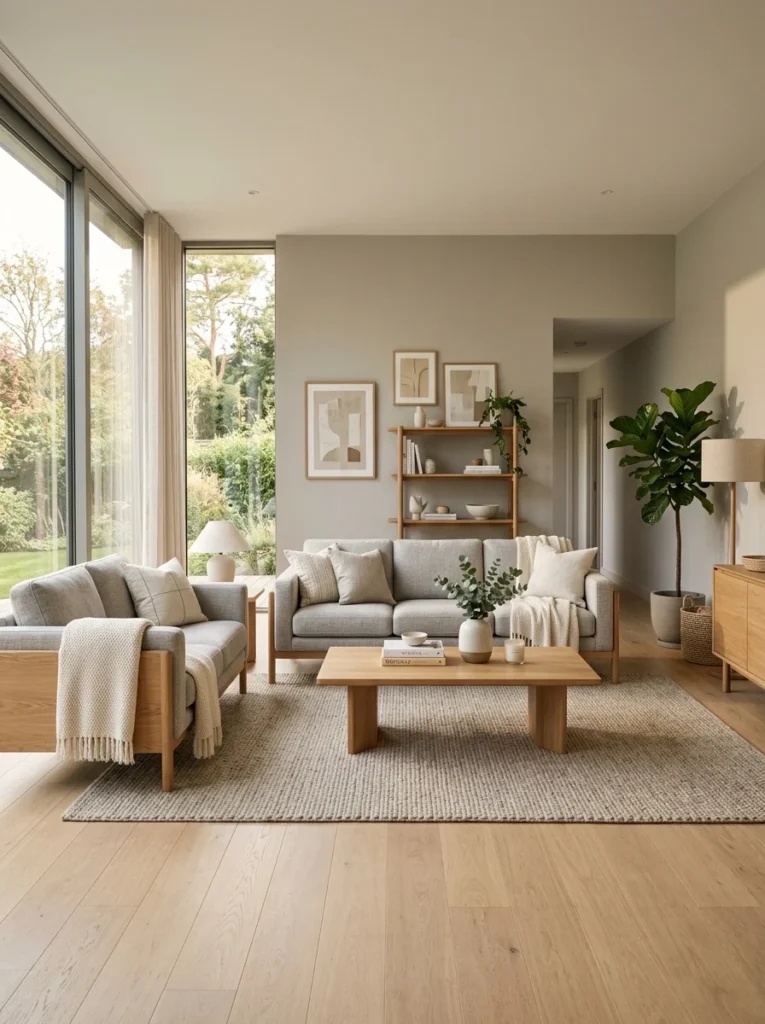
A matching furniture set is the easiest way to furnish a room quickly, and it’s also the most reliable way to make that room look like a showroom rather than a considered space. Here’s why, and how to fix one you already own.
A matching furniture set — a bedroom set with identical wood tone and hardware across the bed, both nightstands, and the dresser, or a living room set with the sofa, loveseat, and armchair all in the same fabric — solves furnishing a room quickly and removes the difficulty of coordinating separate pieces. It also, consistently and predictably, produces a room that looks less considered than one furnished with pieces that relate to each other without matching exactly. This is a narrower, more specific point than the broader distinction covered elsewhere in this series between a decorated house and a lived-in home — it’s less about accumulated time and personal history, and more about a specific visual tell: uniform matching reads as a retail bundle, not a designed room, regardless of how much time has actually passed since the purchase.
Why Sets Exist and What Problem They Actually Solve
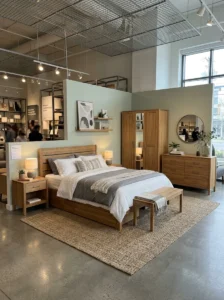
Furniture sets are sold as a bundle primarily to solve a retail and manufacturing problem, not a design one — a matched set is easier to produce, market, and sell as a single decision than curating individual pieces, and it removes the coordination burden from a customer who doesn’t want to make several separate style and material decisions. This is a genuinely useful convenience for a customer prioritizing speed and simplicity, but the resulting uniformity is a byproduct of that convenience, not a considered design outcome — the set exists to simplify the retailer’s sale and the customer’s decision, not because uniform matching is actually the more successful design approach.
Recognizing this distinction is useful because it reframes the choice: buying a matched set isn’t a design failure if speed and simplicity were genuinely the priority, but it’s worth understanding that the resulting uniform look is a known, predictable trade-off of that convenience, not a neutral or invisible one.
Uniform Matching Reads as a Single Purchasing Decision, Not an Accumulated Room
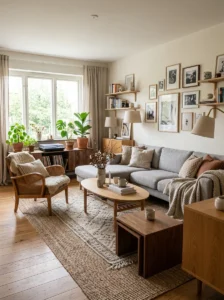
As covered in more detail elsewhere in this series regarding the difference between a decorated house and a genuine home, a room assembled from a single matched set reads as exactly what it is — one purchasing decision, executed all at once — in a way that’s recognizable even to someone who couldn’t articulate exactly why the room feels showroom-like rather than personally considered. This is a more specific, narrower version of that broader principle: it’s not simply about accumulated time, but about the particular visual signature that identical wood tones, identical hardware, and identical fabric across multiple pieces produces, which is distinct enough to be recognized as “a set” almost immediately.
A room furnished with pieces that share a coordinated but not identical relationship — related wood tones without being an exact match, a consistent but not uniform metal finish, complementary rather than identical fabric — avoids this specific tell while still achieving genuine visual coherence, which is the actual goal a matched set is trying, somewhat bluntly, to achieve.
The Difference Between Coordination and Uniformity
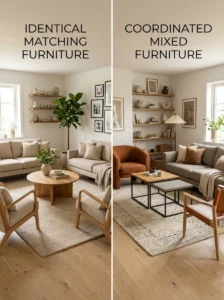
Coordination and uniformity are often conflated, but they’re meaningfully different: coordination means pieces relate to each other through a shared underlying logic — similar warmth of wood tone, a consistent color family, comparable scale — while uniformity means pieces are identical or near-identical to each other. A well-coordinated room achieves the cohesion a matched set is attempting, without the specific flatness that comes from literal repetition of the same exact material, finish, and design across multiple pieces.
A useful practical guideline: introducing at least one meaningfully different element among what would otherwise be a matched grouping — a nightstand in a different but complementary wood tone than the bed frame, an armchair in a different but coordinating fabric than the sofa — breaks the uniform-set signature while still maintaining enough coordination that the room doesn’t read as chaotic or mismatched.
Breaking Up a Set You Already Own
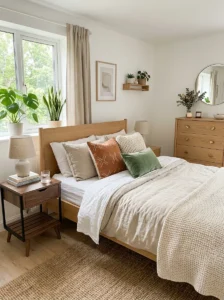
A household that already owns a matched furniture set isn’t required to replace it entirely to address this issue — introducing even one or two genuinely different elements into the grouping often does most of the work of breaking the uniform-set appearance without requiring a full furniture replacement.
Replacing just the hardware on one piece within a matched bedroom set — new pulls on the dresser while leaving the nightstands as they came — is a low-cost way to introduce enough variation to disrupt the set’s uniform signature, applying the same low-cost hardware-update principle covered elsewhere in this series regarding bathroom and general home refreshes.
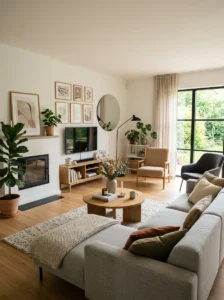
Adding a single non-matching piece to a matched living room set — a different accent chair, rather than the matching armchair the set originally included — introduces variation while keeping the room’s overall coordination intact, since the new piece can still relate to the set’s existing color and scale without being identical to it.
Textiles are one of the easiest and lowest-cost ways to break a set’s uniformity — different but coordinating pillow fabrics on a matched sofa and loveseat, or different but complementary bedding on either side of a matched bedroom set, introduces enough variation to disrupt the uniform read without touching the furniture itself at all.
When a Matched Set Is Genuinely the Right Choice
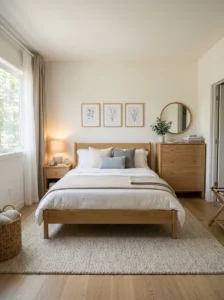
None of this means matched sets are always the wrong choice — a household prioritizing speed, simplicity, and budget predictability over the specific goal of avoiding the showroom-uniform look has a genuinely reasonable reason to choose a set, and the trade-off described here is worth making consciously rather than treating a matched set purchase as an unambiguous mistake.
A matched set is also a more reasonable choice in a lower-visibility or less design-prioritized space — a guest room used infrequently, a child’s room that will be replaced as they grow, a rental furnished for practicality rather than long-term personal expression — where the specific visual sophistication that breaking up a set achieves matters less than it would in a primary living space or a bedroom the household spends significant daily time in.
The Underlying Principle Applies Beyond Furniture Specifically
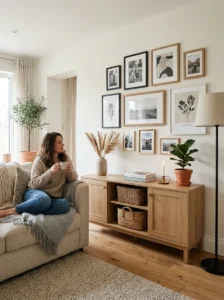
This same uniform-versus-coordinated distinction applies to other categories covered throughout this series — hardware finishes, picture frames in a gallery wall, storage containers on a shelf — wherever a household is choosing between an identical, matched set of items and a coordinated but varied collection. The specific mechanism is consistent across all these contexts: exact uniformity reads as a single bundled decision, while coordinated variation reads as a considered, assembled collection, even when the actual difference in effort or cost between the two approaches is relatively small.
Key Takeaways

- Furniture sets are sold as a bundle primarily to simplify manufacturing, marketing, and the customer’s decision-making, not because uniform matching is the more successful design outcome
- A room furnished entirely from a matched set reads as a single purchasing decision executed at once, a narrower and more specific version of the broader decorated-versus-home distinction covered elsewhere in this series
- Coordination — pieces relating through shared underlying qualities like tone or scale — achieves genuine cohesion without the flatness that comes from literal, identical uniformity
- Introducing even one meaningfully different element into an otherwise matched grouping — different hardware, a non-matching accent piece, varied textiles — breaks the set’s uniform signature without requiring full replacement
- Textiles are among the easiest and lowest-cost ways to disrupt a matched set’s uniformity, since they don’t require touching the furniture itself at all
- A matched set remains a reasonable, deliberate choice for households prioritizing speed and budget predictability, or for lower-visibility spaces where design sophistication matters less
Frequently Asked Questions
Do I need to get rid of my matching bedroom or living room set to fix this? Not necessarily — introducing one or two genuinely different elements, like new hardware on one piece or a non-matching accent chair, often does most of the work of breaking the uniform appearance without requiring full replacement. This is a lower-cost, lower-effort path than replacing the entire set.
Is it ever fine to just buy a matching set and not worry about this? Yes — a matched set is a genuinely reasonable choice when speed, simplicity, and budget predictability are the actual priorities, or in a lower-visibility space like a guest room or a rental where design sophistication matters less. The trade-off described here is worth making consciously rather than treating a matched set as an automatic mistake.
What’s the easiest, cheapest way to make a matched living room set look less uniform? Different but coordinating pillow and throw textiles across the sofa and loveseat is generally the lowest-cost, lowest-effort option, since it introduces variation without touching the furniture pieces themselves. A single non-matching accent chair is a slightly larger but still moderate investment that has a stronger visual effect.
Why does a matched furniture set look less “designed” even if it’s good quality? The issue isn’t quality — it’s that exact uniformity across multiple pieces reads as a single bundled purchasing decision rather than a considered, assembled collection, regardless of how well-made the individual pieces are. This is a recognizable visual signature independent of the furniture’s actual craftsmanship or cost.
Does this principle apply to anything besides furniture? Yes — the same distinction between coordination and uniformity applies to hardware finishes, picture frames in a gallery arrangement, and storage containers, among other categories covered throughout this series. Wherever a household chooses between an identical matched set and a coordinated but varied collection, the same underlying visual principle is at play.