



A full closet and “nothing to wear” aren’t actually a contradiction — they’re describing two different problems that happen to occur in the same space. Here’s what’s really going on.
The article elsewhere in this series on building a wardrobe you actually wear focuses on the acquisition side of this problem — how to buy in a way that produces a genuinely worn wardrobe going forward. This is a different, more immediate question: why a closet that’s already full, sometimes overflowing, can still produce a genuine, recurring feeling of having nothing to wear on any given morning. This isn’t usually a contradiction or an exaggeration — it’s a sign that “full” and “functional” are measuring different things, and a closet can score high on the first while genuinely failing at the second.
Owning Individual Pieces Is Different From Owning Complete Outfits
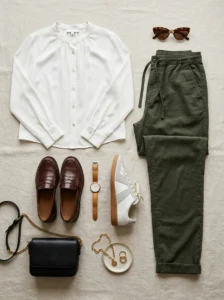
A closet can contain a large number of individually decent pieces that don’t actually combine into complete, wearable outfits — a formal top with nothing appropriate to pair it with, pants that don’t work with any currently owned shoes for a specific occasion, a piece that was bought as part of a passing trend and has no natural partners in the rest of the wardrobe. This is the core of the “full closet, nothing to wear” paradox: the relevant unit of a functional wardrobe isn’t the individual garment, it’s the combination, and a closet can have plenty of the former while genuinely lacking enough of the latter.
This is worth checking directly rather than assuming more individual pieces will resolve the feeling — going through the closet and specifically identifying which pieces currently have no clear outfit partner reveals how much of the “fullness” is actually functional versus simply present, and this diagnostic is often more revealing than it initially seems, since the proportion of orphaned, partnerless pieces in a typical closet is usually higher than expected.
A Small Percentage of the Wardrobe Typically Gets Worn Repeatedly
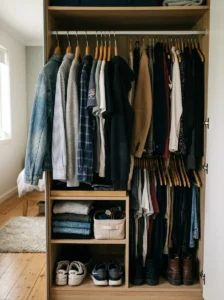
A commonly observed pattern — sometimes referenced informally as something like an 80/20 split, though the exact ratio varies by individual — is that most people wear a relatively small proportion of their total wardrobe on a regular, rotating basis, while a larger proportion sits mostly or entirely unused, which means the “nothing to wear” feeling often isn’t actually about total volume, but about the fact that the genuinely functional, regularly-worn portion of the closet is considerably smaller than the closet’s total contents suggest.
Recognizing this pattern directly — tracking or simply paying attention over a few weeks to which specific pieces actually get worn — provides a more honest picture of the wardrobe’s real functional size than its total volume does, and this observed pattern is genuinely useful information for future purchasing decisions, connecting directly to the cost-per-wear framework covered in more detail elsewhere in this series.
Damaged, Ill-Fitting, or Outgrown Items Occupy Space Without Contributing Function

Clothing that no longer fits (due to body changes, shrinkage, or simply never having fit quite right), items with visible damage or wear that make them unsuitable for regular use, and pieces that were replaced by a better version but never actually removed from the closet, all occupy physical closet space and visual attention without contributing any actual wearable function — every time these pieces are seen, considered, and passed over during the process of getting dressed, they add a small amount of decision friction without ever being a genuine option.
Removing these specific categories — not the entire closet, but this identifiable, non-functional subset — often meaningfully improves the felt experience of getting dressed even without adding a single new item, since it reduces the visual and decision-making noise between the person getting dressed and the actual, functional portion of the wardrobe that does exist.
Seasonal and Occasion Mismatch Creates a Temporary but Recurring Version of This Problem

A wardrobe that’s reasonably well-suited to one season or one set of typical occasions can still produce a genuine “nothing to wear” feeling during a different season or an atypical occasion, if the closet’s actual composition doesn’t reflect a balanced range of what’s regularly needed — a wardrobe heavy on warm-weather clothing experiencing an unexpected cold snap, or a wardrobe built primarily around casual daily wear suddenly facing a more formal occasion, both represent a genuine mismatch between current closet contents and current need, rather than a false or exaggerated complaint.
This is worth diagnosing separately from the general full-closet paradox, since the fix is different — rather than a general decluttering or reorganization, a seasonal or occasion mismatch calls for identifying the specific gap (a a genuine need for more layering pieces, one appropriate formal option) and addressing that particular gap directly, rather than assuming the entire wardrobe-building approach needs to change.
Sentimental Attachment Keeps Unworn Items From Being Recognized as Unworn

Clothing kept for sentimental reasons — a piece from a specific memorable event, a gift from someone significant, an item tied to a particular period of life — occupies a different category than clothing kept simply through inertia or oversight, and it’s worth being honest about which category a specific unworn piece actually falls into, since sentimental pieces serve a genuine, different function (memory and meaning) than a functional wardrobe’s actual purpose, and treating them identically to genuinely forgotten or simply unworn pieces can lead to either guilt about “wasting” a sentimental item’s closet space, or conversely, an unwillingness to actually address genuinely non-sentimental clutter because it’s been mentally grouped with the sentimental pieces.
A reasonable approach: separating sentimental pieces into their own storage, distinct from the actively used closet space, acknowledges their real value without letting them continue occupying the specific, prime closet real estate that a functional, regularly-accessed wardrobe needs.
Out-of-Sight Storage Can Cause Genuine “Forgetting” of What’s Actually Owned

Items stored out of immediate view — a separate seasonal storage bin, the back of a closet, a rarely opened drawer — are genuinely, measurably less likely to be remembered and worn than items in immediate view and easy reach, which means a wardrobe’s functional size can be smaller than its actual total contents simply because a meaningful portion of what’s owned isn’t being actively considered during the daily process of getting dressed.
Periodically rotating stored items back into visible, accessible space — particularly at seasonal transitions — genuinely helps counteract this “out of sight, out of mind” effect, and it’s a low-cost way to potentially rediscover functional, wearable pieces that have simply been forgotten rather than genuinely unwanted or unworn by choice.
Distinguishing Which Specific Problem Is Actually Present

A useful diagnostic sequence: checking whether pieces lack outfit partners (a combination problem), checking what percentage of the closet is actually worn regularly over a set period (a functional-versus-total-volume problem), checking for damaged, ill-fitting, or outgrown items still occupying space (a removal problem), checking whether the wardrobe matches current season and occasion needs (a gap-filling problem), and checking whether sentimental attachment or out-of-sight storage is obscuring what’s actually available (a visibility problem) — since “full closet, nothing to wear” can result from any one or a combination of these distinct issues, and the actual fix depends on correctly identifying which one is genuinely driving the specific feeling.
Key Takeaways
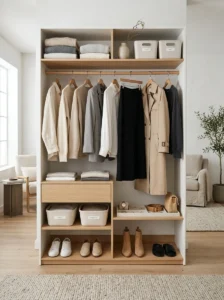
- A closet can be full of individually decent pieces that don’t actually combine into complete, wearable outfits, which is the core of the “full closet, nothing to wear” paradox
- Most people regularly wear a relatively small proportion of their total wardrobe, meaning the functional size of a closet is often considerably smaller than its total volume suggests
- Damaged, ill-fitting, or outgrown items occupy closet space and add decision friction without contributing any actual wearable function, and removing this specific subset often improves the felt experience without adding anything new
- A seasonal or occasion mismatch between current closet contents and current need is a genuine, specific gap worth addressing directly, distinct from the broader full-closet paradox
- Sentimental items serve a different purpose than functional wardrobe pieces, and separating them into distinct storage avoids both guilt about their closet space and confusion with genuinely unworn, non-sentimental clutter
- Items stored out of immediate view are measurably less likely to be remembered and worn, meaning periodic rotation of stored items back into visible space can help rediscover genuinely usable, forgotten pieces

Frequently Asked Questions
Is “I have nothing to wear” ever a real problem, or is it always an exaggeration? It’s often a genuine, accurately described problem, just not necessarily about total clothing volume — it usually reflects a lack of complete, coordinated outfit combinations, a seasonal or occasion mismatch, or a functional wardrobe considerably smaller than the closet’s total contents due to unworn, forgotten, or non-functional items occupying space.
How do I figure out what percentage of my closet I actually wear? Simply paying attention over a few weeks to which specific pieces you actually reach for and wear provides a fairly accurate picture, or a more structured approach (turning hangers backward and flipping them forward only after wearing an item, for instance) tracks this more precisely over a longer period like a full season.
Should I get rid of sentimental clothes I never wear? Not necessarily — sentimental pieces serve a genuinely different function than a working wardrobe’s actual purpose, and it’s reasonable to keep them. The more useful step is separating them into their own distinct storage, away from the prime, actively-used closet space, rather than either discarding them or letting them continue occupying space a functional wardrobe needs.
Why does rotating my seasonal clothes into storage make me forget I own things? Items stored out of immediate view are genuinely, measurably less likely to be remembered and considered during daily dressing than items in easy reach, which is a well-documented “out of sight, out of mind” effect rather than a personal failing. Periodically bringing stored items back into visible rotation, particularly at seasonal transitions, helps counteract this.
What’s the fastest way to fix a “full closet, nothing to wear” feeling without buying anything new? Removing damaged, ill-fitting, or outgrown items that are still occupying space without contributing any actual function often produces a meaningful improvement on its own, since it reduces the decision friction of considering and passing over non-functional pieces every time you get dressed, even without adding a single new item to the wardrobe.