


Kitchen counters have two jobs that fight each other: they need to look good, and they need to work hard. Most kitchen counter decor fails at one of them. Either the counter looks like a magazine spread you cannot cook on, or it looks like a storage unit with a stove in the middle. I have lived in both versions, and the kitchens I actually enjoy cooking in land somewhere deliberate in the middle — a few beautiful things, each with a job, and clear space left over for a cutting board.
The 15 ideas below follow one rule: if it sits on the counter, it must earn its place by being used daily, holding something you use daily, or making the room genuinely prettier without blocking work. Nothing here needs a remodel, and most of it costs under $40.
Kitchen Counter Decor Rules That Keep Counters Working
Three rules before the ideas. First, protect one clear prep lane — the stretch of counter where you actually chop — and decorate everywhere except there. Second, corral small things onto trays so five objects read as one and lift away for wiping. Third, keep a nightly two-minute reset: everything back to its home before bed, or the counter slowly reverts to a junk drawer with better lighting. The clutter-free counter habits behind that reset are simple, and they are what make any of these ideas stick past the first week.
1. Park a Utensil Crock Beside the Stove

A crock of wooden spoons, spatulas, and tongs beside the stove is decor that works for its rent. Pick a heavy ceramic or stoneware crock that will not tip when you grab a spatula mid-stir, and keep it to the eight or ten tools you actually reach for — the rest live in a drawer. Match the crock to your kitchen’s palette rather than buying a novelty one; a plain cream or charcoal crock outlasts trends and never clashes with the backsplash. Mine sits on a small cork pad so it does not scratch the counter, a two-dollar fix I wish I had thought of before the first ring mark.
2. Lean a Beautiful Cutting Board Against the Backsplash

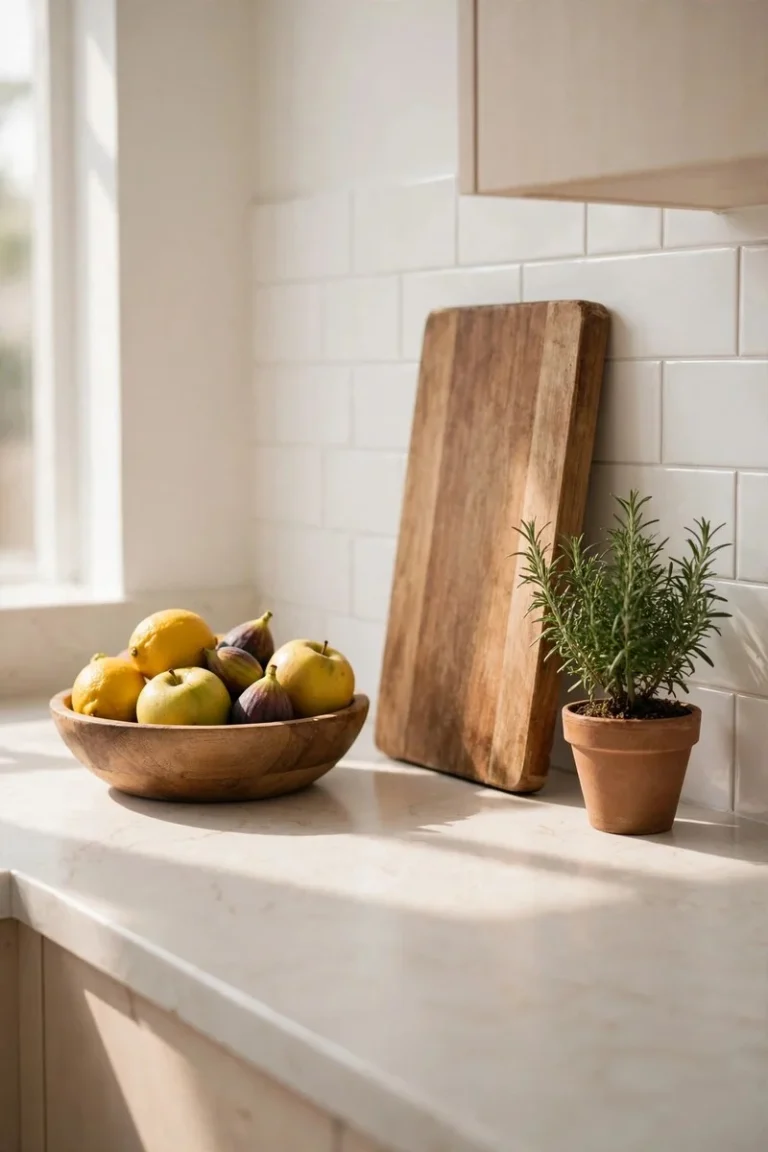
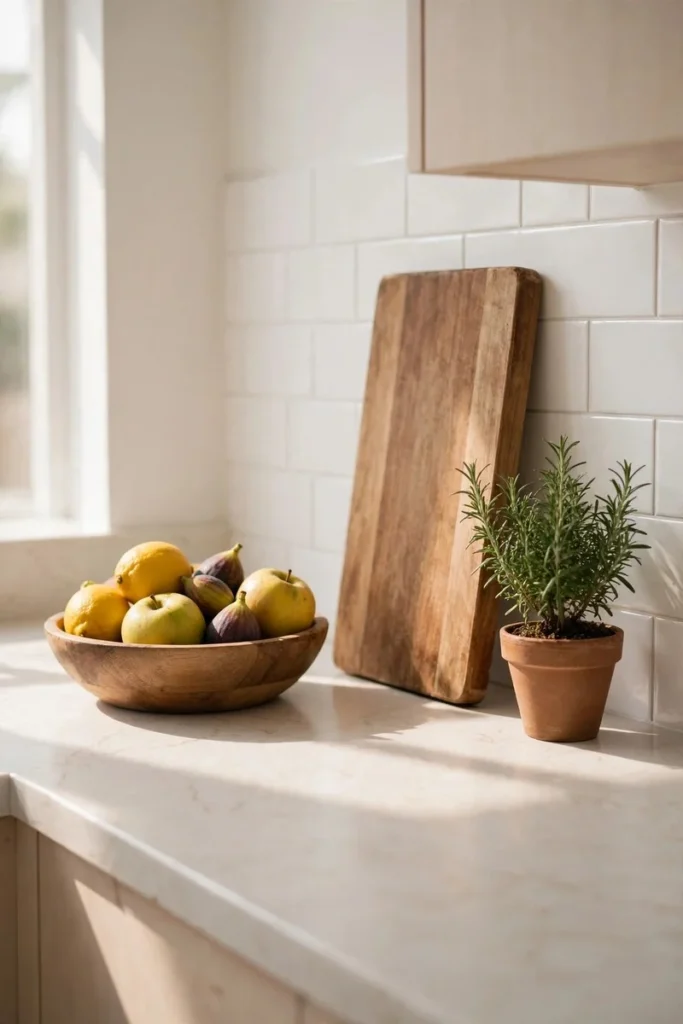
A good wooden board leaning against the backsplash adds warmth and height for zero effort, and it stays useful — grab it, chop, lean it back. Use a board with some grain character, not the thin plastic one from the drawer, and lean it at a slight angle so it does not slide. One board is styling; four boards is a lumber display. If the board is one you use for onions and garlic, keep a second, prettier one for display and bread, because nobody wants yesterday’s garlic on this morning’s toast.
3. Keep a Fruit Bowl Where Everyone Walks Past

A fruit bowl is the oldest counter decor trick because it works: colour, life, and a snack in one object. A wooden or ceramic bowl reads warmer than glass, which shows every fingerprint and bruise. Keep it to one kind of fruit at a time for a cleaner look — all lemons, all apples — and refill it rather than letting it become a graveyard of single bananas. Put it near the room’s entrance, not the prep lane, so grabbing an apple never means reaching across your chopping space.
4. Corral Cooking Oils on a Small Tray by the Stove

Olive oil, salt, pepper, and the one vinegar you actually use belong together on a small tray beside the stove, not scattered across the backsplash. The tray turns four loose bottles into one object you can lift to wipe underneath, which is the difference between a counter that stays clean and one that slowly grows a grease ring. Marble, wood, or ceramic all work; avoid anything with a lip so tall you cannot grab a bottle one-handed. Keep the tray small — if it fits more than five bottles, it will collect more than five bottles.
5. Build a Coffee Corner on One Tray

Group the coffee maker, two mugs, and the beans or pods onto one tray in an underused corner, and a functional appliance zone becomes the prettiest spot in the kitchen. The tray contains drips, defines the zone, and makes the whole setup portable when you need the counter for a big cooking day. Add a small jar of sugar and a spoon, and stop there — a coffee station with seven accessories is a gift shop. Keep it near the outlet it already uses, and never in the main prep lane, or morning coffee traffic collides with dinner prep.
6. Grow Herbs on the Windowsill, Not the Counter

Three small pots of basil, parsley, and mint on the windowsill give you living decor that you cook with, and they cost nothing in counter space. Use matching pots — mismatched nursery pots look like a greenhouse accident — and a tray underneath to catch water. Snip from the top and the plants bush out instead of going leggy; I learned that the hard way with a basil plant that became a small tree. If your windowsill is narrow, a single long planter beats three round pots that crowd the glass.
7. Move Knives to the Wall and Reclaim a Whole Square Foot

A knife block eats a full square foot of counter. A magnetic strip on the wall holds the same knives, looks sharper, and frees that foot for actual work. Mount it into a stud at a height where the handles clear the backsplash, and keep the blades you use daily on it — the rest stay in a drawer block or sheath. This is the single highest-impact move for small counters, and it pairs with the same vertical thinking in our small-counter kitchen ideas, where wall space does the work that a wide footprint cannot.
8. Choose a Dish Rack That Drains and Looks Good Doing It

If you hand-wash anything, the dish rack is permanent counter decor, so buy one you would not hide. A slim stainless or bamboo rack with a proper drain slope beats a plastic tray that pools water, and a roll-up over-sink rack disappears entirely when not in use. Size it to your actual dish load — a rack built for a family of six in a two-person kitchen is just a sculpture. Empty it the same evening, or the rack becomes the clutter it was supposed to solve.
9. Give the Sink a Soap Caddy Worth Looking At

The sink area collects bottles, sponges, and brushes faster than any spot in the house. Decant dish soap into a matching dispenser, park the sponge in a small ceramic caddy or on a stone tray that drains, and the whole zone reads as intentional. Skip the novelty dispensers — a plain amber glass bottle or a simple ceramic pump lasts longer visually than anything shaped like an animal. One sponge, one brush, one bottle: if a second sponge appears, the first one goes. The sink is where clutter starts, so it is where the rules get enforced first.
10. Rest One Cookbook on a Stand

An open cookbook on a stand is decor with a dinner plan attached. Pick the book you are cooking from that week, not a decorative stack of books nobody opens — a stand holding a book you actually use signals a kitchen that cooks. Wood or metal stands both work; avoid acrylic, which shows every splash. When the week’s cooking is done, the stand folds flat into a drawer and the counter is clear again. This is the same “one beautiful, useful thing” logic that makes a Christmas kitchen stay workable: decoration that earns its footprint or leaves.
11. Use a Tiered Stand in the Dead Corner

Every kitchen has a counter corner where nothing useful fits — too far from the stove, too cramped for prep. A two-tier stand turns that corner into vertical display space for mugs, a small plant, and the salt cellar, using about one square foot. Keep the bottom tier for heavier, daily things and the top for lighter display, and cap it at six or seven items total. A crowded tiered stand reads as a yard sale; a curated one reads as a styled shelf that happens to sit on the counter.
12. Mount the Paper Towels Under the Cabinet

A freestanding paper towel holder wobbles, topples, and eats counter space. An under-cabinet mount ($8–$15, two screws) puts the roll exactly where you need it — near the sink, one-handed — and gives you back the footprint entirely. Measure the cabinet depth so the roll does not stick out past the cabinet front, and mount it near the sink end of the run rather than the middle, where it blocks the upper cabinet doors. Renters can use an adhesive-mount version that peels off clean, which is what I used for two years before drilling.
13. Add One Plant That Can Survive a Kitchen

One plant softens a hard kitchen faster than any object you can buy, but only if it survives. Pothos, snake plants, and trailing philodendron tolerate kitchen heat, steam, and forgetful watering; ferns and fussy herbs do not, and a dead plant is worse decor than no plant. A small pot on the counter’s far end, away from the stove’s heat and the sink’s splashes, is the sweet spot. Water it when the soil is dry an inch down, not on a schedule — kitchens are humid, and overwatering kills more counter plants than neglect does.
14. Hide the Bread in a Bread Box

A bread box solves a real problem — bread bags and loaf ends scattered across the counter — and looks like it belongs in a kitchen that bakes. Wood or bamboo boxes keep bread fresher than a bag on the counter, and a roll-top or fall-front lid keeps the footprint tidy. Size it to one loaf plus a little room; an oversized box becomes a second pantry. Put it at the end of the counter near the toaster, and the breakfast zone assembles itself without a single loose bag in sight.
15. Finish With One Beautiful, Useless Thing

After all the practical rules, allow yourself exactly one purely decorative object: a vase with eucalyptus, a candle, a small sculpture. One. It sits at the far end of the counter, away from the prep lane, and it is the thing that makes the kitchen feel styled rather than merely organised. The moment a second decorative object joins it, you are back to clutter — so rotate it seasonally instead of adding to it. A single stem in a tall vase in spring, a candle in winter, and the counter stays both pretty and usable all year. That balance is the whole point: a kitchen that welcomes guests and still lets you chop an onion without moving six things first, the same balance that matters when you host in a small dining room and every inch has to do double duty.
FAQs
What should stay on kitchen counters permanently?
Only what you use daily: a coffee maker, a knife block or strip, a utensil crock, a cutting board, and one decorative piece. Everything else — the blender, the stand mixer, the bread maker — earns a cabinet home and comes out only when used.
How do I decorate counters without losing prep space?
Protect one clear prep lane and decorate everywhere except there: walls, windowsills, dead corners, and the far end of the counter. Corral small items onto trays so they lift away in one motion when you need the space.
What is the best counter decor for a small kitchen?
Vertical and wall-mounted pieces: a magnetic knife strip, an under-cabinet paper towel holder, and a windowsill herb garden. They add function and beauty without taking a single inch of counter.
How often should I reset my counters?
Two minutes every evening. Wipe, return everything to its home, and start the next day clear. A weekly deeper reset — checking for items that migrated onto the counter during the week — keeps the system from quietly collapsing.
Counters stay practical when every object has a reason to be there. Pick three ideas from this list, give each one a real home, and keep the prep lane sacred. The kitchen will look better in photos, and it will feel better at 6 p.m. when dinner actually has to happen.