


How to Choose Bathroom Tile Without Regret
Choosing from bathroom tile ideas is a decision you will live with for years, probably longer than the tap, the mirror, and the paint combined. That is why it causes so much second-guessing in the showroom, under those bright lights, with fifty samples that all look good and none that look quite right at home. I have watched friends pick a tile in ten minutes and love it for a decade, and I have watched others agonise for a month and still wince every morning. The difference was rarely taste. It was process. Good bathroom tile ideas start at home, with your light, your room size, and your cleaning habits, not with the prettiest sample on the wall.
The twelve steps below are in the order I would follow them, cheapest decision first. Work through them one at a time, and stop to test before you commit to a full order. A week spent with samples on your own wall is far cheaper than a year spent wishing you had chosen differently.
Bathroom Tile Ideas That Start With Your Room, Not the Showroom
Before you look at a single tile, note three facts about your room. First, the light: does the bathroom get direct daylight, borrowed light from a hallway, or only artificial light? Second, the size: a tiny room forgives far less pattern than a generous one. Third, the water zones: the shower floor, the splash zone behind the sink, and the dry floor each need different qualities. A tile that is perfect on a dry wall can be dangerously slippery on a wet floor.
Write those facts on a card and take it to the showroom. It stops the most common mistake, falling for a tile that suits the shop and not your room. Our guide to making a small bedroom feel twice as big uses the same light-first logic, and it applies just as well when the room is tiled.
1. Test Samples in Your Own Light
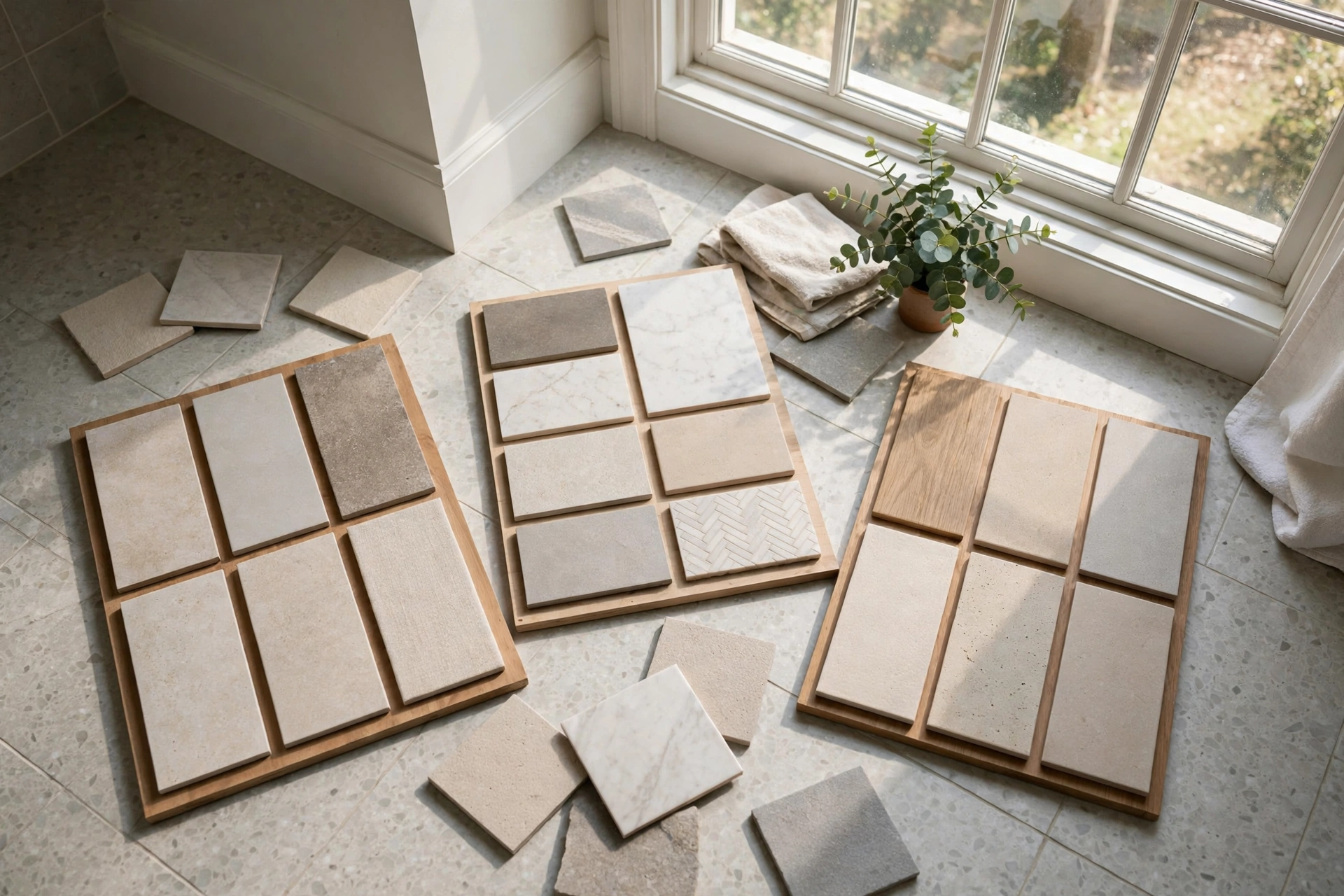
Showroom lighting flatters everything. It is bright, even, and nothing like the light in your bathroom at 7 a.m. Take samples home, at least three or four per shortlisted tile, and lay them on the floor and prop them on the wall where they will actually live. Look at them in morning light, evening light, and with the bathroom light on: a warm white can turn pink under one bulb and grey under another.
Live with the samples for a few days, not minutes. Walk past them, splash water on them, and see how they sit with the room’s existing things. I once loved a sage tile in the shop and hated it at home, because next to our oak vanity it read as muddy green. The sample week saved us from tiling a whole wall in a colour we would have resented.
2. Choose the Floor for Grip First, Looks Second
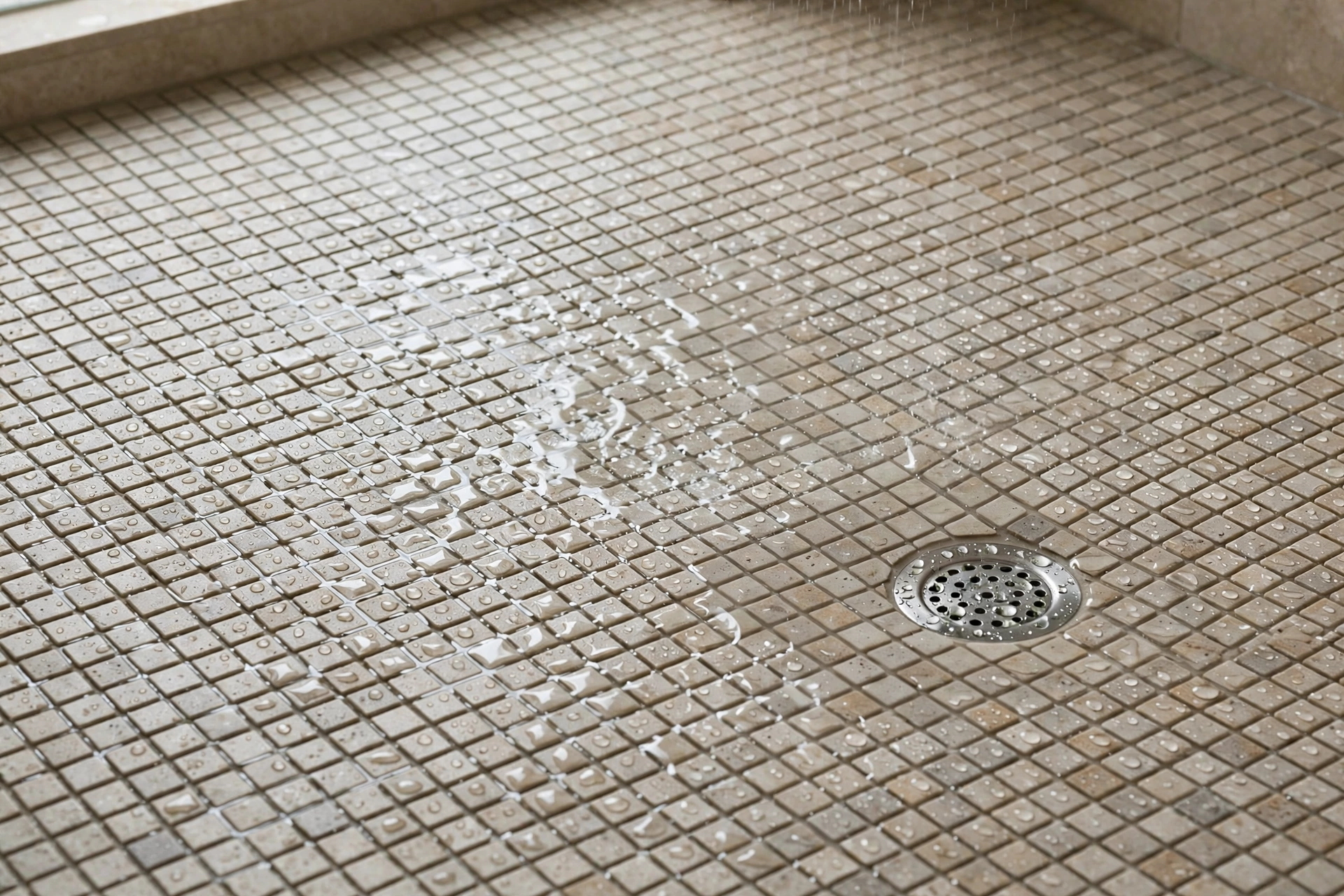
A bathroom floor gets wet, soapy, and barefoot, and grip matters more than any pattern. Look for tiles rated as slip-resistant, and favour smaller tiles or textured matte finishes on the shower floor, where the many grout lines add grip underfoot. Large glossy tiles look sleek on a showroom floor, but they can be treacherous when wet, especially for children and older family members.
Test grip honestly: wet a sample and step on it barefoot if the shop allows. Check the rating with the supplier rather than trusting the word “textured” on a label. A floor you feel safe on is a floor you will relax on, and no pattern is worth a slip. For a plain, safe base, small mosaics or a matte porcelain in a mid-tone usually beat a high-gloss statement tile underfoot.
3. Use Large Tiles to Make a Small Room Feel Bigger
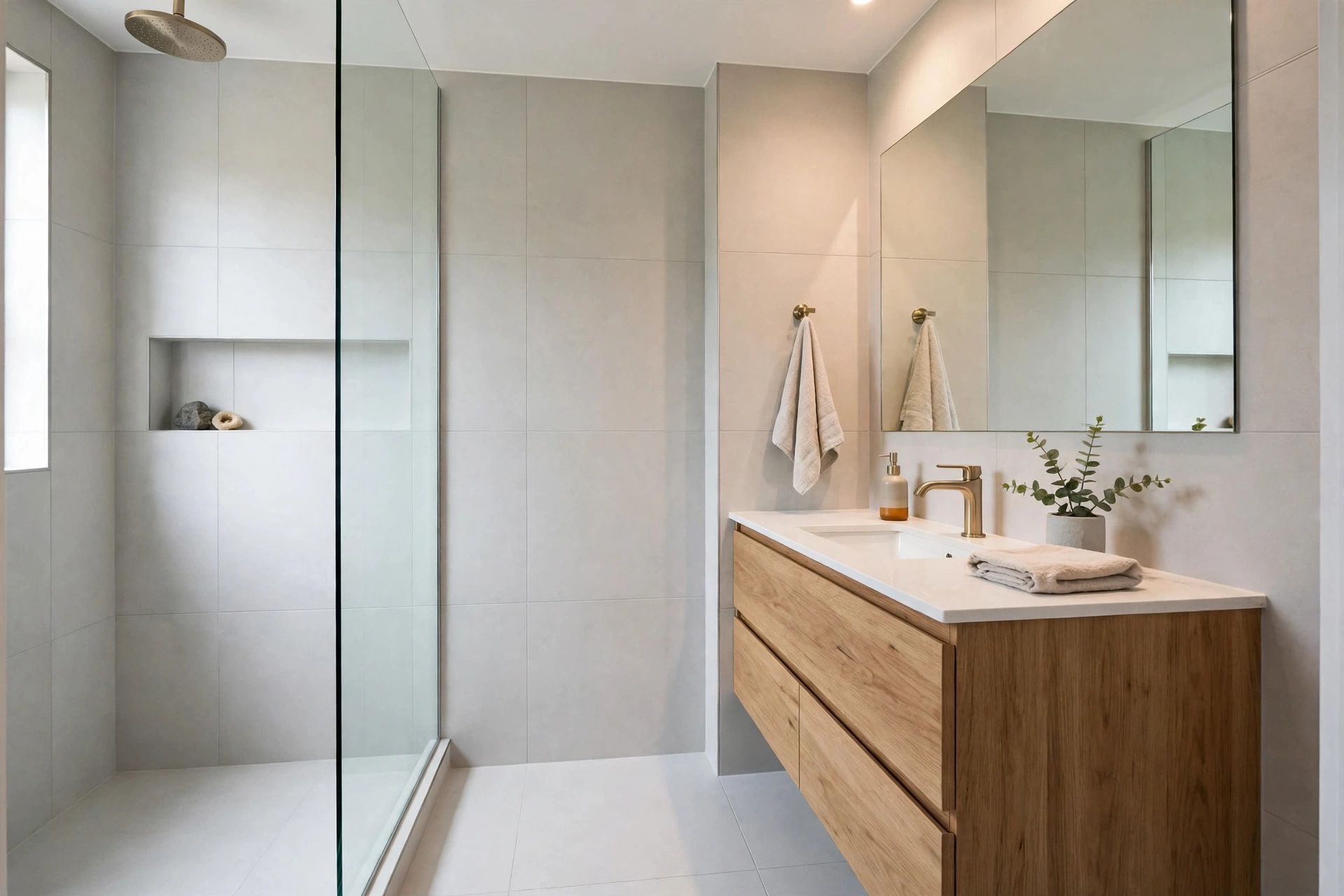
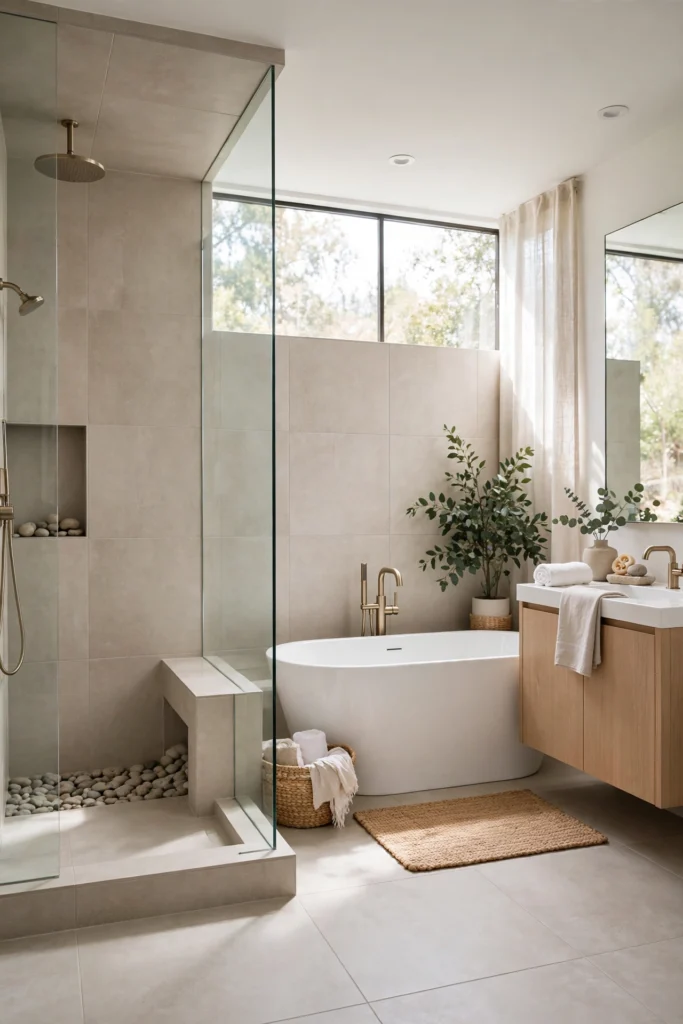
Fewer grout lines mean fewer visual breaks, and that makes a small bathroom read as one calm surface instead of a grid. Large-format tiles, 60 by 60 centimetres or bigger, work well on both walls and floors in a compact room, provided the walls are flat enough to take them. The effect is strongest in a light, neutral colour, where the eye travels across the room without stopping.
Large tiles need a skilled fitter and flat walls, so ask your tiler first. An uneven wall shows lippage, where one tile edge sits proud of its neighbour, far more on a large tile. If your walls are wavy, a medium 30 by 60 format gives most of the calm look with more forgiveness. Carry the same tile from floor to wall if you can, because a continuous surface stretches the room further.
4. Know Porcelain From Ceramic Before You Pay
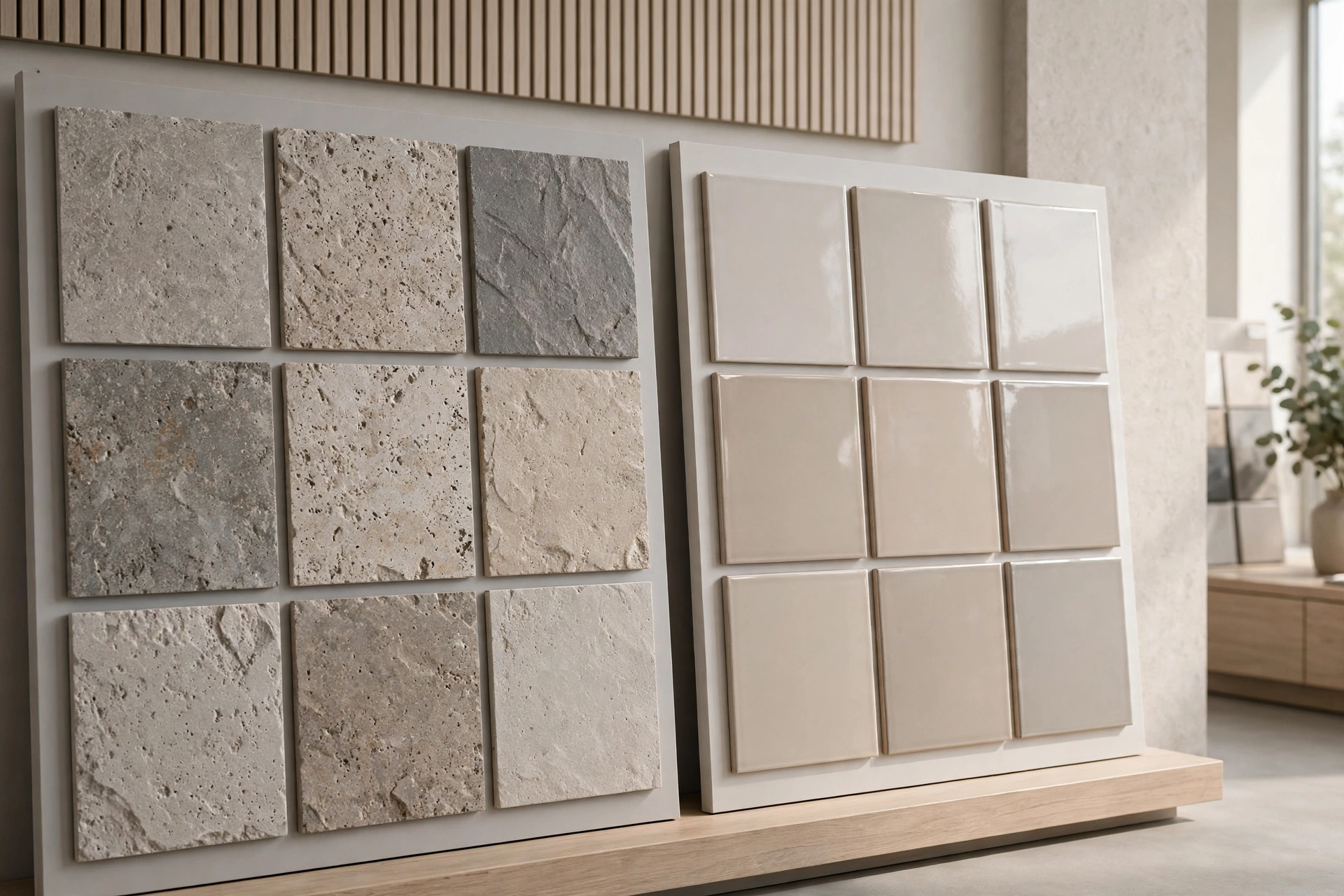
Porcelain and ceramic look alike on a shelf, but they behave differently. Porcelain is denser, less porous, and harder wearing, which makes it the safer pick for floors and wet zones. Ceramic is lighter, easier to cut, and usually cheaper, which makes it a sensible pick for walls that never get soaked. Paying porcelain prices for a dry wall wastes money; using soft ceramic on a busy floor risks chips.
Ask the supplier for the tile’s water absorption and wear rating, not just its price. A porcelain floor tile carries a low absorption figure suited to heavy use; a wall ceramic need not. Match the tile to the job: porcelain where feet and water meet, ceramic where only eyes meet. That single distinction prevents the most expensive kind of regret, a floor that wears out early.
5. Pick the Grout Colour as Carefully as the Tile
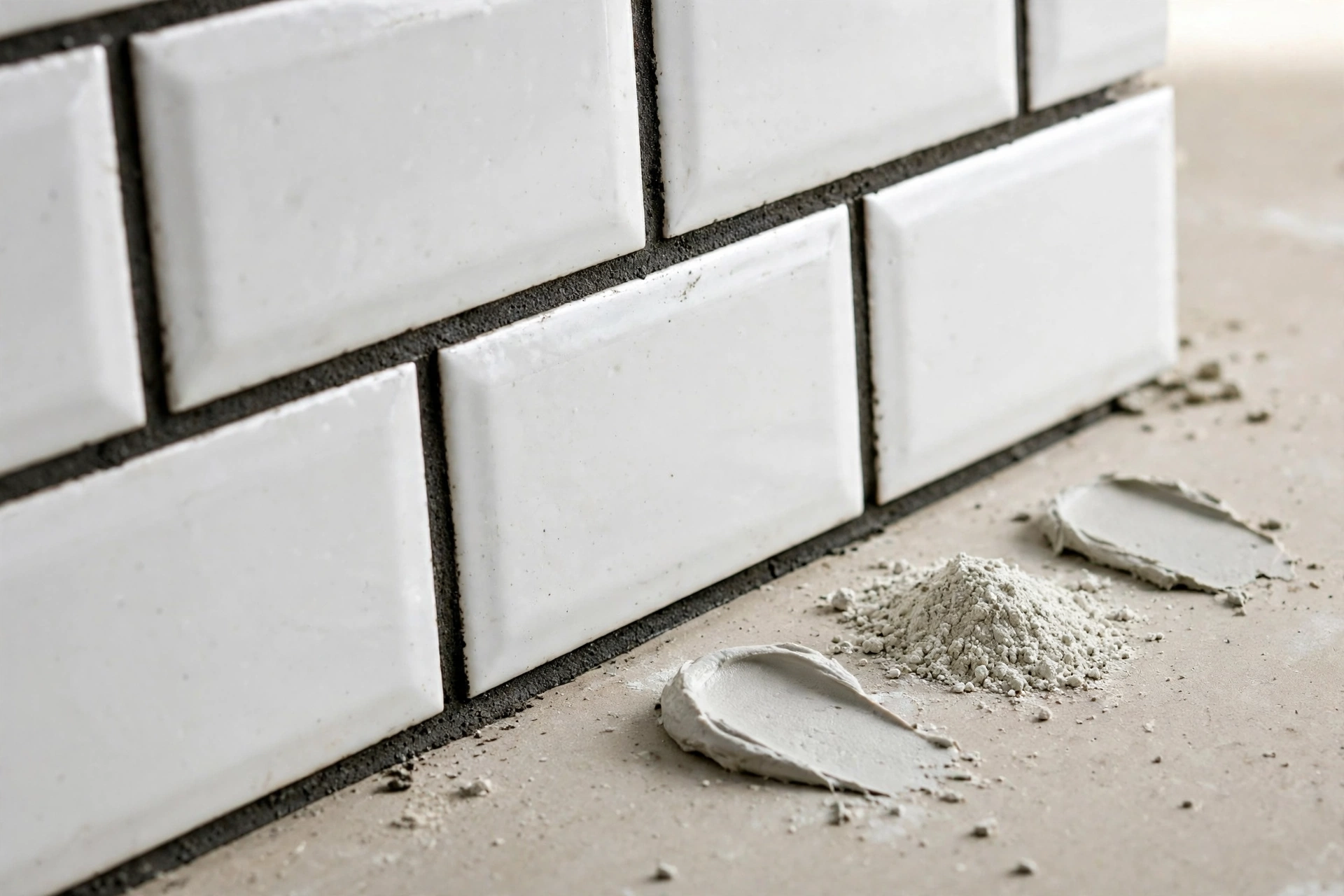
Grout is not a background detail. It is the grid your eye reads first, and its colour changes the whole wall. Matching grout, close to the tile colour, makes the surface read as one calm sheet and hides uneven spacing. Contrasting grout, dark lines on white tile for example, turns the tile pattern into the feature and shows every wobble in the layout.
Test grout with the actual tile, not on a colour card: lay two tiles with a grout sample between them and look from the doorway, as you will every day. On floors, favour mid-tone grout over brilliant white, which shows dirt fast. Seal the grout after fitting, especially in the shower, and ask your tiler which sealer suits the grout type. A good grout choice makes a modest tile look expensive, and a poor one does the opposite.
6. Match the Finish to the Job
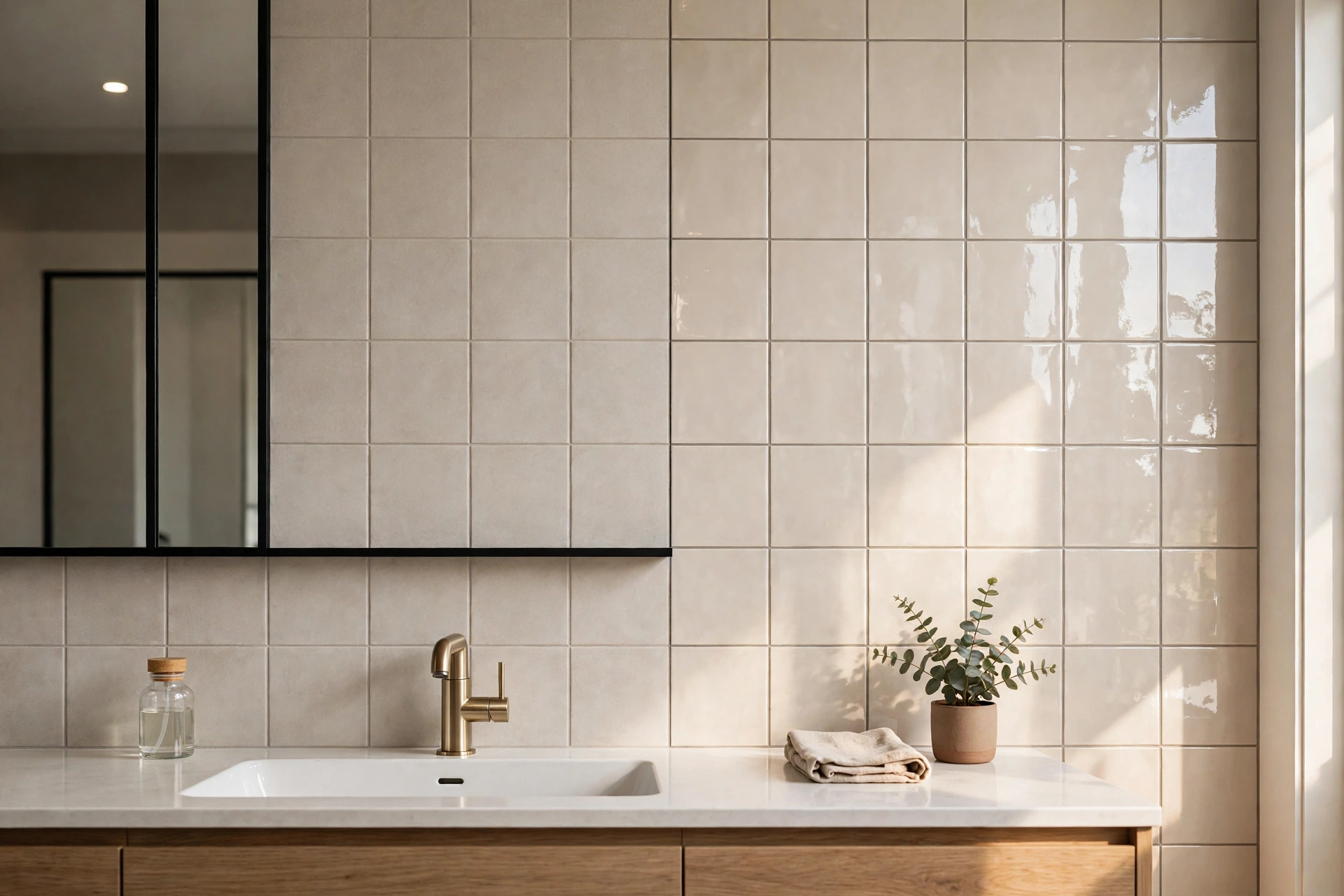
Matte, glossy, and textured finishes each suit a different spot. Glossy tiles bounce light around a dark bathroom and wipe clean easily, which is why they suit walls and splashbacks. Matte tiles hide water marks and give grip, which is why they suit floors. Textured or stone-effect tiles add character but can be harder to clean, so keep them where hands and sponges can reach.
Mix finishes on purpose: glossy walls lift a small room, while a matte floor keeps it safe. Try them as samples together, because the same colour family can look different once light hits each finish. If cleaning time is short in your house, lean matte on the floor and smooth gloss on the walls, and skip heavily textured tiles in the shower, where soap scum settles into every groove.
7. Keep the Statement to One Wall or One Zone
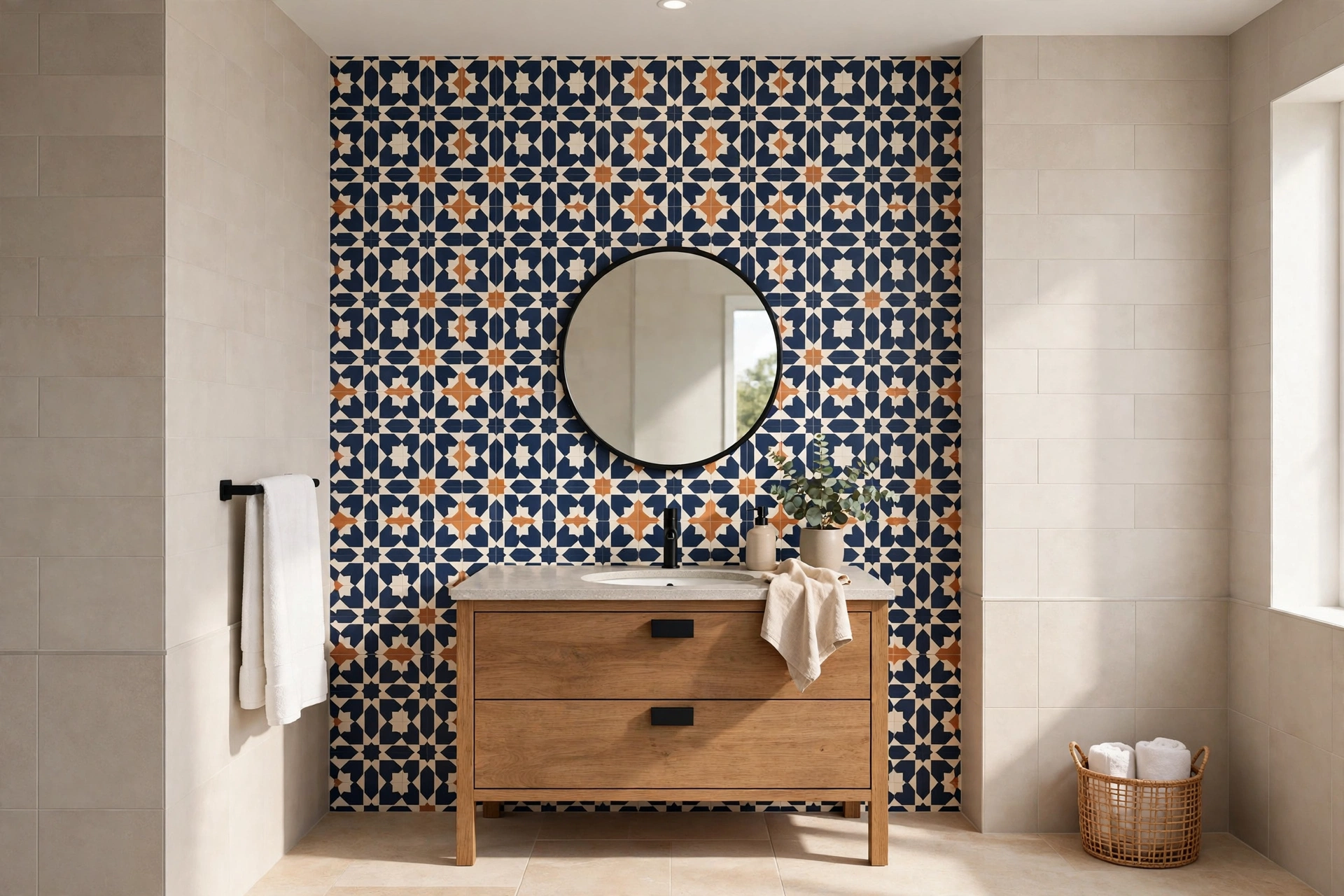
A bold patterned tile is wonderful in a photo and exhausting on four walls. The rule that saves most bathrooms is one statement zone: the wall behind the vanity, the shower wall, or the floor, with plain tiles everywhere else. The plain tiles let the pattern breathe, and they keep the room calm on mornings when you do not want a visual argument.
Choose the zone you actually look at: the shower wall is seen for minutes a day, the vanity wall every time you brush your teeth, so put the pattern where it gives pleasure. If you love two patterns, pick the stronger one and let the other go, or use the second only as a border. Restraint here is not boring; it is what makes the bold tile still feel bold in five years.
8. Budget for Breakage, Cuts, and Spares
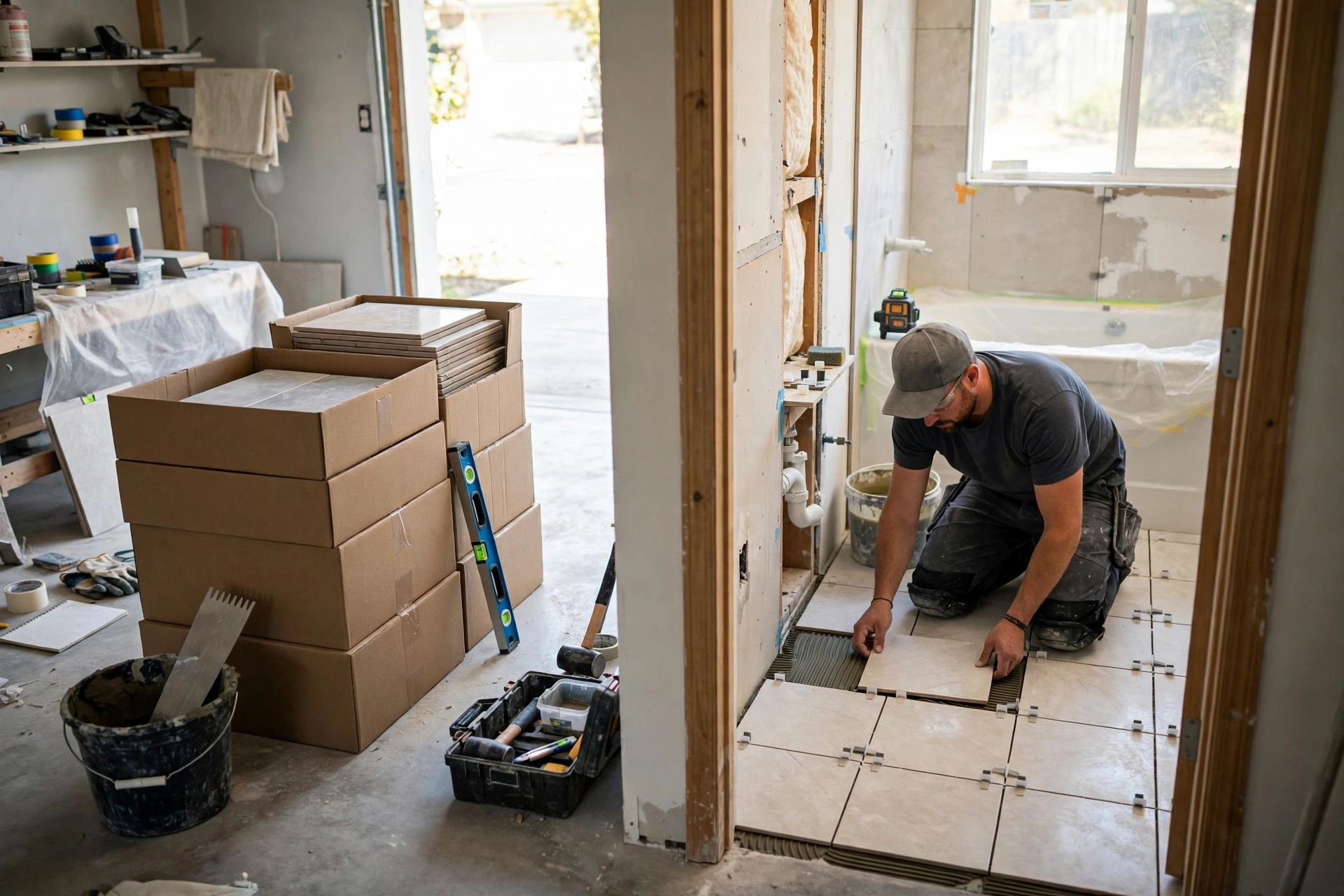
Tile budgets go wrong in the same place: the order quantity. Cuts around pipes, windows, and corners waste tiles, and a batch that runs out mid-job cannot always be matched, because dye lots vary. Order 10 percent extra for a straightforward room and 15 percent for a room with diagonal laying, a pattern, or many cuts. Keep a full box of spares after the job, stored flat and dry, for future repairs.
Price the whole job, not just the tile: adhesive, grout, sealer, trim, and labour often cost as much as the tile itself. A cheap tile in herringbone can cost more fitted than a pricier tile laid straight. Get the fitter’s quote before ordering, and confirm pattern, grout, and trim in writing. That one conversation prevents the classic regret of a beautiful tile laid in a pattern nobody agreed on.
9. Scale the Pattern to the Room
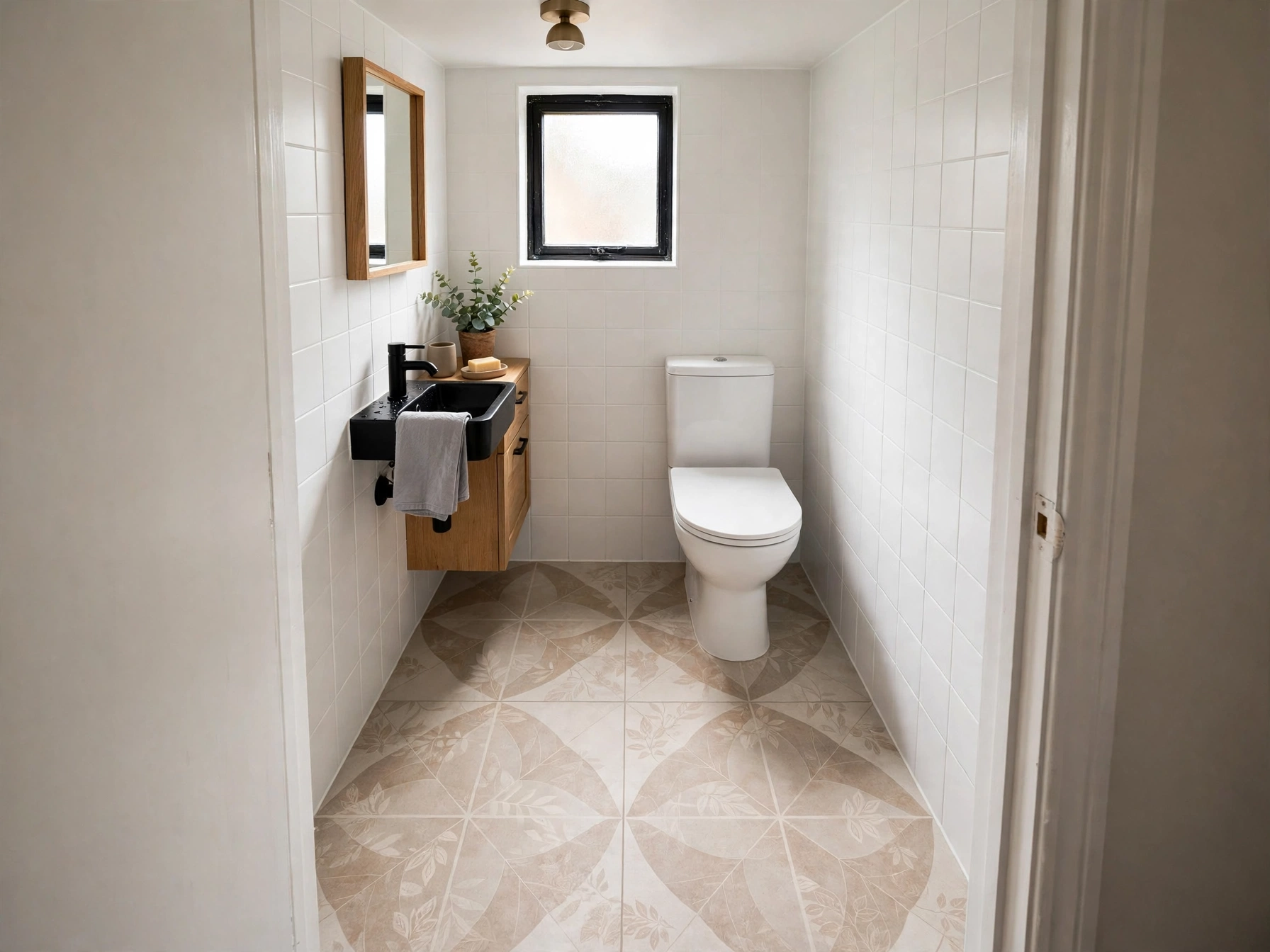
Pattern scale matters as much as pattern style. A large, bold motif in a tiny bathroom can feel like the walls are closing in, while a tiny, busy mosaic in a large bathroom can look fussy and lost. As a rough guide, small rooms suit medium or large tiles with a subtle pattern, and large rooms can carry a bolder motif without feeling crowded.
Test scale with a full sample board, not a single tile: one tile tells you nothing about how the repeat looks across a wall. Prop four or more together and step back to the doorway. If the repeat feels restful from the doorway, it will feel restful daily. If it feels dizzy there, it will feel worse when tired. Our guide to small living room storage ideas that hide clutter makes the same scale point for furniture, and it holds for tile too.
10. Do Not Skip Waterproofing Behind the Tile
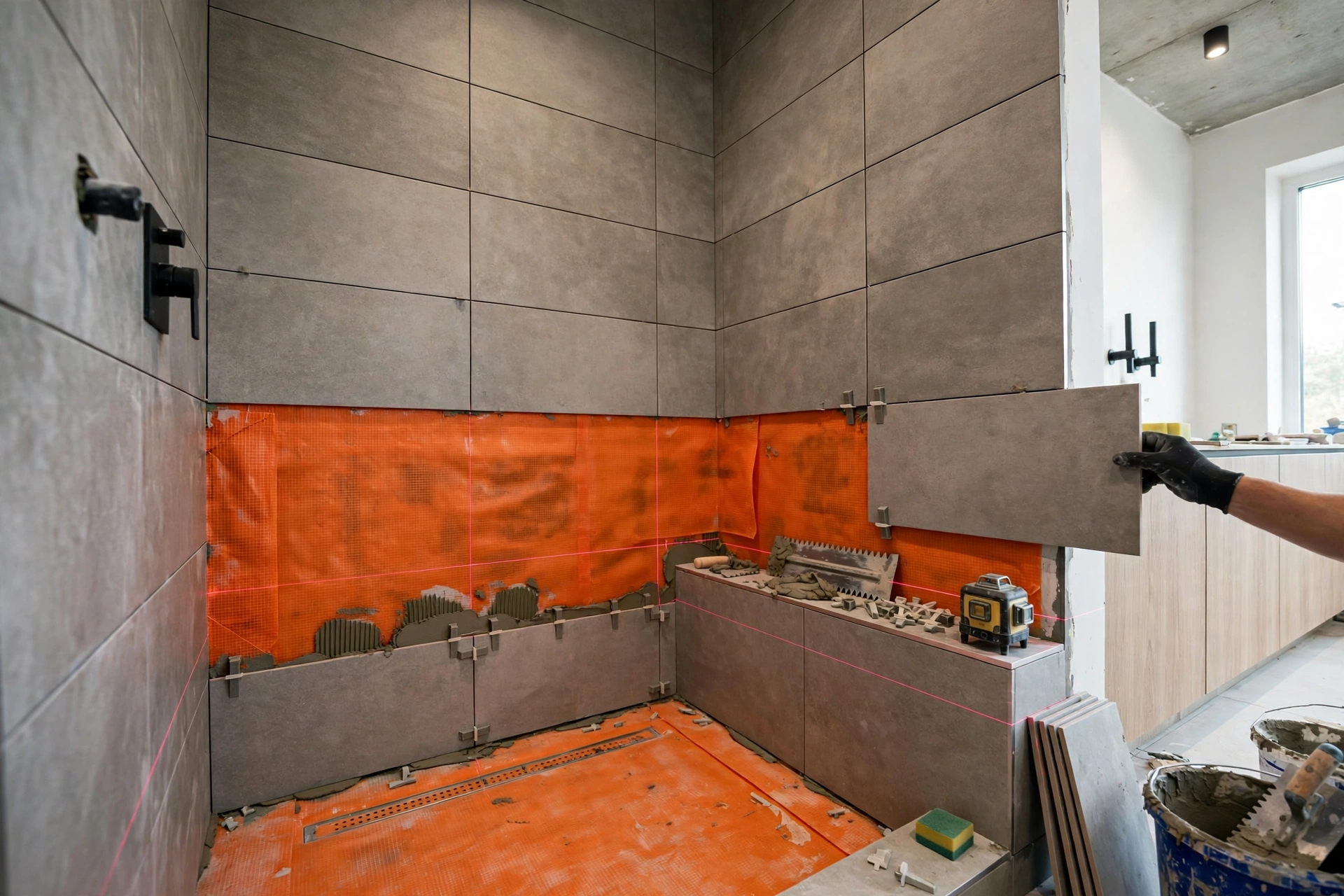
Tile itself is not waterproofing. Water gets through grout, however good the tile, so the shower walls and floor need a proper waterproof membrane underneath, fitted before a single tile goes up. Skipping or rushing this step is the most expensive regret of all, because the damage hides behind the tile for months and then appears as damp, mould, or a ruined wall.
Ask your fitter what system they use, how far it extends beyond the shower, and whether the floor falls to the drain correctly. A vague answer is a reason to get a second quote. Check the membrane is continuous around corners and pipes, where failures start. Tile is the visible finish, but waterproofing is the job that protects the house, so treat it as non-negotiable even if it adds a day to the schedule.
11. Think About Cleaning Before You Fall in Love
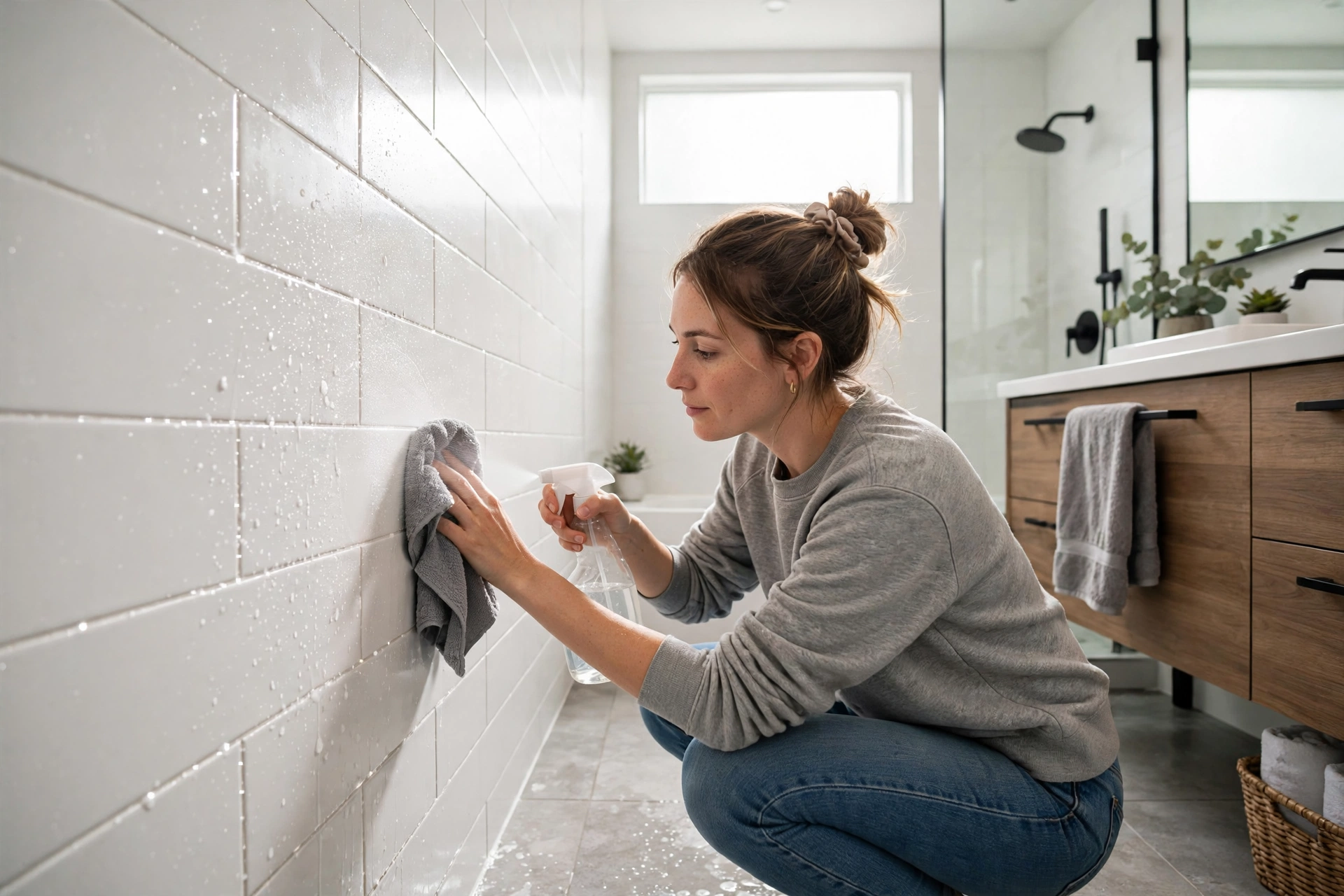
Every tile looks clean in the shop. The question is how it looks after six months of real showers, hard water, and hurried wipes. Dark glossy tiles show water spots, white grout shows dirt, heavily textured tiles trap soap scum, and natural stone needs sealing and gentler cleaners. None of these are deal-breakers, but each one is a weekly chore you should choose knowingly.
Be honest about your cleaning routine: if it gets a quick wipe once a week, favour mid-tone tiles, mid-tone grout, and smooth surfaces that forgive a missed clean. If you enjoy a thorough clean and love the look of stone, then stone is a fair choice, provided you seal it and use the right cleaner. Ask the supplier about limescale and cleaners to avoid, especially for stone and metallic finishes. A tile you enjoy cleaning is a tile you will still like in five years.
12. Live With the Winner for a Week
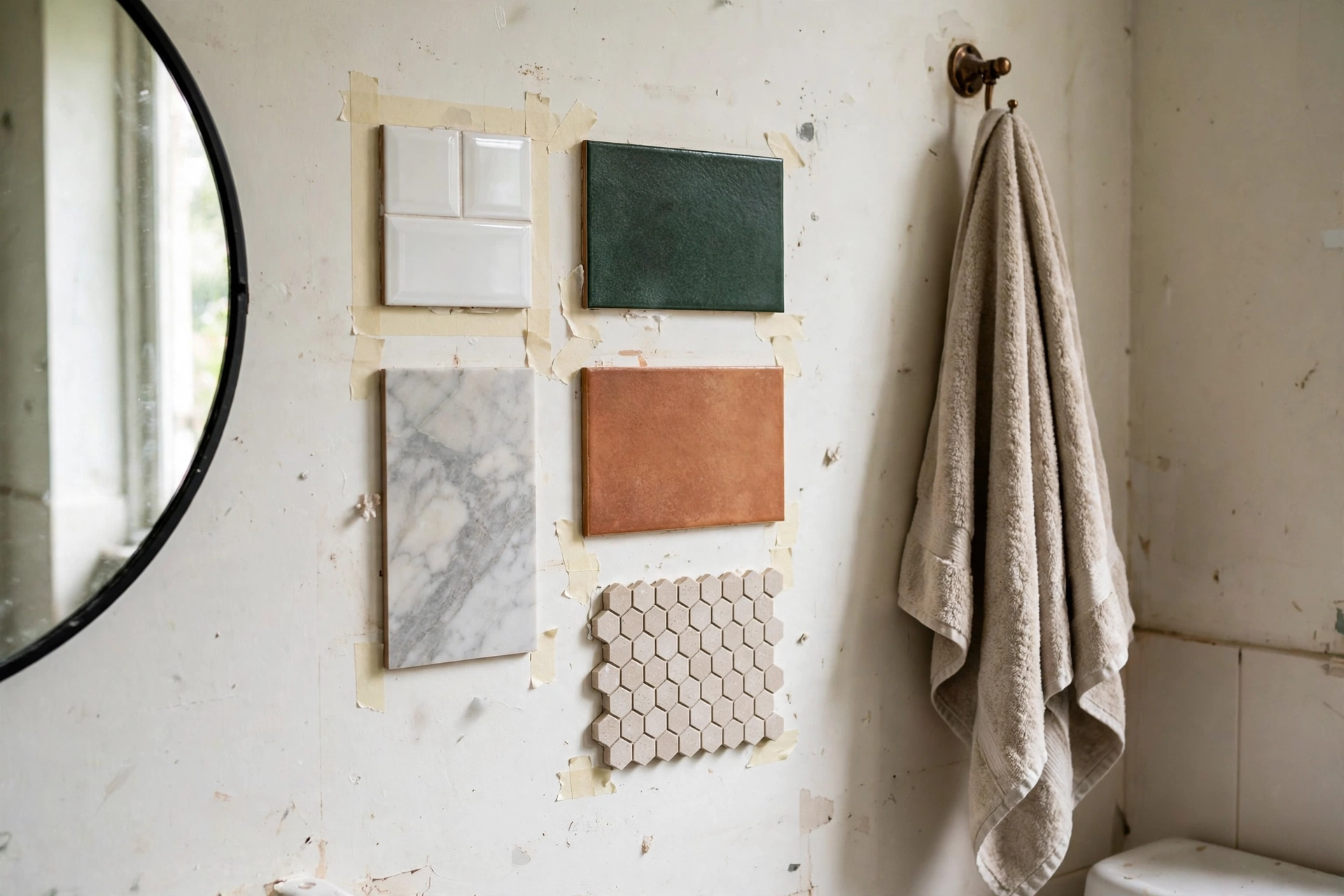
After all the ratings and grout tests, the final step is simple and strangely hard: wait. Tape the winning samples to the wall, live with them for a week, and notice whether you still like them on day seven. Do you admire them, or have you stopped seeing them? A tile you stop noticing is often right: a bathroom should feel calm, not like a gallery.
If doubt creeps in, check what bothers you: colour in evening light, pattern scale, grout contrast. Often one small change, a lighter grout or plainer floor, fixes it. If the doubt stays, change the tile now, while it costs nothing but a sample. That week of patience is the cheapest insurance in the renovation, and the step most regret stories skipped. For a broader view on choosing bathroom finishes, the Tile Council of North America publishes tile installation and selection guidance that fitters themselves rely on.
Frequently Asked Questions
What is the safest tile for a bathroom floor?
Usually a matte porcelain with a slip-resistant rating, or small mosaic tiles whose many grout lines add grip. Avoid large glossy tiles on wet floors, especially in showers.
Should bathroom floor and wall tiles match?
They do not have to match exactly, but they should sit in the same colour family. Carrying the same tile from floor to wall makes a small room feel larger, while a contrasting floor can ground a larger room nicely.
Is porcelain worth the extra cost over ceramic?
For floors and wet zones, yes, because porcelain is denser and harder wearing. For dry walls, ceramic is usually fine and cheaper, so spend the porcelain money where feet and water meet.
How much extra tile should I order?
Order 10 percent extra for a straightforward room and 15 percent for diagonal laying, patterns, or many cuts, and keep a full box of spares for future repairs.
Can I mix tile patterns in one bathroom?
Yes, if you keep one pattern as the statement and the rest plain. Two bold patterns in one small room usually fight each other, so let one lead and the other support it.
Start at home, test in your light, and give the winner a week on your wall before you order. That slow, boring process is exactly what makes the result feel effortless for years afterwards. And if you are also rethinking the rest of the room, our guide to small bedroom storage ideas that use every inch shows the same measure-first thinking applied to tight spaces generally. Choose the tile you can live with on an ordinary Tuesday morning, not just the one that dazzles under showroom lights, and you will not regret it.