


How to Make a Small Bathroom Feel Larger
My first flat had a bathroom so tight that the door nearly clipped the sink every time it opened. I spent months blaming the square footage, until a friend pointed out the real culprits: a dark shower curtain cutting the room in half, a bulky vanity sitting flat on the floor, and a mirror the size of a postcard. We changed three things in one weekend, and the room felt like a different place. That is the heart of good small bathroom ideas — most of them are about what your eye sees, not how many square feet you own.
The twelve changes below cost little or nothing, and none of them needs a contractor. Work through them in order, cheapest first, and stop when the room feels right. A bathroom that feels calm and easy to move through beats one that ticks every box in a magazine.
Small Bathroom Ideas That Work Without a Renovation
1. Paint It Light, Ceiling Included
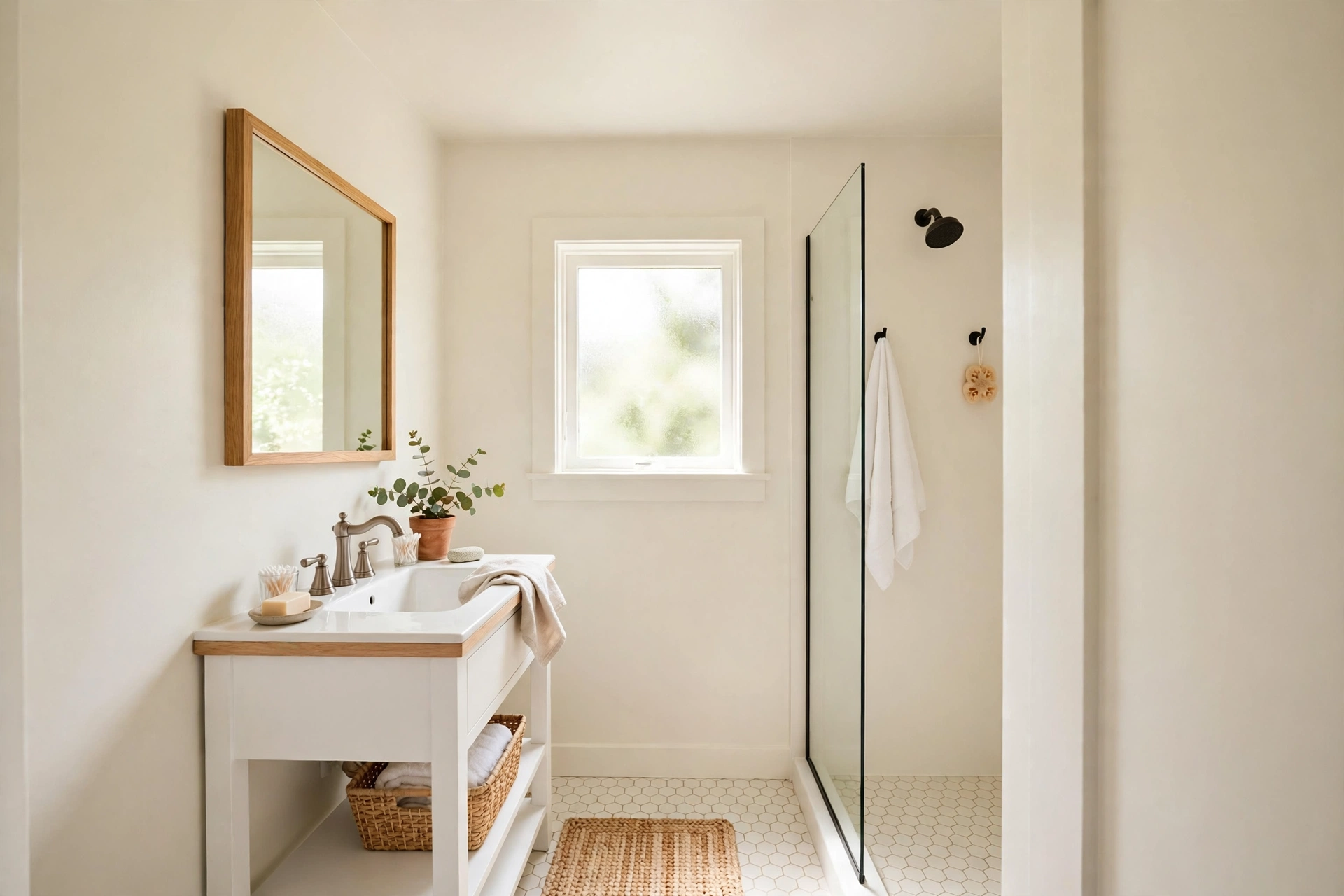
Dark paint can look dramatic in a big room, but in a small bathroom it pulls the walls inward. A pale warm white, a soft sage, or a light greige on the walls, carried onto the ceiling in the same colour, blurs the line where the wall ends and makes the ceiling feel higher. Paint the skirting boards the same shade too, so there is no dark stripe cutting the room in half at ankle height. I used to think white walls were boring until I lived with them for a month and realised the towels, the wood, and the plants were finally doing the talking. If you rent and cannot paint, the same effect comes from pale towels, a light shower curtain, and removing one dark, heavy accessory.
2. Put a Big Mirror Opposite the Window
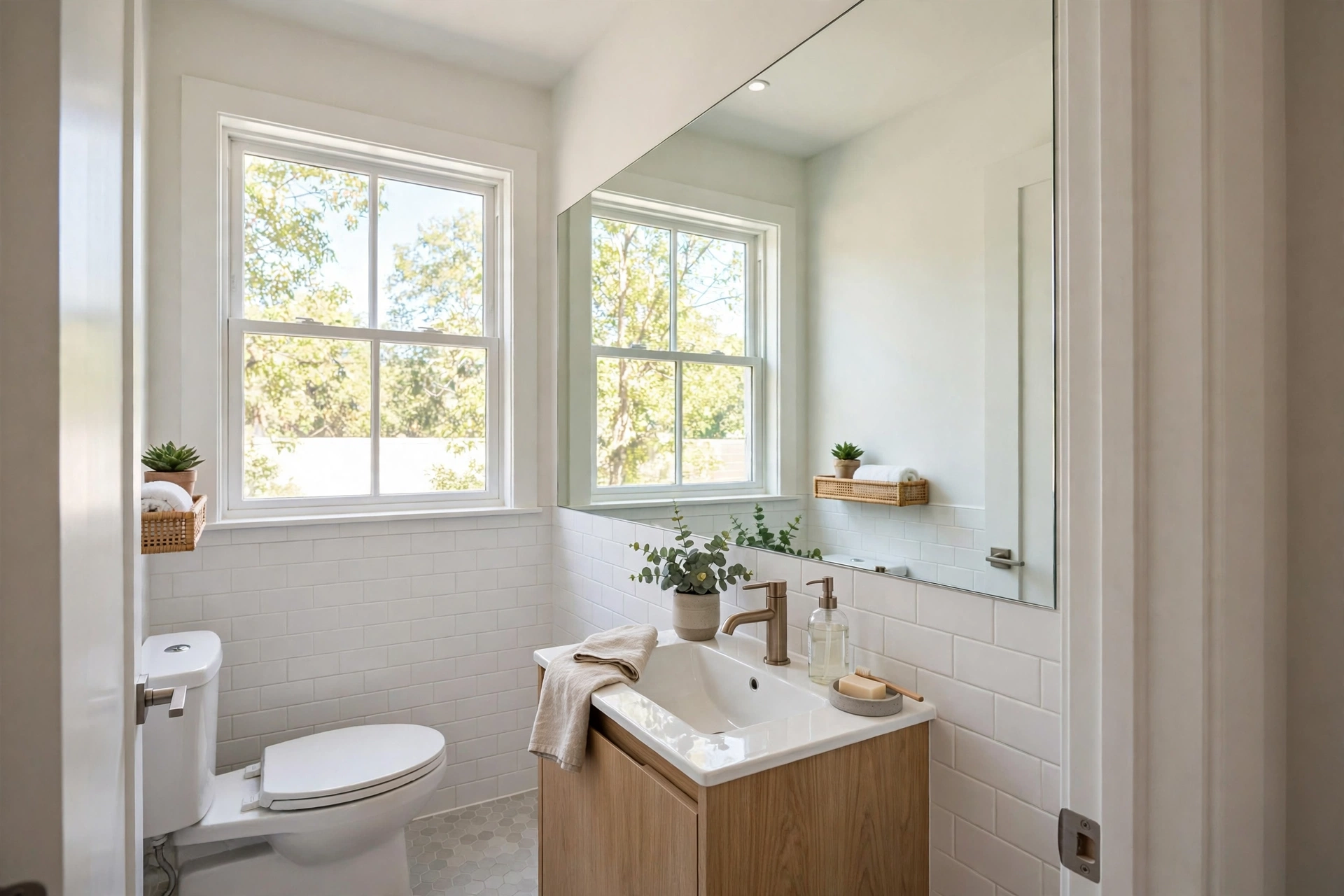
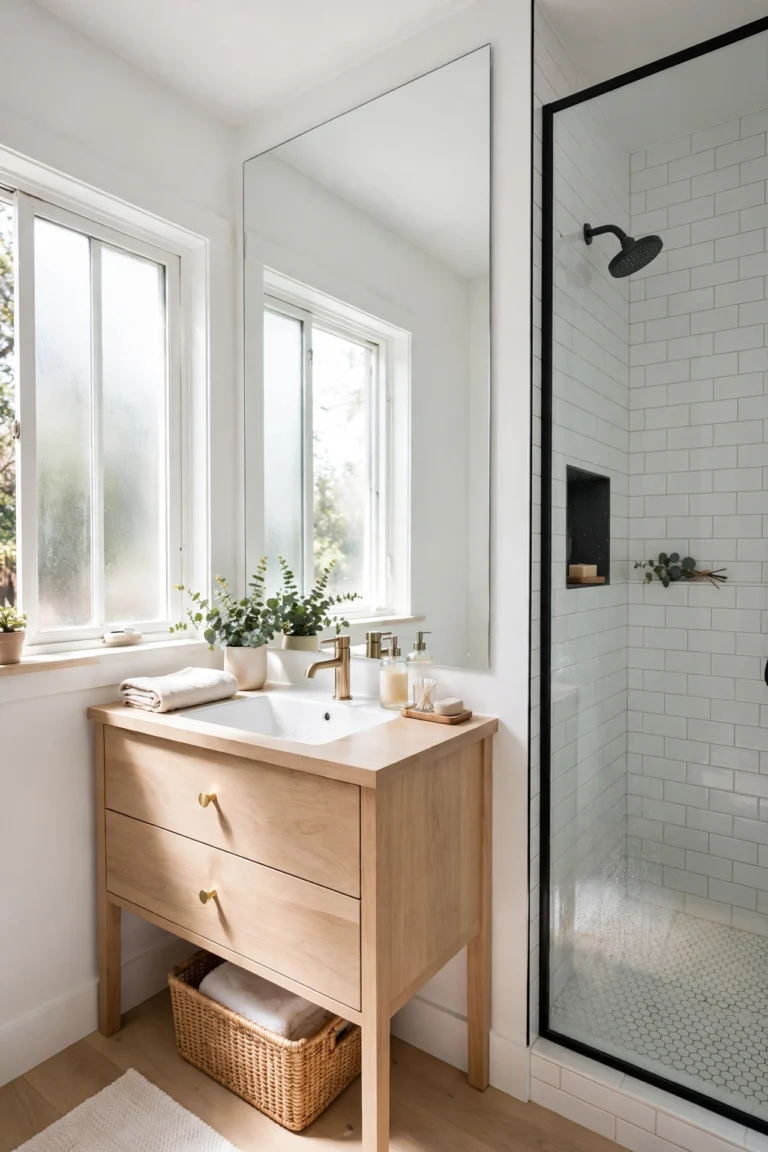
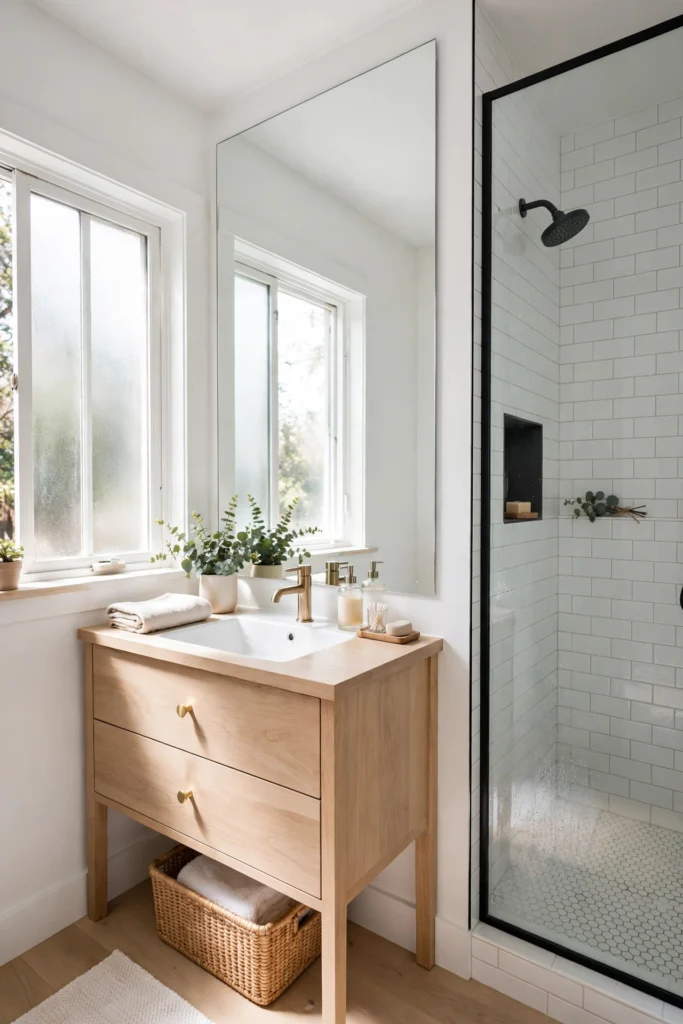
A mirror on the same wall as the window reflects the wall back at you and adds almost nothing. Move it opposite the window, or on the wall beside it, and it doubles the daylight and the view. Go as large as the wall allows — one big mirror beats a cluster of small ones, which chop the wall into pieces and create a busy reflection. Check what the mirror reflects before you commit: a tidy corner or a plant is lovely, a pile of laundry less so. Keep the frame slim and light-coloured, because a thick dark frame eats up the very openness the mirror is meant to create. Fix a leaning mirror to the wall at the top so it cannot tip.
3. Swap the Shower Curtain for Clear Glass
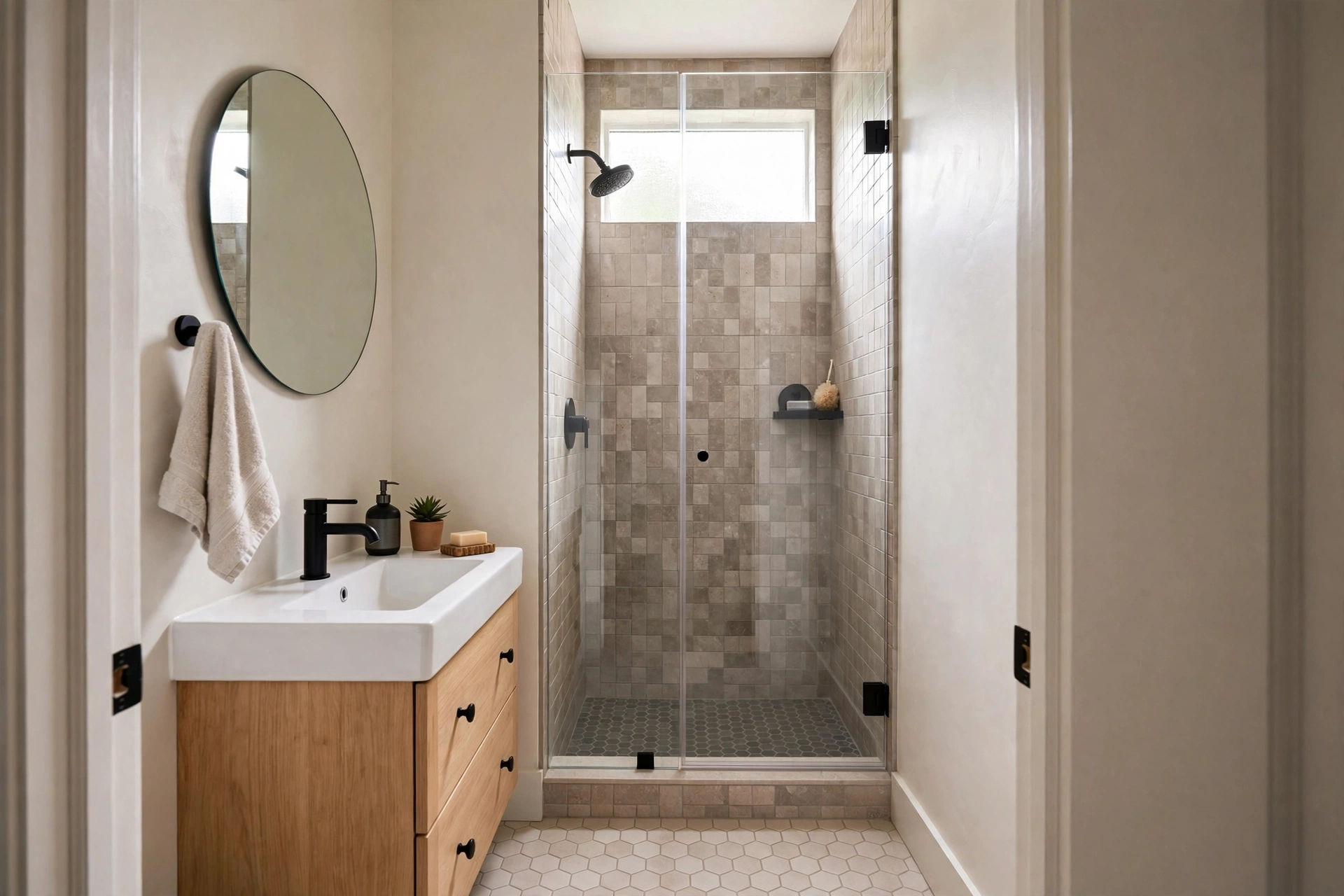
A shower curtain is a wall. It hides a third of the room and stops your eye at the rail. A clear frameless glass panel or door lets the sightline run straight through to the back wall of the shower, and the room instantly reads as one space instead of two cramped ones. If a glass door is out of budget, a clear or very pale curtain is a decent halfway step — it still lets light through. Keep the glass clean, because water spots show fast, and a daily squeegee takes about thirty seconds. This one change alone made my old bathroom feel a foot wider, and it is the upgrade guests notice first.
4. Show More Floor With a Wall-Hung Vanity
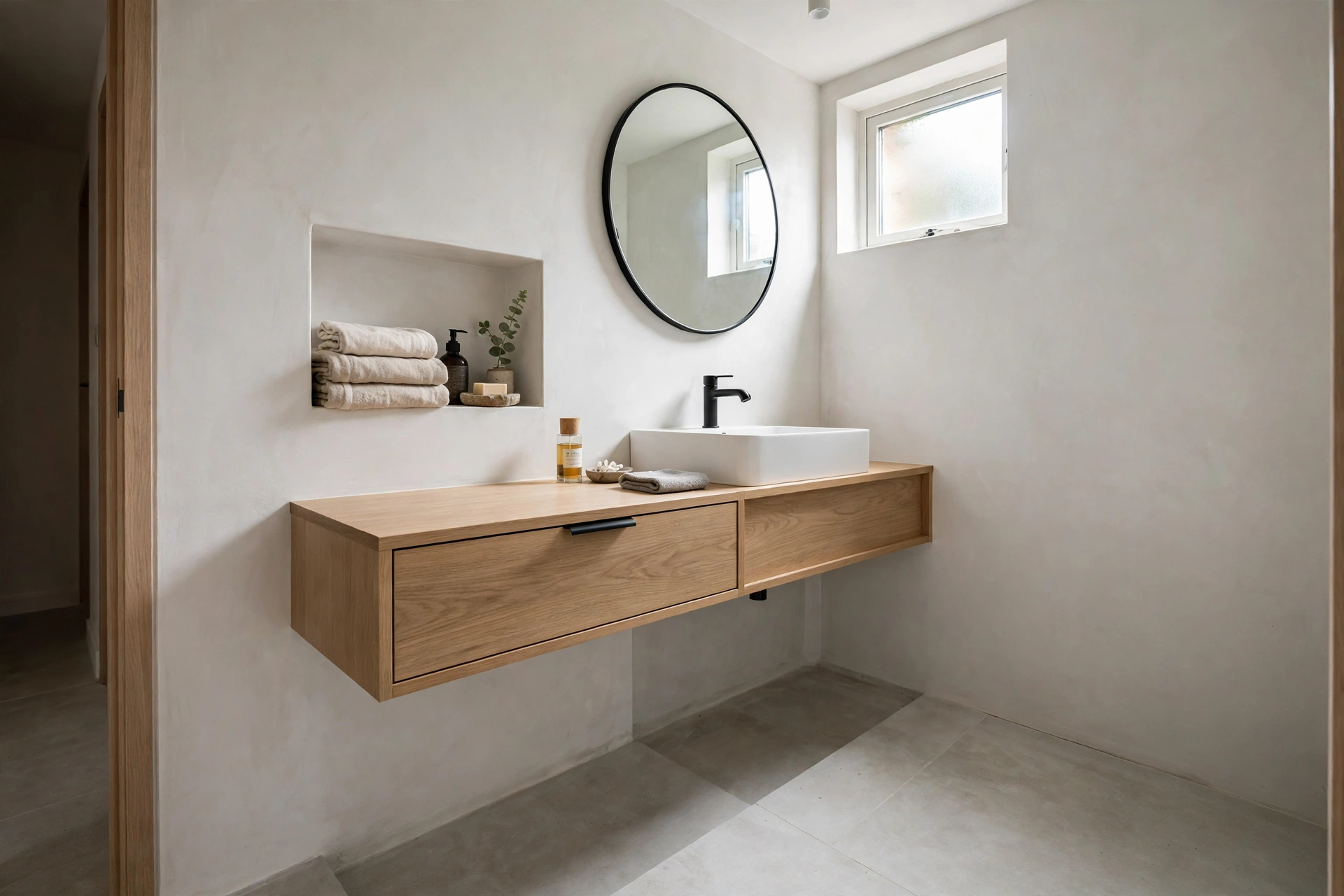
Your eye judges a room’s size by how much floor it can see. A vanity that sits flat on the ground reads as a solid block, while a wall-hung one lets the floor run underneath and the room feels lighter at once. If replacing the vanity is too much, the same logic applies to anything else sitting on the floor: a basket on legs, a stool instead of a solid storage box, a toilet with a concealed cistern. Keep the floor itself as clear as you can — nothing stored in the walkway, one basket for the bits and pieces. Even six inches of clear floor along the main path changes how the room feels to walk through.
5. Stick to One Calm Palette
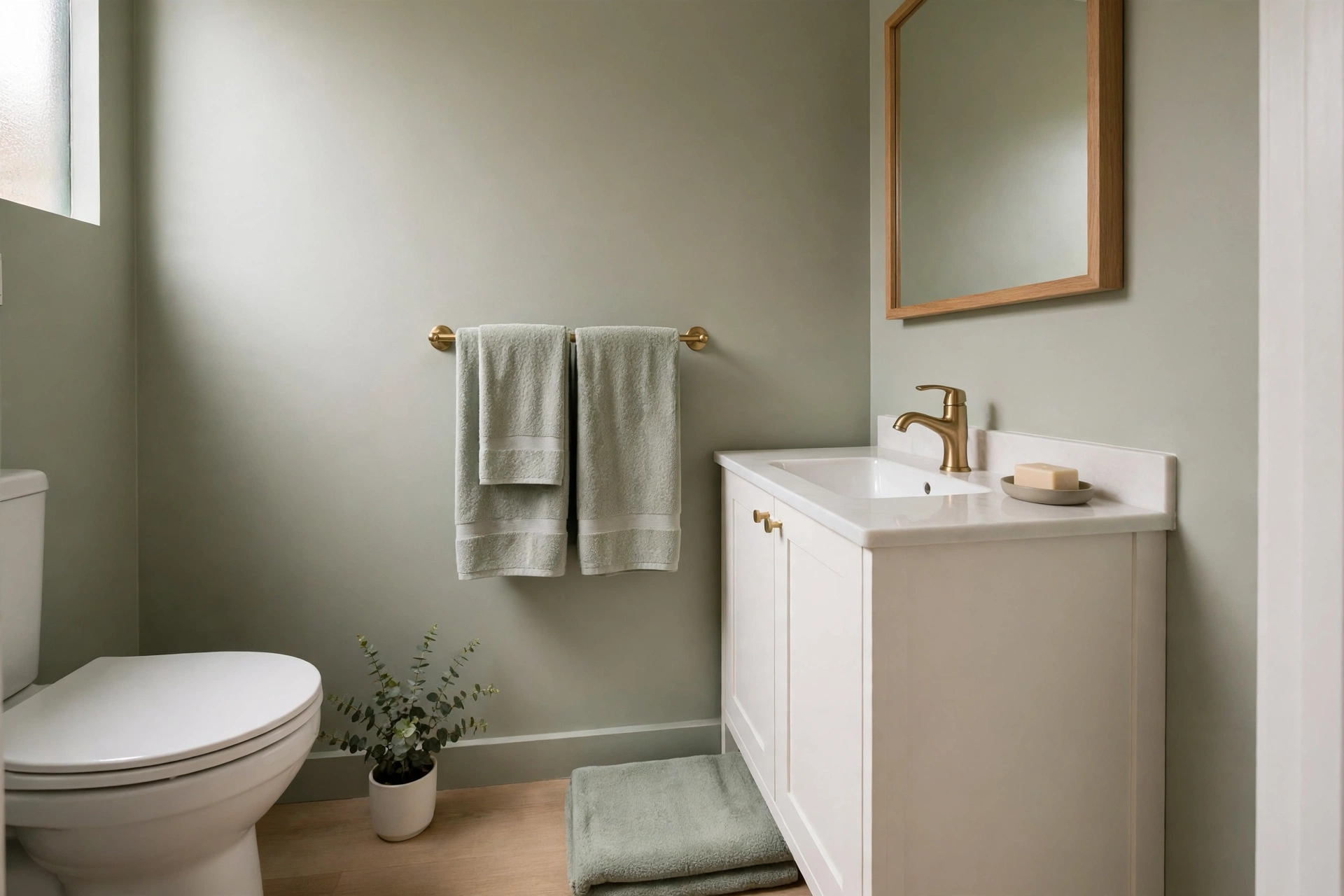
Too many colours in a small room fight for attention, and the room ends up feeling busy rather than personal. Pick a calm base — warm white, pale grey, or soft beige — and let one accent colour carry the personality: a sage towel, a terracotta soap dish, a single piece of art. Repeat that accent two or three times so it looks deliberate, not random, and keep the rest plain. Pattern works best in one place, usually the shower curtain or the towels, with everything else solid. I once had a patterned curtain, patterned towels, and a patterned rug in the same tiny bathroom, and taking two of them out felt like gaining a window.
6. Layer the Light Instead of Relying on One Bright Bulb
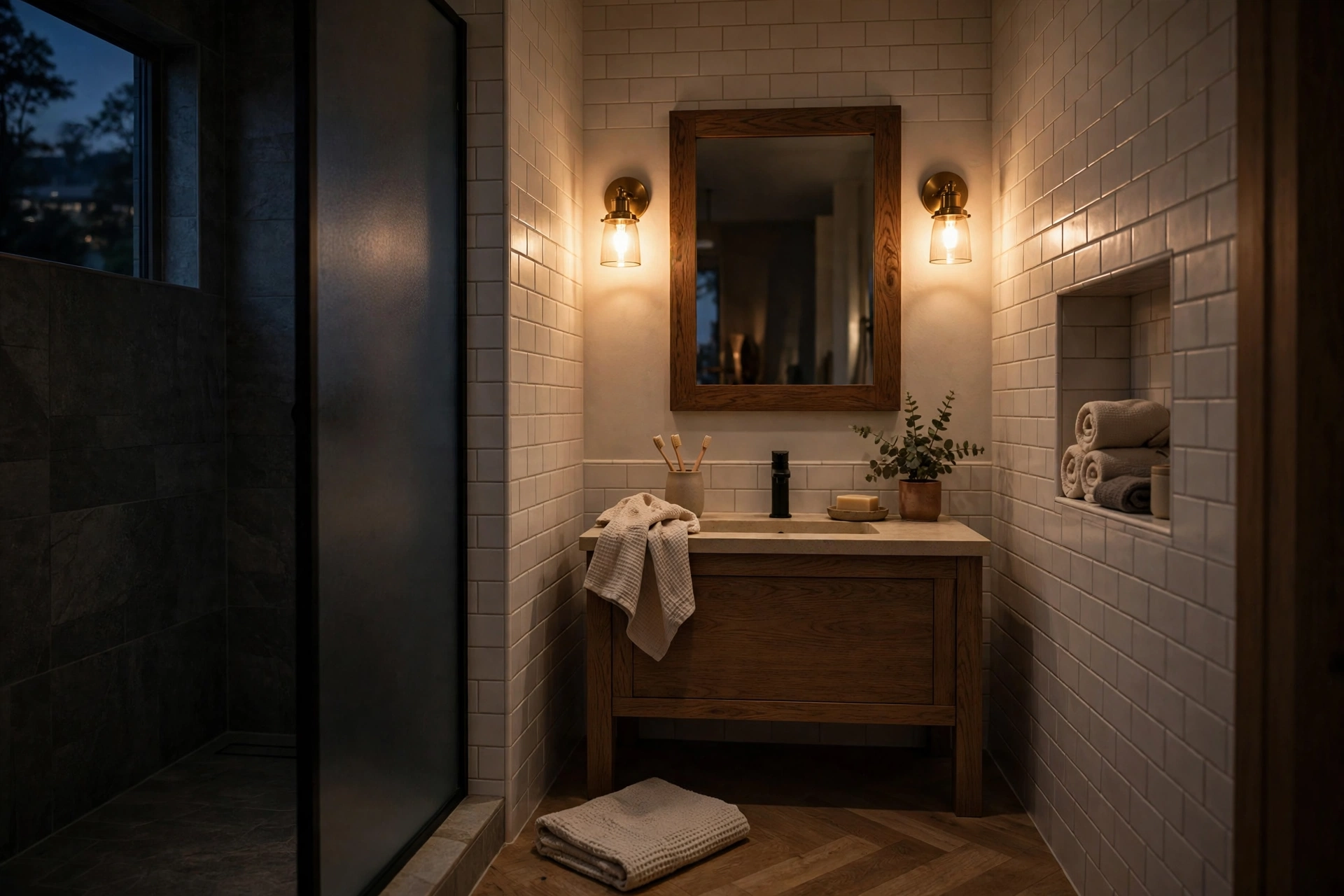
One bright ceiling light flattens a small bathroom and highlights every flaw. Layered light does the opposite: sconces beside the mirror for the face, a soft glow near the bath or shower, and the ceiling light only when you need full brightness. Warm bulbs around 2700K make the room feel restful rather than clinical, and a dimmer on the main light, if your wiring allows it, is worth the small cost. Put the brightest light where you wash your face and the softest where you relax, and avoid a bare bulb at eye level when you are standing at the sink. For more on the mood side of bathroom light, our winter bathroom ideas that feel like a spa use the same warm-light thinking.
7. Clear the Surfaces You See First
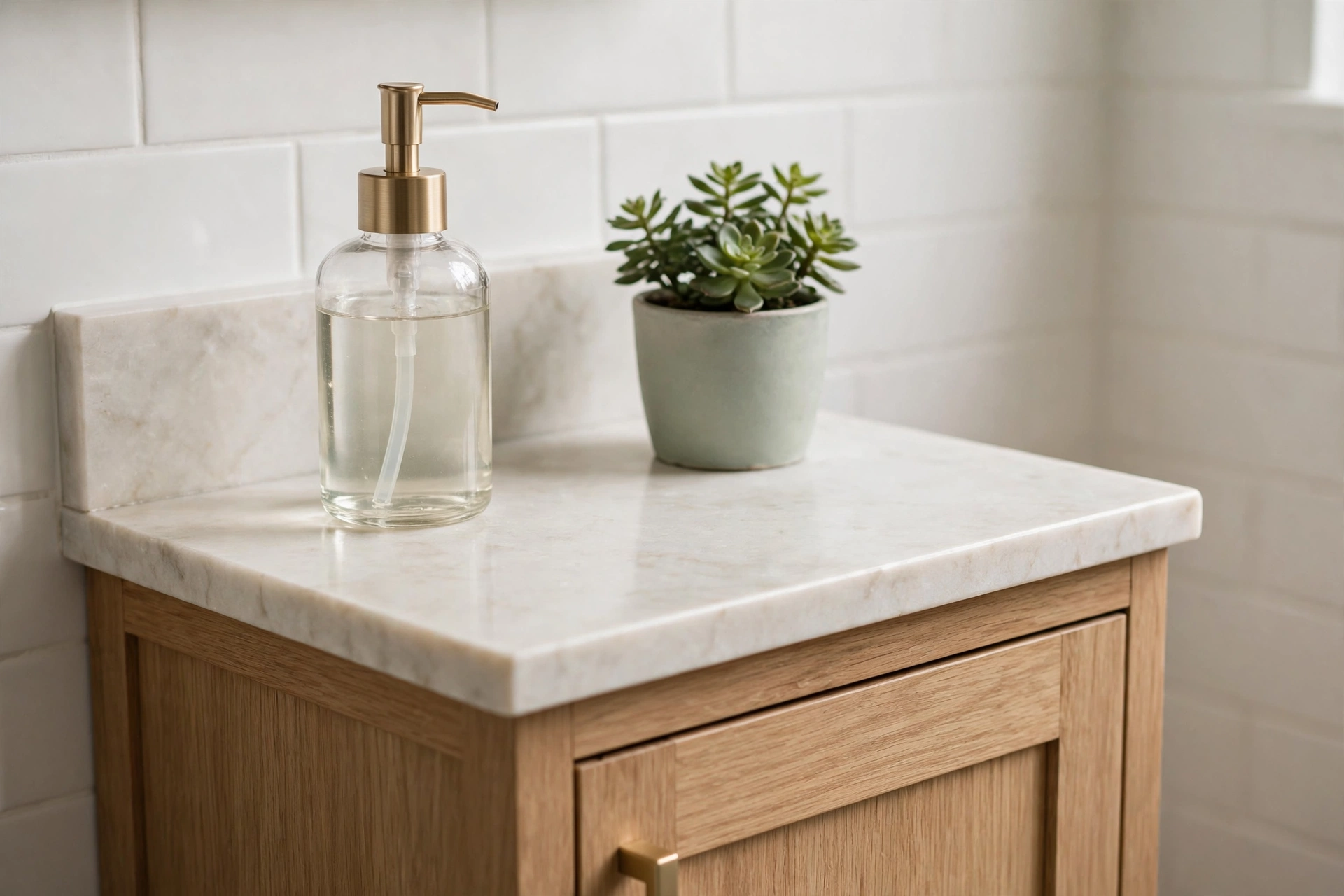
Walk into your bathroom and notice the first surface your eye lands on, usually the vanity counter. If that surface is crowded, the whole room feels crowded, even when the floor is clear. Keep it to three things at most: a soap dispenser, a small plant, and one object you like looking at. Everything else — medicines, spare razors, the hairdryer — goes in a drawer or a cabinet. I moved my charger and clutter into the vanity drawer one evening, and the counter went from chaotic to calm overnight. Do the same test on top of the toilet cistern, and be honest about what actually earns its place there. A clear surface also makes cleaning faster, which means it stays clear instead of drifting back to clutter within a week.
8. Use Large Tiles With Minimal Grout Lines
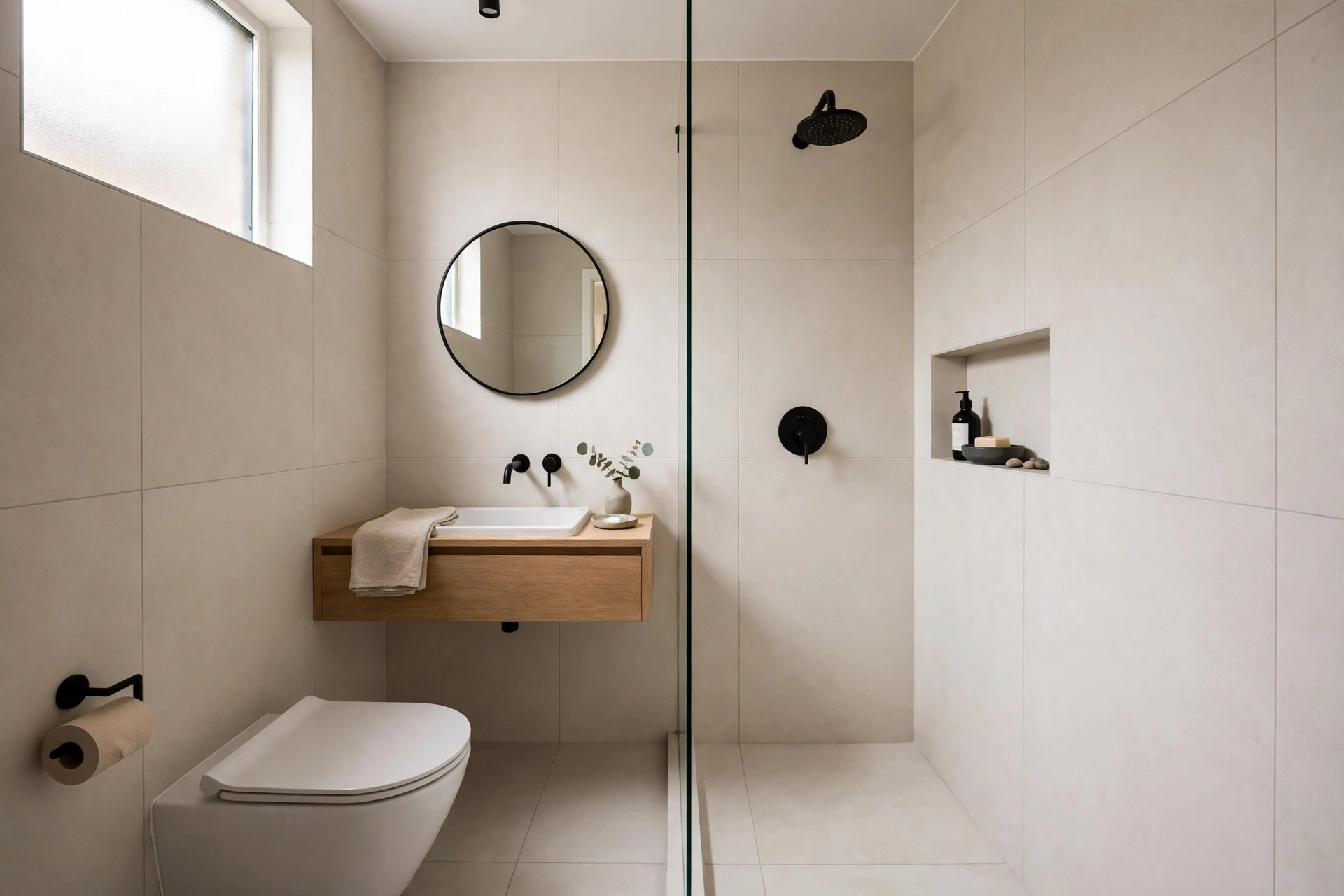
Small mosaic tiles mean a grid of grout lines, and every line is a visual stop for the eye. Large-format tiles — 12 by 24 inches or bigger — mean far fewer lines, so the floor and walls read as one continuous surface. Run the same tile on the floor and up the shower wall, and the room stops being chopped into zones. Keep the grout colour close to the tile colour, because high-contrast grout draws the grid back into focus. This is a bigger job than paint or a mirror, so it suits a planned refresh rather than a weekend whim, but if you are retiling anyway, tile size is one of the cheapest space tricks there is. This Old House’s small bath designs show the same large-tile effect in real remodels.
9. Free the Door Swing
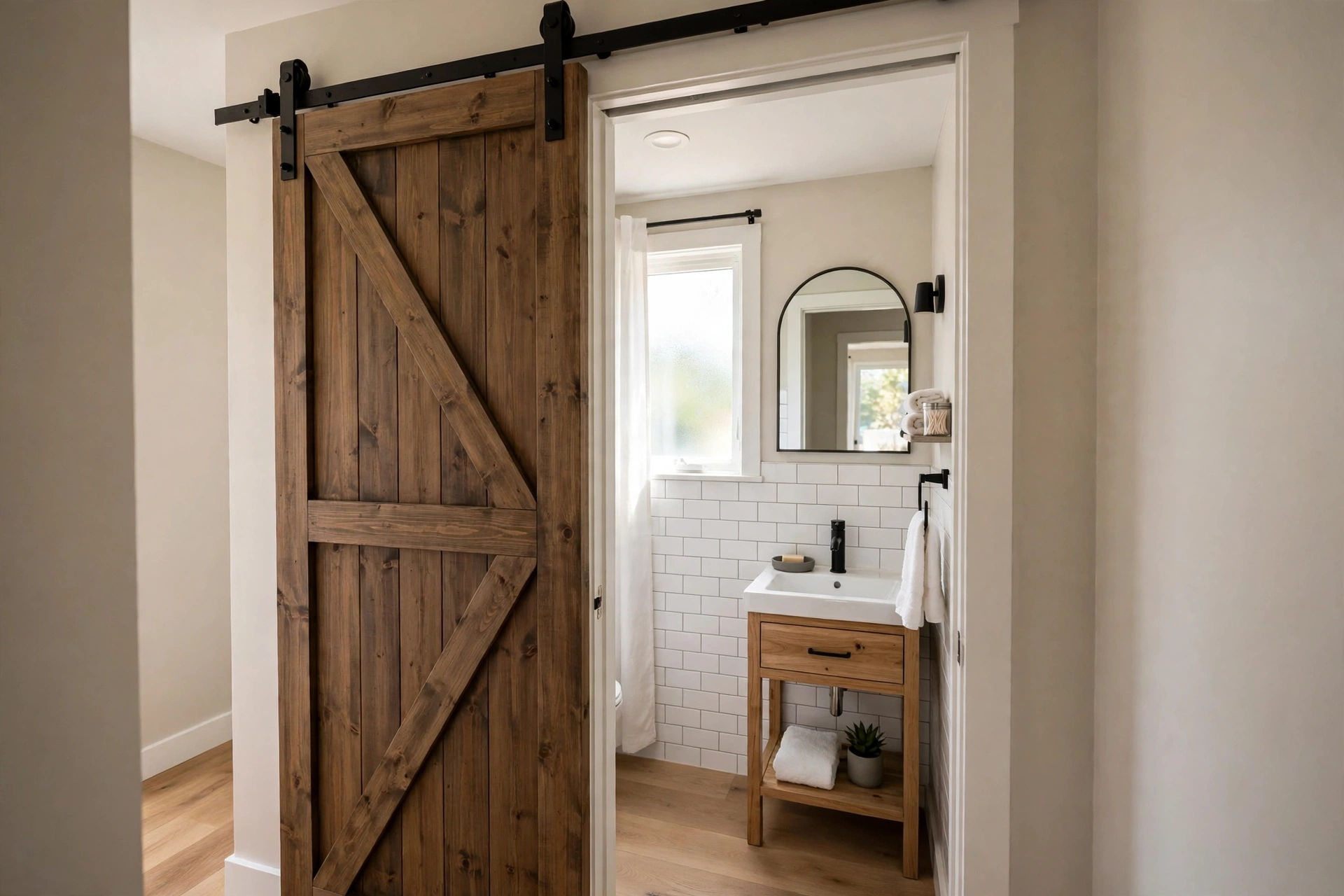
A standard door swinging into a small bathroom can eat up to nine square feet of usable floor — floor you then cannot put anything on. A pocket door that slides into the wall, or a barn-style slider on the outside, hands that space back. If neither is possible, check whether the door can be rehung to swing outward into the hallway instead; it costs little and changes the layout completely. I rehung a bathroom door to open outward once, and suddenly there was room for a proper towel rail where the door used to sweep. Check the hallway side first, so the new swing does not block a bedroom door or a walkway.
10. Build Storage Into the Walls, Not Onto Them
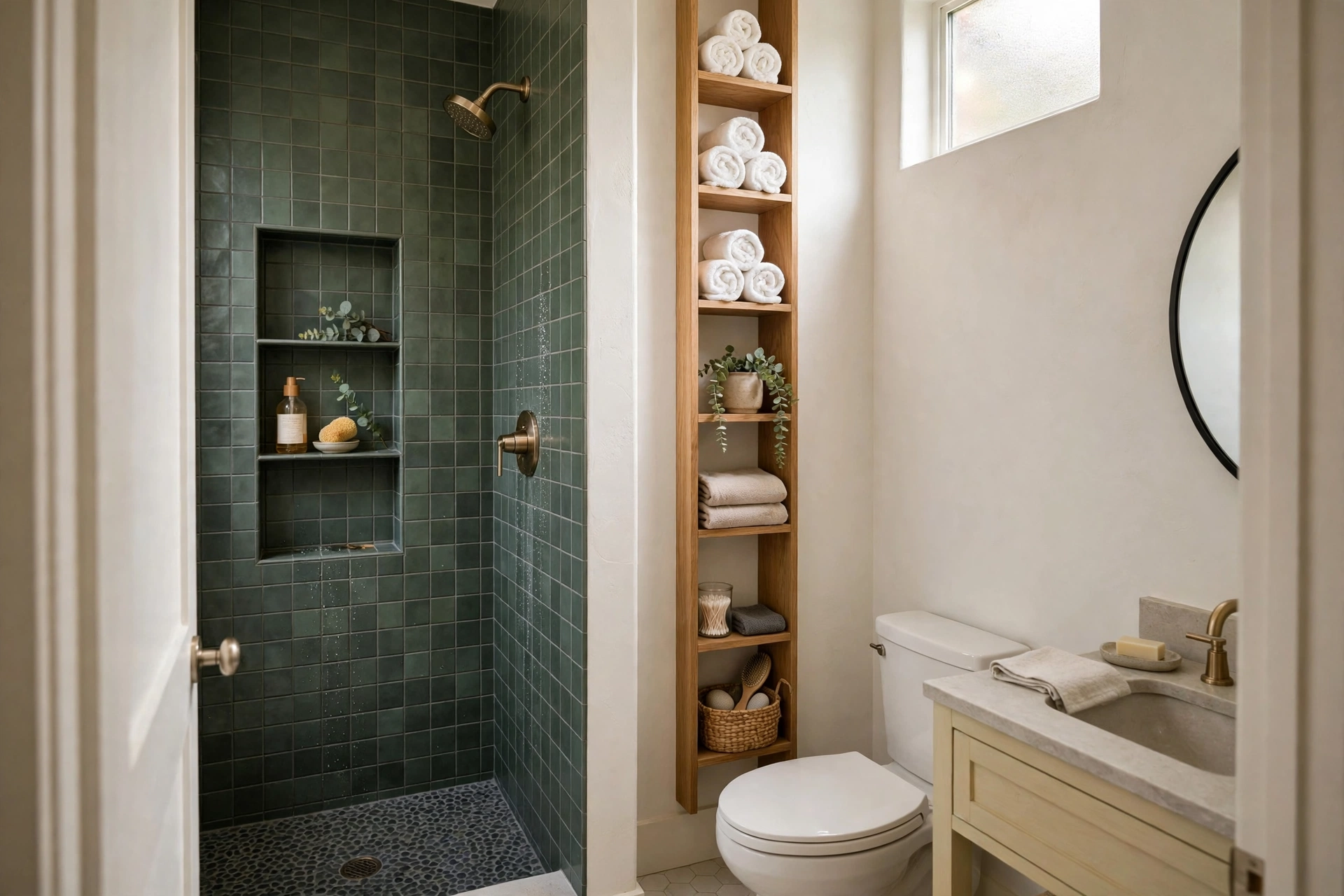
Freestanding shelves and over-toilet racks stick out into the room and crowd it. Recessed storage does the opposite: a tiled niche in the shower wall holds shampoo bottles without a caddy hanging off the rail, and a recessed medicine cabinet gives you depth without stealing airspace. Use the vertical space too — a tall, narrow cabinet or a shelf run up to the ceiling draws the eye upward and keeps the floor clear. The same logic works in other tight rooms; our guide on how to make a small bedroom feel twice as big leans on vertical storage the same way. Keep recessed shelves tidy, because an open niche full of half-empty bottles is just clutter at eye level.
11. Choose Fixtures Sized for the Room
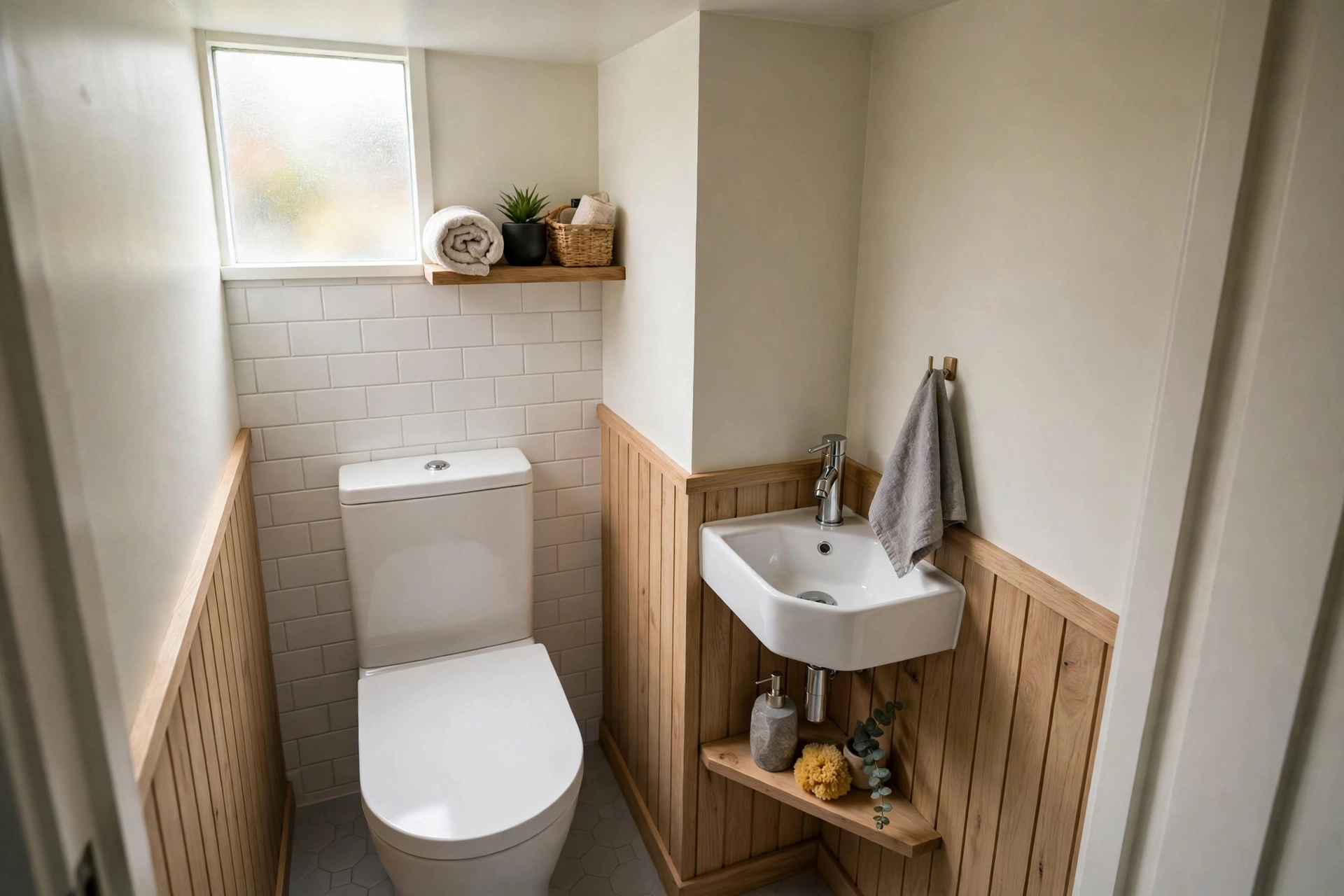
A standard-size toilet and a deep vanity in a tiny bathroom leave no room to move, and the room feels cramped no matter how pretty it is. Compact fixtures — a corner sink, a slim-profile or short-projection toilet, a narrow vanity — are made for exactly this problem, and they can free up several inches on every side. Measure the walkways before you buy: you want comfortable clearance in front of the toilet and the sink, not just fixtures that technically fit. A round-front toilet bowl instead of an elongated one saves a couple of inches that matter more than they sound. This is the one idea on the list that needs a plumber for the toilet itself, but the sink and vanity swaps are often straightforward.
12. Pick One Statement Piece and Let It Breathe
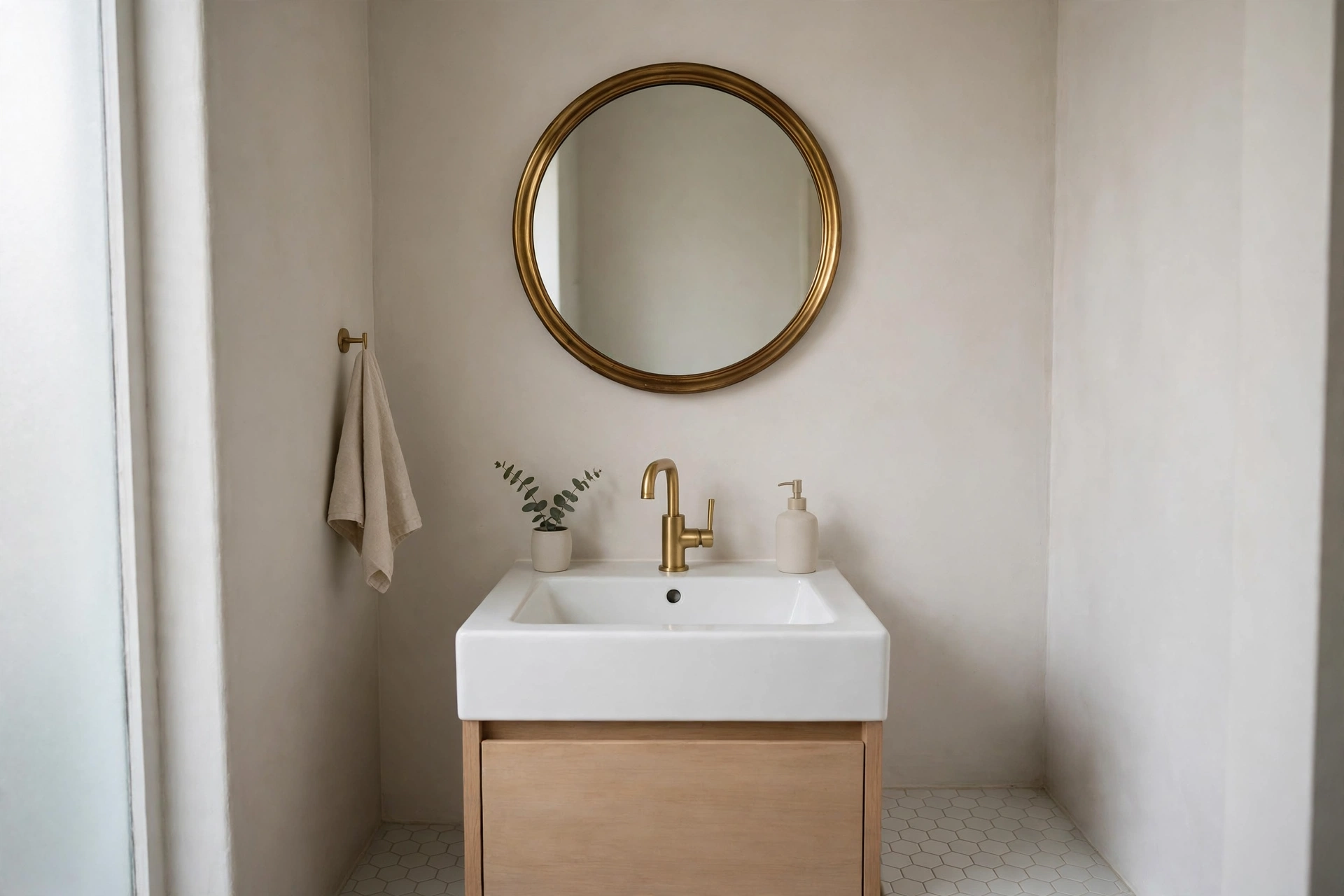
A small room with five decorative ideas looks like a shop window. A small room with one good one looks intentional. Choose a single statement piece — a round brass mirror, a bold light fixture, a beautiful tiled feature strip — and let everything else stay quiet. The statement piece gets the attention, and the plain surroundings make the room feel calm and spacious rather than busy. I broke this rule for years, adding a patterned curtain here and a bright rug there, and the room always felt smaller for it. The day I took everything out except one brass mirror, the bathroom finally looked finished. Restraint is the cheapest luxury a small bathroom can have.
Frequently Asked Questions
What colour makes a small bathroom look bigger?
Pale, warm colours usually help most: warm white, light greige, and soft sage, carried onto the ceiling and skirting boards so the room reads as one continuous surface. A single dark accent, like a mirror frame or a light fixture, is fine, but painting all four walls dark in a tiny room tends to pull them inward.
Is a glass shower door worth it in a tiny bathroom?
In most cases, yes, because it removes a visual wall and lets light travel through the room. If a glass door is out of budget, a clear or very pale curtain gives you part of the effect. Keep the glass squeegeed, since water spots undo the clean look quickly.
Can I make a small bathroom feel larger without renovating?
Absolutely. Paint, a bigger mirror, a clear shower curtain, a cleared counter, and a rehung door are all non-renovation changes, and together they change how the room feels more than most people expect. Start with the mirror and the counter clear-out, since both cost almost nothing.
What should I avoid in a small bathroom?
Big patterns on every surface, dark heavy furniture sitting flat on the floor, a shower curtain in a strong colour, and clutter on the counter. Each one on its own is fine; together they make the room feel busy and tight.
Start with paint and the mirror, because those two changes cost the least and change the most. Then work down the list at your own pace, one change at a time, and notice how the room feels after each one. A small bathroom will never be a big bathroom, and it does not need to be. It needs to feel calm, easy to move through, and pleasant at the start of the day, and that is entirely within reach without a renovation.