

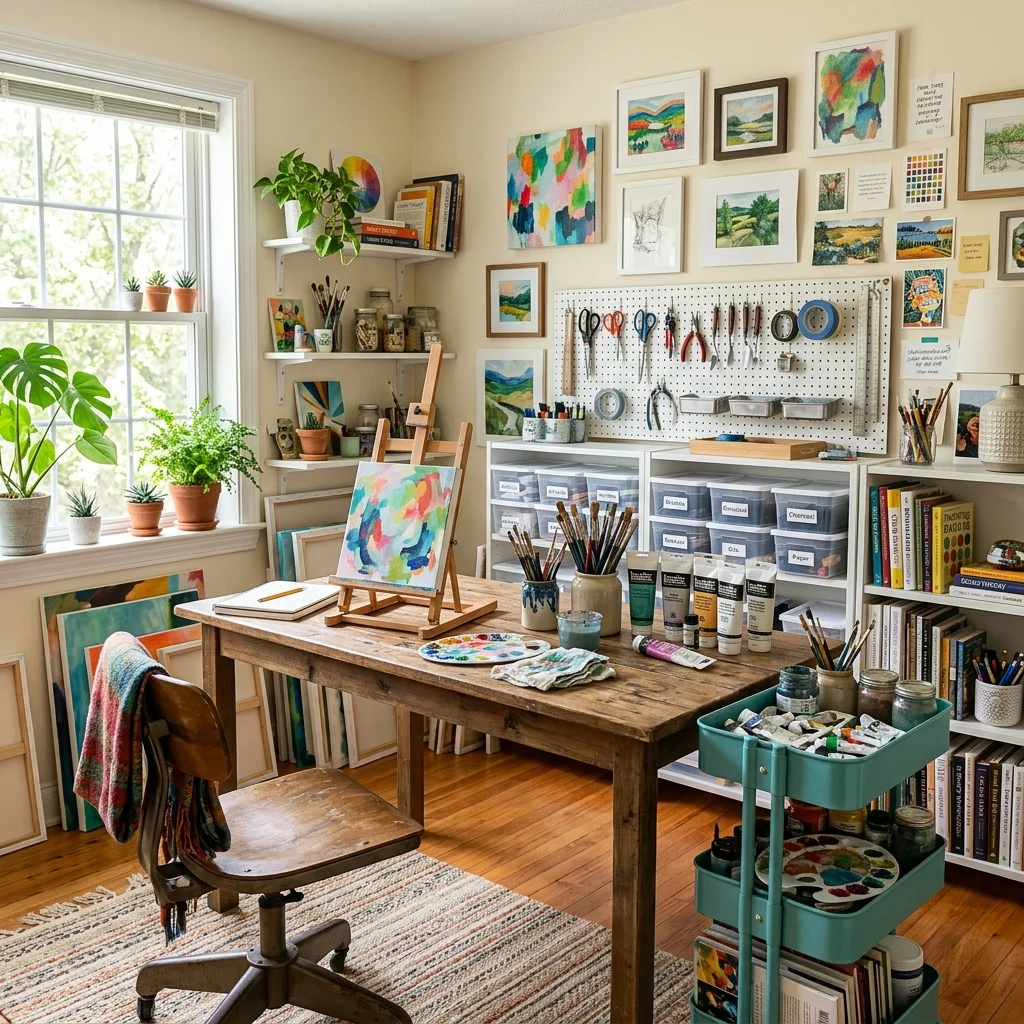
A great art studio balances inspiration with function. These 15 hobby room ideas help you create a space that’s both creative and genuinely organized.
A hobby room that looks inspiring in photos but is impossible to actually create in isn’t doing its job. The best art studios balance two things people often treat as opposites — a space that feels open and inspiring, and one where every supply has a logical, findable home. Getting both right changes how often the space actually gets used.
I helped a friend convert a spare bedroom into a working art studio after her supplies had taken over half the dining room for years. The transformation wasn’t about buying more storage — it was about a handful of specific layout and organization decisions that made the space genuinely usable, not just nice to look at.
Why Function Should Come Before Aesthetics
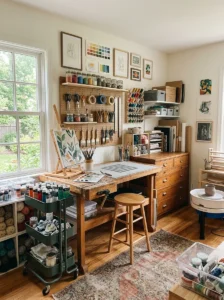
Before diving into specific ideas, it’s worth addressing a common mistake: designing a hobby room to look good in photos before considering how it will actually function during real use.
- A studio that isn’t organized around actual workflow gets abandoned faster than one built purely around aesthetics.
- Storage needs to match the specific medium being used, since painting, sewing, and pottery all have very different supply and cleanup requirements.
- Lighting and surface durability matter more in a working studio than in almost any other room in the house.
Lighting Setups That Support Real Work
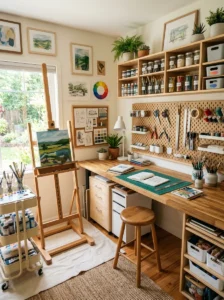
Good lighting is arguably the single most important functional element in any creative space, directly affecting both the quality of work produced and how long someone comfortably stays in the room.
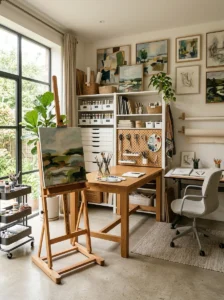
1. Natural Light Positioned for the Main Work Area Positioning the primary workspace near the best natural light source in the room, ideally north-facing for consistent, non-harsh light, makes color and detail work significantly easier throughout the day.
2. Adjustable Task Lighting
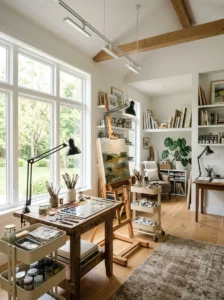
A flexible task lamp with adjustable positioning and brightness allows lighting to be customized for different projects, especially important for detailed work like drawing, sewing, or fine painting.
3. Daylight-Balanced Bulbs Choosing daylight-balanced LED bulbs, rather than warm yellow-toned ones, keeps colors reading accurately during evening or low-natural-light work sessions, which matters significantly for painting and color-based crafts.
Supply Storage That Matches How You Actually Work
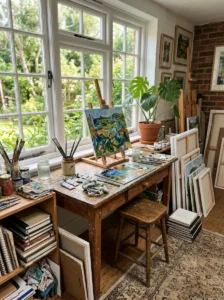
Generic storage solutions often fail in a hobby room because different creative mediums require very different types of organization.
4. Clear Bin Storage for Small Supplies Clear, labeled bins for beads, paints, or small craft supplies allow contents to be identified at a glance, avoiding the time-consuming process of opening multiple opaque containers to find one item.
5. Vertical Paper and Canvas Storage
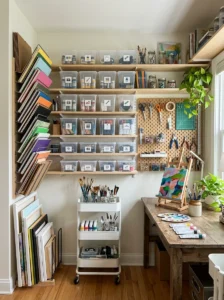
Flat papers, canvases, or fabric are prone to damage when stacked horizontally — a vertical slot organizer or rack keeps these materials protected and easy to flip through without bending or creasing them.
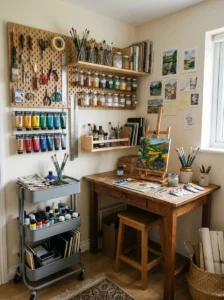
6. Rolling Storage Carts A rolling cart with multiple drawers or tiers keeps frequently used supplies mobile, allowing them to travel between a main work surface and a secondary station without needing duplicate supplies in multiple spots.
7. Pegboard for Tools and Frequently Used Items A pegboard wall keeps scissors, rulers, and other frequently grabbed tools visible and within reach, reducing the small daily frustration of digging through drawers for commonly used items.
Work Surface Considerations
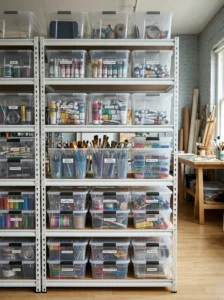
The work surface itself needs to accommodate both the physical demands of the specific hobby and the reality of an unfinished project sitting out between sessions.
8. A Durable, Easy-to-Clean Main Table A work surface with a durable, wipeable finish handles paint spills, glue, or ink far better than a delicate or porous material, extending the table’s usable life significantly.
9. A Secondary Surface for Works in Progress
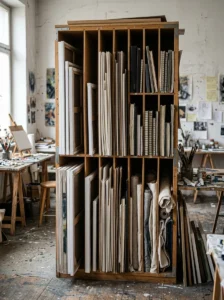
A smaller side table or shelf dedicated to holding an unfinished project keeps the main work surface clear for starting new tasks, rather than needing to fully clean up and reset between every session.
10. Adjustable-Height Surfaces Where possible, an adjustable-height table accommodates both seated detail work and standing tasks like cutting large fabric or paper, adding flexibility that a single fixed-height surface can’t offer.
Zoning the Room by Activity
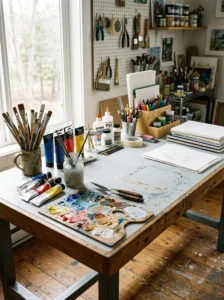
Even a small hobby room benefits from being mentally and physically divided into zones based on different stages of the creative process.
11. A Dedicated Messy Work Zone Keeping paint mixing, glue work, or anything prone to spills in one clearly defined area, ideally near easy-to-clean flooring, protects the rest of the room from accidental damage.
12. A Clean Planning or Sketching Zone
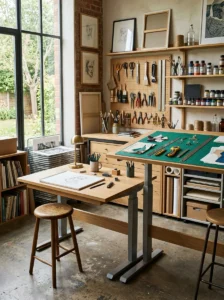
A separate, tidier area for sketching, planning, or reviewing finished work keeps creative planning distinct from the messier production stages, and it’s often the most photogenic, calming part of the room.
13. A Display Wall for Finished or In-Progress Work Reserving wall space to pin up or display current and past projects provides ongoing inspiration and a visual sense of progress, which matters more for creative motivation than most people expect.
Comfort and Sensory Details That Improve Long Sessions
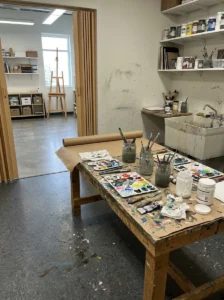
A hobby room used for extended periods needs comfort considerations that purely decorative spaces don’t require, since physical discomfort directly limits how long someone stays productive.
14. A Supportive Chair for Extended Sessions An ergonomic, adjustable chair matters significantly for hobbies involving long stretches of seated detail work, reducing the fatigue that leads to shorter, less productive sessions over time.
15. Sound and Air Quality Considerations
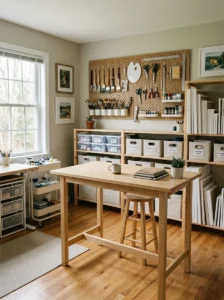
For mediums involving strong fumes or dust, like certain paints, resins, or woodworking, proper ventilation is essential, while a small speaker or sound system can make longer creative sessions feel more enjoyable rather than isolating.
Keeping the Space Organized Long-Term
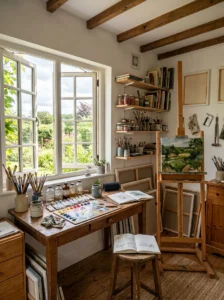
Even a well-designed studio slowly falls into disorganization without habits that support it staying that way over time.
- End each session with a five-minute reset, returning frequently used tools to their designated spots rather than letting clutter accumulate.
- Periodically reassess whether the storage system still matches current projects, since hobbies and mediums often shift over time.
- Avoid overbuying supplies before existing storage is full, which is one of the fastest ways an organized studio slides back into clutter.
Key Takeaways
- Function and workflow should guide a hobby room’s design more than pure aesthetics.
- Lighting quality significantly affects both work accuracy and how long the space stays comfortable to use.
- Storage should be matched to the specific medium, from vertical canvas racks to clear small-supply bins.
- Dividing the room into messy, clean, and display zones keeps different stages of the creative process organized.
- Comfort details like seating and ventilation matter more in a working studio than in decorative-only spaces.
- Small end-of-session habits do more to maintain long-term organization than any storage system alone.
Conclusion
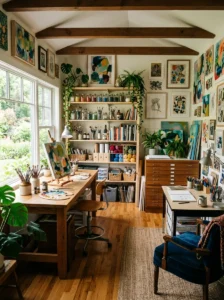
A great art studio or hobby room isn’t defined by how it photographs — it’s defined by how well it supports the actual creative process, session after session. From lighting positioned for real work to storage that matches your specific medium, these fifteen ideas focus on building a space that stays both inspiring and genuinely usable over time. Start with the zones and storage that match how you actually work, and let the aesthetic details follow naturally from there.
Frequently Asked Questions
1. How much space do I need for a functional art studio or hobby room? Even a small spare room or a dedicated corner can work well if the zoning and storage principles are applied thoughtfully. Function depends far more on smart organization than on total square footage.
2. What’s the most important factor in setting up a hobby room, if I can only prioritize one thing? Lighting typically has the biggest impact on both work quality and how comfortable the space feels to use for extended periods, making it the strongest starting point if budget or space is limited.
3. How do I keep a shared hobby room organized if multiple people use it? Clear labeling and designated zones become even more important in shared spaces, along with a simple end-of-session reset habit that everyone follows to keep supplies returned to their correct spots.
4. What kind of flooring works best in a messy art studio? Durable, easy-to-clean flooring like vinyl, sealed concrete, or laminate handles spills and stains far better than carpet, especially in the designated messy work zone where paint or glue spills are more likely.
5. Can a hobby room work well without access to natural light? Yes, though it requires more intentional artificial lighting. Daylight-balanced LED bulbs combined with adjustable task lighting can closely replicate the color accuracy and brightness that natural light typically provid