

A decorated house and a home aren’t the same achievement, and conflating them is a common mistake. Here’s the actual difference, and it has less to do with how a photo looks and more to do with time.
A fully decorated house — coordinated colors, matched furniture, everything purchased and arranged with clear intention — can still feel like a hotel suite rather than a home, and this is a different problem than the photo-versus-lived-experience gap covered elsewhere in this series, which is about sensory and spatial qualities a camera can’t capture. This is a subtler distinction: a house can be genuinely comfortable to live in, well-lit, well-scaled, and pleasant on every sensory dimension, and still feel decorated rather than lived-in, because “decorated” and “home” are actually measuring different things. Decoration is about coordination and intention. Home is about accumulated time and evidence of an actual life.
Decoration Is Purchased; Home Is Accumulated
A fully decorated room can, in principle, be assembled entirely in a single shopping trip or a single coordinated order — matched furniture, a curated palette, everything sourced and arranged at once. This is a genuinely impressive logistical and aesthetic achievement, but it produces a specific quality that’s recognizable precisely because it happened all at once: nothing in the room has a different origin story than anything else, nothing arrived at a different time for a different reason, and the room reflects a single moment of decision-making rather than years of accumulated choices.
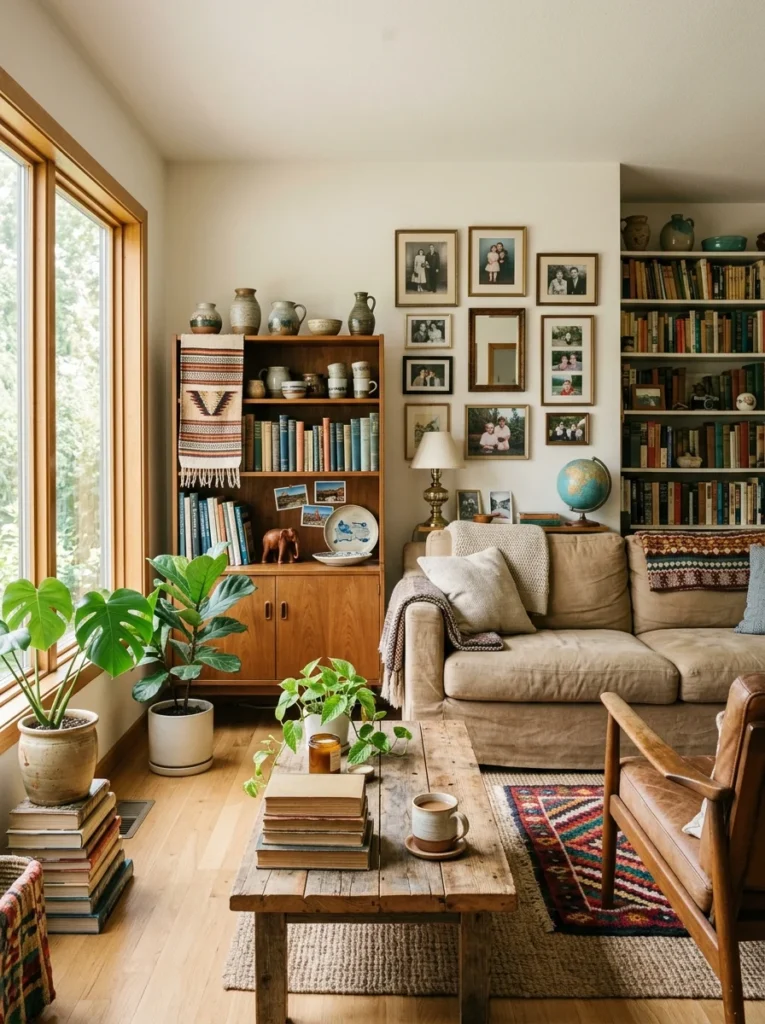
A home, by contrast, is built through a longer, messier process — an object inherited from a grandparent, a piece bought secondhand because it was the only thing that fit the budget at the time, art collected on a trip years before the rest of the room existed, a chair that doesn’t perfectly match anything else but that nobody wants to give up. This accumulated quality can’t be purchased or replicated in a single trip, because its defining feature is precisely that it happened across different moments, for different reasons, reflecting a life actually being lived rather than a room being assembled.
This doesn’t mean newly furnished homes can’t feel like homes — a household that’s just moved in hasn’t had time to accumulate this layered history yet, and that’s a genuinely different situation than a household that’s had years to accumulate it and has instead maintained a purely decorated, coordinated look throughout, resisting the natural accumulation that time and life would otherwise produce.
Imperfection and Evidence of Use Are Signs of Life, Not Failures of Decoration
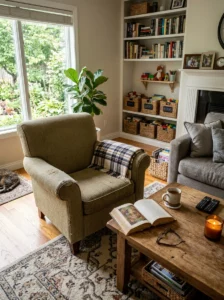
A perfectly decorated room, maintained in exactly its original arranged state indefinitely, tends to read as staged rather than lived-in — precisely because genuine daily life leaves evidence: a slightly worn spot on a favorite chair, a bookshelf with the specific and idiosyncratic collection of a particular household rather than a curated, color-coordinated set, a coffee table that shows the marks of actual daily use rather than remaining in its photographed arrangement indefinitely.
This connects to, but is distinct from, the staged-versus-lived tension covered elsewhere in this series regarding coffee table styling — that discussion was primarily about function versus photography. This is about something slightly different: the visible evidence of routine and repetition, the signs that real, ongoing life happens in a space, which is a different quality than whether the table is currently holding a drink or is arranged for a photo at any given moment.
A household that keeps every surface in a permanently pristine, unchanging, showroom-like state — not because life doesn’t happen there, but because evidence of it is actively minimized or removed — often produces a house that looks decorated precisely because the visible evidence of actual habitation has been edited out, even if the underlying life being lived is completely normal.
Personal Objects With Real History Do Work That Purchased Objects Cannot
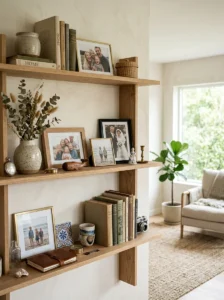
As covered in more detail elsewhere in this series regarding rentals and regarding calm-versus-empty bedrooms, personal objects with genuine history — not simply objects chosen to look personal, but objects that actually carry a specific memory or meaning for the household — contribute something to a space that no amount of well-coordinated purchased decor can replicate. A single meaningful, imperfect object often does more to make a room feel like a home than an entire room of tastefully matched, meaningful-nothing decor.
This is worth distinguishing from decor chosen to look personal or meaningful without actually being so — a curated collection of “vintage-look” objects purchased new specifically to evoke accumulated history is a decoration strategy, not an actual accumulation, and while it can look convincing in a photograph, it doesn’t carry the same quality in person that objects with genuine personal history do, since the household itself knows the difference even if a visitor might not immediately.
Mismatched but Personal Often Reads as More Like Home Than Matched but Generic
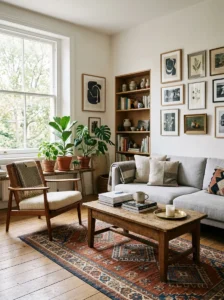
A room where every piece of furniture, every color, and every finish is deliberately coordinated can read as more “decorated” than “home” precisely because that level of coordination is unusual in a space that’s genuinely accumulated over time through normal life circumstances — most households don’t actually replace every piece of furniture at once when tastes shift, which means a genuinely lived-in home usually has some real variation and imperfect coordination as a natural byproduct of its own history.
This isn’t an argument against coordination or good design — the sofa color, accent color, and coordination principles covered throughout this series remain genuinely useful for creating a considered, functional, aesthetically successful home. It’s a specific observation that too much coordination, applied too uniformly and maintained too rigidly, can tip a space toward reading as decorated rather than lived-in, and that some intentional variation — an inherited piece that doesn’t perfectly match, a personally meaningful object chosen for its history rather than its coordination — often serves the “home” quality better than achieving perfect coordination would.
The Household’s Actual Rhythms Should Be Visible, Not Hidden
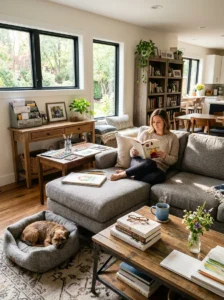
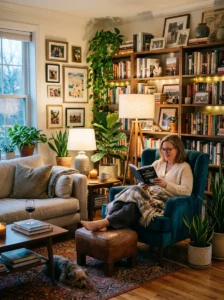
A decorated room often photographs and shows best when it’s cleared of the actual objects a household uses daily — the specific mail organization system, the reading material actually in rotation, the pet’s bed, the visible evidence of whatever hobbies or routines the household actually has. A home that fully hides this evidence, keeping the space in a permanently “ready for photography” state, tends to feel less like an actual home than one where some of this genuine daily evidence remains visible, contained and organized using the principles covered throughout this series, but not eliminated entirely.
This is a matter of degree rather than an argument for visible clutter — the containment and restraint principles covered elsewhere in this series regarding shelving, coffee tables, and general styling remain relevant. The point is that some visible evidence of the household’s actual rhythms and routines, thoughtfully contained rather than either fully hidden or fully scattered, tends to read as more genuinely lived-in than a space where every trace of daily use has been removed.
Decoration and Home Are Not Actually in Conflict
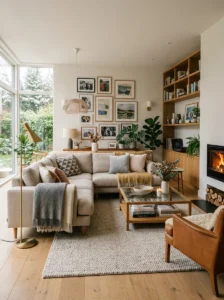
None of this suggests decoration is somehow at odds with a home feeling genuine — a well-decorated home, built with intention and good design principles, and a home that feels warm and lived-in are not mutually exclusive goals, and most successful homes achieve both simultaneously. The distinction matters because it’s possible to over-index entirely on decoration — coordination, matching, a single-moment purchasing approach — at the expense of the accumulated, personal, evidence-of-life qualities that make a space feel like an actual home, and recognizing this trade-off allows a household to deliberately preserve room for both.
A practical approach: apply the coordination and design principles covered throughout this series to the room’s foundation — walls, major furniture, overall palette — while deliberately leaving room within that foundation for accumulated, personal, imperfectly coordinated elements to exist and to be added over time, rather than treating the room as finished and complete the moment the last coordinated purchase arrives.
Key Takeaways
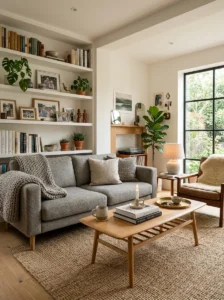
- A decorated room can be assembled in a single coordinated effort, while a home is built through accumulated time, different origin stories, and objects acquired for different reasons across years, not a single shopping trip
- Visible evidence of genuine daily use and routine — rather than a permanently pristine, unchanging arrangement — is part of what distinguishes a lived-in home from a staged, decorated one
- Personal objects with real history do something purchased decor chosen to look personal cannot replicate, even when the purchased version is visually convincing
- Some real variation and imperfect coordination is a natural byproduct of a genuinely accumulated home, and too much uniform coordination can tip a space toward reading as decorated rather than lived-in
- Some visible, thoughtfully contained evidence of a household’s actual rhythms and routines contributes to a home feeling genuinely lived-in, more than a space kept in a permanently photograph-ready state
- Decoration and a genuine sense of home are not in conflict — the goal is applying good design principles to a room’s foundation while deliberately leaving room for accumulated, personal elements to exist within it
Frequently Asked Questions
Does a newly furnished home automatically feel less like a home than an older one? Not automatically — a newly furnished household simply hasn’t had time to accumulate the layered personal history that develops over years, which is a different situation than an older household that’s had that time and has instead maintained a purely decorated, coordinated look throughout. A new home can feel genuinely lived-in quickly if personal, meaningful objects are present from the start, even if the accumulated variety that comes with more time hasn’t developed yet.
Is it bad to have a fully coordinated, matched room? Not inherently — coordination and good design principles remain genuinely useful, and most successful homes combine intentional design with accumulated personal elements rather than choosing one over the other entirely. The concern is specifically when coordination is applied so uniformly and maintained so rigidly that it crowds out any room for the accumulated, imperfect, personal qualities that contribute to a space feeling like an actual home.
Can purchased “vintage-look” or curated decor achieve the same effect as genuinely accumulated objects? It can look convincing in photographs, but it doesn’t carry the same quality in person, since the household itself knows the difference between an object with genuine personal history and one purchased specifically to evoke that appearance. This isn’t necessarily a reason to avoid such decor entirely, but it’s worth recognizing that it serves a different function than actual accumulated, meaningful objects do.
How do I make my home feel more lived-in without making it look cluttered? The containment and restraint principles covered throughout this series — grouping, negative space, deliberate curation — apply here as much as anywhere else. The goal isn’t adding more visible clutter, but allowing some genuine, thoughtfully contained evidence of daily use and personal history to remain visible, rather than removing every trace of it in pursuit of a permanently photograph-ready appearance.
Is this the same as the difference between a home that photographs well and one that feels right in person? Related but distinct — the photo-versus-feel gap covered elsewhere in this series is primarily about sensory and spatial qualities a camera can’t capture, like texture, lighting conditions, and circulation. This distinction is about something different: whether a space reflects accumulated time and genuine personal history, or whether it reflects a single coordinated moment of purchasing and arrangement, regardless of how it photographs or how comfortable it is on a sensory level.