


How to Pick Living Room Paint Colors You’ll Love for Years
Paint is the cheapest way to change a living room, and the easiest to regret. A colour that looked perfect on a tiny swatch can turn pink, grey, or oddly cold once it covers four walls. The good news is that most paint regrets come from skipping the same few steps, not from bad taste. This guide to living room paint colors walks through those steps in order, from testing swatches to choosing a finish, so the colour you pick in the shop is still the colour you love three years later. Take your time with the testing stage. It is boring, and it is the whole secret.
1. Start With Paint Swatches, Not a Finished Colour
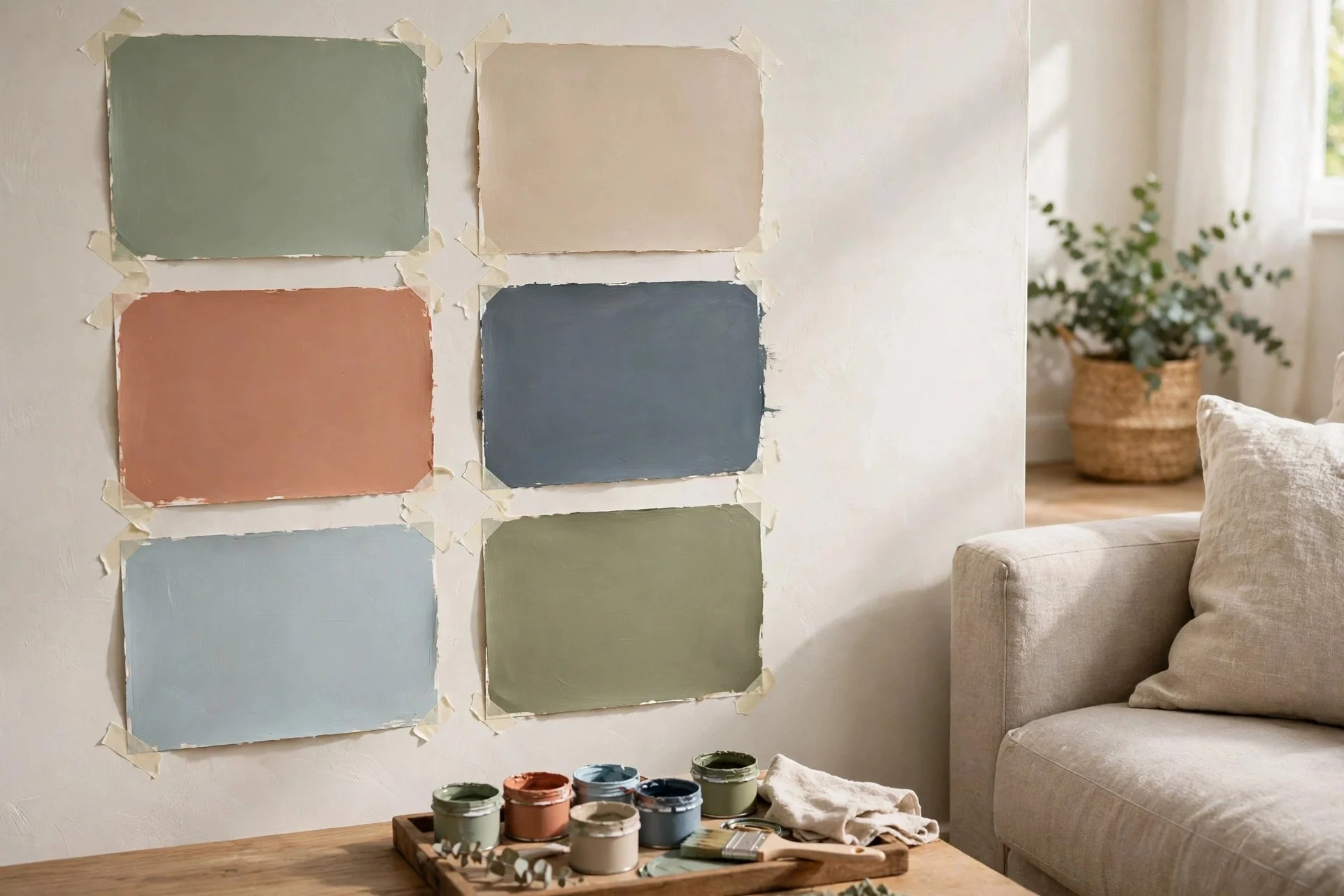
Do not choose a living room colour from a phone screen or a single small chip. Screens shift colour, and a chip is too small to judge. Instead, shortlist three or four colours you like, buy sample pots, and paint them on the wall or on large boards. Live with those samples for a few days before you decide. Look at them in the morning, at midday, and in the evening, with the lamps on and off. A colour that only looks good at noon is not a colour for a room you use at night. Narrow the list to one, then buy a second sample of that colour to confirm it, because two samples from different batches can still surprise you.
2. Understand Your Natural Light Before You Choose
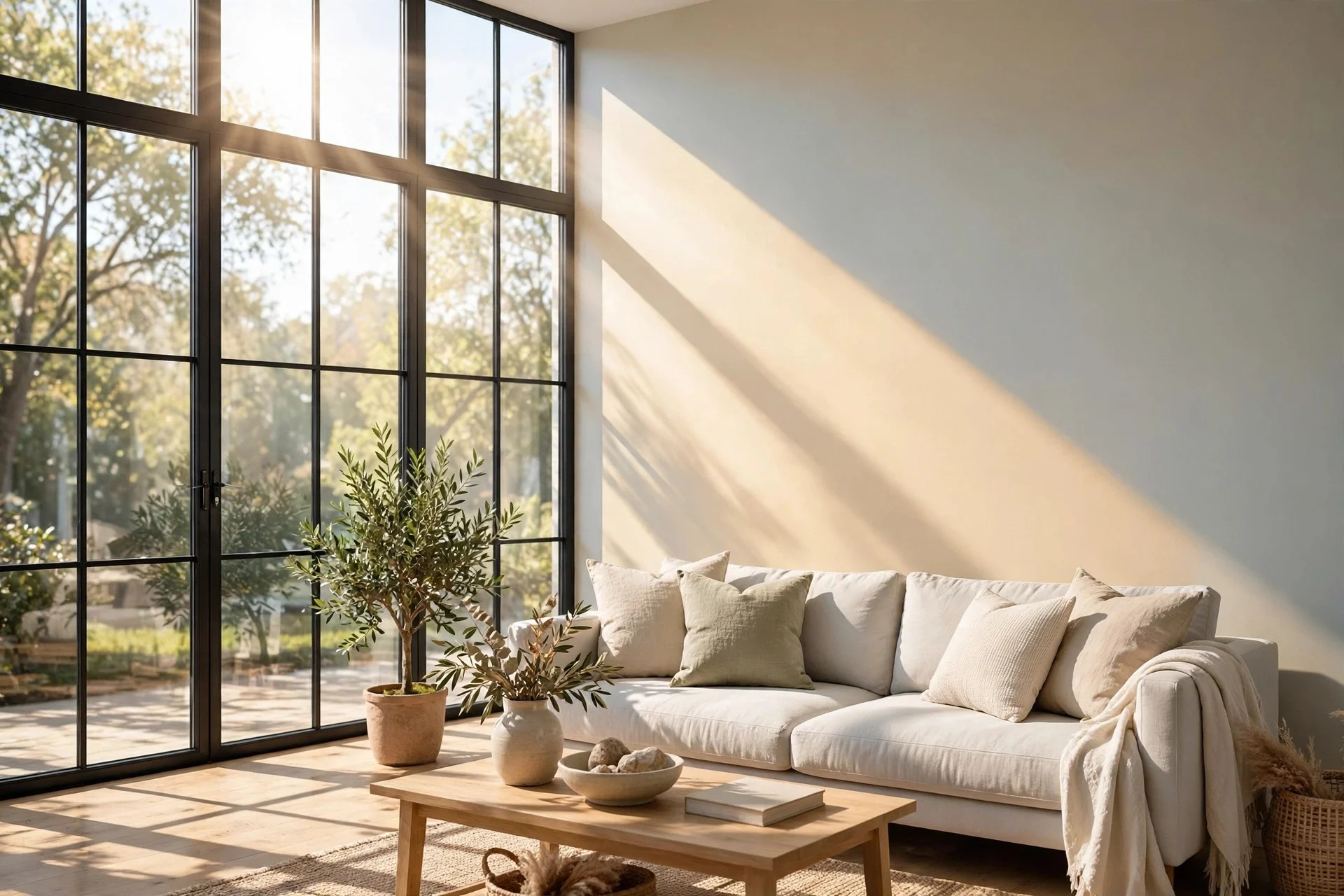
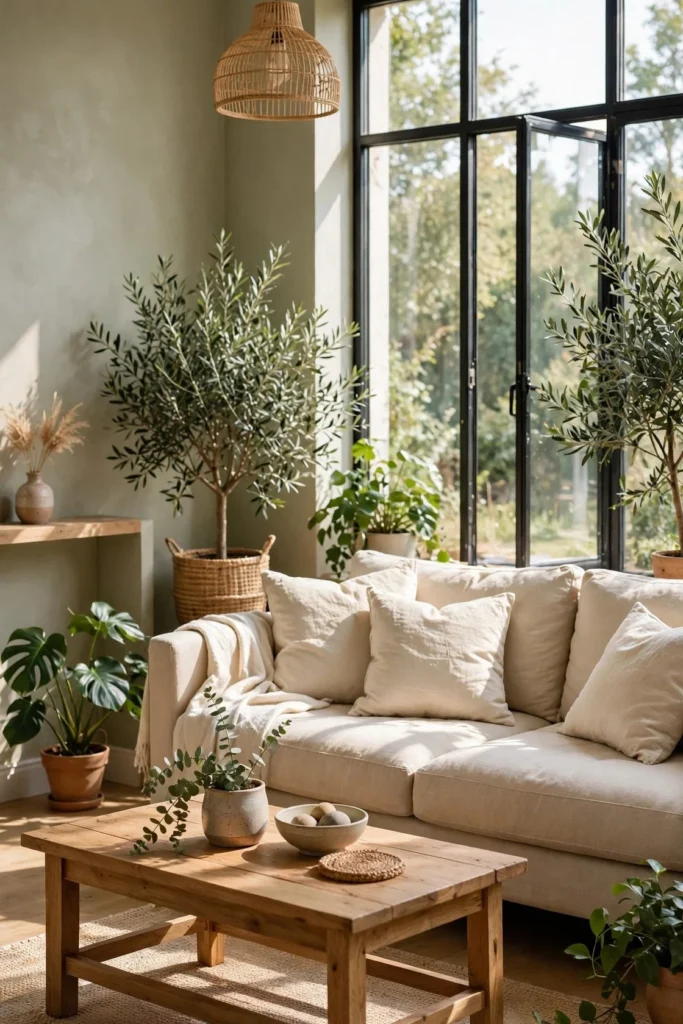
Light changes paint more than any other factor. A north-facing room gets cooler, greyer light, which can make a pale grey look icy and a warm white look dingy. A south-facing room gets warm, golden light, which can make a yellow-based colour look stronger than you expected. East-facing rooms are bright in the morning and cooler later, while west-facing rooms warm up dramatically in the afternoon. Stand in your room at different times of day and note which wall gets direct sun and which stays in shadow. Test your samples on both a sunlit wall and a shadowed wall, because a colour has to work in both, not just in the pretty light.
3. Learn the Undertone, Not Just the Colour Name
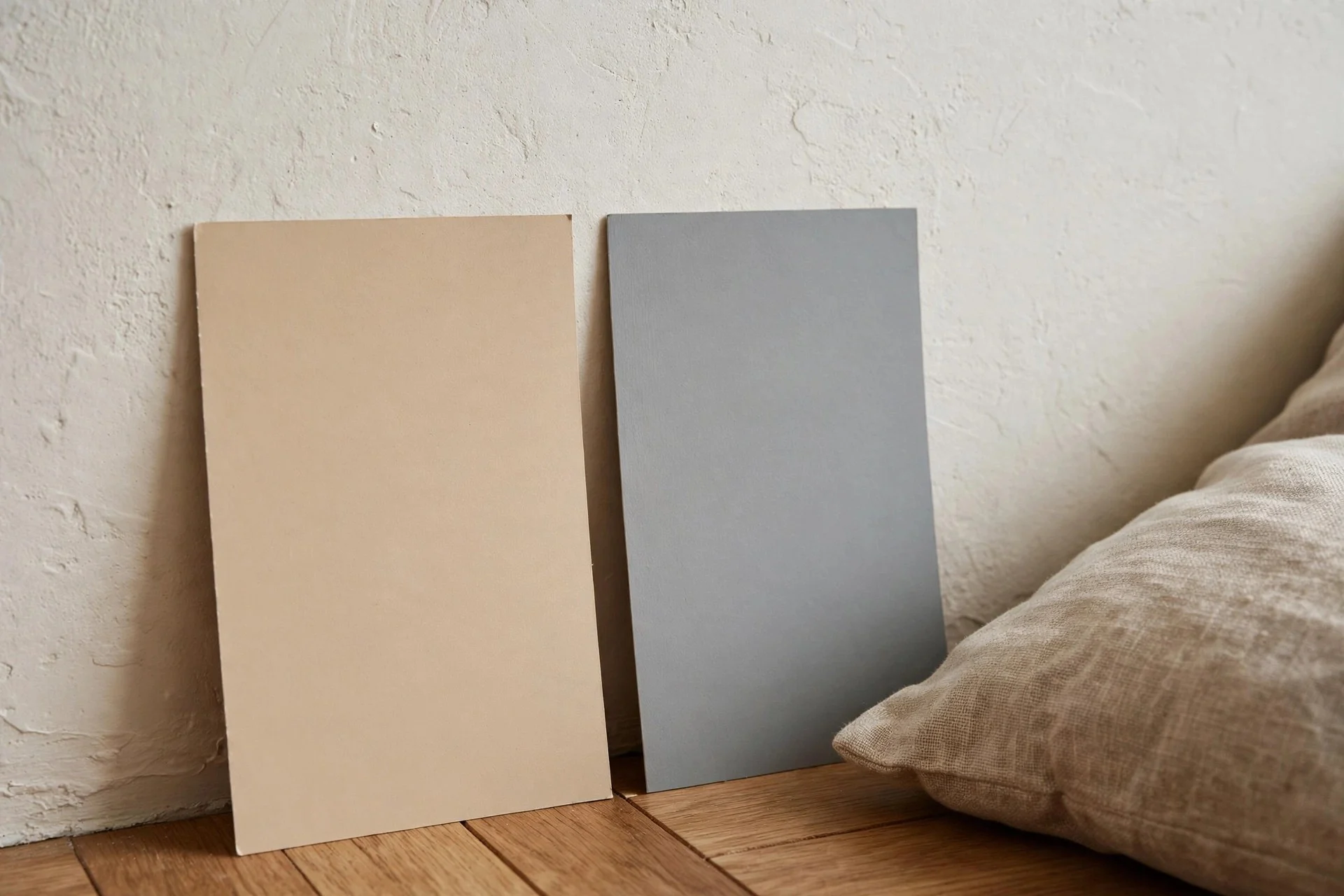
Every neutral has an undertone hiding underneath it: pink, yellow, green, blue, or grey. That undertone is what makes a “warm white” look creamy in one house and peachy in another. To find it, hold the sample against a true white sheet of paper, and compare it with two or three similar colours side by side. The undertone becomes obvious in comparison, even when it is invisible alone. Then check that undertone against your fixed elements, which is the next step. If your sofa has a pink undertone and your paint has a yellow one, they will argue quietly every day, even if you cannot name why the room feels off.
4. Start From What You Cannot Change
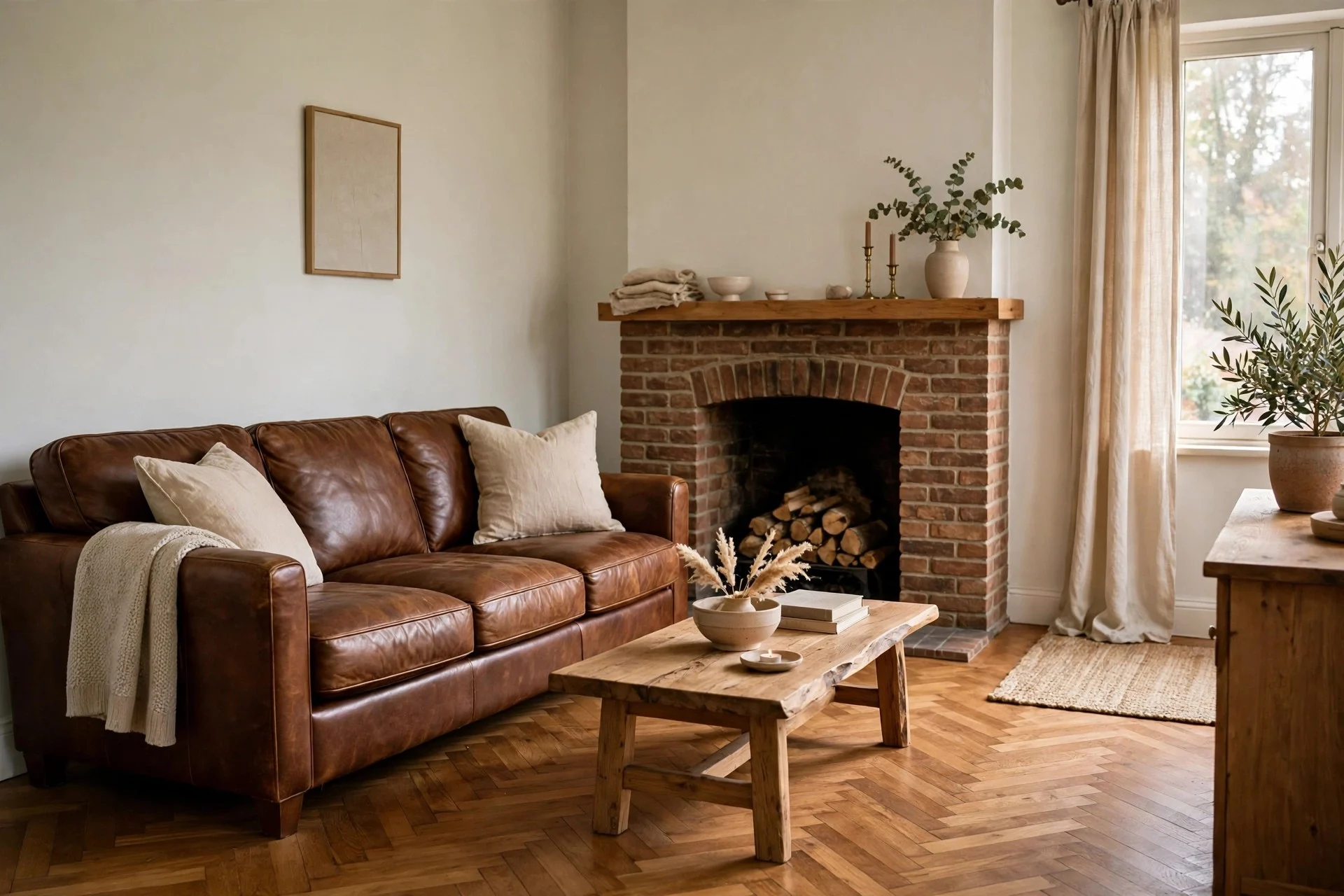
Your paint colour has to get along with the things staying in the room: the sofa, the flooring, the fireplace, the woodwork, and any large rug. List those fixed elements and their undertones before you shop. A warm wooden floor and a brown leather sofa usually pair better with warm whites, soft greiges, and muted greens. A grey sofa and cool stone often suit cooler neutrals. If a fixed element clashes with every colour you love, that is useful information, not a reason to ignore it. It may mean you need a different shade in the same family, or a new rug to bridge the gap, rather than a colour that fights the biggest pieces in the room.
5. Test Large Samples, and Move Them Around the Room
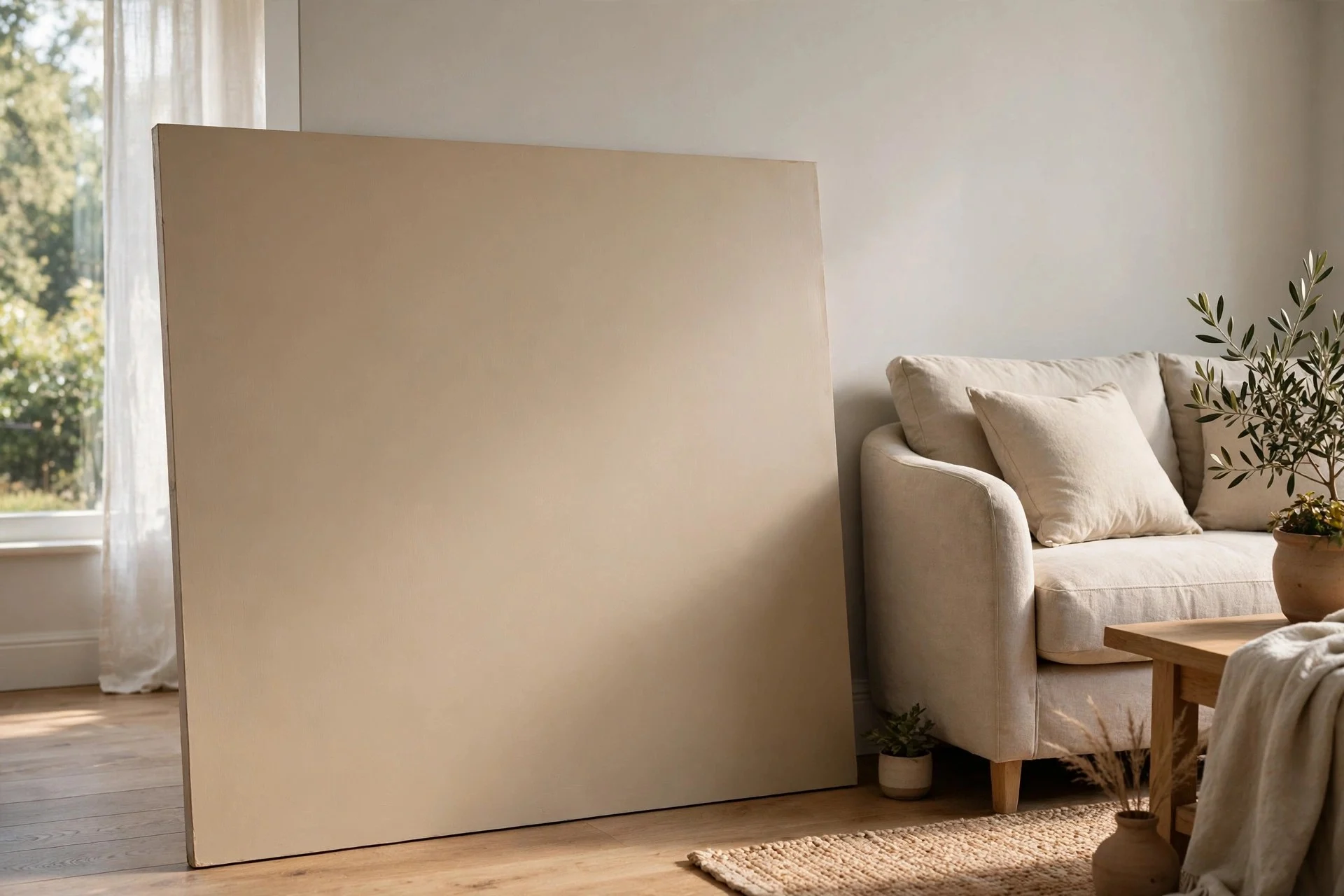
Small swatches lie. Paint your samples on large boards, at least A3 size, or paint a generous patch directly on the wall, and move the boards around the room. Lean a board against the sofa, hold it near the curtains, and place it beside the rug. Colours look different next to different materials, and a board you can move shows you those combinations without committing to a wall. Paint two coats on the board, because one thin coat looks lighter and patchier than the finished wall will. If you can, prime the board first in the same white you will use for the ceiling, so the sample is not tinted by the board itself.
6. Check the Colour at Different Times of Day
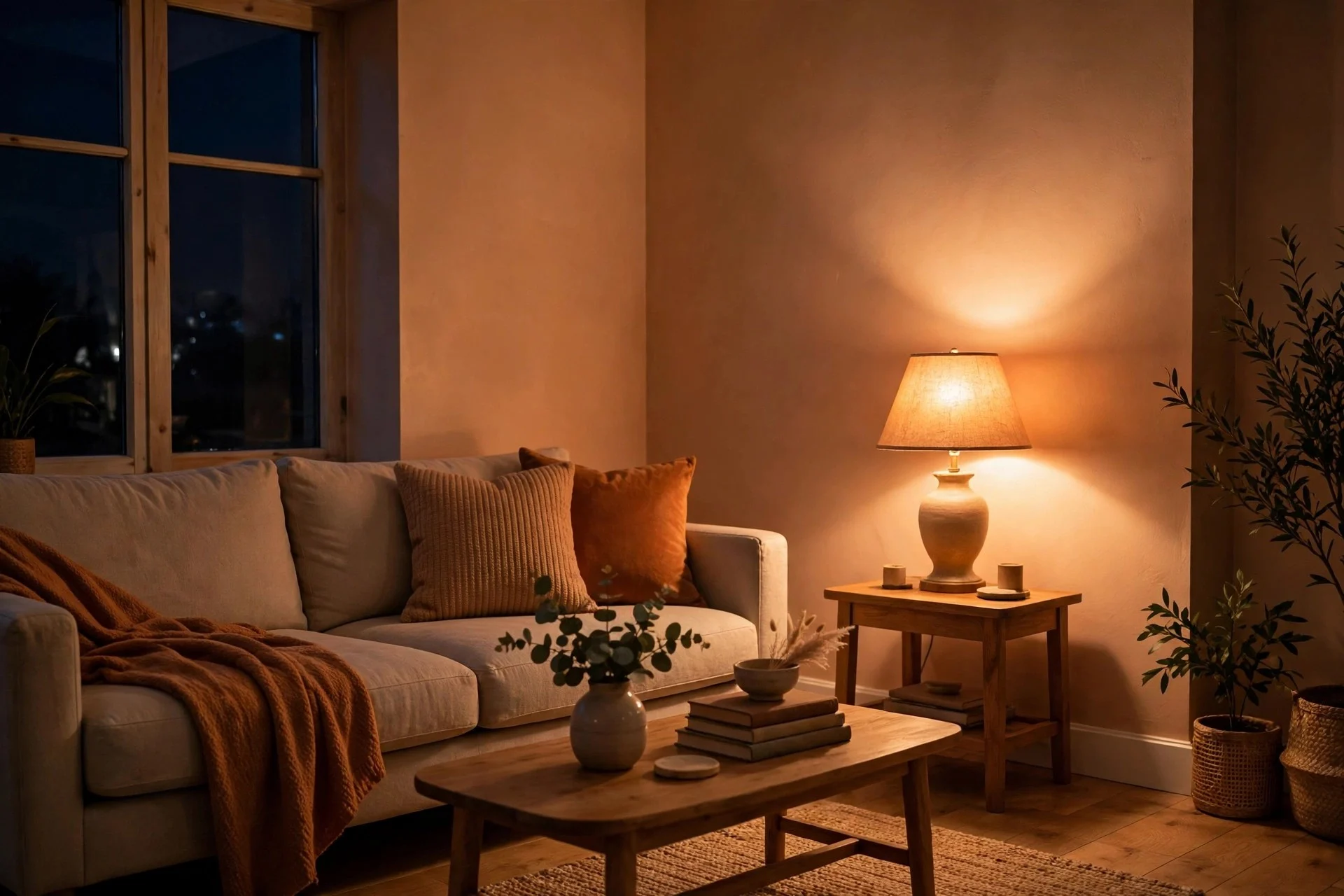
A paint colour is not one colour. It is a different colour at 9am, at 3pm, and at 9pm under lamps. That is why a weekend of testing beats a weekend of painting and repainting. Check your samples on a bright day and a dull day, with curtains open and closed, and with your usual lamps on in the evening. Warm bulbs around 2700K will warm a colour noticeably, while daylight bulbs keep it cooler. If a colour looks good in all those lights, it is a keeper. If it only looks good in one light, keep looking. I once loved a greige at midday and hated it by lamplight, and I was glad I found out before the whole room was painted.
7. Choose the Right Finish for Living Room Walls
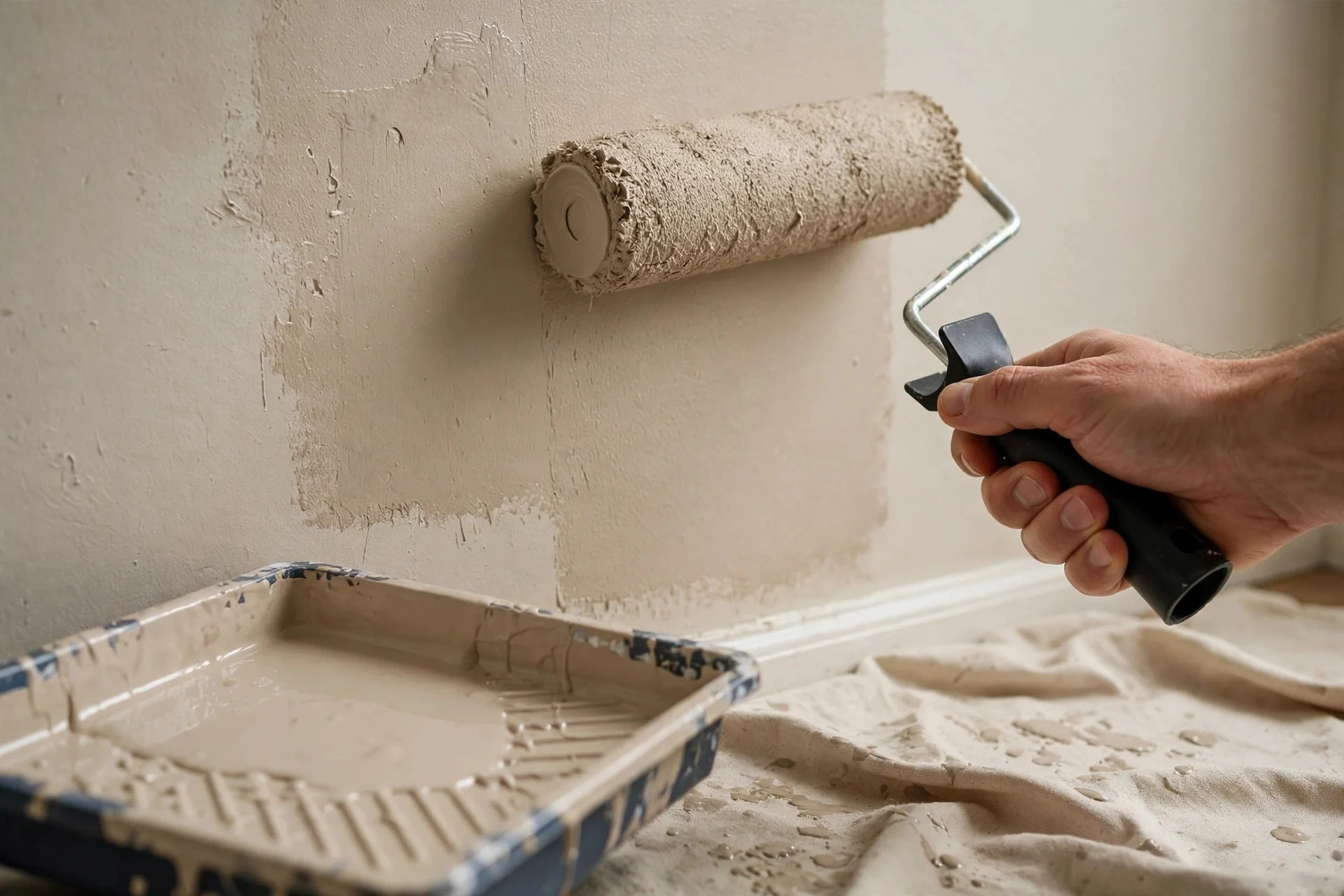
Finish changes how a colour looks and how it survives daily life. Flat or matte finishes hide wall imperfections and look soft, but they are harder to clean. Eggshell has a slight sheen, wipes more easily, and is the usual safe choice for living room walls. Satin is more durable and a little shinier, which suits busy family rooms but shows bumps more clearly. Keep semi-gloss for trim, doors, and woodwork, not for large walls, where it can look harsh. For a clear comparison of sheens, see Benjamin Moore’s sheen guide. Choose the finish after the colour, not before, and test the finish too, because sheen changes the colour you see.
8. Decide: All Walls, or One Accent Wall?
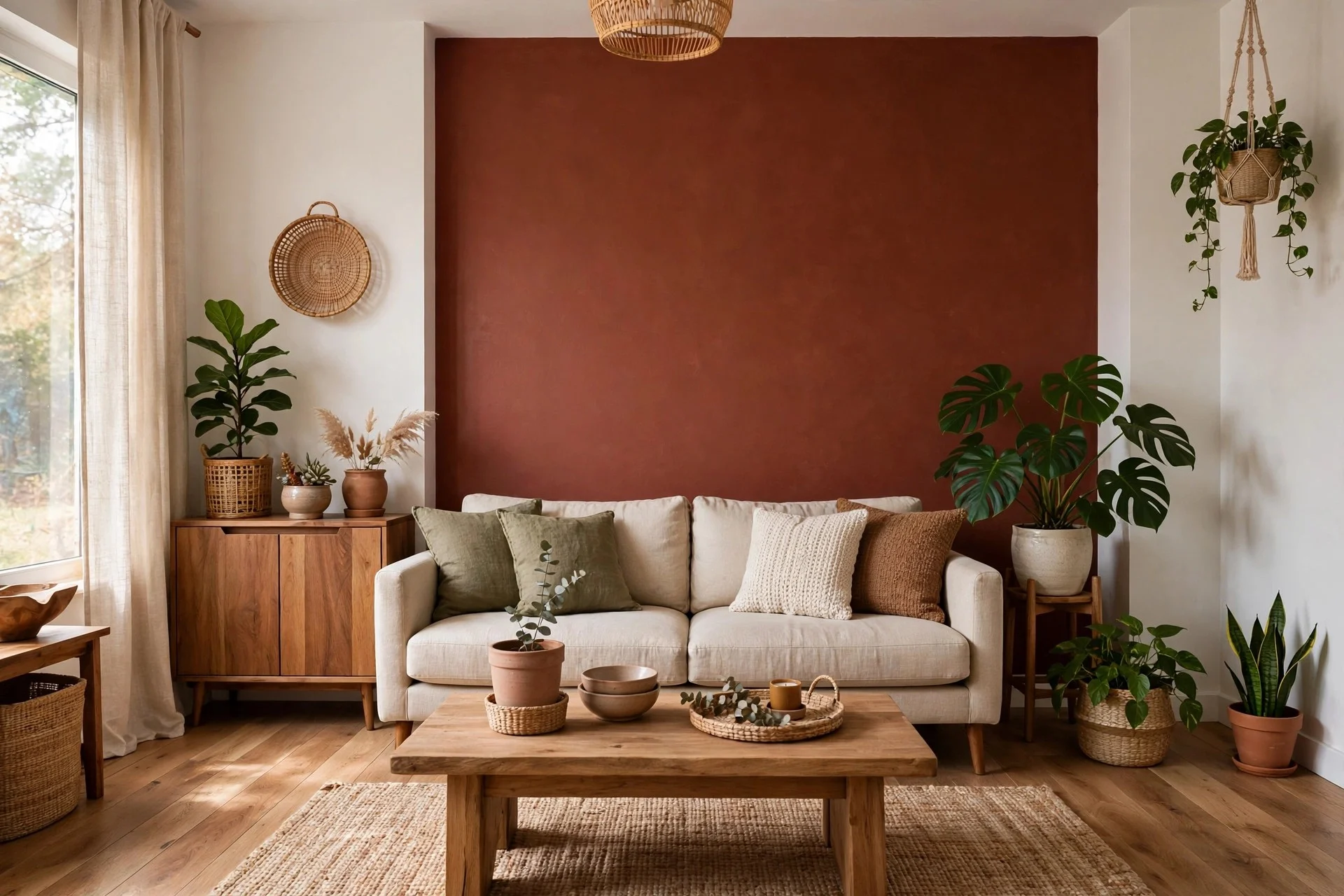
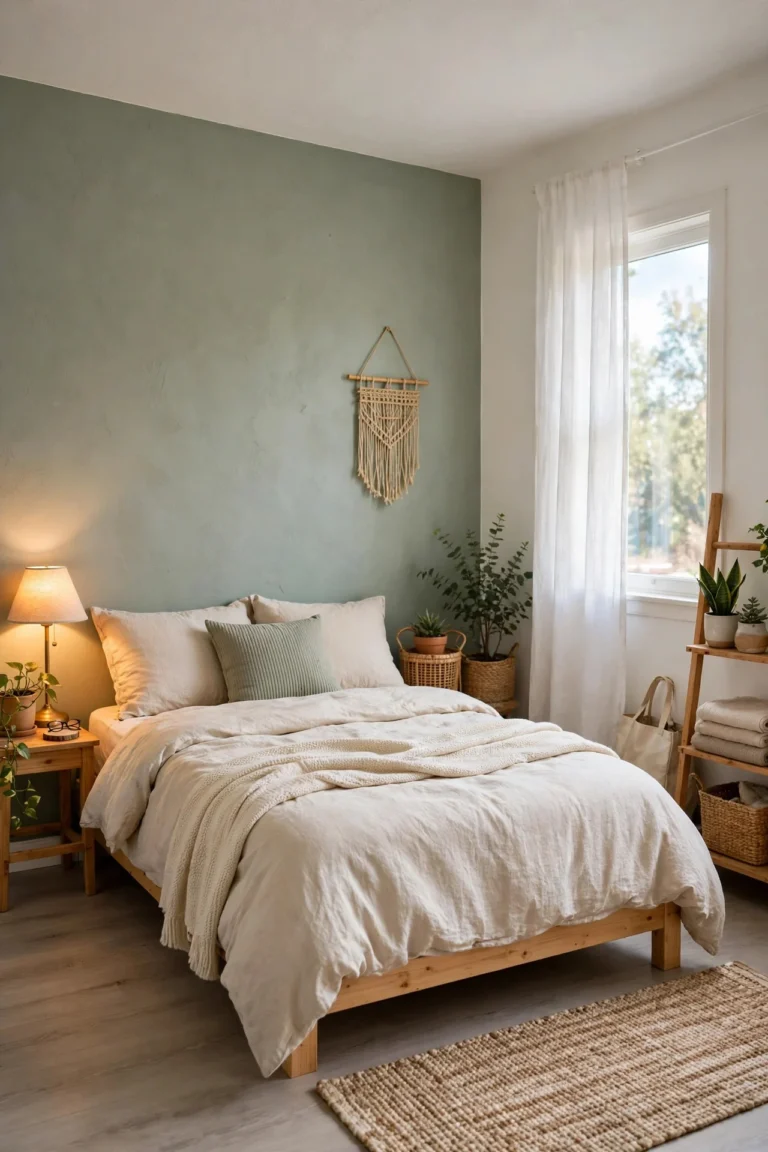
An accent wall is a good way to try a bolder colour without committing the whole room to it. It works best on the wall you naturally look at, often behind the sofa or the fireplace, and in a colour that already appears somewhere else in the room, in a cushion, a rug, or art. Paint the other walls a calm neutral that shares the accent colour’s undertone, so the room still feels connected. If you paint every wall a strong colour, make sure the room has enough light and enough plain furniture to balance it, or the colour will dominate everything else. An accent wall is also easier to repaint if you tire of it, which is a practical advantage, not a failure.
9. Living Room Paint Colors for Small Rooms: Light Colours, and One Clever Trick
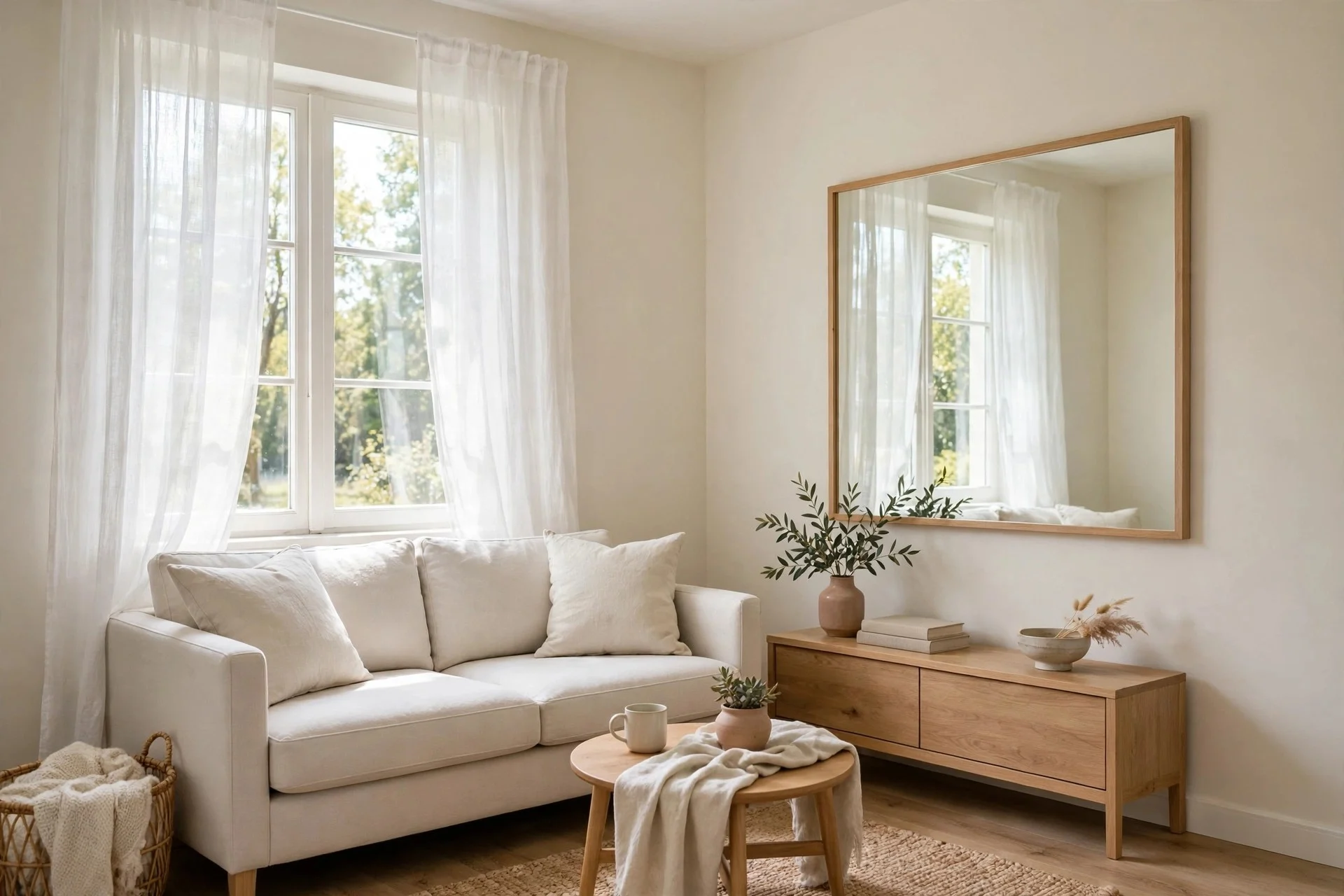
Light colours do help small rooms feel larger, but the trick is not simply “paint it white.” Choose a warm white, pale greige, or soft sage with a light reflectance that bounces light around, and keep the ceiling and trim close to the wall colour so the room reads as one continuous space. A mirror opposite a window doubles the light, and sheer curtains keep daylight coming in. Avoid a stark, cool white in a small, north-facing room, because it can feel clinical rather than spacious. For layout ideas that make a small room feel larger, see our guide on how to arrange a small living room for maximum space.
10. Large Rooms: Darker Colours Can Make Them Cosier
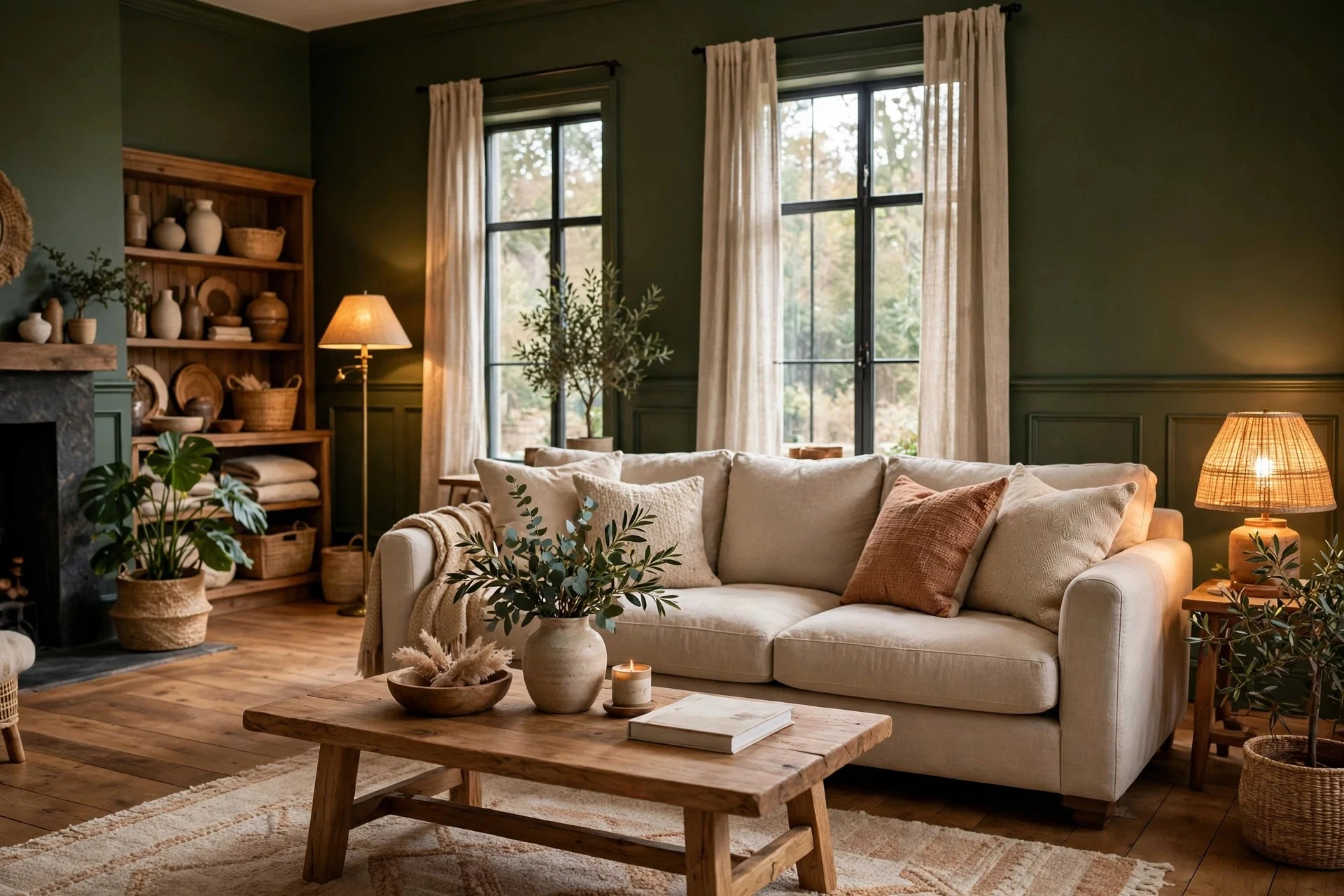
Large living rooms have the opposite problem: they can feel empty rather than cosy. A deeper colour, such as a warm green, a muted navy, or a rich terracotta, pulls the walls in visually and makes the seating area feel like a place, not a hall. Balance a dark wall with lighter furniture, warm lamps, and a rug that grounds the seating group, so the room feels intimate rather than gloomy. You do not need to paint every wall dark. Painting the seating wall and the wall opposite in the deeper colour, with lighter walls elsewhere, often gives you the cosiness without losing light. Test dark colours the same way as light ones, because they change even more between day and evening.
11. Pair the Wall Colour With Ceiling and Trim
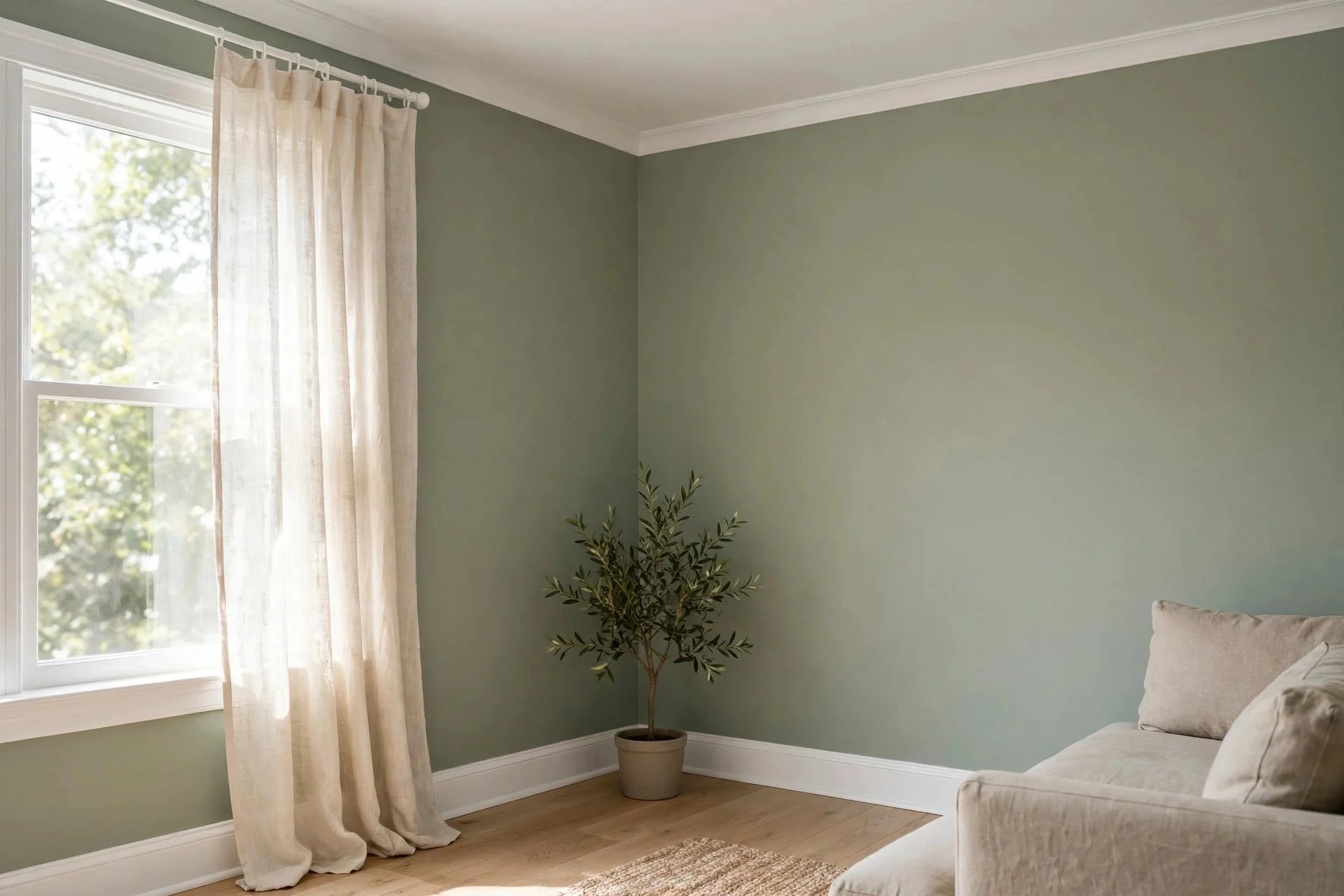
Ceiling and trim are not afterthoughts. A crisp white trim against a soft wall colour gives the room definition, while trim painted the same colour as the walls, in a slightly higher sheen, gives a softer, more modern look. For ceilings, a flat white is the usual choice, but a very pale tint of the wall colour can make a low ceiling feel higher by removing a hard line. If your woodwork is stained wood rather than painted, choose a wall colour that flatters that wood tone, warm whites for warm woods, cooler neutrals for grey-washed woods. Paint a test strip of trim colour next to your wall sample before you commit, because trim covers less area but is seen at close range every day.
12. Avoid the Common Mistakes, Then Commit
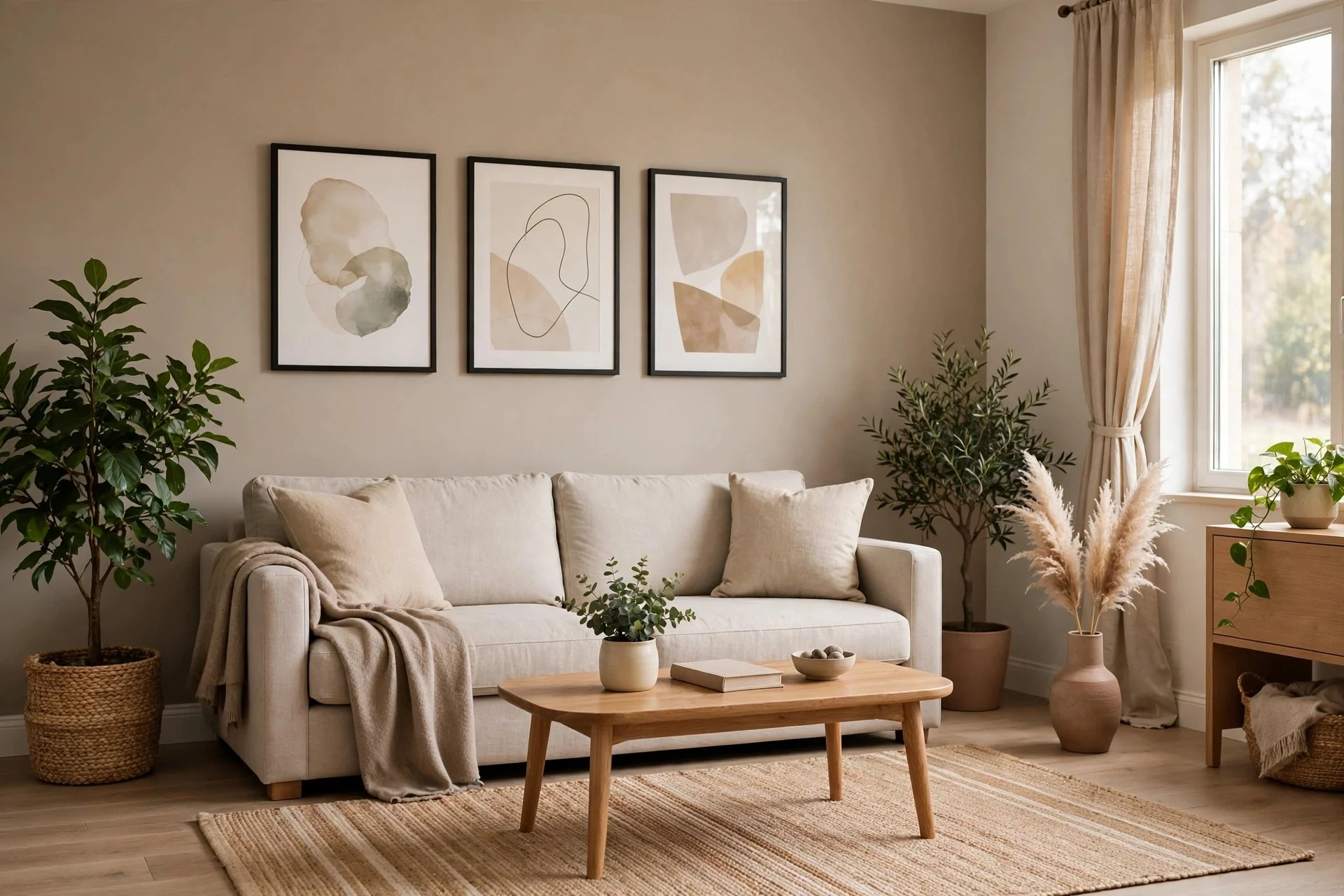
Most paint regrets fall into a few patterns, and all of them are avoidable. Choosing from a tiny chip, painting without testing in evening light, ignoring the sofa’s undertone, and picking a finish for shine rather than for cleaning are the big four. Another is buying all the paint before testing, which locks you into a colour you have not lived with. Once you have tested, checked the light, matched the undertone, and chosen a finish, stop second-guessing and commit. A colour that passes all those tests is unlikely to disappoint, and even if your taste changes in a few years, a room you prepared properly is easy to repaint. For rug and furniture sizing that pairs with a new wall colour, see our guide on how to choose the right rug size for your living room, and for budget-friendly styling after painting, see our cozy living room ideas on a budget.
Frequently Asked Questions
How many paint samples should I test?
Three or four is enough. More than that makes comparison harder, not easier. Narrow to one, then test that one again on a larger board before you buy the full paint.
What is the safest living room paint colour?
A warm white or a soft greige with an undertone that matches your sofa and flooring is the safest starting point. It works in most lights and pairs with almost any furniture, which is why it lasts for years.
Should living room walls be matte or eggshell?
Eggshell is usually the best balance for living rooms: it hides minor imperfections better than satin, and it wipes clean more easily than flat paint. Use matte only in low-traffic rooms with smooth walls.
How do I know if a colour is too dark?
Test it on the darkest wall in the room, in evening light. If the room still feels welcoming with lamps on, it is not too dark. If it feels closed in, try the same colour two shades lighter.
Can I paint just one wall a different colour?
Yes. An accent wall works well when its colour already appears in the room, in a rug, cushion, or artwork, and when the other walls share its undertone. It is also the easiest wall to repaint later.
Pick the colour that survives your light, your sofa, and your evening lamps, not just the colour that looked best in the shop. Test it large, test it late, and test it next to the things staying in the room. Do that, and the paint you choose now is paint you will still be happy with when the room has changed around it.