


19 Farmhouse Living Room Ideas on Any Budget
A farmhouse living room does not have to come from a big renovation or a showroom sofa. Mine started with a secondhand coffee table, a cream throw I already owned, and one wall I painted on a Saturday. The trick with a farmhouse living room is texture over expense: wood grain, woven baskets, soft linen, and a few pieces that look gathered over time rather than bought in one afternoon.
Farmhouse Living Room Ideas for Every Budget
Work through this list in any order. Some ideas cost nothing but an afternoon of rearranging. Others need a tin of paint or a thrift-store trip.
1. Add a Shiplap Accent Wall, Even a Peel-and-Stick One
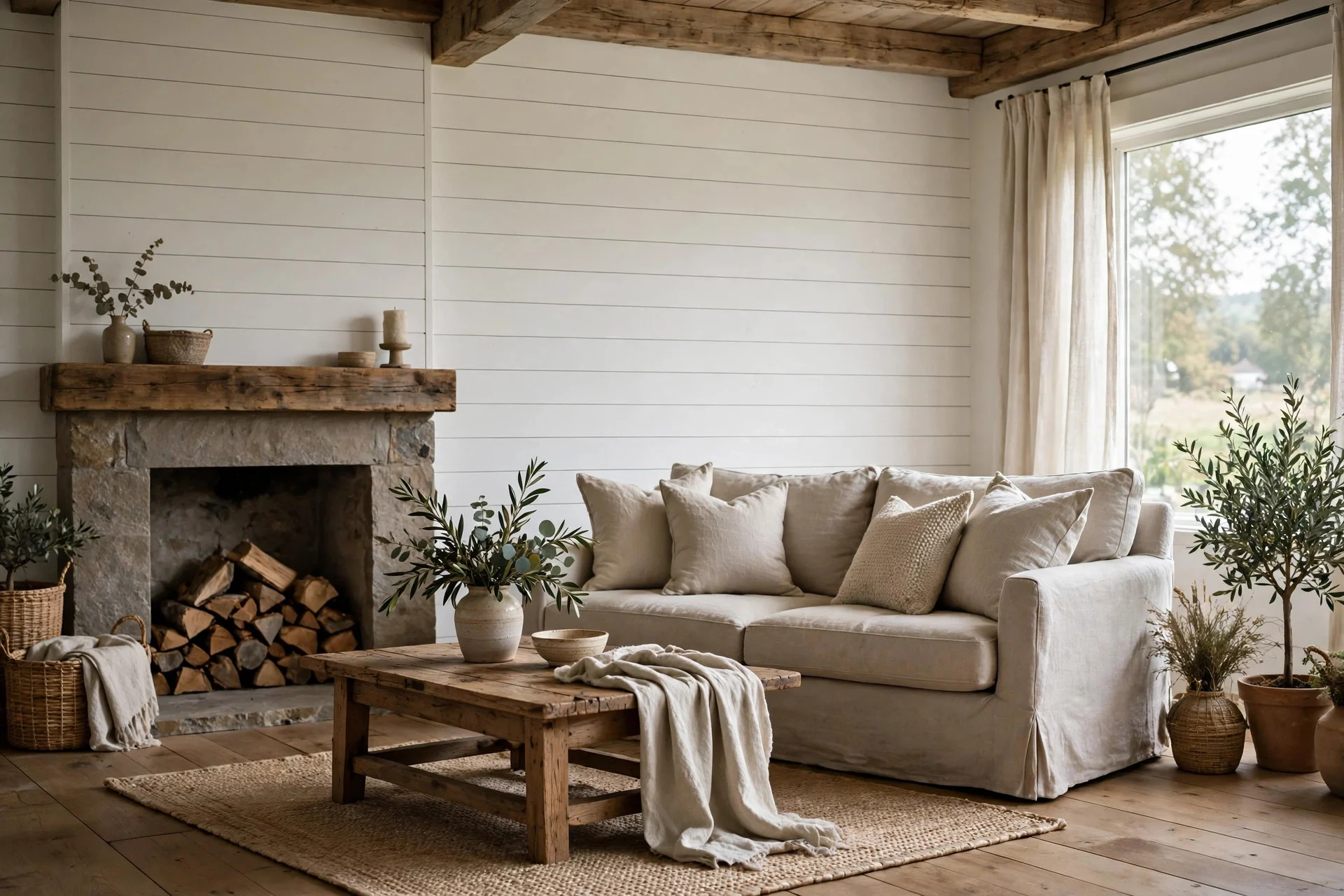
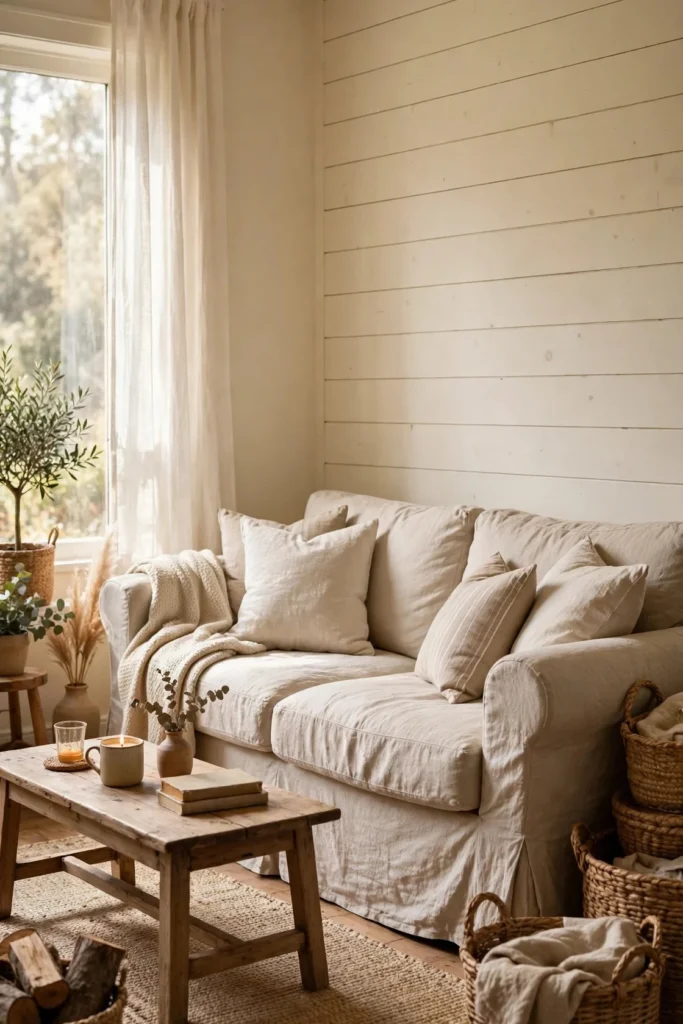
Shiplap is the fastest way to give a plain room farmhouse bones. If you own your home, real boards nailed to one wall work well, and you can paint them the same warm white as the trim so the wall reads as architecture, not decoration. Renters can get a similar effect with peel-and-stick planks, which come off far more cleanly than most people expect. Start with the wall behind the sofa, not every wall in the room. One strong wall is enough, and it keeps the cost down. For a step-by-step on real boards, see This Old House’s shiplap guide.
2. Slipcover a Tired Sofa Instead of Replacing It
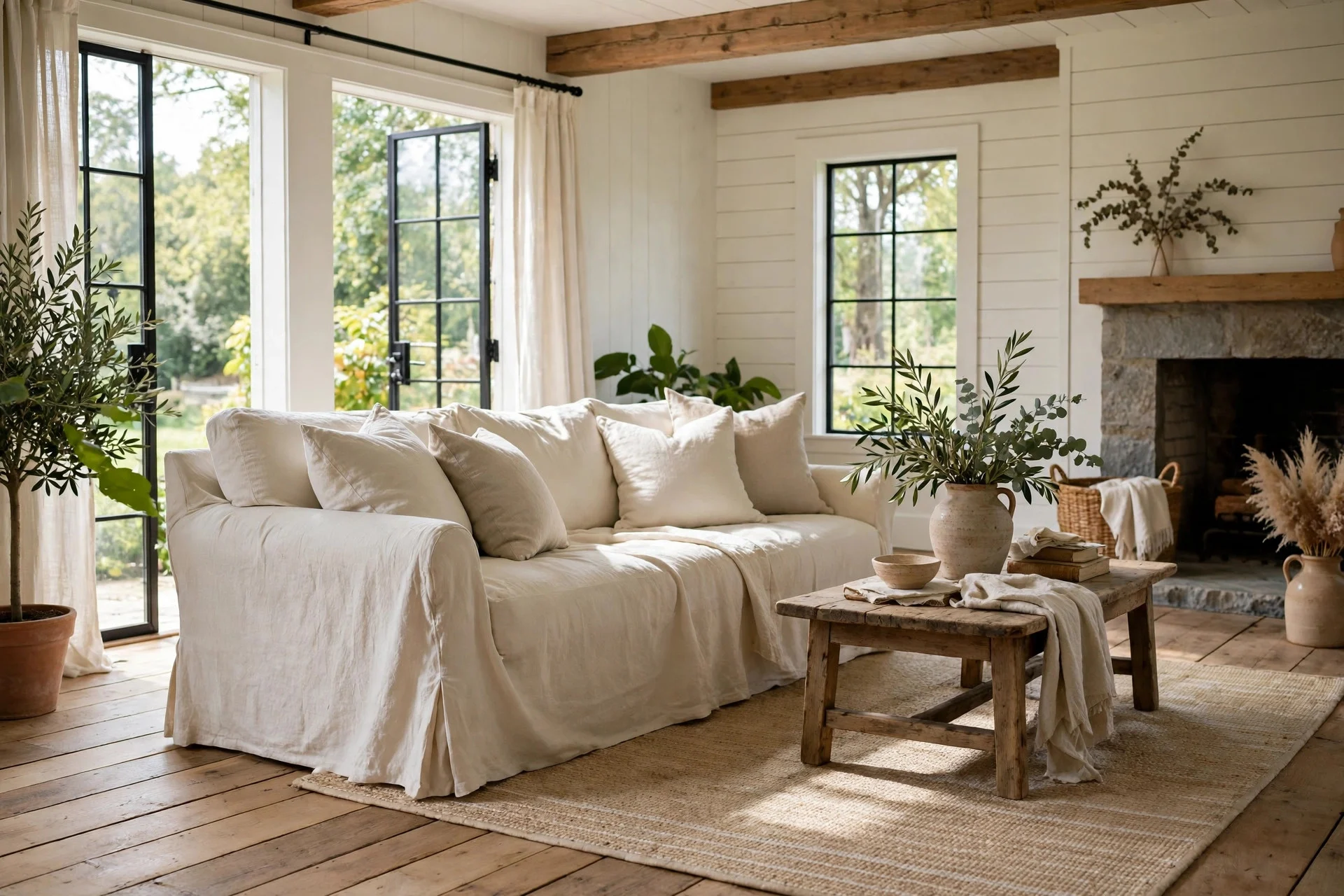
A sofa in the wrong color can drag a whole room down, but a new one costs a small fortune. A loose linen slipcover changes the story for a fraction of that price. Choose a washable cream, oatmeal, or soft sage cover, and tuck it in properly around the cushions so it sits like upholstery rather than a sheet thrown over the top. Wash it before the first use so it softens up, and keep a spare cushion cover handy for spills. I did this with a sofa I was ready to give away, and it stayed in the room for three more years.
3. Rescue a Wooden Coffee Table From a Thrift Store
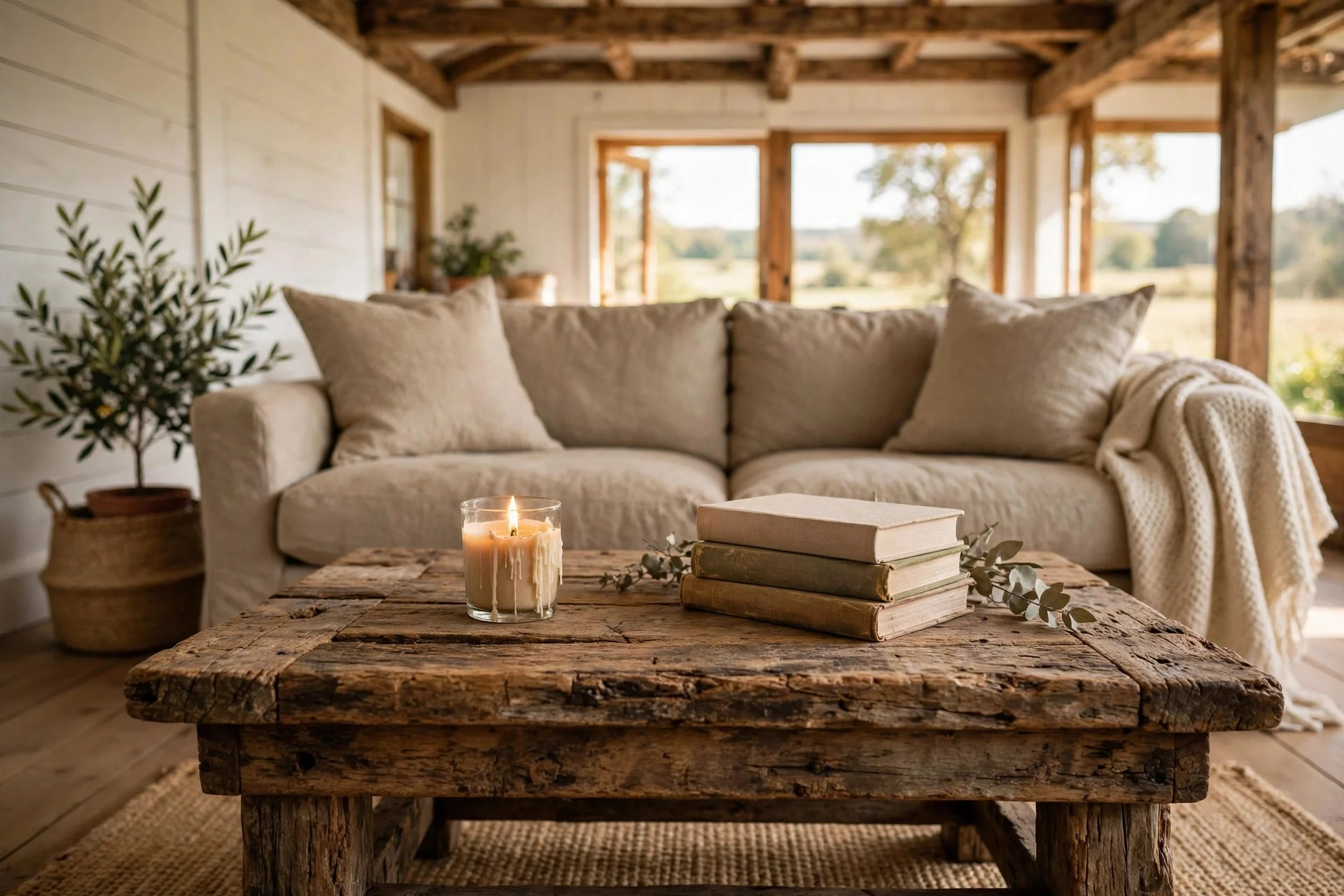
Thrift stores are full of solid wood coffee tables hiding under dark varnish and scratches. Look for weight and stable legs first, and ignore the finish, because that is the part you can change. Sand the top lightly, fill any deep dents, and finish it with a matte wax or a light stain that lets the grain show. A chunky farmhouse table grounds the seating area in a way a glass or metal table rarely does. Style it simply: a stack of books, one candle, and a small plant.
4. Layer Throws and Linen Pillows Until the Sofa Looks Lived In
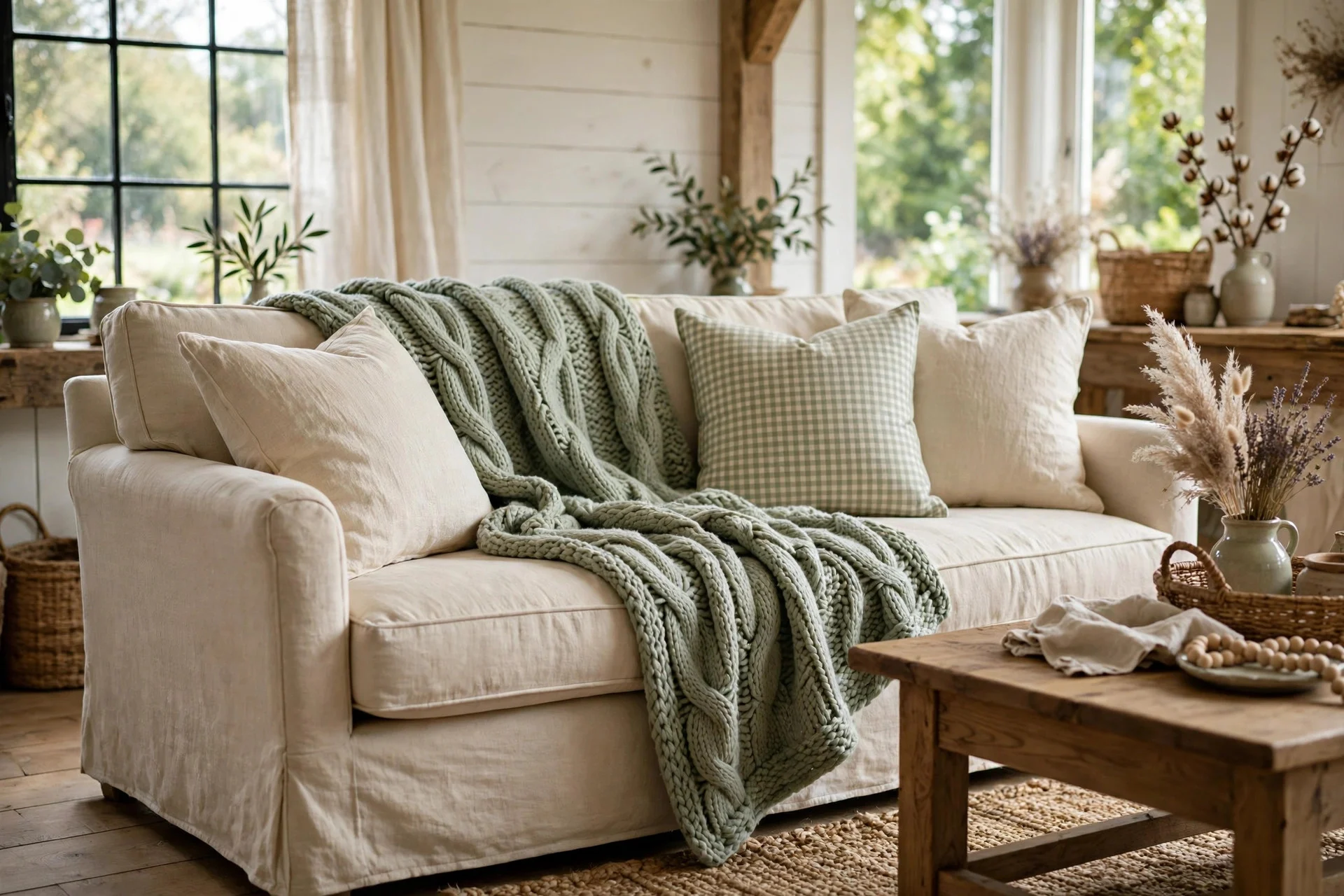
Farmhouse comfort is mostly about layers. Start with two linen pillow covers in a plain neutral, then add one patterned cushion, such as a subtle stripe or gingham, so the sofa does not look like a catalogue set. Drape a chunky knit or waffle throw over one arm, not folded in a perfect square, and leave it where someone can actually reach it. The mix of textures does the work: smooth linen, rough knit, and a bit of cotton. This is also one of the cheapest ways to change the room with the seasons.
5. Hide the Clutter in Big Woven Baskets
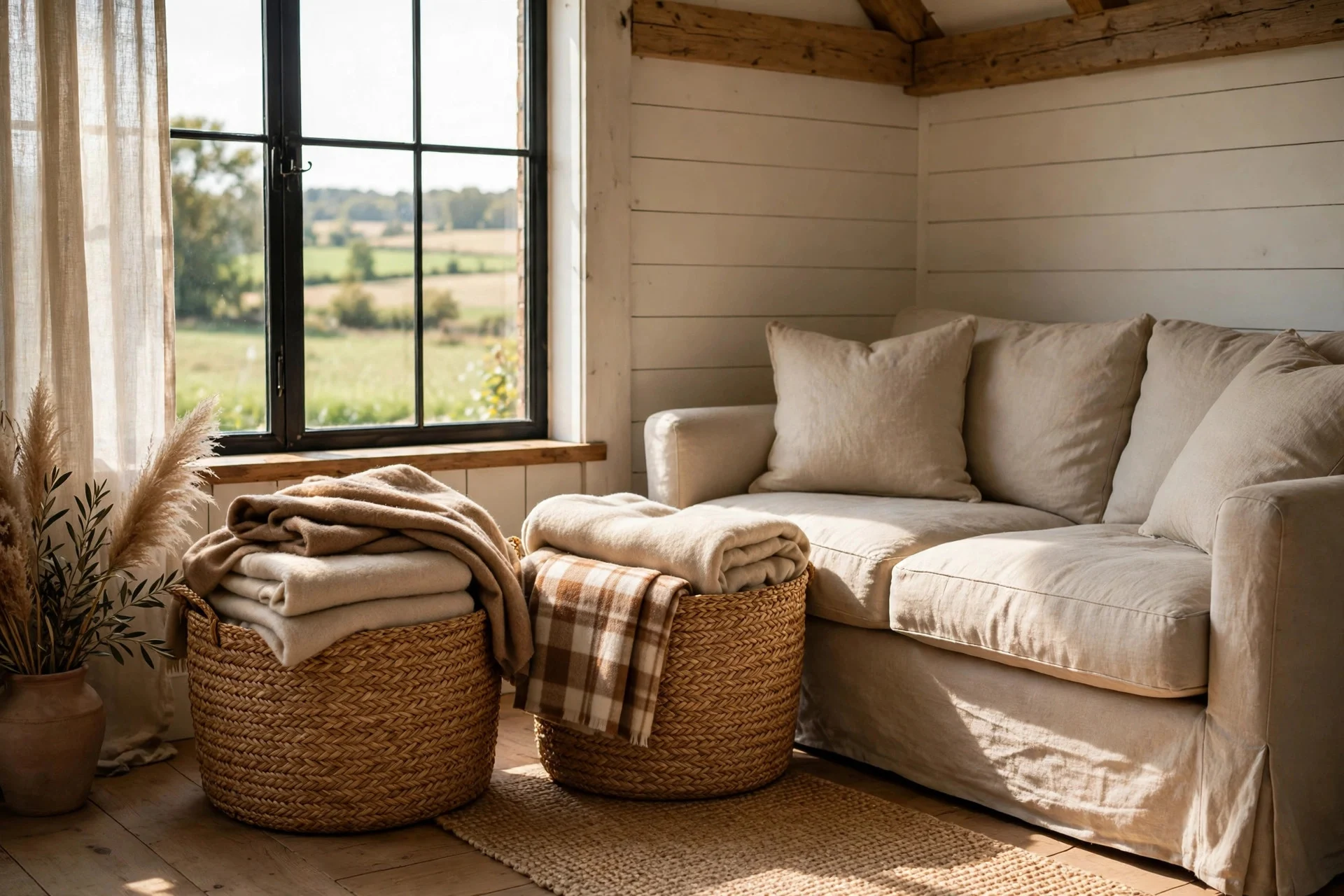
Every farmhouse room I like has a basket or two doing quiet work. A large seagrass basket beside the sofa swallows throws, chargers, and the magazines that never quite make it to recycling. A second, smaller basket can hold kids’ toys or dog toys, so tidying takes about a minute before guests arrive. If you want more hidden storage ideas that suit a small room, see our guide to small living room storage ideas that hide clutter. The baskets themselves become part of the decor, which is why they beat plastic boxes every time.
6. Put Up Open Wood Shelves With Everyday Pieces
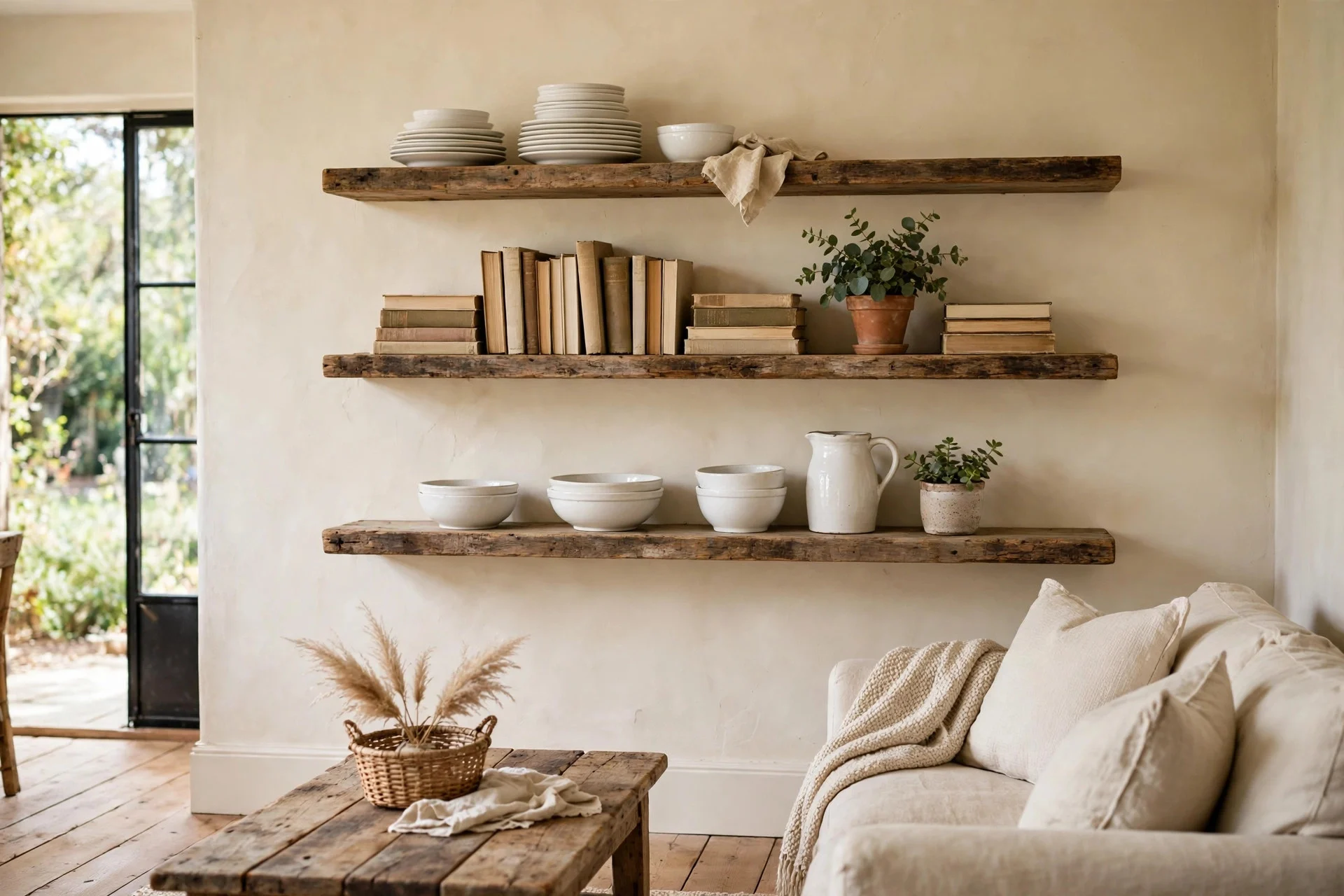
Open shelves suit farmhouse style because they show off ordinary, useful things. Two reclaimed wood shelves on chunky brackets can hold white crockery, a stack of books, and a trailing plant, and the room instantly feels more personal. Keep the shelves shallow, about 20 centimetres deep, so they hold plenty without looming over anyone below. Leave some empty space on each shelf, since a shelf packed edge to edge reads as clutter rather than display. Fix the brackets into studs, not just plasterboard, especially if you plan to put crockery up there.
7. Swap Harsh Light for Warm Lanterns and Lamps
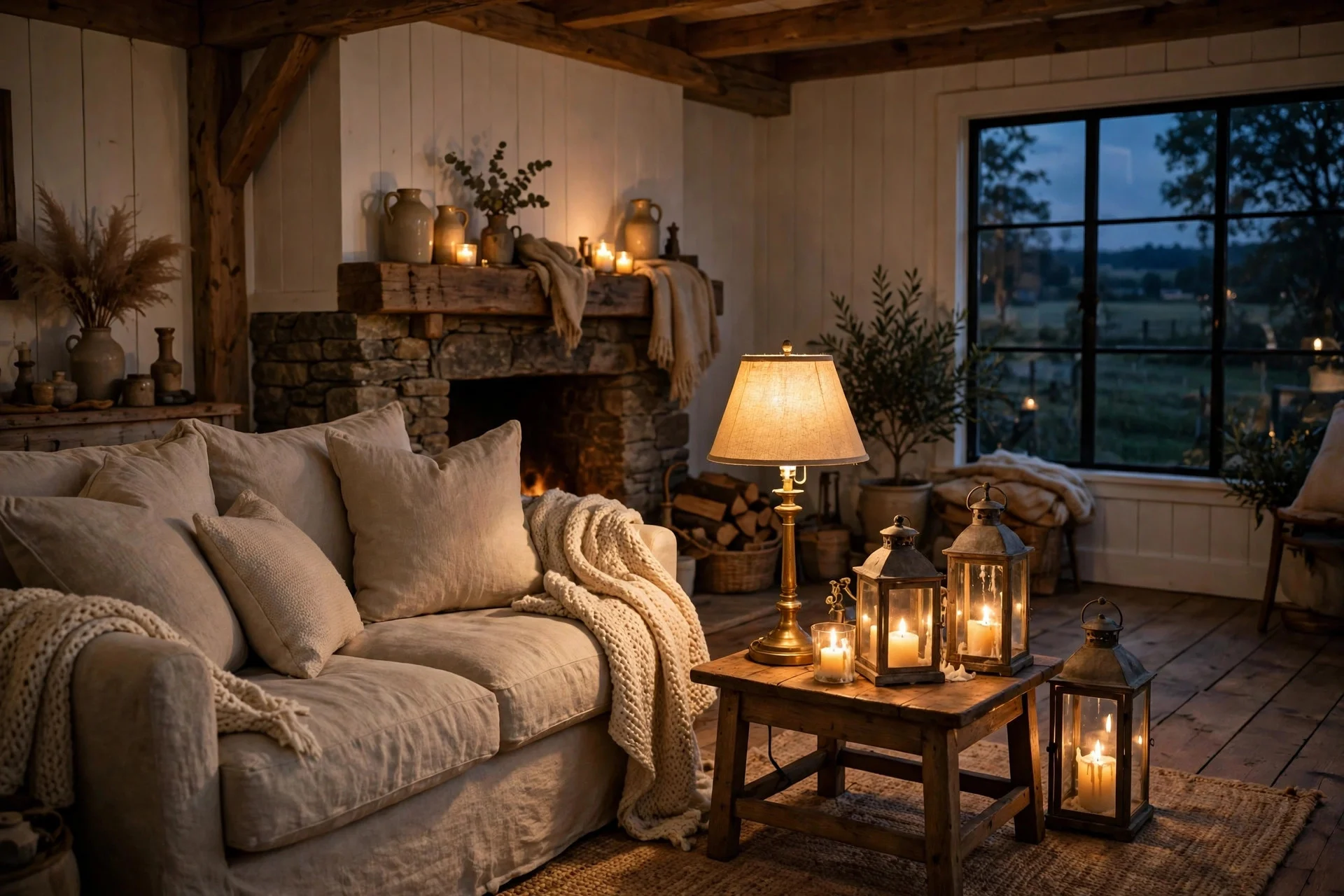
One bright ceiling light can flatten a farmhouse room and make every texture disappear. Layer the light instead: a table lamp with a linen shade, a floor lamp in a dark corner, and a couple of lanterns with candles on the mantel or coffee table. Warm bulbs, around 2700K, suit wood and cream tones far better than cool white ones. Put the brightest light where you read and the softest where you relax in the evening. The room will feel warmer at once, even before you change anything else.
8. Hunt Down a Secondhand Vintage-Style Rug
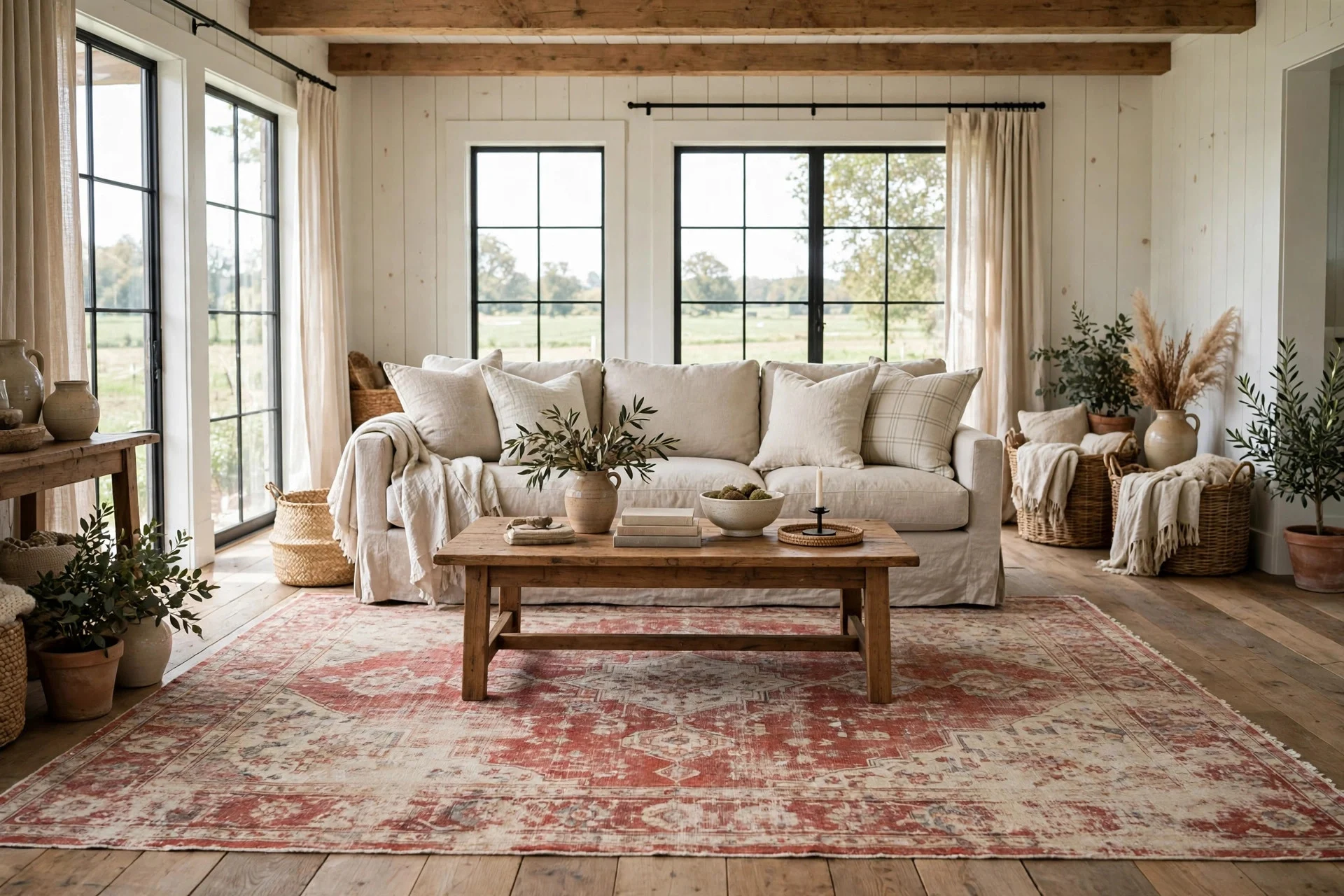
A new wool rug in a generous size can cost more than the sofa, so secondhand is the farmhouse answer. Look for faded vintage-style rugs in muted reds, blues, or creams, since wear and softened color suit this style rather than spoiling it. Check the back for stains and smell, and measure your seating area before you go, because a rug that only fits under the coffee table will chop the room in half. If you are unsure about size, our guide on how to choose the right rug size walks through the front-legs rule in detail.
9. Fill Galvanized Planters and Terracotta Pots With Greenery
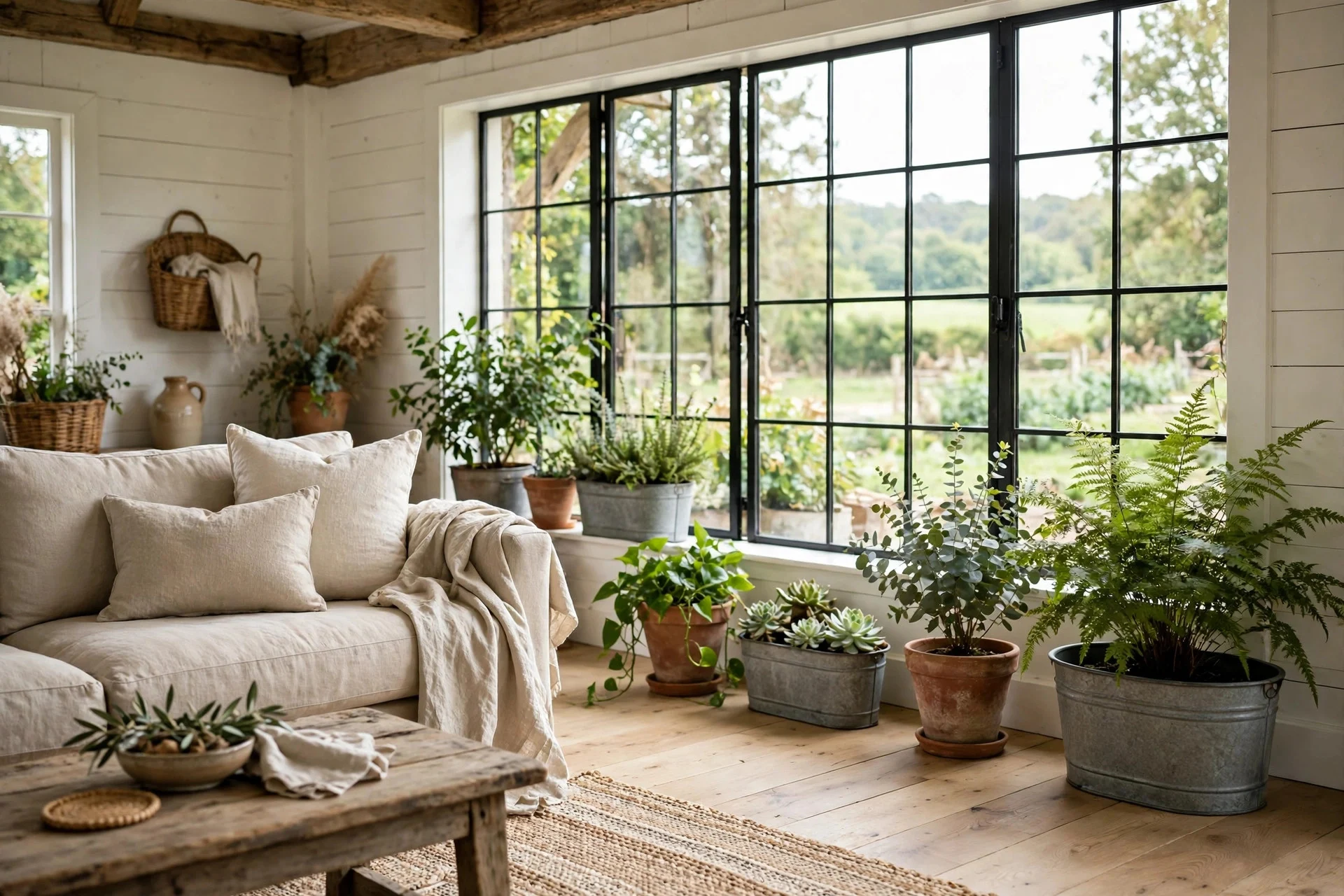
Greenery stops a farmhouse room from feeling like a furniture showroom. A trailing pothos in a galvanized bucket, a rosemary plant in a terracotta pot, and one larger plant by the window add life at three different heights. Terracotta and galvanized metal are cheap, widely available, and they age well, which matters in a style built on patina. Water only when the top inch of soil feels dry, and rotate pots every week or so so plants do not lean hard toward the window. A plant cutting from a friend costs nothing and fits this style perfectly.
10. Style the Mantel With What You Already Own
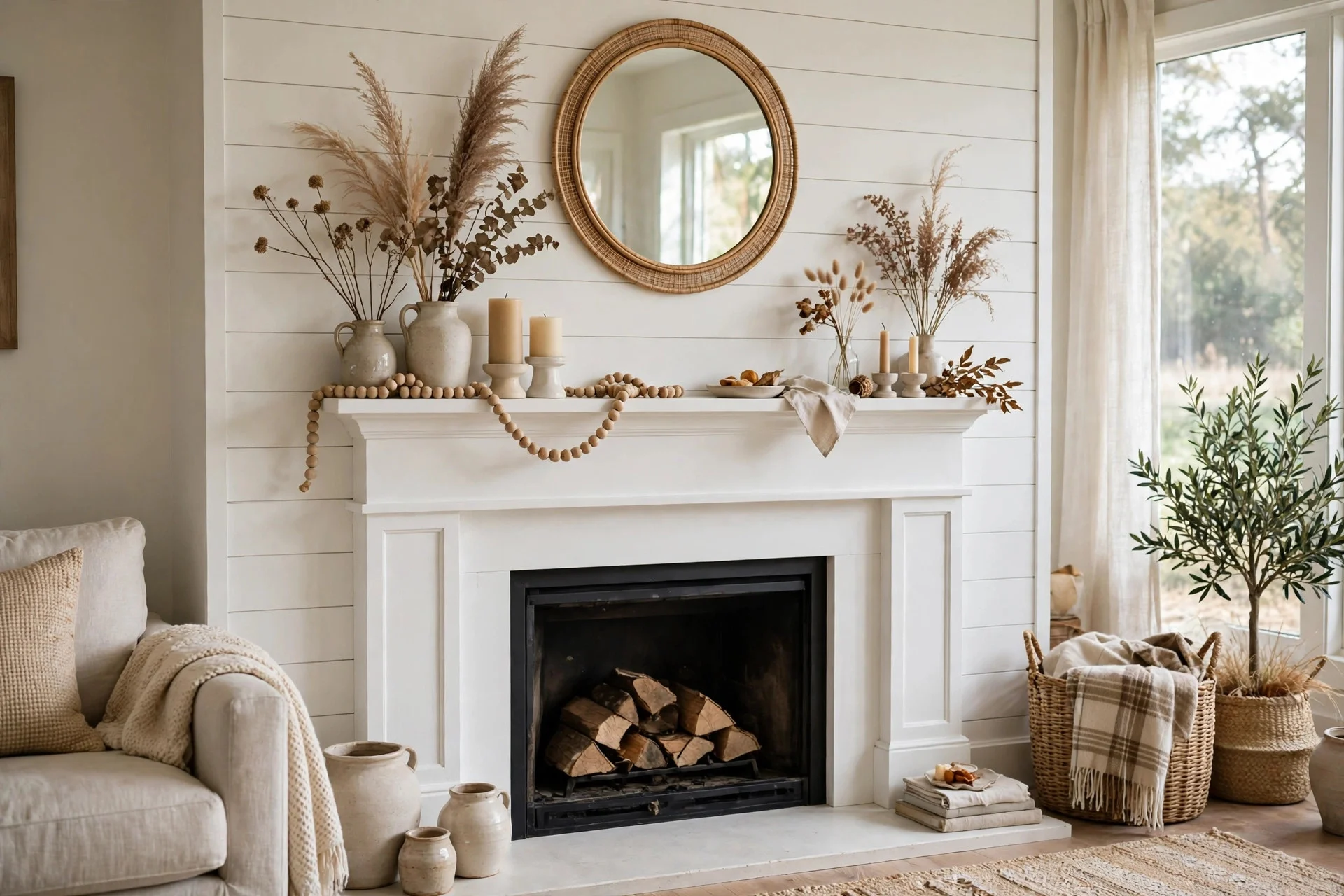
A mantel styled with things you already own looks more farmhouse than one filled with a matching set from one shop. Start with one anchor in the middle, such as a round mirror or a framed print, then build outwards with candles of different heights and a jar of dried stems. Keep one side slightly taller than the other so the display does not look too symmetrical. Change the stems with the seasons: cotton stems in winter, eucalyptus in spring, dried grasses in autumn. Nothing here needs to be expensive, and the display can change in ten minutes.
11. Hang Linen Curtains High and Wide
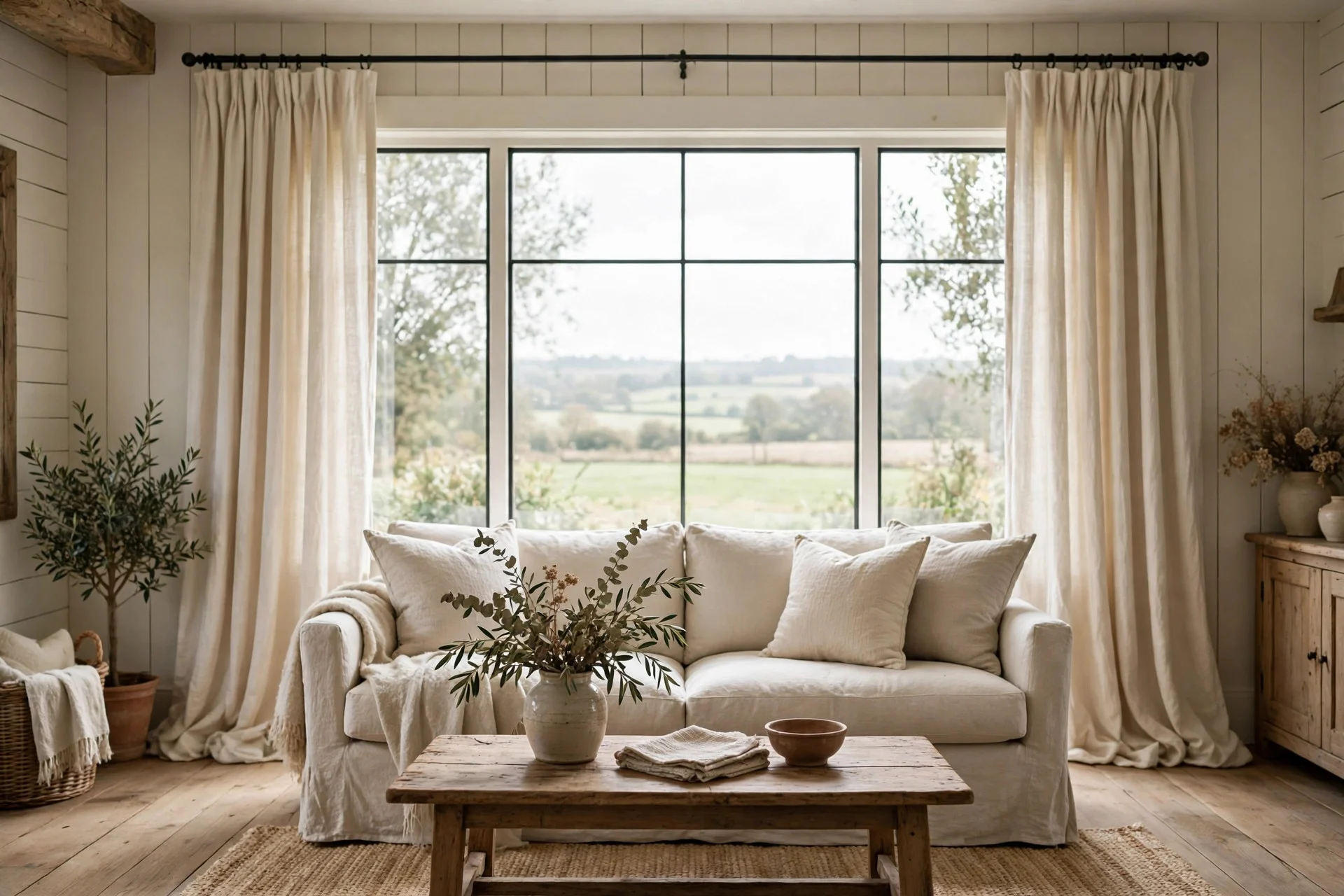
Curtains hung just above the window frame make a window look small, so hang them higher and wider instead. Mount the rod about 15 centimetres above the frame and extend it 20 centimetres past each side, then let plain cream or oatmeal linen fall to the floor. The window instantly looks larger, the room feels taller, and the linen filters daylight into a soft glow. Plain linen suits farmhouse style better than heavy patterns, and it washes well. The effect is strongest where you sit most.
12. Paint a Thrifted Side Table in Sage or Cream
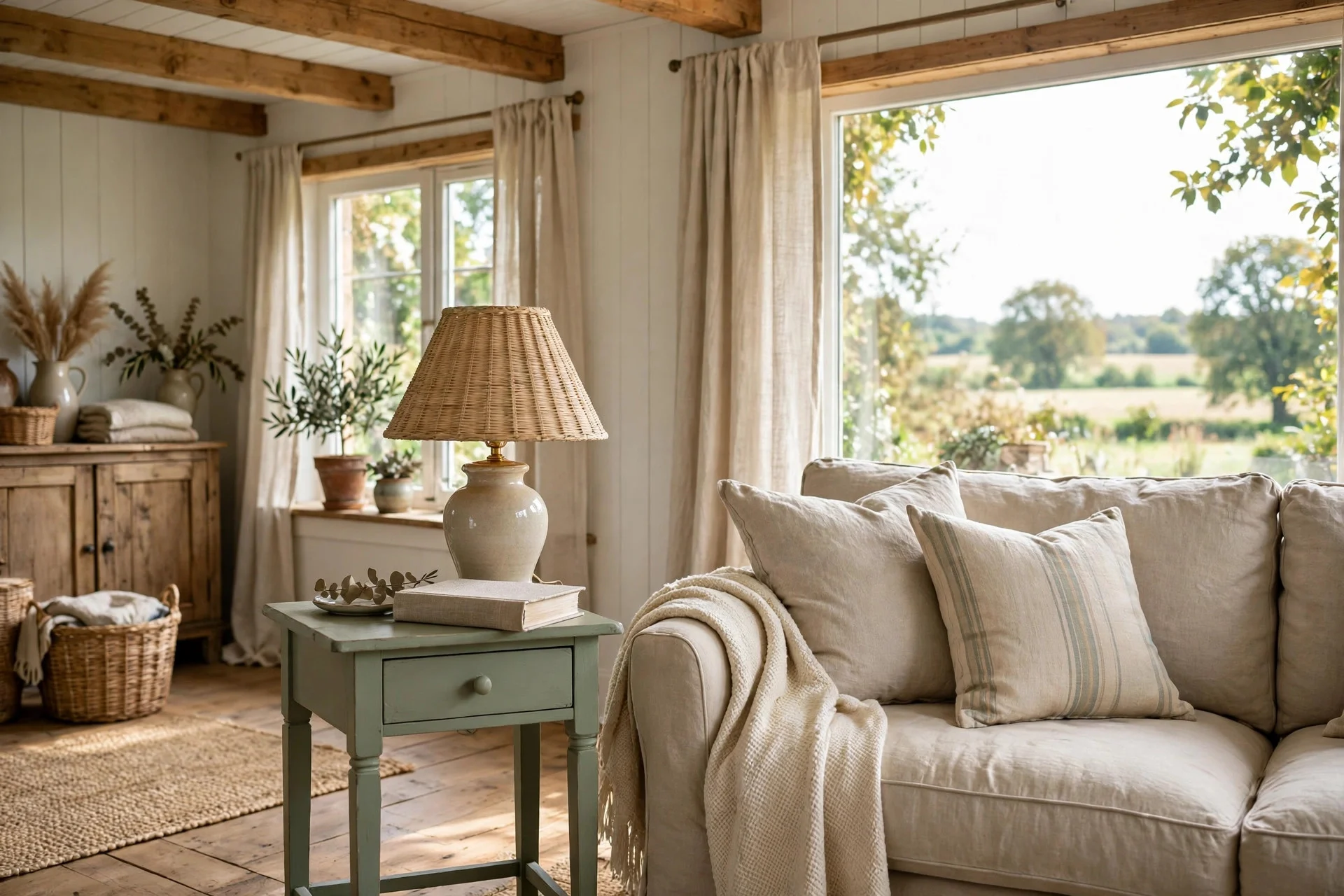
A small wooden side table from a thrift store, painted sage green, cream, or dusty blue, can anchor a seating area for less than a takeaway dinner. Sand it lightly, use a primer, and finish with two coats of furniture paint in a matte or eggshell finish. The painted piece adds a deliberate pop of color without the commitment of painting a wall, and it is easy to repaint later if you change your mind. I painted ours sage on a Saturday afternoon, and it is still the piece guests ask about first.
13. Add a Chunky Reclaimed Beam as a Mantel
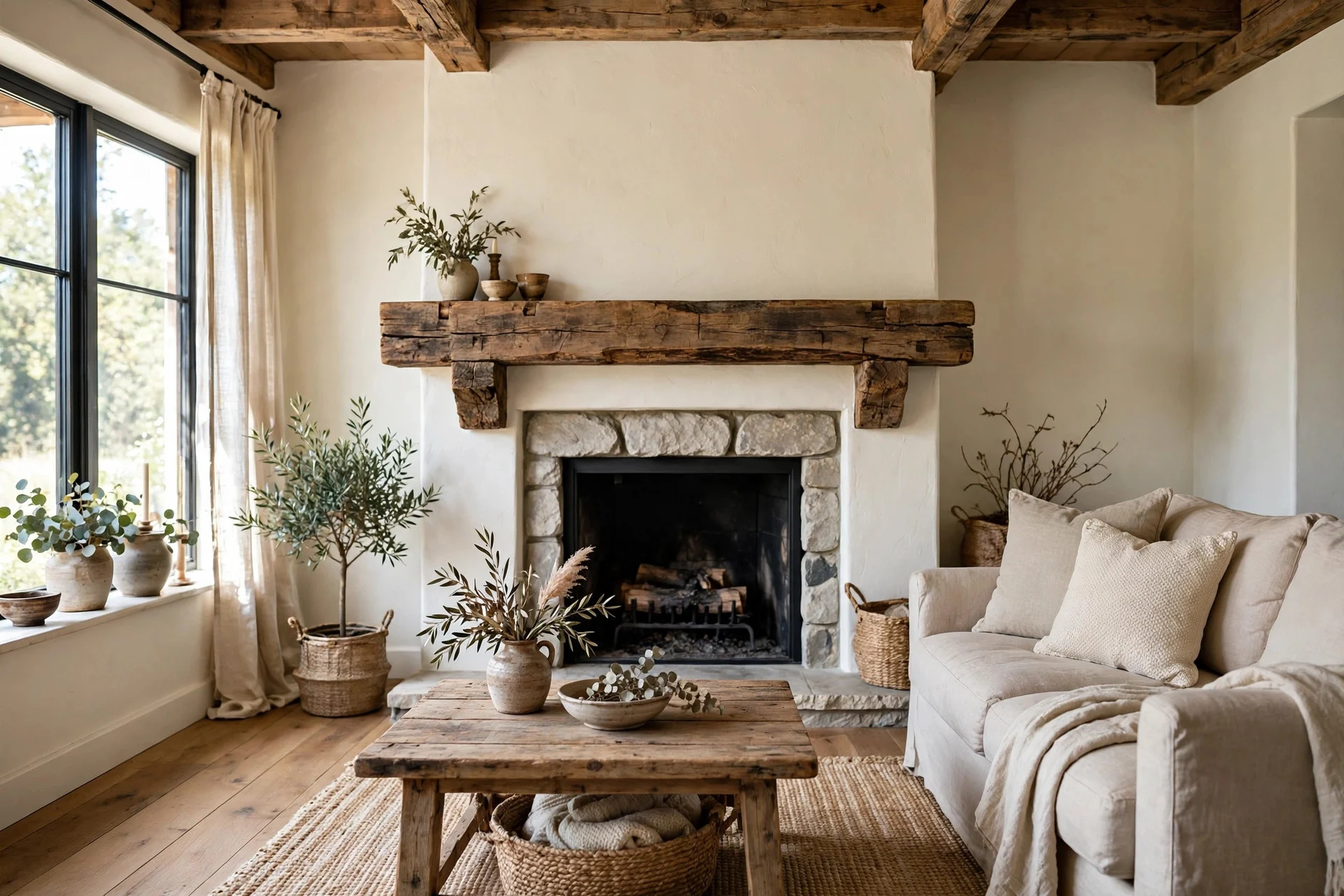
If your fireplace surround feels flat, a chunky wood beam changes its character completely. Reclaimed beams are sold at salvage yards, and lighter faux beams made from hollow wood or foam look convincing once they are stained. Fix it securely into studs or masonry, since a beam is heavy and will hold candles and decor. Keep the rest of the mantel simple so the beam itself is the feature, and let the wood tone warm up the wall around it. This is a weekend job for a confident DIYer, and a half-day job for a handyman if you would rather not drill into masonry yourself.
14. Build a Gallery Wall From Thrifted Frames
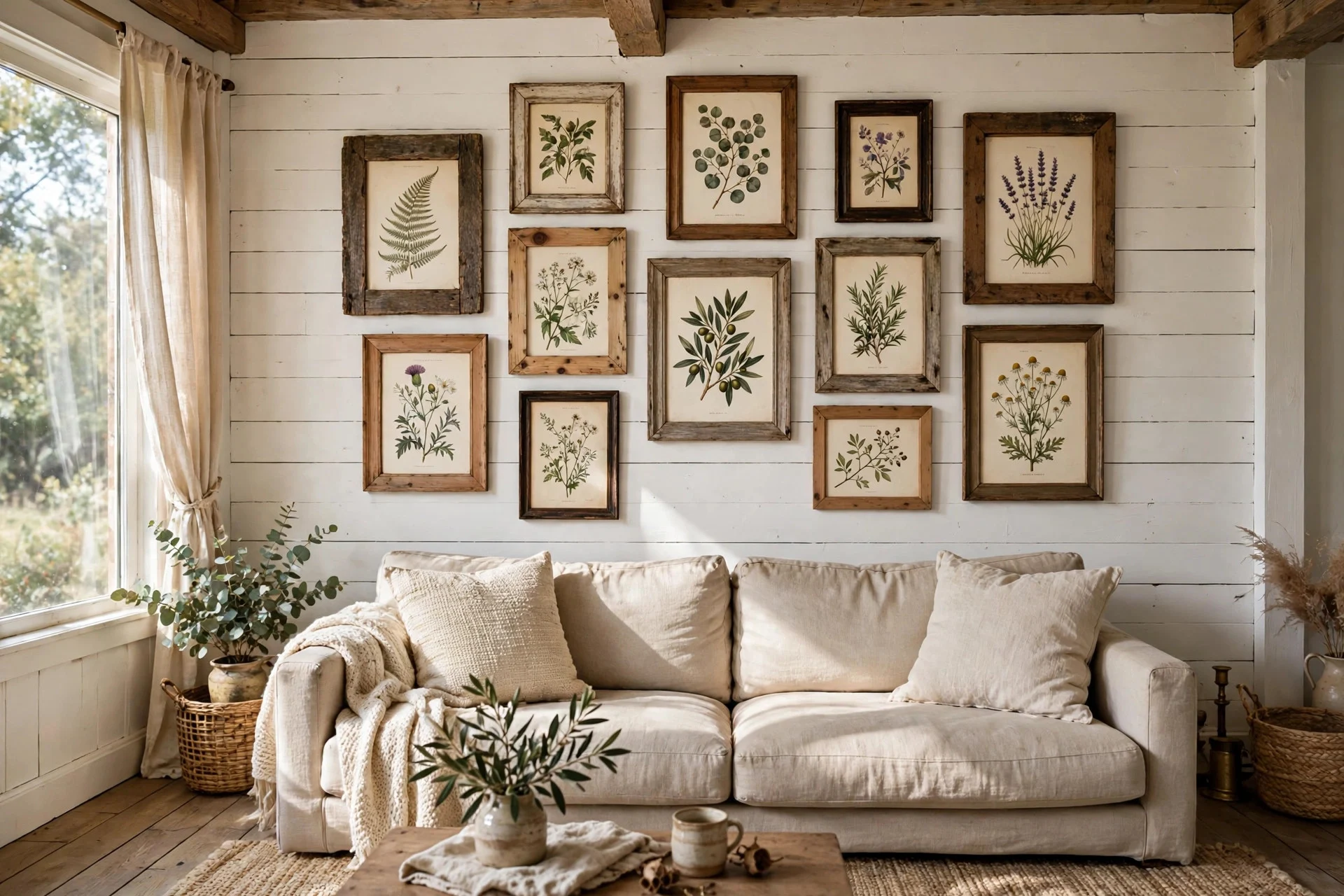
A gallery wall does not need matching frames. In fact, mismatched wooden frames in similar warm tones look more farmhouse than a boxed set. Collect frames slowly from thrift stores, then fill them with botanical prints, family photos, or pages from an old book. Lay the arrangement on the floor first, starting with the largest frame slightly off centre, and photograph it before you hang anything. The wall will look collected rather than decorated, which is exactly the point, and you can swap one print at a time as you find better ones.
15. Use Plaid and Gingham as a Small Accent, Not a Theme
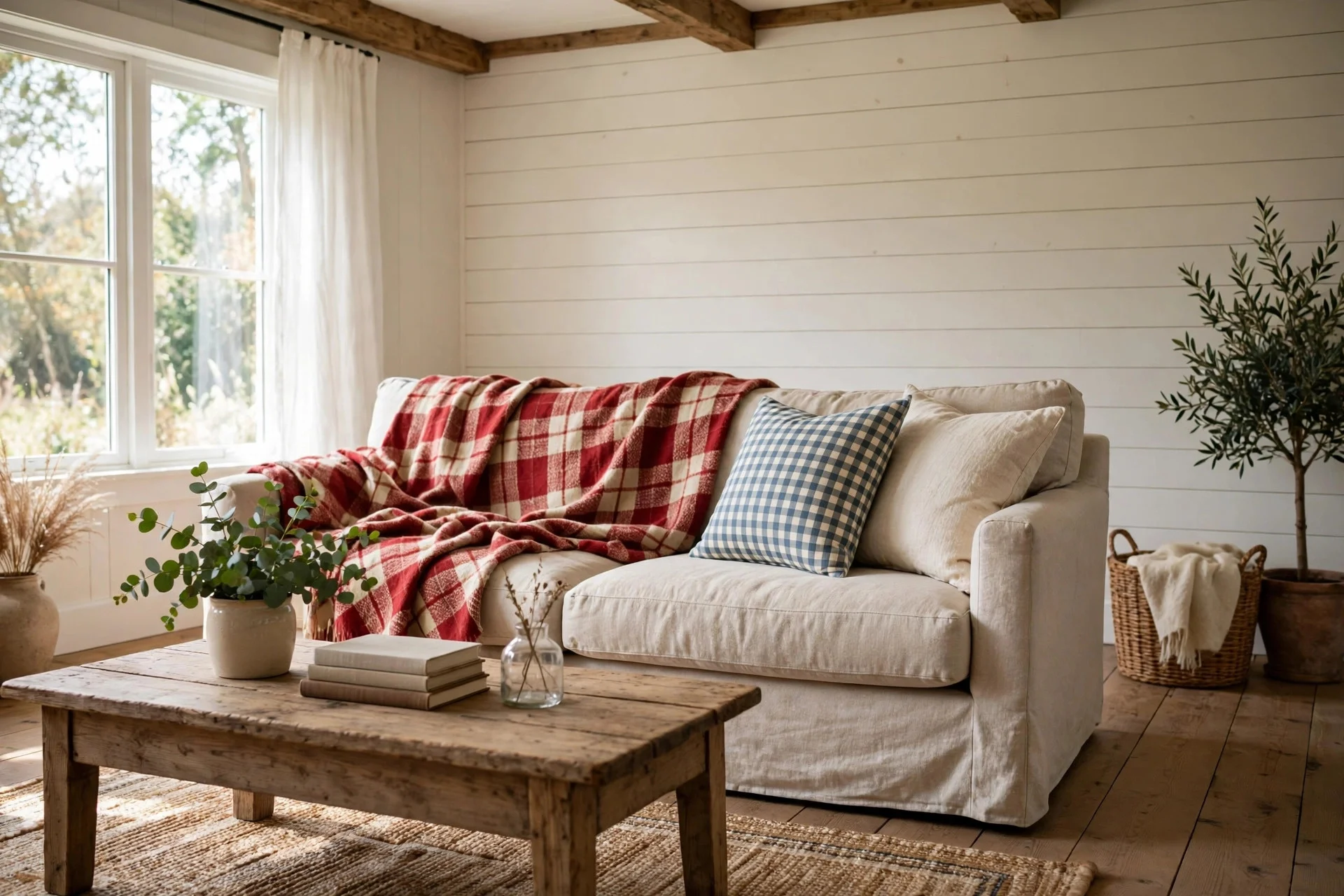
Plaid can tip a farmhouse room into costume territory if it covers everything, so use it as an accent. One plaid throw over the sofa arm, or a single gingham cushion among plain linen ones, gives the nod to farmhouse style without turning the room into a lodge. Keep the rest of the palette calm: cream, oatmeal, sage, and wood tones. Red and cream plaid works well in autumn and winter, while a blue or green gingham feels lighter in spring. Restraint is what keeps plaid feeling like a home rather than a set.
16. Turn Wooden Crates Into a Side Table and Storage
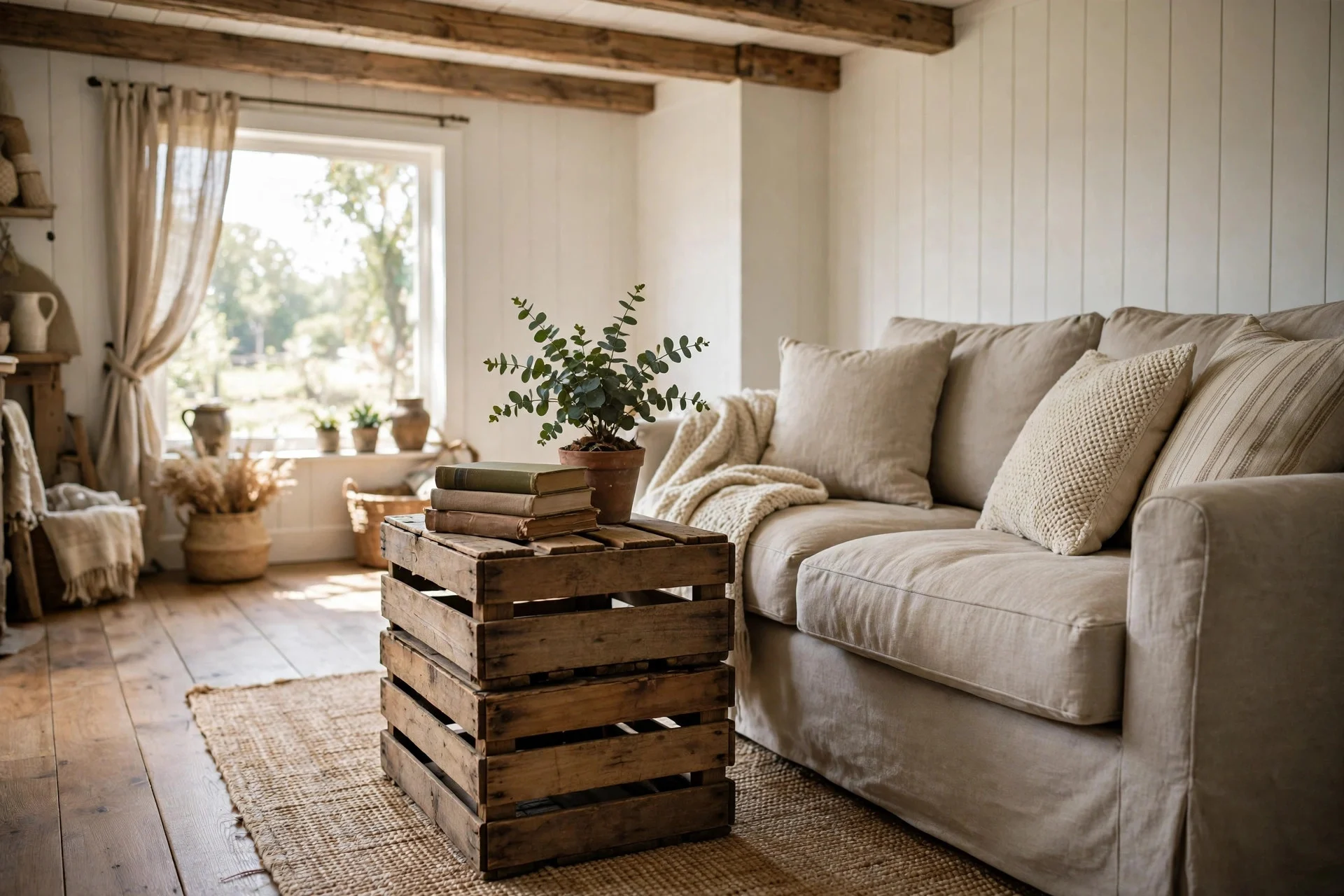
Wooden crates are one of the cheapest farmhouse pieces you can buy, and they work twice as hard as a normal side table. Stack two crates beside the sofa, one upright for books and a plant on top, and one on its side as an open cubby for magazines or a throw. Sand any rough edges, and line the inside with a folded tea towel if you want a softer look. Crates also stack by the fireplace for firewood, or under a console table for extra storage. They cost very little and move easily when you rearrange.
17. Make a Reading Corner With a Rocking Chair
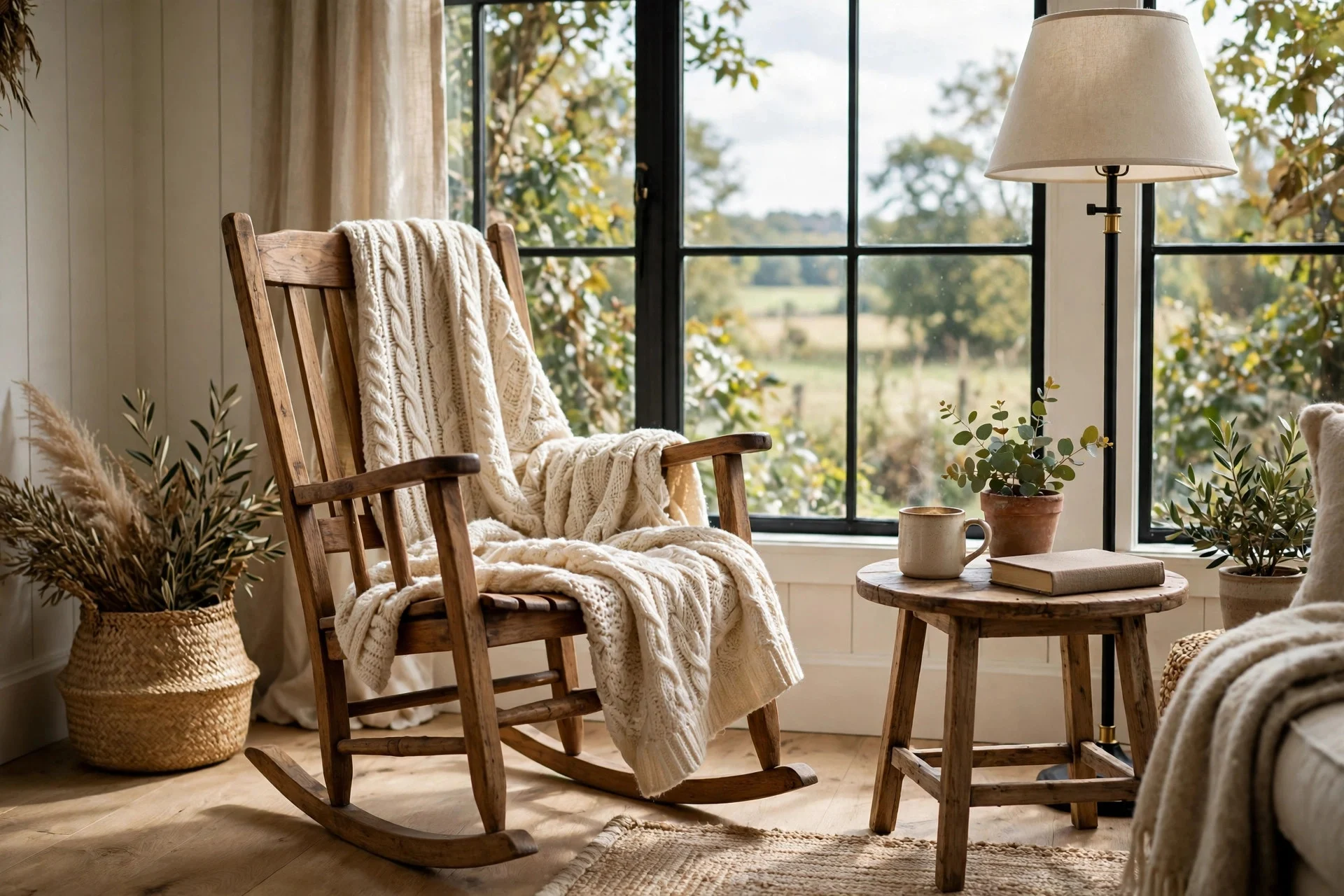
You do not need a whole room for a reading corner, just one chair you actually like sitting in. A wooden rocking chair in a corner, with a floor lamp behind it, a small side table for tea, and a throw within reach, turns a dead corner into the most-used seat in the house. Rocking chairs appear at thrift stores and estate sales regularly, and a worn cushion or a fresh coat of paint brings most of them back. The trick is that the corner now has a purpose, so it stops collecting random clutter and starts inviting you to sit down for ten minutes at the end of the day.
18. Add Black Metal Accents for Contrast
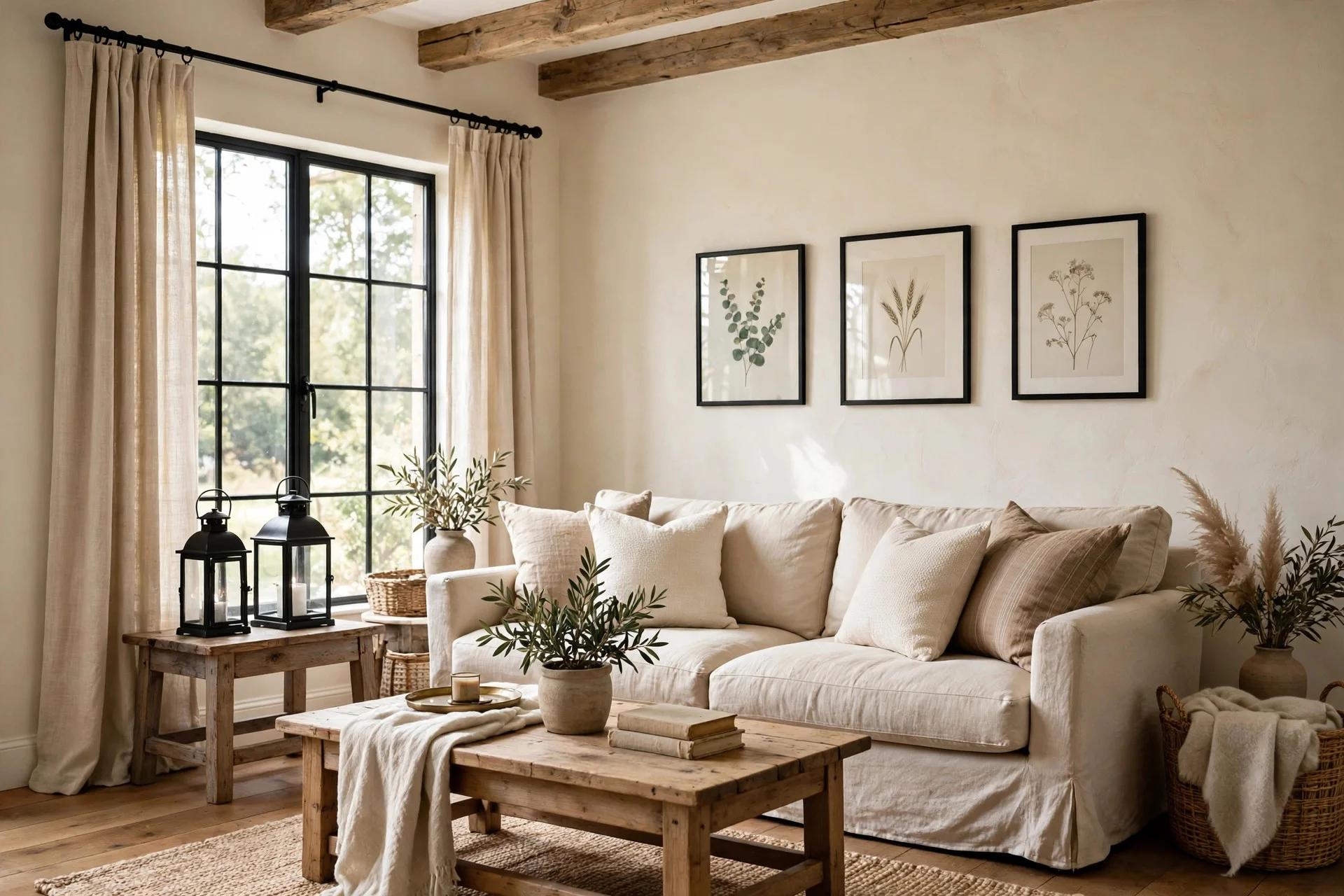
A room full of cream and wood can start to look washed out, and black metal is the fix. A black curtain rod, a couple of lanterns, dark picture frames, or a metal basket give the eye something solid to rest on. Keep the black pieces small and repeat them two or three times so they look deliberate rather than random. A black rod with cream curtains, a black lantern on the mantel, and a black-framed print on the opposite wall are enough. The contrast makes the wood tones warmer and the cream tones cleaner, which is why this small change punches above its cost.
19. Finish With Cotton Stems and Dried Grasses
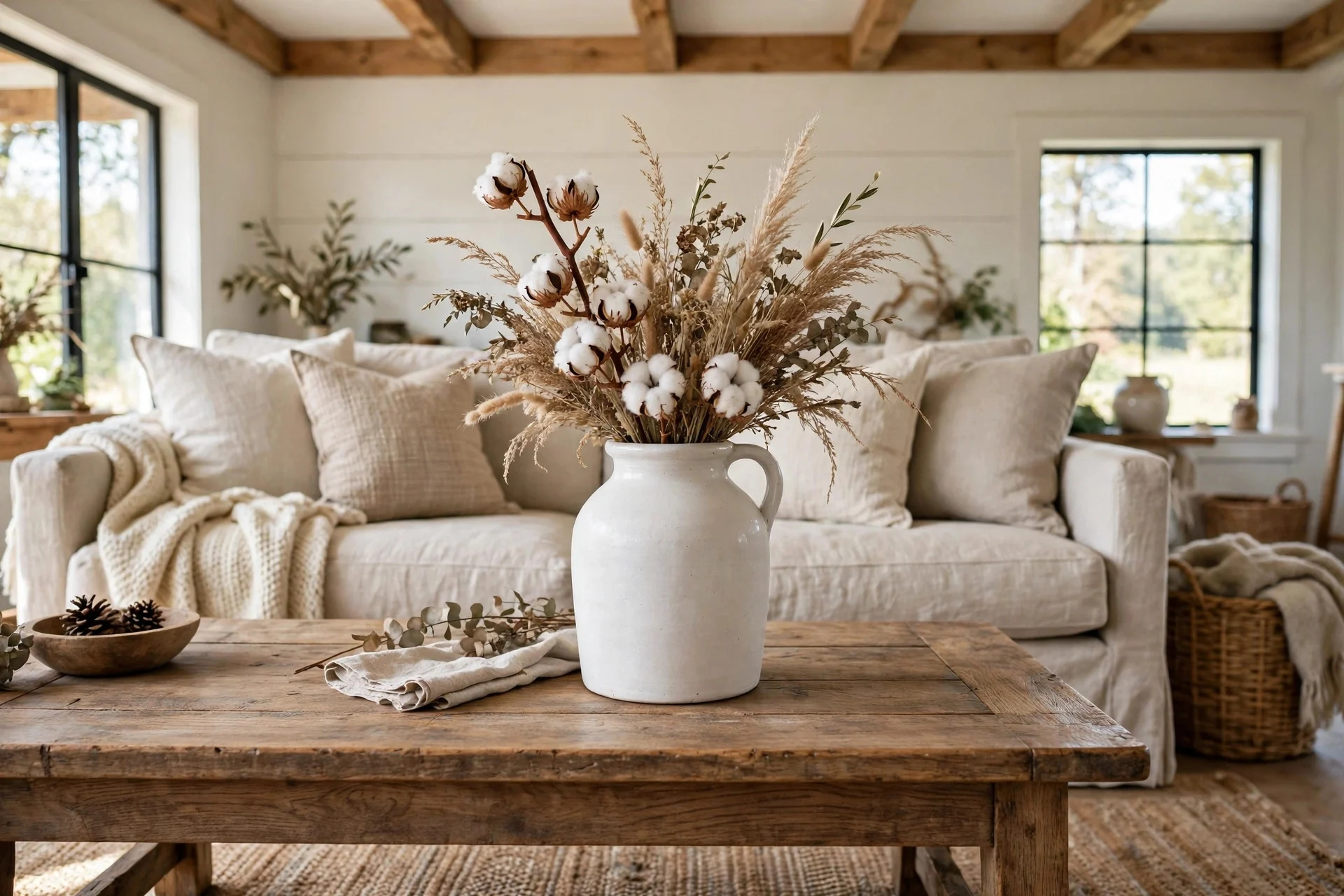
Cotton stems and dried grasses are the farmhouse finishing touch that costs very little and lasts for months. A white ceramic jug or a tall glass jar on the coffee table, filled with a loose bunch of cotton stems, looks intentional without needing fresh flowers every week. Keep the bunch loose and uneven, since a tight, symmetrical bunch looks like a shop display. Swap the stems seasonally if you like: dried lavender in summer, wheat stems in autumn, and a few pine sprigs in winter. It is a small detail, but it is often the one guests notice when they walk in and say the room finally feels finished.
Start with the change that costs the least and feels the best: a throw you actually use, a basket that hides the clutter, or curtains hung a little higher. A farmhouse living room is not built in one shopping trip. It grows, one thrifted table, one painted side table, and one bunch of cotton stems at a time, until one evening you sit down and realize the room finally feels like home. For more budget-friendly comfort, see our cozy living room ideas on a budget, and if your room is small, our guide to arranging a small living room for maximum space pairs well with these ideas.
Frequently Asked Questions
Can I get a farmhouse look in a rented home?
Yes. Stick to removable changes: slipcovers, peel-and-stick shiplap, curtains hung on a tension rod or existing hooks, baskets, and thrifted furniture you can take with you. Avoid anything that needs drilling into masonry or repainting walls unless your landlord agrees in writing.
What colors work best for a farmhouse living room?
Warm neutrals do most of the work: cream, oatmeal, soft sage, dusty blue, and natural wood tones, with one darker accent such as black metal or muted red. You do not need to repaint every wall. Cushion covers, throws, and a rug in those tones are often enough to shift the palette.
Do I need to buy matching furniture for farmhouse style?
No, and matching sets can actually work against the look. Farmhouse rooms suit pieces gathered over time: a thrifted table, a painted side table, and a sofa in plain linen. Shared tones and textures tie them together better than an identical finish.
How do I keep a farmhouse room from looking cluttered?
Give everything a home. Baskets, crates, and a single shelf for display keep layers and decorations contained. If a surface is full, remove one item before adding another, and leave some empty shelf space on purpose.