

Oversized fashion can look effortless or sloppy depending on a few key choices. Here’s how to wear it intentionally, without drowning in fabric.
Oversized clothing has a branding problem. Worn right, it looks cool, confident, and completely intentional. Worn wrong, it looks like laundry day happened and you grabbed whatever was on top of the pile. The difference isn’t the clothes — it’s a handful of styling decisions most people never think about.
I’ve watched this play out in real time with friends who swore off baggy fits entirely after one bad experience, only to try again with a few small adjustments and love the result. The oversized trend isn’t going anywhere, and once you understand the mechanics behind it, it’s genuinely one of the easiest silhouettes to get right.
Why Oversized Outfits Go Wrong in the First Place
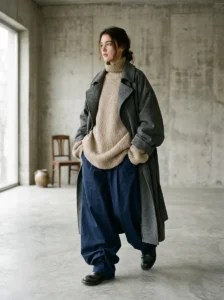
Most failed oversized looks share the same root problem: everything is loose at once. When your top, bottom, and outerwear are all oversized simultaneously, the silhouette collapses into a shapeless block with no visual structure.
The eye needs at least one anchor point — a cinched waist, a fitted layer, or a defined hem — to read the outfit as intentional rather than accidental. Without that anchor, even expensive, well-made pieces start to look like they don’t belong together.
- Volume without contrast reads as sloppy, no matter the fabric quality.
- Proportion imbalance is the single most common mistake in oversized styling.
- Fit at the shoulder still matters even in oversized pieces — a dropped shoulder seam is intentional, a poorly sized one just looks wrong.
The One Rule That Fixes Almost Everything
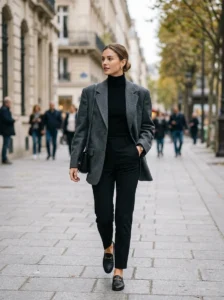
If there’s a single principle that separates polished oversized outfits from messy ones, it’s this: balance loose with fitted, never loose with loose.
This is the rule that stylists apply instinctively, and it’s the fastest fix for anyone who’s struggled with baggy fits before.
Applying the Balance Rule in Practice
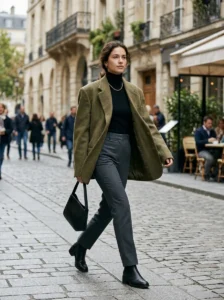
- Oversized top + fitted or slim bottom (jeans, leggings, tailored trousers).
- Oversized bottom + fitted or cropped top.
- Oversized outerwear + a more fitted layer underneath, visible at the neckline or cuffs.
Once one half of the outfit is fitted, the loose half automatically reads as a deliberate style choice rather than an accident of sizing.
Proportion Tricks That Instantly Improve the Silhouette
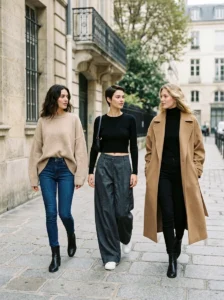
Beyond the basic fitted-loose pairing, a few specific proportion tricks make an enormous difference in how oversized pieces sit on the body.
Define the Waist, Even Loosely
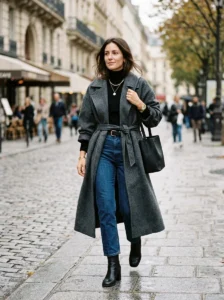
A waist doesn’t need to be tightly cinched to create shape — even a soft, low tuck or a loosely tied layer over an oversized top breaks up the block of fabric and reintroduces a waistline. This single move often does more visual work than any other adjustment.
- A half-tuck (front only) softens bulk without fully committing to a fitted look.
- A belt worn loosely over an oversized jacket or shirt adds structure without changing the fit.
- Layering a fitted piece underneath and letting it peek out at the waist creates the same effect.
Watch the Hem-to-Body Ratio
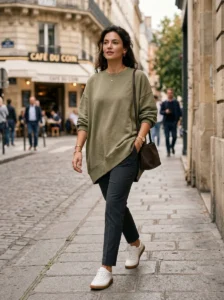
An oversized top that ends mid-thigh over skinny jeans creates an unbalanced, top-heavy silhouette. The same top cropped, tucked, or paired with a wider-leg pant instantly looks more proportional.
- Longer oversized tops pair best with slimmer bottoms to avoid doubling up on volume length.
- Shorter or cropped oversized pieces have more flexibility with wider-leg or looser bottoms.
- Sleeve length matters too — sleeves that hit past the wrist should be pushed up or rolled to avoid swallowing the hands.
Fabric Choice Changes Everything
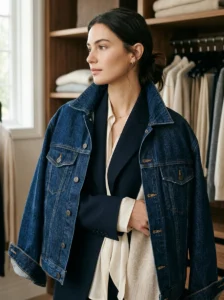
Not all oversized fabrics behave the same way, and this is one of the most overlooked factors in why some outfits look intentional and others look like they’re wearing the person instead of the other way around.
Structured vs. Soft Fabrics
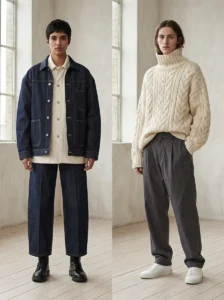
Structured fabrics — denim, canvas, tailored cotton — hold their own shape even when oversized, which keeps the silhouette readable. Soft, clingy, or overly stretchy fabrics in oversized cuts tend to collapse into shapeless volume with no defined edges.
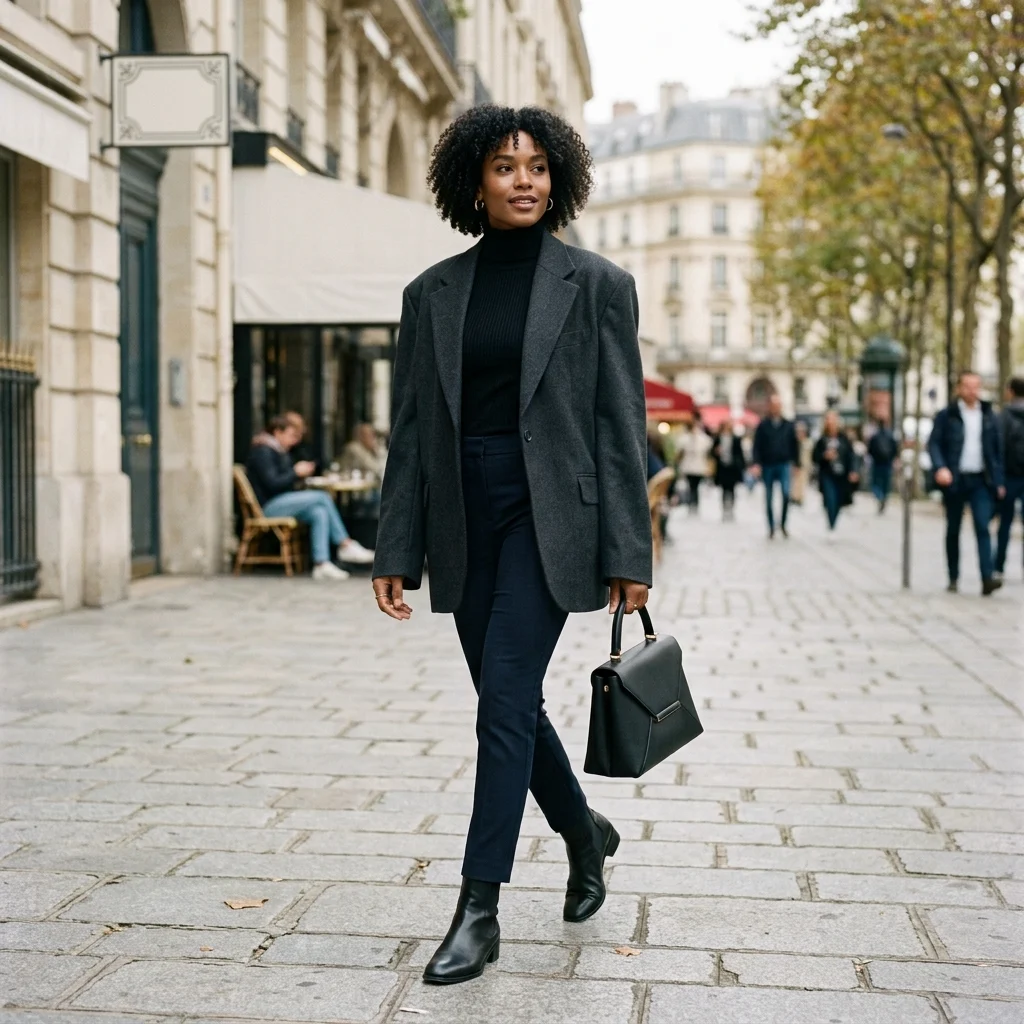
- Structured oversized blazers and jackets almost always look intentional, even worn loosely.
- Soft oversized knits benefit from being paired with a defined bottom to avoid total shapelessness.
- Heavier fabrics drape better in oversized cuts than lightweight, flowy ones, which can look more like borrowed pajamas than fashion.
Accessorizing to Anchor an Oversized Look
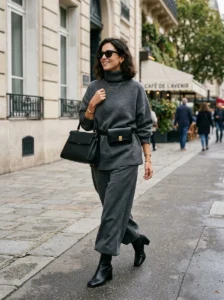
Accessories do more heavy lifting in oversized outfits than people realize, because they reintroduce the small, defined details that baggy silhouettes naturally lack.
- A fitted belt bag or structured handbag contrasts nicely against loose fabric volume.
- Ankle boots or sleek sneakers keep the lower half grounded rather than adding more visual bulk.
- Jewelry, especially anything with clean, minimal lines, gives the eye a small focal point amid the larger silhouette.
Real-World Outfit Formulas That Work
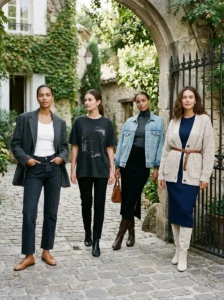
For anyone who wants a starting point rather than building from scratch, these combinations reliably read as intentional rather than accidental.
- Oversized blazer, fitted tank, straight-leg jeans, and pointed flats.
- Oversized graphic tee, half-tucked, with slim trousers and low sneakers.
- Oversized denim jacket over a fitted turtleneck, with a slightly slim skirt or pant.
- Oversized cardigan, belted at the waist, over a fitted midi dress.
Each of these follows the same underlying logic: one dominant loose piece, balanced by at least one fitted or structured element nearby.
Key Takeaways
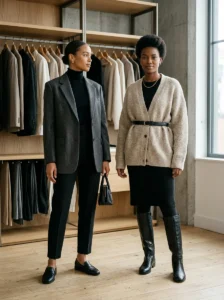
- Never pair oversized with oversized — always balance loose pieces with something fitted.
- Defining the waist, even loosely, is one of the fastest ways to add shape to a baggy outfit.
- Pay attention to hem length and sleeve length relative to the rest of the outfit.
- Structured fabrics hold shape better in oversized cuts than soft, clingy ones.
- Accessories and footwear can anchor an outfit and prevent it from reading as shapeless.
Conclusion
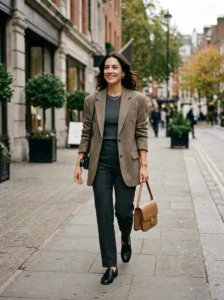
Oversized fashion isn’t about wearing bigger clothes — it’s about controlling proportion within a bigger silhouette. Once you understand the fitted-loose balance and pay attention to where an outfit needs structure, oversized pieces stop looking accidental and start looking like a genuine style choice. The clothes don’t need to change; the way you pair them does.
Frequently Asked Questions
1. Can I wear an oversized top with oversized pants? It’s possible but risky, since it easily collapses into a shapeless silhouette. If you want to try it, add a defining element like a belt, a tuck, or a fitted layer underneath to keep some visual structure in the outfit.
2. Does body type matter when wearing oversized clothing? Proportion matters more than body type. Anyone can wear oversized pieces successfully by balancing loose fabric with fitted elements elsewhere in the outfit, regardless of size or shape.
3. What shoes work best with oversized outfits? Sleek, low-profile shoes like ankle boots, loafers, or minimal sneakers tend to work best, since they ground the outfit without adding extra visual bulk. Chunky or oversized footwear can sometimes tip the balance back into shapelessness.
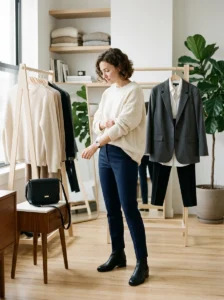
4. Are oversized clothes appropriate for professional or work settings? Yes, with the right pairing. An oversized blazer over a fitted top with tailored trousers reads as polished and intentional, while an oversized top with oversized bottoms tends to look too casual for most workplaces.
5. How do I know if an oversized piece is too big rather than intentionally oversized? Check the shoulder seams first — they should sit at or slightly past your natural shoulder line, not halfway down your arm. If the shoulders are dramatically oversized along with everything else, it usually reads as ill-fitting rather than styled.