


Shoe-outfit matching doesn’t need to be complicated. Here’s a simple, practical system for pairing shoes with any outfit, minus the guesswork.
Shoes are usually the last thing people put on and the first thing that quietly derails an otherwise great outfit. Not because the shoes are wrong on their own, but because nobody ever explains the actual logic behind why some pairings work and others don’t. Once you see the pattern, you stop guessing.
I used to stand in front of my closet for way too long trying on three different pairs before leaving the house. What changed things wasn’t buying more shoes — it was understanding a few simple rules that apply to almost any outfit, any season, any occasion.
Why Shoe Matching Feels Harder Than It Should

Most people treat shoes as a separate decision from the rest of the outfit, chosen last and evaluated in isolation. That’s backwards. Shoes are one of the few elements that interact with formality, color, and proportion all at once, which is exactly why they trip people up more than any other piece.
- Shoes set the formality ceiling of an outfit — you can dress an outfit down with shoes, but rarely up.
- Color mismatches are more noticeable at the feet than almost anywhere else on the body.
- Proportion matters too — a chunky shoe under a delicate outfit throws off the whole balance.
The Formality Rule Everyone Should Know

Every outfit has a formality level, and shoes should sit at or just below it, never above. This single rule solves more shoe-matching confusion than any color chart ever will.
How to Read an Outfit’s Formality Level

Formality isn’t just about “dressy vs. casual” — it exists on a scale. Tailored trousers and a blazer sit higher on that scale than jeans and a t-shirt, even if both are considered acceptable everyday outfits.
- Sneakers under a suit lower the formality intentionally and stylishly, but only when the rest of the outfit supports it.
- Dress shoes under jeans and a t-shirt often look mismatched, since they raise formality in a way the rest of the outfit doesn’t support.
- The safest move is matching shoe formality closely to the outfit’s overall formality, then adjusting deliberately from there.
The Three-Color Rule for Shoes

A simple trick that removes most of the color-matching guesswork: shoes should pick up at least one color already present in the outfit, ideally a color used elsewhere at least twice.
Why This Works So Consistently
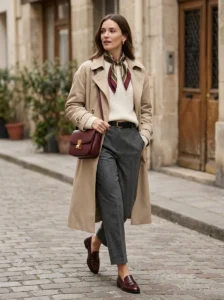
This rule works because it ties the shoes visually back into the rest of the outfit instead of leaving them looking like an unrelated addition. It also naturally limits color choices, which is why it removes so much decision fatigue.
- Neutral shoes (black, white, brown, tan) work with almost any outfit and are the safest default.
- Colored shoes work best when that color appears somewhere else in the outfit — a bag, a print, or an accessory.
- Metallics function like neutrals in most cases and pair surprisingly well across formal and casual outfits alike.
Matching Shoes to Specific Outfit Types

General rules help, but a few common outfit categories deserve their own specific guidance since they come up constantly.
Jeans and Casual Basics

Jeans are the most forgiving base for shoes, which is exactly why they cause the most decision paralysis — too many options can technically work.
- White sneakers are the most versatile option and pair with almost any casual top.
- Loafers or clean boots elevate a jeans outfit without overdressing it.
- Chunky sneakers work best with looser, more relaxed silhouettes rather than fitted outfits.
Dresses and Skirts

Dresses and skirts shift the formality conversation toward silhouette and length as much as color.
- Ankle boots pair well with midi and mini dresses in cooler months, adding structure without competing for attention.
- Strappy sandals or heels suit fitted, shorter dresses for a more polished look.
- Flats work best with flowier, looser dress silhouettes to avoid an overly casual mismatch.
Tailored and Workwear Outfits
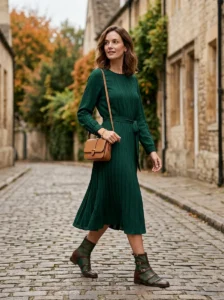
Tailored pieces have the least room for error, since mismatched shoes stand out more against clean lines.
- Classic loafers or oxfords remain the safest, most versatile choice for tailored outfits.
- Block heels offer comfort without sacrificing the polished look tailoring calls for.
- Sneakers can work with tailoring only when the rest of the outfit is deliberately dressed down elsewhere too.
The Proportion Factor Nobody Talks About

Beyond formality and color, shoe silhouette needs to match the proportion of the rest of the outfit, or the whole look feels off even when the color and formality are technically correct.
- Wide-leg pants pair best with shoes that have some visual weight, like chunkier soles or block heels, to avoid getting visually swallowed.
- Fitted, slim silhouettes pair well with sleeker, more minimal shoe shapes.
- Cropped pants or ankle-length hems expose more shoe, so the shoe style becomes a bigger focal point than usual.
A Quick Decision Framework You Can Actually Use

For anyone who wants a fast mental checklist rather than memorizing every rule, this three-question framework covers most situations.
- Does the shoe’s formality match or sit slightly below the outfit’s formality level?
- Does the shoe pick up a color already present somewhere else in the outfit?
- Does the shoe’s visual weight match the proportion of the rest of the outfit?
If the answer to all three is yes, the pairing will almost always work, regardless of the specific occasion.
Key Takeaways

- Shoes should match or sit slightly below the outfit’s formality level, never above it.
- Picking a shoe color that repeats elsewhere in the outfit removes most of the guesswork.
- Neutral shoes are the safest, most versatile default across nearly every outfit type.
- Different outfit categories — jeans, dresses, tailoring — have their own reliable shoe pairings.
- Shoe proportion should match the visual weight of the rest of the outfit, especially with wide-leg or cropped pieces.
Conclusion

Shoe matching stops feeling like guesswork once you stop treating shoes as an afterthought and start reading them as part of the outfit’s formality and color story. A few simple checks — formality level, repeated color, and proportion — cover the vast majority of outfits without needing an elaborate system. The goal isn’t a bigger shoe collection; it’s knowing which pair to reach for without standing in front of the closet debating it.

Frequently Asked Questions
1. Can white sneakers really go with almost everything? Yes, white sneakers function almost like a neutral shoe at this point, working with casual outfits, smart-casual looks, and even some tailored outfits when the rest of the look is dressed down slightly elsewhere. They’re one of the safest default choices for uncertain pairings.
2. Is it ever okay to wear sneakers with a suit? Yes, but it’s an intentional style choice rather than a default. Clean, minimal sneakers can work with a well-fitted suit for a more relaxed, modern look, but the rest of the outfit — fit, fabric, accessories — needs to support that dressed-down direction.
3. What’s the safest shoe color if I don’t want to overthink it? Neutral tones like black, white, tan, or brown are the safest choices, since they pair with nearly any outfit without needing to match a specific color already present. They’re a reliable default when you’re short on time or unsure.
4. Do heel height and shoe shape actually affect how an outfit looks? Yes, significantly. Heel height and shoe shape affect proportion, which changes how balanced an outfit appears, especially with wide-leg pants, cropped hems, or flowy dresses where more of the shoe is visible.
5. How many pairs of shoes do I actually need to cover most outfits? A well-chosen set of 5–6 pairs — one clean sneaker, one boot, one loafer or flat, one heel, and one sandal — covers the vast majority of outfit and occasion combinations without needing an extensive collection.