


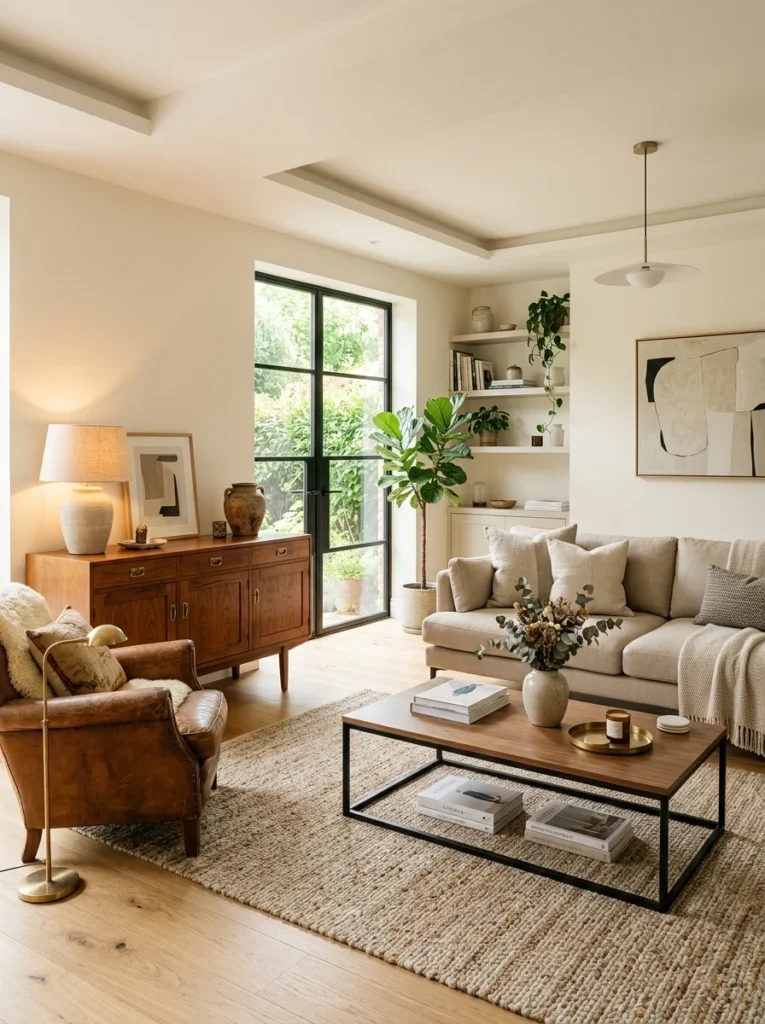
TV placement is usually decided by where an outlet or a wall happens to be, not by how it affects the room. Here’s why that decision matters more than most people realize.Getting TV placement right is a genuinely higher-leverage decision than its usual treatment as an afterthought would suggest, and most of what makes a placement wrong is identifiable and avoidable before the mounting bracket goes on the wall.
Glare Is the Most Common, Most Avoidable Placement Mistake

A TV placed directly across from, or at an angle facing, a window or a bright light source will show glare on the screen during exactly the hours the room gets the most natural light — which, for many households, are the hours the TV isn’t in heavy use, but it’s also the hours the room is otherwise at its brightest and most pleasant, undermined by a washed-out screen every time someone glances at it.
The general rule is placing the TV perpendicular to the main window, rather than directly across from or directly beside it. A perpendicular placement means light crosses the screen at an angle that doesn’t reflect directly back toward the seating area, which is a meaningfully different outcome than a TV positioned to catch a window’s reflection head-on.
Where perpendicular placement isn’t possible given the room’s layout, window treatments become part of the solution rather than an optional add-on — blackout or light-filtering shades on the specific window causing glare, used during the hours the TV is actually watched, address a placement constraint that can’t otherwise be avoided given the room’s fixed architecture.
Artificial light causes the same problem after dark. A lamp or overhead fixture positioned to reflect directly into the screen from the viewer’s sightline creates the same glare issue a window does, just at night rather than during the day. This is worth checking specifically from the seating position actually used to watch TV, not just by looking at the screen from across the room.
Height and Viewing Distance Affect Physical Comfort More Than Most People Realize
The now-common practice of mounting a TV high on the wall — often to clear a piece of furniture below it, or simply because it looks tidy — frequently puts the screen well above the ergonomically correct viewing height, which is the center of the screen at roughly eye level for a seated viewer. A TV mounted too high requires looking upward for extended periods, which causes neck strain that most people attribute to something else entirely, if they notice it at all, rather than connecting it to the room’s TV placement.
The correct mounting height depends on the seating distance and the viewer’s eye level while seated, not on a fixed measurement from the floor that works for every room. As a general guide, the center of the screen should land at or slightly below seated eye level, which in most standard living rooms is lower than the height a TV is often mounted to clear a media console or fireplace below it.
Viewing distance affects comfort and picture quality together. Too close, and the eye strains to take in the whole picture and individual pixels may become visible depending on the screen’s resolution and size; too far, and detail is lost and the room’s other furniture arrangement has to compromise around an unnecessarily large gap between seating and screen. Manufacturer and industry guidelines generally suggest a viewing distance of roughly one and a half to two and a half times the screen’s diagonal size, which is a useful starting point for placement even before considering the room’s other constraints.
TV Placement Frequently Dictates the Entire Room’s Furniture Layout, for Better or Worse

Because the TV is usually the largest fixed visual anchor in a living room, its placement has an outsized effect on how the rest of the furniture gets arranged, often more than the room’s architecture does. A TV on one wall pulls seating to face it, which then determines where a coffee table goes, which then determines the room’s circulation paths — a single early decision cascading through the entire layout.
This is worth deciding deliberately rather than defaulting to whichever wall is empty, since a TV placement chosen for convenience can lock the room into a furniture arrangement that doesn’t actually serve the room’s other functions well — the zoning covered elsewhere in this series, for instance, becomes considerably harder to execute if the TV’s position has already claimed the room’s most natural anchor wall for a single-focus media arrangement that doesn’t leave room for a secondary zone.
In rooms trying to balance TV viewing with conversation, reading, or other uses, TV placement on a side wall rather than the room’s main focal wall can allow the seating to be arranged for conversation as the default, with the TV as a secondary option available when needed rather than the room’s entire seating arrangement being permanently oriented toward a screen that isn’t always on.
A Television Is Also a Large, Dark, Reflective Object Even When It’s Off

Design conversations about TV placement often focus entirely on the viewing experience, but the TV’s appearance when off is a real, constant presence in the room — it’s visible far more hours per day than it’s actually being watched. A large black rectangle on a prominent wall is a significant visual element in the room’s overall composition, whether or not anyone is watching it at a given moment.
Placement that treats the TV as part of the room’s visual composition, not just its media function, tends to age better. A TV centered on a wall with a considered surround — floating shelves, a piece of art nearby, a gallery arrangement that incorporates the screen rather than isolating it — reads as more intentional than a TV mounted in isolation on an otherwise blank wall, in the same way a large blank wall elsewhere in the room needs deliberate scale and grouping to avoid feeling unresolved.
Some households choose to visually minimize the TV’s presence when off — frame-style TVs that display art when not in use, or simply positioning the screen so it’s not the first thing visible on entering the room — as a direct response to the reality that the TV is a visual object in the room for far more hours than it’s a functional one.
Placement Relative to Seating Determines Whether the Room Feels TV-Centric or Balanced

A TV placed as the singular focal point of the room, with all seating oriented toward it and no other clear focal point available, produces a specific kind of living room — one that reads primarily as a media room even when that’s not the household’s intention. This isn’t wrong for a household that genuinely uses the living room primarily for watching television, but it’s worth being a deliberate choice rather than a default outcome of simply mounting the TV on the most obvious wall.
A household wanting the living room to serve conversation, reading, and general living alongside TV viewing benefits from a layout where the TV is present and functional but not the only thing the seating arrangement is organized around — seating that can face a coffee table and each other as the primary configuration, with clear enough sightlines to the TV that it remains genuinely watchable without dictating every other aspect of the room’s arrangement.

Key Takeaways
- Mounting a TV perpendicular to the room’s main window, rather than directly across from or beside it, avoids the glare that a head-on placement creates during the day’s brightest hours
- The correct mounting height puts the center of the screen at or slightly below seated eye level, which is frequently lower than the height a TV is mounted to clear furniture below it
- Viewing distance of roughly one and a half to two and a half times the screen’s diagonal size is a reasonable starting guideline for both comfort and picture quality
- Because the TV is usually the room’s largest fixed visual anchor, its placement often dictates the entire furniture layout — worth deciding deliberately rather than defaulting to whichever wall is empty
- A TV is a large, dark, visually present object even when off, and placement that accounts for its appearance as part of the room’s composition, not just its function, tends to age better
- Whether the room feels TV-centric or balanced between multiple uses is largely determined by whether seating is oriented entirely around the screen or arranged to serve conversation and other activities as well
Frequently Asked Questions
How high should a TV actually be mounted? The center of the screen should generally land at or slightly below the eye level of a seated viewer in the room’s primary seating, which in most standard living rooms is lower than the height many TVs are mounted to clear a media console or fireplace below them. The correct height depends on the specific seating and screen size in a given room rather than a single fixed measurement that works universally.
What’s the best way to deal with window glare if I can’t change where the TV is mounted? Blackout or light-filtering window treatments on the specific window causing the glare, used during the hours the TV is actually watched, are the most direct solution when the room’s layout doesn’t allow for a perpendicular TV placement relative to the window. Checking for glare specifically from the actual seating position used for viewing, rather than assuming the issue based on the window’s general location, helps confirm whether this is actually the problem before addressing it.
Does TV size affect the ideal viewing distance significantly? Yes — the general guideline of roughly one and a half to two and a half times the screen’s diagonal size scales directly with screen size, meaning a larger TV needs proportionally more viewing distance for comfortable viewing without a change in seating distance actually meaning a shift in the experience. This is worth calculating before purchasing a significantly larger TV than a household currently has, since the existing seating arrangement’s distance from the TV wall may not be appropriate for the new screen size.
Is it a mistake to build the whole living room layout around the TV? Not necessarily a mistake if that’s genuinely how a household uses the room, but it’s worth being a deliberate choice rather than an unexamined default. Households that want the living room to serve conversation and other uses alongside TV viewing benefit from placing the TV so it doesn’t require the entire seating arrangement to be oriented toward it as the singular focal point.
Do frame TVs or TV-concealing furniture actually make a meaningful difference? For households bothered by a large dark screen dominating the room’s visual composition when off, yes — frame-style TVs displaying art, or cabinetry that conceals the screen, directly address the reality that the TV is visible far more hours per day than it’s actually in use. For households less concerned with this, a well-placed standard TV, treated as part of the room’s overall visual composition rather than mounted in isolation, is a lower-cost way to address some of the same concern.