


Tired of replacing mulch every year? These 15 river rock landscaping ideas offer a durable, low-maintenance alternative that actually looks better longer.
Mulch breaks down, fades, washes away in heavy rain, and needs replacing almost every season. River rock does none of that. It’s one of the few landscaping materials that genuinely gets better with time instead of needing constant upkeep — and it opens up design options mulch simply can’t match.
After helping redesign a few yards that had “mulch fatigue” — that flat, faded look by mid-summer — I’ve seen firsthand how much river rock changes both the maintenance routine and the overall visual impact of a yard. These 15 ideas cover everything from simple swaps to full design features.
Why River Rock Outperforms Mulch Long-Term
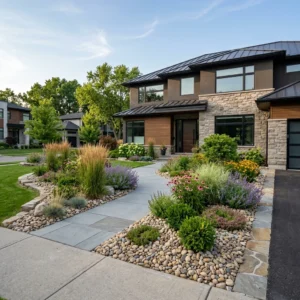
Before getting into specific ideas, it helps to understand why river rock has become such a popular mulch alternative in the first place.
- River rock doesn’t decompose, fade, or need annual replacement like organic mulch does.
- It resists wind and heavy rain displacement far better than lightweight mulch.
- It naturally deters some weed growth when installed with proper landscape fabric underneath.
- It reflects heat differently than mulch, which can be an advantage or a consideration depending on plant placement nearby.
Border and Edging Ideas
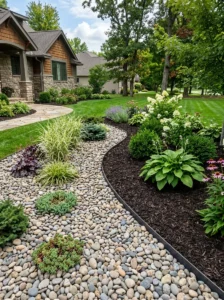
River rock does exceptional work defining clean lines between different areas of a yard, replacing the softer, less defined edges that mulch tends to create over time.
1. Flower Bed Borders
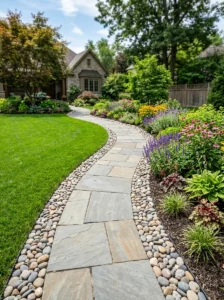
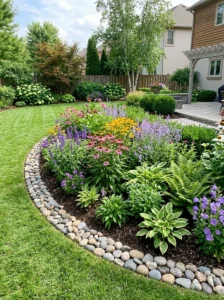
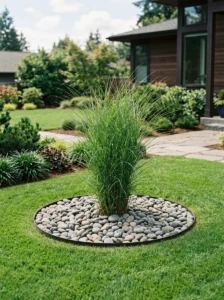
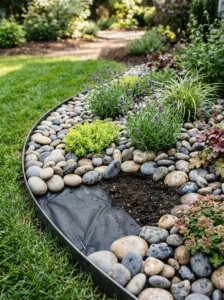
A simple ring of river rock around flower beds creates a crisp, defined edge that holds its shape season after season, unlike mulch borders that gradually blend into surrounding grass.
2. Walkway Edging
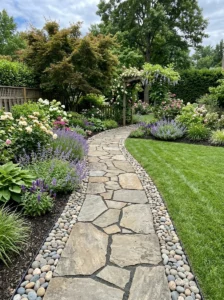
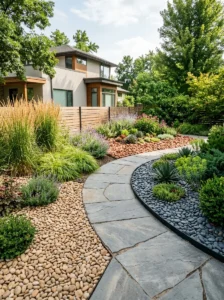
Lining both sides of a walkway or path with river rock creates a polished transition between hardscape and lawn, and it’s far more resistant to erosion from foot traffic runoff than mulch.
3. Tree Ring Accents
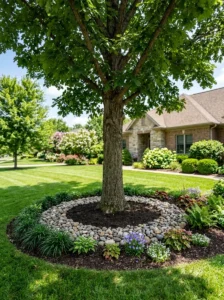
Circling the base of trees with river rock instead of mulch avoids the common problem of “mulch volcanoes” that can trap moisture against the trunk and damage bark over time.
Dry Creek Bed Features
One of river rock’s biggest advantages over mulch is its ability to double as a functional drainage solution, not just a decorative one.
4. Functional Drainage Creek Beds
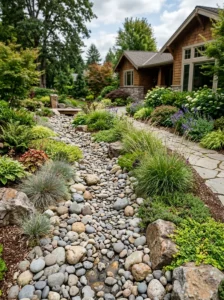
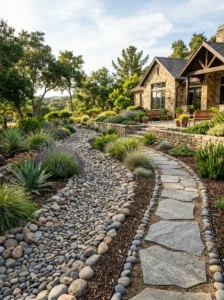
A dry creek bed lined with a mix of river rock sizes can redirect water runoff from downspouts or low-lying areas, solving a drainage problem while adding visual interest at the same time.
5. Decorative-Only Dry Creek Beds
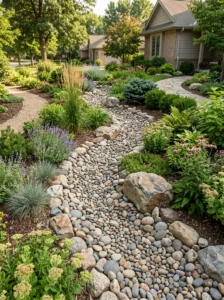
Even without an actual drainage need, a dry creek bed shape filled with varied rock sizes mimics a natural stream bed, adding movement and visual depth to an otherwise flat yard.
6. Bridge or Stepping Stone Crossings
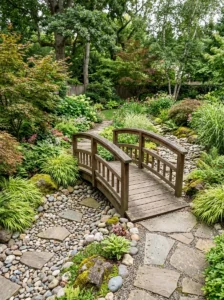
Adding a small decorative bridge or a few flat stepping stones across a dry creek bed elevates the feature from simple landscaping into a genuine focal point.
Foundation and Walkway Applications
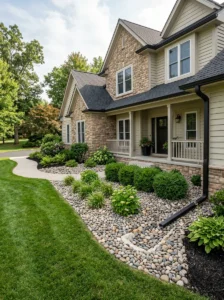
Areas close to the house benefit particularly well from river rock’s durability, since these spots often deal with more runoff and foot traffic than the rest of the yard.
7. Foundation Perimeter Beds
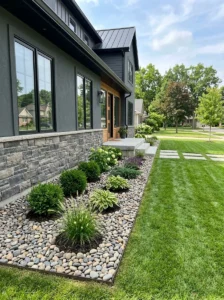
Replacing mulch around the home’s foundation with river rock reduces moisture retention against the house, which can help prevent pest issues that damp mulch sometimes attracts.
8. Downspout Splash Zones
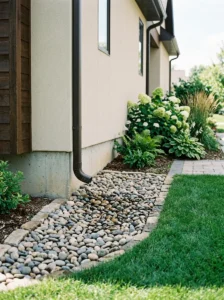
Placing river rock directly beneath downspouts prevents the erosion and mulch displacement that heavy water flow typically causes in that exact spot.
9. Full Walkway Fill Rather than pavers alone, filling the gaps between stepping stones with river rock creates a low-maintenance walkway surface that drains well and rarely needs weeding.
Low-Water and Xeriscape Ideas
River rock is a natural fit for xeriscaping, a landscaping approach built around minimizing water use, and it pairs particularly well with drought-tolerant plants.
10. Full Xeriscape Beds Combining river rock with drought-tolerant plants like succulents, ornamental grasses, or lavender creates a low-water landscape section that still looks intentional and full, not sparse.
11. Gravel-to-Rock Gradient Beds
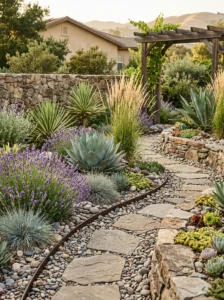
Layering finer gravel near plant bases with larger river rock further out creates visual texture while still serving the practical purpose of reducing water evaporation from soil.
12. Cactus and Succulent Rock Gardens Pairing river rock with cacti or succulents in a dedicated garden section plays to both elements’ strengths — minimal water needs and minimal ongoing maintenance.
Accent and Focal Point Uses
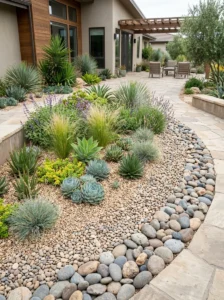
Beyond functional applications, river rock works exceptionally well as a design accent, something mulch’s flat, uniform texture rarely achieves on its own.
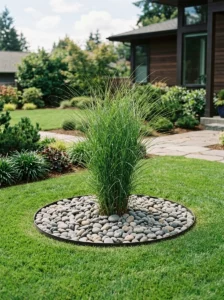
13. Rock Islands Around Focal Plant
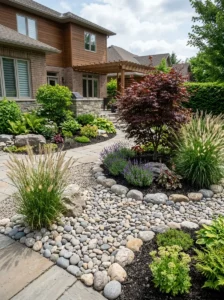
Creating a small river rock “island” around a single specimen plant, ornamental grass, or small tree draws the eye directly to that feature rather than letting it blend into a broader mulch bed.
14. Mixed-Size Rock Layering Combining two or three different river rock sizes in the same bed adds depth and visual texture that a single uniform mulch color can’t replicate.
15. Color-Contrast Rock Zones Using different colored river rock — tan, gray, or reddish tones — to define separate zones within a larger landscape creates visual organization without needing plant borders or edging materials.
Practical Considerations Before Switching
River rock offers real advantages, but a few practical factors are worth planning for before making the switch across an entire yard.
- Installation is more labor-intensive upfront than spreading mulch, often requiring landscape fabric underneath to control weeds effectively.
- River rock retains and reflects heat, so placement near heat-sensitive plants should be considered carefully.
- Cost per square foot is typically higher than mulch initially, though the long-term savings from not replacing it annually often offset this over a few years.
- Removing river rock later, if a design change is needed, takes more effort than removing mulch.
Key Takeaways
- River rock doesn’t decompose or need annual replacement, unlike organic mulch.
- It excels at defining borders, edging, and clean transitions between yard zones.
- Dry creek beds can serve both a decorative and a functional drainage purpose.
- It pairs naturally with xeriscaping and drought-tolerant plant choices.
- Mixing rock sizes and colors adds visual texture that flat mulch beds typically lack.
- Upfront installation costs and heat retention are worth planning around before a full-yard switch.
Conclusion
River rock isn’t just a mulch substitute — it’s a design upgrade that solves several practical problems mulch never fully addresses, from erosion to annual replacement costs. Whether it’s a simple border swap or a full dry creek bed feature, these 15 ideas show just how flexible river rock landscaping can be. Start with one section of the yard, see how it holds up through a season, and expand from there.
Frequently Asked Questions
1. Is river rock more expensive than mulch overall? Upfront costs are usually higher, but since river rock doesn’t need annual replacement like mulch does, the long-term cost often evens out or becomes cheaper within a few years, depending on the size of the area covered.
2. Does river rock actually help with weed control? Yes, especially when installed over quality landscape fabric. The rock blocks sunlight from reaching weed seeds in the soil, though some weed growth can still occur over time as organic debris accumulates on top of the rocks.
3. Can river rock damage plants due to heat retention? It can, particularly for heat-sensitive plants in very sunny areas, since rock absorbs and radiates heat more than mulch does. Choosing heat-tolerant plants near river rock beds, or leaving a small mulch buffer directly around delicate plants, helps manage this.
4. How do I install river rock so it doesn’t sink into the soil over time? Installing a layer of landscape fabric beneath the rock prevents it from gradually sinking into the soil and also improves weed control. Skipping this step is the most common reason river rock beds look uneven after a year or two.
5. Can I mix river rock and mulch in the same yard? Yes, and many yards benefit from doing exactly that — using river rock in high-drainage or high-traffic areas like walkways and foundations, while keeping mulch in planting beds where organic matter benefits soil health over time.